Categories
Reflections and Comments

Tell a Story, Share a Wordle

There have been so many new ways to communicate and share ideas introduced throughout this course. Some of the ones that I have experimented with are posted here. My hope is to use some of these within my work as a teacher and leader.

Wordle:   Wordle for Psychology of Educational Technology

Prezi:  Presentation for DLG 9 The Economics of Educational Technology

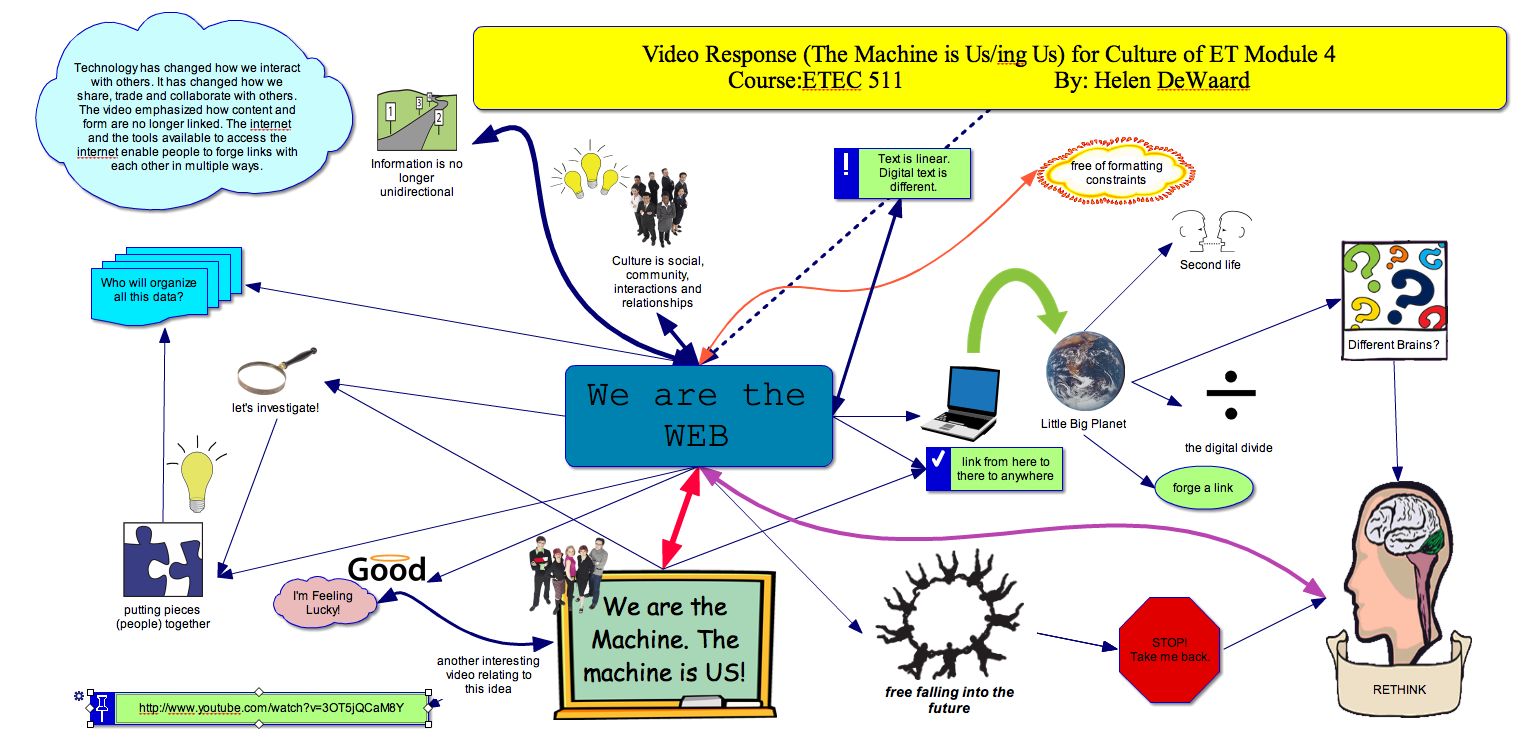
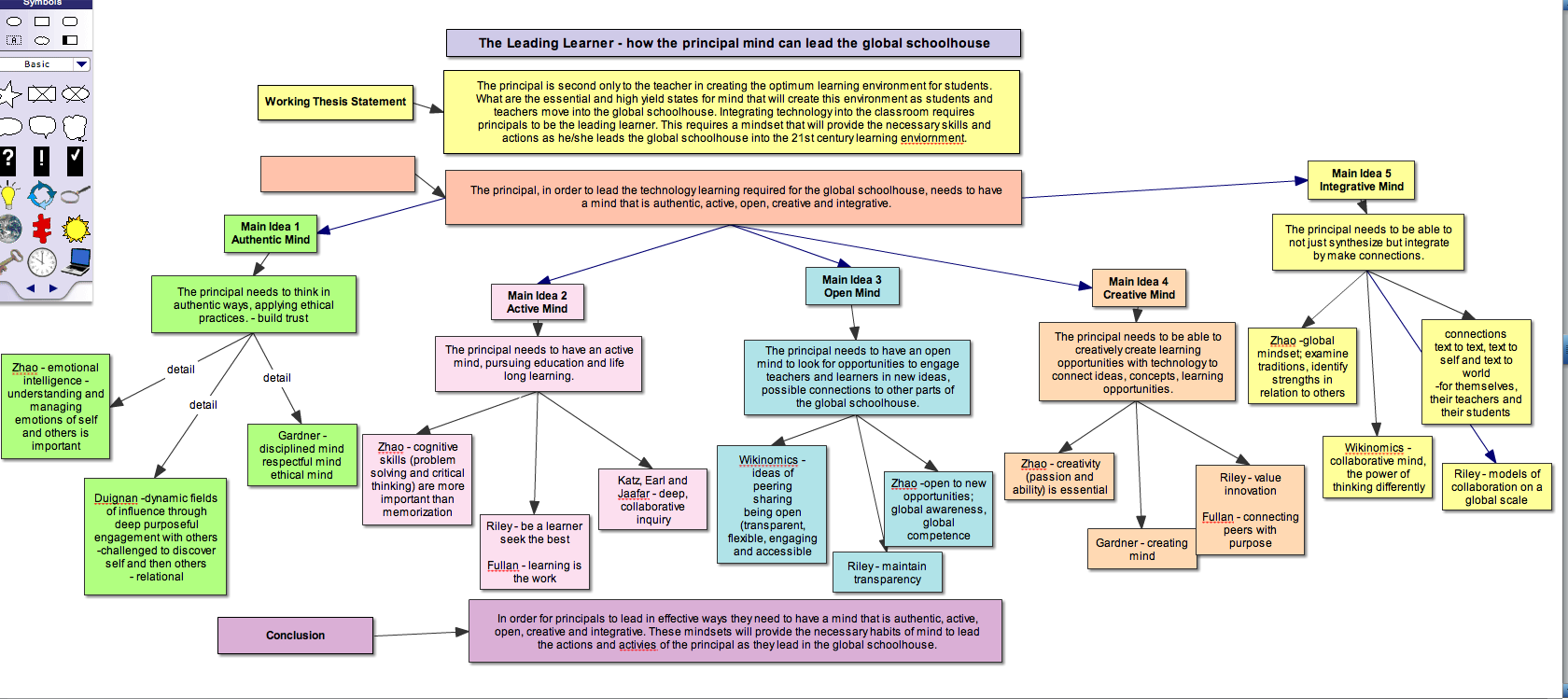
Webspiration: used to plan Outline of Essay


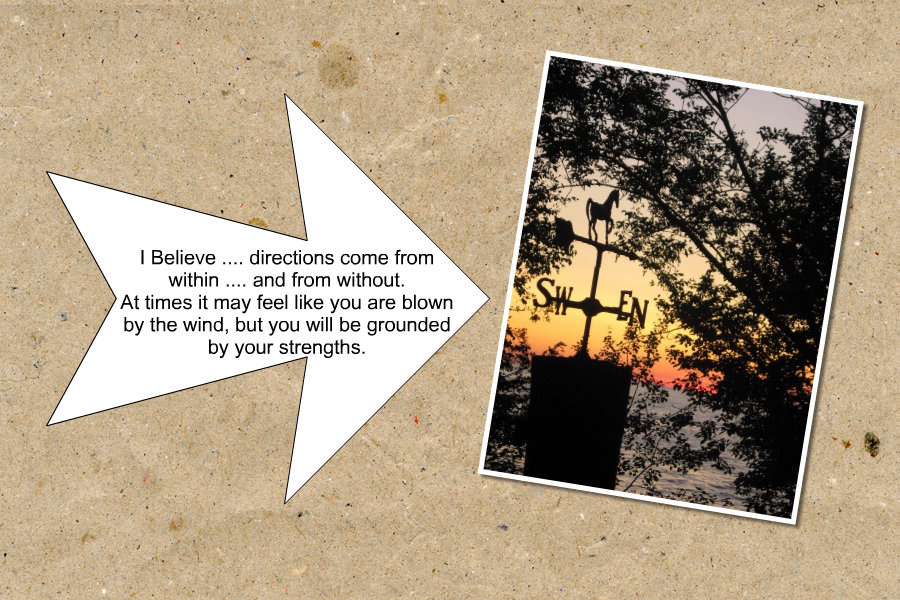
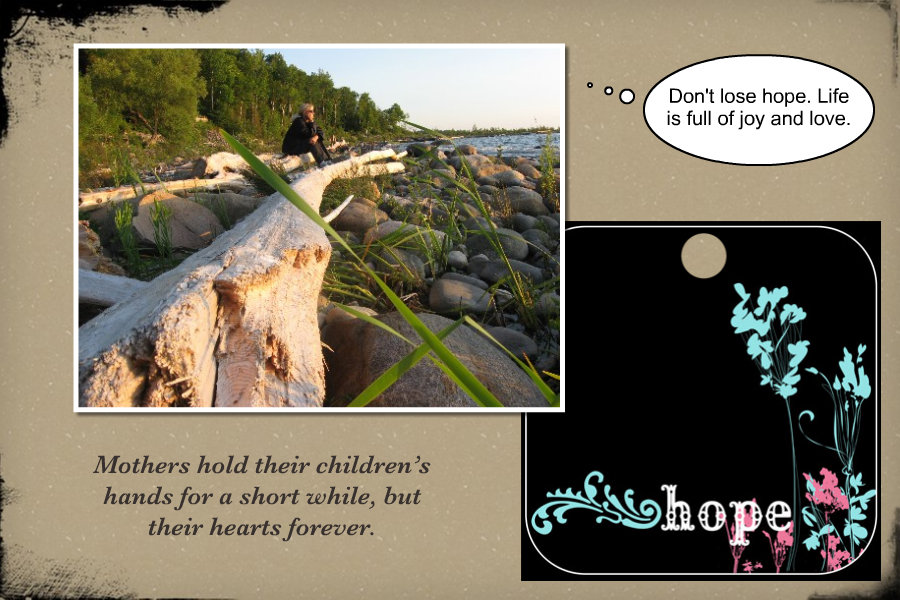
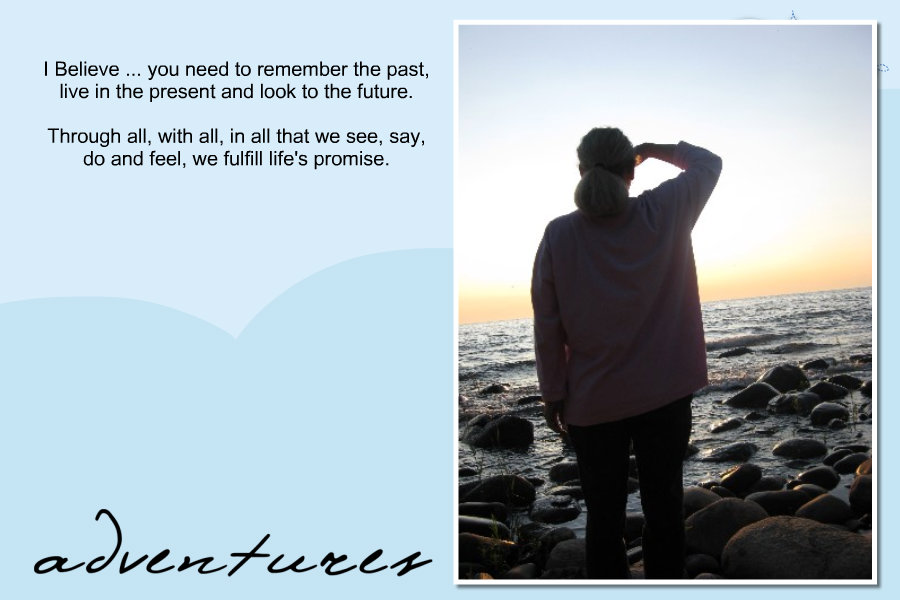
Scrapblog: response to Module 11 – Spirituality of Educational Technology 

Categories
Reflections and Comments

I Believe …

The module on the  Spirituality of Educational Technology will challenged us to examine our beliefs, in general and in specifics in relation to technology. Our first task was to share our beliefs. 

Here is my first ever Scrapblog creation. I have had some challenges to share this creation so I will also share each page here. There will be no music or transitions for these pages, as there is on the Scrapblog site.


Categories
Reflections and Comments

DLG – what it means to me

DLG – discussion, leadership, group….. 

I have recently completed my work with leading a module discussion relating to the Economics of Educational Technology. This module leadership was done with a group of diverse educators from many parts of the world. Our challenge was to work together to build a discussion on this topic and find resources, questions, links etc. to keep the discussion moving throughout the week of this module. The experience was a positive one since the group really worked well together. We each brought our interests, passions and perspectives to the work. We created a wiki to capture the key ideas and information. We drafted and re-drafted many questions and discussion points. Together we became DLG-9. At the end of the week, I was quite pleased with the results of the discussion threads and content that the work was done.  

Here is the culminating task that I created as part of this week’s work. It was a response to “The economics of educational technology is like …… because …..” My response is in podcast format as well as a written post.

Categories
Reflections and Comments

The Queen’s Cell Phone

This week has been a challenge of reading, writing and playing. The essay outlines are due, the module readings and posts are keeping me busy. The challenge was to find some time to play. Our challenge as part of this module was to create an alternate identity in a virtual world. My first movie creation was fun to do, but did not fit this challenge. So I went back to the virtual drawing board and created the following animated movie clip. It was fun creating. It will be even more fun sharing it with family, friends and colleagues. 

The story is The Queen’s Cell Phone.

Categories
Reflections and Comments

Articles and Third Things

This week’s module is the Psychology of Educational Technology. We have delved into readings by Sherry Turkle, Bonnie Nardi, and Dall’Alba & Barnacle. The discussions revolved around embodied knowledge, Cartesian models, human-technology relations and cyber-identity. We have been challenged to create a response to the articles and discussions through video (xTranormal.com) or Wordle.

We have been asked to write a paragraph expressing an experience related to the topic of Embodied Knowing in Online Environments. Here are my thoughts, relating to key passages that captured my attention.

“The primary way that things are encountered, according to Heidegger, is as instruments or obstructions to our projects and goals, rather than as objects of theoretical analysis (which Descartes’ deduction assumed).” (Dall’Alba & Barnacle, 2005, p. 733)

Merleau-Ponty states that all knowledge is embodied and it’s created in the unity between subjects and objects that is the direct result of having a body.

(accessed on Nov. 1, 2010 from http://www.thegreenfuse.org/harris/notions-of-ek.htm)

Sherry Turkle makes reference to an initiative she has instituted called ‘Objects Seminar’ where people present an object that has caused them to think differently about ‘self, other, intention, desire, emotion, the body.’ She states that ‘objects carry ideas, memories, ways of thinking about the world, ways of framing arguments.’

(p.2 in Open DOOR interview accessed on Oct. 27, 2010 from http://alumweb.mit.edu/opendoor/200307/turkle.shtml

All of these ideas link to work that Parker Palmer does with educators in his Courage to Teach work where he uses what is called a ‘third thing’. 

An Excerpt from A Hidden Wholeness: The Journey Toward an Undivided Life by Parker Palmer

“We achieve intentionality in a circle of trust by focusing on an important topic. We achieve indirection by exploring that topic metaphorically, via a poem, a story, a piece of music, or a work of art that embodies it. I call these embodiments ‘third things’ because they represent neither the voice of the facilitator nor the voice of a participant. They have voices of their own, voices that tell the truth about a topic but, in the manner of metaphors, tell it on the slant. Mediated by a third thing, truth can emerge from, and return to, our awareness at whatever pace and depth we are able to handle — sometimes inwardly in silence, sometimes aloud in community — giving the shy soul the protective cover it needs.

“Rightly used, a third thing functions a bit like the old Rorschach inkblot test, evoking from us whatever the soul wants us to attend to. Mediated by a good metaphor, the soul is more likely than usual to have something to say. But the fact will count for nothing if we fail to recognize that the soul is speaking or fail to pay attention to what it says.”

Accessed on Nov. 3, 2010 from

http://www.spiritualityandpractice.com/books/excerpts.php?id=14443

The Lost Mind of Dr. Brain and Courage to Serve

Each of these great thinkers presents a notion of embodied knowing in relation to objects. The object that comes to mind through all these readings this week, for this module and for my upcoming essay, is the computer program developed by Sierra Software in 1995 called “The Lost Mind of Dr. Brain”. It was developed from the learning theory of multiple intelligence from Howard Gardner. I used this software as a element of my teaching while working in the computer lab of my school during the mid 1990’s. The premise of the game is to put back together the mind of the professor through various activities that relate to ‘ways of knowing’. Students would eagerly take on the challenges that best matched their strengths and quickly collaborated with peers who were better able to complete puzzles that were difficult or challenging for them. Students were not directly involved in the metacognition of the activity but indirectly learned a lot about how brains work and think. 

To bring this together to the idea of ‘third thing’ and ’embodied knowing’ is the visceral reaction of my daughter when I mentioned the name of this software. A few days ago we were talking and this came up in conversation. Her reaction was immediate and animated. (My own children were frequently used as a testing ground for my educational ideas so she was subjected to Dr. Brain at an early stage.)  Turkle talks about ‘getting them to talk about an object in their lives that might be deemed “evocative”, that had special meaning for them.’ This is what happened when I mentioned Dr. Brain to my daughter.

My reaction to this notion of embodied knowledge and ‘third thing’ comes from my self reflective work done through the two year retreat program offered through Courage to Serve-Canada. This work frequently brought out of me, through use of objects, articles, poetry, or conversation with others, a clarity or clearing of thinking, feeling or relationship. It was a unique experience that continues to help me merge ‘soul to role‘. There are many objects that embody my knowing. Objects that are evocative and carry meaning are embedded in memory and ways of thinking. I am better able to think about them and myself by knowing about embodied knowledge phenomenology.

Tooning in Ed. Tech.

What an interesting assignment this was… one of those that is ‘outside the box’. 

For our second assignment we had to create a cartoon that related in some way to educational technology and the course material we have been working through. The others in my course have really supported and shared with one another and the cartoons that were created are incredibly diverse and interesting. Each one is unique so I’m glad I don’t have to mark them. 

The cartoon I created is not the one I started with. The evolution of my cartoon happened when we were deep into the copyright discussions during module three. I had my original idea for a cartoon during the first module and was going to weave Plato, Pressey, the Matrix movie  and CSI into my cartoon. I had even ‘captured’ images from various websites and put them into Comic Life. The whole thing had a nice flow through the ABC’s of educational technology. Since I collect ABC books, this made perfect sense and had a personal connection. The comic ended with SackBoy from Little Big Planet (one of the most interesting characters out there right now!) coming to ‘save the planet’ from the ‘vortex of alphabetic annihilation’. 

BUT… the scare of copyright police put a halt to my creativity!!!

The whole comic took a sharp turn when one of the students in my school suggested I have two computers talking to each other. So that day, I went around the school looking for all things techno…. captured them with the digital camera and they began to take on personalities similar to students in a classroom.  The rest is ‘history’ as they say. See for yourself. The final cartoon, created in Comic Life is attached.  E.T. at School

Categories
Reflections and Comments

Philosophy

This week the philosophy of educational technology is digging deeply into Martin Heidegger’s article “The Question Concerning Technology”. One of the focus questions was “How do we relate to technology?”. 

In order to answer this question, we need to understand the word ‘relate’. When we first think of relationship we think in human terms – one person to another, in mutual and reciprocal ways. But in digging deeper into this word, it brings forth many other forms of being in relationship: subjugation, formal contract, affiliation, membership, friendship, assimilation, acquaintance, dependance. The one common element in all of these forms of relationship is the sense of an emotional connection, either good or bad, positive or negative. In terms of our relationship with technology, each one of these forms of relating can be seen in the way an individual uses any form of technology. For example, we could see our dependance on cell phones as becoming a relationship of subjugation. We are in relationship with technology through our membership in an online course. 

Heidegger refers to technology being a means to an end and as a human activity. “This much remains correct: modern technology too is a means to an end.” He also states “The will to mastery becomes all the more urgent the more technology threatens to slip from human control.” This makes me think that the relationship is one of subjugation and dominance rather than one of reciprocity and mutual dependance. 

He later also states “Everything depends on our manipulating technology in the proper manner as a means.” This makes me think of relating to technology as one would an unmannerly child… with firm hand and stern voice. Let’s keep that technology in line or it will get out of control. (Think of a classroom full of 13 year olds!) 

Yet, further into Heidegger’s article, he talks about techne belonging to the ‘bursting forth’ and that it is grounded in revealing. This ‘brings forth’ a more mutual sense of relationship. It is one of reciprocity. We are revealing ourselves through our use of technology and technology is revealed in our use. We are changed by our use of technology and technology is changed by our use. Just think of our own personal change and revealing that has occurred over the previous few weeks as evidence of that reciprocity! 

So, in conclusion our relationship with technology is how we choose it to be… one of a means to an end, one of subjugation, one of assimilation, or one of mutual interdependence. Love it or hate it… there is always an emotional connection when there is relationship.

Reference: Heidegger, M. (1953/1977). The question concerning technology. In M. Heidegger, The question concerning technology and other essays (trans. W. Lovitt) (pp. 3-35). New York: Harper & Row.

Categories
Reflections and Comments

Inspiring

Today I took some time to reflect on one of the videos for Module 4. The task ahead of me was to create a response to the video in whatever format I wished. I was very interested in all the mind maps that had been created by our module leaders and others in the course. I searched for a means to complete the task.

Since there was no mind mapping software available on my computer, I searched the listing for our course. The first two sites had software that looked great, but was only available for Windows machines. So I searched farther and came upon Webspiration. It is the web based version of Inspiration which is familiar software for me.

I smiled and got to work. Once I signed in, it was intuitive to create a mind map that visually shares the ideas and messages from the video “The Machine is Us/ing Us” created by M. Wesch. Here is the mind map I have created.

Categories
Reflections and Comments

Prezi, wiki and idvd!

I have had quite a week, immersed in technology, learning and creating. I started the week by creating a podcast of my written assignment for ETEC 511. Then I spent a brief moment to investigate how to create a ‘prezi’ to connect to my group work for module nine. This led to work on a wiki that I am involved with through work, part of a mentor steering committee. Finally, I have now created my first ever dvd using idvd for an upcoming community event. Wow. I think I’m done now. This is late Friday night and it’s time to rest my brain.

Podcast about Podagogy

I have just completed my first assignment for ETEC 511. It was with much trepidation that I moved the document into the media file to submit it for grading. It was a labour of intensity but one done with excitement too. The more I read it over, researched the ideas and wrote the 500 words or less document, the more I understood what podogogy really means. The lesson I think I learned, was not so much about what podagogy, pedagogy and podcasting is all about, but the age old lesson of learning to tie your shoes. 

It is in doing that we learn. It is in teaching what we have learned that we master the learning.  The true power of podagogy is in applying podcasting to students’ projects and making them the creators, not just the consumers, of their own learning. So…. In order to prove, to myself, more than anyone else, I created my assignment as a written document and also as a podcast. My next challenge is to embed it into my e-portfolio. Learning by doing, at it’s most challenging. Wish me luck. If I am successful, you will be able to hear my assignment as well as read it.

podagogy podcast

Spam prevention powered by Akismet