Author Archives: yutian xia

Math 101 Assignment 9

Name: Rain Xia       Student Number: 59118159

Intermediate Value Theorem

In a continuous function, there is an interval [a,b] in x-axis, the corresponding y value of a and b is f(a) and f(b). There has a point c in x-axis which is bigger than a and smaller than b, and f(c) is between the values of f(a) and f(b) definitely. It is called Intermediate Value Theorem.

For example, when a<0 and b>0, there must has a point c which equals to 0 if a<c<b. It has the same idea of the previous one.

The Intermediate Value Theorem must in a continuous function, the function is continuous in [a,b]. If the function is not continuity, the Intermediate Value Theorem is not true anymore.

Math 101 Assignment 7

When an function is analytic at c, we can find a Taylor series at point c such that the series converges to f(x) for x near c.This definition is useful because it can change a function into a infinite power series. e^x is an example for this, it is infinitely differentiable and the Taylor series is still itself.

An analytic function can be differentiable infinitely. However, a function differentiable infinitely does not mean it is analytic. Therefore, by determining if all nth derivatives are zero, we can distinguish whether an infinitely differentiable function analytic or not.

Math 101 Assignment 5

Name: Rain Xia       Student Number: 59118159

I think the most difficult question on the midterm is the question #5. I am not very familiar with those volume questions at that time. The volume questions could be pretty challenge to us because we need to think out a rotating graph or cut the object into empty cones by ourselves. I realized how to do this kind of question recently.

Tips:

  1. More practice, do all the pre-reading questions, all the practice question that teacher gave us, and don’t lose points on the calculation part.
  2. Really understand the basic definition of some key words.

Math 101 Assignement 3

Name: Rain Xia       Student Number: 59118159

  1. If part of the function is the derivate of another part of the function, we should use u-substitution to solve the problem.
  2. If we see e^x, we should make e^x equals to u, because the derivate of e^x is itself.
  3. Break the integral as small as possible. We can deal with smaller pieces each time in that way and we can use different substitution in different parts.

Math assignment 1

Name: Rain Xia       Student Number: 59118159

We can separate the area under curve into rectangles which have same width,  f(t*)=t^2 is the height of each subinterval, we can get the area of each rectangles and sum them up to get the total area under the curve according to the definition of integral. In this question, when t=1,2,3, f(t)=0, there is no area in these cases, therefore we can just ignore them and count their area as 0. The total area does not affect by these bad points. Even if there is many removable discontinuities, the function is still integrable, we can receive the area under the curve by adding all the rectangles’ area together. The number of discontinuity point is limited, as n grows to infinity, the exist part of sum is also infinite. When we take the limit when n goes to 0, no matter how many discontinuities the function has, as long as it is infinite, the function is always integrable.

Math assignment 9

Name: Rain Xia       Student Number: 59118159

Use the function, derivative and second derivative to sketch the graph of f(x) =x^x

f(x)=x^x     domain: x≥0.      intercepts: when x=0, y=1, therefore the intercept is (0,1).                                asymptotes: lim x->∞f(x)=∞      lim x->0 f(x)=1

f'(x)=(x^x)(1+lnx)     intervals of increase and decrease: when (x^x)(1+lnx)<0.368, the function decreases, when (x^x)(1+lnx)>0.368, the function increases.     extrema: f'(x)=(x^x)(1+lnx)=0 when x=0.368, therefore the extrema for f(x) is x=0.368 and it is the global minimum of the funtion.

f”(x)=x^x*[(lnx+1)²+1/x]     intervals of concavity: x^x*[(lnx+1)²+1/x]≥0, therefore f(x) is concave up.     inflection points: (0.368,0.692)

Based on these points and information, we can draw the diagram of function f(x)=x^x.QQ图片20151119214337

Math assignment 7

Name: Rain Xia       Student Number: 59118159

There is a fountain in UBC campus which has a 5 meters radius and 1 meter height. If water flows into the fountain at a rate of 5 meters^3 per minute, how fast is the depth of the water increasing?

Given: dv/dt=5

Want: dh/dt

V=πr^2h

dv/dt=π*5^2*dh/dt

5=π*25*dh/dt

dh/dt=1/(5π)

Therefore the speed of the water increasing is 1/(5π) meter per minute.

Math Assignment 5

Name: Rain Xia       Student Number: 59118159

In a continuous function, there is an interval [a,b] in x-axis, the corresponding y value of a and b is f(a) and f(b). There has a point c in x-axis which is bigger than a and smaller than b, and f(c) is between the values of f(a) and f(b) definitely. It is called Intermediate Value Theorem.

Like when a<0 and b>0, there must has a point c which equals to 0 if a<c<b. It has the same idea of the previous one.

Because [a,b] is a closed interval under the continuous function, [f(a),f(b)] is still a closed interval. Therefore we can find a value we want in the interval definitely.

My argument is relying on the concept of continuity. The Intermediate Value Theorem must in a continuous function, the function is continuous in [a,b]. If the function is not continuity, the Intermediate Value Theorem is not true anymore.
Math assignment 3

Name: Rain Xia       Student Number: 59118159

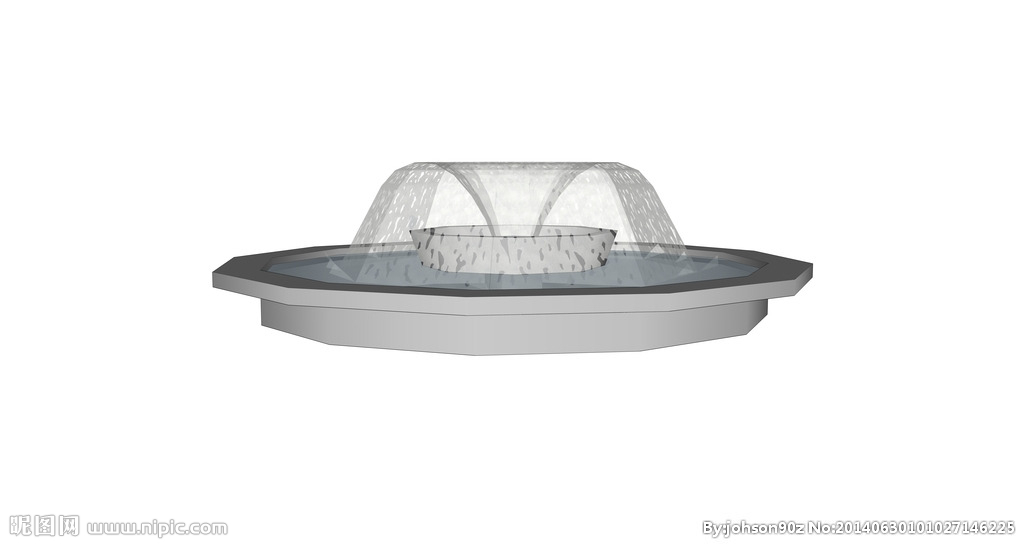
The example I made for function is fountain. When you look at the picture at this fountain, you will find out that the track of the water looks like a quadratic function, which is represented as y=ax²+bx+c(a≠0). I guess the function for the half of the fountain is may be y=-x²-5x+10 if we make the ground as the x-axis and fountain center as the 0 point. And this function does not have a horizontal asymptote.function

The example I made for sequence is the transverse wave of particle. Many wave phenomena in nature can be represented by the sine mathematical function. This sequence converges to 0.

The example I made for series is a person want to walk 1 km, he walks 0.5km first time and he walks half of the remaining distance every time after. The sum of his each walking is a series. This series does not converge but arbitrarily close to 1.