Featured post

Geog 481 Blog 1: Mount Fuji and its Volcanic Potential

Mount Fuji and its Volcanic Potential

Mount Fuji is an extremely important symbol within Japanese culture. It is recreated in art frequently and it is a common practice for Japanese people to hike to its summit in the summer. Located just outside the city of Tokyo, Fuji’s snowy peak can be seen from the centre of the city. Its beauty has captured the attention of people around the world and is potentially the most recognizable mountain in the world. However, many do not realize that Mount Fuji is an active volcano. The last time it erupted was in 1707 as a result of an earthquake and it had devastating results. If the volcano were to erupt today, the affects may be even more disastrous.

The 1707 Eruption

This incident is the largest recorded eruption of Mount Fuji in history and its scale is somewhat difficult to comprehend. A massive amount of debris was ejected from the top of the mountain and showered the city of then Edo and its surroundings. It is estimated that two billion tonnes of tephra were expelled from Fuji, covering the Japanese landscape (Magill et al. 2015). Additionally, remnants of tephra were found in the North Pacific Ocean as far as 270km from the source of the eruption (Magill et al. 2015) This map shows the distribution of debris across the Greater Tokyo Area . Areas closest to the eruption received the largest amount of falling tephra. The Mikuriya area, just to the east of Mount Fuji, was covered by 3 metres of debris and some buildings were completely destroyed by the falling fiery ash and rock (Magill et al. 2015). At the time, the affected area was populated by about 3 million people (Magill et al. 2015).

Potential for Eruption

In the year 2000, scientists began to notice small earthquakes happening deep underneath Mount Fuji; at one point in 2001, about 100 small quakes were recorded in a single month (Cyranoski 2004). This led to a panic from the Japanese government who in turn launched a research project to attempt to understand what was happening inside what was thought to be a peaceful mountain. However, researchers have yet to find any answers due to the somewhat anomalous incident of 1707. It was previously thought that volcanos filled with basalt do not violently erupt due to fact that basalt does not tend to trap gases, an effect which often causes the most violent explosions (Magill et al. 2015). Additionally, according to old records taken at the the time of the eruption, the harshness of the blast seemed to increase towards the end, rather than the usual slowing down (Magill et al. 2015). This all adds up to a high level of uncertainty when it comes to predicting the next eruption, if it ever comes.

Impact and Preparedness

With the capitol of Tokyo and its massive surrounding metropolitan area, the impact of a volcanic eruption could be catastrophic. The area effected by the 1707 eruption is now populated by more than 30 million people (Magill et al. 2015). Falling ash can have numerous negative effects on health as well as grounding flights, damaging cars and corrupting hard drives (Cyranoski 2004). Additionally, the affects of lava are extremely devastating to buildings and other structures. Part of the Japanese research effort was to develop the Mount Fuji Hazard Map, which attempts to predict the spread of lava and tephra and as a result describes different levels of evacuation areas. Along with the map is an entire website filled with specific instructions for evacuations in different areas and conditions.

The Japanese government has attempted to prepare for the potential eruption of the beloved Mount Fuji, but its volcanic activity has proven perplexing for earth scientists and as a result, near impossible to predict. Judging by the effects of the 1707 eruption, a current eruption would have a highly destructive impact on the Greater Tokyo Area.

References

Cyranoski, D. (2004). A sleeping giant stirs. Nature, 428(6978), 12-3. Retrieved from http://

ezproxy.library.ubc.ca/login?url=https://search-proquest-com.ezproxy.library.ubc.ca/

docview/204534910?accountid=14656

Magill, C., Mannen, K., Connor, L. et al. (2015). Simulating a multi-phase tephra fall event:

inversion modelling for the 1707 Hoei eruption of Mount Fuji, Japan. Bulletin of

Volcanology 77: 81. https://doi-org.ezproxy.library.ubc.ca/10.1007/s00445-015-0967-2

Geog 481 Blog 5: Roppongi and Japanese Leisure Post-Bubble

Japan in the 1980’s was enjoying a period of extreme economic prosperity due to the major successes of their post-war industrial efforts. Many Japanese people lived extravagant lifestyles at this time, spending and investing, continually fuelling the Japanese economy. As a result, businesses flourished, including those in the Roppongi region of Tokyo, which soon came to be known as the nightlife district. However, in the early nineties, the so-called ‘bubble’ finally, and unexpectedly, burst, leaving Japan in a downward spiral of economic loss. As a result, several social and eventually geographical changes occurred within Japan, and more specifically, in the Roppongi region of Tokyo.

Roppongi as a region of Tokyo has a clear reputation for the unsavoury activities it facilitates, including things like uncleanliness, drugs, nightlife, crime and gang activity. Yet at the same time, it acts as a sort of hub for social gatherings as it is an extremely common meeting place for both Japanese locals and foreigners (Cybriwsky 2011). It seems though, that this general understanding of the roughness of the neighbourhood has led to a redevelopment plan which began in the early 2000’s with two massive housing developments. Roppongi Hills and Tokyo Midtown were the result of a new plan for Tokyo’s urban development and the so-called ‘construction state’ (Cybriwsky 2011). Each development consists of large towers that contain primarily housing in addition to common amenities to make the area liveable. Tokyo city planners and development designers argued that creating more housing in the centre of the city for people who work within the city makes commuting much less difficult. These developments were also facilitated by the close relationship the massive construction companies of Japan have with its LDP government. This relationship has proven to be massively prosperous for both the government and the construction companies as each stands to gain profits and urban development within the city (Cybriwsky 2011). Of course, the city was also committed to the ‘clean-up’ of the Roppongi district, as in the removal of all the bad activities that take place there. Rightfully so, as the district has, on numerous occasions, proven itself to be dangerous and unpredictable, such as in the case of “gaijin” or foreigners that broke into a sword fight on the street in 9AM broad daylight, or the gang killings between rival Yakuza factions (Cybriwsky 2011). Upon reviewing the multitude of other strange occurrences in Roppongi, it becomes no mystery as to why the district carries such a negative reputation.

Where better then, than Roppongi, for the Japanese government to establish its new plan for urban life, with support from locals who won’t miss the old Roppongi in the slightest. With the construction of massive new towers, there was the destruction of much of what made up Roppongi: night clubs, bars, arcades, many of which were known to be associated with or owned by Yakuza (Cybriwsky 2011). More and more buildings which are still perfectly usable are bought until the company has a large enough block to construct their high rise. The neighbourhood is rapidly consumed and replaced with modern office towers.

With this transition in mind, it is interesting to note the labour patterns observed around the time of the burst of the bubble in Japan. A study regarding the average amount of hours worked in a year shows that working hours have been steadily declining since the 1960’s with a more significant drop occurring just after the bubble burst in the late 1980’s (when there was little work available); the declining pattern continued up until 1998 when the study was conducted (Harada 1998). Additionally, the study outlined an increase in the value people gave to leisure time rather than work time in the years following the economic crash (Harada 1998). More recently, Japan has also seen an increase in “Keiyakushain” type workers, which are defined as non-permanent, contracted positions (Schumann 2017), in addition to relative economic prosperity. These changes imply a general reduction in the focus of Japanese people on their work and an increase in focus on leisure and enjoyment as well as an increase in free time during. It is interesting to note then, that there is little protest in the removal of a large portion Tokyo’s entertainment facilities in Roppongi. This might be explained by the association with these types of entertainment with extravagant lifestyles that led to economic despair. The Japanese public may hope to move away from these types of activities and instead seek to spend their leisure time in more responsible forms. It seems that even though time and money has once again become more available to the Japanese, that they are reluctant to turn to their old forms of entertainment which caused them both economic troubles and brought about significant criminal activity. 

References

Cybriwsky, R. A., & Project Muse University Press eBooks. (2011). Roppongi crossing: The demise of a tokyo nightclub district and the reshaping of a global city. Athens: University of Georgia Press.

Harada, M. (1998). Changing relationship between work and leisure after the “bubble economy” in japan. Loisir Et Société/Society and Leisure, 21(1), 195.

Schumann, F. R. (2017). Changing trends in japan’s employment and leisure activities : Implications for tourism marketing. Singapore: Springer. doi:10.1007/978-981-10-3608-8

Geog 481 Blog 4: Japan’s Journey to a Sustainable Hydrogen Society

Japan is a nation committed to green energy projects, especially after the Triple Disaster of 2011 which resulted in significant nuclear fallout impacts. The Japanese government has funded numerous new renewable projects including solar panels, biomass and hydrogen fuel. The Japanese dream of the hydrogen society will be achieved through a combination of all these renewable sources.

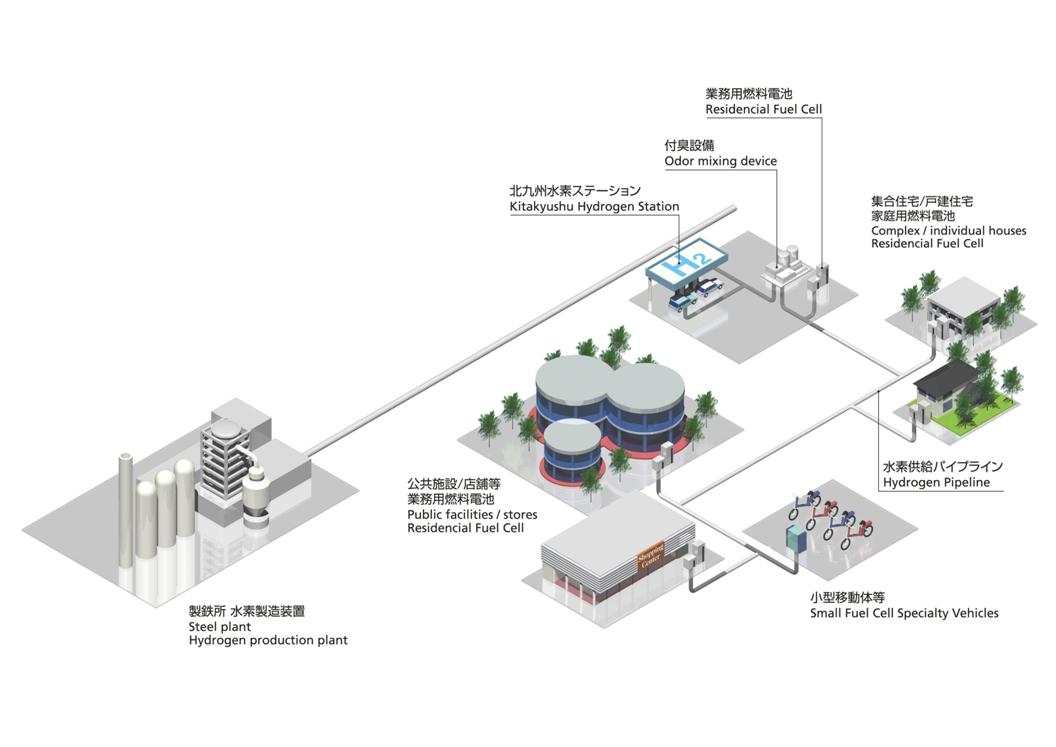
For a ‘hydrogen society’ to exist and function efficiently, it would require in-situ production to alleviate transportation problems (Marbán 2007). This entails establishing within a given region, a hydrogen production facility connected to all hydrogen consuming structures via an underground network of pipelines capable of sustaining peripheral energy demands. This model has already been put into practice experimentally in the town of Kitakyushu in Japan (World’s Largest… 2009) and will be established in the Chuo Ward of Tokyo which will be home to the 2020 Olympic Village (Matthew 2015). In both situations, the pipeline supplies hydrogen fuel to hydrogen stations that will fill fuel vehicles with their required propellant, as well as supplying buildings equipped with fuel cells.

Hydrogen is a form of energy which if produced efficiently, can contain large amounts of power and is versatile in that it can provide power to both buildings and vehicles. The production of this hydrogen fuel can be done cleanly through the process of electrolysis, due the fact that this process only requires an electric current. Because Japan is investing in so many new renewable power sources, they could theoretically be able to produce large amounts of hydrogen in a clean fashion. If their efforts in solar panel construction, and biomass fuel are successful, then hydrogen too becomes more of a reality. In this way, hydrogen power is reliant on other power sources which could be considered its largest drawback, and is a large reason that Japan has decided to import large amounts of it.

Unfortunately, hydrogen fuel has not fully caught on globally, in part due to the limitations of the technology. Japan does not produce a large amount of hydrogen, yet instead relies on import from competing nations, such as Australia and Norway (Karagiannopoulos 2017). Marbán (2007) presents an interesting model for the eventual adoption of hydrogen fuel in which different regions develop hydrogen fuel with different methods specialized to a specific region. For example, electrolysis could be used in an area like British Columbia where hydroelectric power is abundant, however, there may be a lack sufficient abundances in a Japanese landscape. It is in this circumstance in which the development of Japanese renewable energy sources become key. Because they already draw most of their power from nuclear reactors, they might be inclined to utilize them for new hydrogen production. This practice would of course be considered less impactful than Australia’s coal fuelled hydrogen production, for example, but nuclear power comes with its own set of risks which the nation of Japan knows all too well.

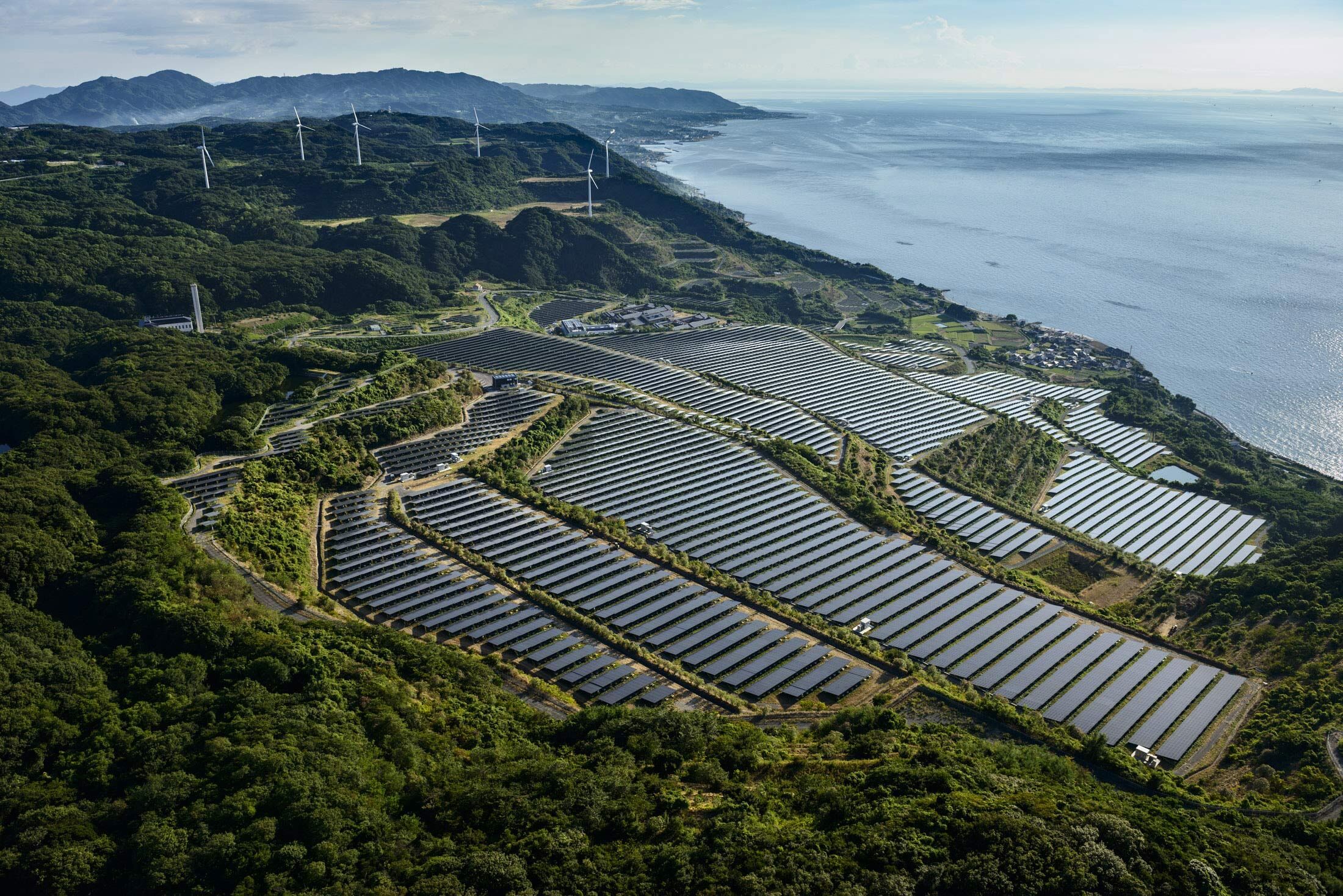
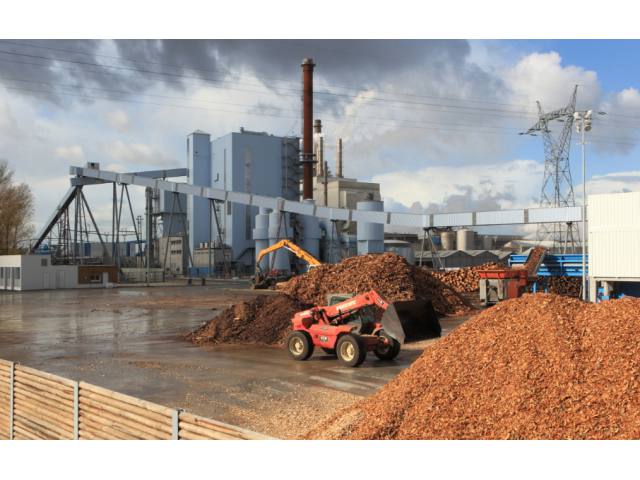
Japan has proven themselves a committed proponent in the interests of environmental degradation prevention. This has been shown particularly through their efforts in the solar energy field, in which they have constructed the third most amount of solar capacity in the world behind China and Germany (Pentland 2017), and they are not slowing down. By the end of 2017, they plan to have installed 8GW worth of solar panels. Biomass energy is also gaining momentum, as Japan’s output is expected to increase by 50% by 2020 to a significant 1.7GW (Japan’s Biomass 2017). This is a huge amount in both fields, especially considering much of it could potentially be put towards the production of hydrogen, further reducing reliance on nuclear and fossil fuels.

References

Japan’s biomass power capacity seen growing 50% by early 2020s. (2017, September 07).

Retrieved November 30, 2017, from https://asia.nikkei.com/Business/Trends/Japan-s-

biomass-power-capacity-seen-growing-50-by-early-2020s

Marbán, G., & Valdés-Solís, T. (2007). Towards the hydrogen economy?. International Journal of

Hydrogen Energy, 32(12), 1625-1637.

Mathew, J. (2015, January 06). Japan plans to develop 2020 Olympics Village into ‘hydrogen

town’. Retrieved November 23, 2017, from http://www.ibtimes.co.uk/japan-plans-

develop-2020-olympics-village-into-hydrogen-town-1482091

Pentland, W. (2017, January 23). Japan’s Solar Boom Is Accelerating. Retrieved November 30,

2017, from https://www.forbes.com/sites/williampentland/2017/01/23/japans-solar-boom-

is-accelerating/#7269645332c9

Worlds Largest Hydrogen Town Project Starts in Japan|JFS Japan for Sustainability. (2009,

January 29). Retrieved November 23, 2017, from https://www.japanfs.org/en/news/

archives/news_id028694.html

Geog 481 Blog 3: Okinawa and Fujiki Hayato

Okinawa is a region which has seen adversity in almost every era of its existence. Originally known as the Ryukyu Empire, it was colonized by Japan, which then attempted to destroy its culture and force it to assimilate with the rest of the Japanese Empire. Okinawa then struggled through the Pacific War as Americans and Japanese troops fought over the island’s strategic location. Postwar, Okinawa has suffered through extensive American occupation and a lack of support from its Japanese colonizers. The Okinawan people have held together though with the help of a popular public figure who, through his performances and teachings, has given the people of Okinawa hope.

In 1879, after brief negotiations fell through with the Chinese and Americans, the Meiji government of Japan officially annexed the Ryukyu Empire, declaring it the Okinawa Prefecture. It wasn’t long before the people of Ryukyu began to resent their new Japanese leaders as there was a deliberate attempt to destroy their culture and language. This was primarily done through schools in which a student caught speaking their native dialect was forced to wear a ‘dialect card’ or plaque around their neck to shame them. Any student wearing one at the end of the school day was punished by their teacher. Despite their mistreatment, some Ryukyan people were happy to be a part of the Japanese Empire, especially in the decades following the annexation in which Japan grew rapidly and began to establish its dominance over Eastern Asia (History of…).

Then, in 1943, the Chinese and Americans again turned their attention towards Okinawa. After both parties expressed interest in eventual control over the islands, they decided to invade. The Battle of Okinawa was one of the last large battles of WWII and it was the largest that took place on Japanese soil. Around 120,000 soldiers were killed in addition to 300,000 civilians which accounted for about one third of the island’s population. The large civilian death toll was due to the fact that propaganda had led Okinawans to be anti-American and to join militias and fight alongside the Japanese forces. There were also mass suicide events as Okinawans feared that American occupation would be worse than death. Eventually, American troops overcame the Japanese and began to establish their new base of operations (History of…).

At the end of the Second World War in 1945, the Americans officially took control of Okinawa, governing it under the United States Military Government of the Ryukyu Islands. Numerous new bases were established on the islands which are still in operation today. The occupation of mainland Japan ended in 1952, but the Americans maintained control over Okinawa until 1972, when they officially returned the territory to Japan. However, as part of the 1952 treaty, the US Military bases remained; they still control about 19% of the island. Although the bases provide some economic activity for Okinawa, including jobs for locals, the relationship between Americans and Okinawans has been less than perfect. There were two separate documented cases of sexual assault between American soldiers and minors, resulting in a large amount of distrust in the presence of Americans. The Japanese government did not provide much support either. Directly after the first sexual assault case, they announced that Okinawan landowners would be forced to lease their land to the Americans for a new base (History of…).

As a result of the island’s rough history, the emergence of a positive public figure was extremely beneficial. Fujiki Hayato is an artist of many mediums who set out to improve the lives of the Okinawan community through his work. He primarily gained support through his storytelling and stand up comedy which revolved around local struggles and conditions. However he is successful in other fields as he has played roles in film, theatre and television, performed in musical groups, hosted radio shows, and published his own newspaper (Nelson 2008). The main reason for his large following in Okinawa is his performance titled “Hitori Yuntaki Shibu,” which is a storytelling act. It revolves around the principle of celebration of life rather than mourning. He believes that the tragedies Okinawa has suffered are of great importance, but if people are not able to move past them they will be forever held down by them and cannot succeed. To shed these tragedies, one must celebrate what they have: life. Fujiki’s stories draw from his own experiences growing up in Okinawa City and traditional Okinawan culture. He attempts to give his audiences “kari,” which is a traditional concept which essentially means ‘a feeling of value,’ which people can hold with them that gives them the strength to endure the struggles of everyday life. It is this concept which has helped him become so popular in Okinawan pop culture. Fujiki is able to reach his specific audience by catering to their experiences and giving them hope that their situation can improve.

Tragedy and hard times can often lead to a gravitation towards positive figures, as is the case in Okinawa with Fujiki Hayato. He was able to fill this role through his important cultural performances after the island of Okinawa was put through seemingly endless suffering by colonization, war and occupation.

References

History of the Ryukyu Islands. (2017, November 05). Retrieved November 08, 2017, from

https://en.wikipedia.org/wiki/History_of_the_Ryukyu_Islands

Nelson, C. T., & e-Duke Books Scholarly Collection 2008. (2008). Dancing with the dead:

Memory, performance, and everyday life in postwar okinawa. Durham: Duke University

Press.

Geog 481 Blog 2: The Tokyo 2020 Olympics and its Environmental Struggles in the Transportation Sector

As the Japanese Olympic Committee attempts to prepare their city for the massive influx of people to an already crowded metropolitan centre, they must consider the potential environmental impacts of the improvements they make to their transportation systems. Transportation is one of the world’s biggest contributors to environmental degradation, so it should be taken seriously when planning transportation projects.

A Checkered Past

As seen with the developments created for the 1964 Tokyo Olympic Games, transportation projects can seriously degrade the environment. One of the principle strategies of the past development was to widen the roads to allow better flow of traffic. To do this, city planners decided to sacrifice the many natural waterways that flowed through the city. They built structures over top of the waterways or filled them in altogether in favour of roadways. This effectively removed some of the only remaining natural landscape in the city, not to mention ending all life that once resided in the water. Water stagnated, fish and plants died, and the water became saturated with industrial waste and biochemical sludge (Whiting 2014). Additionally, Tokyo removed its street trolley system, which today would be considered a green form of transport, in favour of opening more lanes for emissions producing cars, worsening the city’s air quality (Whiting 2014).

New Strategies: Railways

It seems that the event planners in Tokyo have decided to move as far away as possible from their old, unsustainable methods of transportation development. According to the Governor of Tokyo, Yoichi Masuzoe, “If motorization symbolized the 1964 Tokyo Olympics, de-motorization should be the symbol for the 2020 Olympics,” (Obe 2015). They are committed to environmental causes and have even stated that they plan for Tokyo 2020 to be the first carbon neutral olympics (Climate Action 2014). To achieve this, the event planners have decided to capitalize on their existing network of rail transportation. Widely considered one of the most efficient train systems on the planet, the Tokyo train network is fully sustainable due to the fact that it is powered completely by electricity. For the 2020 games, the city will bolster this network with the rebuilding of the famous Harajuku station, improving two other subway stations, and building both a new station and two new subway lines to connect it (Kameda 2015 and Nagata 2016). These upgrades should improve the capacity of the train networks to reduce the strain of the increased ridership during the olympic games and could in turn incentivize the use of the trains rather than the road system. Additionally, a new model of bullet train is set to arrive for the 2020 games: the N700S is a more efficient model than its predecessor due to its lighter weight and reduced aerodynamic drag (N700s to launch… 2016).

New Strategies: Roadways

Unfortunately, the road systems in Tokyo are heavily used in addition to their network of railways, and they do contribute to a high amount of carbon emissions. However, Tokyo plans to improve the environmental impact of road going transportation. The first method is the construction of three ring roads which are designed to drastically improve the congestion of Tokyo’s crowded streets. The ring design will draw traffic away from the city centre’s grid pattern in which traffic is often extremely heavy, with the hopes that traffic on the ring roads can stay in constant motion. This upgrade to the road network is projected to provide a reduction of 2-3 million tonnes of carbon emissions per year (Tokyo Metropolitan 2015). Furthermore, Tokyo plans to turn to a more renewable and clean source of energy for its vehicles (and buildings). The Japanese government has tasked Toyota, Nissan and Honda with creating new hydrogen fuel cell powered personal vehicles and buses, incentivized by around $385 million dollars worth of subsidies, not to mention the 4.5 billion yen project currently underway to build 35 hydrogen fuel stations and an underground pipeline which will supply energy to the Olympic Village (Obe 2015). Tokyo plans to have 6000 FCV’s on the road by the start of the games and over 100,000 by 2025. It seems like an ambitious push for what is currently a relatively unknown and unpopular form of energy, but the Japanese government seems to realize the need for an immediate alternative to fossil fuels. “The first Tokyo Olympics, 50 years ago, left a bullet-train system as a legacy; I want to leave a hydrogen society as a legacy for the next Tokyo Olympics,” said Gov. Masuzoe (Obe 2015).

References

Climate Action. (2014, Jan 14). The Green Games: Tokyo 2020. Retrieved from http://

www.climateactionprogramme.org/climate- leader-interviews/

the_green_games_tokyo_2020

N700S to launch next generation Shinkansen trainsets. (2016, June 28). The Railway Gazette.

Retrieved from http://www.railwaygazette.com/news/high-speed/single-view/view/n700s-

to-launch-next-generation-shinkansen-trainsets.html

Kameda, M. (2015, July 13). Two new Tokyo subway lines being planned. The Japan Times.

Retrieved from https://www.japantimes.co.jp/news/2015/07/13/national/two-new-tokyo-

subway-lines-being-planned/#.WfKSxROPLVp

Nagata, K. (2016, July 4). Modern needs, crowds outgrow historic Harajuku Station. The Japan

Times. Retrieved from https://www.japantimes.co.jp/news/2016/07/04/reference/modern-

needs-crowds-outgrow-historic-harajuku-station/#.WfKUlxOPLVo

Obe, M. (2015, September 11). Tokyo Hopes to Make Hydrogen Power the Star of the 2020

Olympics. The Wall Street Journal. Retrieved from https://www.wsj.com/articles/tokyo-

hopes-to-make-hydrogen-power-the-star-of-the-2020-olympics-1442174267

Tokyo Metropolitan Government Bureau of Construction. (2015). Construction of Roads

Retrieved from http://www.kensetsu.metro.tokyo.jp/english/jigyo/road/01.html

Whiting, R. (2014, October 24). Negative Impacts of 1964 Olympics Profound. The Japan

Times. Retrieved from https://www.japantimes.co.jp/sports/2014/10/24/olympics/

negative-impact-1964-olympics-profound/#.WfKPaROPLVo