Japan is a nation committed to green energy projects, especially after the Triple Disaster of 2011 which resulted in significant nuclear fallout impacts. The Japanese government has funded numerous new renewable projects including solar panels, biomass and hydrogen fuel. The Japanese dream of the hydrogen society will be achieved through a combination of all these renewable sources.
For a ‘hydrogen society’ to exist and function efficiently, it would require in-situ production to alleviate transportation problems (Marbán 2007). This entails establishing within a given region, a hydrogen production facility connected to all hydrogen consuming structures via an underground network of pipelines capable of sustaining peripheral energy demands. This model has already been put into practice experimentally in the town of Kitakyushu in Japan (World’s Largest… 2009) and will be established in the Chuo Ward of Tokyo which will be home to the 2020 Olympic Village (Matthew 2015). In both situations, the pipeline supplies hydrogen fuel to hydrogen stations that will fill fuel vehicles with their required propellant, as well as supplying buildings equipped with fuel cells.
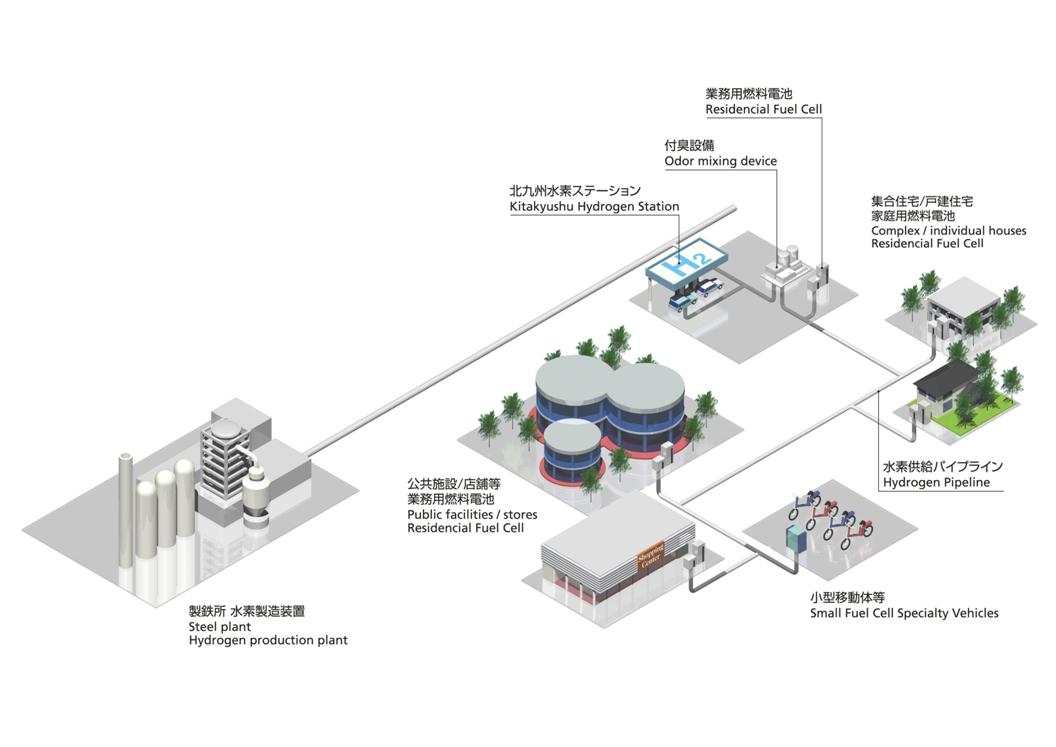

Hydrogen is a form of energy which if produced efficiently, can contain large amounts of power and is versatile in that it can provide power to both buildings and vehicles. The production of this hydrogen fuel can be done cleanly through the process of electrolysis, due the fact that this process only requires an electric current. Because Japan is investing in so many new renewable power sources, they could theoretically be able to produce large amounts of hydrogen in a clean fashion. If their efforts in solar panel construction, and biomass fuel are successful, then hydrogen too becomes more of a reality. In this way, hydrogen power is reliant on other power sources which could be considered its largest drawback, and is a large reason that Japan has decided to import large amounts of it.

Unfortunately, hydrogen fuel has not fully caught on globally, in part due to the limitations of the technology. Japan does not produce a large amount of hydrogen, yet instead relies on import from competing nations, such as Australia and Norway (Karagiannopoulos 2017). Marbán (2007) presents an interesting model for the eventual adoption of hydrogen fuel in which different regions develop hydrogen fuel with different methods specialized to a specific region. For example, electrolysis could be used in an area like British Columbia where hydroelectric power is abundant, however, there may be a lack sufficient abundances in a Japanese landscape. It is in this circumstance in which the development of Japanese renewable energy sources become key. Because they already draw most of their power from nuclear reactors, they might be inclined to utilize them for new hydrogen production. This practice would of course be considered less impactful than Australia’s coal fuelled hydrogen production, for example, but nuclear power comes with its own set of risks which the nation of Japan knows all too well.

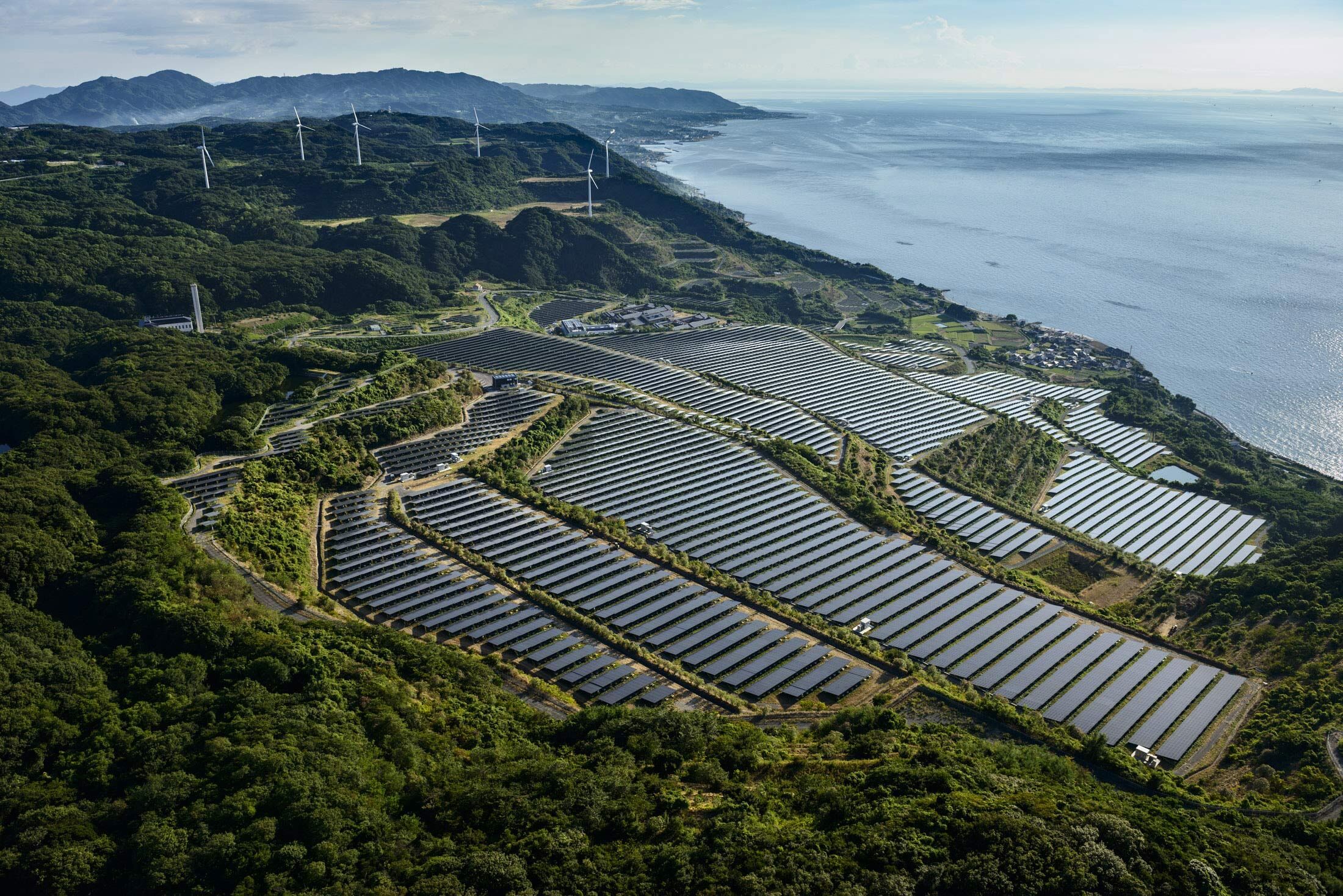
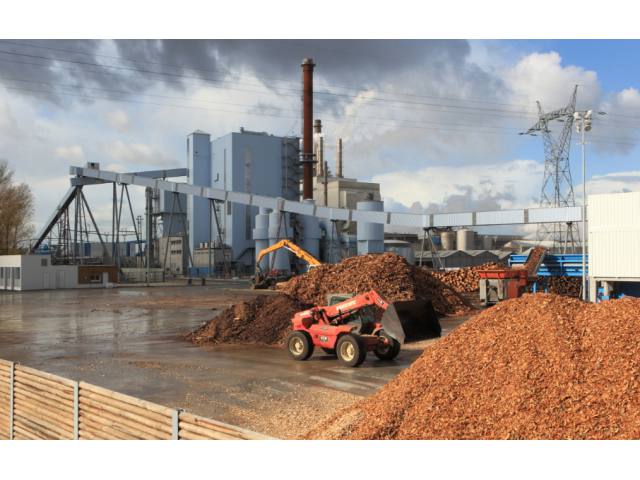
Japan has proven themselves a committed proponent in the interests of environmental degradation prevention. This has been shown particularly through their efforts in the solar energy field, in which they have constructed the third most amount of solar capacity in the world behind China and Germany (Pentland 2017), and they are not slowing down. By the end of 2017, they plan to have installed 8GW worth of solar panels. Biomass energy is also gaining momentum, as Japan’s output is expected to increase by 50% by 2020 to a significant 1.7GW (Japan’s Biomass 2017). This is a huge amount in both fields, especially considering much of it could potentially be put towards the production of hydrogen, further reducing reliance on nuclear and fossil fuels.
References
Japan’s biomass power capacity seen growing 50% by early 2020s. (2017, September 07).
Retrieved November 30, 2017, from https://asia.nikkei.com/Business/Trends/Japan-s-
biomass-power-capacity-seen-growing-50-by-early-2020s
Marbán, G., & Valdés-Solís, T. (2007). Towards the hydrogen economy?. International Journal of
Hydrogen Energy, 32(12), 1625-1637.
Mathew, J. (2015, January 06). Japan plans to develop 2020 Olympics Village into ‘hydrogen
town’. Retrieved November 23, 2017, from http://www.ibtimes.co.uk/japan-plans-
develop-2020-olympics-village-into-hydrogen-town-1482091
Pentland, W. (2017, January 23). Japan’s Solar Boom Is Accelerating. Retrieved November 30,
2017, from https://www.forbes.com/sites/williampentland/2017/01/23/japans-solar-boom-
is-accelerating/#7269645332c9
Worlds Largest Hydrogen Town Project Starts in Japan|JFS Japan for Sustainability. (2009,
January 29). Retrieved November 23, 2017, from https://www.japanfs.org/en/news/
archives/news_id028694.html