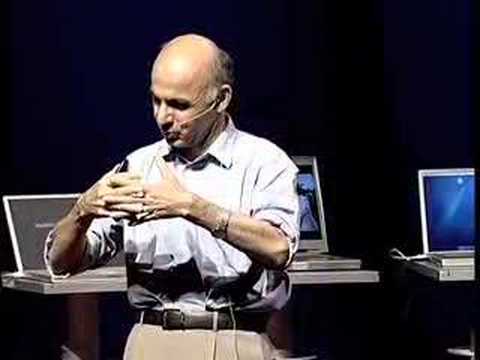
Ashraf Ghani serves as the acting chairman for the Institute of State Effectiveness, an organization to promote the ability of states to serve their citizens. In this video from the TED conference he addresses the necessity for economic investment to engender the rebuilding of broken nation-states; specifically to mobilize capital to promote state building. The majority of the world experiences the state as a repressive entity as opposed to provisional; developing nations in the third world experience capatilism through extractive industry or technical assistance. The majority of the world is excluded froma globalized system of power that views capitalism as the dominant form of economic organization and democracy as the dominant political system. Under this model the majority of states and their respective economies are not constituted on a basis of inclusion which in turn led to the emergence of failed states; the world cannot be based on pockets of exclusion. Through global engagement achieved through a system of inclusion Ghani believes that so-called “broken states” can be re-built into legitimate nation-states that conform to what he considers the ten essential functions of the state, namely:
- A legitimate monopoly of the means of violence
- Administrative Control
- Management of public finances through taxation and wealth creation
- Investment in human capital
- Provision of citizenship rights through national social politics
- Provision of infrastructure
- Management of tangible and intangible assets of the state through regulation
- Creation of the market
- International agreements
- Provision of the rule f law that the state is also subject to
Ghani emphasizes that one must use the current model of political and economic organization based on global consensus as opposed to changing the model itself. Under the current democratic capitalist model Ghani enumerates the need to rethink capital in developing states as they lack the institutional infrastructure to turn the most common form of capital – financial capital – into a viable means of producing more capital. Development of Institutional and huamn capital through information is necessary to create a system that would constitute the development of increased financial capital; thus it is necessary to rethink fundamental education as a means to enfranchise the under developed world. In countries without proper infrastructure the advent of information technology has not increased globalization, rather, it has increased their spatial divide to the rest of the world as they lack the same global access as the rest of the world. Global engagement is necessary to build nation-states throughout the global south; rather than selfish designs focused on increasing technological ease throughout the developed world, ingenuity and design should instead be focused on the rebuilding of infrastructure – better road development, more efficient water systems, etc. The global community must empower the world’s poor through engagement and investment.