Categories
Uncategorized

Ads Going Viral? Inevitable!


Brad Pitt is starred in Chanel No.5 commercial as the first male spokesperson. Surprisingly, audience find the commercial clueless and spawn with parodies.

In the commercial, Brad Pitt rambles “It’s not a journey. Every journey ends but we go on. The world turns and we turn with it. Plans disappear. Dreams take over. But wherever I go, there you are. My luck, my fate, my fortune. Inevitable.”

Going viral is probably what companies are aiming when they produce commercials. But after watching this commercial, I start wondering if going viral is always a good thing.  This ad has gone viral on YouTube with over four million views. For sure, more views means higher publicity.

This ad also has another implication: Anything offline will be brought online if it is gimmicky.

The Chanel No.5 commercial is originally offline advertising. Looking at its production, it does not seem to intend to make a joke hoping the commercial will go viral. It is directed by Joe Wright who is known for movies such as Pride and Prejudice. It is also starred by the famous celebrity Brad Pitt. In other words, the commercial is of very high production.

Nonetheless, aside from the disastrous theme and monologue, the ad itself has made its point.

The sales of Chanel No.5 might spur as a result of the commercial. Brad Pitt is a very good choice of spokesperson of this ad for his fame and background. More women might want the fragrance now as it is “Pitt’s choice”. Also, it might influence more guys to buy Chanel No.5 as a holiday gift for their important ones because Pitt and Angelina Jolie have a very happily ever after image.

But one thing that I am questioning is that whether the jokey commercial will translate the same message that it intended to. In conclusion, ads going viral is only good if it sends the correct message to audience.


Categories
Uncategorized

Twitter Backlashes

Social media enables businesses to reach millions of users in just a second. It is definitely a good channel to reach a large audience as marketing efforts can be significantly amplified. However, when the wrong things are said, negative response will also be amplified. Companies should carefully assess all aspects of a message before sending it out. The following are two examples where company neglects the cultural aspect and sparks backlash from Internet users.

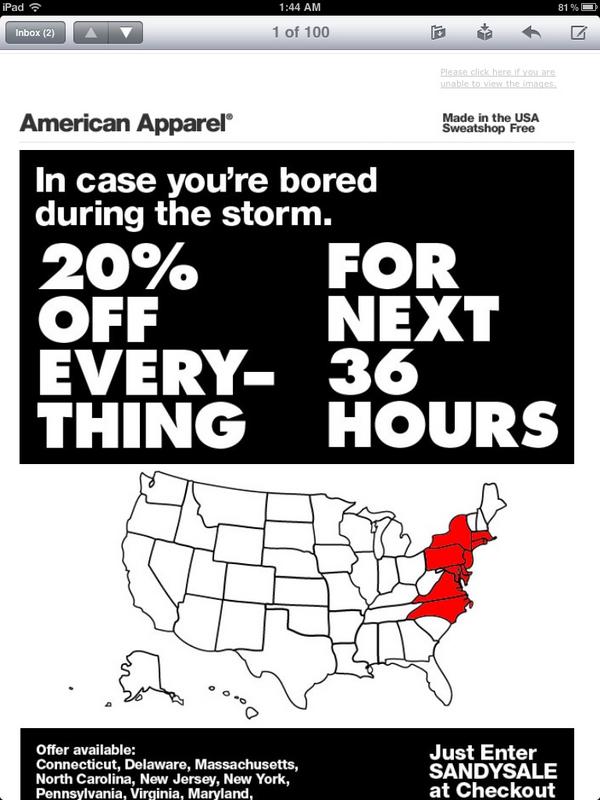
#1: On the Monday following the Hurricane Sandy, American Apparel backlashes on Twitter from offering a 20% off sale to customers to relief customers from boredom during the storm. The sale is available to online shoppers from Connecticut, Delaware, Massachusetts, North Carolina, New Jersey, New York, Pennsylvania, and Virginia and Maryland, who are affected by the hurricane.

This sale lit up many negative response on Twitter.

I just received a “Hurricane Sandy sale” email blast from@americanapparel. I will forever boycott their stores. RT if you’re with me

As if sexualized ads and harassment lawsuits weren’t enough for a boycott, @americanapparel sent out a “hurricane Sandy sale” mail. Ugh.

CEO of American Apparel, Dov Charney, refuses to apologize for the marketing promotion. He feels that the marketing team makes the right move to take advantage of sales-generating opportunities.

This promotion has a negative impact on American Apparel’s brand reputation. The marketing campaign has neglected feelings of those who are suffering from the Hurricane Sandy. American Apparel is positioned as an American brand of which its products are made in USA. Taking advantage of marketing opportunities is a right decision, but its marketing campaign is seemingly disrespectful to those who are suffering from the disaster by attributing their situation as being bored.


#2: Today is Remembrance Day, a day when we grief for Canadian soldiers who sacrificed their lives to protect the country. Traditionally, a two-minute silence is observed at 11am at memorials to honor the armed forces.

BBC’s Top Gear presenter insensitively tweeted during the two-minute silence at 11:01am to feature its “most-watched video of the week”.

Like American Apparel’s ad, it also sparks up many negative response.

BBC apologizes for such insensitivity, explains that it is an automated tweet, and promises it’ll never happen again.

These two companies take a very different approach to address negative response from consumers. As a consumer, I’d be a lot happier to hear the latter response because what everyone seeks is probably an apology.


Spam prevention powered by Akismet