Module 4 – Post 3 – Aboriginals on the Web

Aboriginal Territories in Cyberspace

http://www.abtec.org

From the site

Aboriginal Territories in Cyberspace is a network of academics, artists and technologists whose goal is to define and share conceptual and practical tools that will allow us to create new, Aboriginally-determined territories within the web-pages, online games, and virtual environments that we call cyberspace. Our multi-faceted effort will include a storytelling series, an ongoing gamesnight, a modding workshop, Machinima, and performance art.

The main objective is to implement methods so Aboriginal people can use new media technologies to complement their cultures. As is stated, “even on the Internet, Native people need a self-determined place to call home.”

Module 4 – Post 2 – Living Traditions Living Lands

Traditional Ecological Knowledge

https://www.youtube.com/watch?v=d2LsHHSDiWg

An excellent YouTube video on Traditional Ecological Knowledge (TEK). TEK promotes an Indigenous approach to environmental stewardship. It is the teachings of Elders as taught to them by their ancestors that is TEK. European settlers dictated how land was to be treated after their arrival. The TEK movement is to move towards a more ecologically friendly method of land usage.

Module 4 – Post 1 – Anchoring Education for Indigenous Youth

Anchoring Education for Indigenous Youth in Context of Time-tested Customs Better than Assimilating Them into Mainstream System, Permanent Forum Told

http://www.un.org/News/Press/docs/2013/hr5132.doc.htm

From May 2013 from the Economic and Social Council of the United Nations, a proposal is made to Establish World Cultural Heritage Day to give indigenous people  a chance to ‘Showcase their Culture’.

Some interesting statements from this article:

Government representatives focused on indigenous peoples’ basic right to culture, education and health, described the ways in which they were responding to those calls by being attuned to the cultural sensitivities and variant contextual complexities of the often remote communities.  The delegate of Guyana, for one, said that, as part of an effort to uphold cultural identities, discussions were ongoing about how to incorporate indigenous languages into school curriculums.

“Education is a national priority, especially for remote areas,” she declared, adding that that some 30,000 indigenous children received school uniforms and transportation to enable their attendance at school, and a growing number of secondary schools were being established in remote regions, as were programs enabling children to attend classes elsewhere if necessary.

The Namibian Government heavily subsidized schools in indigenous communities, said its representative.  It covered school-related costs, such as transport, toiletries and books, and sponsored back-to-school campaigns for dropouts.  It had installed mobile schools and school-feeding programmes to aid children from nomadic communities, and it had set up training programmes and developmental projects to give women and girls the skills to start businesses.  It supported initiatives in needlework, tailoring, beekeeping, coffin making and aquaculture.

A second panel discussion focused on culture, which was one of the six mandated areas of the Forum.  Panelists described culture as a “driver” of development and creator of jobs.  Women were perceived as “custodians of culture”, passing traditional knowledge from one generation to another, including through story reading and songs.  One panelist proposed that the United Nations establish a world cultural heritage day to allow indigenous people to “showcase our culture”.

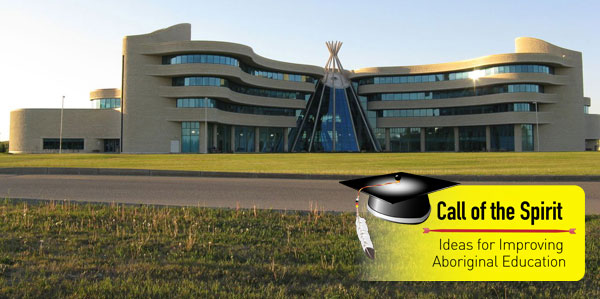
Module 4 Post 1: Reboot at First Nations University

If you want to earn a university degree from a Canadian institution that integrates First Nations culture and ways of knowing into every class, rather than cordoning it off into one or two departments, First Nations University of Canada isn’t just your best option — it’s your only one.

Located on three campuses in Regina, Saskatoon, and Prince Albert and operating on a smaller scale in several First Nations communities across Saskatchewan, First Nations University (FNUC) offers many of the courses you’d find at any comprehensive university: social work, business, fine arts, education, and of course, indigenous studies. But rather than tacking on some facts about first peoples, its courses are designed from the ground up for indigenous ways of knowing and learning.

“We focus on incorporating indigenous languages, cultures, history and worldview into our curriculum, as well as into the day to day activities at our university,” FNUC’s acting president, Juliano Tupone, told The Tyee Solutions Society

Source:

http://www.thetyee.ca/News/2013/11/21/First-Nations-University/

Module #4 – Post #5: The Role of the Arts in Decolonization

Last month I wrote a post on the Urban Thunderbirds/Ravens in a Material World exhibit at the Art Gallery of Greater Victoria. The exhibit, which continues until January 12, 2014, features work by four contemporary indigenous artists from the Northwest, and as the title of the exhibit indicates, many of the works exhibited wrestle with notions of Aboriginal identity in a modern context. One of the events sponsored by the gallery as part of the exhibit that I did not discuss was a panel discussion with three artists (one of whom helped to curate the exhibit), about the factors that influence their work. Xenaleken: First Nations Artist Forum, took place at the gallery on November 9, and discussion centred on the topic of decolonization and the arts.

A search through the Web would indicate that the topic of this particular forum did not emerge out of isolation. The concept of decolonization – and specifically the role of the arts as part of this discourse – seems to have picked up a great deal of traction in the past few years. In 2011, The Ottawa Art Gallery curated an exhibit titled “Decolonize Me,” featuring six Aboriginal artists “whose works challenge, interrogate and reveal Canada’s long history of colonization in daring and innovative ways.” The artists in the exhibit hoped to shed light on how colonization came to affect both Aboriginal and settler identity and how this discourse continues to shape how both continue to view themselves and each other.

In 2012, FUSE magazine began a series of issues focusing on the States of Postcoloniality, with many of the articles focusing on the theoretical and aesthetic principles that informed decolonial thought and art. The series was published in collaboration with e_fagia, an organization of artists and writers based in Toronto, that sponsored the Symposium on Decolonial Aesthetics from the Americas in Toronto this past October. As the title of the symposium suggests, artists and works were featured from North, Central and South America. The diversity of works, approaches and perspectives provided a unique opportunity to consider the plurality of decolonial thought and discourse as represented in the arts. This concept is something that I presume the journal Decolonization: Indigeneity, Education & Society hopes to develop in an upcoming issue, which is currently accepting submissions for papers (the deadline is December 6, 2014). The questions that the journal hopes its contributors will consider provide insight into how the dialogue surrounding decolonization and the role of the arts might unfold:

– What are the connections and relationships between art, activism, resurgence, and resistance?

– What is the role of cultural production in decolonization? (**and/or How might art contribute to the revitalization of Indigenous nationhood?)

– How can art be used to disrupt normative orders and political status quo?

– How is Indigenous artistic creation connected to history, land, and community? How might art be seen as decolonization, particularly in light of the challenges brought forth by Tuck & Yang (2012) around decolonization and its incommensurable meaning/goals?

– How might art and aesthetics, born out of particular locations, Indigenous communities and nations, enable practices of solidarity and alliance to be forged in creative ways?

– What are the intersections between gender and decolonial or Indigenous art and aesthetics?

– How does art create, speak to, and emerge from alternative spaces that contest global capitalism, colonial violence, and imperial expansion?

– How is art used to challenge, unmake, or reconstruct borders?

– How can artistic production contribute to Indigenous and decolonial futures?

– In what ways does art occupy or create contested spaces of ambivalence, between aesthetic production and politically contentious creativity?

Module 4 – Post 2 – The Metis Raconteur

Susan Greig is a health care professional and storyteller who lives in the lower mainland of BC.  Through her blog, “The Metis Raconteur” Susan shares her Metis heritage and culture with others.  From the blog:

“Traditional Métis storytellers related family and community history, stories, lessons and customs around camp fires, or while going about daily activities such as sewing, harvesting berries, or hunting and fishing. Following in my ancestors footsteps I have been writing and telling stories since the fourth grade and my most cherished memories of storytelling are the narratives I would weave for my children at bed time each night.  Blogging is also storytelling and this is where I plan to chronicle more of my family story and to share items and news about Métis culture, particularly anything to do with writing or the arts.”

While most of “The Metis Raconteur” site is dedicated to Metis current events and happenings, links are also provided to Metis associations from across Canada, other Metis bloggers, as well Susan’s paintings and published books.  The site is visually appealing, easy to navigate, and provides god insight into Metis culture.  I recommend browsing through when you have a chance – it’s worth a read.

The blog can be found here: http://metisraconteur.com/

Module 4. Post 1 – “IQ and Gaming”

In order to reduce redundancy, I will refer you to my e-Portfolio where I posted a reflection relating to the Inuit Qaujimajatuqangit Adventure website, specifically describing my experience(s) playing their interactive “movie”.

Inuit shaman by Piona Keyuakjuk, 2006, Pangnirtung (Nunavut)

As I move towards building the final project, this “Adventure” website has given me new perspectives to build upon.

Mel Burgess

Module 4 – Post 1 – Canadian History a Distinct Viewpoint

“Canadian History a Distinct Viewpoint” is the website of Dick Garneau.  Dick is a researcher of both written and oral history of the Metis peoples, with emphasis on the genealogical roots of the Metis Garneau clan.  Dick has been researching his family history and the history of the Metis peoples for the past 60 years.  The bulk of this historical research appears on his website.  While the material was originally intended as a book, Dick decided instead to make the information available on the internet for free with the goal of supporting the education of young people to a different view of history,

The website includes written histories of many of the peoples of Canada including the Indigenous peoples, Europeans, and Asians.  Histories are provided for many regions of Canada including New France, Central Canada, Alberta, and British Columbia.  Information is also provided on the genealogies of many Metis families.  While the provided information is quite text heavy, it is easy to read and navigate.  This resource is recommended for anyone who wishes to explore the history of Canada from a Metis perspective.

The website can be found here: http://www.metis-history.info/index.shtml

Module #4 – Post #4: Aboriginal Territories in Cyberspace

With a focus on storytelling and indigenous culture and values, AbTeC is a unique hub that provides academics, artists and technologists with a network in which to share ideas, developments in technology and digital art, as well as applications of technology for educational purposes. The projects supported by AbTeC are largely geared towards empowering indigenous youth to celebrate and enrich their cultural traditions through new media technologies that allow students to create their own video games and interactive web pages.

The website also provides a lengthy biography of artists, scholars and technicians who have worked with communities, schools and universities to assist in the development of new media projects and curricula, in addition to links to AbTeC related research and case studies that examine the impact of technology on education and Aboriginal youth.

Module #4 – Post #3: Vancouver Indigenous Media Arts Festival

The Vancouver Indigenous Media Arts Festival (VIMAF) recently wrapped up its third annual event last week. This year’s festival ran from the 6 – 11 of November and hosted a number of events across downtown Vancouver, with venues ranging from the Central Library to SFU Woodwards to the NFB. The festival is an opportunity for indigenous artists working in the field to showcase their works, and perhaps even more importantly, for the public to engage with these artists in the issues surrounding indigeneity in a contemporary context.

While the works featured and the topics discussed at VIMAF may diverge from traditional indigenous artistic expression, the organizers of the festival stress the underlying element that ties together the variety of works showcased over the course of the week: storytelling. In this sense, new media technologies have provided indigenous artists with a new venue, a new voice in which to relate their histories, traditions, and contemporary issues with not just their own communities, but with the wider public.

The festival’s programming includes screenings, panel discussions, workshops and networking opportunities that help indigenous artists in the field to build personal and industry connections. Full details from this year’s festival can be found here.