
Module 1 – Post 4: Teaching Students about Aboriginal Cultures

Today I find myself exploring how aboriginal culture and topics are taught in school. I began by looking at beginning topics, such as aboriginal art and cultures. For each of these there are a fair number of webquests available for various grade levels. I like the idea of a webquest as students work in small groups to discover information about a given topic. A webquest is a great way for students to work co-operatively. Webquests also facilitate inquiry based learning.

I then found myself exploring Australia’s Department of Education website. In particular I scoured the lesson plans available on aboriginal education. Here I was happier to see lessons plans with greater levels of analysis, critical thinking, empathy and understanding.

Ultimately my question, as I sifted through the various websites, was: can a non-Aboriginal person teach Aboriginal Culture? My initial thoughts are, of course. One does not need to be a part of a culture to teach it to students. But then I got to thinking about myself and Vietnamese culture. I don’t think I would be comfortable teaching students about Vietnamese culture, even though I have lived here for six years and my husband is Vietnamese, as I don’t feel that I appreciate the subtleties of the culture. Nor do I have a deep enough understanding of the language, cultural practices or history. But simply because I do not have the confidence does that mean that there should not be non-Vietnamese individuals teaching Vietnamese culture?

My question remains: Can/should non-Aboriginals teach Aboriginal culture?
What’s Wrong With the World? and What Can We Do About it?

I wanted to share a link to a documentary I watched called I AM.

I Am is a 2010 American documentary film written, narrated, and directed by Tom Shadyac. The documentary explores the nature of mankind and world’s ever-growing addiction to materialism. The film asks two central questions: What’s Wrong With the World? and What Can We Do About it?

The reason I found this film relevant to this course is because in it they discuss the idea behind Aboriginal society and culture understanding that the need for materialism and greed being seen as mental illness. There is one part that discusses the idea of the Native Americans describing the Europeans as “cannibals”  not because the consume the flesh of other humans but because the consume the life and spirit of other humans.  There is an excellent Aboriginal tale and animation in the film that describes what happens to a tribe when one skilled hunter decides not to share equally and keeps all of his food for himself.  Eventually other hunters do the same and eventually the old and the weak start to starve and die off and over time people stop noticing the weak dying. This tale of warning is reflective to how our current society is. We all want more than we need and are unwilling to share because we don’t feel connected to anyone else. Aboriginal culture wasn’t like this prior to contact they understood that community and sharing in wealth was not just the right thing to do but it was a necessity for survival.

The film is available on Netflix and can be watched online here: http://www.disclose.tv/action/viewvideo/104294/I_AM__The_Documentary__Part_1_of_3/

Resource

Shadyac, T. (Director). (2011). I am [Documentary]. United States: Shady Acres, Inc.

Impact of Tourism on Indigenous Culture

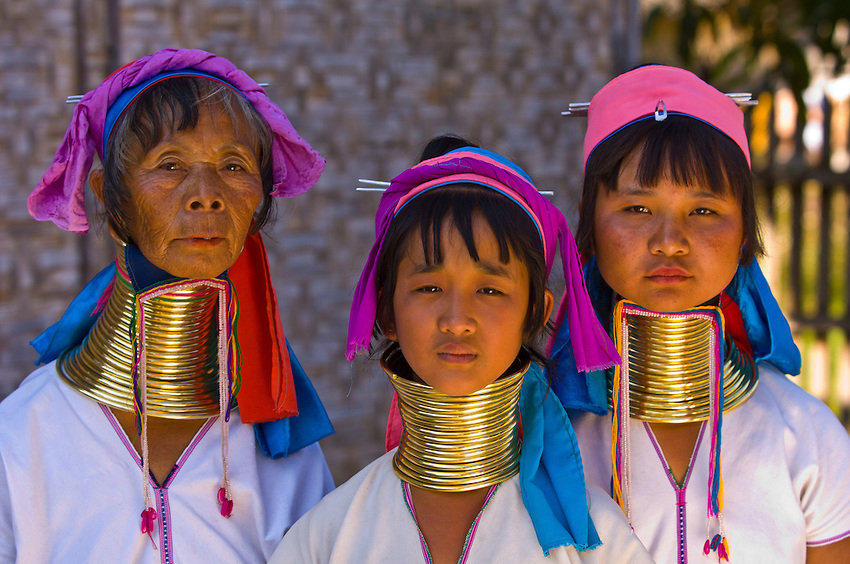
Having lived in Viet Nam for over two years, I have had the privilege to visit remote villages throughout Southeast Asia, in Indonesia, Laos, Malaysia, Thailand and Burma. On more than a few occasions, I have taken part in eco-tours or homestays where local, indigenous people have been my guide, cook or instructor. My initial assumption has always been that tourism is mutually beneficial for both parties. I still believe that is true in most cases. However, I was disheartened after a tour of the local Kayan ladies in Burma.

The ladies seemed disconnected, despondent and dispirited as they performed a traditional dance for us. I felt as if I was encroaching on their home, their space, and their culture. It felt wrong.

I have done some further research into the impact of tourism on indigenous culture and found that, as I presumed, there are pros and cons. The following slideshow presentation goes through several case studies, which outline these threats and benefits. http://www.slideshare.net/guest809599/tourism-impacts-on-indigenous-people

Some negative impacts:

  • Staged authenticity – the performing of shows as if it were in real-life (this is what I experiences in Burma)
  • Cultural Erosion – cultural goods may be sold as souvenirs, possibly lessoning the spiritual or cultural importance
  • Westernization: growing contact with outsiders can affect the culture’s religion, values, language and values.

Some positive impacts:

  • Economic stability
  • Western cultures learn to appreciate diversity
  • Eco-tourism encourages locals to preserve the environment

Overall, this slideshow was a useful resource. It offered interesting case studies of indigenous people from Ecuador, Australia and East Africa. I do; however, feel that it is worth searching for other credible resources on this topic.

Research on ‘The Digital Divide’

Whether or not indigenous communities have equal access to Internet is important in determining if technology is culturally neutral. Our first discussion left me with more questions surrounding ‘the digital divide.’

Research done by Christine Smillie-Adjarkwa in 2005 compared the access to Internet among indigenous communities in Canada, Australia and New Zealand. Conclusions from this study can be found at the following link: http://research.arts.yorku.ca/nhnf/DigitalDivide.pdf

Smillie-Adjarkwa asserts that Canada has made significant strides in closing the gap and increasing connectivity in remote indigenous communities. Her studies show that a digital divide exists in Canada, New Zealand and Australia resulting from:

  • lack of awareness
  • lack of affordability
  • low education
  • los literacy levels
  • lack of culturally appropriate material
  • lack of reliable power supply
  • lack of technical support

It is perhaps not the most stimulating read, but the document does present some intriguing facts and comparisons. If you are interested in statistics relating to the digital divide, I would recommend reading this document.


Module 1: Post 5: Hawaiian Language Immersion

I have been gaining interest in language revitalization.  One of the most successful places in creating a language revolution is Hawaii.

This website is a news article featuring some of the first graduates from Nawahi, the first Hawaiian Immersion University.  It began as a pilot program driven by Hawaiian activists, the entire curriculum was instructed in Hawaiian but there would not be fully qualified professors teaching when the University first started in 2001.

The article focused on a girl named Kuuwehi Hiraishi, who is currently 28.  It is difficult enough graduating from an English program to find jobs in your qualified field.  However Hirasihi was able to graduate in journalism and found a job as a news reporter with the Hawaii News Now Sunrise newspaper in the Hawaiian language news segment.

In an interview with Hiraishi, she was proud  to say she is able to use her language in her career and  the skills she learned in University.  She was also confident to say that she thinks careers in her language will become more and more available for students as they graduate from Nawahu University.

Hawaii has used technology as a way to help revitalize the Hawaiian language.  This example allows hope for other Indigenous cultures to create educational programs in their own language and use technology such as radio broadcasting to keep their languages from disappearing.

http://www.honolulumagazine.com/Honolulu-Magazine/March-2012/Na-Puka-Kula-Hawaiian-Immersion-Graduates/index.php

Module 1: Post 4: Rising Voices

My third post was about a website about Cultural Survival.  I decided to keep searching for sites which help connect and reach out to indigenous  communities around the world.   This website is titled Rising Global Voices Online, it was created by a group of Indigenous bloggers in 2004.  They began to invite other Indigenous peoples around the world to engage in conversation online and shed light to issues and news in their communities which is often overlooked by mainstream media.

Rising Voices allows Indigenous people around the world to voice their opinion to others, it shares Indigenous media and news coverage and support projects that help protect Indigenous peoples worldwide.

The downfall to this website is in order for Indigenous Voices to be heard online the documentation needs to be translated to English.  It is sometimes difficult translating various issues and problems from an Indigenous language to English.  It is also difficult for people to use many of the tools offered on Global Voices such as podcasts, blogs or online videos because it is only translated into 6 languages and many people do not have the language skills or experience to use this technology therefore unable to voice themselves properly.

http://rising.globalvoicesonline.org/projects/

Module 1 – Post 5 – Metis Museum

One of the central themes of Etec521 investigates how technology can be used by Indigenous peoples to reconnect with, archive, and share their identities and culture.  With that in mind, most of my posts for this module have centered around websites that provide online access to historical documentation and information on Metis culture.  For my final post for this module I chose to feature the website: The Virtual Museum of Metis Hitory and Culture.  This website is designed and maintained by the Gabriel Dumont Institute of Native Studies and Applied Reseach in Saskatchewan, Canada.

The virtual museum provides a wealth of information in the following categories:

  • Indigenous Voices – Contains video clips of Michif language interviews
  • Metis Celebration – Video and audio files celebrating Metis music, dance and storytelling
  • Metis Heritage – Oral histories, photographs, and Metis Resistance documentation
  • Learning Resources – Information on traditional Metis lifestyle and education
  • Artistic Expressions – Materials honoring traditional and contemporary Metis art forms
  • Moccasin Telegraph – Links to other Metis resources around the web

The website is very user friendly, and I think provides a wonderful example of how technology can be used by Indigenous groups to preserve and share the visible aspects of their culture.

The website can be found here: Metis Virtual Museum

Mod 1:3 Inside Out – Armidale Australia

http://blog.ted.com/2012/08/16/a-ted-prize-wish-100000-posters-later/

JR is an artist whose TED wish is coming true. His wish is “that people around the globe have a chance to show the world their true face.” (TED Blog) His wish is literal with communities in more than 100 countries displaying huge posters of faces on walls. The video above is from an Australian Aboriginal group who are creating a wall with their faces on it for their town to enjoy.

Inside Out Project is a website created by JR about his project. Most fascinating is the Explore section of the website which maps every place in the world where Inside Out has been done. Armidale Australia is not the only Indigenous group that has participated in this project. In North Dakota, the Lakota Tribe printed posters of faces which were hung in New York among other places.

In the context of this class, the Inside Out project allowed (and continues to allow) Aboriginal communities to share their identity with the world. The posters are free to anyone who uploads a photograph to Inside Out. The project started out as an illegal art installation in Paris but now all around the world people are using the idea to promote their own communities.

Module 1 – Post 4 – Glenbow Museum

I had an opportunity last September to visit the Glenbow Museum, which is located in Calgary, Alberta.  My quest was to visit their archives in hopes of finding information for the family tree project I have been working on for the past ten years.  Glenbow’s website contains links to searchable databases of resources that are available at the archives.  Unfortunately, very few of the materials have been digitized and therefore a visit to the archives will be required if you wish to investigate your initial finds further.

The website is available here: The Glenbow Museum and Archives


Module #1 – Post #5: Contemporary Inuit and Innu Music

Music provides a natural outlet for Aboriginal artists to carry-on an important aspect of their oral culture. With advances in recording technology and the ability to share content online, Aboriginal musicians have more opportunities than ever before to share their work with the international community. Similarly, technology has afforded isolated communities the opportunity to experience music of other cultures, which has surely influenced many contemporary Aboriginal artists. I found this to be an interesting notion, placing into question how we might perceive work by Aboriginal artists that transcend aspects of their musical traditions. In other words, what does music produced by Aboriginal (or even non-aboriginal artists) that incorporate elements from other cultures reveal about Aboriginal identity and interaction with a wider world? Should they be criticized for not adhering to tradition, or is there value in seeking ways to bridge cultural divides through art? What significance lies in the appropriation of Aboriginal language and music by Western artists and vice-versa?

I’ve selected a few artists whose work occupies a unique milieu of traditional Aboriginal and Western influences. Specifically, I sought out work by Inuit musicians to see what kind of a presence their work has online. I was pleasantly surprised by the diversity of musical styles that have emerged in the past couple of decades and the interesting cross-pollination of cultural influences evident in the music being produced. In the case of Quebecois musician Chloe Ste. Marie, the influence went the other way, as she decided to record her 2009 album, Nitshisseniten e tshissenitamin, entirely in the Innu language. Follow the links below to sample some of the diverse music produced by a few of today’s top talents:

Susan Aglukark – an Inuk singer who began her career in 1993 and has amassed 6 albums and multiple Juno awards.

Tanya Tagaq – Inuk throat singer who often incorporates Celtic influences; has recorded and toured with Icelandic singer, Bjork.

Lucie Idlout – Inuk singer/songwriter in English, whose work is heavily influenced by modern rock.

Chloe Ste. Marie – Quebecois singer/songwriter who in 2009 recorded Nitshisseniten e tshissenitamin, an album sung entirely in the Innu language.