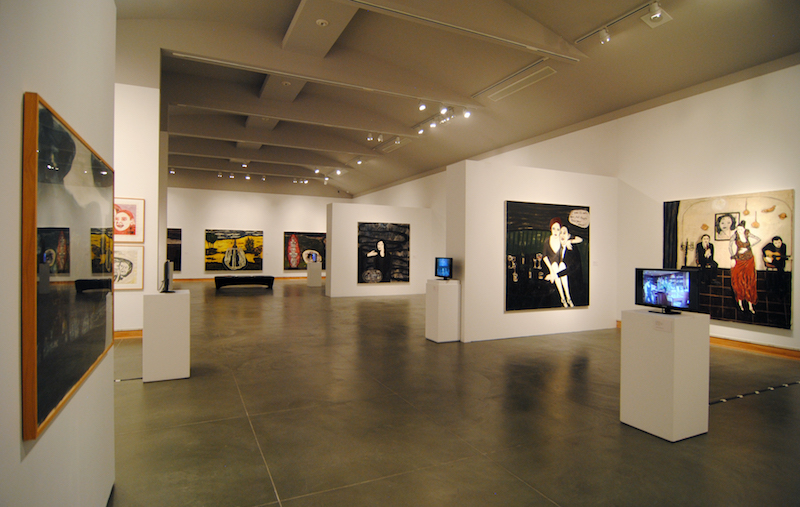
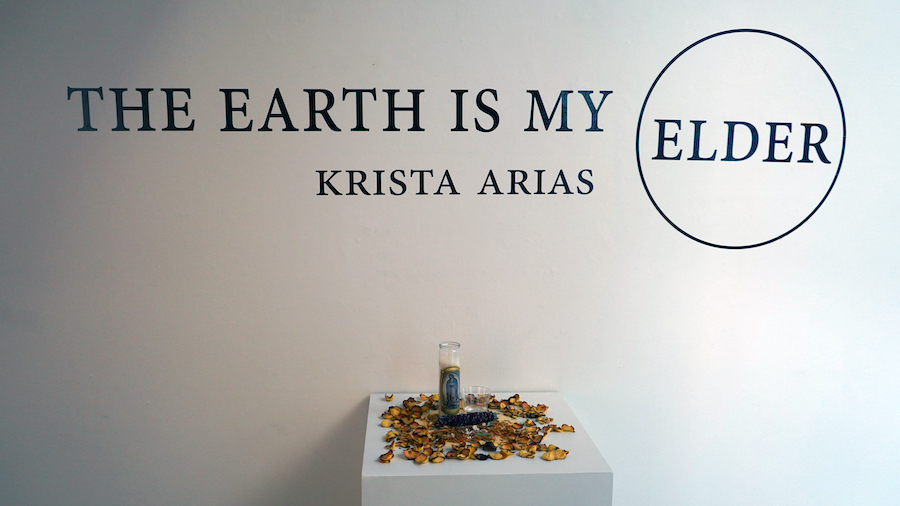
IDENTITY Selected Works by Artists from the Black Student Association
Grace Omoniyi
My pieces are a display of the West African elements that bring light to appearances – the outward beauty of a person. The model has on a purse and ‘aso-oke’, which are accessories for adornment – a refined means to make commotion and introduce presence at an event. Capturing this reminded me that this culture is not lost- it will in-fact carry on because the average Nigerian is a direct product of this society. This is the identity ingrained from consuming party scenes. It is my mother’s accessory, hence it is mine.
Shayo Aroniyo
Growing up in a country away from home, you can miss out on core cultural pieces that help shape who you are. As a child who was never taught my language, I wanted to capture that feeling of being slightly outside looking in. The gold accents connect the child to her food and to the dancers she watches, hinting at a quiet thread of belonging. Even if she doesn’t fully understand it yet, those connections suggest she will grow into her identity over time.
Garvin Le Blanc
The collaged images against the black background are scanned images of an assembly collaged of madras fabric, palm leaves, and cardboard. These are all found materials – the thought process going into those images was to use madras itself as a layout guide for visual design. Madras is a cultural symbol for people of Creole heritage, particularly people from Guadeloupe, Saint Lucia, Martinique and Dominica – my home country.
The poem is a journal excerpt. It’s a view into a conversation with myself. There’s a saying that goes “we find ourselves in the service of others” as well as an African philosophy “Ubuntu – I am because you are”. The more I reflect on life, the more I realize that I am a mosaic of all the experiences that I have had and all the people that I have encountered. In serving others and interacting with others, we become ourselves. The version of ourselves we decide to be is a result of what we decide to take with us from interactions as well as what we decide to leave behind. So go out and chase experiences. Serve others and be.
Garvin Le Blanc
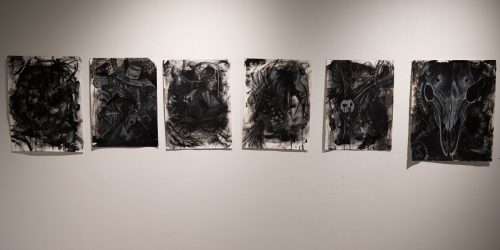
The other abstract sketches are a series of studies. They explore identity through experimentation of style. Broad marker strokes are made on the page and are followed by thinner strokes – either adding accentual details or filling in the spaces made by previous strokes. While writing about them now, I ask myself “how does one build off of the marks that one is making now?”. You have to make a mark inorder to see what the next one can be, which is in itself a way of building a sense of identity.
We are what we do consistently.
Kamso Dozie
These photos explore Black identity through personal style, using gold jewelry as a symbol of heritage, pride, and self-expression. What is often stereotyped as excessive or unprofessional is reclaimed here as something meaningful and powerful. Our identity calls for pushing back against the pressure to shrink or change our appearance to fit into stereotypes. Even though Black voices and expressions are often overshadowed by society, we continue to find ways to shine through. Instead of hiding parts of our culture to be accepted, these images celebrate showing up fully and unapologetically. Cultural expression isn’t something to tone down; it’s an important part of who we are and deserves to be seen, valued, and respected.
Manuella Opondo
Acrylic on canvas
Oil on canvas
David Kolawole Aderibgbe
Few fashion statements carry as much cultural weight and symbolism as grillz. These decorative mouthpieces serve as an explicit representation of black identity as well as one of Afro-Cultures’ most iconic forms of gold jewelry. Evoking roots from Sub-Saharan traditions’ use of gold as symbol of wealth and power, these jewelry carry a rich and complex legacy. Artists like Eddie Plein reignited their popularity, revolutionizing their use in Hip-Hop and transforming it into a staple of mainstream fashion and media across the globe, despite negative backlash fuelled by stereotypes and racial prejudice.
They have also served as a reminder of the ambitious and stylized nature of gaining wealth; a cultural marker of the “Come up”. At the same time it reflects the less appealing tension between authenticity and the pressure project success or to “put up a front,” turning an iconic form of self-expression into a burdensome performance of one’s ego. Grillz, like all great things, emerged from complex and often painful histories. Yet through growth, tolerance, and reinvention, it has evolved into a timeless fashion statement that showcases one’s creativity, individuality, and status in a beautifully crafted piece of mouth jewelry.
Kyle Tuyishime
This piece represents an insecurity I’ve held stemming from my black identity. Growing up, I realized quite early I was an outsider in white spaces. I always felt like I was just “the black friend” or the “proof I’m not racist friend.” I didn’t really have black friends until much later in life since there weren’t many black kids in my hometown at the time. It was only through befriending other black people my age that I was able to realize that a large part of my black identity was suppressed so I could assimilate better into my mostly white environment. Through years of self introspection, I’ve managed to somewhat “stitch back together” my black identity, similarly to a doll. Although I feel my identity is mostly whole, there’s still parts of me that have been shaped by the constant white presence.