Categories
Flexible Learning teaching

Workshop for Teaching Assistant

VSE Workshop for Teaching Assistant (TA)

In the VSE TA Workshop, we provided some important resources, essential for the incoming Teaching Assistants. I think everyone within the teaching and learning community can benefit from reviewing these tips and suggestions. So here it is:

  1. If you are starting off as a TA at your graduate school, it’s always a good idea to familiarize yourself with your University’s policy on the appointment of graduate students and the TA guideline provided by your department. You can find UBC resources here:
  1. Your department and University are very likely to offer TA workshops and training programs; these are free programs and will also add weight to your CV. You might also want to look into professional development courses offered by your University for graduate students.

Here is a list offered by UBC:

CTLT Presentations:

  1. Familiarize yourself with the learning management system (LMS) used by the department or the University. These will be used for interacting & communicating with the students, and to maintain and update grades and student rosters. I mostly use Canvas and  My Econlab.

i) CANVAS: This is a Learning management system offered by UBC and is used by most VSE  faculty.  I have curated a short and comprehensive playlist for Canvas- you will learn how to a) organize content, b) Post Announcements, c) Create Assignments, and d) Upload and Maintain Grades.

 https://www.lynda.com/SharedPlaylist/5a077cfc321a4c7388a8af951313f9d6

ii) MyLab: is a learning management system for Pearson textbooks.

 Here is a screencast of my session with a TA, where we discuss how to enter grades and manage class list

https://www.youtube.com/playlist?list=PLodnYOww5O-wD3QalMcuMx3r_k5VPJUWd

  1. Advice from your senior TAs is the most useful resource for any newcomer. So, invite them for coffee, or email them and ask them for pointers.

Finally, it’s vital to have open communication with the course instructor about your responsibilities and workload.
Categories
EDUCATION teaching

Teaching is like _ Sparking the Ignition System.

Teaching is Like Sparking The Ignition System.

The spark timing is extremely important – For some students we need to advance that spark but for others, those reluctant & sluggish engines, advancing the spark would only lead to detonation/knocking that might ultimately cause an engine failure.

Failure that would either reflect in school drop out rates, those failing grades or changes in their graduating majors.

Teaching can not happen without a super conductor. The teacher has to be able to connect with the students.

She has to be the conductor that can eventually deliver that spark.

And deliver that spark without self-burnouts. You see, the weaker the conduction the more effort required on the part of the teacher to convey the knowledge.

Once sparked – see those engines rev up.

REVVED UP AND READY TO GO

Categories
Flexible Learning Flipped Classroom teaching

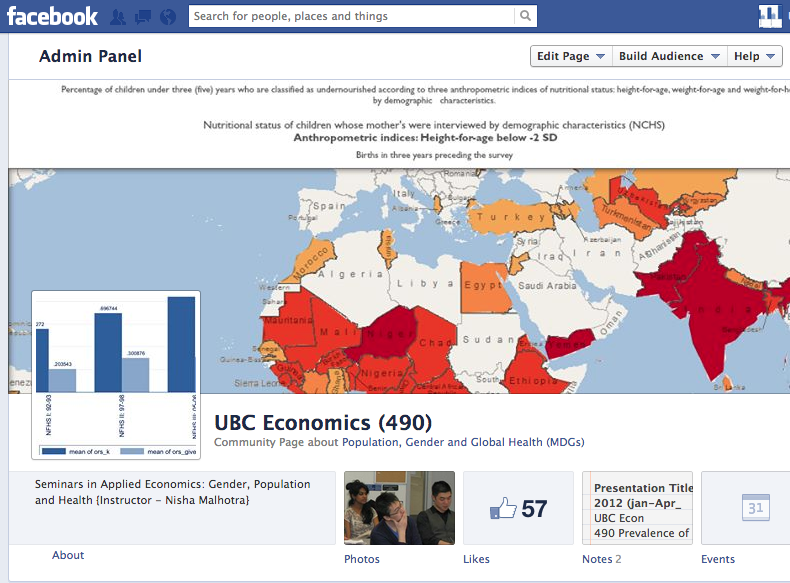
Social media helps collaboration and participation among students – in and out of classroom.

This 4th year undergraduate course, in the Economics Department, is required for all graduating students majoring in Economics. Most students come into the course excited about applying their skills learned from four years of undergraduate work to a real issue, through forming a research question and answering it by analyzing data. From the beginning, interactions between the professor and other classmates are encouraged.  Peer discussions, which often generate positive externalities, can lead to a greater understanding of the costs and benefits of various policies and behaviors (Van Den Berg, Admiraal, & Pilot, 2006).

Having a place to post comments and participate without the public eye encourage involvement from the shy student and this has also been documented earlier (Larson, B.E. & Keiper, T.A., 2002). The idea of a Facebook page came from my students in the first year undergraduate class – who after having created a Facebook group for the class invited me to join the group to help them with some practice questions.

This module helped achieve what face-to-face, three-hours a week interaction could not. I have decided to make this media a permanent feature in my course.

References:

Van Den Berg, I., Admiraal, W., & Pilot, A. (2006). Peer assessment in university teaching: evaluating seven course designs. Assessment & Evaluation in Higher Education, 31(1), 19–36. doi:10.1080/02602930500262346

Larson, B.E. & Keiper, T.A. (2002). Classroom Discussion and Threaded Electronic Discussion: Learning In Two Arenas. Contemporary Issues in Technology and Teacher Education, 2(1), 45-62. Norfolk, VA: AACE Retrieved from http://www.editlib.org/p/14452.

For the complete article and an insightful discussion please follow this link

http://tinyw.in/OVPC

Experimenting with Facebook in the College Classroom

By:  in Teaching with Technology

Spam prevention powered by Akismet