Categories
Uncategorized

Solidarity: My Thoughts and Processes

Solidarity.  The fundamental core of what Geography 495 is all about.

So, what exactly does solidarity mean? 

Juanita posed this question to all of us on the first day of class.  To be honest, I didn’t quite know what to make of the term.  I had a grasp of its theoretical definition and academic explanation, but other than that, I was lost.  It wasn’t until the next few weeks when our class engaged in “A Beautiful Unraveling”, a workshop directed by Mia Amir, when I began to develop my own sense of what solidarity was comprised of.  The workshop was designed to open up a safe space to recognize how each individual person internalizes power and positionality in one form or another, and this was demonstrated through activities that encouraged personal understanding and realization of what kind of privilege and oppression we are exposed to as individuals.

Personally, it was a surprise to become conscious of the fact that I am a privileged person and I reap the benefits that come with it.  I live in a ‘developed’ country, I come from a middle-class family, I have a post-secondary education, I am heterosexual, and I am not physically or mentally disabled.  On the other hand, I am an oppressed individual.  I am a non-Caucasian woman.  Interestingly enough, I had always been aware of the ways I am oppressed, but seldom had I given any thought to what makes me privileged, or whether I was privileged at all.  This process brings attention to the importance of recognizing how we are privileged to be able to actually work in solidarity with an oppressed group. If we do not willfully realize the ways in which we are privileged, we may very well continue to oppress the oppressed.  Therefore, solidarity is not simply a conceptual theory and mindset, but it is also felt, experienced, and embodied.

Although solidarity is a term compacted with meanings that differ for everybody, I feel that I have actively developed my own sense of solidarity with the help of Celia for the past few weeks.  Jess Van and I decided to help Celia learn English by fitting in English sessions whenever her schedule was open.  In the first few classes, we were lucky enough to have John join us as the translator, since I didn’t know any Spanish and Jess only knew the basics to get by (I wouldn’t know, I think her Spanish sounds great!)  The first session was a bit awkward for me because of the language barrier, but it definitely allowed me to step out of my comfort zone, since nothing productive would come of being self-conscious about my lack of Spanish skills.  Also, while I was preparing the lesson plans, I always tried to make an effort to avoid making our sessions feel like an authoritative relationship between a teacher and a student.  I found that this was not a problem because our English lessons turned into English AND Spanish lessons.  Jess and I played the role of English teachers and Celia was the Spanish teacher.

I ended up really enjoying our time together because all of us were co-learning and co-teaching. Although I always needed someone to translate for me when I spoke to Celia, I think we were still able to create a bond between us – a bond consisting of a lot of body language (being lost in translation means a few raised eyebrows, puzzled looks and of course the many laughs), but also a mutual understanding that learning a new language is fun and difficult at the same time.  I think we both realized that we were going through the same process with the same goal in mind – learning a language! Isn’t this what solidarity is all about?  Creating relationships and connections through the purpose of a common goal?  Even though we were not actively fighting against anything, I think being able to build this kind of relationship is one key element necessary for solidarity to be carried out in a positive and constructive way.

Overall, I thoroughly enjoyed participating in this community-service learning seminar and I am delighted to finish my undergraduate career with this course.  The structure of this class is unlike any of the other ones I have taken at UBC.  A majority of classes involve routine tasks – reading a textbook, writing papers, and examinations – which tend to require a lot of memorization, but no retention.  As students, Geog 495 gave us more freedom and flexibility on what we wanted to learn and how we learned it.  We created an open space for dialogue allowing each one of us to speak and be heard.  We diverted from the ‘traditional’ passive way of learning (i.e. in the form of lectures, reading abstract textbooks, copying notes) and instead learned through active participation.  In a sense, I have embodied the learning done in this class and it has positively affected my personal growth.  As corny as this sounds, it feels like the knowledge that I have gained from Geog 495 will always be part of who I am and something that I will never forget.  I feel lucky to have been a part of this process and it is unfortunate that only a tiny fraction of the university population is able to partake in such an action-driven, community-focused course.  This needs to change!

Thanks to all my classmates, Jennifer, Juanita, and especially Celia and Marla, for making this such a unique and rewarding experience!

Jessica T.
Categories
Uncategorized

On the Pedagogy of Geography 495

First and foremost, I would like to say that there must be a larger shift in the “University of ______” institutions towards this learning kind of learning model. To put it in pretty practical terms, I feel like I am winding down my undergraduate frustrated and looking back on a memory of classroom environments at UBC that did not function nor were structured in the way of Geography 495. However, the important lesson learned is that in order for these sorts of pedagogies to exist, they must be supported and built from the grassroots. We as students have to voice how valuable they are! A very crucial revelation for me in the unwinding of my experience within the university classroom model is that classes encouraging collective spaces of learning, where the students model and run the classroom, are really the ones where the most truth and happiness is really found in learning. Something about our weekly sessions held lots of truth to me, in that there is no performing element to class participation in 495 like there is in so many other classes that encourage class participation. Our discussions seemed organic, and the space we created was built on personal emotions, individual cosmologies, memories, and ideologies. To put it straight, I feel like I have had to hold myself back so much in other classrooms and discussions in past terms, But not in the space we all created.

In the classic academic space, the learning circle reaches an end, at a three-quarter turn, where the analysis of something stops at a conclusion supposing to be some kind of more objective truth that was framed in your introduction as being more subjective. It’s like a personal conquista of learning. Bringing it home or into your life is never really what is important in the hegemonic academic analysis. Take for example a topic from our group presentation. I presented on the ‘82 debt crisis in Mexico and the practice of using debt as a social discipline in maintaining producer-consumer relations between the south and north in today’s world market capitalism. In the pedagogy of hegemony, the analysis would end here. However, in 495, we met Marla and Celia and learned about the social condition in Chiapas and their comercio justo cooperative in San Cristóbal. From this experience, I can further the conclusion and say, “okay, I see on a very human and emotional level how the global market economy of present is benefitting the few at the expense of the many.” Free of academic citation, we can find truth in the people that we meet.

What this 495 Pedagogy has achieved (from what I have experienced), thanks to our solidarity with our compañeras at Jolom Maya’etik, is a full circle of learning, wherein we are living what we are studying. The south-north link is achieved face-to-face, in the flesh. This is the praxis we talk so much about. And this is the Education we have to foster from the roots. More immediately, considering UBC has got deep pockets at the moment (before their own debt growth becomes unmanageable), demand it from the institution!

Categories
Uncategorized

Slams, Songs and Stitches

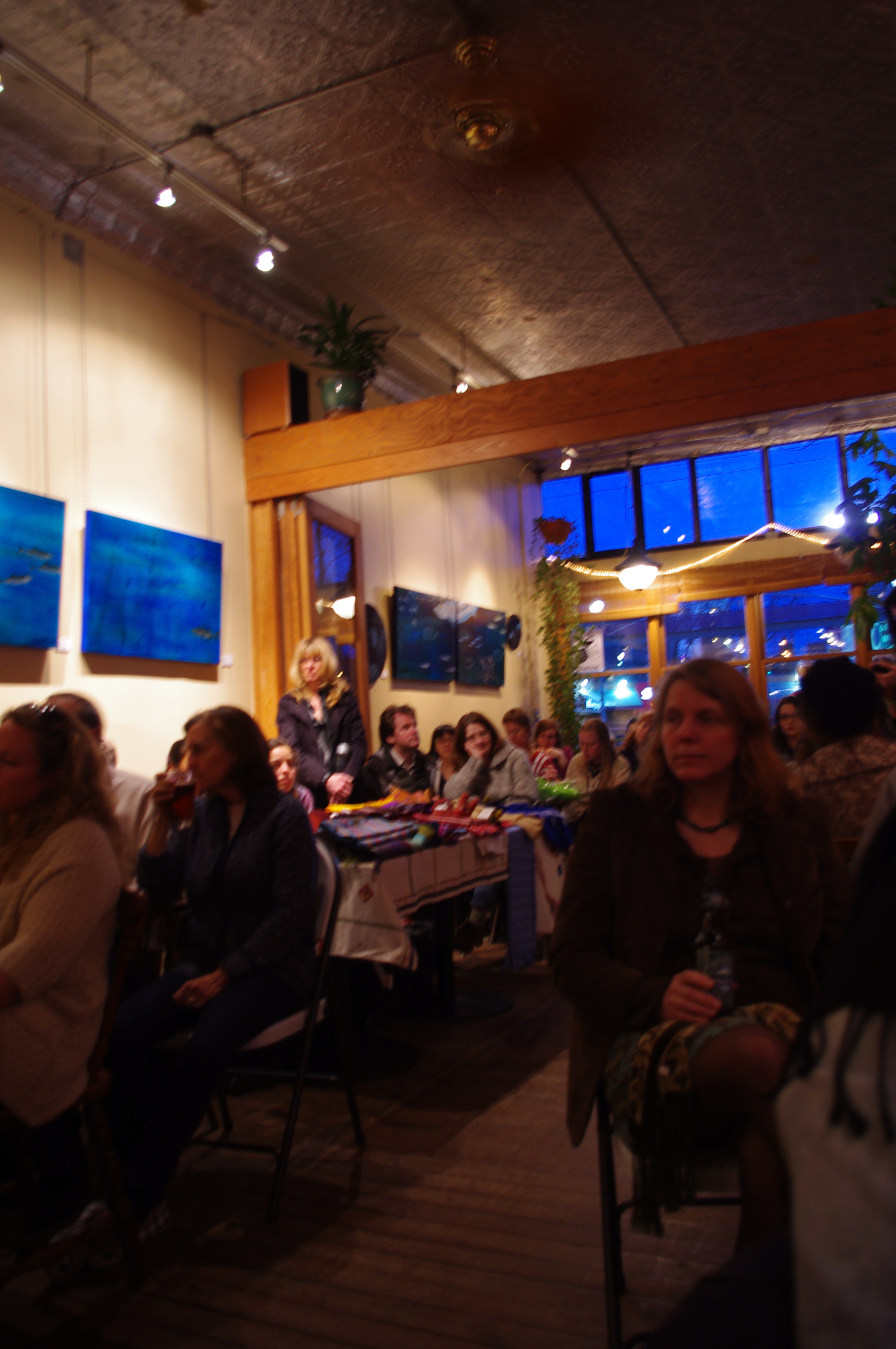
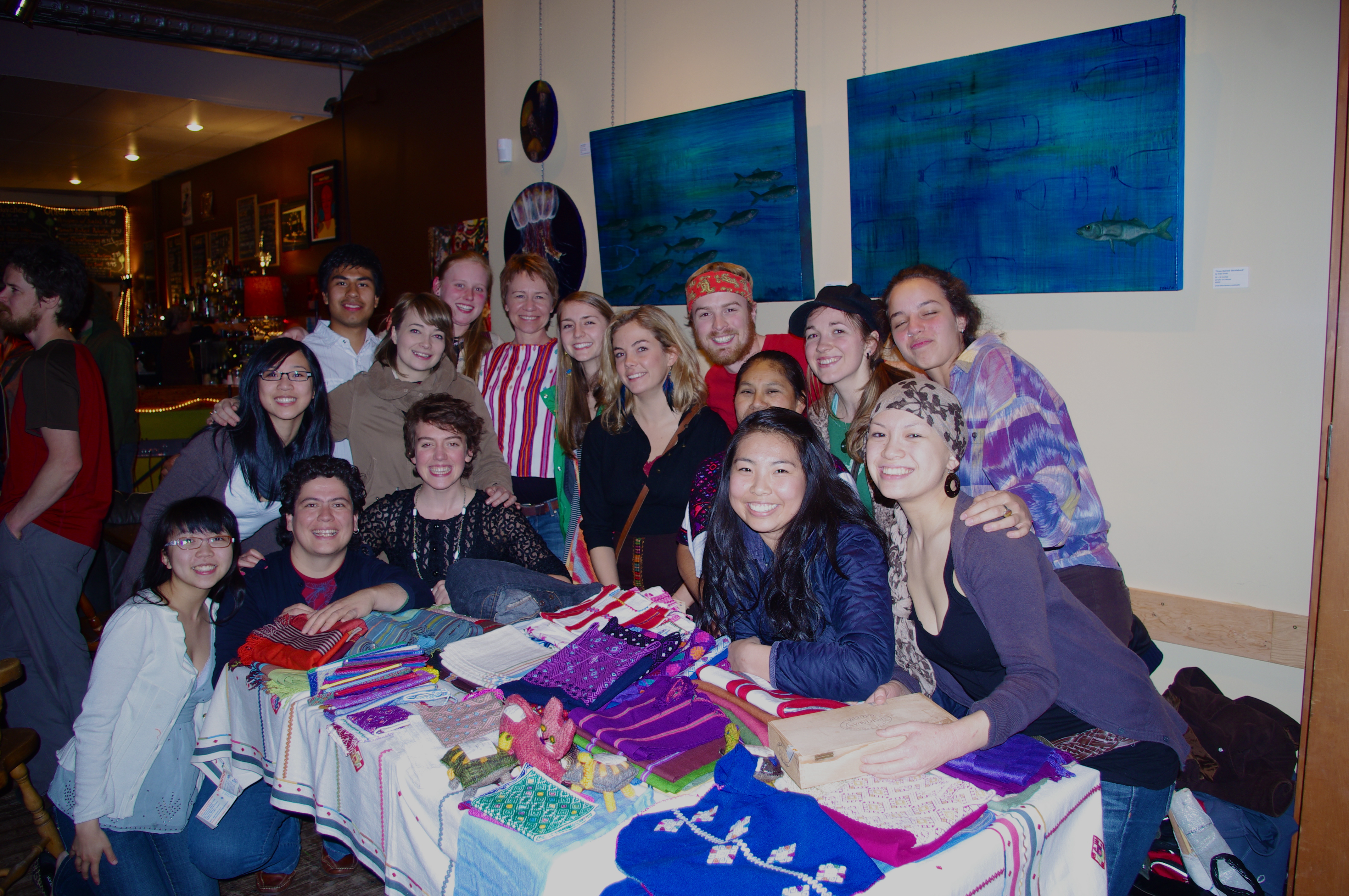
I think it’s safe to say that the event was an astounding success. The combination of amazing performers and a wonderful crowd just created an infectious atmosphere of good vibes and big love. For those of you who were unfortunate enough to miss it, here is a visual diary of the event.

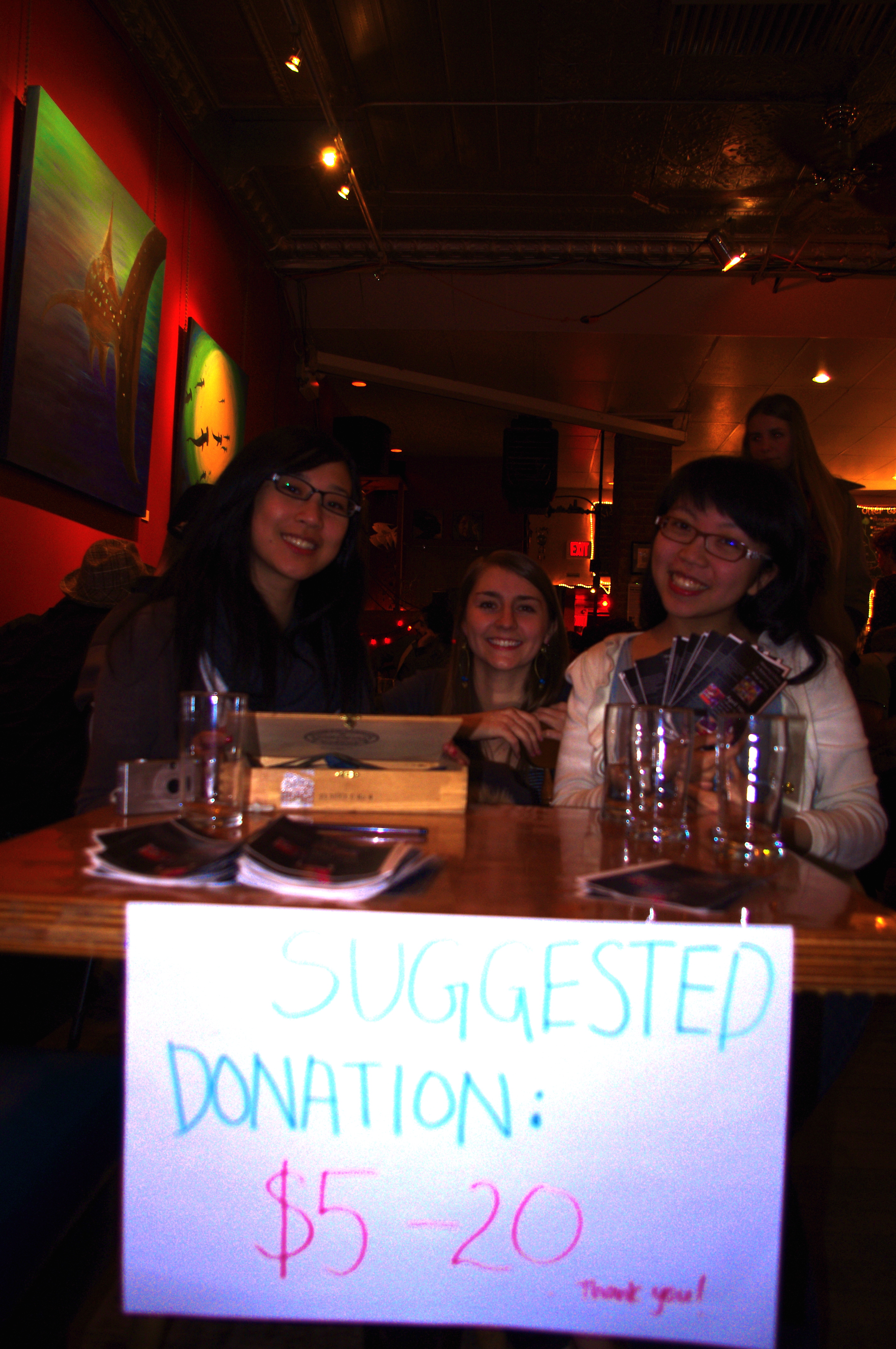
The lovely Jess, Alex and Lucinda, wo-maning the entrance table.

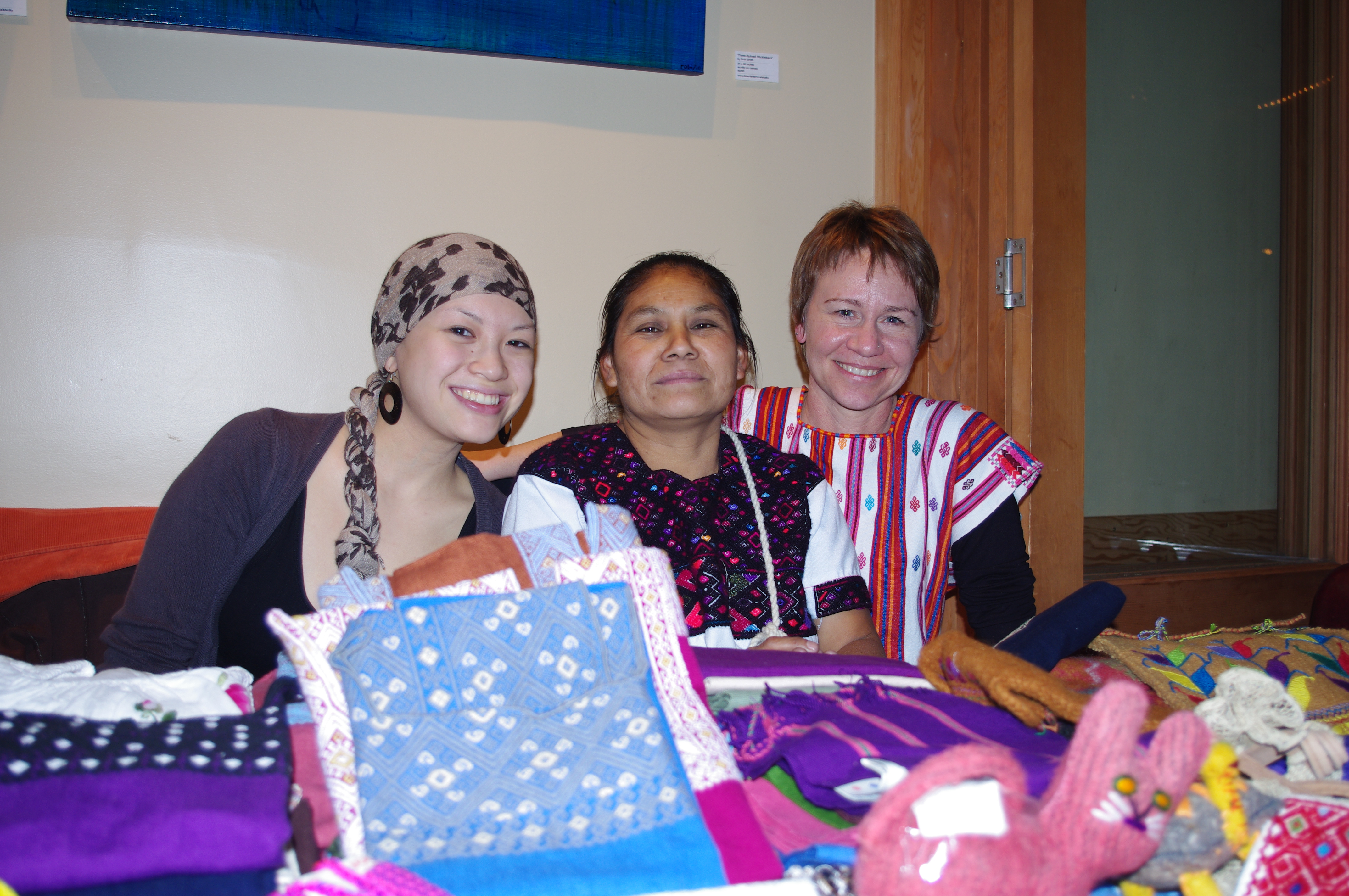
At the weavings table, we have Jess, Celia, and Juanita

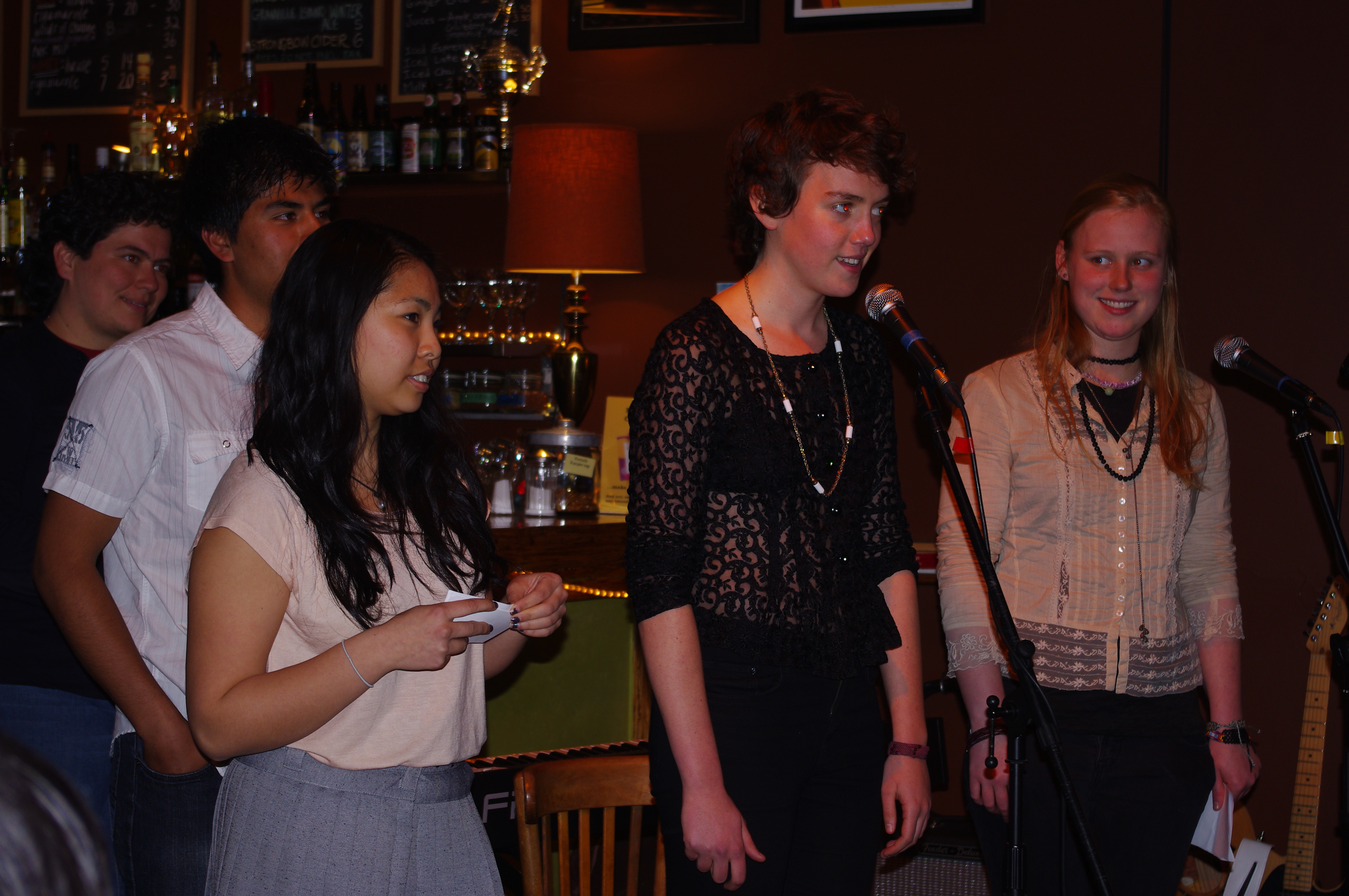
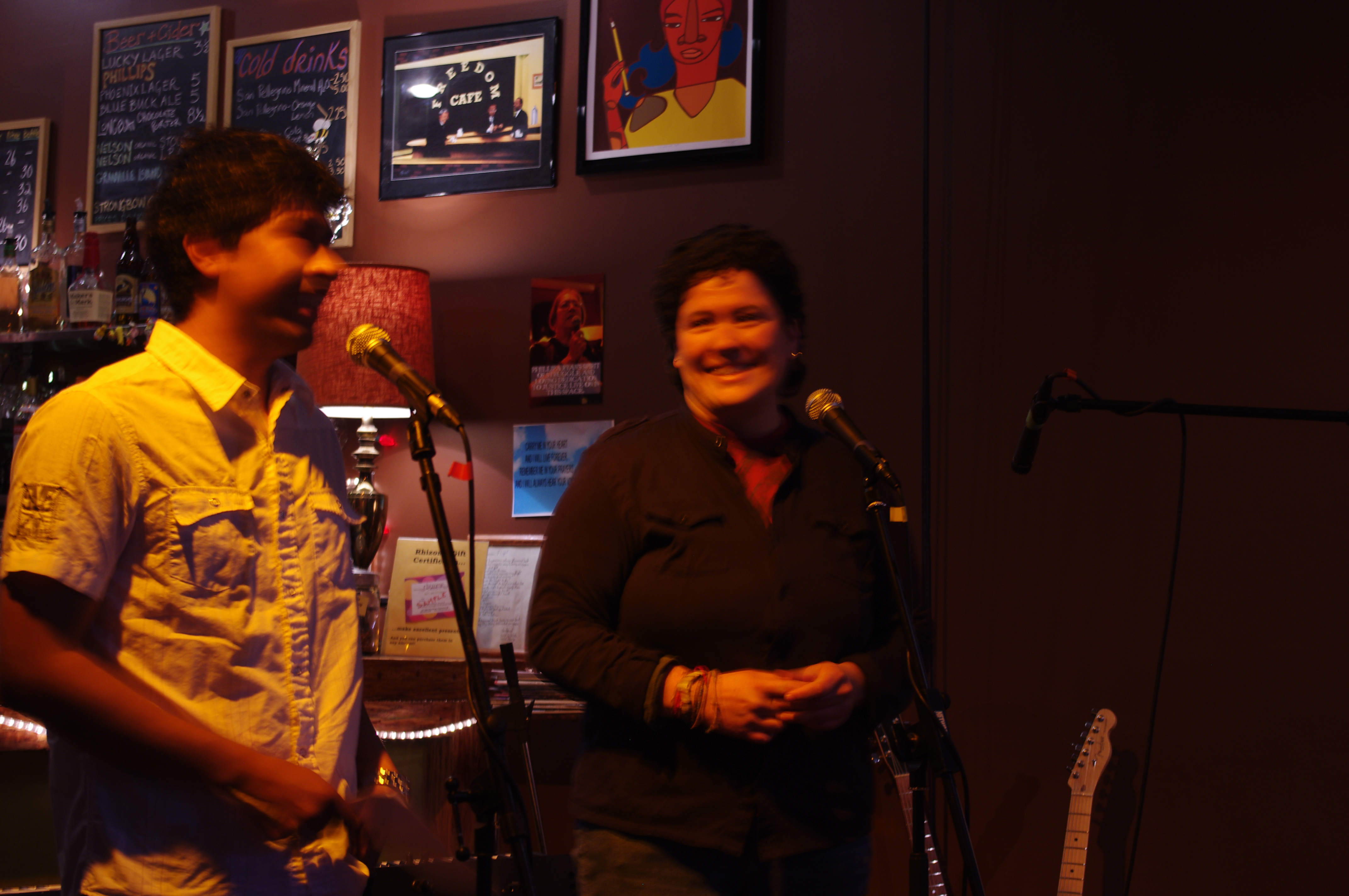
The MC’s of the evening, Jorge, Claire and Gillian

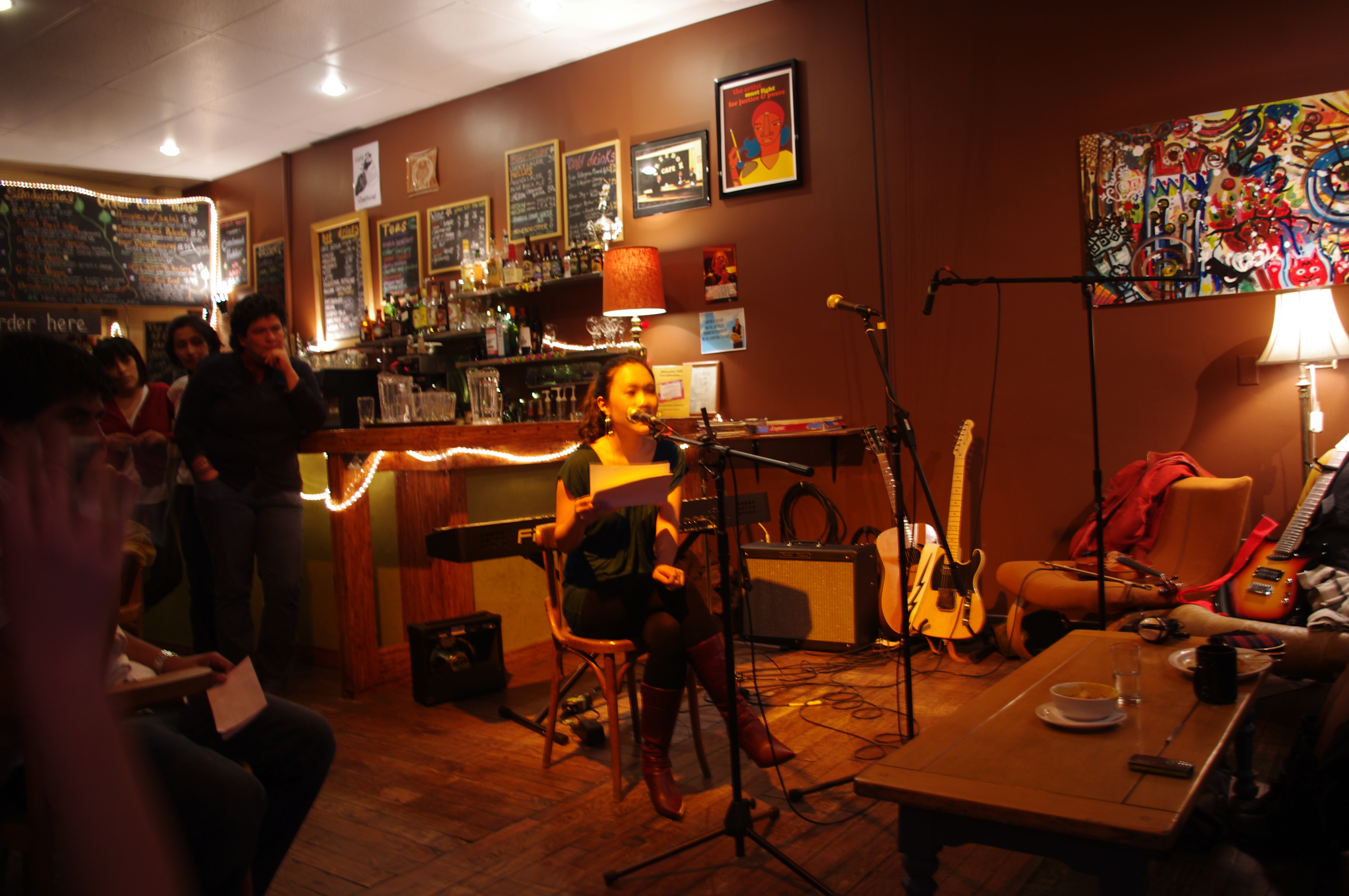
Starting the night off with some powerful poetry by Cynthia Oka

Marla of K’inal gave an engaging presentation of the history and workings of Jolom, as well as the partnership they have built with K’inal. The evening was made bi-lingual thanks to Jorge.

It was really great to see how engaged and interested the audience was in the work of Jolom, as the questions just kept coming for Marla.

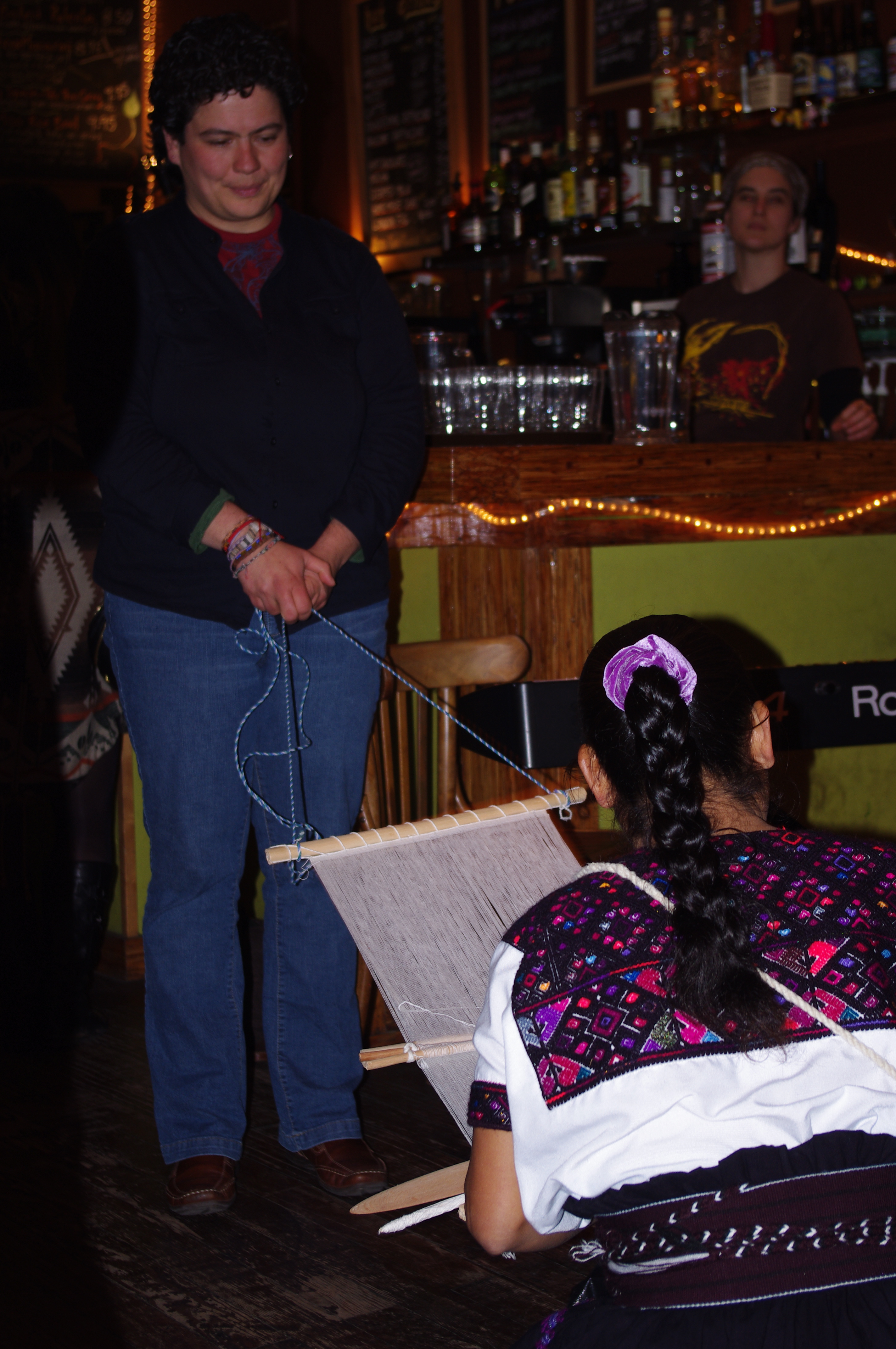
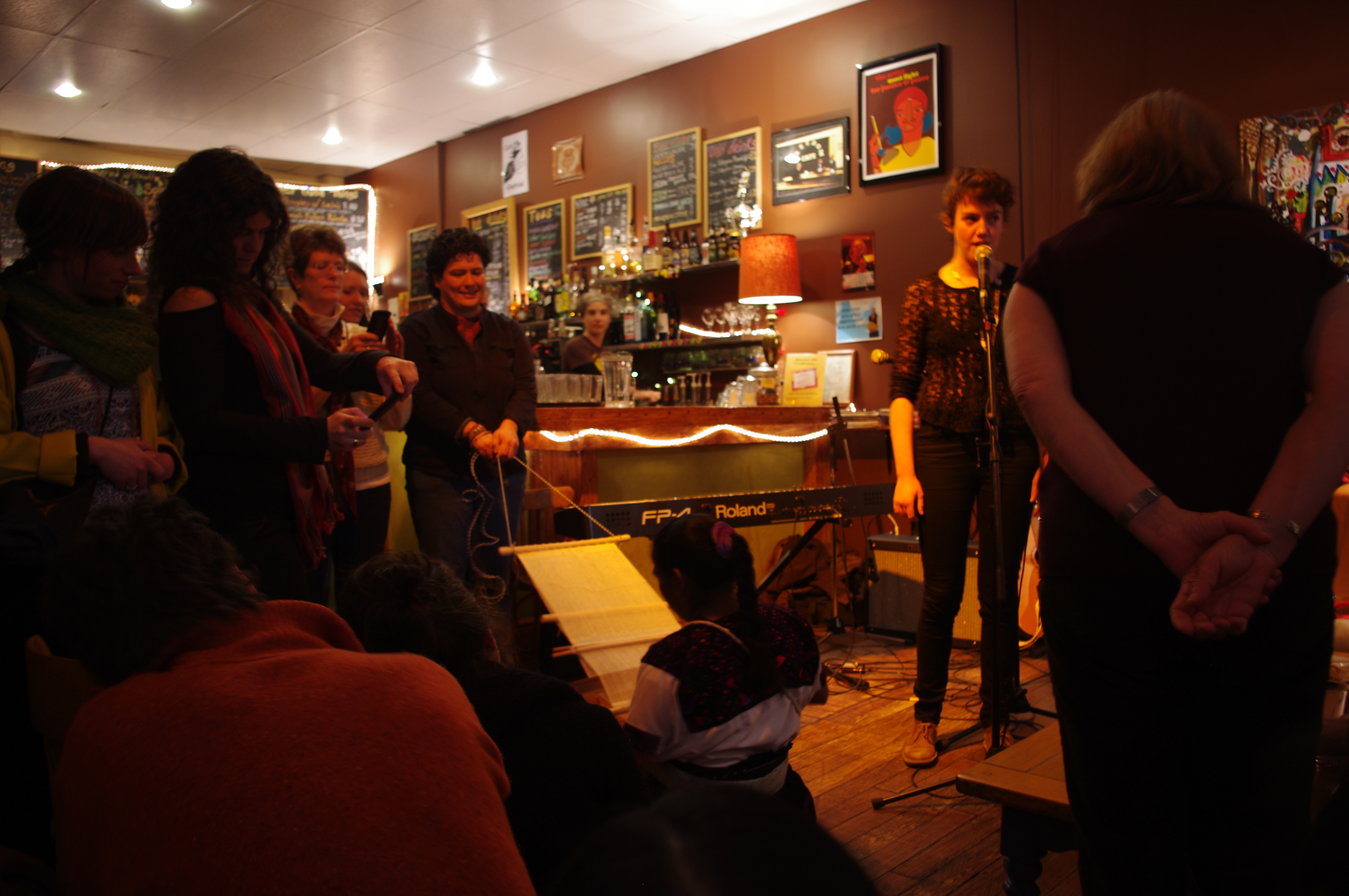
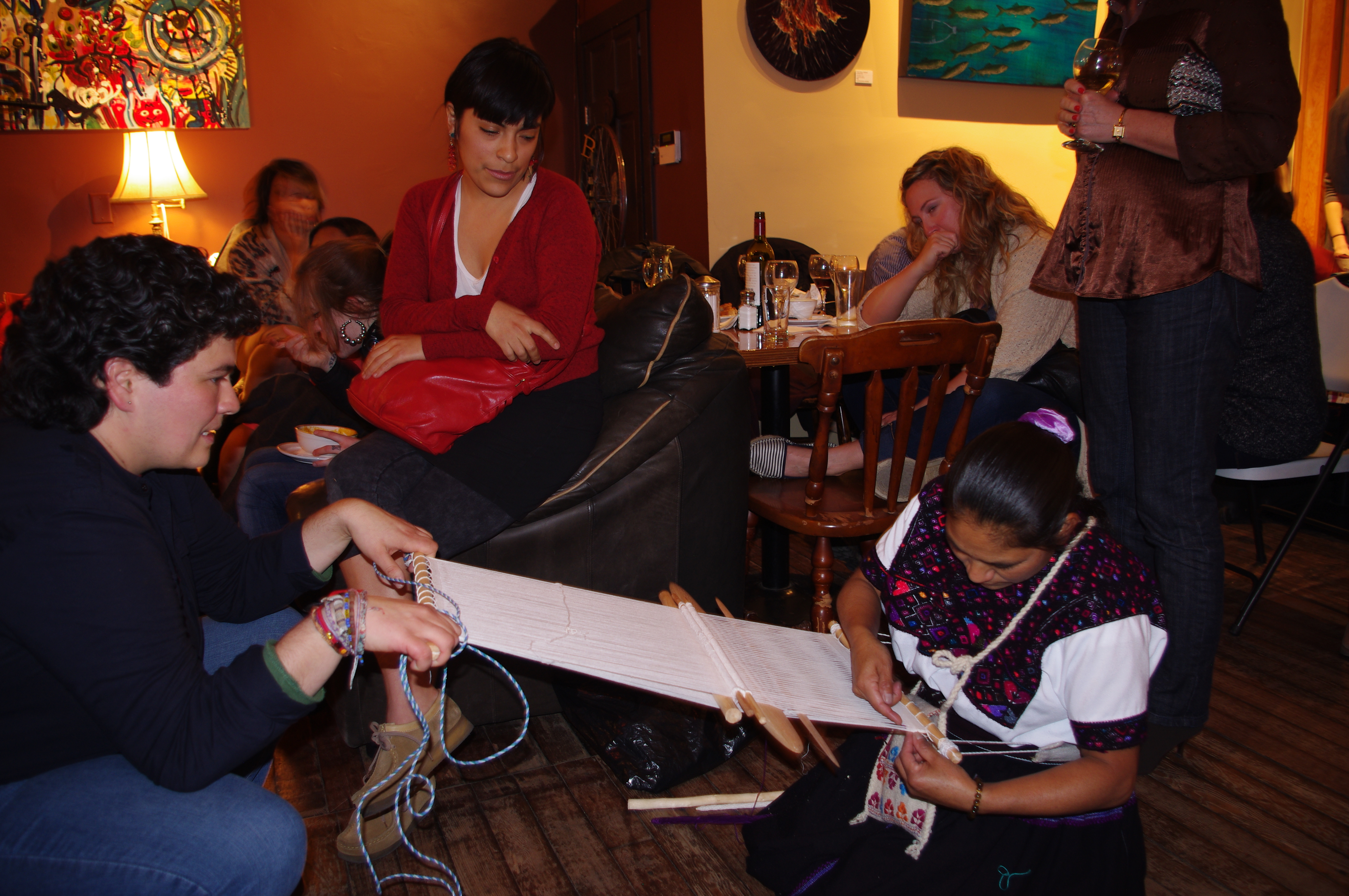
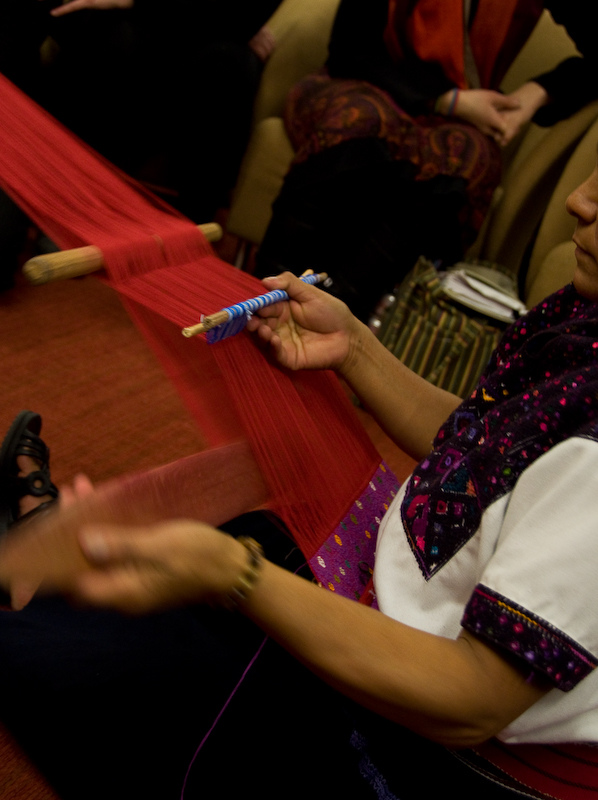
Celia giving a weaving demonstration with the aid of her trusty hemlock tree, aka. Marla and Jen

Of course, no weaving demonstration would be complete without a play-by-play commentary, provided here by Claire

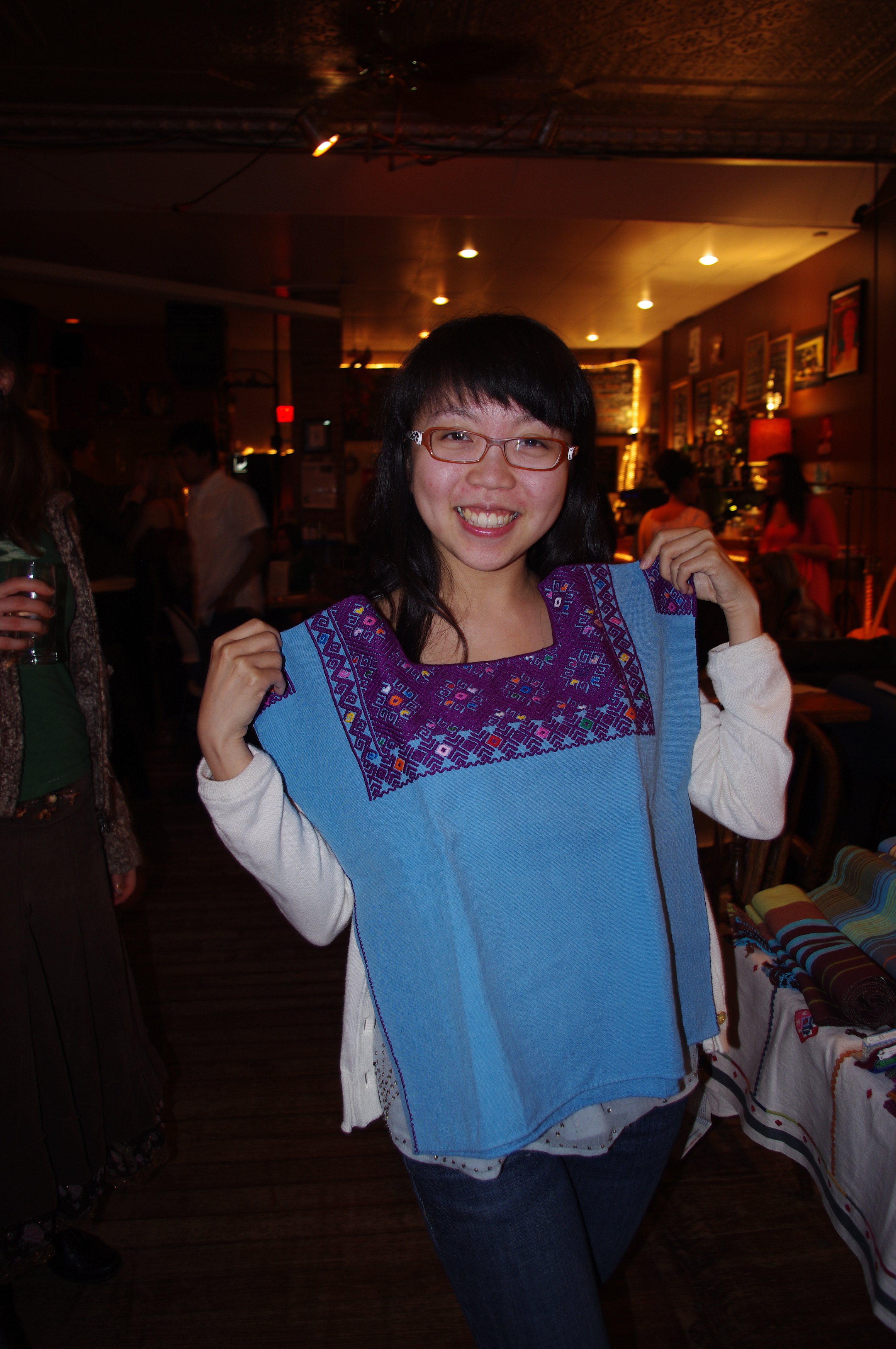
Ta-da! The finished product! Hah, just kidding. I believe this beautiful blouse took over 100 hours of labour to create.

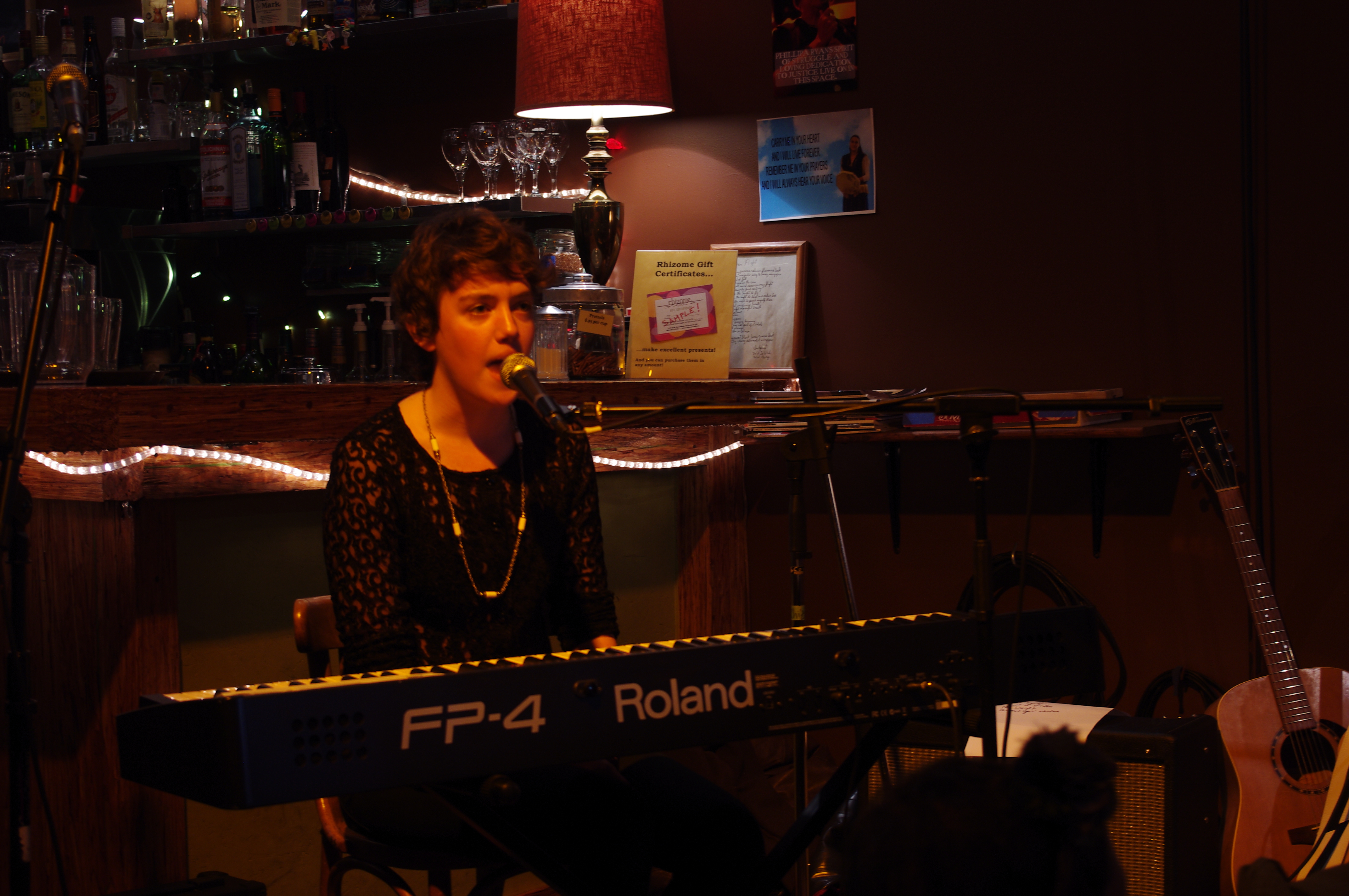
The lovely Claire, gracing us with sweet tunes and meaningful lyrics.

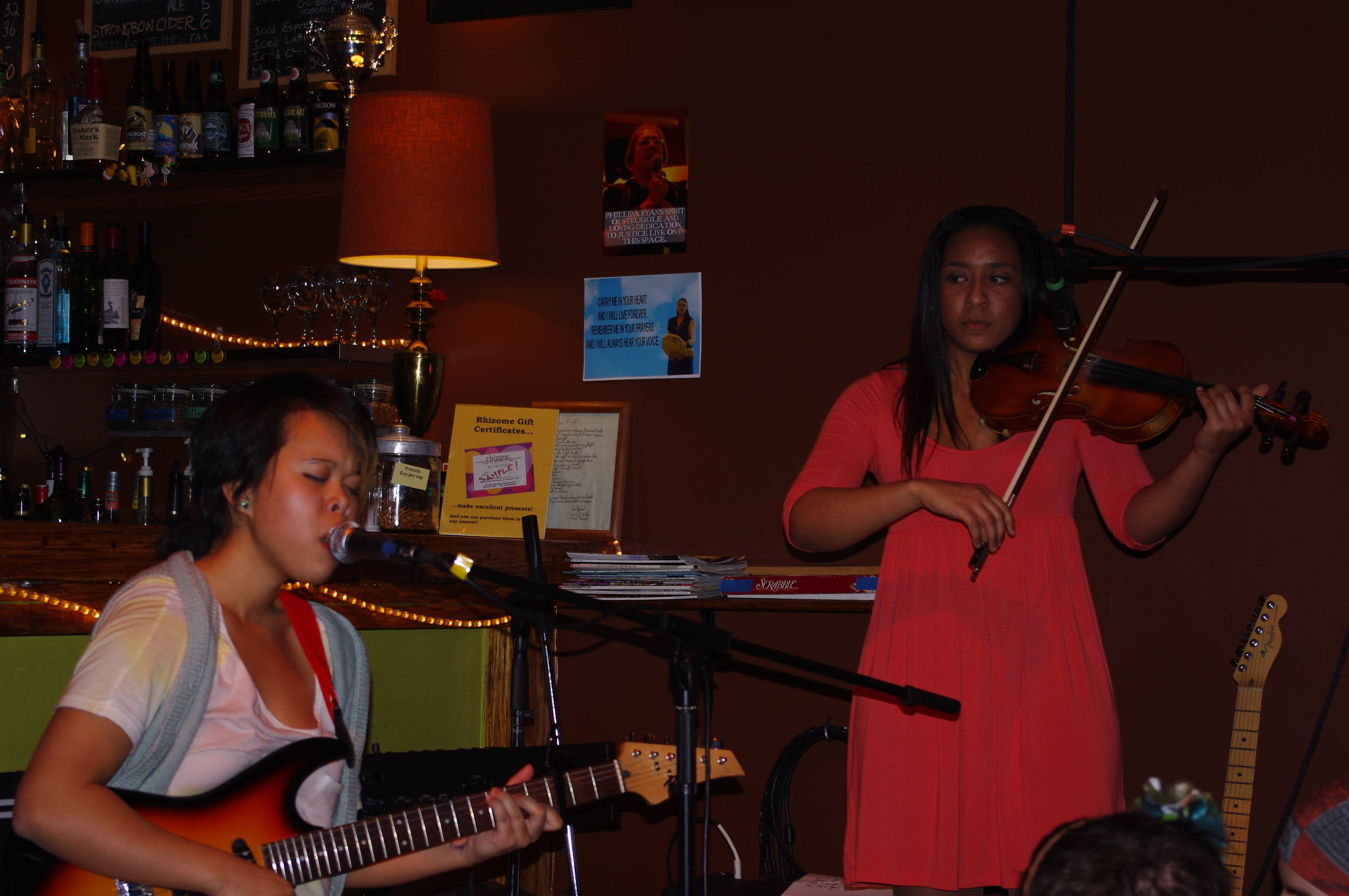
The amazing Kim Villagante, aka Kim Possible accompanied by the a wonderful violinist (I don’t know her name, help me out?)

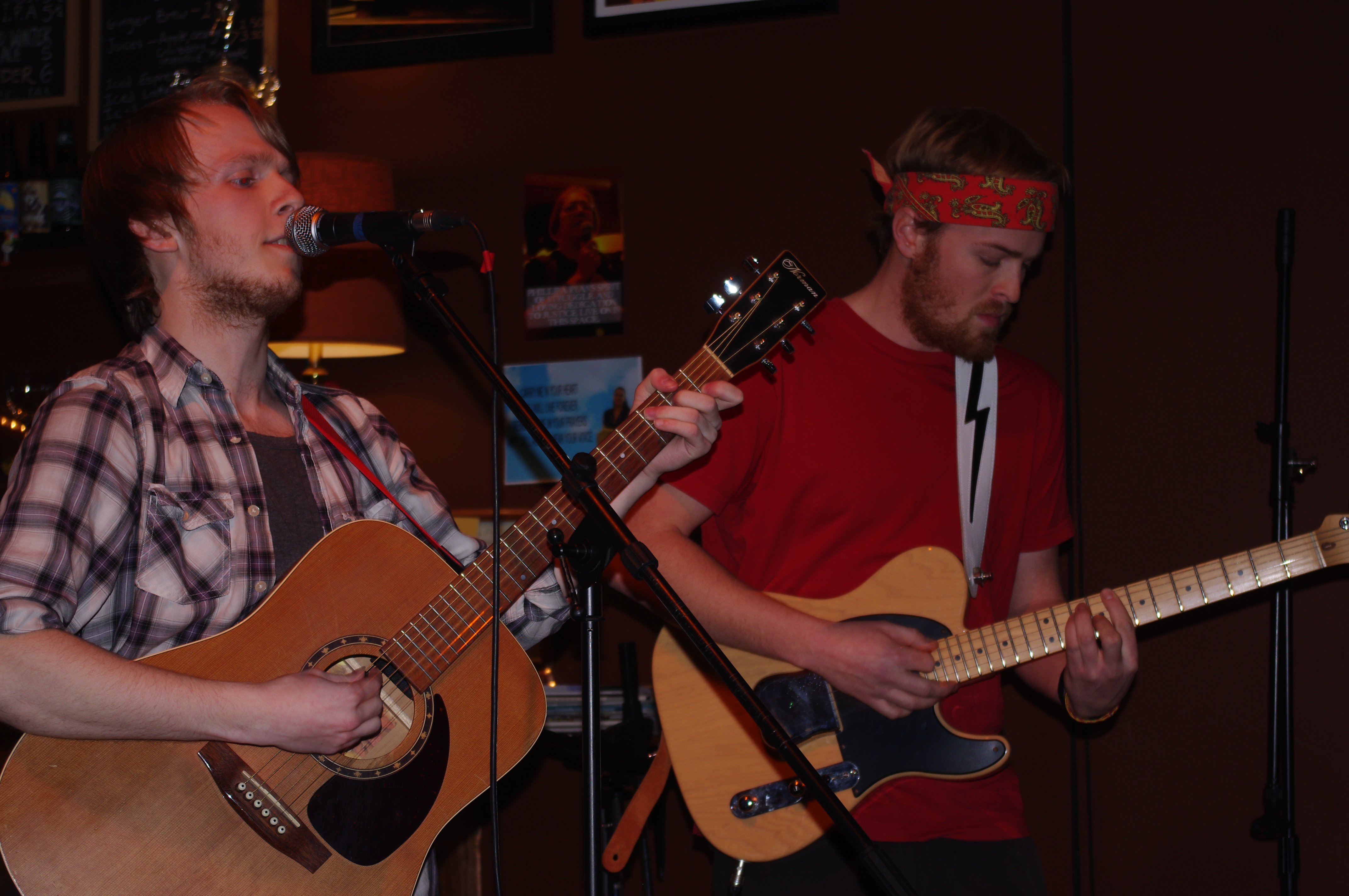
As if the evening was not already packed-full of great talent, The Gravely Brothers ended the night off with some great toe-tapping tunes. What a privilege it was to be able to witness so many great performances all in one night!

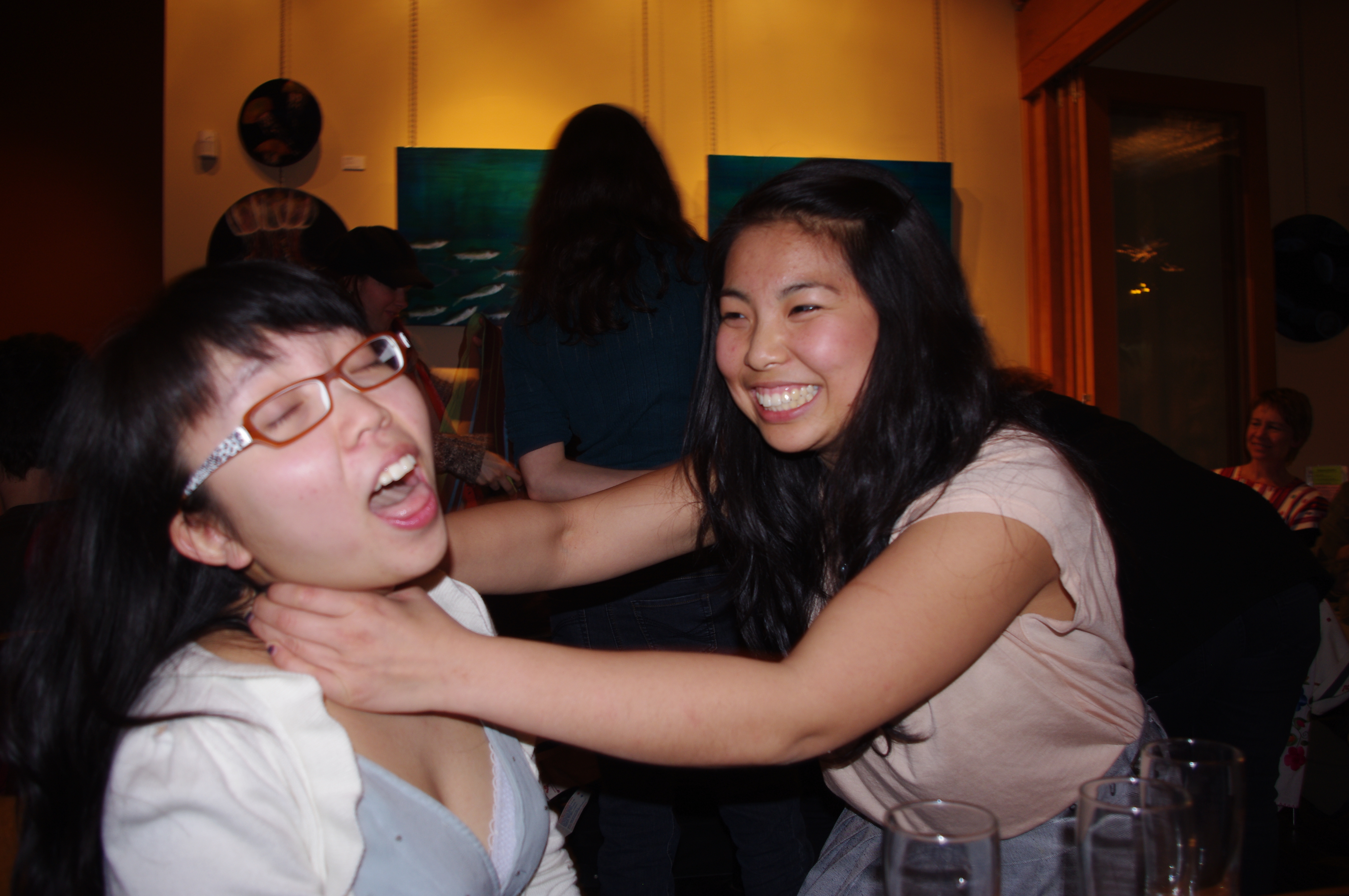
Practicing solidarity ain’t always easy…

….but when we get it right, it truly is a beautiful sight.

Great job everybody!

Categories
Uncategorized

Looking Back on Women Weaving Worlds: Living Resistance

Photo by Mirah Valdes

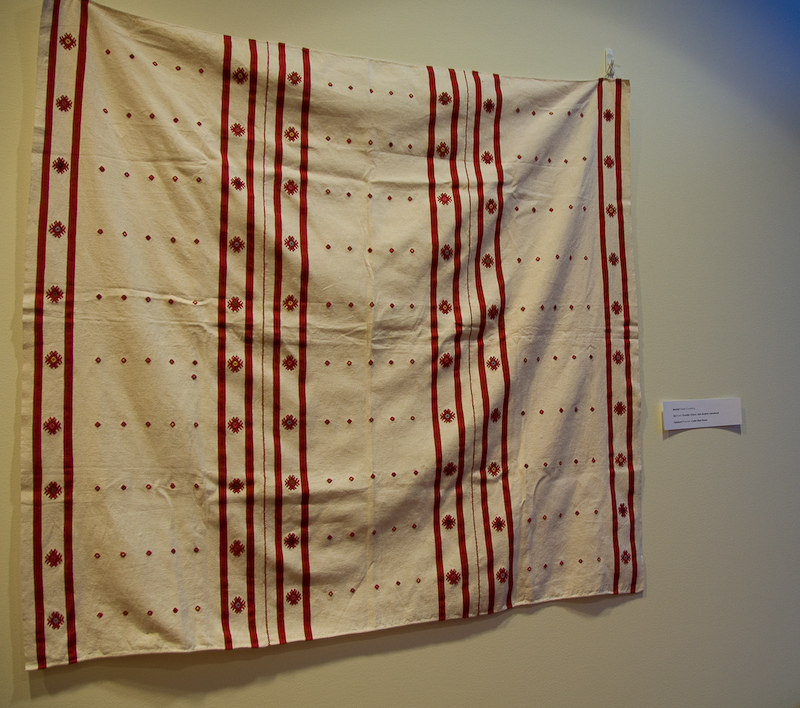
I’m excited that I’ve had the opportunity to participate in Geography 495 in my final semester at UBC. It has been an entirely unique experience to work in cooperation with the autonomous indigenous women’s weaving cooperative Jolom Mayaetik and this has allowed me to depart from typical academic models of learning. The fact that the course is based on a community service learning model has allowed me the opportunity to take part in organizing an exhibition of Jolom Mayaetik’s work, which took place on Wednesday March 16th 2011, and was curated by Celia Ruiz the president of the cooperative. We called the exhibition Women Weaving World: Living Resistance, in order to emphasize the lived experience of weaving. The evening took place in the Simon KY Global Lounge on UBC campus, and featured weavings from the women in the cooperative, as well as a weaving demonstration from Celia.

Our hope for the exhibition was that people would begin to understand the lived experience of weaving. We hoped that those that attended the exhibition would not simply look at the pieces that were on display, and understand them in their final form, but that they would think of the process and hours that went i

nto their creation. To this end, we incorporated images of the weaving process throughout the exhibition. Celia also spoke about the history of the cooperative, which was followed by a demonstration of the weaving technique on the

back strap loom.

From my perspective, the most interesting aspect of the exhibition was how people were looking at the weaving differently after they saw the demonstration. They were interested in touching the pieces, and many people were interested in learning how long specific pieces would take to complete. Overall, I feel lucky to have been a part of organizing Women Weaving Worlds: Living Resistance. It was a totally unique way to learn, and I look forward to our final event on April 19th, which will incorporate an exhibition and silent auction.

Photo by Mirah Valdes

Spam prevention powered by Akismet

This work is licensed under a Creative Commons Attribution-NonCommercial-NoDerivs 3.0 Unported.