Categories
Mini Assignments

Best of the Term

Moi

So I guess if I had to choose my favourite blog post of the term (that I wrote) it would have to be my Democracy With Adjectives assignment on fictional democracy (Guatemala). This was my favourite post to write and I think that is because it hits so close to home. I often consider the many social, political, and economic problems that plague Guatemala, but I don’t usually get an opportunity to verbalize these thoughts. Essentially all of my extended family lives in Guatemala City so it is something that is somewhat of a touchy subject for me. I want to spend more time educating myself about Guatemala’s history in hopes of gaining insight to its future. I can only hope that in the future, when I write about Guatemala, I will have positive changes to report and will, by extension, get to enjoy some more peace of mind. I hope that one day in the future when I talk about the circumstances in the country, I won’t have to worry about my relatives; I won’t have to cross my fingers and hope for the best, because there will be real, structural improvements and changes being implemented. Changes that the people of Guatemala deserve.

Roxy

I think my favourite post that I read this term was Roxy’s “So what is democracy, anyway?” I found it to be so refreshingly approachable and insightful. I thought the concepts were good and that it was ultimately pretty informative, but I liked her writing style more than anything. It was light-hearted and humorous and for such a large, heavy topic like democracy, I found the contrast extremely amusing! 🙂

Categories
Mini Assignments

South Africa Democracy

I am by no means an expert in South African politics. Actually, I know next to nothing about it unfortunately. But after reading those two articles, it seems unfathomable to me that the Supreme Court ruling could be considered undemocratic. I think that this case has actually proven the strength of democracy. The most significant reason being the simplest: Jacob Zuma is president, but he still ought to be subject to checks and balances to make sure he never acquires extreme power. I think that the ruling just goes to show that South African Democracy is doing well. The most important reason being that “it confirms that a decision to discontinue a prosecution is reviewable by the courts,” which is a fundamental ‘check’ to prevent abuse of power by political authorities. However, upon reading about the case some more, I realize that this is really just the tip of the iceberg as Zuma and the NPA is going to use every trick in the book to delay proceedings so that Zuma can serve a second term. This is obviously going to be made much easier given the fact that Zuma has the financial ability to make this a reality.

For people to suggest that “democracy can be undermined by simply approaching courts to reverse any decision arrived at by a qualified organ of state,” is ridiculous. I don’t see how any of this is undermining democracy, instead I think it strengthens it. Even if the opposition in the case is fuelled by political motives to get Zuma out of office, re-opening the case for these reasons and to draw negative attention to Zuma is not undemocratic. Sheesh.

Categories
Mini Assignments

(B)Logical Fallacies

#1 Obama Pours Gasoline on the Racialist Fires

I have already heard enough about Obama single-handedly working to perpetuate racism from, of all people, Newt Gingrich. And the fact that I continue to hear more complaints from Fox and other right-wing news sources is, I guess, to be expected. But recently I read an article that focuses its attention on how Richard Land, the head of the Southern Baptist Convention’s public policy arm condemns Obama and many other black leaders’ responses to Trayvon Martin’s death as “shameful.”

Particularly, attacking Obama for having a response that, supposedly, “poured gasoline on the racialist fires,” is a fallacy. I don’t think Obama’s comments and reactions were reprehensible, nor do I think Obama shamefully exploited Martin’s death by saying “If I had a son, he’d look like Trayvon.” Obviously for a white man like Land to say this is a bit strange to begin with as he is not even part of the group that he is trying to advocate for. By undermining the opinions of prominent black figures, such as Reverend Al Sharpton, Jesse Jackson and Barack Obama, Land is making himself out to look a bit irrational.

Land also goes on to say that the comments made by black figures other than Obama trying to use the Trayvon Martin case as an attempt to “try to gin up the black vote for an African American president who is in deep, deep, deep trouble for re-election.” These suggestions are ridiculous. Obviously, people–especially prominent political and social figures–who support Obama are going to try to help him and his campaign in any way that they can. But by painting the situation as dire and using phrases like “deep, deep, deep trouble” are going to give many readers the wrong impression. Not to mention that earlier in the article, the journalist portrayed Obama as some sort of anti-equality racist who was trying to spoil the progress of racial equality in the United States.

Overall the journalist, as well as Land himself because he is spouting this kind of rhetoric on his radio show, seems to be quite fond of fallacies. By painting the actions of Obama, Sharpton, Green, and other prominent black activists and social/political figures, as ‘shameful’ and calling them ‘ambulance chasers’ he is spreading the idea that these men did in fact do and say things that ought to be considered shameful and inappropriate by the population at large. This is simply an opinion, one with which I do not agree. Furthermore, suggesting that Obama is in ‘deep trouble’ for re-election is also problematic, as this depends on your political views as well as your partisan bias, which clearly (coming from Fox News) is not in support of Obama here. Not to mention that these comments are seriously harming the image of the Southern Baptist Convention (of which Land is a part of), and perpetuating notions that ” the SBC is a denomination of old, angry white men.” Overall this article leaves much to be desired, is ridiculous, and ultimately isfilled with fallacies.

Read more: http://www.foxnews.com/us/2012/04/14/baptist-leader-criticizes-trayvon-martin-support/#ixzz1s2BzG1Ft

#2 Breaking News from Fox News: Obama is Willing to Risk Accusations of Socialism!

Sorry to continue talking about Obama, but since Fox News is rife with anti-Obama rhetoric, often backed up with fallacies, my second example is also an Obama fallacy piece. It seems to me that one of the Republican party’s favourite insults to throw at Obama is that he is a ‘socialist.’ First of all, I personally am not anti-socialist, so I don’t see it as much of an insult, but many Americans tend to liken Socialism to Communism, which just ends up opening a huge can of worms. Anyways, an article that I read had a fallacy blatantly sitting in the title: “Obama Willing to Risk Accusations of Socialism for Chance to Whack Romney’s Wealth.” Hm, okay. Well I am pretty sure that the vast majority of socialist accusations are going to be coming from the GOP itself. So that’s interesting.

The writer of this article also suggests:

The president is clearly conscious of the dangers involved his class-based line of attack against Romney. In February, he said his tax policies were animated by the teachings of Jesus Christ, and he has lately been mocking his detractors and putting words in their mouths: “wild-eyed socialism” etc. 

Not only that, but trying to deny accusations of socialism, suggests the journalist, is not a good idea; “insisting that your plan is not “some grand scheme to redistribute wealth from one group to another” or a “socialist dream,” draws attention to a negative. So it seems there is no way out. Either Obama is a socialist and admits to being one or he denies it and is portrays himself as a liar in denial? I’m not really sure what this writer is trying to say. This article is setting up Obama as one of two things, depending on how you interpret it, and neither one is good. The two options are mainstream republican criticisms of the President, and I am not a fan.
Read more: http://www.foxnews.com/politics/2012/04/12/obama-willing-to-risk-accusations-socialism-for-chance-to-whack-romneys-wealth/#ixzz1s2GFzIOo


Once again, Fox News, THANK YOU, for your insight.


Also, only remotely related to the topic, I thought this was cute:

Categories
Mini Assignments

Online Voting: Realistic or Not?

For me, the very first thing that comes to mind when anyone mentions “digital democracy” is online voting. More specifically, when I get to thinking about notions of digital democracies, a question immediately pops into my head: would this be a good idea?

It is easier, perhaps, for individuals living in the Western world to be inclined to say that online voting would be a great idea. After all, what better way to ‘cure’ voter apathy than to allow individuals to vote for their next leader in the comfort of their own home and at their leisure? Hell, they could even vote in their pajamas! How could this possibly not be a good thing?

The only problem is that this is based strictly on a very privileged way of thinking; one that assumes that individuals, across the board, have access to the internet or to a computer. In the U.S. and Canada and throughout much of Europe, this is a luxury that a considerable portion of the population can say that they have. However, throughout much of the rest of the world, this is not the case at all. In this sense it is obvious that online voting would not be a viable option in most parts of the world. It should come as no surprise that online voting would cause more marginalization; relegating those without access to certain types of technology to the fringe of society. Clearly most of the world is not ready for digital democracy, in terms of online voting. However, it is equally important to ask whether or not it is even a good idea for the countries that do in fact have the ability to begin implementing this kind of system.

I am by no means an expert in online voting. I have a general idea of what this would mean–in theory– but I have no idae how this would actually play out in practice, regardless of how widespread access to the internet was in a country. Ultimately, I think in theory, online voting could help seriously curb a lot of the problems that arise from voter apathy and pure laziness. It could be a brilliant attempt to fix a lot of the preexisting circumstances that lead to pathetic voter turnouts. However, it is important to remember that online voting, while possibly having very positive effects on voter turnout, will only have such effects on those with access to the internet. This means severe inequality and an imbalanced opportunity for citizens. Which brings us, essentially, back to square one. After all, democracy is for everyone, and online voting, clearly, is not. Back to the drawing board, I suppose.

Categories
Mini Assignments

The Fine Line Between Brilliant and Atrocious: What I Look for in Political Blogs

1) The National Review has a blog called ‘The Corner‘ and I had already read several posts before I even realized I was reading them. What I mean by this is, I found the posts not only extremely accessible but just easy to read in general.  The blog covers a large variety of topics and I found their writing style to be straightforward and fair. Obviously any writing will have a certain amount of biases attached to it, that is inescapable. But I found the posts on The Corner informative and entertaining and I really enjoyed reading the posts I read. I have added it to my bookmarks for future reference.

2) For me, the writing style of a blog makes a lot of difference. But that doesn’t mean that I can disregard what is being said even if it is written in the most eloquent of ways. For this reason, far right American blogs are just horrifying to me and I had to pick one of these as an example of a blog that I would never look at willingly (or maybe I would but probably only to ‘educate’ myself on what the other side is saying). Bill O’Reilly is not only one of my least favourite people on the planet but he is also not a very convincing, intriguing or otherwise good blogger (Behold: Bill O’Reilly’s Blog). So for this assignment I tried to set aside my strong dislike of Bill and simply critique the writing style. Overall I found it to be somewhat informative but I couldn’t help but sense a strong degree of entitlement and my somewhat short attention span was not having it.

Writing style is integral to a successful blog. A well-rounded, successful political blog is a difficult combination of fair reporting, accessible writing, and careful word choice. In addition to this, the personality of the writer/blogger can often times be easy to detect from a good blog post. For this reason, it is easy to separate which blogs one might read and might steer clear based on partisanship that may not even be explicit. For me, I read political blogs that cater to my interests and political concerns and tend to be left-leaning, but if it’s not well-written and doesn’t hold my attention, I will find my news elsewhere.

Categories
Mini Assignments Uncategorized

“What is Democracy, Anyway?”

To be honest as a fourth year political science student I still like to sometimes disregard this question simply because, as straightforward as it may seem, democracy is quite difficult to define. Despite being used (and often misused) by so many, there still does not seem to be any real consensus about what exactly this dubious term means.

When attempting to define democracy, one must ask which liberal features must be present in a certain state for it to be considered truly democratic? Some think that having somewhat representative elections is enough to constitute a democracy, and although I think this is most certainly an important factor, I don’t think that determining how democratic a country is depends on this factor alone. In relation to this, some view democracy as a strict dichotomy while others claim that it is a spectrum. Personally, I still have not decided which I think is the case.

Ultimately, to answer this question (although only partially, because as I said before I still do not have a full definition), I have to say that democracy means a country where every single individual has the opportunity to participate in free and fair elections, allowing each person to be directly involved in deciding the future of the country. Furthermore, I believe that another important element is the accountability of the elected government to the people. After all, it is undemocratic for a leader to dismiss the voices of his people once elected. In this sense, the views and needs of the country’s populace ought to be reflected in the actions of the government. A democracy, then, cannot merely be a country that that holds elections that are somewhat representative of the views of the people. Nor is it a country where the leader is able to disregard the will of the people. In order to be a functional democracy in light of these two factors, there must exist a system through which the legitimacy of the government is ensured. In other words, if a governing body is not fulfilling the needs of the people, there ought to exist a way to replace it.

Democracy means the freedom to choose as well as the freedom to change. Although democracy and freedom are rather entangled, I think it is important that one realize that they are not the same thing. There are so many states that claim they are a democracy yet systematically and continuously oppress their own people. This is what makes it so difficult to define democracy: setting specific standards of democracy is a nice idea, however the circumstances change so drastically from country to country that this becomes quite difficult. For example, many countries in Latin America, Africa and elsewhere are ‘democratic’ however have very little freedom because widespread vote fraud usually means that a small elite group will end up in control. Defining democracy on a case-by-case (country-by country) basis, however,  is also dangerous because it has the potential to become extremely subjective.

Defining democracy will always prove difficult. I know that this little word has real implications that impact the inner-workings of governments around the world. For now I will continue my attempts to come up with a working definition for myself. But perhaps it is just one of those abstract concepts that is simply destined to remain without a concrete answer.

Categories
Mini Assignments Uncategorized

Democracy with Adjectives: Part II
Junk Democracy

Junk Democracy – Gyorgy Konrad, New York Times

I previously addressed the current political situation in Hungary. Yet despite the fact that previous governments left much to be desired, Viktor Orban has done very little to improve the country’s democracy.

Konrad labels Hungary’s government a ‘junk’ democracy, saying: “it would be one thing if our economy were doing well. But the three leading credit rating institutions have put it into the lowest possible category: junk. A junk country, with a junk administration and a junk prime minister.” Using the pejorative word ‘junk’ before any noun severely undermines its legitimacy, therefore it is important to wonder what the repercussions will be now that so many Hungarian citizens have come to think of their democracy as closely relating to ‘junk.’

In his article, Konrad explains how he feels that Hungary is ” beginning to resemble the post-Soviet dictatorships of Central Asia; some are even calling it Orbanistan.” Taking into consideration the ‘dismal’ economic situation in Hungary coupled with changes to the constitution and an increasing lack of governmental approval, Konrad’s disillusionment with his country’s government is not surprising. He goes on to explain that he himself is

I myself am a devotee of neither right nor left, but cast my lot with a democracy that allows all to speak, so we can see what kind of people are trying to lead us. Democracy’s main benefit is its protection, guaranteed by law, of the dignity of its citizens from humiliation at the hands of their leaders. It protects the weak from overweening power, and gives them the tools to protect themselves if need be.

The fact that Konrad is not alone regarding this sentiment serves as a testament to a lack of legitimacy in the Hungarian government; a fundamental flaw in the country’s democracy.

Despite the negative circumstances, however, Konrad remains optimistic: “Any system founded on propaganda and credulity is doomed to collapse sooner or later. I have been a satisfied witness to the fall of two authoritarian regimes, fascism and communism. The end of the third is in sight. Since it is built on falsehoods, its fall will be less than graceful.”

Only time will tell if the power is to be returned from the eager hands of Viktor Orban to the Hungarian people, resuscitating a democracy that is well-deserved.

Categories
Mini Assignments Uncategorized

Democracy with Adjectives:Part I
Fictional Democracy

Fictional Democracy | Francisco Goldman, New York Times

This article is almost ten years old, however in light of the new presidential elections in Guatemala this topic of so-called ‘fictional democracy’ has a renewed validity in terms of analyzing policy-making in Guatemala under President Otto Pérez Molina.

Pérez assumed office only two weeks ago, on January 14, 2012. However, the stakes are high in a country with deep-rooted corruption and paralyzing poverty. The murder rate in Guatemala is roughly 39 per 100,000 people, among the world’s highest yearly homicide rates. Riddled with cartels, conflicts among drug gangs have long affected the social and political climate of the country. In addition to already turbulent circumstances, poverty and subsequent malnutrition are silent killers of a significant portion of the population.

Mr Pérez’s pledges of fighting crime and corruption resulted in his election. A retired military officer, Pérez is the first former military official since Guatemala’s return to democracy in 1986, to be elected President. Based on this, many critics worry that “as head of military intelligence during some of the country’s 36-year civil war, he must have known of the atrocities committed by his side” (The Economist). Regardless of such concerns, President Pérez’s intentions are admirable in theory, however it remains to be seen whether or not they materialize.

Collier and Levitsky actually use Guatemala as an example of an illiberal democracy where ‘free and fair elections’ are held but where not much else, in terms of democracy, is guaranteed. Guatemala, is

seen as democratic in terms of the procedural minimum definition.  By contrast, the diminished subtype ‘illiberal democracy’ would include only Guatemala, the case that specifically did not fit the root definition of democracy (Collier & Levitsky)

This idea of ‘illiberal’ or ‘fictional’ democracy continues to be relevant in Guatemala (and much of Latin America) where “criminals and mafiosos have found in ”democracy” the perfect Trojan Horse for attaining and preserving real power inside essentially hijacked states” (Fictional Democracy). As someone who has witnessed first-hand the atrocities that corruption, poverty and ensuing desperation can bring (I know several friends and family members who have been assaulted and/or kidnapped in Guatemala) I remain skeptical. I take Pérez’s optimistic promises with a grain of salt while simultaneously remaining hopeful that he can manage to deliver on some of them. “Guatemala isn’t the only place in the world where law, language and life are treated with contempt. But if the international community cannot free this small country’s democracy from usurpation by a criminal army-mafia, how can it succeed elsewhere?” Ten years later, this question remains relevant. Like Goldman, I too wonder how likely democracy is to succeed in Guatemala this time around.

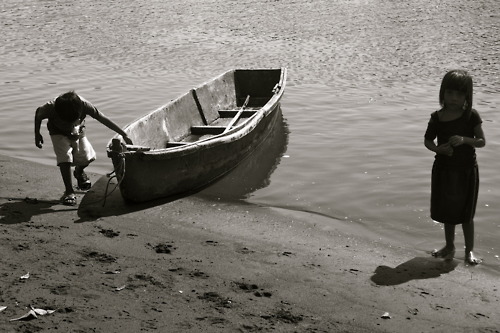
Children in Retalhuleu, Guatemala
Categories
Mini Assignments Uncategorized

Hope you like to eat.

Ahem:

[1] Jairus

Okay so this first one is for you. I know that being abroad can be super exciting (I just spent last year on exchange) but I know you can sometimes get homesick. Anyways, a close family friend of mine is from Singapore and she said that Mandala Iki (on 4th avenue and Balsam) has really good Laska. So if you’re ever missing Singapore maybe check it out! I know there are a few more good Singaporean restaurants in Vancouver as well. Let me know what you think if you end up going!

Also, this isn’t particularly ‘fun’ but it’s a good and useful tip, nonetheless. I know you’re on exchange and you’re probably not going to want to spend your whole time studying, but when midterms and exams come around you might be looking for a place to study that isn’t the library. I would recommend Calhoun’s, on West Broadway. It’s open 24 hours and has really good food and drinks. I basically live there during exams. There have been many, many papers of mine written within those walls, let me tell you.

There are so many things to do and see in and around Vancouver (also, I grew up in Seattle so if you’re planning on making a trip there, I’d be happy to tell you where to go!) but I don’t really know your specific interests. If you let me know what you’re into I’d be more than happy to recommend more exciting places!

[2] Roxy

Helllo. That’s awesome that you spent last summer in Warsaw. I was supposed to go to Warsaw last summer and visit my friend but it didn’t work out and now I am sad. But next time! Also, I’m half Slovak and I know that Polish and Slovak are pretty similar! Are you fluent in Polish? I can say about 10 things in Czech and Slovak. It’s extremely pathetic. Anyways, we have a lot of similar interests actually, but the thing that I thought I’d show you has to do with cooking. So this is kind of a silly, non-fancy food blog. But I like it. I’ve seen so many things on here that I’ve wanted to make. It’s called Fatties Delight. I seriously find myself staring at it for long periods of time when I should be doing more productive things. Anyways, if you click any photo, it should redirect you to a recipe. So it’s really nice to just be able to look through and see what looks good and then you can make it!  They have especially yummy-looking desserts that I’ve been wanting to make. Alas, I live in a tiny studio that has a pathetic kitchen and I have no oven so I have to wait until I go home… lame! Let me know what you think and if you end up making anything!

[3] Annie

Trust me, I have the same travel bug as you. I miss living in Europe so much. I need to practice my French more, let me know if you need someone to practice with! I know sometimes its hard to keep it up when you’re back home. Anyways, I thought I would let you in on my favourite brunch place, Cafe Régalade. It kind of feels like you are back in France. They have the best breakfast/brunch menu and I’m pretty sure the management is actually French. Anyways, my favourite thing on the menu is just the Parisian breakfast accompanied by a good old café au lait. Their blueberry pancakes are also to die for. They get pretty busy on the weekends but they are at 4th and Macdonald so it’s pretty close to campus if you want to treat yourself to a delicious brunch on a weekday!

Okay how embarrassing, every single one of my posts have something to do with food. I am obviously a humungous foodie. I swear I do other things with my life, but recommendations to me always mean food! Hope you guys enjoy!

Categories
Mini Assignments Uncategorized

Hello.

My name is Ludmila. Those who know me well call me Ludi or Mila. I have come to call myself a Vancouverite despite also having spent half of my life in Seattle, Washington. However, I like to think of myself as a citizen of the world.  I spent the last year in Barcelona, Spain. While living in Spain, I took a variety of political science, history, and journalism courses at a Catalan university, which provided me with a drastically different perspective on international affairs. Traveling is one of my greatest passions and my love for languages lends itself well to this pastime; I truly believe that being able to communicate (however badly) with individuals in another country in their own native language is one of the most incredible experiences one can have. There is no more rewarding way to immerse oneself in the culture, politics, or any other sector of a community than to make a significant attempt to relate to them linguistically. This being said, I speak Spanish and English fluently and have a pretty good grasp on French, a mediocre grasp on Catalan and German, and am currently also teaching myself Japanese on the side (this has been one of my biggest linguistic challenges, for obvious reasons).

I am of mixed-ethnicity and I think that each of my parents’ heritages and the fact that I am multi-cultural has had an immense impact on the person I have become. My father was born into a family of Slovakian refugees just after the Second World War in Winnepeg, Manitoba. My mother was born and raised in a middle class family in Guatemala (a middle class that has since then disappeared entirely) and experienced several social and political uprisings throughout her lifetime which undoubtedly shaped her political perspective. My parents are two of my best friends and I respect them more than anyone. I have a younger sister who studies at McGill who I am also extremely close with. The strength and perseverance that each and every one of my family members possesses and which has allowed them to overcome many different types of challenges and smile in the face of adversity is something that makes me incredibly proud to call myself a part of my family. My ethnic background is also something that has contributed greatly to my political identity, particularly my interest in minority rights and immigration, especially within the United States, Canada, and Europe.

Art, whatever you choose to define it as, is one of the most important constants in my life. It is the thread that keeps the fabric of my existence from unravelling within my fingertips. I live and breathe music; I have been singing for as long as I can remember and playing guitar for a few years. But even if I am not making music, you can be certain that I will be listening to it. If I could listen to music 24/7 and still be a functional member of society I would. But alas, it’s rather difficult to go to class and have some semblance of social interactions with headphones on. Still, I listen as much as possibly can. Writing keeps my heart beat constant—it’s the umbilical cord that keeps me grounded when I begin to feel disconnected from reality. I try to carry my Moleskine notebook with me wherever I go, to write down poetry, scribble down scattered thoughts, or sketch my surroundings. Writing allows me to escape; it provides me with a chance to catch my breath from the hurried and rushed lifestyle that so many of us have become accustomed to. Writing, or any art form for that matter, is free and can provide one with more comfort than many would ever think possible. My plan for many years has been to pursue a career in Journalism, hopefully as a foreign correspondent or a photojournalist, but only time will tell if that is what I’m meant to do. [my photo blog]

I became interested in politics when I was quite young, I always wondered why some people were given the power to rule while others merely spent their lives being ‘ruled.’ As I grew older I learned more how government works, and became more familiar with the notion of democracy. Growing up in my household was interesting, as my mother is extremely liberal and is, for the most part, less than enamoured with American government (particularly American foreign affairs). My father, on the other hand, is a naturalized American citizen who is absolutely brilliant and an entrepreneur in renewable energy, and who has a severe addiction to the Economist. In general, my family tends to be rather liberal. As of late, I have been keeping a close eye on the Republican race for 2012—watching the debates, and voicing my dislike of most of the candidates (except for, generally, Ron Paul).

On the other hand, having witnessed first-hand the pervasive political corruption in Guatemala, where I spent many summers visiting my family, I also have become rather disillusioned by many governments and political leaders (mostly in developing nations). My exposure to many of the lofty promises of democracy made by leaders of these developing countries (leaders who often possess zero intention of following through with their assurances) has created an underlying feeling of skepticism and cynicism that sometimes creeps up on me at inopportune moments. I am particularly interested in political theory and political philosophy.

I suppose that’s all for now. I leave you with this link: [click]. A compilation of the most powerful images in journalism from 2011.

Also, sorry. This was reeeally long. Obviously got a bit carried away…

Spam prevention powered by Akismet