When I walked into my first COMM299 class, I was not expecting to get anything out of the course other than extra homework. Instead, I found many useful resources which will be available to all commerce students even after they graduate. I have compiled a list the top resources relevant to components in the Sauder Career Success Cycle along with where to find them and what one can find useful with them.

Sauder Career Success Cycle
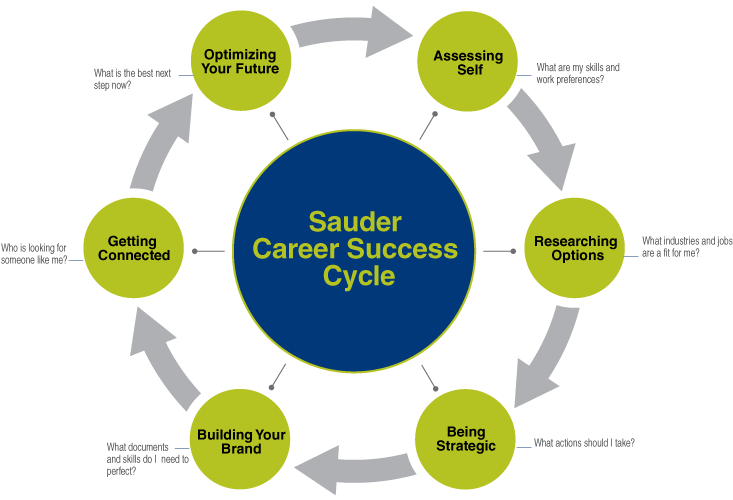
The Sauder Career Success Cycle, accessed through Vista impressed me the most out of all the resources. This cycle illustrates the process from career planning to finding a job to acing the application process, complete with tips and tricks.
STEP 1: ASSESS YOURSELF
Through self-assessment, with the help of StrengthsQuest, we were able to determine personal skills and aptitudes as well as get an idea of how to express those skills both on resumes and verbal conversation.
STEP 2: RESEARCHING CAREER OPTIONS
Job satisfaction is invaluable. By researching careers, one can determine jobs that fit his skill sets and company cultures that complement her character. We also learned about the many different ways to find job opportunities or get in touch with recruiters, including career fairs, company websites, social media (more on this later), job banks, online databases, and publications.
STEP 3: BEING STRATEGIC
We explored two methods of approaching recruiters: the indirect method, which involves the simply search and apply, and the direct method, involving much research, planning, self-promotion, and scheduling information interviews. The latter is a strategic way to find hidden opportunities, or even create opportunities.
STEP 4: BUILDING YOUR BRAND
This step was pretty much the bulk of the course – resume and cover letter writing, managing blogs and social media, printing business cards, and making an impression at networking invents. The marking scheme for resumes and cover letters, while shockingly gruesome, really indicates how harsh companies can be. Every component is critical: formatting, accomplishment statements, transferable skills, matching job description, and interests. For networking preparation, a good 20-second elevator pitch is just as important as dressing professionally. Finally, at interviews, it is crucial to “keep calm, cool and collected” in communicating oneself to the interviewer, clearly outlining experiences using CAR (challenge, action, results) statements and end everything off with a THINCC.
STEP 5: GETTING CONNECTED
It’s all about the people. Networking is so crucial, not just with industry professionals. A good connection with a peer could translate to an introduction to a hidden job position or an important businessperson. We talked a lot about keeping a good online presence with social media, which also can be used to find job postings. These include LinkedIn (job search function), Facebook (marketplace), COOL (amazing and UBC exclusive, it automatically filters through postings according to eligibility), Twitter, and blogging, as well as directly contacting employers to express interest in their company and perhaps even schedule information interviews.
STEP 6: OPTIMIZING YOUR FUTURE
So now you’ve gotten a job offer. What should you do now? We didn’t get much of a chance to explore this section, but it is important to know what, as an employee, one is entitled to at the job positions. Or, if you didn’t get the job offer, what should you do then? Try, try, try again. There’s nothing to lose.
So what did I take out of this 1 credit course?

In late March, I had an amazing opportunity to put what I learned from COMM 299 into action. As a finalist for the Focus 2040 competition in Hamilton, Ontario, I had many chances to network. We had a cocktail reception as well as catered dinners where we could sit and chat with judges, industry professionals, and other important people. I even got a chance to use my business cards.

I really enjoyed talking to Ezra Rosen, the founder of the competition, over a nice grilled chicken and steak at Earl’s. It was also very interesting to observe the networking techniques of the other competitors, and how they communicated their skills, interests, and experiences. However, I have to say that I found the most rewarding part of the ordeal was connecting with the nine other competitors. From simply just two days, all of us became close friends, regardless of the age difference (myself being a first year, and the rest third years to MBA). Now, if I ever were to look for a job opportunity or even people to chat with, there they would be.

Who knew networking could be so much fun.


 At New York’s Fashion week, this “Swatch Girl” was seen roaming the vicinity where attendees could tweet (@swatchus) and tag (#swatchgirl) to win themselves a nice new pastel watch straight from the model’s dress. (Check out full story here: http://mashable.com/2011/02/14/swatch-girl/#10033)