Categories
Educator of the Week Monkey Messages

Educators of the Week

Educators of the week: Jose, Natalia, Kiran, Louise, Allison, Ilana, Ellis, Gabriel, Irene, Christina, Melanie, Clayton, Corinna, Ashlee, Blair, Natasha, Cristina, Rita, Sophie, Shannon, Annie, Dayonne, and Sarah.

The 2nd century CE Rabbi, Yehudah HaNasi, has been widely credited with making the following statement: “Much have I learned from my teachers, more from my colleagues, but most from my students.” It has been a great pleasure learning from and with all of you through the past three weeks. You have encouraged me to revisit old writings and to take up new ones, to re-examine some of the big questions of teaching and learning, and to interrogate my assumptions and the assumptions of others in the spirit of open inquiry, learning, and debate. Thank you for your wisdom, patience, humour, and creativity.

Categories
Monkey Messages

Presentation and Written Submission

The following components should be included in your presentation and written submission:

  • Context (What led you to select this question? Why is it important for English language arts educators to consider?)
  • Approach/Method (How did you approach your inquiry (e.g., review of scholarly literature, examination of teaching methodologies, examination of curriculum documents, etc.)?
  • Findings (What are your findings? Synthesize key findings in your research. )
  • Implications (What are the implications of your inquiry for teaching generally and for your teaching in particular? Do you intend to reflect on the effectiveness of any strategies you have identified in your practicum? If so, how will you do so?)
  • Works Cited (A list of works cited in your presentation. Be sure to include any professional materials such as lesson plans.)
  • Bibliography (To be included with your written materials only: your bibliography will serve as the reading log for EDUC 451B and may or may not be annotated. You should have consulted at least 8 articles. Be sure to include any professional and multimodal materials.)

Draft due: 17 January 2013
Final due: 27 January 2013

Categories
Uncategorized

Grading

A couple of individuals in the class asked for some further information respecting grading after our session yesterday. You’ll find the Postman discussion about the origin of grading that we read in class in the comments sections on the proposals of individuals in Group 6 (Sophie, Cristina, and Blair). Postman doesn’t argue for or against grading — he merely notes that it is a curious practice and results in a particular perspective on teaching and learning.

Probably the most outspoken individual against grading is Alfie Kohn, an independent scholar and advocate for Progressive Education. Kohn has written many books and articles on the subject over the years. One article that synthesizes his position is here (Kohn, 1999). There are also many who critique Kohn’s perspective (e.g., Chance, 1993).

———-
References

Chance, P. (1993). Sticking up for rewards. Phi Delta Kappan, 787-790.

Kohn, A. (1999). From Degrading to De-Grading. High School Magazine. Available: http://www.alfiekohn.org/teaching/fdtd-g.htm

Categories
Monkey Messages

Margaret Atwood, 4-8pm, 16 February, Richmond

Margaret Atwood will speak at the Melville Centre for Dialogue, Kwantlan Richmond campus, on 16 Februrary, 4-8 pm. Tickets range from $25-125. More information is available here:

http://kpu.wildapricot.org/events
http://www.richmondreview.com/news/186078701.html

Categories
Uncategorized

Educational Commonplaces

I spoke with a couple of groups yesterday about what are sometimes referred to as educational “commonplaces” (knowledge, child, society). The commonplaces as iterated above are referenced in some educational literature. For example, Holmes (1984) writes, “In terms of emphasis, the aims of education may be child-, society-, or knowledge-centered.” However, Holmes evidently deems this notion so ubiquitous that he fails to reference his source. Schwab is the key curriculum theorist who articulates the notion of commonplaces, alluding to the bodies of experience that play into the act of curriculum planning, including the following: subject matter, learner, milieu, teacher (503-504). He goes on to ponder what curriculum planning might look like when one centres activities more on one commonplace than another: “Imagine a child-centered planning which emphasizes above all else the present inclinations of students, the interests they bring with them or those which can be aroused by the shrewd placement of provocative objects and events in the educational space” (509). Just as easily, we might imagine a curriculum emphasizing other commonplaces.

———-
References

Holmes, B. (1984). Paradigm shifts in comparative education. Comparative Education Review, 28(4), 584-604.

Schwab, J. J. (1973). The practical 3: Translation into curriculum. The school review, 81(4), 501-522.

Categories
Educator of the Week Monkey Messages

Educator of the Week

Thanks to Diane Loomer, former English teacher, alumnus of UBC, and longtime Vancouver choral conductor extraordinaire, for the gift of music.

Ahearne, S. (2013, January 8). Obituary: Diane Loomer had a gift for getting the best from her singers. The Globe and Mail.

Categories
Educator of the Week Monkey Messages

Educators of the Week

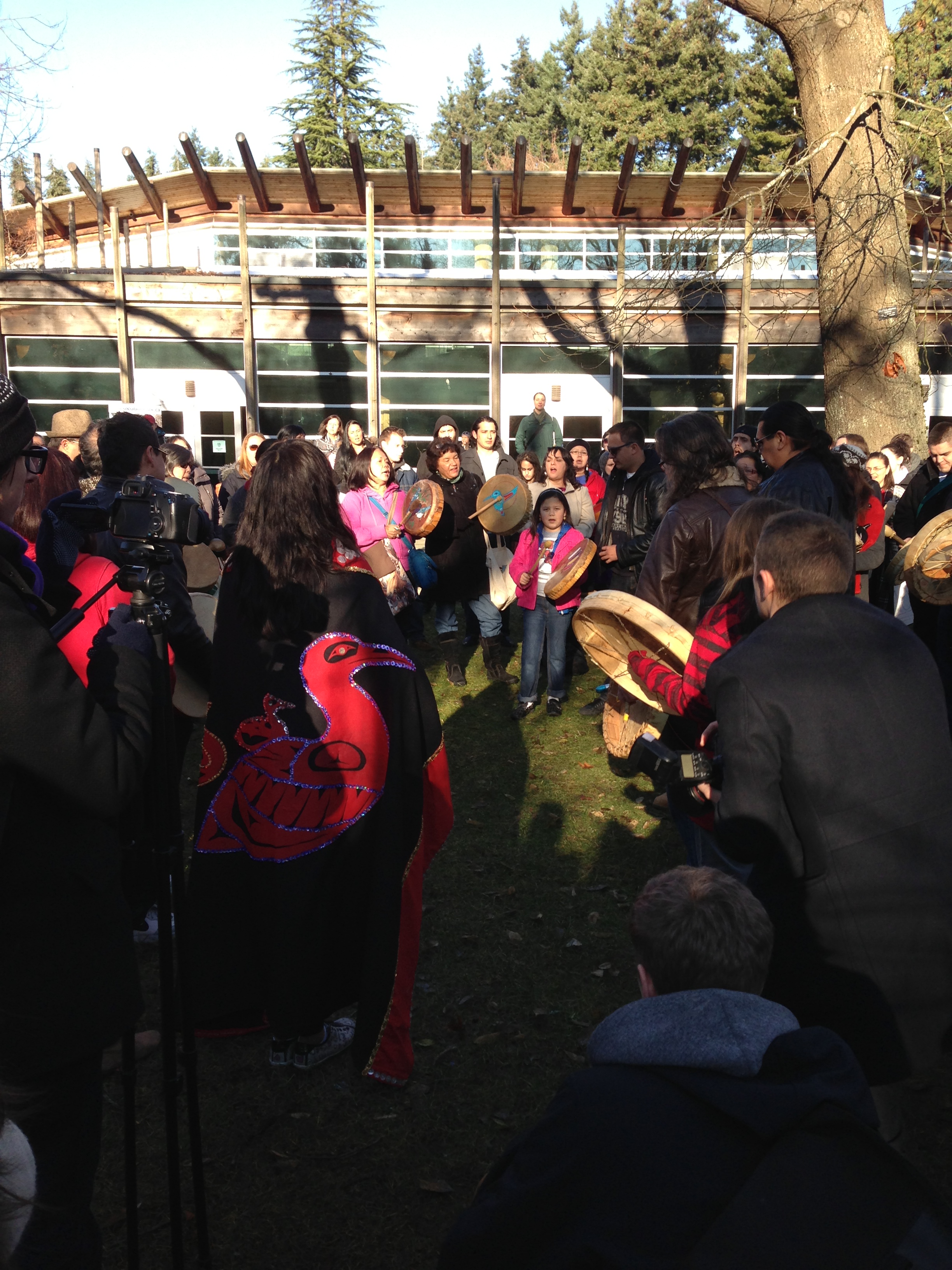
Thanks to the Musqueam people for wisdom and leadership, as well as for their ongoing generosity in hosting UBC on their traditional and unceeded territory.

Idle No More, First Nations House of Learning, Thursday, 3 January 2013.

Categories
Monkey Messages

Day 2

Hello all,

Today our task is twofold:

1. Finish your prospectus and post it to the blog;
2. Read the postings of others (see below) and provide feedback by commenting. (Click on the category “Project Prospectus” in the right-hand margin to view all proposals.)

You may also wish to take a look at CiteULike and consider its use for collecting your resources.

In regards to use of the blog, do remember that you must log in through the main UBC Blogs site before you can post. You should also log in before you comment. (If you do not log in your comment will be held for moderation and will not appear on the site until I respond to the moderation notification; as well, it is more difficult to determine who has commented if individuals do not log in.)

Categories
Monkey Messages

Greetings

Welcome to the Inquiry Seminar II community writing space. Here you should feel free to post your ideas and questions about your research projects or the projects of others, as well as the research you’re examining in the context of your study. My role in the next three weeks is to serve as your “project advisor” while you engage in independent self-directed study, individually or in groups. You’ll find the tentative course syllabus here.

Our primary tasks for 3 and 4 January are as follows:

  • post your project title and project group on the wiki project page (ideally, groups should be 3-5 people);
  • orient yourself to this blog (login to UBC Blogs and make sure EDUC 451 appears as one of your available blogs);
  • post your draft proposal to the blog as your first submission today if possible (remember, this need only be a draft: you may revise the draft as many times as necessary between today and tomorrow in response to feedback, etc);
  • review the proposals of others on the blog and comment (give feedback, offer suggestions and links to resources);
  • go to CiteULike and orient yourself to that tool if you have time;
  • send me an image that somehow represents you (not too large, please), and also add your name and email to the appropriate wiki page

By way of introduction, you’ll find a little about my research interests here. My research projects currently are in literary education, digital literacy, and digital humanities. When I’m not working I spend time raising my two sons, aged 8 and 12, and participating in outdoor activities (on the ocean or in the hills). I look forward to working with you through the next weeks!

Spam prevention powered by Akismet