Categories
4.2 Ten to Twelve 6-12: Cognitive Skills

Cognitive Skills

Ages 10 to 12 years are a great time for cognitive skills (see full Glossary). The children’s thinking is progressing nicely and they are getting ready to start thinking and reasoning “like adults do. They are now able to look at situations from different angles and understand that most situations have more than one aspect. They are also much better at paying attention, even while being mildly distracted.

Children at this age can:

graphic organizer
Figure 1. Graphic organizer
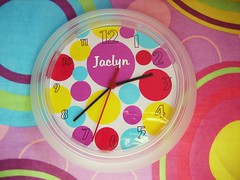
analog clock
Figure 2. Analog clock

Did you know?

Children at this age love to evaluate ideas, and let you know what they think. Of course, some of the principles behind whether or not an idea is good may not always be sound. Despite that, this is a sure sign that children are now quite capable of looking beyond the “here and now” when they are trying to think and reason.
see References
Categories
4.3 Ten to Twelve 6-12: Language Skills

Language Skills

The language that ten to twelve year olds use is almost as complex as the language adults use. Children this age are now playing with words and delight in the use of word-based problems. They are capable of modifying the complexity of their language to fit the audience they are speaking to and the situation they are in.

EXPRESSIVE LANGUAGE

(see full Glossary)

At this age, children can:

  • speak in full and complex sentences;
  • use the negative form (For example: I do not want this.”);
  • use the correct form, when asking questions (For example: “Can I have this?”);
  • use the passive form (For example: “The cat was chased by the dog.”);
  • use figurative language (For example: “It is raining cats and dogs.”);
  • use irregular plurals (For example, mice and feet);
  • use the irregular past tense (For example: “He ate and then slept.”).

RECEPTIVE LANGUAGE

(see full Glossary)

At this age, children can:

  • understand complex directions (for example, “Please take the book that is on the shelf and put under the table.);
  • understand the main topic in a conversation, even if they missed a part of it;
  • understand figurative language (for example “zip it”);
  • understand the passive form (for example, “The book was carried by the teacher.”).

PRAGMATICS

(see full Glossary)

At this age, children can:

  • carry on lengthy conversations (Fig. 1) with others;
  • wait for their turn in a conversation;
  • stay on topic;
  • understand para-verbal (saying: hmmm) and non-verbal cues (nodding in agreement);
  • ask for clarifications as needed.
conversation
Figure 1. Conversation

ARTICULATION

(see full Glossary)

At this age, children can:

  • pronounce all sounds in their native language.

Did you know?

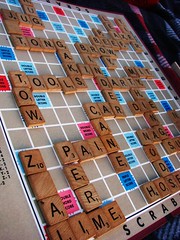
Children at this age are very proud of all the new words they are learning every day. Language-based games, such as Scrabble (Fig. 2), make great gift ideas.

scrabble
Figure 2: Scrabble

Children at this age are capable of pronouncing all sounds in their native language. Any articulation difficulties that have persisted to this age should be brought to the attention of a speech and language pathologist.

see References
Categories
4.4 Ten to Twelve 6-12: Motor Skills

Motor Skills

The motor skills (see full Glossary) of a child 10 to 12 years of age are developing and getting refined quite nicely. They have good balance and are quite coordinated.

GROSS MOTOR

At this age, children can:

  • walk, run, and go up and down the stairs;
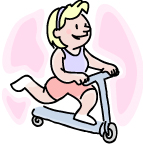
  • ride bikes (Fig. 1) and scooters (Fig. 2) ;
  • throw and catch balls of all sizes;
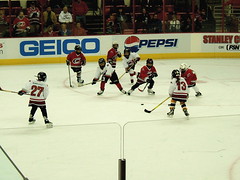
  • engage in complex sports such as hockey (Fig. 3) and soccer.
riding a bike
Figure 1. Riding a bike
riding a scooter
Figure 2. Riding a scooter
hockey
Figure 3. Hockey

FINE MOTOR

At this age, children can:

  • have good posture (Fig. 4) when reading and writing;
  • use all writing tools;
  • tie knots and secure bows.
good posture
Figure 4. Good posture

Did you know?

Children at this age have a lot of energy. Getting them gifts that would allow them to use this energy is highly recommended.

see References
Categories
4.5 Ten to Twelve 6-12: Social/Emotional Skills

Social/Emotional Skills

Between ages 10 to 12 years, children’s social and emotional skills (see full Glossary) are developing well. They are interested in others around them and really want to fit in. Their self-esteem is developing and solidifying itself, but they still rely on those around them, for positive support and feedback.

SOCIAL

At this age, children can:

  • take turns;
  • share, though can be a bit possessive about personal belongings;
  • value friendships;
  • hang out with friends (Fig. 1), without adult supervision;
  • take into account the points of view of others.
with friends
Figure 1. Hanging out with friends


EMOTIONAL

At this age, children:

  • have good impulse control (see full Glossary);
  • have a good idea of who they are;
  • care a great deal about what others think of them;
  • can usually label their feelings quite well (For example: “I am very angry right now.”);
  • can usually label the feelings of others;
  • show genuine concern if someone is hurt, physically or emotionally.

Did you know?

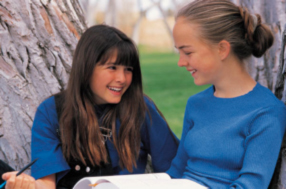
Children at this age often have a best friend (Fig. 2) with whom they will spend most of their time. Best friends help children understand the complexities of the world and how unpredictable life can be. Best friends are often each other’s “rock.” They provide each other with a solid shoulder to lean on.

best friends
Figure 2. Best friends

Children at this age are extremely aware of their bodies, and they start to value their privacy (though not necessarily that of others). They may demand that you knock on their door before entering their room. This is a typical part of growing up and should not be seen as a sign of rejection. Your child, who is now pre-pubescent, is just getting ready for the next big stage in his or her life: adolescence!

see References

Spam prevention powered by Akismet