Categories
2.9 Children with Mental Illness: Ellimination Disorders

Elimination Disorders

An elimination disorders means a child has trouble with bowel or bladder control. The child may have trouble controlling his or her bladder at night (enuresis) and/or his or her bowel functioning (encropesis). Enuresis involves urine and encropesis involves stool.

Enuresis

Enuresis, also known as bed-wetting, means losing control over one’s bladder during the night. The child wakes up with wet sheets and pajamas. Enuresis is not a cause for concern in children who are under six or seven years of age. It could become a problem if the child wets the bed after he or she turns six or seven years old. Some of the warning signs of enuresis are:

  • Wetting the bed after a period of no bed-wetting (that is, the child is completely toilet trained, wakes up dry after a long night’s sleep, then suddenly starts wetting the bed);
  • Experiencing pain while urinating;
  • Being thirsty all the time.

Nobody really knows why a child may have enuresis. There are a few theories regarding the cause of this disorder. They are:

  • Having an unusually small bladder (that is, a bladder that can only hold a small amount of urine);
  • Not being able to tell that one’s bladder is full (most of us know when our bladder is full, even at night, and go to the bathroom. Some children seem unable to recognize that their bladder is full.);
  • Stress: sometimes children start wetting the bed because they are experiencing a stressful event in their lives;
  • Having a medical condition that could cause enuresis. Such conditions include hormonal imbalances and diabetes.

Some children overcome enuresis on their own, and others do not. For those who do not, some medications that make the body produce less urine at night could be prescribed.

For more information about enuresis, please visit the birth to six section of this course.

Encropesis

Encropesis, also called “stool holding,” involves voluntarily refusing to have a bowel movement. The child holds the stool inside until it fills up parts of his or her body. When that happens, liquid stool could leak from the child’s anus, causing staining on the child’s underwear. Encropesis happens in children who have already developed bowel control and who are usually over four years of age. It can be caused by emotional difficulties and/or stress. Some of the symptoms of encropesis are:

  • Having very hard stool;
  • Having stool that is so large it clogs the toilet;
  • Avoiding having a bowel movement;
  • Going for up to a week without having a bowel movement;
  • Having abdominal pain.

Because the causes of encropesis can be either physiological or psychological, treatments vary, and can include:

  • Using stool softeners, enemas and/or suppositories (that is, medical tools that can help the child have a bowel movement);
  • Psychotherapy, if the cause is emotional and/or a stress condition.

Unlike enuresis, encropesis can be quite visible at school. A child who holds his or her stool cannot control the fact that the stool could leak out occasionally. The child may end up smelling bad or wearing stained pants, which can be embarrassing. If that happens, the teacher will need to be very understanding and patient with the child. It is also recommended that the child always have a change of clothing at school, in case he or she soils his or her pants.

For more information about encropesis, please visit the birth to six section of this course.
see References
Categories
2.9 Children with Mental Illness: Conduct Disorders

Children with Conduct Disorder (CD)

Children with conduct disorder are very defiant. This means they rebel against authority and   engage in activities that are meant to annoy and in some cases hurt others. They say no to almost everyone.

Many children with Oppositional Defiant Disorder or ODD who do not get proper treatment end up getting diagnosed with CD when they get older. CD is a condition that is much more serious than ODD. Children with CD do not just annoy others. They hurt them physically, verbally, or both. CD usually includes the following symptoms:

  • Aggressive behavior, which includes:
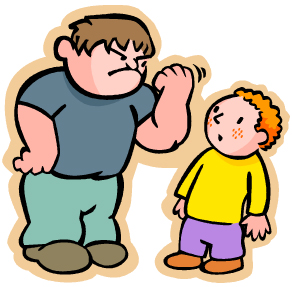
    • Bullying and intimidating others (Fig. 1);
    • Fighting  with others;
    • Using weapons to hurt others (like a knife, gun or bat (Fig. 2);
    • Physically hurting people;
    • Physically hurting animals;

bulling

Figure 1. Bulling

Figure 2. Knives
  • Destroying property, which includes:
    • Setting fires (Fig. 3);
    • Keying cars (that is, scratching marks onto cars with  keys);
    • Damaging school property;
    • Damaging other people’s homes (Fig. 4);

Figure 3. Fire

Figure 4. Damage
  • Delinquent behavior (that is, behavior that is not socially acceptable and might be illegal), which includes:
    • Breaking into people’s homes in order to hurt them or steal from them;
    • Lying;
    • Stealing;
    • Disobeying curfews;
    • Running away from home;
    • Joining a gang.

Many children with CD do not perform well in school because of their behavior. Many miss a lot of school days and others drop out of school very early. Teachers can help these children in the classroom but they need help because these children can and will hurt the teacher or their classmates. With the help of the special educator, a behavioral consultant and the child’s clinical psychologist, the teacher can help the child by:

  • Making sure the child knows that he or she is welcome in the classroom but that his or her behaviors and attitudes are not;
  • Being very consistent because a child with CD will test the teacher to his or her limits;
  • Providing them with routines and predictability;
  • Watching them very carefully and stepping in the minute they realize the child is about to act out (for example, a child who fidgets and squirms in his or her seat is sending the message that he or she needs a break);
  • Making sure valuable and potentially dangerous materials (like scissors) are put under lock and key;
  • Giving them extra time, if needed, to turn in class and homework assignments;
  • Consulting with the school’s special educator to help these children reach their maximum potential. That is because many children with CD do not perform well in school and have low grades. The special educator can help the teacher find ways to encourage these children to perform well in school;
  • Many children with CD also have Attention Deficit Hyperactive Disorder or ADHD. In these cases the special educator will help the teacher rearrange the classroom in order to help a child with ADHD;
  • Consulting with the school counselor: many children with CD have a low self-esteem and do not have many friends. The school counselor and teacher can work together to improve the child’s low self-esteem.

Children with CD need help from a licensed clinical psychologist. The psychotherapist will:

  • Offer the child individual psychotherapy;
  • Offer the child social skills training;
  • Offer the child and his or her family therapy;
  • Offer the child’s family advice on how they should treat their child;
  • Help the child with any other condition he or she has, such as depression or anxiety.

The parents of children with CD are usually asked to take parenting classes to learn how to best raise their children. With proper and intensive psycho-therapy, many children with CD do overcome their difficulties and grow up to be happy and healthy adults (Fig. 5).

Figure 2. Happy young adult
see References
Categories
2.9 Children with Mental Illness

Children with Mental Health Disorders

Many school-aged children are being identified with mental health disorders. In some cases the child has been diagnosed with just one condition, which is the mental health disorder. In other cases, the mental illness disorder is secondary to another disorder, like autism. Studies show that many children with a variety of special needs have more than one diagnosis. For example, some children with autism also have a diagnosis of a mental illness, a learning disability or ADHD. So it is very important to learn about these conditions because they occur with other developmental disabilities.

In the following sections, we will review the main types of mental health disorders that can be diagnosed in the school age years. They are:

see References
Categories
2.9 Children with Mental Illness: Schizophrenia

Schizophrenia

Schizophrenia is a complex group of disorders that has many symptoms. Schizophrenia usually starts in the late teen to early adulthood years, but more and more children are being diagnosed with schizophrenia. Schizophrenia is a disorder in which the child loses touch with reality. The child has difficulty telling the difference between what is real and what is not real. Schizophrenia has a large impact on the mental and emotional states of those who are diagnosed with it. That is mainly because schizophrenia affects the way a person perceives (that is, how a person sees and feels) the world, and interacts (that is, how a child connects with others and relates to them) with it.

Schizophrenia has many symptoms. The most common symptoms are:

  • Having hallucinations (seeing and/or hearing things that are not really there), which include:
    • Auditory: hearing voices (child hears a voice inside his or her head, sometimes the voice tells the child to do something he or she may not want to do);
    • Visual: seeing things that are not there;
  • Being delusional, that is, believing things that are not true;
  • Being unable to think in a rational and organized way;
  • Having difficulty paying attention and concentrating (Fig. 1);
  • Having difficulty remembering things;
  • Having unusual emotions (being happy when everyone is sad) or no emotions at all;
  • Having few or no friends;
  • Having weird eating habits (that is, eating certain types of foods or eating while in a specific situation);
  • Doing poorly in school;
  • Being unable to take care of his or herself.

Figure 1. Difficulty paying attention

The causes of schizophrenia are not known. It is believed that genetics (see ECI Glossary) and imbalances in certain brain neuro-transmitters (see full Glossary)  may be some of the causes.

Children with schizophrenia need help from a licensed psychotherapist with experience working with children who have schizophrenia. Psycho-therapy could be intensive and could include the entire family. Some children with schizophrenia may also be placed on medication, to restore balance to certain brain neuro-transmitters.

In school, some children with schizophrenia are placed in an Individual Education Plan (IEP) (see full Glossary). So, with the help of the school counselor and special educator, the regular education teacher can:

  • Make sure the child feels safe and secure in the classroom;
  • Give him or her extra time for in-class and homework assignments;
  • Provide him or her with graphic organizers and outlines  to make it easier for them to pay attention to  lessons;
  • Provide information more than once, and in more through more than one way to help the child will remember what he or she is being taught;
  • Be understanding when the child experiences a hallucination or delusion in the classroom;
  • Make sure the child and his or her classmates are safe if the child experiences a hallucination.

Schizophrenia is a lifelong condition. There is no cure. But many individuals with schizophrenia grow up to lead happy and healthy lives. The earlier therapy starts, and the more understanding the child’s environment is, the more likely he or she is to grow up to be a happy adult.

For more information about childhood schizophrenia, please visit the birth to six section of this course.

see References
Categories
2.9 Children with Mental Illness: Eating Disorders

Eating Disorders

Eating disorders involve having an unusual relationship with food. A person with an eating disorder either eats too much or too little food. The reason for this unusual relationship is not clear. Some claim is the illness is about how much a person eats and an obsession with staying slim, even if it is bad for that person’s health. Others claim that it is about control. That is, children who have eating disorders do not feel that they have control over any aspect of their life so they try to control what goes into their body (Fig. 1). Many psychologists feel the truth is somewhere in the middle. They believe children who have eating disorders have serious emotional problems that they only seem to be able to deal with by controlling what they eat. In fact, many children with eating disorders have low self-esteem.

eating

Figure 1. Eating disorder

More and more children are being diagnosed with eating disorders. Some of these children are as young as eight or nine years old. Eating disorders are mainly girls’ disorders, but boys can suffer from these disorders too.

Eating disorders can be classified into two categories:

  • Anorexia nervosa: children with this eating disorder are obsessed with their weight. They are ultra-thin but may still see themselves as fat. They:
    • Usually eat very little or no food at all;
    • Only eat food that has very few calories (for example, they eat lettuce and cucumbers);
    • Insist on a body weight that is way below what is expected for their age and height;
    • May exercise too much (that is, they may run 30 miles per day, or go up and down the stairs a hundred times a day);
    • May binge on food (over-eat) and purge what they eat vomit on purpose;
    • May use laxatives (which is medication that some adults take when they are constipated) and even give themselves enemas (another type of medication that some adults take, when they are severely constipated), in order to get rid of the food they ate;
    • May lie to their parents and teachers about how much they have eaten;
    • May refuse to admit that they are hungry;
    • Appear very thin and sick;
    • May have dark circles under their eyes;
    • May faint because of little or no energy;
    • May appear very tired, all the time;
    • May have trouble sleeping because they are so hungry;
    • May feel dizzy or nauseous;
    • May have fingers that appear blue;
    • May be losing their hair;
    • May fail to menstruate (if they are a girl who is old enough to be menstruating);
    • May have dry skin;
    • May be constipated;
    • May skip meals;
    • May be dehydrated because they drink lots of water and eat virtually nothing;
    • May be depressed or anxious about gaining weight (despite not eating at all);
    • May be socially withdrawn;
    • May complain about being fat;
    • May weigh themselves several times per day (Fig. 2);
    • May be highly irritable.

weighing

Figure 2. Weighing oneself

Bulimia nervosa: children with bulimia nervosa overeat, then try to get rid of what they have eaten. They eat very large amounts of food in very short periods of time. For example, a child could eat in two hours what others would eat in three days or more. They then get rid of what they have eaten by either using lots of laxatives, by vomiting, or by going on a strict diet and/or excessively exercising. They:

    • Are obsessed (with their weight and what their body looks like;
    • Want to be thin so they try to get rid of the food that they eat;
    • Are very afraid of being fat or gaining weight;
    • May say that they are fat, even though they are not;
    • May purge after eating a very small amount of food;
    • May feel that they have no control over how much they eat;
    • May fast for several days, after a binging episode;
    • May have a negative self-esteem;
    • May have sores or scars on their knuckles (caused by constantly inducing vomiting);
    • May have damaged teeth and gums;
    • May appear withdrawn or sad (Fig. 3).

Figure 3. Withdrawn

Children with eating disorders need help. Those with anorexia nervosa may need to stay in the hospital because of their refusal to eat. Doctors may need to monitor their heart rates (sometimes, the hearts of children with anorexia nervosa beat very fast), electrolyte and hydration levels (how much water they have in their bodies). They also need psychotherapy. This therapy needs to be provided by a licensed clinical psychologist that has experience working with children with eating disorders. The clinical psychologist can offer these children individual therapy to work out any emotional problems and help them develop a healthy relationship with food. Family therapy may also be recommended for these children and their families. Some children with anorexia nervosa benefit from group therapy with other young people who suffer from an eating disorder. Knowing that they are not alone and that others struggle with food issues just like they do can sometimes help these children.

Children with bulimia nervosa may also be hospitalized because of stomach problems caused by constant vomiting. Constantly vomiting could cause tears in the lining of the stomach and could cause heart problems in children. In fact, many children with bulimia nervosa who do not get treatment die of heart failure. These children also need psychotherapy. It needs to be provided by a licensed clinical psychologist with experience working with children with eating disorders. The clinical psychologist will help these children improve their self-esteem (see full Glossary)  and sense of self-worth. He or she will also help these children develop a healthy relationship with food.

In the classroom, the teacher can look for warning signs of eating disorders. They are:

  • In the case of anorexia nervosa:
    • Only eating foods that are low in calories;
    • Refusing to buy anything from the cafeteria;
    • Skipping meals;
    • Stating that they are not hungry even if they haven’t eaten anything all day;
    • Appearing sickly, weak or tired.
  • In the case of bulimia nervosa:
    • Refusing to eat in front of others;
    • Having too much food with them, or buying lots of food;
    • Wanting to go to the bathroom immediately after eating all the time.

Teachers need to reassure these children that they are welcome in the classroom. They should make every effort possible to give them positive feedback that boosts their self-esteem. The compliments should be sincere and genuine.

Eating disorders do not always have happy endings. Many children with anorexia nervosa die of starvation. Those with bulimia could die from heart failure caused by constant vomiting. These disorders are extremely serious and children who suffer from them should get therapy as soon as possible. Many children who do get therapy lead happy and fulfilling lives.

see References
Categories
2.9 Children with Mental Illness: Oppositional Defiant Disorder

Children with Oppositional Defiant Disorder (ODD)

Children with ODD are very defiant. This means  they say no to everything and everyone. They rebel against  the adults  around them, especially their parents. They can argue a lot and may not respond to requests or instructions. Most children go through a defiant stage at some point in their lives. This is typical. But when a child is defiant almost all the time and goes out of his or her way to annoy the adults around him, he or she may have ODD.

A child may have ODD if:

  • He or she is in a bad mood, most of the time;
  • He or she does not follow requests most of the time;
  • He or she does the opposite of what is asked most of the time;
  • He or she argues about everything, from the smallest to the biggest thing (Fig. 1);
  • He or she appears to be resentful (see full Glossary) of adults, and especially his or her parents;
  • He or she has frequent and intense temper tantrums;
  • He or she tries to annoy others on purpose (that is, He or she does things that he or she knows would annoy his or her parents);
  • He or she appears angry and spiteful;
  • He or she lies and blames others for his or her mistakes;
  • He or she has few, if any, friends.

Figure 1. Arguing

Children with ODD may have difficulty in developmental areas:

  • Academic: children with ODD do not do well academically. They perform less well than their peers and do not do well on standardized (see full Glossary) and/or regular tests. It is because they are not as smart as their peers. It is because they are not interested in academics. It could also be because they know that not doing well would annoy their parents;
  • Social/emotional: children with ODD usually have a low self-esteem. They do not have many friends and seem to annoy their peers just like they annoy adults. They are angry and may be sad. This  makes it difficult for them to make friends;
  • Mental health: many children with ODD also have an anxiety disorder and some also suffer from depression. Therapy can help these children with all these symptoms;
  • Cognitive: some children who have ODD also have ADHD. These children may have a dual diagnosis of ODD and ADHD. They  may have an Individual Education Plan (IEP) that deals with both disorders (which overlap a lot).

Children with ODD need help in the classroom. Their teacher has to be very creative because most techniques that work with other children may not work with them. Unlike other children with other special needs, children with ODD are not eager to please adults. In fact, they go out of their way to annoy adults and do the exact opposite of what they are supposed to do. The teacher will need to gather a lot of resources, get help from the special educator in school and maybe also a behavior interventionist, to reach and teach a child with ODD. Here are a few suggestions:

  • These children need to feel welcome in the classroom. They know they are difficult. Teachers need to make sure these children know that their behaviors and attitudes are not welcome in the classroom, but they are!
  • These children are defiant. They will say no just to say no. Teachers will need to be creative in finding ways to encourage these children to want to participate in activities and lessons;
  •  Teachers need to know when to ignore behavior that is annoying but not very disruptive and when to step in so everyone feels safe and secure in the classroom;
  • The teacher may need to give these children extra time to hand in in-class and homework assignments. This is not because these children need extra time to perform these tasks. It is because they are defiant and may not turn in assignments on time;
  • The teacher may need to place the child on a behavioral contract (a written contract between the child and the teacher). The behavioral contract can be developed in consultation with the school’s special educator and the behavior consultant. The contract will include what is expected from the child and what happens when she or he does not respect the class rules. The contract can also include a section where the child lists what he or she expects from his or her teacher.

Children with ODD need help as soon as they can get it. They need individual psychotherapy to work out their anger and frustration with adults, especially their parents. Therapy should be intensive and start as soon as possible after the child is diagnosed with ODD. Also, many children with ODD could use social skills training. They need to learn how to interact properly with others. They need to learn to respect others. Psycho-therapy should be provided by an experienced  clinical psychologist.

But individual psycho-therapy is usually not enough. There seems to be a mismatch between the child with ODD and his or her parents. That is, the child and the parent’s temperaments do not match, and there is no goodness of fit. (Please refer to social/emotional section of the birth to six course, in order to learn more about temperament and goodness of fit.) Most children diagnosed with ODD will receive family therapy, with their parents, and the individual therapy they need. It is also highly recommended that parents enroll in parenting classes to learn more about child development and how to best treat their child. This does not mean that parents are doing something wrong. But they do appear not to be “in-sync” with their children and this is why parenting classes are often a good idea  .

Research suggests that therapy provided by an experienced psychologist can be very helpful for  children with ODD. The vast majority of children with ODD get help can overcome this disorder. Those who do not could end up getting diagnosed with a more serious disorder called Conduct Disorder. It is important that children with ODD get help as early as possible.

see References
Categories
2.9 Children with Mental Illness: Attachment Disorders

Reactive Attachment Disorder

Babies need to feel safe and secure with their parents and primary caregivers. They need to feel that they are loved and that their basic needs are going to be taken care of (Fig. 1). Reactive attachment disorders usually happen when a child does not develop solid and secure attachment to parents or primary caregivers. (For more information, see  the typical and atypical sections of social/emotional development). RAD is a very sad disorder because it is preventable. A baby whose needs are met, who feels safe and secure and who is loved will not develop RAD. RAD happens when the parent and child do not bond with each other. This failure is never the baby’s fault.

Figure 1. Feeling loved

RAD is a very serious but rare disorder. It affects the way the child relates to and interacts with others. The child may appear typical and may behave typically, but he or she has a very serious disorder that needs to be addressed and taken care of. RAD is most often found in children who have been abused and/or neglected, and children who are in foster care, but RAD can occur to children from all races, ethnic and socio-economic backgrounds.

RAD has many symptoms. For a description of RAD symptoms in the early childhood years, please visit the zero to six part of this course.

In school-age children, the symptoms of RAD could go from one behavioral extreme to another. The child could show lots of affection, or the child could not show any affection at all. That is, the child could show lots of affection, or the child could not show any affection at all. The first extreme includes these behaviors:

  • Child forms attachment to a variety of adults, including adults that the child does not know very well;
  • Child clings to anyone in sight (Fig. 2);
  • Child hugs and snuggles into anyone in sight;
  • Child is overly eager to please.

a boy clinging to his mother

Figure 2. Clinging to his mother

The second extreme includes these behaviors:

  • Child does not let anyone get close to him or her emotionally;
  • Child acts aloof and distant;
  • Child does not let anyone hug him or her;
  • Child throws very severe temper tantrums;
  • Child is overly defiant of individuals who are a source of authority.

Other behaviors that are common to all children with RAD include:

  • Moving from one extreme emotional state to another;
  • Not trusting others;
  • Not having any close friends;
  • Lying;
  • Cheating;
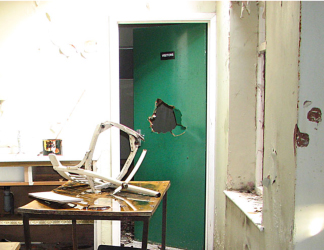
  • Acting aggressively towards others (in some cases) (Fig. 3);
  • Having  poor self-esteem (see full Glossary);
  • Being angry (Fig. 4) and sometimes showing rage;
  • Being sad and  sometimes suffering from depression.

damaged furniture

Figure 3. Destroying property

Figure 4. Angry

Children with RAD need psychotherapy. If they are living with their biological parents, family therapy is usually recommended. They also need individual therapy. Parenting classes are also recommended if the child is living with the biological parents. It is highly recommended that whoever is taking care of the child (biological parent, grandparent, foster parent) learn about RAD. They should also learn what its symptoms and treatment options are. The therapy should be provided by a licensed clinical psychologist who has experience working with children and families. It is best that the therapist has experience working with children with RAD. Psycho-therapy sessions could be intensive (several times per week) and often last more than a year.

Some children with RAD do not perform as well as their peers in school. This is because they may not be very motivated to learn. Another reason could be the child’s poor self-esteem and his or her lack of feelings towards life. The classroom teacher can help the child get motivated to learn (with help from the special educator and the child’s psycho-therapist), by:

  • Making sure the child knows that he or she is welcome and safe in the classroom;
  • Making sure the child understands that he or she is wanted in the classroom;
  • Being patient with the child, knowing that he or she may act out (for example, talk back to others) sometimes;
  • Giving the child more time to complete in class and at home assignments;
  • Giving the child as much consistency as possible in the classroom;
  • Being firm but kind; these children need structure in their lives.

Although RAD appears to be a lifelong condition, proper treatment and therapy can help children with RAD grow up to be healthy individuals who are perfectly capable of forming happy and healthy relationships with others (Fig. 5).

relationship

Figure 5. Relationships
see References
Categories
2.9 Children with Mental Illness: Generalized Anxiety Disorder (GAD)

Generalized Anxiety Disorder (GAD)

Children with GAD worry all the time, about almost everything. What they worry about may change from time to time, but the worry is always there. It  prevents the child from leading a typical life and participating in daily activities (such as brushing one’s teeth). In fact, having GAD has an effect on every aspect of the child’s life.

Children who have GAD usually have mental and physical symptoms.

The mental symptoms include:

  • Worrying about big things (“Will I pass this term in school?”) and little things (“What if I can’t find the cereal I like at the supermarket?”);Difficulty concentrating and paying attention to the task at hand;
  • Feeling as if one’s mind has gone “blank” (that is, not being able to think about anything, or even move);
  • Feeling irritable (that is, feeling on edge);
  • Feeling as if the world is going to end;
  • Worrying excessively about being “on time” and what happens if one is not on time;
  • Being a perfectionist (that is, wanting to do everything extremely well);
  • Re-doing certain tasks because child feels that the task was not performed well the first time around (even though it was);
  • Constantly asking others for reassurance that everything is ok;
  • Constantly asking a lot of “what if” questions.

The physical symptoms include:

  • Restlessness;
  • Fatigue;
  • Having muscle tension or aches;
  • Trembling and getting “a bad case of the shakes;”
  • Having trouble sleeping;
  • Sweating (Fig. 1);
  • Breathing very fast (that is, as if the child has been running for an hour);
  • Feeling nauseous.

sweating

Figure 1. Sweating

Children with GAD need psychotherapy. If symptoms are severe, the therapy may need to be intensive (that is, at least once a week) in the beginning. For GAD, the most common type of psycho-therapy is cognitive-behavioral therapy. In cognitive-behavioral therapy, the therapist helps the child learn how not to worry so much by identifying negative thoughts (the cognitive part), and learning how to change the behaviors that are associated with worrying (the behavioral part).

Some children with GAD may need to take medication. Placing children under age 12 years on medication is controversial. Parents should research this issue very carefully before they decide whether or not they wish their child to take medication.

Some children with GAD may have an Individual Education Plan (IEP. In the classroom, children with GAD need the help and support of the classroom teacher:

  • The teacher may have to take things slowly, as children may need extra time to process certain types of information;
  • The teacher may have to give a lot of advance notice about going on field trips or outside of the school, because children with GAD usually worry a lot when they have to go to an unfamiliar place;
  • The teacher may need to give extra time to submit in-class assignments or  homework assignments;
  • The teacher may need to give extra time during in class tests;
  • The teacher may need to make sure they are not being bullied or made fun of by other children;

The most important thing the teacher can do is offer children with GAD support and make them feel welcome and safe in the classroom. This may help the child to worry less. This will also help other students better accept  those who are different.

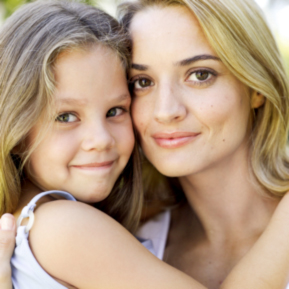
Children with GAD who get good therapy and lots of love and support at home move on to lead very full and healthy lives. They may not overcome GAD or be cured of it, but they do learn to live with it  successfully (Fig. 2).

mother and daughter

Figure 2. Mother and daughter
see References
Categories
2.9 Children with Mental Illness: Mood Disorder - Depression

Mood Disorder – Depression

Children who have mood disorders struggle with how they feel. There are many types of mood disorders. The most common mood disorders are depression (also known as uni-polar disorder) and bi-polar disorder. To learn about other types of mood disorders, please visit the birth to six section of this course.

A child with depression usually shows these symptoms almost every day:

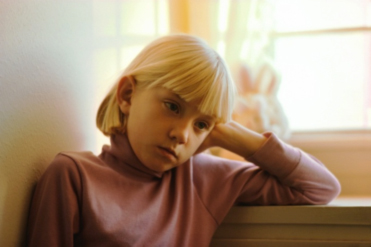
  • Experiencing feelings of extreme sadness even if there is no reason for the sadness (Fig. 1);
  • Having very low energy or being very restless;
  • Sleeping lots or not sleeping enough;
  • Over-eating or not eating enough;
  • Having no interest in anything or anyone;
  • Failing to take pleasure in any activity, including activities that used to be pleasurable to the child before he or she became depressed;
  • Appearing sad or uninterested in others;
  • Younger children may seem irritable;
  • Feeling very tired or exhausted, even without physical activity;
  • Experiencing feelings of worthlessness (that is, they feel that they do not matter);
  • Feeling hopeless and helpless;
  • Having trouble concentrating on daily mental activities, such as solving a math problem;
  • Speaking very slowly and in a somewhat monotonous tone (that is, without emotion);
  • Being unable to make decisions;
  • Having trouble remembering things;
  • Spending a lot of time alone and avoiding friends;
  • Being extremely sensitive and crying at the smallest things;
  • Possibly feeling that life is not worth living, often thinking of death and dying and feeling suicidal.

sad girl

Figure 1. Experiencing sadness

Many adults, adolescents and children feel sad and even very sad at some point in their lives. These feelings do not usually last very long. Also, some do feel very sad for a somewhat long period of time, but it is because there is a reason (for example, the death of a parent). Depression occurs when the child is very sad for a very long time (at least six weeks) for no apparent reason. The sadness is so severe and constant that it hurts the child’s ability to function well and go to school. The child’s sadness is usually not explained by sickness or a sad event.

Children who suffer from depression need psychotherapy to help them understand and cope with their emotions and feelings of low energy. Psycho-therapy should be provided by a licensed clinical psychologist or a psychiatrist who has experience working with children. In the beginning, the psycho-therapy sessions can be frequent. The most common type of psycho-therapy used with children who are depressed is cognitive-behavioral therapy (CBT) (see ECI Glossary). In CBT, children are taught to change how they think (the cognitive part) and how to change the behaviors associated with depression (the behavioral part).

Some children with severe depression could be placed on medication. It is believed that one of the causes for depression is an imbalance in the level of some neuro-transmitters (see ECI Glossary) in the brain. The issue of medicating children is a difficult one.  Most research done on depression medication has focused on adults, not children. There can be serious side effects. For more information about intervention options for depression, please visit the birth to six portion of this course and scroll down to the bottom of the page.

Children with depression need help in the classroom. They will often have trouble  staying on task and paying attention. They may find class and home work overwhelming. Sometimes they can be irritable and defiant. Most of them will not be on an Individual Education Plan (IEP) but they still need help. Here are a few things  teachers who have a child with depression in their classroom can:

  • Make sure the child feels welcome and safe in the classroom;
  • Make changes to class material such as:
    • Giving them more time to complete in-class assignments;
    • Giving them more time to turn in home work;
    • Giving them more time to complete tests;
    • Giving them simple directions;
    • Giving them outlines of lessons so it is easier for them to follow the day’s lesson;
    • Make sure children are told that they are worthwhile:
      • Finding out what the child is good at and making sure they engage in such activities;
      • Giving the child frequent but sincere compliments;
      • Drawing attention to the child’s skills and strengths;
      • Encourage the child to engage in physical activities (Fig. 2) (if they are not moving enough);
      • Encourage the child to eat healthy foods (if the child is over-eating) or make sure the child is eating (if the child is under-eating) (Fig. 3);
      • Allow the child to go to the nurse’s station and take a nap (if the child suffers from lack of sleep);
      • Collaborate with the school counselor who may have additional information on how to help a child with depression in a regular classroom.

a boy with a ball

Figure 2. Physical activity

a girl eating a strawberry

Figure 3. Eating

Depression is a very serious disorder that can be a lifelong condition. Most children who get the right amount of psycho-therapy grow up to be happy and healthy adults. That is because good psychotherapy does not just deal with the child’s current symptoms. It also teaches the child how to cope with overwhelming feelings if they happen again.

see References
Categories
2.9 Children with Mental Illness: Mood disorders - Bipolar Disorder

Mood Disorders: Bipolar Disorder

Children with bipolar disorder suffer from extreme mood swings. Sometimes the child suffers from depression. Other times, the child suffers from what the psychology community calls “manic episodes. ” This is an episode lasting a week or more and is when  a person experiences mania, an abnormally cheerful or joyful mood. A depressed or manic state can last several hours or several days. A child can swing between these two extreme moods several times per day or only a few times per year.

When the child is depressed, he or she could show the following symptoms:

  • Feeling very sad;
  • Have little or no energy;
  • Having little or no appetite, or over-eating;
  • Not sleeping enough or oversleeping;
  • Feeling worthless and having very low self-esteem;
  • Thinking about committing suicide;
  • Feeling hopeless and helpless;
  • Finding it hard to concentrate and carry on typical daily activities (such as taking a shower);
  • Experiencing little or no pleasure in any activity, including things that used to provide the child with great pleasure (Fig. 1);
  • Experiencing physical pain even though there is nothing medically wrong with him or her.

not happy boy

Figure 1. Experiencing little or no pleasure

When the child is in a manic state, he or she could exhibit the following symptoms:

  • Feeling very important (grandiosity);
  • Feeling that one can do anything (omnipotence);
  • Feeling very happy for no apparent reason (euphoric);
  • Feeling as if one has a lot of energy and sometimes going days without sleeping;
  • Having an unusually high self-esteem;
  • Having a lot of self-confidence;
  • Speaking very fast;
  • Exercising poor judgment because one feels very confident;
  • Engaging in risky behavior (some people have jumped off the roofs of their houses during a manic episodes because they felt that they could fly);
  • Being easily distracted;
  • Having trouble concentrating on a specific task because one is thinking about a lot of different things at the same time;
  • Getting lower grades at school because one feels that there is no need to study because one is so smart.

Children with bipolar disorder need help. They need psychotherapy from experienced clinical psychologists or psychiatrists with experience working with children.

The most common type of psycho-therapy for children who have bipolar disorder is cognitive behavioral therapy (see ECI Glossary) (CBT). For information about other types of therapy, please visit the birth to six section of this course, and scroll down to the bottom of the page. Children who have bipolar disorder can also be placed on medication (Fig. 2). The child’s parents, along with his or her psychiatrist can decide on what the best medical options would be.

pills
Figure 2. Medication

In the classroom, the bipolar child can be helped in the following ways:

  • For depressive episodes:
    • Letting the child know that he or she is welcome and safe in the classroom;
    • Making sure the child eats enough (if under-eating);
    • Allowing the child to go to the nurse’s station and take a nap if he or she is not sleeping enough at home;
    • Allowing the child to take extra time to do assignments and homework;
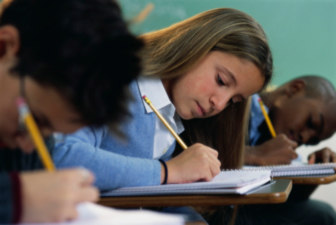
    • Giving the child extra time to complete tests (Fig. 3);
    • Giving the child lesson outlines to make it easier for him or her to follow what is happening in the classroom;
    • Giving the child frequent but sincere compliments;
    • Knowing the side effects of any medication the child may be taking;
    • Collaborating with the school counselor.
    • For manic episodes:
      • Letting the child know that he or she is welcome and safe in the classroom;
      • Encouraging the child to be calm when having a manic episode;
      • Watching the child very carefully when having a manic episode;
      • Giving the child frequent physical breaks so he or she can release all the extra energy that he or she has;
      • Giving the child extra work or activities to engage in if he or she finishes class work quickly;
      • Helping the child to pace him or herself  to make it easier for him or her to concentrate;
      • Knowing the side effects of any medication the child may be taking;
      • Collaborating with the school counselor.

Bipolar disorder is a lifelong condition for which there is no cure. Children who receive appropriate and effective therapy (psychological, medical or both), grow up to be healthy and happy adults.

writing a test

Figure 3. Taking a test
see References

Spam prevention powered by Akismet