

I have just finished teaching my undergraduate and graduate courses for future and practicing STEM teachers. With grades submitted, I finally have the space to pause and reflect—not only on my students’ learning, but on my own experience as a STEM teacher this year. I was lucky this year having many inspiring colleagues visiting my class, such as Mr. Darren Ng (an award winning STEM teacher from New Westminster), Dr. Valery Milner (a physics professor), colleagues from the Perimeter Institute for Theoretical Physics, as well as colleagues from TRIUMF.
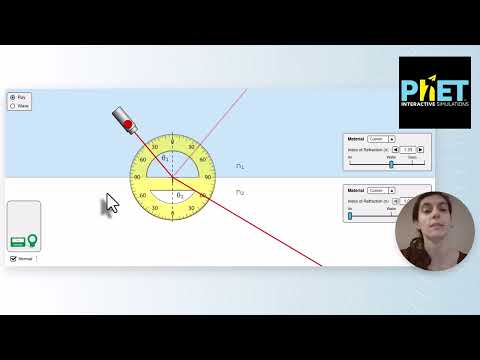
Most importantly, in both of my classes I had students who are genuinely interested in teaching science. You can see that from their projects, such as videos of STEM demos on a shoe-string budget my future physics teachers have designed:
And the websites for Pro-D my graduate students created to share with their colleagues:
Chatbots in Education: https://chatbotsinstem.my.canva.site/
Simulations and virtual labs in STEM: https://kishk.my.canva.site/virtual-simulations-and-labs-proffesional-development
Gamification in Education: https://sites.google.com/view/gbl-edcp544/game-based-learning
Brilliant for teachers: https://brilliantintheclassroom.weebly.com/
Despite that, a few key questions stayed with me throughout the term: how can I help my students rethink their relationship with AI—both as STEM teacher candidates and STEM teachers, as well as learners themselves? AI now makes it remarkably easy to generate STEM lesson plans. Yet it remains deeply challenging to design lessons that are genuinely inspiring—lessons that motivate students, spark curiosity, and lead to meaningful learning. I also kept thinking, why with the abundance of resources our students have not improved their STEM engagement? My thoughts on this process, were expressed in my recent paper published in the Canadian Journal of Science, Mathematics and Technology Education:
Milner-Bolotin, M. (2025). From TV to AI: Evolving Challenges and Enduring Questions in STEM Education [Commentary]. Canadian Journal of Science Mathematics and Technology Education, 1-10. https://doi.org/https://doi.org/10.1007/s42330-025-00404-x
Teaching, after all, is not primarily about what we, as teachers, do in the classroom. It is about what students do as a result of our teaching. This realization brought me back to my doctoral dissertation, written 25 years ago under the supervision of Professor Marilla Svinicki at the University of Texas at Austin:
Milner-Bolotin, M. (2001). The Effects of the Topic Choice in Project-Based Instruction on Undergraduate Physical Science Students’ Interest, Ownership, and Motivation [Doctoral Dissertation, The University of TX at Austin]. Austin, TX.
My research focused on how Project-Based Instruction can inspire future teachers to take ownership of their learning—and, ultimately, of their teaching. One conclusion from that work feels more relevant today than ever:
Project-Based Instruction can significantly increase future teachers’ sense of ownership over their learning, leading to deeper engagement and more meaningful understanding. The study found that when teacher candidates actively design, implement, and reflect on projects, they shift from passive recipients of knowledge to active constructors of both content knowledge and pedagogical identity. A central conclusion was that teachers who experience ownership of learning themselves are better positioned to inspire ownership, motivation, and agency in their own students.
If we want to inspire students to take ownership of their STEM learning, teachers themselves must take ownership of their own pedagogical growth. We have to be role models for our students. This is why I believe using Project-Based Instruction in STEM teacher education is so important.
Today’s teachers face perhaps the greatest challenge of all—motivating students to learn and be active in the process. Increasing student interest and engagement in STEM is not a secondary goal; it is the central task. In an age of instant information and powerful AI tools, it is dangerously easy for learners to become passive, assuming that knowledge can simply be “delivered” to them—from a teacher, a website, or an algorithm. This belief is widespread, but deeply mistaken.
Knowledge cannot be transmitted intact from teacher to student, nor downloaded from the internet into a learner’s head. Learning is something students must actively construct for themselves. What teachers can do—what we must do—is inspire students to want to pursue that knowledge. And that is a difficult task, as in many ways ubiquitous access to information can be demotivating. AI can support us, but it cannot replace this core human challenge of teaching.
If anything, the presence of AI makes the work of STEM teachers and STEM teacher educators more important, not less. This is why the thank you note I received from my students was so important for me:

I will keep thinking about it in the next year. May it be a happy and healthy year for us all. Maybe it be the year full of exciting learning opportunities, collaborations and discoveries. Happy New Year to all our STEM teachers and students!