Category Archives: Biological sciences

Revolutionary micro-rocket medicine to stop bleeding

Imagine medicine that can actively move. Medicine that are like fighter-jets transporting soldiers to a disaster zone. Clearly, this way of thinking challenges the traditional view of medicine where drugs are designed to absorb into the blood stream and flow with the direction of blood to reach sites all over the body. However, Dr. Christian Kastrup and his research team at the University of British Columbia are boldly challenging this traditional view. In collaboration with the Department of Emergency Medicine at Harvard Medical school, these researchers have developed a revolutionary micro-particle system that actively moves to sites of injury in the body. The system is a cream that can be applied on the surface of the skin. The hope is that these systems can be used to transport medicine deep inside wounds that are bleeding uncontrollably.

Medicine that can self-propel may be the next big breakthrough in pharmacological research. Image courtesy of Dr. Christian Kastrup

This new technology has exciting implications for saving lives in developing countries. In Africa, 1 in 10 mothers will die from severe bleeding during childbirth. In modern cities, this technology could reduce bleeding after a traumatic injury, buying the victim more time before reaching the hospital and having access to doctors and surgeons. In Canada alone, 15,000 people die each year from such traumatic injuries. Moreover, this technology could make life more convenient by substituting endless rolls of bandages and dressing with a thin film of cream coated on top of a simple band-aid. The next time you get your wisdom teeth pulled out by the dentist, you may not need to suck on uncomfortable pads of cotton! Rather, a cotton liner swabbed with cream may suffice to control the bleeding.

Layer upon layers of bandages may be a thing of the past! Image via Wikipedia

The system developed by Dr. Kastrup and colleagues works by immediately reacting with blood to fizz and foam up. To help you visualize this, the way it works is similar to Vitamin C tablets bought from pharmacies. When you drop the tablet into water, it bubbles and creates foaming (see youtube video below). This foaming reaction generates force which can be used to move medicine against outward flowing blood in situations where severe bleeding occurs.

[youtube]https://www.youtube.com/watch?v=mEKiF21abME[/youtube]

This research by Dr. Kastrup is the first to demonstrate effectiveness in reducing bleeding in living organisms. In two mice models, the micro-particle systems were shown to significant reduce the amount of bleeding. While these results are promising, further study will be needed to investigate proper dosages in humans and how to develop more selectivity in the pathway to which the micro-particle systems move. The latter is an important point as blood clotting in unintended regions may led to serious adverse effects (such as stroke).

We had the pleasure of interviewing Dr. Kastrup and graduate student James Baylis to learn more about this exciting line of research. Please see below for our podcast and video.

Video:

https://www.youtube.com/watch?v=4s89poehvmw&feature=youtu.be

Podcast:

https://www.youtube.com/watch?v=DXf0g_KFmVk

Written by: Group 2 (Vivian Kwan, Baltej Sekhon, William Yang)

Hey, Nice Smile

[youtube]https://www.youtube.com/watch?v=kfLSjobM9bg[/youtube]

A scene from the movie Mean Girls provides some interesting insight on the way we interact with each other. With a smile, Regina George compliments a fellow classmate and brightens her day. Seconds later, she rolls her eyes and says, “That is the ugliest effing skirt I’ve ever seen.” How was she able to pull off her lie so convincingly?

Through her smile.

Smiling has a long evolution history and is considered an inborn trait, meaning that we’ve developed the ability to smile from the time we were born. There are many reasons we smile and an important one is that it fosters communication between people. Moreover, we tend to smile when we are talking to people because we don’t want to give off the impression that we are unlikeable and hostile. Even though we know it’s impossible to like everyone and for everyone to like us,  we generally still try to appear friendly and polite, if not neutral, to avoid getting into any unnecessary confrontations.

Back in the 1800s, French physician Duchenne de Boulogne identified two distinct types of smiles. The first type of smile, called a Duchenne smile, refers to a smile linked to genuine positive emotion and involves contraction of the muscles around the eyes and the muscles that raise the corners of the lips. The other, the Pan Am smile, is a fake smile that involves contraction of only the muscles around the corner of the lips. Sounds relatively straightforward, right?

(Copyright Paul Ekman 2003, “Emotions Revealed,” Owl Books, 2007.)

Current research using neuroimaging techniques have indicated otherwise. A study by Calvo and colleagues (2013) measured the neuronal activity of participants using electroencephalograms (EEG) as they judged whether or not an assortment of faces were genuinely happy. The researchers found that there were no differences in brain activity upon seeing happy faces compared to seeing faces that combined a smile with fearful or neutral eyes. In other words, the brain was unable to differentiate genuine smiles from fake smiles.

In a different study, researchers tracked the eye movements of participants as they viewed images of faces with genuine and fake smiles and found that the majority of viewers fixated their gazes the earliest on the smiling mouth first, regardless of the type of eyes. Participants were also more likely to judge faces with fake smiles as genuine when they fixated on the smiling mouth first before looking at the eyes. The results suggested that the primary fixation on the mouth causes viewers to misinterpret the true emotion behind a face.

So, in conclusion, it is quite difficult to detect the sincerity behind a smiling face. This is how Regina George was able to deceive the poor girl. On the bright side, this means that no one really knows our real thoughts, either.

This really casts a new light on the saying, “Smile at your enemies, it confuses them”, doesn’t it?


By Joanne Shih


Elepants Have Learnt to “Understand” Human


Whether we realize it, African elephants (Loxodonta africana) are listening to us. It is recently found that African elephants are able to differentiate between ethnicities and genders, and can tell an adult from a child just by listening to the sound of a human voice. This is a very beneficial skill for the elephants that are often threatened by humans because they can protect themselves from human actions.

African elephants (Loxodonta africana)

A recently published study in PNAs (Proceedings of the National Academy of Sciences of the United States of America) last month by Drs. Karen McCombs and Graeme Shannon from University of Sussex provides evidence that African elephants (Loxodonta africana) can recognize human voices. By listening to our voices, elepants can determine our relative age and gender, tell different human languages apart and determine whether the people approaching them are a threat.

Their study was conducted in Kenya’s Amboseli National Park, and Elepants there are killed periodically by Maasi pastoralists (a semi-nomadic group that sometimes kill elephants). McComb and her colleagues wondered if the elephants are able to tell the voice of the Maasai men apart from Kamba people (crop farmers who rarely have violent contact with elephants). The researchers recorded voices of both Maasai and Kamba speaking in their native language “Look, look over there, a group of elephants is coming.” The researchers then played back the voice recordings to 47 elephant groups while observing the animals’ reactions. McComb and her colleagues discovered that Massai voices caused the elephants to smell the air or  huddle together twice as tightly than when they heard the Kamba voices.

Image of Maasai Men

Image of Kamba People

The elephants not only are able to tell the diffenrent ethnic groups apart, they are also able to recognize the gender and relative age of the voices. McComb found that elephants were less likely to run away when they heard Massai women or boys speaking as compared to Massai men. And this is because the Massai men is a much more serious threat for the elephants compared to Massai women or boys. Their research shows that elephants and other animals might be studying us more carefully than we are studying them as they have learnt to “understand” human in order to protect themselves from danger.

“Humans are undoubtedly the most dangerous and versatile predators the elephants are faced with these days,” said Prof McComb, and their research showed that elephants were “trying to adapt to human threats” by recognizing human languages.

[youtube]https://www.youtube.com/watch?v=wKWvlsRJVRI[/youtube]


Reference:

McComb K, Shannon G, Sayialel KN, Moss C. Elephants can determine ethnicity, gender, and age from acoustic cues in human voices. Proceedings of the National Academy of Sciences. doi: 10.1073/pnas.1321543111

By Simeng Alexandra Cai

Using Neuroimaging to Understand the Impact of Seizures on Brain Development

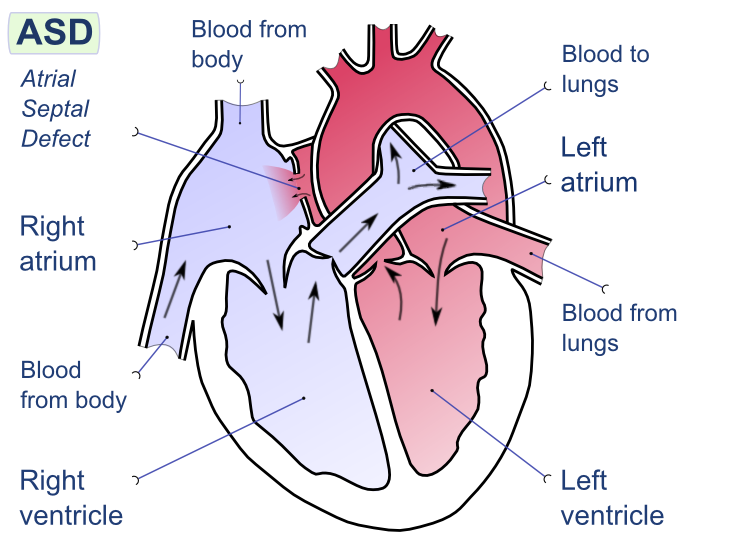
One of the most fulfilling experiences in my undergraduate career thus far is my  involvement in research at BC Children’s Hospital with neurologist Dr. Vann Chau. We are looking at how seizures affect brain maturation in children who have congenital heart disease (CHD). This is when a baby is born with abnormalities in their heart structure or function, which leads to problems with blood circulation. One example is “atrial septal defect” (see image below)

File:Atrial septal defect-en.png

Atrial septal defect is where the septum separating the right from the left atria is missing (Image via Wikipedia)

After open-heart surgery, 15% of infants will have seizures— the most common neurological complication. Previous research using animal models has found that seizures can induce lasting brain injuries (Holmes, 2002). However, it is not known whether this is true in human newborns.

Cardiac surgery operating room at BC Children’s Hospital (With permission from Dr. Kenneth Poskitt)

Seizures are treated using anti-epileptic drugs which decreases excitation in the brain. However, there is a high risk for adverse effects when treating a newborn with anti-epileptic drugs. Thus it is not clear to doctors just how aggressive they should be with seizure treatment since it is unknown how seizures affect brain development in the first place.

This is where our study comes in. We are examining whether cases of CHD with seizures, compared to those without, is associated with disturbed brain development. If we do find that seizures are associated with alterations in brain development, then this would be compelling evidence that improved management of seizures may lead to better neurological outcomes.

So how exactly are we assessing brain development? We are using neuroimaging methods which I will write about for the remainder of this post!

(1) Standard Magnetic Resonance Imaging (sMRI)
This method allows us to detect stroke and white matter (nerve fiber) injury by looking at differences in the alignment of protons in the brain. Below is an example of a stroke injury.

sMRI showing a stroke injury in the upper left region of the brain (With permission from Dr. Kenneth Poskitt)

(2) Diffusion Tensor Imaging (DTI)
This is a specialized application of MRI which uses properties of water diffusion to visualize neuronal tracts (bundles of nerve fibers) in the brain. Below is an example of a DTI image.

DTI of the human brain. To the left of this image is the frontal part of your brain. (Image via Wikipedia)

(3) Magnetic Resonance Spectroscopy (MRS)
This method looks at differences in resonant frequencies to determine the concentrations of key metabolites in selected regions of the brain. Below is an example of a MRS spectra.

MRS spectra showing different peaks for each metabolite which appears at a known frequency (Image via Wikipedia)

Written by Vivian Kwan

Taking a hit on HIV

A marijuana plant (via Google).

Recently cannabis, or more commonly known as marijuana, is being frequently debated on multiple talk shows in the United States with respect to legalization, but its medical aspects are being overlooked. Marijuana has been used in the past to treat chronic pain and weight loss, both symptoms associated with HIV. According to a study published in AIDS Research and Human Retrovirus, marijuana may be able to prevent the disease from spreading once the patient has been infected.

For 17 months, researchers at Louisiana State University were busy getting Rhesus monkeys high— well, maybe not exactly getting the monkeys high– but more like administering a fixed amount of THC, the active ingredient in marijuana, twice a day into the monkeys. All this was done while adhering to the NIH Guide for the Care and Use of Laboratory Animals. By including THC in the monkeys’ diet, researchers were hoping to discover how this chemical affects the spread of HIV in monkeys.

A Rhesus monkey. The monkey used in this study (via Google).

The monkeys used in the study were in the age range of four to six-years-old, and had to pass a physical and blood test before the study was conducted to confirm that they were not presenting a new variable to the study that could  cause the results to be scientifically flawed.

After the 17 month period, the researchers found the damage to lymphatic tissue in the gut area to have decreased. This is significant, as gut-associated lymphatic tissue plays a key role in HIV replication and inflammation.

Dr. Patricia Molina, a lead researcher in the study, stated “These findings reveal novel mechanisms that may potentially contribute to cannabinoid-mediated disease modulation.” These finding can be applied to humans as the direct injection of THC in monkeys has similar effects to humans smoking marijuana.


[youtube]https://www.youtube.com/watch?v=Xdt5mZMzHzE[/youtube]

Baltej Sekhon

Methadone: A Transfer of Addiction and Dependency.

Walking through the streets of East Hastings is a shocking scene. The sights of addiction and drug use is prevalent  on any street corner or block. Recently posters have been put up on every street corner warning citizens of an increased concentration in a dosage of Methadone. This sparked an interest to investigate what this drug does and why does it matter.

Posters on street corners of East Hastings. Photo Credit: BC Harm Reduction Strategies and Services.

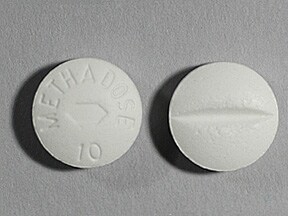
Methadone is a drug used for treatments of opioid addictions such as heroin and morphine. It works by blocking receptors in the brain that narcotics bind to therefore preventing them from binding and that “high” sensation lost. It should be noted that Methadone does not treat non-opioid addictions such as methamphetamine and alcohol addictions which are present around Downtown Eastside. Methadone is an effective drug in temporarily shifting a patients addiction away from more dangerous drugs and promotes time for rehabilitation.

Methadone in it’s pill form, also comes in liquid form. Photo Credit: WebMD.

Unfortunately, although Methadone is used clinically for treatment of addiction it does have its own side effects.  A more important side effect after all the common side effects is its tendency of addiction. Methadone on its own is a very addictive drug that proves to be equally addictive as what it is trying to cure although it does not have as detrimental negative effects. Another problem with Methadone is that it is not a cure rather a substitute for opioid drugs, a person who stops having access to Methadone will potentially return back to the drugs that they were trying to overcome.

The news about a new form of Methadone is a drug called Methadose, which in fact is 10 times stronger than the previous opioid prevention drug. This causes increase risk of overdose in the drug using community and puts a great strain on users.

So the big question is, is Methadone an appropriate solution to opioid addiction. Although Methadone is not a fix to the problem, it is a solution for patients to be able to have a functional life. With daily dosage of Methadone, it acts as the same dependency as any opioid drug but without life threatening negative effects.

However, this should not be the complete solution, fixing the problem on East Hastings requires institutional assistance. Methadone is designed for a rehabilitation process, currently it is available as an over the counter solution to addiction which is a financial strain especially on recovering addicts.

For more information on Methadone and its use for rehabilitation, watch:

[youtube]https://www.youtube.com/watch?v=nwOKE1W53L4[/youtube]


-Guan Qun Zhao