Can we get more power?

Solar powered cells are an area of rapid research, as solar energy is abundant, clean, sustainable, and available in most areas of the world. These solar powered cells are also known as solar photovoltaic (PV) cells because photons from sunlight are converted into electricity (Philibert 2011).  The material that makes up the PV cell has a property that allows the material to absorb light photons and release electrons (Knier 2002).  The free electrons are captured and flow through a circuit generating an electric current.  Ideally, the material is efficient, inexpensive, durable, and easily manufactured.  Despite some problems, an inorganic crystalline substance known as perovskite provides several advantages over other materials used in PV cells (Philibert 2011).

The following video describes how PV cells work.  Video credit:  YouTube user bcheng42 via YouTube.

Researchers have worked hard to increase the efficiency of PV cells so that solar energy is converted to electricity, and become a viable alternate to fossil fuels.  Silicon-based cells are the most widely utilized material, as their efficiency of 20% outperforms all other types of cells (NTU New Release).  However, experts note that the efficiency of silicon cells improved by less than 1% over the past decade.  In contrast, the efficiency of perovskite increased quickly over the past five years.  The efficiency of perovskite was 3.8% in 2009, 6.5% in 2011, and 15% in 2013.  This large increase in efficiency indicates that perovskite may hold a promising future as a material in PV cells.

In addition, perovskite easily precipitates from a low cost solution stored at 80ºC.  In contrast, silicon PV cells are manufactured at extremely high temperatures that require expensive manufacturing facilities (University of Nebraska-Lincoln).  In fact, it is about five times cheaper to synthesize perovskite than silicon (NTU news release).

Thirdly, perovskite is advantageous since it precipitates out of solution in an almost perfect crystalline structure.  The nearly perfect symmetry allows free electrons to travel through the material to the electrodes to produce an electric current (Science Magazine).  If the material has a defective crystalline structure, the electron is impeded resulting in lower power production.

Perovskite has an almost perfect crystalline structure, making it an excellent material for PV cells. Photo credit: R.H. Buttner & E.N. Maslen via Wikimedia Commons.

Fourthly, it may be possible to layer perovskite on top of silicon, providing researchers with exciting possibilities for PV cells.  Perovskite is better at capturing photons in the blue and green spectrum, whereas silicon is better at capturing photons in the red and infrared areas.  By combining these two materials, it may be possible to reach efficiencies of 30%.

Currently, scientists are trying to overcome some drawbacks with perovskite.  Research is needed to stop the breakdown of perovskite in the presence of oxygen or water.  Furthermore, perovskite production is currently limited to the size of a postage stamp.  The larger silicion cells are metres in length and capture more sunlight.  Finally, perovskite contains lead, an undesirable environmental toxin.  Despite these challenges, researchers are enthusiastically working to conquer these obstacles.   In fact, perovskite is considered to be one of the breakthrough discoveries of 2013.

By:  Jason Leung

What is the Possibility of Living On The Neighbouring Planet: Mars

Since 2012 when NASA landed the Mars Exploration Rover the whole nation questions whether or not the planet next to us is capable of supporting life. If our planet ever comes to a dooms day or judgement, knowing that there is a life-sustainable planet right next to us can help ease the anxiety created by the fear that the world can come to an end. Based on all the recent articles released by the press it seems as though scientists are hinting us that Mars is habitable.

Personally I enjoy believing that Mars is a planet human can “run to” as a second home when Earth cannot support a total population of eight million people that is increasing at an exponentially rate. Let’s face it the Earth is getting over populated with all of its resources getting depleted and trained to the very bits. One of the sources that allow Earth to be sustainable is the almighty Sun that radiates its solar energy on our planet’s surface, making it possible for primary gases like carbon dioxide and ozone to form and produce a habitable atmosphere. Recently researchers hypothesized that in approximately two billion years the heat radiated from our Sun may make it possible for Mars to become habitable. Years later when the heat emitted from the sun is in a perfect temperature range, enough to boil carbon dioxide (CO2) and produce an atmosphere sustainable to life.

Image of Mars from outer space

Image of Mars by NASA via Flickr


Another possibility comes from the analysis of the oldest minerals discovered by the Mars Rover show that billions of years ago Mars had liquid water that could lead to liveable planet. For now the temperature on Mars is still too cold for liquid water to be produced and provide support needed for life. If water every formed on Mars there must have been livable mud that existed on the planet. Chances are that if Mars had once had the ability to produce liquid water and sustainable mud then in future years it is possible for our neighbouring planet to do it again.

Below is a question&answer video from Dr. Emily Rice who speaks about whether heat from our Sun make Mars habitable

[youtube]https://www.youtube.com/watch?v=aSAr3An01Go[/youtube]


Even if these ideas are only possible billion of years later, the hint that researchers been trying to tell us is that Mars will eventually be a habitable planet. The question is whether the history of human race will survive long enough and develop state of the art technology that can transfer a great number of lives to Mars.


Mars in 2050

Mars in 2050 via Flickr


-Blog post by Tien Vu


Are Europe and North America Losing the Battle for Science Supremacy?

Research. Image Credit: MedCityNews

For centuries, Western Europe and North America have resided at the centre of innovation, research, and scientific advancement. Starting with the Scientific Revolution, which saw the advancement of modern science, the major European countries began to assert their prowess in the intellectual arena. Jumping ahead, up through the age of Imperialism and into the Industrial Revolution of the mid-18th and 19th centuries, the United Kingdom emerged as the clear leader in scholarship and technological innovation. Beginning in the 19th century, the United states moves to the forefront of global scientific efforts; a place it arguably holds even today. Despite the storied history of western dominance of science in the modern age, recent research suggests a swing in the balance of power may be under way.

 Several recent articles in Nature News & Comment have reported that, over the last decade, China has slowly maneuvered its way to the top.  Specifically, China is now the world’s third-largest producer of scientific research articles and has nearly tripled the percentage of its gross domestic product (GDP) it invests in science and innovation. Even as the combined productivity of the European Union and US has declined, China’s own output has climbed from 3% to 11% since 2001. Furthermore, at 1.98% GDP investment in research and development in 2012, China has officially surpassed Europe and now places third, behind the US and Japan. Interestingly, while European investments remain relatively stagnant, China is set to increase to 2.5% GDP investment in R&D by 2020. No matter how one looks at it, China, and many other parts of Asia, are rapidly becoming global competitors in the race for science supremacy.

Perhaps more worrying that China’s rise in the ranks of international funding and scientific innovation and publishing, is the widespread decline of education is mathematics and science in western countries. The Paris-based Organisation for Economic Co-operation and Development (OECD), an association of 34 member countries aimed at aligning domestic and international policies, administers a test to assess the success of each countries teaching in mathematics, reading, and science. The Programme for International Student Assessment (PISA) is administered to 15-year-old students every three years, and is meant as a comprehensive performance review of education policies. Once the dominant contestants for the top 10 overall educational results, the 2012 PISA results show that western countries have rapidly fallen behind Asian constituents, with the US scoring below the OECD average in all three categories of interest.

Programme for International Student Assessment (PISA) Ranks. OECD 2012.

So has the time of western-led scientific advancement come to an end? Probably not. Although the current numbers show that the the EU and North America are lagging, the US has retained its position as the number one country for research and development and foreign direct investment. Furthermore, while China’s %GDP investment in research and innovation has surpassed that of the European Union, the total dollar-amount investment made by the EU still remains higher. Additionally, the same article discussing China’s recent growth in research out-put also noted that the US remains the leading producer of highly cited literature, whereas Chinese-published material is largely cited within China alone, and argues that this may be a case of quantity over quality. Lastly, international research collaboration and ‘big science’ is at an all time high, suggesting that while each country is  facing its own challenges, collaboration may allow for sharing of the burden.

– Joseph Burant

Empowering Autonomy in Scientific Education

When you think about undergraduate education, what do you visualize? In my mind, I picture large lecture halls filled with many students sitting shoulder-to-shoulder, in the fold-down chairs with the fold-up tables. At the front of the room, the professor lectures away while students quietly take notes for an upcoming exam. Sounds familiar, doesn’t it?

Typical university experience? (image via flickr by Alan Levine)

Don’t get me wrong- I’m not suggesting that lectures are unacceptable or a waste of time. Certainly, lectures has its place at large universities such as UBC. In fact, I think lectures are great because it allows many students to learn from incredibly knowledgeable professors. I will argue, however, that this should not be all there is. There needs to be more opportunities for student-centered learning, especially in science where discoveries depend on creativity, critical thinking and effective communication rather than passive accumulation of information.

Carl Rogers describes student-centered learning as a shift in power from the expert teacher to the student learner. Lea et al. (2003) emphasizes the importance of active learning where participation and involvement is essential for quality education. In recent years, the term student-centered learning has been increasingly used, along with flexible learning, experiential learning and self directed learning. The emergence of this proactive approach in education reflects today’s society where choice and democracy are important concepts.

But the fact that active learning is good is not breaking news. Rather, it’s quite obvious! So what’s the big deal anyway? The big deal is that “many institutions or educators claim to be putting student-centered learning into practice, but in reality they are not (Lea et al., 2003).” However, I do believe that UBC is indeed an advocate for student-centered learning.

This semester, as part of the UBC student directed seminars program, I am leading a course on the topic of traumatic brain injury. The UBC student directed seminars program allows undergraduate students to create their own 3-credit course for a 15 person maximum class. As I have strong interests in neuropsychology, I created a course that explores in depth how a traumatic brain injury can profoundly impact an individual’s life. From project conception to execution, UBC has provided me with all the resources, guidance and support I need to succeed.

The experience leading a seminar so far has taught me a lot regarding how to effectively communicate science. Our motto here at UBC is “Tuum Est” which means “make it yours”. Our undergraduate careers are too short (and expensive) to spend passively learning what we’re told. There are ways to personalize the experience of how we learn about science whether it’s through a hands-on research project, a student directed seminar or even service in the community. It’s important to find your passion, but it’s also important to then pursue that passion from different facets outside the traditional lecture.

Tuum est “Make it yours” (via UBC branding)

Written by: Vivian


Methadone: A Transfer of Addiction and Dependency.

Walking through the streets of East Hastings is a shocking scene. The sights of addiction and drug use is prevalent  on any street corner or block. Recently posters have been put up on every street corner warning citizens of an increased concentration in a dosage of Methadone. This sparked an interest to investigate what this drug does and why does it matter.

Posters on street corners of East Hastings. Photo Credit: BC Harm Reduction Strategies and Services.

Methadone is a drug used for treatments of opioid addictions such as heroin and morphine. It works by blocking receptors in the brain that narcotics bind to therefore preventing them from binding and that “high” sensation lost. It should be noted that Methadone does not treat non-opioid addictions such as methamphetamine and alcohol addictions which are present around Downtown Eastside. Methadone is an effective drug in temporarily shifting a patients addiction away from more dangerous drugs and promotes time for rehabilitation.

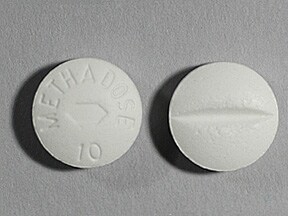
Methadone in it’s pill form, also comes in liquid form. Photo Credit: WebMD.

Unfortunately, although Methadone is used clinically for treatment of addiction it does have its own side effects.  A more important side effect after all the common side effects is its tendency of addiction. Methadone on its own is a very addictive drug that proves to be equally addictive as what it is trying to cure although it does not have as detrimental negative effects. Another problem with Methadone is that it is not a cure rather a substitute for opioid drugs, a person who stops having access to Methadone will potentially return back to the drugs that they were trying to overcome.

The news about a new form of Methadone is a drug called Methadose, which in fact is 10 times stronger than the previous opioid prevention drug. This causes increase risk of overdose in the drug using community and puts a great strain on users.

So the big question is, is Methadone an appropriate solution to opioid addiction. Although Methadone is not a fix to the problem, it is a solution for patients to be able to have a functional life. With daily dosage of Methadone, it acts as the same dependency as any opioid drug but without life threatening negative effects.

However, this should not be the complete solution, fixing the problem on East Hastings requires institutional assistance. Methadone is designed for a rehabilitation process, currently it is available as an over the counter solution to addiction which is a financial strain especially on recovering addicts.

For more information on Methadone and its use for rehabilitation, watch:

[youtube]https://www.youtube.com/watch?v=nwOKE1W53L4[/youtube]


-Guan Qun Zhao


A Positive New Outlook on Brain Activity and Aging

Aging comes with many worries, often related to health scares and a fear of cognitive decline. From personal experience, I know that even in our early twenties we’re told that our mental prowess has already diminished.   However a new study by Ramscar et al (2014) gives hope to those worried about their aging minds!

http://epilepsyu.com/wp-content/uploads/2013/03/url2.jpeg

In the past, studies have shown that memory not only deteriorates with time, but that the decline begins as early as 45 years old.

With continual medical advances, people are living longer and the average life expectancy in Canada is now 81 years old. This means that research into how brain activity and memory are affected with age is becoming extremely important in our society. Personally, I know that I would like to be able to keep up to date with modern scientific developments, and maybe even learn a third or fourth language when I’m well into my 60’s and 70’s.

http://img.gawkerassets.com/img/180v598668f4hjpg/original.jpg

Ramscar’s study takes a different approach to memory than previous works, stating that old models for memory degradation “do not take account of the statistical skew  of human experience or the way knowledge increases with experience. As a consequence… [this] paint[s] a misleading picture of cognitive development.” His model/study instead shows that older adults appear to have a worse memory simply because they need to process through more information before finding an answer, causing their responses to be slower. The study also accounts for the fact that fine-detail memory differs with age and makes the claim that older populations “encode less contextual information”, simply because throughout their lives they learn to ignore what they think is useless background information.

I found this study to be extremely exciting and relevant, since the world’s population is becoming more and more top heavy (larger old population then young population). With studies like this, it becomes clear that research on cognitive diseases is extremely important since cognitive abilities remain fairly constant throughout our lives in the absence of disease.

Written by: Andrew Hefford

I’m Awake, But I Can’t Move

A few days ago, I was drifting somewhere between sleep and wakefulness when my body decided that it was time to wake up. I opened my eyes… and nothing happened. No matter how hard I tried to lift my arms, no matter how hard I tried to kick off my covers, I couldn’t move a single muscle. Worse, I felt like I was suffocating, that if I didn’t get up right that instant, I wouldn’t be able to breathe. I opened my mouth to call for help, but I couldn’t even produce a sound. My alert brain was very aware of these frightening sensations, but my body had no response.

Henry Fuseli, “The Nightmare” (via Wikipedia)

What I experienced is a sleep disorder called sleep paralysis, defined as a “feeling of being conscious but unable to move”. A browse through the listed symptoms confirms my self-diagnosis, right up to the inability to speak and the feeling of choking. The only symptom that I hadn’t experienced was, fortunately, seeing or hearing things in the dark.

There are different theories for its cause, and I will begin with the more fanciful explanations. A summary of sleep paralysis in different cultures not only demonstrates that it transcends cultural boundaries but also reveals the common belief that a ghost or a devil is behind this scary experience. In Thai folklore, for example, it is believed that the sleeping person is unable to move or breathe because he or she is being held down by a ghostly spirit. Other interesting explanations include witchcraft and drinking bad wine.

Research on sleep cycles and sleep disorders have revealed more insight on sleep paralysis, but the exact cause is still unknown. Scientists believe that an inappropriate overlap between deep sleep (rapid eye movements, or REM) and the waking stages of sleep is the major culprit. While we are sleeping, our body undergoes different stages of sleep cycles. During REM, the eyes move quickly and dreams are thought to occur, but the rest of the body remains in a relaxed state. Thus, if we regain some wakefulness before the REM cycle has finished, we are unable to move or speak, which explains the paralysis.

The risk of sleep paralysis increases with stress, sleep deprivation, an irregular sleep schedule, and sleeping in the supine position. Sleeping face-up can result in the collapse of the soft palate and the subsequent obstruction of the airway, triggering a sense of suffocation and producing panic that may manifest as hallucinations.

If you have also experienced this, or if you would like to find out more, there is a website dedicated entirely to sleep paralysis. The creators of the site have recently finished a documentary, titled “Devil in the Room”, but be warned because the teaser begins with people staring blankly up at the ceiling.

[youtube]https://www.youtube.com/watch?v=QJcd06CJjOU[/youtube]


Joanne Shih

What if oneday you need to wear a mask and carry an air purifier everywhere you go?

[youtube]https://www.youtube.com/watch?v=S_SY6r8MlDU[/youtube]

what are you doing when you are reading my blog?

When you  are sitting in front of your computer or  laptop, reading my blog, or maybe drinking a cup of coffee , but do you notice that you are doing something else at the same time which you have been doing for your entire life? Yes, it is breathing!  Breathing is what we do in every second of our daily  life, and air is one of the most important element for humans and other animals to survive. We can live for  a few days without food or water, but we can’t even live for more than a few minutes without breathing air!

Air pollution affects our health

Breathing polluted air can cause a wide range of illnesses and mortality. There has been increased rates of premature deaths caused by air pollution all around the world. The air we breath in penetrates deep into our lungs, and when air is heavily polluted, harmful chemicals can be carried into our internal organs. Most of the harmful chemicals in air, such as benzene or vinyl chloride, which come from industry pollutant or coal consumption  are very toxic.  Breathing polluted air can cause throat and lung cancer, nose and eye allergy, stroke and other heart diseases, nerve and brain damage.

Air pollution affects our daily life

In China, the air quality is measured to be world’s heaviest PM 2.5 pollution and people’s daily life are affected because of the air. In order not to get sick from breathing in the polluted air, people in many cities of  China have taken many self-protection measures into action. For example, outdoor activities are prevented as much as they can, and when people have to go outside, they have to  wear N95 face masks which can protect them from PM 2.5 effectively.  Traffic is also affected as the air is heavily polluted because the air is not clear but instead it has a cloudy white color. Therefore, it is very hard for the drivers to see the road condition, causing more traffic accidents. Air conditioners and purifiers are used indoor for air circulation so that people can breath in fresh air without wearing a mask.

http://upload.wikimedia.org/wikipedia/commons/a/a4/Beijing_smog_comparison_August_2005.png

Actions should be taken to prevent air pollution

For many people air pollution seems to be a very far topic from our daily life, like myself,  who live in Vancouver–the most beautiful place in the world. However, for many people living in other parts of the world, they have no access to fresh and clean air all their life. And it is shown that increased deaths are caused by air pollution all over the world. Can you imagine that one day  we need to wear masks and carry air purifier with us everywhere we go? If you don’t want that to happen, we should start taking actions from today.

by Simeng Alexandra Cai


Pluto 1930 – 2006

In 2006, thousands of astronomers around the world gathered in Praha to vote for the fate of the ninth planets in our solar system, Pluto. 76 years after its discovery, the planet was removed from the list of the nine planets in our solar system. This may not be new to you, but do you know why was Pluto demoted?

Prior to the discovery of Pluto, astronomers had mathematically predicted the existence of a ninth planet based on the perturbed orbital motions of Neptune and Uranus. After tracing the shadows of the planets for several decades, in 1930, astronomers finally confirmed that they had found the ninth planet, Pluto. It is only approximately 0.21 percent of Earth’s mass and it has five known moons. Pluto seems to share all the properties of the other eight planets, except for one: it has a very eccentric orbit.

Pluto under a 14” telescope from Earth. Photo credit : via Google

Over the span of half a century, telescopes are starting to get more advanced. As a result of that, astronomers have accomplished observing more than 10,000 of the small asteroids or icy bodies with a radius over 100km around the orbits of Pluto. The radius of the largest asteroids discovered, Eris, is 27 percent greater than that of Pluto. Astronomers began having problems classifying these huge asteroids. Hence, they decided to vote on the definition of a planet on the 26th General Assembly for the International Astronomical Union in 2006.

The new definition of a planet is given that

  1. The celestial body must orbits around the Sun
  2. It must have enough gravity to pull itself into a spherical shape
  3. It must have cleared all other celestial bodies on its orbit
  4. Any non-satellite body that meet the first two requirements but not the third one is classified as a dwarf planet.

What would happened if the definition of a planets is unclear. Photo credit: Flickr user Wesley Fryer via Flickr

Now let’s see if Pluto meets the above requirements.

We know that it orbits around the Sun and maintains itself in a spherical shape. Although the first two requirements are met, it does not meet the last one as it has over thousands of asteroids on its orbit. Soon after the approval of the new definition of a planet, Pluto was crossed out from the list of planets in our solar system. However, this dwarf planet, Pluto, will still be orbiting in our solar system for a long time.

To learn more about classification of Pluto, here is a short video.

[youtube]https://www.youtube.com/watch?v=BKoRt-6pjAE[/youtube]


Written by: William Yang