Going Extinct: What Really Killed The Dinosaurs?

D. Krentzel (2011), A Triassic archosaur. Flickr – CreativeCommons.

Let me set the scene. It’s a sunny day in Laurentia, present day North America, circa 65 million years ago (Ma). A gigantic yet graceful Triceratops casually munches away on a fern frond, unaware that life on Earth will soon be very different. Thousands of kilometers away, an asteroid 10 km in diameter impacts at the Yucatan peninsula in the Gulf of Mexico with over 100 million megatons of force, setting into action a dramatic series of events that will see the sun set on the reign of the dinosaurs.

NASA (2011), The Chicxulub Impact. Wikimedia Commons.

At least that’s the story we are probably all familiar with. Indeed, that is the generally accepted theory for the cause of the mass extinction that marked the boundary of the Cretaceous and Paleogene periods (K-Pg; previously known as the K-T boundary) and resulted in the extinction of some 75% of all species on the planet. However, the details of where the asteroid came from and what caused it to come barreling to Earth are still being debated. As a recent article in Nature reports, the answers might be found in the periodicity of our movement through space. Allow me to explain.

Just as the planets orbit the Sun, our Solar System is moving through one of the arms of our galaxy, the Milky Way. However, the movement of our Solar System through the galaxy is not as simple as you might think. Not only are we hurdling through space at 70,000 km/hr, but the Solar System is also oscillating vertically through the galactic plane – a densely packed disk that slices through the centre of the galaxy. In the latest paper on the subject, soon to be published in Physical Review Letters, Lisa Randall and Matthew Reece (2014) propose that this disk may be composed of dark matter and that our Solar System moves through the plane at regular 35 million-year intervals.

Movement through this dense layer of dark matter is thought to cause gravitational distortion in the Oort Cloud, which is a hypothesized sphere of millions of asteroids that lies about one light-year away and surrounds our entire Solar System. Specifically, it has been hypothesized that in the centre of the galactic plane gravitational pull from the dark matter ‘stretches’ the Oort Cloud and weakens the effects of the Sun’s gravity. As the Sun exits the plane, the cloud rebounds and, similar to an elastic band shooting a wad of paper, asteroids may be sent flying into the inner Solar System.

So, is this elusive dark matter really to blame for the dinosaur’s demise? Maybe, but as astrophysicist Adrian Merlott points out, “dark matter is a possible explanation, but it’s not clear that it’s explaining anything real.” While the Chicxulub Impact Event is believed to be proximately responsible for the mass extinction 65 Ma, scientists are still searching for an ultimate, astronomical cause.

D. Young (2011), Milky Way Galaxy. Flickr – CreativeCommons.

– Joseph Burant

How to Sleep

Trouble getting enough sleeping is a large problem for many people around the world. In fact, in the US 43.7% of Americans ages 18-25 have reported unintentionally falling asleep sometime during the day at least once in the past month in 2008 and in 2011 a poll done by the National Sleep Foundation found 60% of Americans age 11-64 report having trouble falling asleep. This issue is something I’ve started to accumulate as extremely late nights are more of an occurrence while feeling tired and fatigued during the day and choosing to pull “all-nighters” more and more. The severity feels that at some point I could develop a mild case of insomnia.

The average adults requires 7-8 hours of sleep per night. (Image via health.com)

This blog is focused on three topics in how to better improve sleep patterns, by limiting visual stimulants, and sleep aids prior to sleeping. They are methods or a simple checklist to better improve a nights sleep.

As a student, it is very common to be on the computer before sleeping, finishing off a daily assignment or studying. The use of electronic devices before sleeping greatly suppresses the production of melatonin, the bodies hormone for enabling sleep. It is well known that the use of electronic devices should be stopped one hour before sleeping to allow the body to begin producing melatonin and be able to have a full nights sleep. This however seems unlikely for many students , and in the world of social media might find it very difficult to shut down all devices for one hour before sleeping.

The use of electronics before sleeping hinders the quality of sleep. (Image via dailymail.co.uk)

Melatonin is the hormone produced by the body to enable us to sleep, melatonin is available in pill and spray form to help our body stimulate the hormones and assist in production. This allows us to fall asleep sooner and having a  better sleep. There are side effects to having external melatonin such as dizziness and fatigue in the daytime.

Melatonin is available over the counter at any drug store. (Image via latimes.com)

Tips on how to have a better sleep is endless, there are many methods to improving sleep.  The best way to having a better sleep is maintaining a healthy lifestyle both physically and emotionally. The sleep foundation has many more tips on how to get a better nights sleep on their website here.

Dr. Joseph Mercola recommends with his many tips that a person should go to sleep around 9-10, meanwhile I’m going to bed around 4-5.

[youtube]https://www.youtube.com/watch?v=gwwe5Zis6VI[/youtube]

Guan Qun Zhao


Using Neuroimaging to Understand the Impact of Seizures on Brain Development

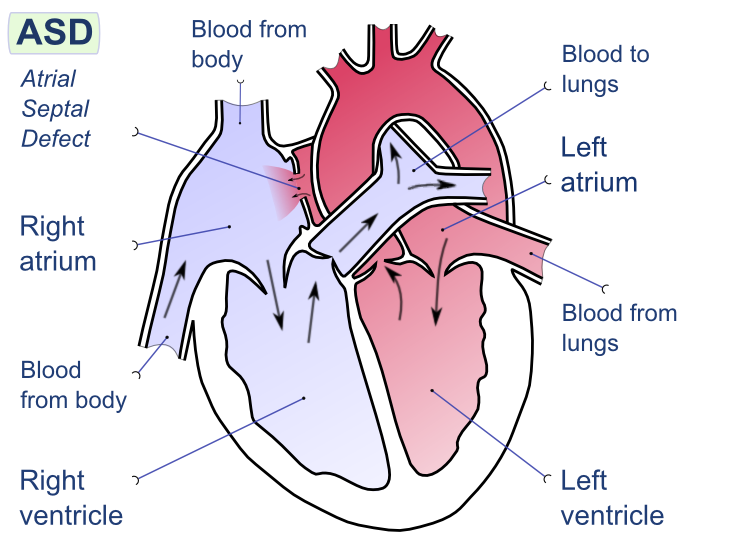
One of the most fulfilling experiences in my undergraduate career thus far is my  involvement in research at BC Children’s Hospital with neurologist Dr. Vann Chau. We are looking at how seizures affect brain maturation in children who have congenital heart disease (CHD). This is when a baby is born with abnormalities in their heart structure or function, which leads to problems with blood circulation. One example is “atrial septal defect” (see image below)

File:Atrial septal defect-en.png

Atrial septal defect is where the septum separating the right from the left atria is missing (Image via Wikipedia)

After open-heart surgery, 15% of infants will have seizures— the most common neurological complication. Previous research using animal models has found that seizures can induce lasting brain injuries (Holmes, 2002). However, it is not known whether this is true in human newborns.

Cardiac surgery operating room at BC Children’s Hospital (With permission from Dr. Kenneth Poskitt)

Seizures are treated using anti-epileptic drugs which decreases excitation in the brain. However, there is a high risk for adverse effects when treating a newborn with anti-epileptic drugs. Thus it is not clear to doctors just how aggressive they should be with seizure treatment since it is unknown how seizures affect brain development in the first place.

This is where our study comes in. We are examining whether cases of CHD with seizures, compared to those without, is associated with disturbed brain development. If we do find that seizures are associated with alterations in brain development, then this would be compelling evidence that improved management of seizures may lead to better neurological outcomes.

So how exactly are we assessing brain development? We are using neuroimaging methods which I will write about for the remainder of this post!

(1) Standard Magnetic Resonance Imaging (sMRI)
This method allows us to detect stroke and white matter (nerve fiber) injury by looking at differences in the alignment of protons in the brain. Below is an example of a stroke injury.

sMRI showing a stroke injury in the upper left region of the brain (With permission from Dr. Kenneth Poskitt)

(2) Diffusion Tensor Imaging (DTI)
This is a specialized application of MRI which uses properties of water diffusion to visualize neuronal tracts (bundles of nerve fibers) in the brain. Below is an example of a DTI image.

DTI of the human brain. To the left of this image is the frontal part of your brain. (Image via Wikipedia)

(3) Magnetic Resonance Spectroscopy (MRS)
This method looks at differences in resonant frequencies to determine the concentrations of key metabolites in selected regions of the brain. Below is an example of a MRS spectra.

MRS spectra showing different peaks for each metabolite which appears at a known frequency (Image via Wikipedia)

Written by Vivian Kwan

Image

A Need For More Carefully Regulated Marine Protected Areas

If you pay attention to recent news and environmentalists, you’ve probably heard that there is an ever increasing push to have a larger number of conservation areas for wildlife protection. This is extremely important in a world where populations are exploding and humans are constantly transforming rural areas into urbanized zones.  Globally there are 13 million hectares of deforestation occurring every year, with rare countries showing as much as a 28% increase of clear cutting. Although land protection is very important, it seems like less press time is given to the protection of marine habitats.

http://upload.wikimedia.org/wikipedia/commons/e/ea/US-NationalMarineProtectedAreasCenter-Logo.svg

In the last few year there has been a push for marine protected areas; however,  a disturbing, 6 year study from Australia published in nature, shows that these marine protected areas or MPAs are not having as positive an effect as we might have hoped. With the total fish biomass having declined by two thirds in fished areas it’s extremely worrisome that fifty nine percent of the marine protected areas studied were not “ecologically distinguishable from fished sites”.

The study chose 5 characteristics to describe a well run marine protected area, and found that only those MPAs which contained at least 4 of these characteristics were effective. These characteristics were that the areas were:  established for more then 10 years, allowed no fishing, were larger then 100km squared and are isolated by deep water or sand. When 4 or more of these were present it was shown that there was huge improvements in larger fish biomass with up to 14 times more shark biomass and 5 times more large fish biomass.

http://upload.wikimedia.org/wikipedia/commons/a/a6/Bunaken_Marine_Park.JPG

However 59% of MPAs were ineffective and  did not contain 4  or more of these characteristics, with only one of the 26 MPAs examined containing all 5. This means that simply saying an area is “a marine protected area” is not an effective strategy. The world must do more to ensure that these areas are researched to be important ecological areas and that these MPAs will be well enforced, allow no fishing, be larger then 100km squared and are isolated by deep water or sand.

Written by Andrew Hefford 


Cup color influences the taste of hot chocolate.

A team of researchers from the Polytechnic University of Valencia and the University of Oxford did a new study on how our senses perceive food in a  way depending on the characteristics of the containers that we use to serve our food and drinks.  Their study demonstrated that the containers from which we eat and drink matters hugely in our perception of taste, and the researchers believe that our brain integrates visual information not just from the food itself but also from the receptacles.

Scientists suggest the colour of the cup in which you consume a beverage might affect the taste. Hot chocolate served in orange container is found to have the best taste.

For their study, the researchers invited 57 participants to taste hot chocolate drinks served in four different colors of plastic cups — white, cream, red,  and orange.  The content of hot chocolate was exactly the same in each cup — same type and amount of chocolate powder and milk was used. And the cups are exactly the same except for their color — they all  have the same size and shape.  After sampling each drink, the participants were asked to give it a score between 1 and 10 depending on different qualities, such as enjoyment, sweetness, flavor and chocolate aroma.  All of the 57 participants claimed the hot chocolate in the orange and cream-color cups tasted better than the others, and they thought the chocolate in the cream cups was  the sweetest and most aromatic.  And the hot chocolate in white plastic cups  scored significantly worse than any other colors, even though it was exactly the same hot chocolate in each cup.

Charles Spence, Oxford University experimental psychology professor, who is also one of the researchers for  this study  concluded that people can not ever eat or drink without being influenced by the environment.   Spence also claimed that our eyes are playing tricks with our taste buds and our brain integrates visual information  to infer how tasty the food is.

Spence did other experiments to confirm his findings and the results are relevant with his conclusion that the color of the container can enhance the attributes of food, like flavor and aroma.  For example, Spence found that popcorn is saltier when served in blue bowls as opposed to red, yellow containers boost the perception of flavour of lemons in soft drinks, strawberry mousse cake tastes sweeter on white plates than they do on black ones, and coffee has a stronger and smoother taste in brown packaging compared to yellow and red.  All of these have demonstrated once again that our taste buds are definitely influenced by visual information that  our eyes perceive.

Strawberry mousse cake is found to taste sweeter when served in a white plate..

So next time if you want to enjoy a cup of hot chocolate in all its sweet, warming,  chocolaty goodness, try to drink it in a orange or cream cup to experience the full flavor and aroma!


by Alexandra Cai

Taking a hit on HIV

A marijuana plant (via Google).

Recently cannabis, or more commonly known as marijuana, is being frequently debated on multiple talk shows in the United States with respect to legalization, but its medical aspects are being overlooked. Marijuana has been used in the past to treat chronic pain and weight loss, both symptoms associated with HIV. According to a study published in AIDS Research and Human Retrovirus, marijuana may be able to prevent the disease from spreading once the patient has been infected.

For 17 months, researchers at Louisiana State University were busy getting Rhesus monkeys high— well, maybe not exactly getting the monkeys high– but more like administering a fixed amount of THC, the active ingredient in marijuana, twice a day into the monkeys. All this was done while adhering to the NIH Guide for the Care and Use of Laboratory Animals. By including THC in the monkeys’ diet, researchers were hoping to discover how this chemical affects the spread of HIV in monkeys.

A Rhesus monkey. The monkey used in this study (via Google).

The monkeys used in the study were in the age range of four to six-years-old, and had to pass a physical and blood test before the study was conducted to confirm that they were not presenting a new variable to the study that could  cause the results to be scientifically flawed.

After the 17 month period, the researchers found the damage to lymphatic tissue in the gut area to have decreased. This is significant, as gut-associated lymphatic tissue plays a key role in HIV replication and inflammation.

Dr. Patricia Molina, a lead researcher in the study, stated “These findings reveal novel mechanisms that may potentially contribute to cannabinoid-mediated disease modulation.” These finding can be applied to humans as the direct injection of THC in monkeys has similar effects to humans smoking marijuana.


[youtube]https://www.youtube.com/watch?v=Xdt5mZMzHzE[/youtube]

Baltej Sekhon