Category Archives: Open Educational Resources

Performance Assessment: connecting teaching, learning, and assessment to support student

Performance Assessment is a way to integrate not only students’ knowledge and competencies but also the teaching and assessment process. By engaging in a more ‘real-world’ and authentic approach, students will learn in a more contextualized and deep way!

Performance Standards: The B.C. Performance Standards have been developed for voluntary use in B.C. schools. They describe the professional judgments of a significant number of B.C. educators about standards and expectations for the following key areas of learning: literacy, numeracy, social responsibility and healthy living. These came from work conducted by educators as part of the BC Network of Performance based schools.

What is a performance assessment?

This type of assessment evaluates students’ knowledge in a more complex way because students need to show what they know and are able to do through a practical and contextualized activity (Darling-Hammond & Adamson, 2010). In this sense, students produce something, such as an experiment, a performance, a report, research, etc that materialize what they have learned.

Moreover, performance assessment gives teachers the space to think about assessment beyond a way of measuring student learning. This type of assessment is also an opportunity for student learning since they may understand better a concept or develop a new skill during a performance assessment (Darling-Hammond & Adamson, 2014).

Performance standards helps students practice and understand their learning and how they can apply it.

Differences between performance task and performance assessment

The biggest difference between performance tasks and performance assessments is that the latter is designed for students to demonstrate a group of skills and knowledge acquired during a couple of performance tasks.

Teachers might design a series of three or four performance tasks (for example, one for each week of class). Each one of these performance tasks has the purpose of developing different skills and knowledge. Consequently, the final performance assessment of this course should give the opportunity to students to demonstrate all skills and knowledge developed during the four performance tasks.

One common way in which performance tasks  might be designed is through project-based learning where students are invited to develop a topic connecting classroom knowledge with some real world, community or contemporary topic (Lenz, Wells & Kingston, 2015).

Performance assessment has the purpose of helping teachers (and students) understand what students have (or have not) learned over a period by getting them to apply and practice in a contextualized situations.

How to design a performance assessment?

The National Science Teacher Association (NSTA) has an interesting article with steps to help you design a performance assessment. Below, we summarize these five steps:

Step 1: Unpack the performance expectation: Teachers should understand their expectations or in other words what they expect students to achieve at the end of the lesson/ classroom. Thus, teachers need to evaluate if the performance assessment is really accessing what they want. In this step, teachers can use curriculum standards to better align their expectations with the performance assessment.

Step 2: Identify a rich and authentic phenomenon: the richness of performance assessment is exactly its characteristic of being contextualized. Therefore, teachers should pay attention to choosing a phenomenon that allows students to apply their knowledge and skills in an authentic way.

Step 3: Develop prompts: teachers should develop prompts and questions that guide students throughout the process without taking them the opportunity to discover and test their hypotheses and assumption because these experiences are essential to produce deep learning.

Step 4: Create scoring guides: teachers should create rubrics or order types of scoring guides for students during the process. These guides help students to understand the different kinds of activities and levels of expectations teachers expect them to complete.

Step 5: Pilot, score, and revise: before putting performance assessments in practice, it would be important to test them to analyze if they attend what you want and identify possible problems.

Performance Assessment Tools and Resources

The Performance Assessment Bank, an open educational repository, includes resources for interdisciplinary studies and in several discrete subject areas including history/social studies, english language arts, science and math. In BC, a set of performance standards was developed to support teachers in designing assessments. Below are some additional resources:

References

Darling-Hammond, L., & Adamson, F. (2014). Beyond the bubble test: How performance assessments support 21st-century learning. John Wiley & Sons.

Darling-Hammond, L. & Adamson, F. (2010). Beyond basic skills: The role of performance assessment in achieving
21st century standards of learning. Stanford, CA: Stanford University.

Lenz, B., Wells, J., & Kingston, S. (2015). Transforming schools using project-based learning, performance assessment, and common core standards. John Wiley & Sons.


Guest post by Peer Tutor Ariane Faria dos Santos (Ph.D. EDCP), Dec. 2021
Leave a Comment

Filed under Active Learning, Assessment, Blog Posts, Curriculum, Language & Lit Learning, Lesson & Unit Planning, Math, Open Educational Resources, Planning, Resources, Science, Social Studies, STEAM

Developing, interpreting, and accessing student thinking

According to Teaching Works Team (2022, May 9), eliciting students’ thinking involves classroom practices that develop, interpret, and access student thinking, such as questioning, discussions, and assessments with the purpose of identifying students’ prior knowledge, understanding, and misconceptions. It is a pedagogical approach where…

“Teachers pose questions that create space for students to share their thinking about specific academic content. They seek to understand student thinking, including novel points of view, new ideas, ways of thinking, or alternative conceptions. Teachers draw out student thinking through carefully chosen questions and tasks and attend closely to what students do and say. They consider and check alternative interpretations of student ideas and methods. Teachers are attentive to how students might hear their questions and to how students communicate their own thinking. Teachers use what they learn about students to guide instructional decisions and to surface ideas that will benefit other students. By eliciting and interpreting student thinking, the teacher positions students as sense-makers and centers their thinking as valuable” (Teaching Works Team, 2022, May 9).

Why is eliciting student thinking essential?

There are many reasons to teachers invest classroom time to elicit students’ thinking:
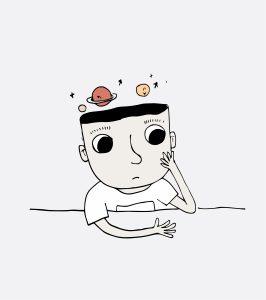
  • Value students’ ideas, competencies, and ways of seeing the world, changing the focus from the teacher to the students;
  • Understand students’ connections to previous knowledge, making learning meaningful;
  • support students’ deepen understanding of essential concepts in each subject matter, generating the development of high-level skills;

How can teachers elicit student thinking?

The Teaching Works Team (2022, May 9) suggests some steps teachers can take to develop, interpret, elicit, or assess students’ thinking:

  1. “Formulating and posing questions designed to elicit and probe student thinking, with sensitivity to how students might hear or respond to the questions
  2. Listening to and interpreting student responses
  3. Developing additional questions, prompts, and tasks to probe and unpack what students say”

To help you understand the specific features in each one of the steps of this cycle, you can check in the Teaching Works Team document.

Circular Model with Children at the Center where Teachers formulate questions design to elicit and probe student thinking, pose the questions, listen and interpret responses, develop additional questions and make sense of what students know and can do.

Source: Visual representation of eliciting and interpreting student thinking (Teaching Works Team, 2022, May 9).

Designing effective questions

Making questions to students is one of the most common and powerful pedagogical strategies used by teachers during the process of teaching and learning. Read the blog post “Asking Questions that promote deep learning” to learn more about asking effective questions.

Probing as a formative assessment

Another way that teachers can interpret students’ understanding is through formative assessment probes. Tobey and Arline’s books (2014) give many examples of how teachers can build formative assessment probes to identify misconceptions or prior knowledge that conducted students to develop their current way of thinking about specific contents or concepts in a subject area.

The difference between using assessment probes to evaluate learning and to understand students’ thoughts, is that the latter wants to reveal parts of the learning process and not its final results.  In this sense, the goal is to uncover the connections students have made during their learning. Another feature is that these types of formative assessment probes are designed to show students’ understanding of specific (and in general essential) knowledge of a subject. For example, Tobey and Arline (2014c, p. 5-7) claim that teachers should design assessments that allow uncovering students’ misconceptions about “area” and “volume”.

As a consequence of better understanding students’ thinking, teachers may be able to design new learning experiences to deepen or correct students’ conception at this point. Therefore, teachers may be able to improve the process of teaching and learning and deepen students’ understanding.

What does eliciting students’ thinking look like in different content areas?

The Teaching Works Team (2022, May 9) from the teacher education program of the University of Michigan shares some specific tips and classroom resources for different subjects:

More resources:

The course, Eliciting and interpreting, offered by the University of Michigan as part of their Teaching Works Collection of free and openly accessible resources, shares many classroom videos as examples of how to elicit students’ thinking. The videos discuss classroom situations and show how teachers can use these moments to better understand students’ thinking:

References:

Keeley, P., Eberle, F., & Farrin, L. (2005). Formative Assessment Probes: Uncovering Students’ Ideas in Science. Science Scope, 28(4), 18-21. http://pal.lternet.edu/docs/outreach/educators/education_pedagogy_research/assessment_probes_uncovering_student_ideas.pdf

NSTA (2022, May 9).Using Formative Assessment Probes With Real or Virtual Field Trips. https://www.nsta.org/science-and-children/science-and-children-septemberoctober-2020/using-formative-assessment-probes.

Ok Math Teachers (2022, May 9). Formative Assessment Probes. http://okmathteachers.com/formative-assessment-probes/

Teaching Works (2022, May 9). Eliciting and interpreting. The University of Michigan. https://library.teachingworks.org/curriculum-resources/teaching-practices/eliciting-and-interpreting/

Tobey, C., & Arline, C. (2014a). Uncovering student thinking about mathematics in the common core, grades k-2. SAGE Publications, Inc.

Tobey, C., & Arline, C. (2014b). Uncovering student thinking about mathematics in the common core, grades 3-8. SAGE Publications, Inc.

Tobey, C., & Arline, C. (2014c). Uncovering student thinking about mathematics in the common core, grades 6-8. SAGE Publications, Inc.

Tobey, C., & Arline, C. (2014d). Uncovering student thinking about mathematics in the common core, high school. SAGE Publications, Ltd.


Guest post by Peer Tutor Ariane Faria dos Santos (Ph.D. EDCP), Aug. 2022.

Leave a Comment

Filed under Active Learning, Blog Posts, Inquiry, Not Subject Specific, Open Educational Resources, Planning, Resources, Teaching Strategies

Art Canada Institute: Teacher Resources

The Art Canada Institute (ACI), is a not-for-profit charity and educational organization based at Massey College at the University of Toronto. In collaboration with Canadian teachers and cultural advisors, they have developed over 40 Teacher Resources Guides, available for free in both English and French, to enable K-12  educators to teach cross-curricular subjects through art.

Developed in accordance with national education recommendations, these guides include step-by-step lesson plans, classroom activities, and ready-to-download Power Point slide decks that cover topics including Indigenous history; Truth and Reconciliation; Black, Asian and Women’s history; Climate Change, Human Rights in Canada and many more.

Research has shown that learning through the arts has a positive impact on student learning and can benefit engagement. Pre-service and in-service teachers will benefit from access to free, high-quality Canadian-made, open-source resources in both French and English.

Getting Started:

  1. Visit the Teacher Resource Guides on the ACI website
  2. Search by keyword, Sort and filter by grade level(s) and subject area(s)
    • filter features the ability to plan for multi-age and interdisciplinary learning!
  3. You can also access ‘Independent student learning activities’
  4. While on their website, you may wish to explore further. Visit the ACI Home Page and check out the ‘Explore Canadian Art’ menu!

Leave a Comment

Filed under Blog Posts, Curriculum, Open Educational Resources, Resources, STEAM, The Arts

Teaching Critical Media Literacy Skills


Canada’s 18th Media Literacy Week typically takes place in late November 23 to 27.

The BC curriculum incorporates media literacy throughout the K-12 curriculum in many subject areas such as English Language Arts, Social Studies, visual arts and drama.

For more details on the integration of media education in K-12 BC curriculum, visit MediaSmarts.

Why is critical’ media literacy increasingly important?

Students encounter multiple genres of texts on a daily basis, ranging from movies and songs, to social media videos, memes and gifs. As highlighted by Paul Orlowski (2014), there are three main sources of information in contemporary society: the mainstream corporate media, the Internet and the public education system. The increased amount of time with media and the increasing commercial, and rarely critical engagement with media has been shown in a study by researchers at Stanford University which shows that 96% of students, at 3466 high schools, failed to evaluate the credibility of a website that claimed to disseminate factual reports (as cited in Share, Mamikonyan, & Lopez, 2023).

Elmore  & Coleman (2019) highlight that students encounter a variety of political texts and videos online that often lack gatekeeping efforts, such as fact checking or any editorial judgment; yet, on the other hand, there is also the advantage that marginalized and misrepresented people get to voice their opinions on these platforms. In order to prepare students to actively participate as part of democratic citizenry, Elmore & Coleman (2019) emphasize that critical media literacy must be incorporated into the curriculum.

Critical Media Skills enable students to:

  • analyze relationships between speakers and audiences
  • interpret and critique multilayered messages
  • examine the stereotypes, dominant values, and ideologies informing these messages

(Kellner & Share, 2007)

Categories of Media Literacy

Paul Orlowski highlights three main categories of media literacy:

  • the first type analyzes how the various groups are represented in the media
  • the second type is concerned with diversity and voices of dissent, particularly of those who do not belong to the elites.
  • the third type is concerned with “how powerful groups control public discourse on important political and economic issues” (2014, p. 336).

A Framework for Integrating Critical Media Literacy in Lessons

A simple brief framework to integrate critical media literacy is developed by the Center for Media Literacy.

This includes 5 main concepts:

  1. All media messages are constructed.
  2. Media messages are constructed using a creative language with its own rules.
  3. Different people experience the same media message differently.
  4. Media have embedded values and points of view.
  5. Most media messages are organized to gain profit and/or power.

and,

Five key questions to deconstruct and unpack any media message:

  1. Who created this message?
  2. What creative techniques are used to attract attention?
  3. How might different people understand this message differently?
  4. What values, lifestyles and points of view are represented in, or omitted from, this message?
  5. Why is this message being sent?

Examples of Teaching Critical Media Literacy

Critical Media Literacy could be integrated into many subject areas and related to a variety of topics. Below are some examples:

  • Media Literacy for Kindergarten to Grade 2 students:

An introductory lesson plan on media literacy for Kindergarten to Grade 2, titled “Break the Fake”, is created as part the USE, UNDERSTAND & CREATE: Digital Media Literacy Framework for Canadian Schools (available through MediaSmarts).

  • Assignment on Bias in Cultural Issues:

An assignment suggested by Orlowski (2014) is asking students to choose an article that addresses a cultural issue such as race, class, gender, sexuality, or war. Students would write one-page that addresses issues of bias, highlighting which groups benefit and which groups lose from a given ideological perspective. Students also reflect on who was quoted, and why, and which affected groups were excluded. Students could then present their findings to class.

One of the approaches that Orlowski uses is “reframing” conservative arguments using progressive values. For example, a student could attempt to reframe the debate regarding the topic of increasing minimum wage by focusing on the idea of “prosperity for all who work hard”.

Similarly, recent events such as the Ukraine war could be analyzed in different mainstream and alternative articles.

  • Newspaper Photo Analysis:

Another idea is encouraging students to quantitatively analyze a newspaper photo for the representation of different racial groups (Choudhury & Share, 2012; Lewison, Leland, & Harste, 2014).

  • Analyzing Representations in Textbooks:

Representations of identity groups in book pictures could be analyzed by comparing the similarities between representations of race and gender. For example, students could explore unequal representation and socialization of gender roles.

  • Museums as a Springboard:

Museums could be used a springboard, where students could analyze phrases like “wars erupted” which frame ‘war’ as natural and as something that just happens. Students would then be encouraged to interrogate the language and write counternarratives (Lewison, Leland & Harste, 2014).

  • Analyzing Memes:

There are a variety of memes on social media, including political memes. Elmore & Coleman  (2019) highlight that rather than perceiving memes as merely funny or provocative pictures, students should be able to analyze memes by questioning the motives of the author and the intended audience. They propose analyzing political memes through three actions:

  • Analyzing relationships between speakers and audiences.
  • Interpreting and critiquing multilayered messages.
  • Examining the stereotypes, dominant values, and ideologies informing these messages.
  • Analyzing Advertisements:

Advertisements such as those for Nicotine and alcohol products could be analyzed and students could be encouraged to create anti-ads with Google drawings (Share, Mamikonyan, & Lopez, 2023)

  • Creating Counter-narratives:

Students are encouraged not only to analyze texts but also produce media (Share, Mamikonyan, & Lopez, 2023).

Students could create counter-narratives through interviewing marginalized communities or family elders about past events, as well as searching archives and online sources.


References:

Elmore, P. G. &. Coleman, J. M. (2019) Middle School Students’ Analysis of Political Memes to Support Critical Media Literacy. Journal of Adolescent & Adult Literacy, 63 (1), pp. 29-40.

Kellner, D., & Share, J. (2007). Critical media literacy, democracy, and the reconstruction of education. In D. Macedo & S.R. Steinberg (Eds.), Media literacy: A reader (pp. 3–23). New York, NY: Peter Lang. Knobel, M., & Lankshear,

Lewison, M., Leland, C. & Harste, J. (2014). Creating Critical Classrooms: Reading and Writing with an Edge. Routledge.

Orlowski, P. (2014). Critical media literacy & social studies: Paying heed to Orwell and Huxley. In E.W. Ross (Ed.), The social studies curriculum: Purposes, problems and possibilities (4th ed.) (pp. 335-352). State University of New York Press.

Share, J., Mamikonyan, T., & Lopez, E.  (2023, September 20). Critical Media Literacy in Teacher Education, Theory, and Practice. Oxford Research Encyclopedia of Education. Retrieved 31 Oct. 2023, from https://oxfordre.com/education/view/10.1093/acrefore/9780190264093.001.0001/acrefore-978.0190264093-e-1404.


Guest Post: Nashwa Khedr, EDCP graduate student, peer mentor 2023


Leave a Comment

Filed under Blog Posts, Digital & Media Literacy, Open Educational Resources, Planning, Resources

Space Exploration Resources (K-12)

Many students are fascinated by outer space and space exploration. Understanding our planet, solar system, galaxy, and beyond is part of the BC Curriculum for science at several different grade levels, including objects in the sky at grade 1, the earth’s orbit in grade 4, and tides and eclipses in Earth Sciences 11, among others.

Educational Resources:

  • The Canadian Space Agency has many resources (in both French and English) for teachers, including printable materials, hands-on experiments and activities, and digital games and resources. A couple of highlights include instructions to build your own projector for watching solar eclipses safely and a lesson about designing astronaut patches that would be a great community building activity.
  • If you’re looking for videos to support learning about space, The Kids Should See This is an award-winning website of curated videos (ad-free) with hundreds of searchable videos separated by subject areas.
  • Let’s Talk Science has a number of ongoing projects that classes can join by collecting, recording, and uploading their own data related to space research.
  • Students can explore the surface of Mars via Access Mars. This is a VR experience using data collected from NASA’s Curiosity Rover.
  • NASA offers many resources for educators, such as a daily moon guide experience and a number of interdisciplinary activities, like the Pi in the Sky activity (math + science).

Apps:

  •  Apps can be a great way to integrate tech into science classes. For example,  Star Walk 2 allows users to view constellations (images paired with stars) anywhere in the world, in the past, present or future.
  • The NASA app offers videos, information about missions, and a live-feed from the International Space Station.

Guest post by Peer Mentor Lindsay Cunningham (Ph.D. student, EDCP), October 2023.

1 Comment

Filed under Curriculum, Open Educational Resources, Resources, Science, STEAM, Technology

Place-Based Learning: using your senses and digital tools as you experience nature

Hybrid Approaches to Facilitating High-Impact Experiences

Many teachers are being challenged to teach online, face-to-face or both. Shifting practices in education over the past decade or more, causes us to wonder:

How can we virtually facilitate high-impact, place-based learning experiences with our students? What practices might be most effective and which tools can support these approaches?

In an online and outdoor workshop session facilitated by: Dr. Patrick Robertson, Teresa Rowley & Yvonne Dawydiak as part of the Classroom to Communities (C2C) conference on October 23, 2020, we connected with nearby places and people around us in search of a balance of practices. We hoped you enjoyed the session and thank you for your participation in our activities and for sharing your ideas.

Below are resources from our session*.

  • PBL-in-a-Pandemic-Field-Experience-Resource-Package.docx-1
    Activities adapted from: Get Outdoors, An Educator’s Guide to Outdoor Classrooms, written & compiled by Sue Staniforth. (purchase: https://www.hctfeducation.ca/product/get-outdoors/ or View the Sample Resource: http://www.metrovancouver.org/events/school-programs/K12publications/GetOutdoors.pdf )
  • Jamboard (pdf and link posted following the session)
  • Learn about some alternative ‘digital whiteboard style‘ applications (Jamboard discontinued)
  • Our Collaborative Map: https://c2c2020.opened.ca/ was set up using a template developed as part of an open source apps community. IF you’re at all familiar with WordPress, you’ll find setting one up fairly intuitive. If not, I’m working on some instructions as a more ‘step by step’ set up and will post here when ready.
  • OpenETC Free Range Ed Tech: The FIPPA compliant interactive map we used is just one of the amazing open source technologies created by this dedicated community of volunteers made up of learning technologists, designers and educators from all levels. To access and make a copy of your own map, you will need to set up an OpenETC account and then access the ‘Clone Zone’ area of the site where you’ll find a variety of templates you can clone (including the Map – Toolset Mapping Master Template). Once there, you’ll be prompted to sign in or register for an account before cloning and setting up your own map. *Watch for some step by step instructions coming soon! A note: this is part of an open, volunteer run and under-funded project so having a plan B is valuable but also please ensure you’re respectful when asking for help or improvements.

    A few favourite apps to support outdoor experiences

  • iNaturalist: a citizen science app to support crowd sourcing ID in the field. An amazing bi-product of this application is the development of a large database of images available for research. Or try Seek by iNaturalist with your students to support ID – fairly simple interface: the Seek camera will draw from observations posted by members of the iNaturalist community to try to ID the photo. You can even scan the environment for common species of plant, birds, amphibians, insects!
  • LeafSnap is a free app created by the Canadian Wildlife Federation that allows you to learn to ID trees by their leaves, flowers and seeds.
  • Plantsnap was developed as a collaboration with several non-profits along with SnapChat that helps you ID plants by taking a photo and getting instant feedback. Their goal is to map out the world’s plants.
  • iPhone and iPad users can use the Visual Look Up feature to use Siri’s AI to identify plants, insects, landmarks, and more in pictures they have taken. You’ll need to update your device to the latest iOS. To start, open a picture on your camera, press the Visual Look Up button (‘i’ in a circle with stars on the left), then press Look Up and it will offer ideas based on a web comparison of images.
  • Using the Museum of Vancouver’s Indigenous Plant Guide, you can hear and learn the Squamish and hən̓q̓əmin̓əm̓ words for a variety of plants that are native to BC.

About the presenters:
Teresa Rowley
Teresa is an outdoor learning teacher with North Vancouver School District, and an adjunct teaching professor and faculty advisor working with teacher candidates in the Education for Sustainability cohort at UBC. Definitely not a techie, Teresa has been ruminating on simple ways educators can utilize technology to enhance place-based learning experiences.
Patrick Robertson
Patrick is a teacher educator and educational consultant working collaboratively with a wide range of partners in B.C. and Canada. He teaches in the Faculty of Education at the University of British Columbia and is a director of various community organizations focused on place, sustainability, social justice, climate and the environment. Patrick is the current Chair of the Classrooms to Communities Education Network.
Yvonne Dawydiak
Originator and Editor of this blog, Yvonne is a long time teacher passionate about taking learning outside the confines of the classroom – both ‘in place’ and ‘virtually’. As a Teacher Educator and Masters of Educational Technology graduate, Yvonne is currently the Learning Design Manager in Teacher Education at UBC helping to support faculty and teacher candidates in effectively integrating 21st Century approaches including digital technology integration for face-to-face, online and remote learning contexts.

Leave a Comment

Filed under Active Learning, Blog Posts, Curriculum, Inclusive Practices, Math, Not Subject Specific, Open Educational Resources, Planning, Remote teaching & learning, Resources, Science, STEAM, Technology

Generative AI: Possibilities and Challenges for Educators

“Cyborg writing must not be about the Fall, the imagination of a once-upon-a-time wholeness before language, before writing, before Man. Cyborg writing is about the power to survive, not on the basis of original innocence, but on the basis of seizing the tools to mark the world that marked them as other.”
~ Donna Haraway

Donna Haraway’s “A Cyborg Manifesto” challenges traditional notions of identity and boundaries between humans and machines. It invites us to view ourselves as “cyborgs” – entities that merge human and machine elements. In the context of generative AI in education, Haraway’s perspective might encourage us to explore the symbiotic relationship between humans and AI technologies. Rather than fearing AI as a replacement for teachers, we can envision a future where educational cyborgs, consisting of humans and AI working together, empower learners to thrive in an interconnected world.

While this may seem an overly optimistic viewpoint, it is clear that generative AI presents numerous opportunities and, at risk of sounding cliche, might even help to transform education. Generative AI has the potential to support personalized learning, assist with content creation, provide language support, and, even foster creativity and critical thinking.

Of course, if we are to harness the full potential of generative AI in education, it is essential to address the challenges of ethical use, data privacy, teacher-student relationships, and assist educators in developing essential AI competencies so they can effectively utilize AI, design assessments and assignments and guide their students.

Perhaps, by embracing generative AI responsibly and ethically, we can help to create a future where education is more inclusive, engaging, and tailored to the needs of every learner.


I recently had the opportunity to facilitate a panel discussion on this topic at UBC. Below you will find resources, including a recording and links shared by presenters as they responded to our prompt:

What is the biggest opportunity and the biggest challenge you’ve found with respect to Generative AI’s, such as Chat GPT, in your context?

  1. Reid Patterson, BA Cognitive Systems: Professional Development Educator, UBC Geering Up
  2. Emma Gray, Product Manager, Microsoft Education
  3. Wendy Traas, Education Research Librarian, UBC Library
  4. Danny Leeming, UBC WKTEP Instructor, Classroom Teacher, Nelson, BC

A concise resource describing ‘what is AI’ and what are some potential implications on education, shared by Reid, Geering Up

A few links shared by presenters:

Some Tools mentioned:

Further Reading:


Please continue to watch this blog for future posts about Artificial Intelligence as I work with colleagues across campus and in K12 to learn more about this emerging edtech issue.

My first post on this topic Winter 2022: Preliminary Thoughts & Resources

NOTE:

I have recently begun some research into the environmental impacts we need to consider (and address) as part of an essential global response to climate change (more on this in another post!). A starting point is this article in Scientific American, A Computer Scientist Breaks down Generative AIs Hefty Carbon Footprint. 


Reference:

Haraway, D. (1991) A Cyborg Manifesto: Science, Technology, and Socialist-Femi- nism in the Late Twentieth Century. Simians, Cyborgs and Women: The Reinvention of Nature, Routledge, New York, 149-181.

Leave a Comment

Filed under AppliedDesignSkillsTechnologies, Assistive Technology, Blog Posts, Curriculum, Digital & Media Literacy, Inclusive Practices, Not Subject Specific, Open Educational Resources, Planning, Resources