
The New Liberation Movements
We live in a time of possibility. From the so-called Arab Spring, the anarchic riots ofVancouver to London through Indignants in Europe and the Occupy Together movements in North Amercia the world’s majority peoples are finally standing up and taking a stand – of sorts. What remains to be seen is whether or not we have the staying power to keep the pressure on. Those who stand the most to loose know it and, as history has shown us, they will stop at nothing to keep their power and privilege. But their power is really an illusion, a façade. 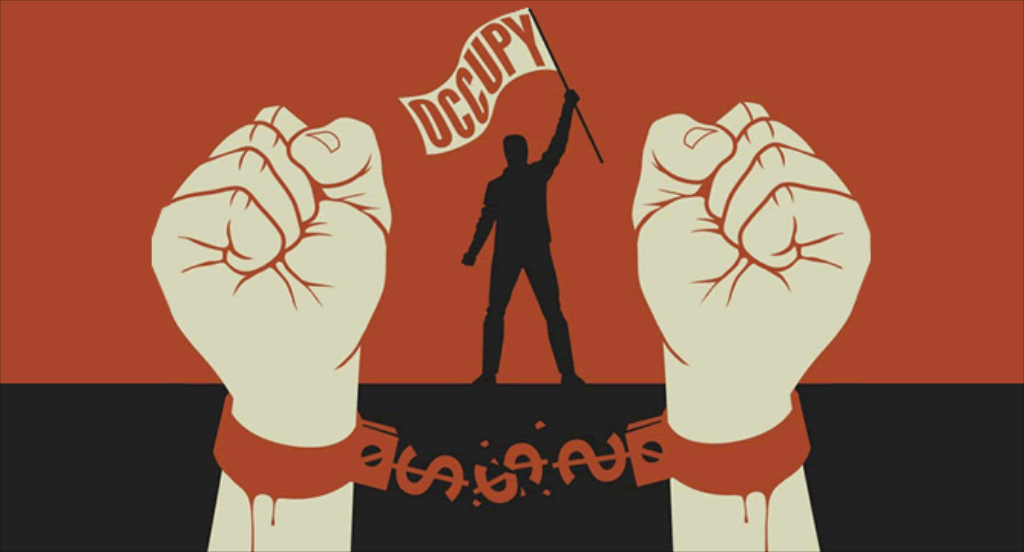
Power involves a capacity of control and a psycho–social component. The capacity of control is technical in nature. Thus the powerful may control the police, they may control the politicians, they may own all of the property. But their ability to use that control over these things rest upon the majority’s acceptance of the status quo; upon the majority’s feeling that they might gain something by going along. What the Arab Spring, Indignants and Occupy Together movements have shown is that we don’t have to accept the minority’s control – when challenged we can face them down and cause change – real change.
The power of the new liberation movements lies in their distributed and anarchical forms of leadership. This is also a site of key weakness that mainstream pundits have picked up (and on) in their well-funded opposition commentaries. “They’re earnest and quaint, but don’t know what they want,” has been a standard complaint of the media pundit. Perhaps the focus of these conservative commentators on this aspect of the new liberation movements arises out of their realization that the lack of clearly defined leadership and a well developed program is a real threat to the powerful minority that pays the pundits.
The Romans found themselves stalled in their advance across Europe when they encountered the tribal Celts. The British and French had to develop new techniques of warfare when they confronted the Iroquois and Mohawk in North America. The US found themselves stymied in Vietnam when confronted with a new form of guerrilla warfare. And, as the 20th century ground to a close the anarchic and distributed terror of small well-connected networks has essentially brought the world’s major imperialist powers to an economic crisis not seen for generations.
Out of this maelstrom of war, protest, and crisis has arisen a new liberation movement that has the potential to shake off the shackles of nihilism and create the grounds to overthrow the minority rulers of late capitalism.
——–
Originally published in New Proposals Vol. 5(1) 2011.
