Measuring the carbon footprint of global fisheries and aquaculture

Standard

Food production is one of the largest contributors to climate change, accounting for roughly one quarter of global greenhouse gas (GHG) emissions. Diets and food choices, particularly as they pertain to animal protein, also provide one of the most effective ways for individuals to limit their own carbon footprints. Over the past 15 years, a growing number of seafood production systems have been assessed to determine their relative contributions to GHGs and other emissions.

These studies have primarily used a tool called life cycle assessment — capturing
the impacts at each stage of production from ocean to plate — producing over 60 papers to date from case studies in both wild capture and aquaculture systems.
This presentation is intended to provide a brief overview of observed patterns in GHG emissions from fisheries and aquaculture as well as consistent drivers and opportunities for improvement across the industry. Results will be presented from a recently accepted paper to Nature Climate Change modelling the GHG emissions of the global fishing industry. Finally, the presentation will preview work being done in collaboration with Dalhousie University and Monterey Bay Aquarium’s Seafood Watch program to communicate the carbon footprint of fisheries and
aquaculture production via an interactive website.

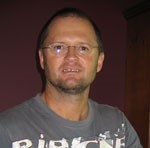
Dr. Robert Parker
NSERC Postdoctoral Fellow
Fisheries Economic Research Unit, IOF

Robert Parker has been a postdoctoral research fellow at the Institute for the Oceans and Fisheries since January 2017. He completed his PhD at the University of Tasmania where he quantified the rates and drivers of fuel consumption in Australian and global fisheries. He has conducted life cycle assessments of Antarctic krill fisheries, lobster fisheries, and Atlantic salmon farming, and has worked with industry and non-governmental organizations interested
in understanding the application of carbon footprinting and life cycle assessments to seafood operations and products. His current work focuses on modelling seafood supply chains as sources of protein and caloric energy, and relating the relative environmental performance of seafood systems to their ability to provide a net nutritional benefit.

December 1 w 11:00am w AERL 120
SEMINAR
SSC and FASmail

Standard

Please update your personal coordinates on SSC (address, contacts, phone number, email address) ASAP.


FASMail – please activate

In response to privacy and security concerns as outlined in BC Provincial FIPPA legislation and UBC Policy #104, the Faculty of Land and Food Systems has assigned each of our graduate students a new UBC email account (FASMail).

This email account will remain active for the duration of your studies at LFS and must be used for all UBC-related correspondence. Starting in the spring of 2016, this email address will be the only one used by the LFS Grad Student Office to contact you.

Account Details

Your email address is: Your_CWL_ID@mail.ubc.ca

Web Interface:  www.mail.ubc.ca

Account Setup

To activate your email account, please login (without “.stu”) and change your CWL password .   (If you already have a FASMail account, you do not need to change your CWL password).

To test, log in. If your mail box is there, you don’t need to do anything else. If you need to create a FASMail mailbox, follow these instructions.


Updating your email account in the SSC and notify Lia in the grad programs office

To ensure that emails are not sent inadvertently to a non UBC email, please update your preferred email address in your SSC profile to this new email account.  This is especially important when you are appointed as a TA, as Connect retrieves email addresses for TA’s from SSC.

Security Awareness Training

UBCIT offers free online training on security awareness.

Questions?

Contact the LFS Learning Centre via email, it@landfood.ubc.ca, or in person in MCM 264.

Edmund Seow
Computer Systems Manager
The Learning Centre
Faculty of Land and Food Systems

Reminder: Competition announcement: Tri-Agency CGS-M / Affiliated Fellowships (Master’s)

Standard

NOTE: please notify me about your intention of applying ASAP but not later than Friday, November 24th. 

You may consider working on your CGS-M or Affiliated Fellowship application with your supervisor.

Or at least have it reviewed by your supervisor before submit it.

Once submitted, no corrections/updates would be possible. 

The Fall 2017 Canada Graduate Scholarships-Master’s (CGS-M) application is available on the Tri-Agency Research Portal
(http://www.nserc-crsng.gc.ca/students-etudiants/pg-cs/cgsm-bescm_eng.asp).

The deadline across Canada for applications is 5pm Pacific Standard Time on Friday, 1 December 2017. After this time, the Research Portal will close, and there will be no opportunity to re-open the application. This is the deadline for all application materials, including reference letters. It is the applicant’s responsibility to ensure that their references are submitted on time.
Please note that when identifying UBC as your institution, the official name is “The University of British Columbia”.

Instructions for completing a CGS-M application (including transcript requirements) are available online
(http://www.nserc-crsng.gc.ca/ResearchPortal-PortailDeRecherche/Instructions-Instructions/CGS_M-BESC_M_eng.asp).

The Fall 2017 Affiliated Fellowships Master’s-level competition runs in parallel to the Tri-Agency CGS-M competition. The Affiliated Fellowships materials for Master’s-level funding have now been posted to the Graduate Awards website:
https://www.grad.ubc.ca/awards/affiliated-fellowships-masters-program

The deadline by which Affiliated Fellowship applications for Master’s-level funding must be submitted to the applicant’s UBC graduate program is Friday, 1 December 2017 (same as the deadline for Tri-Agency CGS-M applications).

IRES Seminar Series: Thurs, Nov 30 with Wade Davis

Standard

November 30, 2017: IRES Faculty Seminar
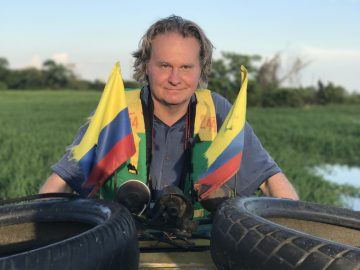
Speaker: Wade Davis

IRES Seminar Series

Time: 12:30pm to 1:30pm (every Thursday)

Location: AERL Theatre (room 120), 2202 Main Mall 

Pizza will be served at 12pm on the 4th floor of AERL.  There’s a limit of one slice per seminar attendee to ensure everyone has pizza.

***************************************************************************

The WayfindersAbstract:

The myriad of cultures in the world, with their own traditions and beliefs, are not failed attempts at modernity, let alone failed attempts to be us. Each is an inspired expression of our collective genius, each a unique answer to a fundamental question: What does it mean to be human and alive?  Every culture has something to say, each deserves to be heard, just as none has a monopoly on the route to the divine. And yet of the world’s 7000 languages, fully half are not being taught to infants. Every fortnight an elder passes away and carries into the grave the last syllables of an ancient tongue. At risk is a vast archive of knowledge and expertise, a catalogue of the imagination that is the human legacy. Rediscovering a new appreciation for the the diversity of the human spirit, as expressed in culture, is among the central challenges of our time.


Bio:

Wade Davis is a writer, photographer, and filmmaker whose work has taken him from the Amazon to Tibet, Africa to Australia, Polynesia to the Arctic. Explorer-in-Residence at the National Geographic Society from 1999 to 2013, he is currently Professor of Anthropology and the BC Leadership Chair in Cultures and Ecosystems at Risk at the University of British Columbia. Author of 20 books, including One River, The Wayfinders and Into the Silence, winner of the 2012 Samuel Johnson prize, he holds degrees in anthropology and biology and received his Ph.D. in ethnobotany, all from Harvard University. His many film credits include Light at the Edge of the World, an eight-hour documentary series written and produced for the National Geographic Channel. Davis is the recipient of 11 honorary degrees, as well as the 2009 Gold Medal from the Royal Canadian Geographical Society, the 2011 Explorers Medal, the highest award of the Explorers’ Club, the 2012 David Fairchild Medal for botanical exploration, the 2015 Centennial Medal of Harvard University, the 2017 Roy Chapman Andrews Society’s Distinguished Explorer Award and the 2017 Sir Christopher Ondaatje Medal for Exploration. In 2016, he was made a Member of the Order of Canada. 

See you there! 

Bonnie Leung

UBC IRES

Last IRES Seminar for Term 1: Thurs Dec 7 with Bradley Eyre

Standard

This is the last IRES Seminar for Term 1.  Bradley Eyre is from Southern Cross University in Australia:

December 7, 2017: IRES Special Seminar
Speaker: Bradley Eyre
(Last Seminar for Term 1)

IRES Seminar Series

Time: 12:30pm to 1:30pm (every Thursday)

Location: AERL Theatre (room 120), 2202 Main Mall 

Pizza will be served at 12pm on the 4th floor of AERL.  There is a limit of one slice of pizza per seminar attendee to ensure everyone has pizza.

*************************************************************************** 

Role of shallow water carbonate sediment dissolution in the future accretion of coral reefs in an acidifying ocean 

Abstract: Ocean acidification (OA) is predicted to have a significant impact on the future of coral reefs, mainly through the reduced formation of calcium carbonate (CaCO3). However, the dissolution of stored CaCO3 has largely been overlooked in the OA community. CaCO3 sediments represent the largest reservoir of carbonate minerals in coral reefs and result from the accumulation and storage of CaCO3 material over thousands of years. Benthic chamber incubations in permeable CaCO3 sediments show that aragonite saturation in the overlying water is a strong predictor of CaCO3 sediment dissolution and most reefs show a similar response to increasing average pCO2 (OA). However, every reef shows a different net sediment dissolution starting condition and the effect of end of century OA conditions on net sediment dissolution is different for every reef. Empirical relationships between average aragonite saturation and net ecosystem calcification, coral calcification and sediment dissolution from reefs around the globe are used to quantify future changes in the CaCO3 accretion of coral reefs. Quantifying the global dissolution kinetics of permeable CaCO3 sediments is clearly just as important as estimating calcification rates when predicting how OA will impact coral reef ecosystems.


Bio: Professor Bradley Eyre is a biogeochemist and the foundation Director of the Centre for Coastal Biogeochemistry at Southern Cross University, Australia. His publications include topics such as whole ecosystem carbon, nitrogen and phosphorus budgets, net ecosystem metabolism estimates, benthic and pelagic production and respiration, dissolved organic carbon fluxes, carbon stable isotopes (fluxes and assimilation), carbon burial and air-sea GHG flux estimates, benthic denitrification, benthic habitats and seascapes, historical and ecosystem comparisons, ocean acidification, hypoxia, eutrophication, submarine groundwater discharge, permeable sands and carbonate sediment dissolution. Professor Eyre has 157 articles in Scopus listed journals (H-index = 44, Total citations >5000, Google Scholar; H-index = 35, Total citations>3500, Scopus) and has attracted over >$20 million in funding. He has mentored 14 early- and mid-career researchers and supervised 32 PhD students. 

See you there! 

Bonnie Leung

UBC IRES