R.I.P. Levi Stubbs

Here’s Dave Marsh on The Four Tops frontman, Levi Stubbs:

From http://www.RockRap.com

SOMETHING ABOUT YOU…When I was 15, I met the Four Tops on a downtown Detroit street, where they were doing a photo shoot with the Supremes. The group—especially Duke Fakir—were extraordinarily kind to a trio of white kids totally out of their element. I love the Four Tops for that, but I would have loved them anyway. They are the voice of adolescent angst and adult heartbreak, the pure, the absolute joy that humans can take in one another. Call them love songs –I’d say it was more like lifelines—but call them silly and you’ve branded yourself as a fool.

Phil Spector once said that “Bernadette” was a black man singing Bob Dylan. The name of that black man was Levi Stubbs. And for those of you who are Bruce Springsteen fans, go find the Tops greatest album, The Four Tops Second Album, and listen to “Love Feels Like Fire” and “Helpless,” two of my alltime Motown tracks (and they weren’t even singles). You’ll feel the same thing. Those crazed sax breaks are as close to free jazz as Motown ever let itself come, and they got away with it there solely because the Tops were such a perfect machine with the most powerful voice of its time at the fore. I could never figure out whether Levi was the toughest or the tenderest singer at Motown, so I finally accepted that he was both.

Yeah, a lot of the Tops is formula Holland Dozier Holland. Sometimes even I think it’s the Supremes when the intro to “It’s the Same Old Song” or “Something About You” comes on. So what? To begin with, HDH created the greatest formula in the history of rock and soul. Now: Go listen again to “Reach Out” and see if you can think of a Supremes record that could grab you in the gut that way. It’s the “Like a Rolling Stone” of soul—with a flute and hand percussion leading the way! The group always got Eddie Holland’s greatest lyrics (and he the most under-rated lyricist of the ‘60s) and that’s one.

They got those songs because Levi could sing the most impossible stuff. Any other soul singer I know would have insisted on editing. The great, long, image rich lines in “Bermandette” and “Ask the Lonely” were too long, that they needed more space to really sing. Not Levi. He charged into those words and wrestled everything out of them, and somehow, he sounded graceful as he did. “Loving you has made my life sweeter than ever” is so multisyllabic that they had to shorten it for the title: “Loving You Is Sweeter Than Ever” fit the label better, I guess.

The Tops got away with that as a group because they knew how to work with such vocal intricacy. By the time they had their first Motown hit they’d already been together for ten years. Duke told me recently that their earlier sojourn at Columbia Records in the late ‘50s came after a brief appearance at the Apollo. The talent scout who signed them was John Hammond—the same guy who found Bob, Bruce, and Aretha. That’s the company the Four Tops, and Levi Stubbs, in particular belong in. Who else could turn “Walk Away Renee” into soul music? Who else could get away with “7 Rooms of Gloom” as a love song without a hint of irony, let alone comedy?

I will testify. Levi and the Tops were among the graces of my own soul. When I get nervous before an interview, I always remember how kind those guys were to that 15 year old kid, and I feel beyond harm. When I listen to “The Same Old Song,” I remember once again the sweetness of sour. “Bernadette” calls to my mind the futility of believing you’re in control, and how easy it is to confuse passion with obsession. “Reach Out” is simply as colossal an extravaganza as rock and soul music have ever produced, as monumental in its way as “Like a Rolling Stone.” The focal point of all that musical gingerbread and the mighty Funk Brothers is not the group—it’s one man, Levi Stubbs, pushed not to his limit but way past it. But there’s not a hint—not a second—where Levi Stubbs sounds like anything but a guy from down the street, across the way or in your mirror. Imagine a Pavarotti on the corner. There he is. All of it helped, somehow, make my own life possible.

This is no case of “Shake Me, Wake Me (When It’s Over).” Levi Stubbs was 72 years old. He hadn’t been in good health for several years. This isn’t Marvin Gaye or David Ruffin or Tammi Terrell. This is a man who made his full contribution to our culture, our lives. That doesn’t make it all that much easier to hear the word.

At the Tops’ golden anniversary show in Detroit several years ago, he sang from a wheelchair. “There wasn’t a dry eye in the house,” his friend and attorney, Judy Tint, told me this afternoon.

Rouge Forum Update

Dear Friends,

Perhaps the most auspicious event of October: the birth of Hurricane Ian Boyer whose eyes might see into the 22nd century. Congratulations to the entire Boyer family who showed there is no room for the failed system of capital, and Ian, on the same planet.

Here is Karl Marx himself, who, when every capitalist economist has to admit, “everything we knew for certain was wrong,” and when so many capitalist economists are proclaiming, “This is socialism,” when in fact it is national socialism, deserves more than a nod:

From Marx, Kapital vol 3, chapter 30 [the words New York and Federal Reserve added]:

“In a system…where the entire continuity of the…process rests upon credit, a crisis must obviously occur — a tremendous rush for means of payment — when credit suddenly ceases and only cash payments have validity. At first glance, therefore, the whole crisis seems to be merely a credit and money crisis. And in fact it is only a question of the convertibility of bills of exchange into money. But the majority of these bills represent actual sales and purchases, whose extension far beyond the needs of society is, after all, the basis of the whole crisis. At the same time, an enormous quantity of these bills of exchange represents plain swindle, which now reaches the light of day and collapses; furthermore, unsuccessful speculation with the capital of other people; finally, commodity-capital which has depreciated or is completely unsaleable, or returns that can never more be realized again. The entire artificial system of forced expansion of the [ecomony] cannot, of course, be remedied by having some bank, like the [FederalReserve], give to all the swindlers the deficient capital by means of its paper and having it buy up all the depreciated commodities at their old nominal values. Incidentally, everything here appears distorted, since in this paper world, the real price and its real basis appear nowhere, but only bullion, metal coin, notes, bills of exchange, securities. Particularly in centers where the entire money business of the country is concentrated, like London [or New York]…the entire process becomes incomprehensible.”

In our current circumstances, education workers who are the most organized workers in the US, who sit in the centripetal point of social and economic life for most people in this society, schools, who look out at about 50 million students (1/2 of them draft eligible in the next three years), who are among the last working people in the US who have fairly predictable employment (granted, there are thousands of layoffs), health benefits, and wages, who set up the vision of how and why the world works for kids—education workers may well be the next target for elites. Merit pay tied to test scores, more regimented curricula, what will likely be booming class size, more militarization of working class schools will mean not merely reaction, but resistance as school workers like other workers before us will have to fight to live.

At issue will be whether or not the Rouge Forum can take the lead to make sense of why these struggles must occur, whether the resistance can be girded by solidarity or whether we will be unable to convince people of the truth of the old labor saw, “An injury to one goes before an injury to all,” and whether or not we will be able to link the fight in schools to the fight against the system of capital itself.

In a Detroit suburb, Westland, teachers went on strike from Monday to Thursday last week. Teachers rarely want to strike. Nearly all teacher strikes are illegal (though the only illegal strike is a strike that fails). But the Westland teachers struck to save their health benefits and for class size caps (class size in Westland is far over the top). Those two demands tied the teachers, students, and parents together.

When a judge ordered the teachers back to work on Friday, they chose to return–against our advice. But on Friday, the students struck the school system on their own, with parental support—more than 200 students staying out. We can learn from this all these lessons and one more—the great potential of Freedom Schools, built on real issues outside the atmosphere of fear and coercion inside most schools. The student strike continues on Monday.

In the state of Morelos, Mexico, school workers entered there 48th day of a strike against both their employers, demanding that the educators concede all job security, and their union bosses, who demand the teachers cave. The school workers set up their own, separate, organization to lead the strike which is supported by students and most parents. Morelos educators were joined by teachers from Oaxaca who arrived with considerable experience about union leaders’ betrayals from their 2006 massive strikes.

On Saturday, the San Diego Coalition for Peace and Justice held a teachin with plenary sessions led by Marjorie Cohen, Roxanne Dunbar Ortiz, Mike Davis and others. It brought together high school students fighting JROTC, Vietnam vets, peace activists, teachers, university students, Rouge Forum members, and community leaders. Despite considerable effort, the entire local press blacked out any coverage of the event.

A month ago a serious discussion about the system of capital would have been actively opposed by many of the leaders of the group. But in this meeting, Capitalism was put on trial by nearly everyone (but for four Navy spies who were sent to watch and disrupt). This is one short speech on the Political Economy of Capitalism and the Emergence of Fascism.

Here is Monthly Review’s John Bellamy Foster: Can the Financial Crisis be Reversed?

Thanks to Joe B, Gil G, Bob A, Amber, Tommie, Wayne, Adam and Gina, Greg and Katie and the girls, Bertell, Roxanne D. O., Tina S, Chandra, Sandy and Van, Colleen, Chantelle, Nancy, Beau, Roxie, Candace, and congratulations to the about to be Mom who shall remain anon.

All the best,

r

Marx on the credit crisis

FromCapital (Volume 3, Chapter 30):

[The words “New York” and “Federal Reserve” added]

In a system of production, where the entire continuity of the reproduction process rests upon credit, a crisis must obviously occur — a tremendous rush for means of payment — when credit suddenly ceases and only cash payments have validity. At first glance, therefore, the whole crisis seems to be merely a credit and money crisis. And in fact it is only a question of the convertibility of bills of exchange into money. But the majority of these bills represent actual sales and purchases, whose extension far beyond the needs of society is, after all, the basis of the whole crisis. At the same time, an enormous quantity of these bills of exchange represents plain swindle, which now reaches the light of day and collapses; furthermore, unsuccessful speculation with the capital of other people; finally, commodity-capital which has depreciated or is completely unsaleable, or returns that can never more be realised again. The entire artificial system of forced expansion of the reproduction process [economy] cannot, of course, be remedied by having some bank, like the Bank of England [Federal Reserve], give to all the swindlers the deficient capital by means of its paper and having it buy up all the depreciated commodities at their old nominal values. Incidentally, everything here appears distorted, since in this paper world, the real price and its real basis appear nowhere, but only bullion, metal coin, notes, bills of exchange, securities. Particularly in centres where the entire money business of the country is concentrated, like London [New York], does this distortion become apparent; the entire process becomes incomprehensible; it is less so in centres of production.

Teachers to Be Measured Based on Students’ Standardized Test Scores

The New York Times: Teachers to Be Measured Based on Students’ Standardized Test Scores

New York City is beginning to measure the performance of thousands of elementary and middle school teachers based on how much their students improve on annual state math and reading tests.

To avoid a contentious fight with the teachers’ union, the New York City Department of Education has agreed not to make public the reports — which described teachers as average, below average or above average with various types of students — nor let them influence formal job evaluations, pay and promotions

Rouge Forum Update

Dear Friends,

The Rouge Forum Conference, 2009, will be at Eastern Michigan University in Ypsilanti the weekend of May 15. Please begin to plan accordingly, prepare workshops, set up travel, etc. It appears we will have quite a few low cost dorm rooms available. EMU is close to Detroit Metro Airport. Thanks to Joe Bishop for his great work on this conference already.

As we suggested two years ago in considerable specificity, finance capital trumped itself while overproduction and de-industrialization sabotaged the North American work force with plenty of help from liberals, conservatives, union leaders, post-modernists, the profit-media, and many people who, in the last 15 years, refused to use the terms: Capitalism, Imperialism, Crises, Collapse, and Class War–and worse, attacked those who advanced those ideas.

The bi-partisan $700 million robbery last week was a clear instance of, not just class rule, but the domination of capital itself, the giant sucking pump of profits, over whatever anyone thought of as capitalist democracy, which bears as strong a relationship to democracy that the Pope does to “do unto others.” Surely, if reality has any connection to reason, many people can see the government is an executive committee and armed weapon of the rich. Inside, they work out their differences, then let us choose who will oppress us best.

The economic crisis is, in part, summed up in Monthly Review, here and here is a shorter piece from the Globe and Mail: “The end of the American order”
The debilitating credit crisis has knocked the U.S. from its perch as the supreme economic power. The climb back up will be steep.

What is next? Hard to predict as if a dozen cue balls were driven into a hundred racks, the only guarantee that no balls could stop. The crashing will continue. Good bet over time: Steep inflation (war costs plus minted money for bailouts) and a ferocious attack on working people to pay for it. Teachers are likely to be next in line.

But it is not merely an economic crisis. It will result in a terrible extension of tyranny into every aspect of life. It is not a dime that people will fight and die for, but social justice, summed up in the movements of history as: Equality and Freedom! It is the tyranny of daily life that prompts upheavals for social change. Again, here is a classroom exercise on the historical critique of tyranny.

When ruling class commentators come on “Marketplace” on National Public Radio (bossed by the hustler who ran Radio Free Europe) and announce that nobody trusts the government, everyone is outraged at the Wall Street bailout, and that the politicians are “pygmies,” who cannot get anything right, when the PBS economist Solomon admits, “everything my colleagues and I knew was wrong,” (but cannot bring himself to say, “Marx was right”), and he goes further to say, “this is socialism,” but cannot be clear and say: National Socialism; then we know something profound is afoot.

But there is no Left (yet) over any size that is able to conduct Grand Strategy, Strategy, and Tactics in order to face down the system of capital and its personifications. In education in North America and much of the world, the only Left is the Rouge Forum.

The anti-war left in the US managed to take a movement that quickly put a million people on the streets six years ago, to one that cannot put a hundred thousand people out now–and in the interim taught people nothing important (those responsible? United for Peace and Justice, above all–here is our analysis from a year ago, by Tom Suber: http://richgibson.com/wheremovement.htm ).

The education resistance movement has been largely derailed by those who want to disconnect education from social crisis, or who want to teach their way out of capitalism. This is how we sought to set that right: http://www-rohan.sdsu.edu/~rgibson/TestingSchoolReformDebate.htm

So, we head into what may well be a very dark era. Still, the few cannot rule the many without considerable consent won, admittedly, through fear and bribes, but consent that has to be disconnected from reason. Our project remains: Connect reason to power.

Part of that is recognizing good work. Here is Jeffrey Perry: The biography, Hubert Harrison: The Voice of Harlem Radicalism, 1883-1918, by Jeffrey B. Perry, is being published by Columbia University Press and is scheduled to be in bookstores by November/December 2008.

And Monthly Review on the deepening crises in education.

The Rouge Forum Steering Committee is working on several projects: A MySpace Page, a Teacher Certification Program, our conference, and more avenues for publication (remember to subscribe to Substance, the hard copy voice of education resistance in the US). If you want to help, let us know and we will set you up with the work group leaders. Suggestions for projects always welcome.

As things stand today, we have about 4600 people on our email list. All volunteers. Will you share some of the Rouge Forum’s thoughts with friends and ask them to sign on?

For some cheer, here is Professor Louis’ rap on Corporate Power!

Thanks to Joe B, Amber, Adam and Gina, Wayne, Paul and Mary, Joe L, Katie and G, Sue H, Teeyah and Moshe, Bob and Tommie, Joe C, Bill of OP, Donna, Candy, Carol O, Agopian, Dan, Melissa and Josh, Isiah, Jules, Breisach, and Weird Eric.

Down the banks!
Up the Rebels????
All the best

r

Monthly Review on the assault on public schools

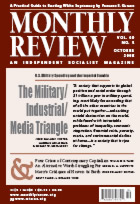
MR081001_140.jpg
The venerable socialist magazine Monthly Review focuses it’s October issue on the US military/industrial/media “imperial triangle”. That issue’s “Notes from the Editor’s” adds schools to the mix discussing the assault on public schools by the No Child Left Behind Act and advocates of “intelligent design.”

Rich and I appreciate the MR editor’s commentary on our CounterPunch article from 2007.

Monthly Review

October 2008, Volume 60, Number 5

c o n t e n t s
»notes from the editors

The United States in the opening decade of the twenty-first century is dominated by a new imperial project that is affecting all aspects of its society. The most obvious manifestation of this (see this month’s Review of the Month) is the expansion of the military-industrial complex. However, another, in some ways even more insidious, manifestation, as Rich Gibson and E. Wayne Ross pointed out in a February 2, 2007, Counterpunch article entitled, “No Child Left Behind and the Imperial Project”, is the current assault on the nation’s public schools through the No Child Left Behind law enacted by the Bush administration with broad bipartisan support. As Gibson and Ross explained, “Any nation promising perpetual war on the world is likely to make peculiar demands on its schools…and its teachers and youth….NCLB [No Child Left Behind] is the result of three decades of elites’ struggles to recapture control over education in the U.S., lost during the Vietnam era when campuses and high-schools broke into open-rebellion and, as a collateral result, critical pedagogy, whole language reading programs, inter-active, investigatory teaching gained a foothold.”… | more |

If you don’t already read MR, and you should, subscribe here.

Time to rewrite the social bargain with the rich

Here‘s a good column by the Boston’s Globe’s Derrick Z. Jackson.

Jackson argues that ‘no bailout should happen without recreating the nation’s social bargain with the rich. The nation can no longer afford the disparity where the average American CEO makes 344 times the pay of the average worker, according to the Institute for Policy Studies and United for a Fair Economy. The CEOs and their boards should pay toward the bailout before a penny of that possible $2,333 comes out of the pockets of Americans. There is more than enough money among the financial elites to pay for the bailout.”

For example:

  • The Institute for Policy Studies last week calculated that a securities transaction tax of a penny for every $4 invested would add $100 billion a year to the treasury. Had such a tax been in place after the 2001 Enron scandal, it would have added up to the current cost of the bailout.
  • A wealth surcharge of no more than 3 percent on households worth more than $10 million would add another $300 billion. In response to the news this year that two-thirds of American corporations paid no income tax between 1998 and 2005, a corporate minimum income tax could add another $60 billion.
  • The institute said a 50 percent tax on salaries of $5 million or more and 70 percent on salaries of $10 million or more – until the bailout is over – would add another $105 billion. Killing overseas tax shelters, loopholes for excessive CEO pay and the sale of mansions, and creating a progressive inheritance tax would add another nearly $300 billion.

Bailing Out the Foes of Public Education

CounterPunch: Quoting Friedman All the Way …

Bailing Out the Foes of Public Education

By TODD ALAN PRICE
We live in dubious times when staunch deregulators howl for vigorous and immediate regulation.

Lessons from the past

In 1983, the release by the Reagan administration of the report A Nation at Risk, launched over two decades of attacks on public education by right wing foundations and corporate pundits. Teachers and students were ill equipped to defend against the Heritage Foundation, the Hoover Institution, and the American Enterprise Institute, just a few of the many shock troops aiming their sights on the public schools.