Darwin Defeated in the Bayou

To bad the Louisiana legislature doesn’t encourage mere thinking.

CreationismProof.jpg

The Chronicle of Higher Education: Darwin Defeated in the Bayou: Louisiana Encourages ‘Critical Thinking’ About Evolution

The Louisiana House voted overwhelmingly in favor of a bill on Wednesday that would promote “critical thinking” by students on topics such as evolution, the origins of life, global warming, and human cloning. The Louisiana Senate already passed a similar bill.

Similar bills have been introduced in several states over the past year and have been supported by opponents of evolution. The Discovery Institute, which promotes a brand of creationism known as intelligent design, hailed the 94-to-3 vote on the bill.

The Louisiana Coalition for Science opposes the bill, which it says “will open the door for creationism in public schools.”

University professors in several states have organized against such bills, many of which are based on a model created by the Discovery Institute. —Richard Monastersky

Sha Na Na: From Rock ‘n’ Roll Stardom to Academe

The Chronicle of Higher Education: From Rock ‘n’ Roll Stardom to Academe

By INGRID NORTON

How do you top the thrill of playing at Woodstock? By going to graduate school, of course.

Just ask the members of Sha Na Na, who were the penultimate act at the legendary 1969 rock festival, in the slot just before Jimi Hendrix. Of Sha Na Na’s 12 original members, eight went on to get advanced degrees. The musicians, who blended doo-wop choruses with blazing dance moves, formed from a Columbia University a cappella group in the late 60s.

Beneath the group’s retro varnish, Sha Na Na’s story mirrors its generation’s: Square teenagers come to college from the suburbs and promptly trade in turtlenecks and stiff dance moves for shimmying, getting girls, and hanging out at clubs. As the decade recedes, they come back down to earth and rejoin the establishment, becoming lawyers, academics, and doctors.

“I don’t think I ever went to a rock concert till I was in a rock concert,” says Rob A. Leonard, a founding member and, today, a professor of linguistics at Hofstra University.

Sha Na Na was the brainchild of Rob Leonard’s brother, George, who was working on his Ph.D. George J. Leonard, now a professor of interdisciplinary humanities at San Francisco State University, wanted to revive 50s innocence through doo wop, making it avant-garde. He became a Svengali, teaching members dance moves and impressing them with his older girlfriend and Lincoln hard-top convertible. Sha Na Na’s first shows in 1969 were a sensation. By the end of summer the group had a gig at Woodstock.

“After that, my college experience was completely abnormal,” says Bruce C. Clarke, a professor of literature and science at Texas Tech University.

Members balanced lives as rock stars and students by taking classes that met in the middle of the week and touring on extended weekends. Rob Leonard, who would later do years of research in East Africa, originally took Swahili because it was the only introductory language class that didn’t meet on a Friday. Rich T. Joffe, who got a Ph.D. after leaving the group but is now an antitrust lawyer, remembers reading an introductory economics textbook on an airplane while the rest of his severely hung-over bandmates tried to sleep.

As time went on, performing took its toll. Rob Leonard started falling asleep during a 10 a.m. linguistics class; Mr. Clarke recalls skipping a party to read Rilke in his hotel room.

Slowly, members peeled off, pursuing separate paths. Mr. Clarke put himself through his first few years of graduate school with money he’d saved from tours. Alan M. Cooper, now provost and a professor of Jewish studies at the Jewish Theological Seminary, wondered if he should go back to the band when he couldn’t find housing at Yale graduate school. They all watched as the band took on new members and grew, starring in a variety show and appearing in the film Grease, which hit theaters 30 years ago this month.

All agree that Sha Na Na shaped them professionally. Mr. Cooper still relies on his performance instincts when he teaches. George Leonard calls his bandmates “the best students I ever had.” Musing on how Sha Na Na influenced him, Rob Leonard says, “Well, you can’t escape rock and roll.”

Two new books

080774901X.gif0807749001.gif

A few years ago, I worked with David Gabbard, Sandra Mathison, Kevin Vinson, and Kathleen Kesson to edit a four volume set of books titled Defending Public Schools. The books were published by Praeger (a division of Greenwood Publishing Group) and received some really outstanding reviews.

I very pleased that Teachers College Press has decided to publish two of the DPS books in paperback editions: Education Under the Security State and The Nature and Limits of Standards-Based Reform and Assessment. Both books will be available in July.

The Defending Public Schools set is still available from Greenwood in hardcover, with individual volumes also available as ebooks.

Rouge Forum Update: $130 a Barrel!

Dear Friends,

As school winds down, it appears the resistance heats up. Integrity is coming forward. Can the resistance be sustained, or make sense?

It may be that the collision of NCLB restrictions, the wars, and $130 a barrel is prompting school resistance. In the past few weeks we have seen:

  • New York City teacher Douglas Avella’s 160 students turned in blank tests. Avella was sent to the notorious $65 million per year NYC “rubber room,” where disciplined teachers live in limbo but get paid, and then may be fired. One student said, “The school system’s just treating us like test dummies for the companies that make the exams.”
  • Twenty-six University of California students were arrested protesting a 10% fee hike (95% in the last six years) in the last month, 16 at a Board of Regents meeting at UCLA.
  • A North Carolina teacher refused to force his special ed kids take the exams he knew they were scheduled to fail.
  • As we know, Carl Chew of Seattle refused to proctor the exams.
  • In San Diego, school workers, like thousands of others, are whipsawed with threats of layoffs. It began with the new superintendent announcing 1200 support personnel layoffs and more than 900 teacher layoffs. Rank and file teachers from Hoover High organized the initial Fightback Demonstration with more than 1000 parents, kids, and educators marching on the school board meeting. Several demonstrations, organized by SDEA and the PTA followed. Only the rank and file led demonstration noted the connection between the economic crises, oil, and the wars. Now, all the support personnel layoffs remain on the table. More than 300 teachers are scheduled to lose jobs. The superintendent found some money. Maybe he can find more. But Las Vegas actively recruited many of the educators wrongly given notices and many of them left.
  • In Detroit, the new superintendent of the collapsing system threatened to open Small Schools based on the failed Chicago Model, then virtually disappeared. Community leaders are wondering where the $280, a year boss is.
  • In D.C. the AFT Local, WTU, appears to prepare to bargain a contract that dumps seniority. WTU is one of the more notoriously corrupt locals of the American Federation of Teachers. Past leaders are in prison for embezzling hundreds of thousands of dollars of member money. One top WTU leader sued the others for similar activity in April. The AFT is the more urban and smaller of the two US school worker unions. Other top AFT officials, like Miami’s Pat Tornillo, are also in prison for embezzlement, while the former Broward County, Florida AFT boss is in jail for molesting children. Both served on key AFT boards which helped develop and promote the NCLB. The AFT in New York City, the bellweather local of the union, recently agreed to a merit pay scheme. AFT has overseen the near-complete collapse of urban schooling (Detroit would be a prime example) and done nothing of note but collaborate.
  • The coming NEA and AFT conventions in early July should be interesting. Activists will seek to bring forward motions against the NCLB and the wars while the leaders of the big school worker unions will do all they can to focus on nothing but crowning new presidents (NEA with Dennis Van Roekel at $450,000 a year and AFT with Randi Weingarten at $600,000 a year) and the billion dollar election spectacle.

At issue is whether or not there can be sense made out of all of this—and sense then connected to organization. Only the Rouge Forum in the US has connected the wars, the NCLB, racist high-stakes exams, and the militarization of schools. We did that even before the NCLB existed, warning middle school teachers in 1997, “you are teaching the combatants in the next oil war.” Here is a recent piece, one of many http://www.richgibson.com/schoolresistance.htm

Our Rouge Forum Louisville conference adjourned with many, many suggestions for what to do: test boycotts, driving recruiters off campus, rejecting union concessions and building a spirited Fightback movement uniting school workers, parents and students, and organizing teach-ins for the fall as well as our own conference in 2009.

The Rouge Forum Steering Committee will take the lead in that. Meanwhile, could you spread the word of the Rouge Forum? Tell friends and colleagues that there is an organization fighting back, leading, and making the kind of sense that makes real solidarity possible. We don’t live off foundation grants whose owners typically run the organizations they fund. We have no dues. Money comes strictly from volunteers. We seek to build a mass base of people who can forge the resistance against an opposition that is well organized and ruthless while, at the same time we build a caring community where people can demonstrate their own creativity and expertise. Ask others to join us!

The Rouge Forum No Blood for Oil (with those good-for-the-rest-of-your-life anti-war posters cheap!) is updated.

All the best, r

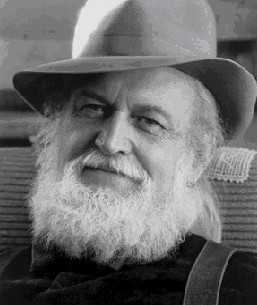
Folksinger and storyteller Utah Phillips, a “national treasure” if there

uup.jpg
Folksinger and storyteller Utah Phillips, a “national treasure” if there
ever was one, died last Friday, May 23.

His performances featured the songs, jokes and lore of hobos, tramps,
cowboys, migrant workers and Wobblies. Although he made a number of fine
recordings, he was most truly in his element in live performances, where he
knew how to draw the audience into a song or story and would leave us
cracking up with laughter at some outrageous punch line that would
unexpectedly pop up in the middle of his apparently rambling reminiscences.

You can get a little taste of this experience from this video of one of his
last performances, posted online in eight parts (totaling about an hour) —
1. https://www.youtube.com/watch?v=5wsFmcFMeME
2. https://www.youtube.com/watch?v=dd4yNMo5r14
3. https://www.youtube.com/watch?v=6D07S-m7h9Q
4. https://www.youtube.com/watch?v=ks-LmHAGouQ
5. https://www.youtube.com/watch?v=7cQMvkDU558
6. https://www.youtube.com/watch?v=n9C93WLtpYc
7. https://www.youtube.com/watch?v=OOscaTfHLFs
8. https://www.youtube.com/watch?v=DZtJdNIUcC4

Here is his famous “Moose Turd Pie” story —
https://www.youtube.com/watch?v=zSlPJOfnJZk

A few more video clips can be found here, along with various other
performers doing some of his songs —
https://www.youtube.com/results?search_query=%22utah+phillips%22

For more recordings and links, see http://www.utahphillips.org/
The obituary below is drawn from that site.

* * *

“Folksinger, Storyteller, Railroad Tramp Utah Phillips Dead at 73”
Nevada City, California:

Utah Phillips, a seminal figure in American folk music who performed
extensively and tirelessly for audiences on two continents for 38 years,
died Friday of congestive heart failure in Nevada City, California, a small
town in the Sierra Nevada mountains where he lived for the last 21 years
with his wife, Joanna Robinson, a freelance editor.

Born Bruce Duncan Phillips on May 15, 1935 in Cleveland, Ohio, he was the
son of labor organizers. Whether through this early influence or an early
life that was not always tranquil or easy, by his twenties Phillips
demonstrated a lifelong concern with the living conditions of working
people. He was a proud member of the Industrial Workers of the World,
popularly known as “the Wobblies,” an organizational artifact of early
twentieth-century labor struggles that has seen renewed interest and growth
in membership in the last decade, not in small part due to his efforts to
popularize it.

Phillips served as an Army private during the Korean War, an experience he
would later refer to as the turning point of his life. Deeply affected by
the devastation and human misery he had witnessed, upon his return to the
United States he began drifting, riding freight trains around the country.
His struggle would be familiar today, when the difficulties of returning
combat veterans are more widely understood, but in the late fifties Phillips
was left to work them out for himself. Destitute and drinking, Phillips got
off a freight train in Salt Lake City and wound up at the Joe Hill House, a
homeless shelter operated by the anarchist Ammon Hennacy, a member of the
Catholic Worker movement and associate of Dorothy Day.

Phillips credited Hennacy and other social reformers he referred to as his
“elders” with having provided a philosophical framework around which he
later constructed songs and stories he intended as a template his audiences
could employ to understand their own political and working lives. They were
often hilarious, sometimes sad, but never shallow.

“He made me understand that music must be more than cotton candy for the
ears,” said John McCutcheon, a nationally-known folksinger and close friend.
In the creation of his performing persona and work, Phillips drew from
influences as diverse as Borscht Belt comedian Myron Cohen, folksingers
Woody Guthrie and Pete Seeger, and Country stars Hank Williams and T. Texas
Tyler.

A stint as an archivist for the State of Utah in the 1960s taught Phillips
the discipline of historical research; beneath the simplest and most folksy
of his songs was a rigorous attention to detail and a strong and
carefully-crafted narrative structure. He was a voracious reader in a
surprising variety of fields.

Meanwhile, Phillips was working at Hennacy’s Joe Hill house. In 1968 he ran
for a seat in the U.S. Senate on the Peace and Freedom Party ticket. The
race was won by a Republican candidate, and Phillips was seen by some
Democrats as having split the vote. He subsequently lost his job with the
State of Utah, a process he described as “blacklisting.”

Phillips left Utah for Saratoga Springs, New York, where he was welcomed
into a lively community of folk performers centered at the Caffé Lena,
operated by Lena Spencer.

“It was the coffeehouse, the place to perform. Everybody went there. She fed
everybody,” said John “Che” Greenwood, a fellow performer and friend.
Over the span of the nearly four decades that followed, Phillips worked in
what he referred to as “the Trade,” developing an audience of hundreds of
thousands and performing in large and small cities throughout the United
States, Canada, and Europe. His performing partners included Rosalie
Sorrels, Kate Wolf, John McCutcheon and Ani DiFranco.

“He was like an alchemist,” said Sorrels, “He took the stories of working
people and railroad bums and he built them into work that was influenced by
writers like Thomas Wolfe, but then he gave it back, he put it in language
so the people whom the songs and stories were about still had them, still
owned them. He didn’t believe in stealing culture from the people it was
about.”

A single from Phillips’s first record, “Moose Turd Pie,” a rollicking story
about working on a railroad track gang, saw extensive airplay in 1973. From
then on, Phillips had work on the road. His extensive writing and recording
career included two albums with Ani DiFranco which earned a Grammy
nomination. Phillips’s songs were performed and recorded by Emmylou Harris,
Waylon Jennings, Joan Baez, Tom Waits, Joe Ely and others. He was awarded a
Lifetime Achievement Award by the Folk Alliance in 1997.

Phillips, something of a perfectionist, claimed that he never lost his stage
fright before performances. He didn’t want to lose it, he said; it kept him
improving.

Phillips began suffering from the effects of chronic heart disease in 2004,
and as his illness kept him off the road at times, he started a nationally
syndicated folk-music radio show, “Loafer’s Glory,” produced at KVMR-FM,
and started a homeless shelter in his rural home county, where
down-on-their-luck men and women were sleeping under the manzanita brush at
the edge of town. Hospitality House opened in 2005 and continues to house 25
to 30 guests a night. In this way, Phillips returned to the work of his
mentor Hennacy in the last four years of his life.

Phillips died at home, in bed, in his sleep, next to his wife. He is
survived by his son Duncan and daughter-in-law Bobette of Salt Lake City;
son Brendan of Olympia, Washington; daughter Morrigan Belle of Washington,
D.C.; stepson Nicholas Tomb of Monterrey, California; stepson and
daughter-in-law Ian Durfee and Mary Creasey of Davis, California; brothers
David Phillips of Fairfield, California, Ed Phillips of Cleveland, Ohio and
Stuart Cohen of Los Angeles; sister Deborah Cohen of Lisbon, Portugal; and a
grandchild, Brendan. He was preceded in death by his father Edwin Phillips
and mother Kathleen, and his stepfather, Syd Cohen.

The family requests memorial donations to Hospitality House, P.O. Box 3223,
Grass Valley, California 95945 (530) 271-7144
www.hospitalityhouseshelter.org

Stackley Cup Playoffs Underway

Stackley Cup Playoffs Underway

The Onion

Stackley Cup Playoffs Underway

NEW YORK—The 2008 Stackley Cup Playoffs, a set of odd-number-of-games series that will determine the champion of the National Huckie League, are well underway, NHL Commissioner Gary Bettman confirmed Monday. At press time,…

.onion_embed {background: rgb(256, 256, 256) !important;border: 4px solid rgb(65, 160, 65);border-width: 4px 0 1px 0;margin: 10px 30px !important;padding: 5px;overflow: hidden !important;zoom: 1;}.onion_embed img {border: 0 !important;}.onion_embed a {display: inline;}.onion_embed a.img {float: left !important;margin: 0 5px 0 0 !important;width: 66px;display: block;overflow: hidden !important;}.onion_embed a.img img {border: 1px solid #222 !important;;width: 64px;;padding: 0 !important;;}.onion_embed h2 {line-height: 2px;;clear: none;;margin: 0 !important;padding: 0 !important;}.onion_embed h3 {line-height: 16px;font: bold 16px arial, sans-serif !important;margin: 3px 0 0 0 !important;padding: 0 !important;}.onion_embed h3 a {line-height: 16px !important;;color: rgb(0, 51, 102) !important;font: bold 16px arial, sans-serif !important;text-decoration: none !important;display: inline !important;;float: none !important;;text-transform: capitalize !important;}.onion_embed h3 a:hover {text-decoration: underline !important;color: rgb(204, 51, 51) !important;}.onion_embed p {color: #000 !important;;font: normal 11px/ 11px arial, sans-serif !important;;margin: 2px 0 0 0 !important;;padding: 0 !important;}.onion_embed a {display: inline !important;;float: none !important;}

Bush: I Gave Up Golf For The Troops

From the Huffington Post:

Bush: I Gave Up Golf For The Troops

As violence in Iraq continues — clashes today left 11 dead and 19 injured — President Bush has for the first time revealed the great sacrifice he’s made for the sake of our soldiers: he’s given up golf.

From an interview with Politico and Yahoo News:

“I don’t want some mom whose son may have recently died to see the commander in chief playing golf,” he said. “I feel I owe it to the families to be in solidarity as best as I can with them. And I think playing golf during a war just sends the wrong signal.”

Bush said he made that decision after the August 2003 bombing of the United Nations headquarters in Baghdad, which killed Sergio Vieira de Mello, the top U.N. official in Iraq and the organization’s high commissioner for human rights.

“I remember when de Mello, who was at the U.N., got killed in Baghdad as a result of these murderers taking this good man’s life,” he said. “I was playing golf — I think I was in central Texas — and they pulled me off the golf course and I said, ‘It’s just not worth it anymore to do.'”

Tests ‘damaging’ to school system

BBC: Tests ‘damaging’ to school system

Tests ‘damaging’ to school system

The national testing system in English schools is being misused to the detriment of children’s education, says a report from a committee of MPs.

The Commons schools, children and families committee says teachers spend too much time “teaching to the test”.

“The inappropriate use of national testing could lead to damaging consequences,” warns the report.

Schools Minister Jim Knight welcomed MPs’ recognition that the “principle of national testing is sound”.

With hundreds of thousands of 11-year-olds in England taking “Sats” tests this week, the select committee report warns that the tests are being used in a way that does not benefit children or the schools system.

New type of test

“In an effort to drive up national standards, too much emphasis has been placed on a single set of tests and this has been to the detriment of some aspects of the curriculum and some students,” says committee chairman Barry Sheerman.

While supporting the idea of national tests, the report from MPs says that an “over-emphasis” on their results can distort how children are taught and “children’s access to a balanced education is being compromised”.

It also criticises the single-level tests which are being piloted as a possible alternative.

These tests, taken when teachers think pupils are ready to go up a level, are likely to perpetuate the drawbacks of the Sats, such as narrowing the curriculum, suggests the report.

And it warns that the single-level tests’ “one-way ratchet” system will lead to an “artificial” improvement in results, in which pupils will be “certified to have achieved a level of knowledge and understanding which they do not in truth possess”.

The report calls for a reform of the school performance tables, which for primary schools are based on the national test results.

It suggests that accountability should be based on a wider range of measures, including Ofsted reports.

Schools Minister Jim Knight defended the use of national tests as part of the process of assessing progress for pupils, schools and the education system.

Please turn on JavaScript. Media requires JavaScript to play. “Along with teachers’ own judgements and Ofsted reports, tests are a tool which help pupils and their parents to understand how well they are doing, help parents and teachers to understand how well their school is doing, and help the public to scrutinise the performance of the schools system.

“That’s why they are here to stay. Parents don’t want to go back to a world where the achievements of schools are hidden from them.”

Mr Knight was asked on the Today programme on BBC Radio Four whether pupils were being put under too much stress at too early an age.

“If you don’t have the tests at 11 and 14 then there’s a danger that children then hit the very high stakes, high stress of GCSEs across the whole curriculum – not just English, maths and science – and the preparation that they get through sitting these Sats at 11 and 14 is in that respect good for them even though it might be a slight level of stress.”

‘Disapproval’

But Christine Blower, acting general secretary of the National Union of Teachers, said the report identified the “poisonous effects of testing”.

“The government now stands isolated on the future of national curriculum testing. It has steadfastly resisted the mounting evidence of the damage caused by the tests to the curriculum and children’s learning,” said Ms Blower.

Chris Keates of the NASUWT teachers’ union said: “It is pleasing to note that some aspects of the report confirm what the NASUWT has been saying for years, that the root of the problem is not the system of national testing but the performance league tables and other aspects of the not-fit-for-purpose accountability regime into which the test results are fed.”

John Dunford, leader of the ASCL head teachers’ union, said that the government should now “finally take seriously this groundswell of disapproval of the current testing regime”.

“The original purpose of examinations, to assess students’ progress, has become confused with school accountability and the performance management of teachers,” said Dr Dunford.

The heads’ union calls for random sampling to monitor standards, rather than targets based on national tests.

Story from BBC NEWS:
http://news.bbc.co.uk/go/pr/fr/-/2/hi/uk_news/education/7396623.stm

Published: 2008/05/13 08:19:46 GMT

© BBC MMVIII