Categories
Business Strategy Design Insight Marketing Strategies Product Positioning & Branding Tips and tricks

Brand Architecture Building: A Step-by-Step Guide (Step 1)


What counts as a sub-brand? How can  I make it easier for the consumers to navigate my offerings? Heck, what is a brand, really? If you’re asking these questions, you are not alone. This is a live challenge I am facing at work, and I wanted to share my key branding insights in a multi-step case study. Let’s do this!

Step 1: Understand what a brand really means.

Before we define a brand architecture, let’s wrap our heads around what a brand really is. I have developed a formula to help tell the brand story: Let’s break this down. Id, ego, and super-ego, as defined by Sigmund Freud, are the three components of human psyche that govern the way you think and make decisions. The id is present with us when we are born, and represents our basic human drive: the unorganized instinct and sometimes irrational impulse. An entity is simply the item, service, or person that is the subject of branding. Is it your personal brand? A corporate identity? A product or service? When you give birth to a brand, you must first think of your entity’s id – peel back the layers of beautiful design, extraordinary functionality, and your price tag. What are you left with? On first impulse, what is the fundamental word that breathes life into your brand?

INDULGENCE

SPEED

BALANCE

As if it were not obvious already, id and entity make up the word identity, and that is the final piece of the puzzle. A brand is an identity – it’s an embodiment of your core offering, a definition of your entity, a way to link associations together, and a promise from you to the world to hold yourself accountable for delivering your core offering.

Only when you understand what makes up your identity will you be able to build a powerful, believable brand!

NOURISHING

I have chosen the word nourishing to represent the corporate brand because of two reasons – 1) Nature’s Path Foods products are  delightfully nourishing – both good tasting and good for you. They choose nourishing, superfood, organic ingredients that you can trust to put in your body. 2) Nature’s Path Foods is also about enriching the community and the land, giving back to everything that has made the company what it is today.


Stay tuned for Step 2.

Categories
Design Product Positioning & Branding Tips and tricks

Font Faves #1: Hipster Series

Well, someone had to do it! Here’s my super round-up of super hipster fonts. They are 100% free, of course, because… when do hipsters not like free things?

When hipsters make videos for Vimeo…

http://www.behance.net/gallery/Vintage-LogoInisignia-Collection-2/8997889

When hipsters make posters…

http://www.behance.net/gallery/Metropolis-1920/3244285

When hipsters teach kindergarten…

http://www.behance.net/gallery/Primary-Sans/9205391

When hipsters design magazines spreads…

http://fontfabric.com/code-pro/

When hipsters make scrapbooks…

http://www.behance.net/gallery/Musket-Free-Font/5535461

When hipsters write fashion blogs…

http://dribbble.com/shots/759587-COCO-Free-Fashion-Typefamily

When hipsters handwrite…

http://www.dafont.com/note-this.font

When hipsters meet the 50s…

http://juliuscsurgo.org/free-font-hipster/

When #hipsters caption their Instagram photos…

http://www.floodfonts.com/freefont/moby.html

When hipsters write books…

http://www.bariol.com/

http://www.behance.net/gallery/Casper-Typeface/4919301

If hipsters opened a bar (besides robbing the liquor stores of all their Pabst)…

http://www.behance.net/gallery/The-Kabel-Font-free/1912005

When hipsters roll the end credits…

Categories
Insight Student Life Technology Tips and tricks

Chrome Extension Round-up Edition 1: Productivity

Uncover the Chrome potential – have you tried these Chrome extensions yet? I’ve round up some of the top productivity and time-saving extensions I’ve used or want to try (in no particular order):

1. StayFocusd

I’ve reviewed this extension before, but it has made it to my list. So what is this extension? StayFocusd restricts the time you can spend on certain websites, thereby increasing “productivity by limiting the amount of time that you can spend on time-wasting websites.” This proves to be useful during exam periods when you need to cut down the time you spend on Youtube, Facebook, Pinterest, or even email. If you want to cheat on the minutes you get after you run out, it takes many annoying clicks through tons of buttons before you’re allowed to make changes.

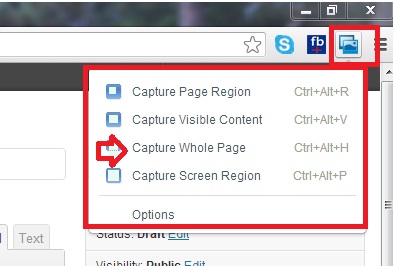
2. Screen Capture

“Capture visible content of a tab, a region of a web page, or the whole page as a PNG image.” Great for materials you want to keep from websites to insert into PowerPoint presentations or reference materials for your papers. It has saved me so much time versus print screening and stitching together photos in Paint.

3. Pocket
When you see a useful page but don’t have time to read it all, hit the “Pocket” button to save the page and view it later. “It automatically syncs to your phone, tablet or computer so you can view it at any time, even without an internet connection.” It’s kind of like a Pinterest for websites, except it’s for your personal use.


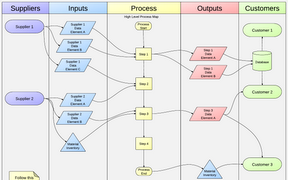
4. LucidChart

For my friends in BTM, TLog, or engineering, I’m sure you’ll have to do a lot of flow charting. Google Drive apps are kind of annoying to create diagrams, as you need to create a drawing and add shapes. LucidChart is “the easiest way to draw flowcharts, mockups, UML, mind maps and more. Work together in real time with your team and clients.”


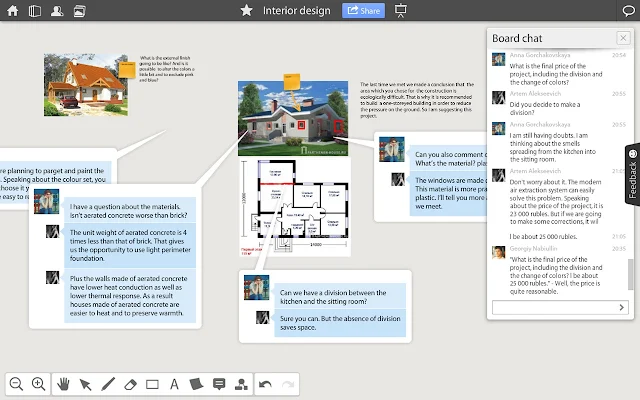
5. RealtimeBoard WhiteBoard

I’ve looked for things like this forever. If you’re in need of a virtual meeting, perhaps give this a try to “discuss design, brainstorm, work on projects, make mindmaps and use it in education.” Only downside (?) is that everyone will have to install it. Similar ones include: Conceptboard, TeamBox, Orchestra and more.

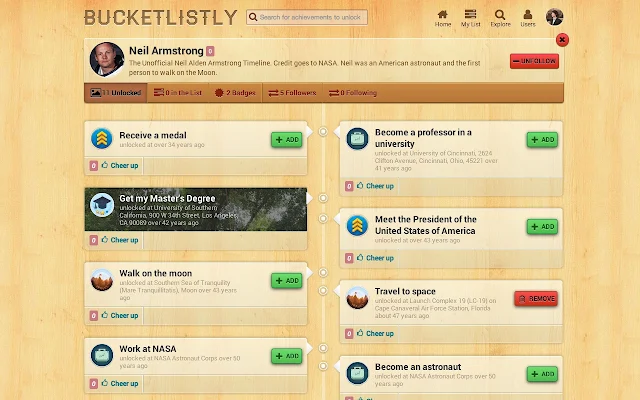
Bonus: BucketListly

This app just sounds like a blast. “Bucketlistly will turn your life into a game. Complete and share your ‘achievement unlocked’ moments with your friends fast and simple.”This has more to do with productivity outside of work or school life, but it is a motivating way to keep track of all the things you want to do. We all get a sense of satisfaction from ticking off a box.


What is your favourite app or extension? Leave a comment below 🙂

 
Categories
Student Life Tips and tricks

Internships Abroad: A Shanghai Experience

“I want to travel, but I want to make use of my summer.” Does this sound like you? Maybe internships abroad are just what you need. *It’s not too long of a read, just tried to spice things up with lots of photos.

A lot of Sauders have been asking me about what I did to land my internship last summer at DDB China Group in Shanghai. I originally wasn’t going to post another one of my “journal entry blogs,” but since interest has been peaking as the end of another school year approaches (although not quite as soon as we’ve hoped), here it is.

China has always been a must-visit place on my bucket list. Part of the reason is actually quite fascinating, and it comes from the story of my family. During the Chinese Civil War in the late 1940s, my grandparents fled from China to the island of Taiwan not knowing that they wouldn’t see their family again for decades. China and Taiwan both enforced travel bans until 1987, and by the time my grandparents returned, they were not faced with all-good news. As a result, the generations that ended up settling down in Taiwan never got a chance to meet their same generation in China. My grandparents have since passed away, and from that point on I have always vowed to visit the land and meet my kin, a generation I never thought I would have a chance to meet. Personal story aside for now, let’s get straight to the internship details!

During the summer of 2012, I had first applied through the Catalai China Programme for an internship. TIP #1: ALWAYS APPLY AT LEAST 1.5 MONTHS AHEAD OF WHEN YOU WANT TO START YOUR INTERNSHIP. Typically, programmes will need a month to process your application, place you, help you with your accommodation, plane tickets, and visa. I got through to the Skype interview, but didn’t get through to the next round. I remember one of the main questions my interviewer asked was: “Why should we hire you if you don’t have any work experience?” That question is a real bummer to hear. We all want to get somewhere, so that’s why we wanted to start with summer internships in the first place.

Crushed, I turned to the one trusty mentor that never fails me – Google. That’s how I came to find Next Step Connections, a guaranteed internship placement programme. TIP #2: IF YOU DON’T HAVE ANY WORK EXPERIENCE, TRY A GUARANTEED PLACEMENT PROGRAMME.  Some people at this point think, “wow, guaranteed placement? That’s for people who come in second place.” Not true. With a guaranteed internship placement, not only do you get to choose the industry and even specific companies you’d like to work for, but you are also guaranteed satisfaction with the placement for a week into your term. Application was simple; they did everything online, and then facilitated placement via e-mail:

1- Submit your application

2- Application confirmation and review

3- Application acceptance and deposit payment

4- Internship Placement Process

5- Internship confirmation

6- Program information (Visa, Housing)

7- Arrival information (Flights, Arrival day)

I chose my industries, indicated a preferred length of stay of 1 month, and chose the  Standard US$ 3,150 program (your final payment may differ, as mine did slightly) standard and comprehensive programs differ in that they offer Chinese lessons). The standard includes internship, airport transfer, accommodation, social events, cellphone card, transportation card, visa, insurance and support.  After that, I paid  USD$450 to “put my foot in the door,” refundable if placement does not occur. The next step is the fun part – choosing an internship. Again, I consulted my trusty pal Google for the top ad agencies in the worlds. Of the ones that had offices in China, I initially specified DDB Global, Grebstad Hicks, Going86 and Avant Capital with no idea what to expect. I ended up getting a confirmed offer for a 6-week internship in Shanghai, China with Doyle Dane Bernbach (DDB) China Group, which is one of the world’s top advertising agencies and marketing communications networks.


What I liked best was definitely the corporate culture and the people there. You see everyone with black hair here, but we actually spoke mainly in English. TIP #3: DON’T BE INTIMIDATED THAT YOU CAN’T SPEAK CHINESE. MOST COMPANIES WELCOME AND WANT FOREIGN (ESPECIALLY ENGLISH-SPEAKERS) TO ADD DIVERSITY AND INSIGHT, AND MOST OF THEM ARE GLOBAL. DDB assigned me as a PR Intern, but what I liked about them is that they didn’t restrict me to my title. I got to explore many things beyond just that. DDB’s office was beautiful, and located near many other creative agencies where my good friend happened to be interning too. On top of that, they were undergoing some corporate and system changes at the time, so it was so interesting to be a part of the change. I was at the offices from 9AM – 6PM, plus I lived only 3 metro stations away which was pretty awesome.

So what was the non-job experience like?

Here, you can see a really blurry picture of the den with my neighbour, roommates and I. Because of the nature of these internships, people come and go pretty quickly. I happened to be one of the “newbies” as most of these guys had been around for way more than a couple months already. They had cleaning ladies that came in to clear our garbage, and there was one washing machine that… “got by”. Other than that, pretty good. TIP #4: MAKE SURE TO SET UP VPN (UBC OFFERS A FREE ONE) SO YOU CAN OVERRIDE THE BIG BROTHER CENSORSHIP. IT IS NOT A MYTH THAT THEY CAN BLOCK YOUR FACEBOOK. I have to admit, I was mildly afraid that I was the only girl in an apartment of 4. However, I ended up getting the biggest room with my own bathroom and balcony, which rocked my fun socks.

Oh, and these roomies… what to say about these roomies. They were so freaking amazing. From the moment we first met, they were all so nice and took me everywhere. They knew so much more about the place than I as a Mandarin-speaker could ever know. So what did we do? Well, the first night we hit up Shelter (a re-purposed bomb shelter), The Apartment, Kartel, and 88. Epic fun. TIP #5: YOU CAN CHECK WWW.SMARTSHANGHAI.COM OR PUBCRAWL SHANGHAI FOR PLACES TO GO AND SPECIAL EVENTS. We also ended up going to places along Huaihaithe Bund, Luwan… you name it. Some favourites were Zapata’s (free margaritas for girls_, I Love Shanghai (absinthe shots), Windows (beer pong, pool), Perry’s (hookah, massive buckets of alcohol for cheap – check out the pics, I put my signature up and tweet me yours when you sign it @yowen_song) and other hot spots included Bar Rouge, Mint, The Geisha, Muse, M2, M3, Shiva… etc. There was also a really cool laser tag bar we went to, which was kind of close to a bowling place. There are so many other fun things to do if you look online. The programme also schedules social events where you can eat your guts out for free or have fun drinking a beer at an outdoor pool, so be sure to go to those.

Of course, who can forget about the food? Dun Dan (steamed egg that tastes like tofu), jian bao (fried meat buns), post-club skewer stands, hot pot, curry… That and a lot of Korean BBQ… yum. Grilled bananas, cow tongue, and grape soda. I chewed on some sugar cane, and ate some pretty neat things, like snails.


I also encourage you to go on trips with the other interns you make friends with. Going in big groups is great to get cheaper hotel/hostel rates, food, and transportation.I ended up going to a couple different places, including taking the high speed rail down to Beijing to see Mao and the Great Wall of China and living in my first hostel! TIP #6:  DOESN’T HURT TO BRING ALONG SOMEONE ON YOUR TRIPS WHO CAN SPEAK FLUENT MANDARIN/READ CHINESE. A lot of last minute changes can happen when you plan your own trips, and asking for/giving directions is so difficult otherwise. I don’t know if this qualifies as a tip, but if you’re not Asian, prepared to be swarmed with little Chinese kids running up to touch you and ask to take pictures with you. We went to a lot of the markets that sold fakes/dupes, and I got some cheap accessories. A lot of interns bought Rosetta Stone DVDs, the software that “taught the CIA how to speak new languages quickly.” Most of these places are highly accessible through the metro system, which you have the transit card for. Google Maps is your friend. TIP #7: LEARN TO HAGGLE AND LOOK AT NEIGHBOURING STORES FOR THE SAME ITEM… USUALLY IT’LL BE WORTH 10% OF SAID PRICE IF YOU’RE A FOREIGNER. HAGGLE SMART; YOU’RE IN THE BALL PARK IF YOU LEAVE AND THEY WAVE YOU BACK. IF YOU ARE SHOOED OUT, YOU PROBABLY FUDGED THAT ONE UP. 

There’s still so much more that you can do on your internship in China. Go to work, but over the weekend, also go explore, go have fun, and remember to take some time off work to relax. Massages and manicures are pretty cheap. It’s a time for you to experience new cultures, not hide yourself in a cubicle. TIP #8: THE COMPANIES KNOW THAT YOU’RE THERE TO EXPERIENCE LIFE.  DON’T HESITATE TO ASK THEM IF YOU ARE ABLE TO TAKE A FEW DAYS OFF TO TRAVEL.

I could go on and on, but I’ll wrap it up here with all the final tip round-ups:

  • Tip #1: Always apply at least 1.5 months ahead of preferred internship start date.
  • Tip #2: If you don’t have any work experience, try a guaranteed placement programme.
  • Tip #3: don’t be intimidated that you can’t speak Chinese. Most internships are at global companies with majority English speakers.
  • Tip #4: Make sure to set up Virtual Private Networks to activate stealth interwebz roaming (UBC offers the package for free).
  • Tip #5: Check www.smartshanghai.com or Pubcrawl Shanghai for places to go and special events.
  • Tip #6: Bring along someone on your trips who can speak fluent mandarin/read Chinese.
  • Tip #7: Learn to haggle and look at neighbouring stores for the same item… aim for 10-20% of initial price. Hey, we’re students on a budget. No judging. We’re allowed to be price sensitive.
  • Tip #8: Don’t hesitate to ask your boss if you can take a few days off to travel. Just don’t do it every week… I don’t want to get in trouble now. 


So I guess the final question is, what did I really get out of this entire experience? The answer’s easy: I made some amazing friends, visited places from my bucket list, and an amazing internship that helped me land a job at Procter & Gamble this summer in Toronto.  Last but not least, I got to meet my “next generation” in China. It was a bewildering experience to be embraced by family I’ve never met, but have heard about in stories. 🙂

 FINAL TIP: Keep an open mind. Don’t be afraid to put yourself out there. Try something new. It’s your start of something different (shameless plug). 


Summer Internships
Apply for an Internship
Visit NSC website for more information
Categories
Insight Tips and tricks

So You Know How To Pitch… It’s just a shame that you’re too nervous.

I cringed as I typed the title of this blog post.

“Oh, Valerie, Valerie, Valerie,” I think. “You could have done so much better.”

Two months ago, I posted about how to pitch it to win it. I have since then made the JDC West Entrepreneurship team, where every week we create a new business given a 2-page industry summary and make a pitch deck to go along with it. My team is amazing, the coaches even more so, and I could not feel more… timid with the sheer amount of “awesome” surrounding me.

I realized that I could write something that read well on paper, invent a relevant story, but I couldn’t deliver. Every time I opened my mouth, I got nervous, stumbled on my words, and talked way too fast for anyone to process. I blame it on the time my voice cracked during a solo in a middle school concert. BRUTAL. I still get nervous looking at the picture of the mic up there.

Knowing my personality, I couldn’t just sit back and watch myself be mediocre at something for the rest of my life. So, I had motivation. Intention. Now I just need the conviction.

I have now decided to set goals for myself to improve my speaking ability in two weeks time (December 5) through intense practice:

BABY STEPS: GO BACK TO THE BASICS

RELAX: address the audience, pause, smile,  “transform nervous energy into enthusiasm

CONTROL: count to three before starting, control breathing and loudness of voice, and do NOT trail off.

PACE: manage the rhythm and speed of speech, rate of changing slides

ENUNCIATE: open your mouth wider, relax your tongue with tongue twisters/exercises, talk slower and louder than you think, practice pauses, inflections, vocal dynamics

EXPRESS: Check facial expressions, body movements.

SING: support from your diaphragm, assume a persona, nestle into the moment, forget the audience, and lose yourself in what comes out of your mouth


BE WILE E. COYOTE: SKILLS TO USE

MESSAGE: Wile E. Coyote always has one message that he conveys in each Bugs Bunny episode – “Allow me to introduce myself. My name is Wile E. Coyote, supergenius.” Effective, simple, and easy to remember. This is the one thing you must get across if all else fails.

OUTLINE: Create a solid, transferable, easy-to-remember methodology. Structure will help with efficiency and confidence. What are the pivotal points you need to get across?

MANIPULATE: the atmosphere and the audience’s attention

CONFIDENCE: emanate an irrefutable charisma, but not come across as cocky

CONQUER: stop being afraid. You can do it.

CONVICTION: you have to believe in yourself before others will believe in you

FINISH: Close with a BANG!

HOMEWORK: PRACTICE MAKES GREATNESS

WATCH: people who are good at speaking and notice what they do (pronunciation, speed)

DO:  Practice speaking. Read story books to kids, see how engaged they are. Read spoken word poetry.


AND ALWAYS REMEMBER…

The team and audience are all rooting for you. They want you to do well. They want you to rock it. It all starts with a smile and a song.

Categories
Insight Tips and tricks

Pitch It to Win It: 15-Second Elevator Pitching Tips from Forbes!

We’ve all heard it. The first impression. The elevator pitch. The adjustment of your voice a few tones higher. So what does it really take to capture someone’s attention in the first 15?

It sounds so easy… You just tell them about it … what’s so hard about that? But have you ever tried picking up something sitting next to you, perhaps a mirror or a cup, and trying to pitch that to someone? I certainly haven’t. So I thought, how better to learn about effectively pitching something than to research, practice, then blog about it? I literally took the closest thing to me and tried to pitch it – my tissue box, Scotties Supreme. 

YouTube Preview Image

Forbes claims there is a method to achieve a wholesome 15 second pitch. How? Through the three-step message map consisting of the following:

  1. Create a Twitter-friendly headline.Can you give the gist of your product/service in one succinct sentence?
    • Scotties Supreme produces various types of soft, family-friendly facial tissues.
    • The sentence has the brand name, what they do, who they target, and what they provide all in one sentence.
  2. Support the headline with 3 key benefits. There’s a reason why it’s called the Magic Number Three! Highlight the benefits – psychologically, emotionally, spiritually, physically, mentally…
    • It’s great for your nose and bum, great for the environment, and great for your wallet. 
    • Physical benefits, psychological benefits as well as potential to a background story, and money-saving incentives.
  3. Reinforce the benefits with stories, statistics, and examples. These are your “bullet points.” Since I don’t have any stats, I went with a simple sentence.
    • They are dermatologist approved, packaged in 100% recycled fibre, and saves mothers lives! Yes, they support the Canadian Breast Cancer Foundation too. 
    • Confirmed “good-for-you” quality by authority, some proof that it’s good for the environment, and a quirky remark that generates a brief emotional attachment.

Scotties Supreme: Good for bum, good for mum. Motto ties everything I’ve mentioned into a succinct, fun and rhyming statement that’s easy to remember.

So I spent about 5 minutes reading through Scottie’s FAQ on-line, and typed out the statements in under 10 minutes.  The results: my 15-second tissue pitch, which according to the video actually refers to just the first two steps, comes to a little over 8 seconds. With the addition of step 3 plus the motto I came up with, it was just under 21 seconds. 

There you have it, my under 30 second pitch for Scotties Supreme tissues.

I’ll definitely have to practice this more, and hope this helps give some of you an idea of how to do it to!

Categories
Insight Technology Tips and tricks Top News

University: A Foster Home for Innovative Ideas

“I remember Lego sets back in the day. There was a time when they did not come with a manual. ” – Eric Gales


Windows has been my technological companion from humongous gray blocks to paper thin laptops. I joined the Windows Campus Rep Program in November 2011, and was sent out to Toronto for training at Microsoft Headquarters with the other UBC Campus Reps. You can find me sitting cheerfully at the PC section (yes, it’s there and it coexists peacefully next to the Macs) in the UBC Bookstore.


On April 3rd, I was lucky enough to be a part of the Microsoft Round Table Discussion with Microsoft Canada President, Eric Gales, and Associate Dean Murali Chandrashekaran from the Sauder School of Business at UBC. Eric was such a pleasure to listen to, and even more engaging to talk to. The event was even published on the front page of the Business Section in the Vancouver Sun!


In the discussion, the three topics of discussion were:

• What students need to be doing to set themselves up for success in the workforce
• Why students need to be more risk-tolerant and curious in order to establish and build career success
• How students can leverage technology to be more innovative, efficient and productive than the competition


I found that the main takeaways from the discussion, however, were of a slightly different focus. If I could summarize the talk in a nutshell, I would say the three main points were rather:

• What is innovation?
• What are entrepreneurs?

• How can students find innovation and help society?


What is innovation?

What is innovation? Innovation isn’t all about “designing that new break-through product” or “making the next, crazy do-all portable device.” Eric defines innovation as: “Doing something in a new way.” Continuing on this concept, Social Innovation BC defines it in their discussion paper about social entrepeneurship as “seeing things differently and imagining that which could be. It is about asking questions of ourselves and our institutions and wondering whether we can do better.”

Innovation is looking at a mug and seeing a coathanger. Innovation is making things larger than life. Innovation is making reality into illusion. Innovation is figuring out how two things can fit hand in hand.


What are entrepreneurs?


Entrepreneurs are people who convert ideas into action. They see through risk and put weight into rewards. They know their views, but do not hold a heavy bias so that they can openly disagree with themselves if they see fit. They are business leaders that attract ideas. And most importantly, they are not alone. Innovation is all about a cumulative; language exists for a reason, and that is for humanity to record, communicate, share and combine these ideas into a collective pool of information, and entrepreneurs think of ways to mold something out of them.


Business leaders: idea attraction: how to capture, cultivate and action: capture system? come from people closest to action


How can students find innovation and help society?

The problem in Canada, specifically, was identified in the discussion to be a large productivity gap and slower rates of adoption in technology in Canada. The reasons mentioned were perhaps the lack of competition, having all the tools for execution but not actually executing, an ineffective capture system for innovative ideas… the list goes on. To foster an innovative environment, we can start from university. We don’t really have issues with generating ideas, but more of what to do once you have one.


As an aspiring entrepreneur, the discussion really inspired me to stop being afraid of taking that first step or of making mistakes, because the biggest difference between people who dream big and people who breathe life into their big dreams is action. Eric commented that it is a “dog eat dog world,” but that should not be discouraging as long as you come into the world prepared. Be prepared to believe that there is a better way, as he put it. Be prepared to be wrong, but have the inner confidence to challenge yourself. Be prepared to invest your thoughts in the benefits for motivation, instead of fearing the risks.


We’re young, and it’s a good time to make mistakes. Bill Gates one said, “At Microsoft there are lots of brilliant ideas but the image is that they all come from the top — I’m afraid that’s not quite right.” There will be many people with more years (and experience) than you, but you have the advantage of coming from the source, closest to action I am discovering so many wonderful opportunities in Sauder alone in terms of clubs, events, workshops and courses, and from what I hear, there will be an additional project-based course in development. Your university is one of the biggest foster homes for innovation, so make use of what’s available to you. It’s time for us to take charge, take risks, and take a chance.


Are you ready to be the change?


Categories
Tips and tricks

First Year at Sauder? Been there, done that.

Since this post is extremely long, I’ll cut straight to the chase. This blog will be a review on courses and teachers for my first year in the Sauder School of Business at UBC. If you want to know more about university life, check out my other blog post: Goodbye, First Year (under construction). I hope you’ll find it useful, upcoming Sauderites! I spent quite some time and used up a lot of unicorn tears to compile this; all I ask is that if you read this blog post and found it useful in any way,  please leave a comment and pass it on to your friends. Bookmark it, print it, love it, worship it, sleep with it… whatever pleases you.


TABLE OF CONTENTS

How to use: Copy and paste title into Ctrl+F if you wish to skip to a particular section.

1. General Resources

– Tutoring Services

– Buying and Selling Books

2. Term 1

– MATH 104

– COMM 292

– JAPN 102

– LING 100

– ECON 101

– COMM 101

– COMM 299 (Term 1 and Term 2)

3. Term 2

– ENG 112

– PHIL 120

– COMM 293

– MATH 105

– ECON 102


GENERAL RESOURCES

If you’re like me and always forget web addresses, here is the ultimate list for any UBC student. Important details are italicized, so if you want to skip me blabbering then just read the slanted words.

http://www.ratemyprofessors.com/SelectTeacher.jsp?sid=1413:

Professor ratings. After going through first year, though, I found some reviews to be untrustworthy, because attendance usually matters regardless of how easy your teacher is (iClicker’s, quizzes etc.)… unless you have awesome friends who will do those in your stead (not that I’m promoting skipping class or anything…clearly). Advice: take courses you like so you’ll actually enjoy the course, be inspired by the teacher and hence try harder/ do better. USE THESE RATINGS FOR THE GREATER GOOD. But if you don’t really care, I heard Rocks and Gems is an easy course.

http://clipboard.sauder.ubc.ca/dashboard/

Collection of useful webpages for Sauder Students on one page.


https://courses.students.ubc.ca:

Exploring Courses, Creating Worklists, Course Registration, Course Schedule, Exam Schedule. If you use the Mac Calendar or Google Calendar, a tip is that you can export your timetable (I believe it is exports as a CSV file, which you can import into the calendar). Also, to check if you have passed a course before marks are released, there is a trick I learned from our second year CUS rep. Register for that same course in the next semester and see if you get rejected (if you passed, it will say that you would exceed the amount of credits for the course).

https://www.vista.ubc.ca:

Access Assessments, Find Notes, Access Drop-Box, Register iClicker, Check Course Calendars, Join Class Discussions, Sauder Career Cycle, Course Grade Summaries. Oh, and you’ll definitely come across the Vista examination system which I despise. If you have ever taken online or summer classes, you’ll know  what I’m talking about — online tests complete with a countdown, yellow dots, and save answer buttons. Tip for you: ALWAYS HIT SAVE even if you are still thinking about it. I’ve gotten destroyed many times for not saving the individual answer before the assessment time expires.

https://ssc.adm.ubc.ca:

Admissions, Finances, Courses, Exam Schedule, Final Grades Summary. For those of you who do your taxes, you can find tax forms (T2202A, T4A,U-Pass).

http://www.sauder.ubc.ca/Programs/Bachelor_of_Commerce/Academic_Student_Services/Registration_Information:

Course Planning, Alternative Options, Taking Credits. I believe this is a new website. It’s much better than the previous in terms of navigation and clarity.

https://www.secure.pair.ubc.ca/reports/

Grade distributions. BEAUTIFUL. I just came across it… very accurate. Good for building resumes and analyzing how well you did in a course/ people did in a course. Evaluate how teachers mark.

https://secure.housing.ubc.caCheck Housing Application Statuses, Apply to Housing, Check Housing Fees…

http://resources.library.ubc.ca/Database


http://www.calendar.ubc.ca/vancouver/index.cfm?tree=3,42,96,0UBC Grading Practices

https://login.lyryx.com/unprotected-servlets/Login?command=showPage: Accounting (Mallia) and Economics (Lemche) requires this.


Tutoring Services

1. http://learningcommons.sauder.ubc.ca/blog/2011/03/17/tutoringworkshops/ Canaccord Learning Commons

2. http://cmp.cusonline.ca/ Commerce Mentorship Program

3. http://tutoring.ams.ubc.ca/ AMS Tutoring

4. If you live on res, check out the exclusive tutoring. I’m sure there’s a lot more I’m missing (could be temporal), but these should be the biggest.


Buying and Selling Books

1. http://www.bookstore.ubc.ca/home UBC Bookstore. Some course material you must purchase from here.

2. http://www.facebook.com/group.php?gid=2229344999&v=wall Because we all use Facebook more often than anything.

3. http://vancouver.en.craigslist.ca/bks/ Craigslist. Beware of liars and cheaters. CHECK MY LISTING!

4. http://www.saveonbook.com/search/advanced-search.jsp?active=0 You can even select UBC to narrow your search (may limit finds).

5. http://www.locazu.com/textbooks/University+of+British+Columbia/1005 Same deal as Saveonbook.


TERM 1

MATH 104, DIFFERENTIAL CALCULUS WITH APPLICATIONS TO COMMERCE AND SOCIAL SCIENCES (same content as 184 except without 1 credit workshop)

Robert Klinzmann (Class Avg: 70)

Robert is a Star Trek lover and a very nice professor. He also had the cutest German accent. His writing is sometimes hard to read, but I would say the same goes for most math professors anyways. If you took AP or IB Mathematics (and didn’t take or couldn’t get credits because you took SL or what not),  you basically know everything.

The coursework is not too bad; you had an online assignment every week on WebWorks, and a hand-in assignment as well (usually out of 15 or 20). The assignments weren’t killer, but they were definitely more advanced than a high school calculus course.

The midterms were fair, with a tough T or F section. Make sure you know the concepts well for the first midterm, because they will grill you on the laws and restrictions for theorems.  Do the practice midterms, they usually follow the same format for the exam. The final was tough. Now when I say tough, it wasn’t that the questions themselves were outrageously hard or anything. However, the exam was VERY long (15 – 20 pages), and each question had 3 – 5 parts. I managed to get through the entire exam with some time to spare to double-check, but I know some people who left pages blank. I imagine that they must have scaled a lot for that final exam. Make sure to memorize alternate formulae given in class if you can’t derive them quickly enough.

COMM 292, ORGANIZATIONAL BEHAVIOUR

David Crawford (Class Avg: 70)

This course probably had the most fun group projects, but the most unappealing textbook. On one hand, I had fun in the course and befriended some amazing people through the project, but on the other I had no interest in the course itself. Many people thought the exams were common sense. I agree, to some extent it was, but the exams also required knowing how to identify and apply certain theories/concepts. If you keep up with readings and review/do practice questions before the exam, you’d do fine.

http://ob_courses.sauder.ubc.ca/292Main.html – Crawford’s OB resources

JAPN 102, BEGINNING JAPANESE IIA

Fumiko Watai (Class Avg: 68)

UBC’s renowned for tough language courses, especially the Asian ones. I did not know that. I took IB Japanese 11 and 12 in high school, so I had a decent basis. I found the course somewhat challenging compared to high school. It may have been because I hadn’t touched Japanese for a year, or because what I learned prior to 102 wasn’t enough, but I think the biggest difference was the significant increase in marking standards. Professors are anal about the details (even shape and placement of punctuation marks) in addition to all the other nitty-gritty tidbits, whereas high school teachers may just let small mistakes slip. However, I really enjoyed the professor. The way she spoke English with her accent was so fun to listen to. She was also very nice and patient.

http://japaneseclass.jp/ – Practice/Review furigana, katakana, kanji, grammar

http://www.guidetojapanese.org/learn/grammar – Good Grammar Review

LING 100, INTRODUCTION TO LANGUAGE AND LINGUISTICS

Susannah Kirby (Class Avg: 73)

Since UBC Blogs decided to lock me out of WordPress all of a sudden, I lost what I originally wrote for this. Basically, despite this course being pretty hard, it was very interesting and I loved it. The teachers and TA’s were knowledgeable and helpful, the speakers were very interesting, and the classes were engaging.

ECON 101, MICROECONOMICS

Soren Lemche (Class Avg: 72)

What I wish I knew before taking Lemche’s classes in my year (goes for Macro as well):

MIDTERMS

– read the articles and identify opinions (you can basically tell the short answer questions he’d ask)

– practice Lyryx, usually the long insignificant ones

FINALS

– know diagrams well

– do not bother with studying additional readings except for those diagram slides

– always study the last chapter and know it well

COMM 101, BUSINESS FUNDAMENTALS

Jeff Kroeker, Paul Cubbon (Class Avg: 71)

This was an elective that many people chose to drop. It had a high work load, some very challenging assignments, and many complaints. However, the material did give a lot of insight into what Sauder students can expect of document preparation and marking standards. There were also many great speakers that came in, and some very informative PowerPoint slides. I actually started this blog and my UBC Twitter because of the course.

COMM 299 (Term 1 and Term 2), BUSINESS COMMUNICATIONS

Deborah Meredith (Well, not really) (Class Avg: 76)

Term 1 was a public speaking course. As long as you attended and spoke, you would have done well. The law TA’s didn’t really care for the course, and we never met Deborah. The class opened my eyes to how many great speakers there are in Sauder, though!

For Term 2, refer to What I Learned in COMM299. In short, great prof and curriculum (not everyone agrees with me though, as they believe that working on a generic resume for a month was useless). The TA’s were also cheery and nice, although I have to say they were so busy that they might have gotten a chance to go through everyone’s resumes and cover letters. Marking was also tough, a small mistake that would be hard to catch (alignment, consistency) gets you an automatic zero.


TERM 2

ENG 112: STRATEGIES FOR UNIVERSITY WRITING

Lorcan Fox (Class Avg: 72)

If you can’t tell already, I love writing. Unfortunately, the curriculum was a tad bit dull for me and I did not find this course spectacular. That being said, Dr. Fox was a knowledgeable and patient professor, although he marks harder compared to the other (usually female) English professors. The course was centered around one research paper and precisely that alone.

PHIL 120: INTRODUCTION TO LOGIC AND CRITICAL THINKING

Leslie Burkholder (Class Avg: 69)

I will be brutally blunt, and I admit I may be biased: do not take this course. If I wanted to learn how to draw green bubbles and Venn diagrams, I would just go buy a book and learn it myself in an hour. Or, for those of you who took ToK, you pretty much know half the material to begin with. This course was a complete waste of time and money. Attendance = one guy in the front row with 7 of his friend’s iClickers. Testing = meaningless online exams that do not test your knowledge. The professor, although an expert in his field, was not a good educator, as in he did not care about his students or bother providing explanation to anything. Also notice the class average. At times like this, I am pretty disappointed in UBC’s faculty scouting. Just because the course is an elective doesn’t mean we shouldn’t have good professors, especially when the TA’s are even more nice and patient, a heck of a lot more helpful, and as knowledgeable. Professors shouldn’t discourage students from wanting to attend class (learn).

COMM 293 – FINANCIAL ACCOUNTING

Patricia Mallia (Class Avg: 70)

At times like this, I am extremely satisfied with UBC’s faculty scouting (or perhaps more specifically within Sauder). What a great professor Patricia was – fun, beautiful, cheerful, humorous, thorough and caring. Despite how difficult COMM 293 was, I never wanted to miss class because everything she says is so valuable. The only complaint I have, again, has to do with online testing. The questions were fine, but I do not believe that the system is right for the course.

http://www.investopedia.com/ and try their awesome video clips explaining ratios.

http://www.principlesofaccounting.com

MATH 105 – INTEGRAL CALCULUS WITH APPLICATIONS TO COMMERCE AND SOCIAL SCIENCES

Robert Israel (Class Avg: 69)

You know, this course was really odd. A few days before the first midterm, I thought everything was super difficult and that I didn’t understand any of it. After cramming for a few days and doing the practice finals (DO THEM. The format was exactly the same), I thought the midterm was very easy! Same goes for the second. I know a few people hundied both midterms. Make sure that you practice enough so you eliminate the chance of making silly mistakes though; you will not lose marks because you don’t know how to answer a question (given you kept up with homework). For the final, they definitely pulled another Math 104, except they didn’t scale as much. It was harder than the midterms because the questions were more conceptual, and they also asked questions in different ways. I would say that if you practice (or even memorize) the main types of questions bound to be on the exam (repeating integrals, steepest ascending slope, trig substitution, word problems, drawing traces and level curves…), you will get at least 70%. The rest comes down to how well you can apply concepts to variants of word problems and combinations of techniques (e.g. trig substitution and repeating integrals).

I was going to upload cheat sheets I made that got me through the course… but they are currently in storage. May scan them an upload to my DeviantArt.

https://circle.ubc.ca/search – AMS Exam Database (limited number of exams, search “Math 105”)

http://www.math.ubc.ca/Ugrad/pastExams/ – UBC Mathematics Department, Past Exams (great resource, a lot more recent)

http://prep101.com/free.php?school=13 – PREP101 Free Stuff (Not really recommended since they don’t usually cover everything, but good practice regardless)

http://www.ubcmathclub.org/exams.php – UBC Math Club Exam Packages ($10 non-club members, $5 for club members)

http://www.math.ubc.ca/~malabika/teaching/ubc/spring11/math105/sec203/index.html – Refer to lecture notes, slides… SO good, but I found them late.

http://www.ubcmathtutor.com/ubcmath105resources.htm – Richard, UBC Math Tutor. He has some great review problems with thorough solutions.

ECON 102 , MACROECONOMICS

Soren Lemche (Class Avg: 73)

What I said for Micro pretty much goes for Macro as well. Much less material for Macro, and the first 3 chapters are the same.

https://www.youtube.com/watch?v=d0nERTFo-Sk – Hayek vs. Keynes… For the lulz. No, but seriously, if you don’t have time to watch all those Commanding Heights videos (because we all know how much we love to cram the day before), WATCH THIS INSTEAD. However, if you do get a chance to read Commanding Heights, that’s actually some really interesting stuff.

A good review.


GOOD LUCK AND ENJOY

🙂


Spam prevention powered by Akismet