The Black Book

bbd_vert_logo The quote on the home page of the The Black Book site reads, “It’s taken sixty thousand years, but finally the portal to Indigenous media and the arts in Australia is here.”    This is one of many sites that features Indigenous communities in Australia using the Internet and multimedia to share their traditions, stories, and arts to inform local communities and the broader global audience.   The Black Book has two main sections: the directory and the library.  The Directory includes over 2700 listings of  Indigenous organizations that work in the arts, media and cultural areas.  The library contains over 2000 pieces of artistic work including work from the 1890s to now. The work is categorized into publications, music, screen productions, documentaries, plays, features, and albums sections. The site also serves as an up to date information portal about events in the country, jobs and training, and leading Indigenous artists.  The Black Book site was inspired by the The Brown Pages, a similar site created by the Maori community.

The Inspiration page on the site links viewers to the following “trailblazers”

Oodgeroo Noonuccal
Bob Maza
Russel Page
Emily Kame Kngwarreye
Michael Riley
Kevin Smith
Pauline McLeod

The Black Book logo [Online Image]. (n.d.). Retrieved November 18, 2009, from The Black Book website. http://www.blackbook.afc.gov.au/default.asp

First Nations Education Steering Committee

home_logoThe First Nations Education Steering Committee (FNESC), an independent organization focused on increasing the quality of education for all First Nations people, is led by First Nation representatives throughout British Columbia.  Along with their commitment to improve education, the FNESC provides support services the First Nations Schools Association and the Indigenous Adult and Higher Learning Association.

Important links include:

First Nations Schools Association

Jurisdiction over Education

Indian Studies Support Program

Indigenous Adult and Higher Learning Association

Post-Secondary Education and Training

Seventh Generation Club

First Nations Parents Club

BCeSIS

Aboriginal Recruitment for 2010 Games

Atlantic FN SchoolNet Helpdesk

First Peoples’ Cultural Foundation

FNESC logo [Online Image]. (n.d.). Retrieved November 17, 2009, from FNESC website. http://www.fnesc.ca/index.php

Pathways to Technology

antco_micro_logoPathways to Technology initiative is to connect First Nations communities to the world.  Working to bring reliable high-speed Internet, they  recognize connectivity as paramount to closing the socio-economic gap between First Nations and other British Colombians.  The First Nations Technology Council (FNTC) and the First Nations Health Council have stated that broadband connectivity as a priority for First Nations.  Through the dedicated work of the FNTC and its partners, $22.5 million was granted to begin to provide connectivity to all 203 First Nations.  Pathways to Technology  is the overall initiative’s name.  The benefits of broadband the site lists are related to: health care, education and skills development, cultural preservation and revitalization, economic development, land and resource management, and critical infrastructure monitoring.

Links include:

All Nations Trust Company & All Nations Development Corporation

First Nations Technology Council

First Nations Health Council

BC Connectivity Map

Pathways to Technology logo [Online Image]. (n.d.). Retrieved November 17, 2009, from Pathways to Technology website. http://www.pathwaystotechnology.ca/

UsMob

topUsMob, Australia’s first Aborignal children’s interactive website, was created to allow users to interact with a virtual experience life in Hidden Valley camp outside of Alice Springs. This site was created with the vision of using new media to develop cross-cultural lines of communication, creating a non-fictional story of life in this area. The producer’s goal was to for children to learn about the community and consequence as opposed to assuming the Aboriginal children in Australia were obliged to catch up to the digital divide standards that have been determined by other communities.

Set in the central desert of Australia.  Visitors interact with Aboriginal teenagers adventures and crisis.  This site encourages an exchange of culture, creativity, and experience between non-indigenous and Indigenous youth.  Its hope is to inspire young Indigenous people to use the Internet to develop skills.  This online environment was developed with a sensitivity to authoring biases ensuring that it is relevant to Indigenous audiences.

The interactive website takes visitors on a seven part journey which includes:

Episode 1: Kwatye (Water)
Aboriginal kids don’t get lost in the desert without any water… do they?
Fact SheetFinding Water in Desert
Fact SheetDifferent Foods in Arrernte Country

Episode 2: Money Day
Teased about her hearing aid at school, Della has to decide whose voice she will listen to.
Fact SheetIndigenous Languages in Australia
Fact SheetDeafness in Indigenous Communities

Episode 3: Ure (Fire)
When Harry burns a tree on someone else’s land, is it just nature that he is messing with?
Fact SheetTraditional Healing
Fact SheetLhere Mparntwe

Episode 4: Wrong Skin
In a battle for the same boy, sisters Jacquita and Della must decide whether to follow their hearts or their traditional law.
Fact SheetSkin Names

Episode 5: Pmere Amekemeke (Sacred Sites)
10, 9, 8, 7… As their childhood days disappear and the non-Aboriginal world seems to be closing in, will Charlie and Harry’s friendship survive?
Fact SheetTraditional Stories
Fact SheetSacred Sites

Episode 6: Sniffer
Alienated by her family and friends, Della turns to petrol sniffing and leaves her sister with a difficult decision.
Fact SheetPetrol Sniffing
Fact SheetArrernte Culture I

Episode 7: Iwerre Atherrame (Two Paths)
No longer a boy but still not a man. Can Harry keep pushing both black and white laws and avoid the consequences?
Fact SheetArrernte Culture II

UsMob logo [Online Image]. (n.d.). Retrieved November 17, 2009, from UsMob website. http://www.usmob.com.au/index.html

Centre for Aboriginal Health Research

menu_r1_c1The Centre for Aboriginal Health Research (CAHR) coordinates research activities to help First Nations and Aboriginal communities to encourage and promote healthy lifestyles and improved health services.  A joint initiative of the Assembly of Manitoba Chiefs, the Faculty of Medicine at the University of Manitoba and the Foundations of Health, the CAHR works towards integrating scientific and traditional Aboriginal knowledge and approaches to work towards producing new knowledge about health and health care.

The symbol of the turtle logo represents a creation story which is appropriate for the Center’s goal to create new knowledge that encompasses Aboriginal cultural and social realities.  The arrows represent the taking in and giving back of information, the medicine wheel, and the four directions represent the four races on earth, stages of life and the physical, spiritual, emotional and psychological realms of health.

Objectives of the CAHR are:

To support and conduct studies related to traditional healing, prevalent diseases, culture-based approaches to healing, factors that influence health service systems, and addresses gender and age related needs within the First Nations and Aboriginal communities.

To provide community education and training in health research, to facilitate the use of health information and policy development, to advice First Nations and Aboriginal governments on health policy issues.

Links include:

Present Research

Past Research

Publications and Reports

http://www.manitobachiefs.com/

Wilde, D. (designer) AHR Logo, (online image)  Retrieved November 17, 2009  from CAHR website. http://www.umanitoba.ca/centres/cahr/about/background.html

United Nations Permanent Forum of Indigenous Peoples

unpfii_logo170obxThe UN Permanent Forum of Indigenous Peoples (UNPFII) mandate is to provide advice and recommendations on Indigenous issues to the Council, to produce and disseminate information related to Indigenous issues. The Permanent Forum was created in response to feelings that the structure of the United Nations was not organized to response to issues related to Indigenous peoples and that Indigenous peoples’ representation was limited.  The Permanent Forum was established with the framework of the UN International Decade of the World’s Indigenous Peoples (1995 – 2004).

Members serve a three year term and  include sixteen independent experts, eight nominated by governments and eight directly by Indigenous organizations in their regions.  Regions include: Africa, Asia, Central and South America and the Caribbean, the Artic, Central and Eastern Europe, Russian Federation, Central Asia and Transcaucasia, North America, and the Pacific.

Links include:

Indigenous Women and the UN System

Indigenous women and the UNPFII

Briefing Notes

Inter-Agency Task Force on Indigenous Women

Convention on the Elimination of all Forms of Discrimination Against Women CEDAW

Gender and Statistics

Second Meeting of UN Agencies and Indigenous Women representatives of Central America and Mexico

Engaging indigenous women: local-government capacity-building through new technologies in Latin America

Declaration from the Indigenuos Children and Adolescents of Latin America to the 2005 Ibero-American Summit Meeting and press release

Committee on the Rights of the Child: Discussion on the Rights on Indigenous Children – Recommendations

UNPFII logo  image, Retrieved Nov. 17  from  UNPFII website. http://www.un.org/esa/socdev/unpfii/

Network Environments for Aboriginal Research BC

header-logoThe Network Environments for Aboriginal Research BCs (NEARBC) mission is to provide an environment to improve the health and wellbeing of Aboriginal Peoples.  Their mission is to provide a setting where researchers and community members can work together to develop research initiatives that are relevant to Aboriginal peoples. They strive to develop research projects that are competitive nationally and internationally.

The Aboriginal Health Abstract data base page stores research articles related to various Aborignial health issues.  Categories include: mental health, diabetes, child and maternal health, injury or suicide, cardiovascular disease, chronic disease, fetal alcohol syndrome, tobacco, and infectious disease.

Featured Resources include:

Aboriginal Health Research Ethics Protocols

CIHR Guidelines for Health Research Involving Aboriginal People

Protocols & Principles for Conducting Research in a Nuu-Chah-Nulth Context

Tri-Council Policy Statement: Ethical Conduct for Research Involving Humans

NEARBC logo  image, Retrieved Nov. 17  from  NEARBC website. http://www.nearbc.ca/index.php


Inuit Tapirlit Kanatami

itk_theme_logo

Inuit Tapirlit Kanatami (ITK), represents four Inuit regions, Nunatsiavut(Labrador), Nunavik (northern Quebec), Nunavut, and Inuvialuit (Northwest Territories),  and is the national Inuit organization in Canada.

In 1971, the organization was founded to represent Inuit interests.  Working with the Canadian government, ITK negotiated land claim settlements and represented Inuit during consitutional talks in the 1980s.

Although, the organization has enjoyed accomplishments in land claim settlements, creation of Nunavut, enormous challenges remain for the Inuit.  Equal opportunity and prosperity in Canada, the recognition from the federal government that the Inuit have different challenges, concerns, and needs than other Aboriginal peoples in Canada, still challenge the community.

The publication page on the site includes the following articles:

Negotiating Research Relationships with Inuit Communities, a Guide for Researchers

Canadian Inuit Perspectives on Climate Change (Unikkaaqatigiit)

An Integrated Arctic Strategy

Negotiating Research Relationships: A Guide for Communities

The Inuit Action Plan

Circumpolar Declaration on Sovereignty in the Arctic

ITK logo  image, Retrieved Nov. 15 from  Inuit Tapiriit Kanatami website. http://www.itk.ca/

Where are the children

Shared Stories is a collection of stories about survivors of the residential schools. Using technology, survivors are able to share and archive their stories. As the number of survivors diminishes, it is important to see and hear their painful stories in order to share a deeper understanding of the trauma that was inflicted on these people, helping to create empathy for them and reconciliation for them.

This site is part of a larger site called Where are the Children? Healing the legacy of residential schools.  The site features a virtual journey through the experiences of survivors of the residential schools operated in Canada.  It is hope that It is their hope that the website will provide healing and restoration to healthy First Nations communities.  The site encourages children to ask their parents and grandparents questions about their families histories.   This site is sponsored by The Legacy of Hope Foundation, Aboriginal Health Foundation, and the Library and Archives Canada.
residential schools

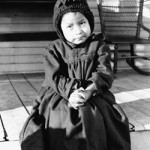
A young student at the Old Anglican Mission School on the Blackfoot Reserve, Alberta, ca. 1900.

Photographer: Glenbow Archives, NC-5-53, Retrieved Nov. 7 from Where are the Children website. http://www.wherearethechildren.ca/en/assimilation.html

Aboriginal Healing Foundation

ahf-logoThe Aboriginal Healing Foundation (AHF) is an Aboriginal managed, non-profit, national corporation based in Ottawa.  Funded by a one time government grant of $350 million dollars, their mandate was to encourage and support community based Aboriginal healing initiatives to deal with the legacy of physical and sexual abuse suffered in Canada’s Indian Residential School System and the multigenerational impacts. This organization is necessary due to the institutional abuses suffered  which has resulted in lateral violence, suicide, depression, poverty, alcoholism, lack of parenting skills, and difficulty maintaining healthy relationships.  They hope that in the future these effects  will have been meaningfully resolved and that Aboriginal people can return to healthy lifestyles for themselves and their future generations.

Links available include:

Aboriginal Canada Portal

Assembly of First Nations

Congress of Aboriginal Peoples

Truth and Reconciliation Commission

Indian Residential Schools Resolution Canada

AHF logo [Online Image]. (n.d.). Retrieved November 17, 2009, from AHF website. http://www.ahf.ca/announcements

March Point Movie

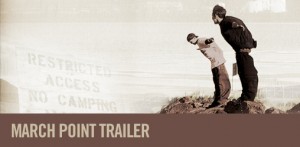
trailer_thumbThe March Point official site includes a link to the trailor and  a synopsis of the story of how the became to be made.  The creation of the March Point documentary is an excellent example of how the use of technology can facilitate a more balanced education and healthier student .    The filmmakers, three once ambivalent and troubled teens from the Swinomish Indian Tribe, combined film production skills with traditional knowledge to heal and gain vision for their lives as they created a documentary centered around the disastrous effects of oil refineries on their land.

Links available on the site include:

Native American Public Telecommunications

Independent Lens

All Roads Film Project

March Point logo [Online Image]. (n.d.). Retrieved November 17, 2009, from March Point website. http://marchpointmovie.com/

Indigenous Education Institute

whatwedo_left_01The mission of the Indigenous Education Institute (IEI) is to preserve, protect and use Indigenous knowledge in current settings.  They have developed projects to preserve  Indigenous knowledge and protocol to protect it.  It is governed by a board of directors, International Advisory Council, and an IEI Elders’ circle.

Current projects include:

  • Cosmic Serpent, a National Science Foundation (NSF)-funded professional development project developed to increase the capacity of museum practitioners to bridge native and western science learning in informal education settings.
  • Sharing The Skies: Navajo Astronomy, A Cross Cultural View.Also available are the CD Stars Over Dine Bikeyah, and the poster Dine (Navajo) Universe and original and giclee paintings of Navajo constellations
  • Paradox and Transformation is published in a peer reviewed journal, the World Indigenous Nations Higher Education Consortium, Volume 2, 2006, by
    Dr. Nancy C. Maryboy, Dr. David Begay and Mr. Lee Nichol.

The site provides links to:

Aboriginal Education Research Centre

Aboriginal Learning Knowledge Centre

The Cosmic Serpent [Online Image]. (n.d.). Retrieved November 17, 2009, from Indigenous Education Institute website.  http://www.indigenouseducation.org/index.html

Warlpiri Media Association

header_r1_c9

The Warlpiri Media Association (WMA) is a community organization managed by locally elected Indigenous  peoples in Australia.  Both Indigenous and non-Indigenous peoples, work together to produce and broadcast local media for regional and national audiences.

Incorporating new technology into their productions, WMA has produced award winning media productions.   In the 1980s, before  television was accessible to remote areas in Australia, communities started to experiment with video production.  Yuendumu, a small community 300kms from Alice Springs,  is the birthplace of WMA.  The association served as a voice of concerns of Aboriginal people in the area regarding the launch of Australian owned satellite television.

WMA projects include:

Shout it Loud – a video about sexual abuse in Aboriginal communitites

Kula-nyampuju ngaju-nyangu – Aboriginal comedy video about the role of an interpreter in the court system

Darby – One hundred years of life in a changing culture

WMA logo [Online Image]. (n.d.). Retrieved November 17, 2009, from WMA website. http://www.warlpiri.com.au/home.htm


Indigenous Archive Tool

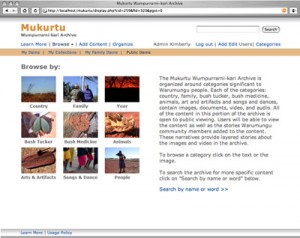
mukurtu_browse_w400Mukurtu Wumpurrarni-kari Archive was created by the Warmungu community in Australia and is housed at the Nyinkka Nyunyu Art and Culture center.  It contains multimedia of cultural artifacts and documents.  The content is defined by parameters set my the Warumungu cultural protocols which set who can view and distribute the cultural knowledge.  This website contains information about the archive and  its future directions.

In the creation of the archive founding members communicating with:

Ara Irititja

Northern Territory Library

PARADISEC

Plateau Center for American Indian Studies

In the future the group hopes to develop:

  • An audio component that allows audio tracks to be recorded on the fly and attached to content already in the database.
  • Mapping capabilities
  • Addition of public collections
  • Robust installation package
  • Production/remix functionality

Archive Image [Online Image]. (n.d.). Retrieved November 17, 2009, from Mukurtu Wumpurranri-kari website. http://www.mukurtuarchive.org/future.html

Isuma TV

isumaTV_logoIsuma TV is an independent network for Inuit and Indigenous multimedia launched by Igloolik Isuma Productions. This platform enables users to upload and exchange multimedia, interact and connect with other users, to create their own channel, and to watch Indigenous videos and offer feedback.   Isuma TV 2.0 was launched in April 2009 with over 1000 films in thirty different Indigenous languages. Igloolik Isuma Productions produced “The Fast Runner Trilogy of award-winning Inuit-language films: Atanarjuat The Fast Runner, The Journals of Knud Rasmussen, and Before Tomorrow; in association with Nunavut Independent TV Network (NITV), imagineNATIVE Film+Media Arts Festival, Vtape, Native Communications Society of the NWT and other non-profit agencies.”

Isuma TV logo [Online Image]. (n.d.). Retrieved November 17, 2009, from Isuma website. http://www.isuma.tv/lo/en

Center for Media Literacy

cml_tier_title

The Center for Media Literacy is dedicating to promoting media literacy education as a framework for incorporating the following skills into media studies:  accessing, analyzing, evaluating, creating and participating with media content.

Critical Viewing and Critical Thinking Skills article found on this site is applicable to Indigenous media.

As Indigenous people use media more and more to revitalize and document their history and culture, it is important that when viewing these media products that are about or are produced by Indigenous  people, that they are viewed with a critical eye.   “Critical Viewing and Critical Thinking Skills” written by David Considine’s, is posted on the Center for Media Literacy site.  Considine states that deconstructing media representations means that one has to let go of “seeing is believing” or “what you see is what you get”.   He also stressed the need to understand what we see. In his article, he outlines 5 elements for reading media which can help people view media products  more critically.

Other links on this website that are of interest:

What is Critical Viewing?

Where Media Literacy Fits in the World of Education

Teaching Media Literacy: Yo! Are you Hip to This?

Center for Media logo [Online Image]. (n.d.). Retrieved November 17, 2009, from CML website. http://www.medialit.org/default.html


Indigenous Internet

earthlogo2

The Roundtable discussion of the pros and cons of the Internet for Indigenous peoples is located on the Earthwatch Institute’s website.   The discussion features Dr. Sharon Bohn Gmelch and Reuel Daniels from Union College, Robyn Kamira from the Maori tribal groups of Te Rarawa and Te Aupouri,  John Afele, originally from Ghana, is the director of the International Program for Africa at the University of Guelph, Ontario, and Rodney Bobiwash, who was a member of the Anishnabek Nation, on the north shore of Lake Huron, Canada.

The Earthwatch Institute’s mission statement is “To find solutions to sustainability and open minds through the practice of scientific field research.”  Other interesting articles found on this site include:

A Loss for Words By Michael Krauss – “Over half of the world’s 6,000 languages will not survive our children’s generation. Can we protect our cultural diversity?”

The Accidental Empire by Nini Bloch – “Globalization may not be intended to create an empire based on Western culture, but it is having that effect all the same. A look at the past gives us insight on how cultural diversity weathers hegemony.”

Earthwatch logo [Online Image]. (n.d.). Retrieved November 17, 2009, from Earthwatch website. http://www.wadsworth.com/anthropology_d/special_features/ext/earthwatch/rt.html

The National Aboriginal Achievement Foundation

logoThe National Aboriginal Achievement Foundation (NAAF) is a  privately funded organization, providing bursary and scholarship awards for post-secondary First Nations, Inuit and Métis students pursuing studies in the following fields: Post-Secondary Education, Fine Arts, Health Careers, and Oil & Gas Aboriginal Trades & Technology. Since its inception in 1985, this non-profit organization has rewarded more than 32 million dollars to more than 8400 students.

The foundation also awards achievement awards to celebrate and encourage excellence in the Aboriginal community. Also, connected to this foundation the following Industry in the Classroom programs:

Taking Pulse – aimed at increasing Aboriginal participation in the workforce

Blueprint for the Future – a series of career fairs

Television Broadcasting in the Classroom- introduces Aboriginal youth to careers in television broadcasting

Health Careers in the Classroom – introduces Aboriginal youth to careers in the health industry

NAAF logo [Online Image]. (n.d.). Retrieved November 17, 2009, from NAAF website.http://www.naaf.ca/

First Nations seeking to cross digital divide.

Published in the online Georgia Straight,  First Nations seeking to cross digital divide, was written by Stephen Hui and published on July 16, 2009. The article discusses a variety of issues: internet connectivity, computers, and technical support, which have created a digital divide in BC for First Nations. The article outlines a variety of plans, councils, and programs which are listed below aimed to decrease the digital divide.

First Nations Technology Council strategic plan
Transformative Change Accord
All Nations Trust Company
Pathways to Technology

Other related stories linked to this article include:
Geek of the Week: First Peoples’ Language Map of British Columbia
Q&A: Grand Chief Edward John on First Nations’ Internet connectivity
Q&A: Indigenous blogger Dustin Rivers on using Internet technology

First Nations Pedagogy

windsofchange2June Kaminski, the author of the First Nations Pedagogy, is Metis, from Anishinabe and European bloodlines. Born in Ontario, close to Ketegaunseebee Anishnabai, or Garden River First Nations lands,at the time of publishing or updating the website, she was/is a PhD candidate in Curriculum Studies and Technology Education at UBC. Along with information on the theory and curriculum of First Nations pedagogy, the “links” section contains a number of articles related to First Nations Pedagogy, Residential School Trauma, First Nations Educational Governance, First Nations Educational Planning, and First Nations Health/Life Planning.

First Nations Pedagogy  logo [Online Image]. (n.d.). Retrieved November 17, 2009, from First Nations Pedagogy website. http://firstnationspedagogy.com/index.html

Spam prevention powered by Akismet