Final Four and Weblog Research Focus

Topic:

Indigenous cultures, aboriginal youth, digital divide, social media and communication

Theme of Weblog Research:

It is a challenge as an educator this day and age not to be directly or even indirectly exposed to discussions about what is occurring in the social media realm or how youth are communicating with each other.  Since starting this course, my inquiries and initial web searches have been focused on how indigenous and aboriginal youth are using social networks and other technologies to communicate within themselves and the “outside” world.  One can assume that technologies are readily available for all to use, but are they really that accessible?  When looking at the digital divide, what opportunities do indigenous and aboriginal youth have to access these technologies to be able to effectively unite with the digital world and become digital citizens?

As the weblog is developed, my entries will attempt to address how the digital divide is being “bridged” to bring indigenous and aboriginal youth together in the digital world.

Canadian Roots

http://www.canadianroots.ca/index.php

The Canadian Roots Exchange is a group of Indigenous and non-Indigenous people (youth and adults) who work together, traveling to indigenous communities around the country.  During the travels, the individuals involved actively engage in conversations with elders and youth, learning from on anothers teachings and experiences.

I found this website to be informative and somewhat encouraging because it is getting youth in touch with communities in different regions of Canada.  The youth movement is a strong one, as they seem to hold the majority when talking about the social media/network movement.  To get willing youth participants of all backgrounds to be involved in a project like this is amazing to view.  A real forum of willing youth to engage and be engaged with dialogue that is real and relevant to the many aboriginal issues.


Digital Youth Council and Four Worlds International Institute

http://dycouncil.ning.com/

http://www.fwii.net/profiles/blogs/building-deep-social-networks

The Digital Youth Council, is a council within the Four Worlds International Institute is a site dedicated to unifying all peoples in the fourth way.  Both of these websites and the councils within, will provide insight into how indigenous and aboriginal youth are using social media to share information that is relevant and meaningful to him/her.

The Digital Youth Council’s mission:

“Our mission is to develop a digital youth council that generates a community of dedicated young people from across the world, who share a responsibility for a common vision of hope in creating a world capable of change, that feel a part of a movement they themselves can mobilize, and eliminates the feeling of isolation and resignation by providing the members with an open healing digital space to share their cultures, individualities, and gifts.”  (http://www.fwii.net/group/digitalyouthcouncil)

The Digital Youth Council is youth driven and everything that is posted on the site has value and meaning from the individual who is posting the information.  The council has in place the following guidelines for posting information:

1)We all must respect each other.
2)Never force opposite material on each other.
3)No-violent images, videos, comments, or content.
4)No gossip, No rumors, No lies.
5)Only tell the truth.
6)Don’t intimidate each other.
7)We are all friends, no enemies.
8)Only positive comments, photos, videos or content.
9)No posting Porno or sexual content, photos, videos, or comments.
10)No meaningless comments, images, videos or content.

(http://dycouncil.ning.com/)

Media Indignea

http://www.mediaindigena.com/

When I stumbled upon this website I found it to be current and relevant to what topics are being discussed currently in the course.  Directly quoting the home page “Media Indigena is an interactive, multimedia magazine dedicated to Indigenous news, views and creative expression.”

With a web source that is reasonably current (entries within the last few months), this allows the user to get a current insight into the views and opinions of what is occurring locally, nationally, and globally.  The site interactive and allows the user to contribute content if willing.  Media Indigena provides content for the following: Arts and Culture, Business/Economy, Issues and Politics, Living, Multimedia, and Polls.

Traditional Ecological Knowledge & Science Education

I am a high school science teacher who was introduced to the concept of traditional ecological knowledge (TEK) only last year when I first taught the new BC Science 10 Curriculum which contains one related student achievement indicator for one prescribed learning outcome, students will “give examples of how traditional ecological knowledge (TEK) can affect biodiversity”. This topic is addressed in two pages in the BC Science 10 textbook, however I believe the topic has much greater potential. I need to increase my knowledge on TEK to become more comfortable including TEK in science lesson.

The focus of my weblog research will be to learn more about traditional ecological knowledge and how I can incorporate it into my science lessons. I will investigate the following research questions and narrow my topic from my findings to create my final research project:

  1. What teaching resources are available on the internet for the topic of TEK?
  2. Do intellectual property rights play a role on the availability of teaching materials?
  3. Is the internet an effect medium for educating people about TEK?

Aboriginal Digital Stories for Non-Aboriginals

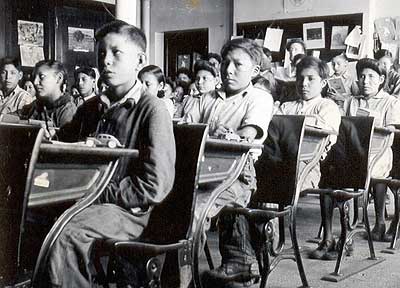
When I first read some of the suggested project topics, I thought my last choice would be residential schools. The topic appears to have reached saturation in the popular media. What could I say or do that has not already been said or done? I’ve since read some newspaper articles that have caused me to reconsider.  It became apparent to me that I was familiar with the topic (on the surface), but knew nothing of the devastating effects. I’m likely not alone. It seems that technology avails the opportunity through digital storytelling to help others like me gain a better understanding of how much this epoch altered the lives and traditions of so many people.

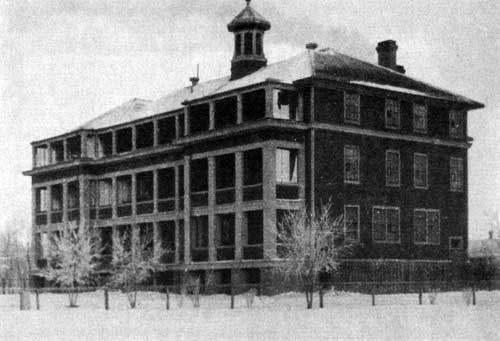
Spanish (ON) Residential School (Image Source:http://4.bp.blogspot.com/DSC00731a.jpg)

McLaughlan and Oliver (2000), identified two type of stories: those to be told within the culture and those to be told outside the culture. Since I’m not aboriginal, I can never expect to tell or comprehend a story as they might. What I can do is broaden my understanding and hope to share some perspectives with others like me (I assume there are lots of us). In addition, I might also be able to enhance my teaching abilities to be more inclusive and thoughtful of other cultures.

What I will look for in my project are opportunities, using digital media, to tell important stories about residential schooling to non-aboriginals by emphasizing  metaphors, imagery, values, and concepts that are not too foreign to us. Perhaps then we can come to terms ourselves with the plight and predicament of those who endured so much loss.

My inquiry will be focused on First Nations communities living on Manitoulin Island and the North Shore of Lake Huron.


References

McLoughan, c. & Oliver, R. (2000). Designing learning environments for cultural exclusivity. Australian Journal of Educational Technology, 16(1), 58-72.

Canada’s Churches acknowledge their role in Residential Schools

Remembering the Children Website, includes a timeline and apologies of Church groups. The Indian Residential School were funded by the Federal government, but mostly run by various church denominations across Canada. Below is timeline history from the Assembly of First Nations that outlines the history of Residential Schools.

http://www.rememberingthechildren.ca/history/index.htm

Canada’s protestant denominations issued a joint paper outlining their apology in very specific terms. Click on the image below.

Residential School

Read all the churches' apologies summarized together in one document

The Anglican Church of Canada

Source: The Anglican Church of Canada

Anglican Church of Canada operated many residential schools throughout Canada. Here is a link of their involvement. The Anglican Church of Canada issued it’s apology for involvement in Residential Schools on August 6, 1993. Here is the full text of their apology.

http://www.rememberingthechildren.ca/press/acc-apology.htm

OLD SUN INDIAN RESIDENTIAL SCHOOL (GLEICHEN, AB), P75-103 S7-184, 1945, General Synod Archives.

OLD SUN INDIAN RESIDENTIAL SCHOOL (GLEICHEN, AB), P75-103 S7-184, 1945, General Synod Archives.

United Church of Canada

Source: United Church of Canada

The United Church of Canada also operated many residential schools throughout Canada. Here is a link of their involvement. The church issued it’s apology for involvement in Residential Schools in 1986. Here is the full text of their apology.

http://www.united-church.ca/beliefs/policies/1986/a651

Presbyterian Church in Canada

Source: Presbyterian Church in Canada

The Presbyterian Church of Canada also operated many residential schools throughout Canada. The church issued it’s apology for involvement in Residential Schools on June 9, 1994. Here is the full text of their apology.

http://www.rememberingthechildren.ca/press/pcc-confession.htm

Catholic Church of Canada

Catholic Church of Canada

The Catholic Church of Canada also operated many residential schools throughout Canada. The church issued it’s apology for involvement in Residential Schools on March 13-15, 1991. Here are some details on their acknowledged apologies.


http://www.cccb.ca/site/eng/media-room/files/2630-apology-on-residential-schools-by-the-catholic-church

The Challenge to Improve First Nations’ Education

I found this article April 15th from the Vancouver Sun regarding economic development as key to retaining culture and heritage.  I lived and taught in Osoyoos for a year so Chief Clarence Louie has interested me for several years.  I especially found his quote “You’re going to lose your language and culture faster in poverty than you will in economic development,” especially interesting.  On their lands they have built 2 golf courses, a winery (with a great Riesling), a resort, and a beautiful cultural centre (well worth the visit).  The most amazing story of this band is the fact that the majority of their members graduate from high school.  Overall an interesting read and take on improving grad rates in aboriginal students.

Deb (M1-#3): First Nations students’ need for Internet technology

[youtube]https://www.youtube.com/watch?v=v1RUesqalw4[/youtube]

Related article: http://www.straight.com/article-254208/first-nations-kids-need-net

This YouTube video clip has the interview with Denise Williams, a youth initiative officer for the First Nations Education Steering Committe. She talks about how Internet technology can help First Nations students to be better achievers.

She answers the following three questions:

1. How would you like to see Internet technology be used in First Nations education over the coming years?

2. How does the digital divide manifest itself in First Nations schools in BC?

3. How does Internet technology improve education for First Nations students?

Williams says that Internet technology can bridge gaps between students with more experience with technology and those with less experience with technolgy. Also, it can help connect to teachers all over the world to share resources and give Aboriginal students opportunities to continue their education. As education shifts from paper work to more technology, the First Nations students can now stay in their community and achieve their educational goals. They can also have information-based careers that they want. There are many opportunities given to them and Internet technology will build and show different aspect of the world.

Government apologizes for Indian Residential Schools

Prime Minister Harper offers full apology on behalf of Canadians for the Indian Residential Schools system. June 11, 2008.

The video below is an apology from Canada’s Prime Minister Stephen Harper in a speech from parliament. In it, he apologizes on behalf of Canadians for Indian Residential Schools and the damage that they have caused first nations people.

[youtube]https://www.youtube.com/watch?v=qo5cG-RjE8Y[/youtube]

The video below is an apology from Canada’s NDP Leader Jack Layton in a speech from parliament. His speech as an oppostion member is largely in support of the apology to first nations.

[youtube]https://www.youtube.com/watch?v=AVAxVhnqTaw&feature=related[/youtube]

Here are some quotes from parliament by the Prime Minister:

“Mr. Speaker, I stand before you today to offer an apology to former students of Indian residential schools,”

“The treatment of children in Indian residential schools is a sad chapter in our history.”

“Today, we recognize that this policy of assimilation was wrong, has caused great harm, and has no place in our country,”

“The government now recognizes that the consequences of the Indian residential schools policy were profoundly negative and that this policy has had a lasting and damaging impact on aboriginal culture, heritage and language,”

“While some former students have spoken positively about their experiences at residential schools, these stories are far overshadowed by tragic accounts of the emotional, physical and sexual abuse and neglect of helpless children, and their separation from powerless families and communities.”

Throwing Money at the Problem?

I found this article – a press release from the BC government from 2009:

http://www2.news.gov.bc.ca/news_releases_2005-2009/2009LCS0004-000216.htm

The press release discusses that the BC Government was going to fund $8.3 million to “bridge the digital divide fir BC First Nations”. In this PR, it talks about this money going towards connectivity to the internet (as prioritized by ANTCO). After all our discussions this week – I wonder is the $8.3 million a wasted effort? Perhaps individual First Nation’s communities would prefer different types of technologies (assuming they want technologies at all)?

Was the BC Government just “throwing money at the problem” here? Or do you  think ANTCO can accurately assess and distribute the funds appropriately to the many different First Nations communities in British Columbia?

Deb (M1-#2): Culture, rhetoric, and technology

http://culturerhetoricandtechnology.blogspot.com/2009/10/on-indigeneity.html

This is an article from a blog that I searched using the keyterm ‘Indigeneity and technology’. It was very interesting to read because one of the readings that we did for Week 2 was from Pamela Wilson and Michelle Stewart’s Global Indigenous Media: Cultures, Poetics, and Politics.

This blog was created in 2009 by one of the graduate students taking a graduate-level English Studies course at Illinois State University. The title of the course is “Technology in English Studies: Race, Rhetoric and Technology”. Although the focus of this course is mostly on English language, this particular article on indigeneity is interesting to read.

The article starts with a question “What does the word “Indigenous” mean?” and then gives the definition of the word described by Wilson and Stewart. Then, throughout the article, the author expresses her opinions and critiques the book.

Using this article, I can briefly get ideas of what the book is discussing. The article particularly focuses on the Aboriginal women using technology which could help me do research on Aboriginal gender issues with regards to technology.

[References]

Global Indigenous Media: Cultures, Poetics, and Politics, eds. Pamela Wilson and Michelle Stewart, Durham, N.C.: Duke University Press, 2008, 89-108.

Module 1- Supporting First Nation, Metis, and Inuit students within the classroom

https://sas.elluminate.com/site/external/jwsdetect/playback.jnlp?psid=2011-01-25.1420.M.36C7C6DAB2C99AB969BF91A151C566.vcr&sid=2009083

This presentation offers strategies for teachers as to how they can support First Nation students and families within learning environments.  The presenter, Debbie Mineault, speaks about her culture and the importance of welcoming all cultural aspects as a means of promoting awareness.

She offers the generic definition of culture as “the customs, history, values and language that make up a heritage of a person or people that contributes to a person’s identity”.  She emphasizes that culture is a framework and stresses the importance of culture in the educational framework.

Benefits of her heritage:

  • Economy- focus on self-reliance and culture of the land (hunting, fishing, sewing, clothing, crafts, etc).  They did not have a lot of money however were rich with knowledge.
  • Family- Strong connections with extended family.
  • Government- Ways of life were dependent upon natural resources and skills available.