Categories
Module B. Design of Technology-Enhanced Learning Experiences (TELE)

What a GEM of an Idea!

 I was excited to know that a method I use for teaching many of my science lessons has a name! GEM!

For me, the enquiry model I use has evolved out of my constructivism class (Etec 530) where I got totally sold on the instructional model created by Driver and Oldham (1986).

Orientation Activation  of Prior knowledge
Elicitation  Interact with the students to figure out their ideas
Reconstruction of Ideas: Help students develop their ideas further through additional physical and mental activities
Application of idea: Students apply their new knowledge to answer questions and solve problems
Review


 When I examined GEM, I found many similarities. GEM stands for generating relationships, evaluating relationships and modifying relationships.  Both models are based in the inquiry model which wants students to create their own learning while teachers facilitate and scaffold.

  • GEM demands that there needs to be relevant prior knowledge present before the process starts.
  • The Elicitation is very much like generating ideas and evaluating them.
  • The reconstruction phase is similar to modifying ideas based on new information.
  • Applying ideas is similar to extending the relationships learned to newer ideas!

 The underlying idea of allowing students to use processes that are similar to the ones employed by scientists to identify a problem and gathering information has a lot of merit. It established active learning as student create and recreate their mental models of concepts as they examine new evidence and arguments. Instead of giving students the facts, it is more meaningful for them to connect the dots themselves to figure out the relationships and facts.

 Adding technology to this mix enhances the students learning. As a teacher it is a challenge to create a lesson which applies technology, pedagogy, and content in an effective manner. In another study I had examine when looking at use of virtual manipulative (Suh, 2007)  it was stated that use of such tools reduces the cognitive load and allows the learner to focus on higher level thinking and problem solving issues. I think the same principle applies when using simulation. Simulation not only makes ideas and relationships visible and tactile, but also allows students to try out their predictions and hypothesis.

 However it has to be the amalgamation of suitable technology within the constructivist learning method which will make such learning effective. Here my only concern is whether the pedagogical beliefs and practices of the teacher will sustain this constructivist model.

 Reference:

Khan, S. (2007). Model-based inquiries in chemistry. Science Education, 91(6), 877-905.
Khan, S. (2010). New pedagogies for teaching with computer simulations. Journal of Science Education and Technology, 20(3), 215-232.

 Suh, J. & Moyer-Packenham, P. (2007). The application of dual coding theory in multi-representational virtual mathematics environment.

http://www.emis.de/proceedings/PME31/4/208.pdf

 Sample Lesson

Challenging Concepts: How oceans affect weather

 In teaching grade 4 science in the last 5 years, I have found students struggling with this concept. Despite understanding that cold air moves hot air and that air over water is warmer than air over land in winter and vice versa, the transfer of knowledge can be hard.

 The technology I will be using here is the Internet Website: Weather Channel:


Phases of Instructions Teaching strategy Teacher Guidance
Generate relationship from information:


Ask students what is the relationship between latitudes and temperatures.


Show location of Prince Rupert and Kelowna on the map to see that PC is at higher latitude and ask which one will be colder in winter.


Then use the weather network sites for Prince Rupert and Kelowna to examine the current temperatures and show that the above established relation is falsified.


Examine the 14 day trends available on the site and the pictures of flora and fauna to see that PR is warmer than Kelowna in winter.


Ask students to discuss and hypothesize

“Why”

Help examine the map


Read data from the site


Draw a quick graph to highlight the difference


Prompt them to examine the map thoroughly


List the hypothesis of each group.

Evaluate the Relationship Go back to the weather network site and then look at the weather patterns and trends of Prince George. It is very close to PR but is colder than Kelowna


Then we go back to the site and check the weather of Campbell River which is on similar latitude as Kelowna.


Ask students to go back to the maps and figure out why this is happening.


Ask how the weather difference between PR and PG relate to that of Kelowna and Campbell River.


Modify the Relationship Check their hypothesis now with new information


Ask them to apply their new knowledge to other locations

Ask them to see the similarities between PR and Campbell River and that of PG and Kelowna and examine the trends.


Is Vancouver Warmer that Kelowna? What about Powell River?


Categories
Module B. Design of Technology-Enhanced Learning Experiences (TELE)

My World: Learning one layer at a time!

Exploring My World was a very different experience compared to the Jasper Series and WISE.

As an elementary school teacher I like technology tools that allow for a blended learning setup. After the prescriptive nature of WISE the open-ended nature of One World was very welcoming.

Theory:

The aim for One World is to integrate content and process together in the design of learning activities to offers experience with authentic activities to allow for deeper understanding.

The LfU design seems most practical and realistic. We are motivated, so we construct knowledge, and as we understand it more through application, we refine our knowledge. It is therefore goal driven learning which is constructed within a relevant context and gets refined. This refining of knowledge hints at Metacognition, as the learner understands what he knows and what else he needs to know.

Application:

While the tool is hard to navigate without instructions, the basic principle of layering information atop the other and then making connections was very effective as it emulated the learning strategy of attaching new information on to existing information to make it relevant. The acquired knowledge gets refined as more layers of information are added. Such connections were made easier to understand as they were presented in multiple modes [maps, graphs, charts].

The tool is very hard to use with my younger students but I have been thinking about ways I could implement it in my class, on the Smart board, to prompt discussions and learning. It can be applied in studying Canadian geography- cities, population patterns, its connection to weather and landscape. I still have to figure out science applications for my grade level. Math will become an integral part of learning as My World uses numbers to create information. This will allow students to see math in context!

Edelson, D.C. (2001). Learning-for-use: A framework for the design of technology-supported inquiry activities. Journal of Research in Science Teaching,38(3), 355-385.

Edelson, D. C., Salierno, C., Matese, G., Pitts, V., & Sherin, B. (2002, April). Learning-for-Use in Earth science: Kids as climate modelers. Paper presented at the Annual Meeting of the National Association for Research in Science Teaching, New Orleans, LA. Download this paper as a Word document from Northwestern University’s site: http://www.worldwatcher.northwestern.edu/userdownloads/pdf/LFU_PF_NARST02.v3.doc

Categories
Module B. Design of Technology-Enhanced Learning Experiences (TELE)

The WISE Approach!

WISE is based on Inquiry based learning and its two main principles of making thinking visible and to learn in a social environment. My understanding is that the main motivational force behind the creation of Wise is to promote Epistemic understanding of the ideas about nature of science.

So the WISE uses the social constructivism model of learning which allows students to diagnose, analyse, critique science knowledge in a collaborative online environment. The WISE uses the Web as a teaching medium in which the content is presented mainly through hypertext.

Examination of the lessons show that the information is presented in small slices: first everyday facts were presented to allow learners to make association (contextualize) and then gradually complex information was presented that could be scaffolded by this previous information. Scaffolding is also afforded through multimodal means of written material, visual and auditory representation, and real life documentaries.

As a teacher, I was not allowed to assign the project to my class without previewing the lesson. Students also had to go through the lesson sequentially and could not skip ahead. This affordance allowed meaningful interaction of the learner with the knowledge. There was assessment for understanding and if the students struggled, they were linked back to the page they needed to examine again. Students also did note taking at different stages and were told how they will be utilizing the notes at a later level.Students collaborated with their peers about their learning.

Some Concerns:
I believe that there wasn’t enough collaboration in the process. It was mainly near the end of the process and not much during the knowledge building process. I believe the collaborative part of learning should begin right as the students start to examine their prior knowledge.

There was no facilitation for student-student or student- teacher interaction outside of assignments.

Also there was not much flexibility for externalizing the learning to allow students to represent the learning in different ways.

I missed the open-endedness and the real life connections of the Jasper Series!

Categories
Module B. Design of Technology-Enhanced Learning Experiences (TELE)

Emulating Jasper!

Now when planning learning environments following the Jasper Series model, do they have to be as grandiose?

I think if the smallest of relevant-realistic activity can provide for the essential underlying assumptions, they are applicable. So the activity needs to be based in reality, a problem needs to be solved, and it should be relevant to the students. They should have the know-how of the basics needed for this problem or there should be provision for mini lessons long with the activity where these building blocks of knowledge could be provided. They will need to work in small groups. Technology support can provide content, scaffolding, discourse, and manipulative software to create and compute.

My little brain is abuzz with ideas! Here is my ambitious plan- next year I am definitely going to use the anchored learning approach with a multidisciplinary slant for one semester for sure. Some ideas floating in my head currently are:

1. For grade 4 science and writing outcomes, my students could design the school playground as we are going to get a new one soon. They will be dealing with math concepts of addition, area, perimeter as they will look at the cost of equipment and labour and designing of the playground with safety and capacity in mind. They will need to visit some playgrounds, interview the school district personnel in charge of playgroup. This could be a F2F or a Skype interview. Students will have to communicate formally with the principal and PAC regarding budget issues.

2. Another grade 3 scenario I am thinking is about including the science unit of structures with the socials unit of pioneers. As the pioneers came, they build structures. In each scenario the students could be provided materials and they have to plan structures like houses, bridges, barns, igloos. They have to rationalize the structure style according to the material provides and from the environmental aspect.

These are very simple scenarios but they appear quite doable to me. With MET done by July, I can go ahead and plan full steam!

Categories
Module B. Design of Technology-Enhanced Learning Experiences (TELE)

Jasper Series: A Model of Social Constructivism

Jasper series prompted a very robust discussion on Vista. We examined the series through the lens of pedagogy, technology, our own beliefs and practices, and the existing trends. It is impressive that despite being three decades old, the series is based on sound pedagogical beliefs of social constructivism and anchored learning, which are the “trends” in education at present.

Cognitive Affordances:
While I may not apply the Jasper series -as it is -in my class, it has provided for me a model to create learning environments in which students can work collaboratively in a multimodal, multidisciplinary environment and problem solve through dialogue and critical thinking. What appeals to me most about the series is its prerequisite of a blended learning environment which is so suitable for learning in elementary education. Such a setup will allow students not only support of their peers and teachers through their zone of proximal development in a F2F setup. Another theoretical base that will be very conducive in elementary education will be the anchored learning approach. This approach is very similar to the situated learning approach but is not as open ended. I see this as a graduating step towards an open ended, ill designed problem based learning.

Technological Affordances:
The technology of the series gets retrained by its time. It mainly provides for multimodality through the videodisc. But as technology is evolving the creators’ of the series have added technology which is very conducive to social constructivism. The use of Teleconference assessment is a great interactive tool for formative assessment the development of SMART extension has also given the series an online community of learners through the Smart Lab, A Kids- online space as a model to help in the ZPD and above all a Toolbox – for tools needed for computation. By freeing the mind from simple computation to focus on higher level thinking, the Jasper series has exploited the affordances of current technology to allow for better by providing a wider community of practice, active learning, scaffolding and assessment for learning, besides multimodality. I think the technology has been interwoven well with the pedagogical needs.

Categories
Module B. Design of Technology-Enhanced Learning Experiences (TELE)

Jasper Series: First Impression

Once I got over the dated look of the videos and got into the content, The Jasper series absolutely captivated me! It is a problem based approach of constructivist learning at its best.

Based on NCTM standards, the series provides authentic tasks from real life to help students explore math concepts which students solve through collaboration and discussion in small groups. Despite being based on math standards, these tasks have many cross curricular implications. Students overtly examine integrated science concepts along with math, while there are many embedded issues like career prep, social interactions and responsibility.

There is no prescribed way suggested to solve the problems which makes the tasks very open ended. The students need to explain the how’s and why’s of their solutions. To verbalize or write their thinking will promote critical thinking and Meta cognition. I am sure, the teachers will probably lay the foundation of the core math concepts needed to solve these tasks before presenting them to the students – or could it be that they could teach these concepts to small groups as the students encounter the issues in the task? Now wouldn’t that provide a better schema for the math concept?

The series is a great model to follow where a teacher could create an anchored learning scenario based on their grade level’s outcomes from different subject areas. The possibilities are tremendous. Such a cross curricular approach will overcome the time constraints we teachers often feel as we try to meet learning outcomes from different subject areas during their allotted time. I think such an approach will be more liberating not only for the students but also for the teachers.

My one big concern is – does such an approach suit all learning styles and abilities?
And on second thought – does such an approach suit all teaching styles?

Categories
Module B. Design of Technology-Enhanced Learning Experiences (TELE)

Ideal Pedagogical Design of TELE

An ideal pedagogical design of a technology-enhanced learning experience for math and/or science

My vision of an ideal pedagogical design for a technology-enhanced learning environment for math and/or science is not much different from Kozma’s. Kozma recommends that, “Designers should provide students with environments that restructure the discourse of …classrooms around collaborative knowledge building and the social construction of meaning” (Kozma, 2003, p.9).

I strongly believe that students need to construct their own knowledge through collaborative work and discourse. So an ideal TELE space will provide for all learners to examine and explore knowledge, interact with it and others to understand it, and then apply the new knowledge in real environments – in their own style and at their own pace.

In a perfect design, technology needs to be interwoven with established constructivist instructional models like the one created by Driver and Oldham (1986; in Matthews, 1994). In such a TELE, learners use technology and apply their own learning style to explore concepts through the knowledge building sequence of orientation (activation of prior knowledge), elicitation (interacting with others to figure out their ideas), reconstruction of ideas (seeking information from other and resources provided), application of ideas (applying newly learned ideas to a new scenario), and review (analyzing own ideas and those of others).

Reference:
Matthews, M. R. (1994). Science Teaching. New York: Routledge, chapter 7

Categories
Module B. Design of Technology-Enhanced Learning Experiences (TELE)

Defining Technology

Defining technology

Before reading through the given definitions I jotted down: A tool that improvises our lives –our thoughts-our behaviour -as what I deem technology to be. Then as I read through the definitions, the one that resonated with my thinking was Margaret Roblyer’s.

Roblyer (2004) describes technology as technology is us -our tools, our methods, and our own creative attempts to solve problems in our environment.

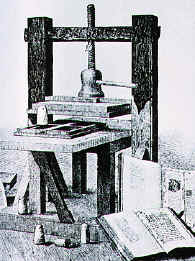
As my mind travels through the annals of human history, I am fascinated by how again and again man came up with technology to solve problems. From the Stone Age tools and wheel, to literacy and printing press, from the telegraphs to texting- man has come up with innovative technology again and again for basic survival, for comfort, for enhancement of human life, and often just for fun!

Society has evolved and continues to grow and change through technology that is ubiquitously interwoven in the tapestry of our everyday lives.

Technology has many facets because there are varied human needs it tries to provide for. We pick and choose from this array of technology – the tools that we believe will enhance the quality of our own journey and ignore the other. We enjoy and like the technology we are familiar with and benefit from, and are overwhelmed and afraid of the plethora of the new and the unknown.

Sometimes we will venture into the unknown and find tools that work better for us and sometime we get more lost into the bottomless abyss of our own created technologies. The whole new challenge facing us now is to find, choose, and apply suitable and comprehensive technologies which will enable us to achieve the goals we want to accomplish.

Reference:

Roblyer, M.D. (2004). Integrating educational technology into teaching, 3rd Ed. Upper Saddle River, NJ: Merrill/ Prentice Hall.

Spam prevention powered by Akismet