International Students: Immigration Pathway Information Session

Standard

Immigration Pathway Information Session

with IRCC and BC PNP

If you are an international student interested in applying for permanent residency, this info session is for you!

You will:

  • learn about federal and provincial immigration pathways to B.C.
  • hear a detailed overview of how the federal Express Entry system works
  • hear an update on provincial priorities, including the new BC PNP Tech Pilot
  • understand the provincial registration system (SIRS) including how the points system relates to invitations to apply
  • speak directly with staff from IRCC and BC PNP in a lengthy Q&A

To maximise the effectiveness of this opportunity, prior to the session, students are strongly encouraged to review:

1)   the BC PNP’s Skills Immigration and Express Entry BC processes

2)   information on IRCC’s federal Express Entry immigration intake system. After reviewing information about the federal Express Entry system, students who are not already in the Express Entry pool are encouraged to try the self-assessment tool.

Feel free to bring questions that you could not find answers for on the website to the info session.

In anticipation for the high demand to attend this session, we will be hosting two timeslots, please register for the one that works best with your schedule:


Session 1

Date:  Friday Nov. 10, 2017

Time:  3:30-5:30pm

Location:  SCRF 100, Neville Scarfe Building


Session 2

Date:  Friday Nov. 24, 2017

Time:  2:00-4:00pm

Location:  SCRF 100, Neville Scarfe Building

Register online:  https://survey.ubc.ca/surveys/37-52a59138f3fceaf5ea2107e6a00/registration-for-pathways-to-immigration-workshop/


Scan QR Code to access online registration


Opportunity to showcase your research to LFS undergrad students 

Standard

Context: 

The LFS Academic and Engagement Team (LFS ACE Team) is a UBC Peer Program. The  purpose of the team is  to provide support resources that are tailored towards the academic and career development for LFS undergraduate students.  

This year, the team is planning to introduce a new discussion-based event called “Meet & Eat” which will occur once a month during lunchtime.  The purpose of this event is for LFS students who are interested in engaging with their peers, LFS Faculty, and staff to bring their lunches, and share discussion over today’s global issues.  

The event:  

Our first event will be on Wednesday, November 1st from 1 pm – 2 pm [IBLC 191] and our discussion topic will be on Foods of the Future!  This encompasses anything from eating insects, to soylent, to lab grown meat, as well as how these foods might change our diet, and contribute to feeding an ever growing population. 

The request:  

We would like to extend invitations to LFS graduate students whose research is relevant to the theme of “Foods of the Future”.  We encourage you to facilitate the discussion through your own experiences, perspectives, and learning of what “Food of the Future” means to you.   

You would be asked to give a brief ten minute introduction about your area of study and what you envision the food system to be like in the future, whether it be in 30, 50 or 100 years time. Following the introduction we will have a 30 minute group discussion period  where you are welcome to provide more information about your field of study and bring up new topics of interest.  

We would appreciate any graduate students who are interested to be involved as guest speakers, as we believe it would provide a great opportunity for students to learn more about what their future in the food and health industry might hold. If you are interested and available to be a guest speaker, please let us know by Friday, October 26th.  We will follow up with further details at this time. If you are unable to come to this event feel free to extend this invitation to another representative.  

For questions or further details, please contact Emma Rowbotham, LFS Student Engagement Officer at emma.rowbotham@ubc.ca 

Emma Rowbotham  MA
Student Engagement Officer
Faculty of Land and Food Systems | Student Services
The University of British Columbia | Vancouver Campus
344 – 2357 Main Mall | Vancouver British Columbia | V6T 1Z4 Canada
Phone 604 822 2989 | Fax 604 822 4400
emma.rowbotham@ubc.ca
http://landfood.ubc.ca | https://blogs.ubc.ca/lfsundergrads

November 2, 2017: IRES Faculty Seminar speaker: Terre Satterfield

Standard

IRES Seminar Series

Time: 12:30pm to 1:30pm (every Thursday)

Location: AERL Theatre (room 120), 2202 Main Mall

***************************************************************************

From subsistence to sovereignty: On the meaning and measurement of the right to fish for the ‘Namgis First Nation 

Terre Satterfield, Professor of Culture, Risk and the Environment, IRES;

Co-authors: Leslie Robertson, Anton Pitts, Nathan Vadeboncoeur, Diane Jacobson 

The colonial history of First Nations fishing on the British Columbia coast is undeniably a history of dispossession and an often-brutal restructuring of indigenous food regimes. This included but was not limited to the criminalization of acts of fishing (e.g., use of weirs and traps), trade and territorial access; the reduction of all fishing to household need only; and the racial assignation of licenses and fishing permission to non-aboriginal fishers only.  More recently, a series of supreme court decisions have begun to overturn some restrictions, and myriad acts of ‘practicing fishing rights’ are evident on the ground. Going fishing has thus become (with due critical humor): “Ted is out practicing his aboriginal rights [to fish]”.  But, just what the right to fish or harvest other traditional foods might mean is an open question. This collaborative study examines one effort to answer a challenge posed by the ‘Namgis First Nation: What would it take to become food sovereign? By food sovereign, we mean practicing fully the right to feed a community of 1000 through local hunting, fishing, gathering, cultivating and processing primarily traditional foods? What would and could people eat daily? How much is needed and by what logic? Can food be processed, stored and distributed locally? And what other kinds of local food production might also make sense? The answer is varied and often surprising, particularly when considered in juxtaposition to the cost and effort of procuring market foods. Results include discussion of different possible diets, the social life and organization of food, and the potential for a renewed and vital food system. We conclude with a brief set of theoretical challenges to theories of food sovereignty and their meaning in the face of empirical and field-based examinations of the possibilities for becoming food sovereign.
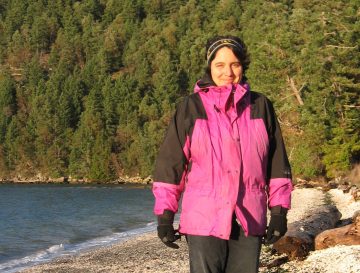
Click for Terre’s Bio: http://ires.ubc.ca/person/terre-satterfield/

Terre Satterfield is an interdisciplinary social scientist; professor of culture, risk and the environment; and (after five years) is outgoing director of the University of British Columbia’s Institute for Resources, Environment and Sustainability. Her research concerns sustainable thinking and action in the context of environmental management and decision making. She studies natural resource controversies; cultural risk and cultural ecosystem services; and the perceived risk of new technologies (gene drive and nano-technologies). Recently she has also worked on tensions between indigenous communities and the state and/or regulatory dilemmas regarding First Nations interest and environmental assessment. Her work with co-authors (many of whom are part of IRES) has been published in journals such as: Nature; Proceedings of the National Academy of Sciences; Environmental Science and Technology; PLOS One; Global Environmental Change; Ecological Applications, Conservation Biology; Ecology and Society; Journal of Environmental Management; Biosciences; Land Economics; Science and Public Policy; Ecological Economics; and Risk Analysis. Her books include: The Anatomy of a Conflict: Emotion, Knowledge and Identity in Old Growth Forests; What’s Nature Worth? (with Scott Slovic); and The Earthscan Reader in Environmental Values (with Linda Kalof).
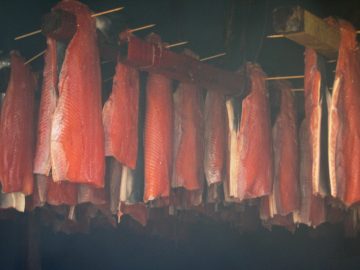


Photo Credit: Adam Bautz from flickr/ Creative Commons 

 Carlina Kim

Administrative Assistant for Institute for Resources, Environment and Sustainability (IRES)

B.Sc Environmental Sciences

The University of British Columbia | Vancouver Campus

Aquatic Ecosystems Research Laboratory (AERL Building)

Room 428-2202 Main Mall | Vancouver, BC | V6T 1Z4


Email: carlina.kim@ubc.ca

Website: www.ires.ubc.ca

Waitlist Registration is now OPEN for January 13, 14, 20 2018 Grad ISW

Standard

Waitlist registration is now open for the Instructional Skills Workshop (ISW) January 13, 14, 20 2018.  The ISW is an internationally recognized program and students receive transcript notation for their participation. In addition, graduate students in STEM departments are eligible to become CIRTL associates upon completion of the workshop.   The ISW is a 3-day intensive workshop that develops participant’s teaching skills and confidence.  It is appropriate for first time teachers or those with years of experience.  Join the thousands of students who have taken this workshop.

IMPORTANT: The workshop runs from 8:15am-5:00pm. Please note you must be able to attend all three days, i.e. the entire 24-hour workshop.  Please find attached the policy for registering in an ISW and an FAQ sheet.

This workshop is always in high demand. To register for the January 13, 14, 20 2018 please go to the following link and sign-up: http://events.ctlt.ubc.ca/events/graduate-instructional-skills-workshop-january-13-14-20-2018/  Waitlist registration will close on Friday at 4:30pm. By clicking this link, you can register for the waitlist, however this does not register you for the workshop. If you are accepted into the workshop, you will be contacted directly by our office.

Please let me know if you have any questions.

Sincerely,

Julia

Julia Levasseur  Senior Events Program Assistant Centre for Teaching, Learning, and Technology The University of British Columbia | Vancouver Campus 1961 East Mall  | Vancouver BC | V6T 1Z1 Canada Phone 604 822 0064 julia.levasseur@ubc.ca | @UBC_CTLT http://www.ctlt.ubc.ca/

This Thursday IRES Professional Development Seminar with Speakers: Alaya Boisvert, Ann Rowan, David Boyd, Adriane Carr

Standard

IRES Seminar Series

Time: 12:30pm to 1:30pm (every Thursday)

Location: AERL Theatre (room 120), 2202 Main Mall

***************************************************************************


Abstract: Environmental policies are crafted by governments, but influenced by stakeholders and lobbyists. In this seminar we will talk to a panel of people outside of academia, in both governmental and government relations roles, to learn about what it’s like to build environmental policies from inside and outside the government. 

This seminar will not be filmed.  

Photo credit: marcostetter from flickr/ Creative Commons

 Carlina Kim

Administrative Assistant for Institute for Resources, Environment and Sustainability (IRES)

B.Sc Environmental Sciences

The University of British Columbia | Vancouver Campus

Aquatic Ecosystems Research Laboratory (AERL Building)

Room 428-2202 Main Mall | Vancouver, BC | V6T 1Z4 

Email: carlina.kim@ubc.ca

Website: www.ires.ubc.ca