Categories
Research Themed Sessions

Do Not Press Print: What Can We Do to Keep the Reader Engaged in Online Use of Journals?: The Session Blog

When: Friday, July 10, 2009 3:30pm – 4:30pm

Room: Main Concourse – Fletcher Challenge Room 1900

Presenters: Rick Kopak, Chia-Ning Chiang

Rick Kopak is an Assistant Professor at the School of Library, Archival, and Information Studies, UBC.  Chia-Ning Chiang is a PhD Candidate at the School of Library, Archival, and Information Studies, UBC.
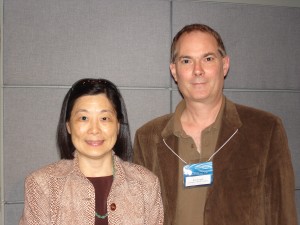
Chin-Ning Chiang & Rick Kopak (Source: Photo taken by Helen Szeto)
Chia-Ning Chiang and Rick Kopak (Source: Photo taken by Helen Szeto)

Session Abstract

Session Video

Session Overview:

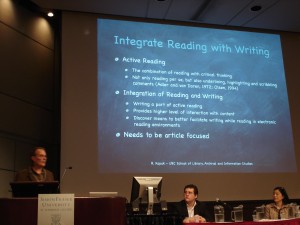
Rick Kopak presentation (Source: Photo taken by Helen Szeto)

The purpose behind this session is to look at ways to engage journal readers through the journal’s interface.  Rick Kopak and Chia-Ning Chiang presented a series of reading tools in the Open Journal System (OJS) that will critically engage readers as they read through the articles.  They want to provide an environment that enables an active reading process where they are thinking about the information as they read.

The reading tools will help the reader focus on the article and interact with it.  Also, the reader can bring in other related information on the topic; making connections in the process.  Kopak gives examples of reading tools found in other models: highwire press, PubMed and PIRA (Personal Information Retrieval Assistant).
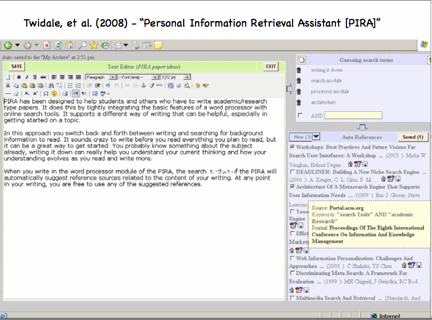
PIRA screen capture (Source: slide courtesy of Rick Kopak)

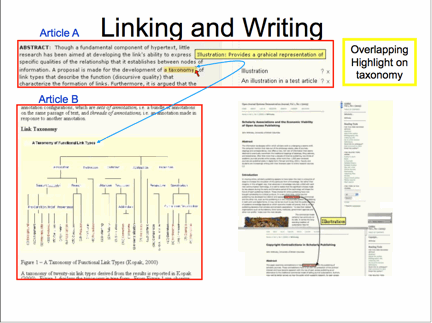
Linking and Writing (Source: courtesy of Rick Kopak)
Linking and Writing (Source: slide courtesy of Rick Kopak)

For the prototype of reading tools being developed for OJS, there are two components: annotation and linking.  Writing annotations allow the reader to capture their thinking process as they read.  They also provide a visual search of ideas on the sides of the article.  In the prototype, readers can highlight text and space is allotted on the side for notes.  Linking and link typing are extensions of annotation.   Readers can link to another piece that elaborates on the article topic.  The idea behind linking is to capture relationships between different journals and make connections.
Chin-Ning Chiang Presentation (Source: Photo taken by Helen Szeto)

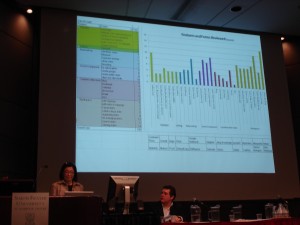
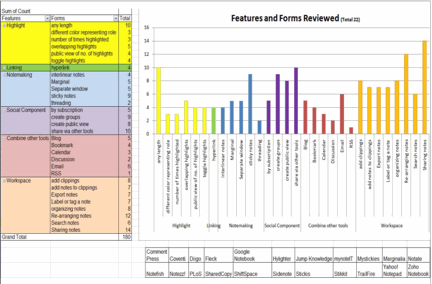
During Chin-Ning’s part of the presentation, she reviews a bar graph chart that compares the features of reading tools from 2006 to 2009.  There are social components to article reading as well.  Reader comments can be found at the bottom of the page.  Chiang argues that comments at the bottom of the page are ineffective because people rarely scroll down to the bottom.  Also, readers lose context when they scroll away from the text.
reading tools chart (Source: slide courtesy of Rick Kopak)

There are 5 parts that Chiang and Kopak would like to include in their production version of OJS reading tools: highlighting, note making, workspace, public views, and linking.  Chiang and Kopak would like the reader to have more control over highlighting, including the choice of colours and tone densities.  For note making, readers would be able to toggle the note function on and off, and have the ability to fold long notes.  A workspace will also be created for people to start composing and clipping notes and text to the workspace.  In the public view mode, individual markings can be shared which promotes social interaction among academics.  It allows readers to view the multiple commentaries in an article. Finally, the linking function will give the user more control.  Some of these abilities include clicking links off and on, creating hyper links and being able to tag annotations and highlighted text.

(Source: powerpoint presentation courtesy of Rick Kopak)

Session Analysis:

Chiang and Kopak were clear on their intentions on creating reading tools for OJS.  They referred to existing reading tools to show improvements they wanted to make.  The screenshots of the various interfaces were helpful visuals to understand the different tool functions.  The rationale behind each component and their beneficial functions were clearly explained to persuade the audience that the reading tools will enrich the reading process greatly in OJS.

Session Questions and Answers:

A gentleman in the audience posed the following questions: What about the editorial view?  Can we apply these tools there?

I couldn’t hear the reply clearly, but Kopak sent me an email reply to the questions asked.

Kopak’s reply:  “The gentleman’s question concerned whether we ever thought of using the Annotation and Linking Reading Tools for the Editorial view in OJS in addition to the Reader View.  I said yes, we had considered it, and it might be a feature in the Editorial View at some point in the future.  But, at the moment, we were focusing on the readers of OJS journal articles.  In the Editorial View, editors and reviewers could comment on journal articles directly using the Annotation Tool specifically, and editors could give editorial instructions as well.”

Related Links:

Categories
Research Themed Sessions

Critical Mass is Critical – Creating Sustainable Scholarly Communication: The Session Blog

When: Friday, July 10, 2009 2pm – 3pm

Room: Main Concourse – Fletcher Challenge Room 1900

Presenter: Gregg Gordon

Gregg Gordon is President and CEO of the Social Science Research Network (SSRN).  SSRN is a digital repository that has close to 100,000 full-text documents.  The network allows readers access to full text and articles without any changes, but no access to the meta data attached to the articles.  It has received approximately 30 million downloads so far.  SSRN is part of the social networking community through a blog, Facebook, and Twitter.

Gregg Gordon
Gregg Gordon (Source: Photo taken by Helen Szeto)

Session Abstract

Session Video

Session Overview:

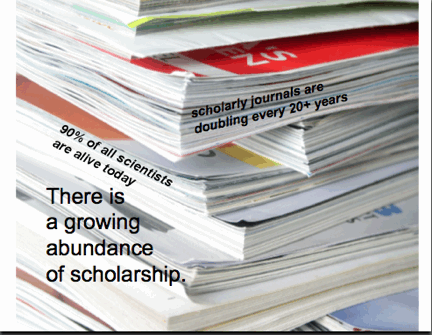
Gordon’s presentation is about the growing amount of scholarly information that is out there and the connections that can be made with it.  He starts off by defining the term “critical mass.”  Critical mass is the minimum amount of something required to start or maintain a venture.  Gordon believes that there is an endless abundance of information out there.   There is a lot of research, but he asks the question, how can academics sort through everything?  The biggest complaint received at the SSRN is that there is too much information with over 1000 journals available on the network.

(Source: slide courtesy of Gregg Gordon)

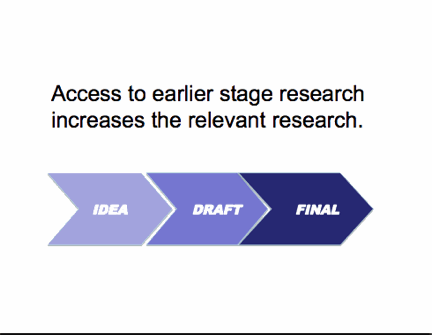
Gordon explains how the scholarship of information is growing.  The Open Journal System (OJS) has enabled the creation of over 3000 OJS journals, which means over 3000 new publishers.  Every 20 years, the amount of scholarly journals available is doubled.  Ninety percent of all scientists are alive today, which means they are still making contributions to the scholarly world.  The amount of research available increases because readers are getting access to earlier research stages.  In the SSRN, 13% of the citations are towards working papers.  Drafts are being referenced.  Interdisciplinary classifications are also increasing research relevance.  Academics are able to see the content from a broader amount of subjects.

(Source: slide courtesy of Gregg Gordon)

Gregg Gordon Presentation
Gregg Gordon Presentation (Source: Photo taken by Helen Szeto)

Gordon says that traditional publishing models are slowing innovation.  On the other hand, clusters of information are increasing innovation.  Information is being connected to make more meaningful relationships.  People are growing up with access to information and therefore understand that information needs to be free.  Depositories are being built, but not used widely.  Greg offers a formula to get people to the depositories.  “C(onversation) + C(onnections) = C(ommunity)”  Communities will form when people are talking about the information out there and making connections with the pieces.  Gordon says as you find more content, you determine what is important to you.  The community also has to provide many means to access the information.  Content is being accessed through the web and various social networking sites.  Wireless allows information to be accessible anywhere and everywhere.

Clusters and Connections of Relevant Information (Source: slide courtesy of Gregg Gordon)

In Gordon’s search trend analysis, he has discovered that people are looking at blogs and wikis to find what is important to them.  Journal use has declined a little bit in trend.  Gordon makes a reference to a NY Times article regarding Google search being replaced by YouTube in an elementary school.

The overall underlying message is that communities are key to sharing ideas and making relevant connections in your field of study.

Session Analysis:

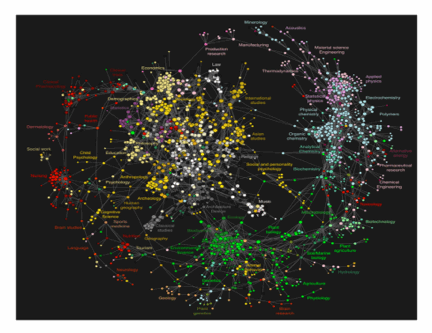
Gordon makes good use of visual slides to display his ideas of growing information and the communities that emerge from the connections being made.  By visually being able to see the clusters of information and the connections they form, we have a better understanding of their impact.  Gordon has shown that repositories will be more efficiently used when the information is clustered and networks are created.  We learn that communication is vital in grouping relevant research together.  People need to have discussions and to share their ideas in the communities.  Gordon is showing us how we can make better use of the information mass that is already out there.

Session Questions and Answers:

1)    Why is there more structure in the scholarly publishing of hard sciences than in the social sciences?

Reply:   Gordon compares scientific, technical and medical (STM) publishing and social sciences to a rifle shot and a shotgun approach.  STM is like a rifle shot where information is very cloistered.  “Social sciences have a shotgun approach because you want to get your information out there by getting published.  In the hard sciences, you are writing to fund your lab, while in the social sciences; you are writing to build your lab.”    There are two clear differences in submission approaches.  “Some academics do not want to submit anything until it is it ready, while others will send out a proposal to put their stake out there.”

2)    Gordon also comments that there needs to be a person checking the data to ensure that quality is there.

Related Links

Categories
Research Themed Sessions

Towards A New Future for Journal-Article Publishing: The Session Blog

When: Friday, July 10, 2009

Room: Main Concourse – Fletcher Challenge Room 1900

Time: 9:30 am – 10:30 am

Presenter: Frederick “Fred” Friend

Fred Friend studied history in Kings College, London.  Next, he obtained a post graduate library qualification at the University College in London.  Fred’s library career has spanned from Manchester University, to the University of Leeds, to the University of Nottingham and finally at University College in London.  He currently holds the title of Honorary Director of Scholarly Communication at the University College in London.  He is an OSI Open Access Advocate and a JISC Consultant.

Fred Friend
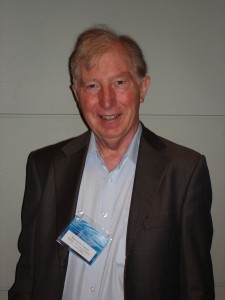
Fred Friend (source: Photo taken by Helen Szeto)

Abstract

Session Video

Session Overview:

Friend is here today to discuss the future of scholarly journal publishing with the movement towards the Open Access model.  He begins the session by letting the audience know that the publishers in the UK are saying Open Access will destroy scholarly publishing.  He continues by listing the assumptions that the publishers have.  Some publishers see Open Access as a threat, while others see opportunities in the new model.  Many publishers want the change in model to support rather than weaken journal publication.  Publishers put the emphasis on the quality of the journal, while researchers put the emphasis on the article.  They want to see public money to help increase publication.  Friend asks the questions, “What kind of business models can be made viable in the future?  Which models will enable high and effective use of published research?”  There are large areas of agree and disagreement.

(Source: slide courtesy of Fred Friend)

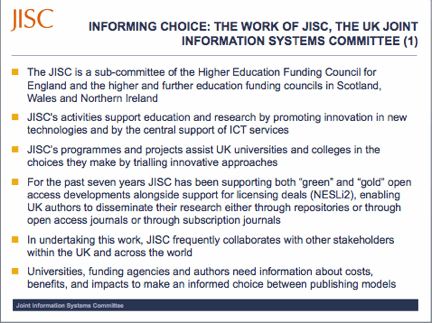
This is where the Joint Information Systems Committee (JISC) comes into the conversation.  It is a national committee in the UK that provides universities and researchers with information that they need in order to make the right choice.  JISC is a strong supporter of open access and want to help maintain the existing model.  They want to help promote innovation especially in helping universities decide which are the best innovative approaches.  JISC supports both “green” and “gold” open access development alongside support for licensing deals.  They want to collaborate with other stakeholders of scholarly journal publishing within the UK and world.  Friend is here today to see JISC have more collaboration with the Public Knowledge Project.

The one key factor about providing information is the choice about cost and impact factor.  JISC commissioned a report on the economic implications of alternative scholarly models.  It also looked at how it would help the UK economy.  Findings from the report showed that the UK benefited from moving towards either a self-archiving model or the gold Open Access model.   It can get very fast returns by moving top open access (either green or gold).  The Netherlands and Denmark have made similar reports.  JISC also examines how much it will cost for institutions to switch models.  They are trying to work with publishers on offering authors a choice between copyright and licensing.

Many policy statements in Europe have supported Open Access.  Collectively, the European Union committed to an Open Access policy research funded through FP7.  Local European institutions are considering how to manage these Open Access changes.  There is stronger interest in gold Open Access in Europe than in the United States.  Globally, countries with newer growth economies and less established publishers do not appear to be more advanced in Open Access developments than ones with established economies.

Fred Friend Presentation
Fred Friend Presentation (Source: Photo taken by Helen Szeto)

(Source: slide courtesy of Fred Friend)

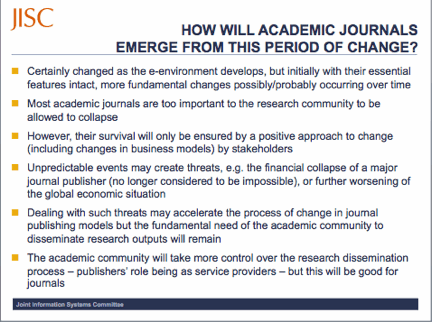
In future developments, Friend believes that there has to be a lot more in advocacy.  Many researchers are concerned that their favourite journals will disappear.  Fred says that academic journals will not collapse because of their importance to the research community.  He believes their survival will come through changes in the repository.  The academic community will take more control over the research dissemination process while publishers will act as service providers.  Changes will happen, there will be variations and hybrids of new and old models.  There will not be one model that will be able to dominate such as the subscription model has.

Analysis:

Friend recognizes that changes will need to be made to the subscription model in order for scholarly publishing to remain.  His presentation provides a positive outlook for publishers in a world with Open Access.  Both models can survive together, but changes will need to be made by both.  The key word in the presentation is “change.”  Things cannot stay the same; changes will have to be made to the traditional scholarly publishing model.  Friend encourages everyone to go out and advocate for these changes.  He believes that is the way to change the traditional model.

Session Questions and Answers:

1) One audience member said, “There are some green Open Access advocates who are very vocal about researchers …giving money to publishers when they can do it for less themselves. What is the cost of building institution repositories?

Reply: Green Open Access is the best value for money of the 3 models, which is evident at the national level in the UK, Netherlands, and Denmark.” Friend doesn’t believe it will be the sole model used.

2) How do you get over the problem of having researchers demand certain journals?

Reply: Friend’s suggestion is to cancel subscription and buy gold Open Access journals.

3) Addressing the awareness of difference economies.

Reply: Friend says that charges to each model are based on their cost in the current system.  He thinks that the costs will settle down over time.  There will still be variations in models because there are different costs involved.

4) Friend comments on the voluntary labour in the publishing models. Voluntary labour is not free because mostly the institutions subsidize it. Problems occur with certain inefficiencies such as people not skilled in what they are doing. People are spending time doing something that someone else can be doing better.

5) What makes you think that the cost will be better controlled in the new models?

Reply: Friend believes that the academic community will control costs.

Related Links:

Spam prevention powered by Akismet