All out on Saturday! Rouge Forum Update

RF4.jpg
Dear Friends,

The promise for perpetual war is quite real. The US cannot leave the Gulf Region, nor the Caucasus, as it cannot abandon the oil, cannot relinquish regional control. Yet the US military cannot defeat the residents of the regions, and cannot understand why. But the US is there to rob the regions of their natural resources, and their labor, and everyone there knows it, if most US citizens do not. So, that fighting will continue. And it will deepen as imperial rivals like the Russians, China, Japan, and Europe witness the weakness of US military and economic might.

The only thing Bush is telling the truth about is that the US ruling classes cannot lose, cannot retreat, in the oil regions. But they cannot win either, so they hope to send working class men and women to fight and die, not fighting against their enemies, but fighting the enemies of their greatest enemies.

The battle over oil is the most serious of battles, as oil independence in the US is simply not possible, and all military machines run on oil.

As the wars progress, we have long argued that fascism will emerge in the US, as it is. Two recent articles, one from the radical press, and one from a prominent Princeton professor, buttress that insight. Here is a link from Richard Falk, Princeton, “Will the Empire Be Fascist?”
and Greg Meyerson, here.

What can educators, students, and parents do in the face of these multiple crises? We can educate and organize to try to build a mass base of class conscious, ethical, resistance, in schools and out. Schools are a key choke point of US society, as elites insistence on NCLB demonstrates. Combined with the military, it is possible that youth in schools and in uniform, could take the lead in mobilizing anti-fascist resistance.

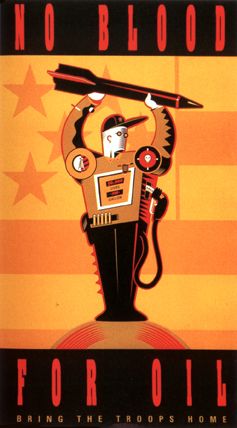
One aspect of that resistance is to build for the mass actions this coming Saturday, demanding that the US GET OUT of IRAQ NOW.

We should demonstrate, not so much to “show ourselves” to politicians, but as a test of our movement, a test of ourselves, our own courage and consciousness, our ability to bring others, to build close personal friendships, and to struggle with one another over our differing analyses of power and change in our communities–so we come away smarter.

We will not change the mind of the executive committee of the rich that is the US government today. But we will learn how far we have come in the process of defeating all of them, and their plan to extinguish hope and reason in the world.

The next step of that process is the Rouge Forum Conference, March 1 to 4, in lovely downtown Detroit, Wayne State University. The full schedule will be released by the conference committee this coming Sunday but, as this is mainly a participatory conference, plan to bring yourself and friends now.

People are already on the move, as people struggle to survive. Street kids recently invaded the World Social Forum and took the food they needed.

And, while school workers remain the most highly unionized people in the US, the percentage of the work force in unions dropped below 12 percent, one-third of the membership peak, perhaps indicating the irrelevance of US union leadership, despite their six figure salaries.

Apologies, again, to AOL users who find many of their Rouge Forum email updates blocked. We have worked with AOL on this problem for one year now, as have many similar list leaders. AOL refuses to assist, and remains, according to Consumer Reports, the worst server in the northern hemisphere. AOL is not only uncooperative and incompetent, their owners were among the first to turn over their members email to the government, on a simple request, when other providers, like Earthlink, refused. We urge you to leave AOL. After all, they do not want you as customers, as they themselves have said. There are many free alternatives, like Sharpreader.

In the meantime, we are troubled we are still blocked by AOL, and seeking hints on how to circumvent them.

Don’t forget, ALL OUT ON SATURDAY. US OUT OF IRAQ. You are welcome to download free posters and flyers from www.rougeforum.org.

Bracey’s Rotten Apples in Education Awards: 2006 Edition

ROTTEN APPLES IN EDUCATION: 2006 EDITION

Education researcher Gerald W. Bracey has done it again. This much-respected education outsider has released his annual list of “Rotten Apples” that points fingers at foolishness and malice and bad science in the education world. 2006 winners include: Secretary of Education Margaret Spellings for her belief in the absolutely purity of NCLB; Neil Bush and Barbara Bush for questionable business practices related to an educational software company; George Will and other advocates of the 65 Percent Solution; Thomas Friedman, journalist and author of “The World Is Flat”; ABC-TV’s John Stossel for his alarmist reporting; and a few select others.

Teaching: The Movies v. The Real World

Tom Moore is a tenth grade history teacher in the Bronx and his op-ed in today’s New York Times deconstructs the Hollywood image of teacher as hero/martyr

In analyzing the recent film “Freedom Writers,” Moore argues that the “dangerous message such films promote is that what schools really need are heroes. This is the Myth of the Great Teacher. Films like “Freedom Writers” portray teachers more as missionaries than professionals, eager to give up their lives and comfort for the benefit of others, without need of compensation.”

While there’s plenty of room for more love and idealism in the classroom, martrydom is not the answer to the problems teachers and students face in schools. Moore says he doesn’t expect to be thought of as a hero for doing his job. What he wants is to be respected, supported, trusted and paid.

Moore says that “every day teachers are blamed for what the system they’re just a part of doesn’t provide: safe, adequately staffed schools with the highest expectations for all students.”

He’s right, of course, but here he seriously downplays the responsibilities that teachers share as part of the system.

It’s true that “one maverick teacher, no matter how idealistic, perky or self-sacrificing” will not transform the system, collective action among teachers choosing to work in the interest of students (as opposed to the corporations and the state) could turn the system upside down.

The New York Times

January 19, 2007
Op-Ed Contributor
Classroom Distinctions
By TOM MOORE

IN the past year or so I have seen Matthew Perry drink 30 cartons of milk, Ted Danson explain the difference between a rook and a pawn, and Hilary Swank remind us that white teachers still can’t dance or jive talk. In other words, I have been confronted by distorted images of my own profession — teaching. Teaching the post-desegregation urban poor, to be precise.

Although my friends and family (who should all know better) continue to ask me whether my job is similar to these movies, I find it hard to recognize myself or my students in them.

So what are these films really about? And what do they teach us about teachers? Are we heroes, villains, bullies, fools? The time has come to set the class record straight.

At the beginning of Ms. Swank’s new movie, “Freedom Writers,” her character, a teacher named Erin Gruwell, walks into her Long Beach, Calif., classroom, and the camera pans across the room to show us what we are supposed to believe is a terribly shabby learning environment. Any experienced educator will have already noted that not only does she have the right key to get into the room but, unlike the seventh-grade science teacher in my current school, she has a door to put the key into. The worst thing about Ms. Gruwell’s classroom seems to be graffiti on the desks, and crooked blinds.

I felt like shouting, Hey, at least you have blinds! My first classroom didn’t, but it did have a family of pigeons living next to the window, whose pane was a cracked piece of plastic. During the winter, snowflakes blew in. The pigeons competed with the mice and cockroaches for the students’ attention.

This is not to say that all schools in poor neighborhoods are a shambles, or that teaching in a real school is impossible. In fact, thousands of teachers in New York City somehow manage to teach every day, many of them in schools more underfinanced and chaotic than anything you’ve seen in movies or on television (except perhaps the most recent season of “The Wire”).

Ms. Gruwell’s students might backtalk, but first they listen to what she says. And when she raises her inflection just slightly, the class falls silent. Many of the students I’ve known won’t sit down unless they’re repeatedly asked to (maybe not even then), and they don’t listen just because the teacher is speaking; even “good teachers” are occasionally drowned out by the din of 30 students simultaneously using language that would easily earn a movie an NC-17 rating.

When a fight breaks out during an English lesson, Ms. Gruwell steps into the hallway and a security guard immediately materializes to break it up. Forget the teacher — this guy was the hero of the movie for me.

If I were to step out into the hallway during a fight, the only people I’d see would be some students who’d heard there was a fight in my room. I’d be wasting my time waiting for a security guard. The handful of guards where I work are responsible for the safety of five floors, six exits, two yards and four schools jammed into my building.

Although personal safety is at the top of both teachers’ and students’ lists of grievances, the people in charge of real schools don’t take it as seriously as the people in charge of movie schools seem to.

The great misconception of these films is not that actual schools are more chaotic and decrepit — many schools in poor neighborhoods are clean and orderly yet still don’t have enough teachers or money for supplies. No, the most dangerous message such films promote is that what schools really need are heroes. This is the Myth of the Great Teacher.

Films like “Freedom Writers” portray teachers more as missionaries than professionals, eager to give up their lives and comfort for the benefit of others, without need of compensation. Ms. Gruwell sacrifices money, time and even her marriage for her job.

Her behavior is not represented as obsessive or self-destructive, but driven — necessary, even. She is forced into making these sacrifices by the aggressive neglect of the school’s administrators, who won’t even let her take books from the bookroom. The film applauds Ms. Gruwell’s dedication, but also implies that she has no other choice. In order to be a good teacher, she has to be a hero.

“Freedom Writers,” like all teacher movies this side of “The Prime of Miss Jean Brodie,” is presented as a celebration of teaching, but its message is that poor students need only love, idealism and martyrdom.

I won’t argue the need for more of the first two, but I’m always surprised at how, once a Ms. Gruwell wins over a class with clowning, tears, rewards and motivational speeches, there is nothing those kids can’t do. It is as if all the previously insurmountable obstacles students face could be erased by a 10-minute pep talk or a fancy dinner. This trivializes not only the difficulties many real students must overcome, but also the hard-earned skill and tireless effort real teachers must use to help those students succeed.

Every year young people enter the teaching profession hoping to emulate the teachers they’ve seen in films. (Maybe in the back of my mind I felt that I could be an inspiring teacher like Howard Hesseman or Gabe Kaplan.) But when you’re confronted with the reality of teaching not just one class of misunderstood teenagers (the common television and movie conceit) but four or five every day, and dealing with parents, administrators, mentors, grades, attendance records, standardized tests and individual education plans for children with learning disabilities, not to mention multiple daily lesson plans — all without being able to count on the support of your superiors — it becomes harder to measure up to the heroic movie teachers you thought you might be.

It’s no surprise that half the teachers in poor urban schools, like Erin Gruwell herself, quit within five years. (Ms. Gruwell now heads a foundation.)

I don’t expect to be thought of as a hero for doing my job. I do expect to be respected, supported, trusted and paid. And while I don’t anticipate that Hollywood will stop producing movies about gold-hearted mavericks who play by their own rules and show the suits how to get the job done, I do hope that these movies will be kept in perspective.

While no one believes that hospitals are really like “ER” or that doctors are anything like “House,” no one blames doctors for the failure of the health care system. From No Child Left Behind to City Hall, teachers are accused of being incompetent and underqualified, while their appeals for better and safer workplaces are systematically ignored.

Every day teachers are blamed for what the system they’re just a part of doesn’t provide: safe, adequately staffed schools with the highest expectations for all students. But that’s not something one maverick teacher, no matter how idealistic, perky or self-sacrificing, can accomplish.

Tom Moore, a 10th-grade history teacher at a public school in the Bronx, is writing a book about his teaching experiences.

Copyright 2007 The New York Times Company

Rouge Forum Conference Update – The Wars Left Behind: Education for Action

NoBloodForOil.jpg
Dear Friends,

We focus once again this week on the Rouge Forum Conference in Detroit, March 1 to 4, at Wayne State University. This will be the key gathering of educational activists in the US this year, bringing together test resisters, anti-war activists, community activists, literacy and social studies specialists, students, parents, profs, and k12 educators. We expect participants from the UK, Japan, China, South Africa, Canada, and even Brooklyn.

Spread the word. Nothing works better than a call or email from a friend.

Among the presenters: Patrick Shannon, Susan Ohanian, George Schmidt, Dave Hill, Steven Strauss, Adam Renner, and many others.

As we have had five requests to extend the due date for proposals, we will accept proposals until Saturday morning, January 20, as the review committee must meet and make decisions, as well as the schedule, then. We continue to ask for donations, but no one will be turned away for fees. Many thanks to those who have donated already.

This link represents some of the work that members of the Rouge Forum are initiating for strategic planning in San Diego. The template could be used nearly anywhere.

On this Martin Luther King Holiday, we highlight his speech, “Beyond Vietnam—A Time to Break the Silence,” one speech that it is hard to turn into its own opposite, even though many of the MLK celebrations reflect everything that King set out to oppose, as in the militarized march led by the JROTC in San Diego.

We also recommend the film, Deacons For Defense, as a collateral discussion piece.

Here is Professor Michael Klare, author of Resource Wars, on Energo-Fascism.

This article is but one of many incisive pieces linked to the No Blood For Oil web page, a remarkable resource for educators.

We note with great sadness the death of South African writer, intellectual, and activist, Jimmy Seephe, a dear friend. We will have an appreciation of his life next week.

From Rethinking to Reacting -A Call for a Resistance Revolution in Teacher Education

From Rethinking to Reacting
A Call for a Resistance Revolution in Teacher Education-
Beginning the Fall Semester, 2007

Four Arrows, aka Don Trent Jacobs

This is a call for all teacher-educators and their teacher candidates to
revolt, beginning with the Fall school semester just ahead. No more research
articles that show how current practices are failing. No more complaining
about policies that diminish authentic teaching and learning. No more
“rethinking schools.” It is time to resist. I am sending this communiqué to as
many forums as possible so you will not be acting alone, unless we have all
lost our courage completely.

The strategy for the revolution I am calling for is triple-tiered. First,
resist all standardized measurement protocols. This includes standing firmly
against No Child Left Behind, against the National Council of Accreditation
for Teacher Education (NCATE) and against letter or numerical grading
policies. Second, emphasize social and ecological justice in all classroom
activities and assignments in spite of the arguments against so doing. This
includes, where appropriate, encouraging students to consider possibilities of
criminal wrongdoing by the U.S. government with regards to the suppression of
environmental science relative to global warming; complicity in the events of
September 11, 2001; and deceit in its actions relating to the Iraq war. Third,
do your best to implement at least one part of the vision or mission statement
adopted by your university or College of Education. Pay special attention to
the one that is probably NOT being followed.

It is important that all revolutionary resistance be supported by good
educational research. This will give confidence to your actions in the face of
opposition. I will do this in my own College of Education at Northern Arizona
University beginning with the submission of my “Methods for Teaching Social
Studies” syllabus in August. In it I will clearly state my disagreement with
Education Secretary Margaret Spelling’s recent statement that No Child Left
Behind is “nearly perfect.” I will state my intentions regarding class
inquiries about deceptions surrounding 9/11 by quoting similar material from
Professor David Smith’s book, Trying to Teach in a Season of Great Untruth:
Globalization, Empire and the Crises of Pedagogy. I will refer to a resolution
recently passed by the College and University Faculty Assembly of the National
Council for the Social Studies at its annual conference in Washington, DC,
November 30, 2006, where NCSS and the American Historical Association urged
its members “to take a public stand as citizens on behalf of the values and
goals taught in social studies and necessary to the practice of our
profession; and to do whatever they can to bring the Iraq war to a speedy
conclusion.” I will restate Postman and Weingartner’s precepts for good
learning, including the need for a keen sense of relevance, open-mindedness,
and an emphasis on the importance of inquiry.

Under “grading policy” for my syllabus, I will state simply that this will be
“negotiated” the first day of class. However, in terms of our revolutionary
strategy, I will share with you my plans for this negotiation. First I will
explain that I do not believe in grading. I will refer to the abundant studies
that show that grading generally depresses creativity, gets in the way of
complex learning and undermines genuine interest in the subject. I will say
that in previous years the class and I agreed on giving everyone “Bs” if they
missed no more than three classes, agreeing that the material would be too
difficult to master in one semester. One student appealed nonetheless. Against
all logic, the consumerism mentality of the system gave in and the student was
given the “A.” Thus, this year everyone get’s the “A” grade. The very fact
that the students will be thinking critically might warrant a “superior”
rating, although the whole affair if somehwhat ridiculous. I suspect that
there will be a class consensus to support this policy, although the college
at large will be appalled in spite of the fact that grade inflation at the
College of Education is such that around 89 percent of the teacher candidates
are somehow “A” students anyway.

My stand against NCATE will be especially challenging since my college is in
the early stages of preparing for its first NCATE accreditation and most
faculty will have implementation responsibilities. However, in addition to
standing by those conclusions of educators who write about how NCATE
trivializes the truly important dimensions of teaching and learning, I will
also stand against NCATE because of its recent decision to end its support for
“social justice” in teacher education because they believe it is not more than
a political position.

In fact, the “social justice” imperative for teacher education is a
foundation for this revolt. Thus, I will devote a little space here to talk
about why NCATE removed this language from its list of dispositions and why
the many arguments against university vision statements that refer to social
justice are flimsey. If it is wrong or “political” for universities to support
social justice then the notion of an Internal Review Board for protecting
human subjects should also be criticized. IRB policies stem from the 1979
Belmont Report and the concerns for the protection of human life and values
expressed therein. If IRBs can structure justice into research ethics, teacher
education can include it in its guidelines.

In fact, all of the arguments against universities using “social justice” as
a goal are insufficient. Moral relativity no longer has a leg to stand upon.
The complaint by libertarians that social justice implementation violates its
non-aggression principle does not ultimately hold water when referring to an
educational approach, not some form of coersion or violence. The concern that
social justice may be unfeasible economically is but a reflection of a way of
thinking guided by an almost exclusive focus on quarterly profit and loss
statements. Saying that the subject only applies to the social sciences is not
accurate, for “word problems” in math and applications in science are
excellent ways to bring forth both awareness and solutions to social and
ecological problems.

Finally, the objection that no one can agree on a definition is also bogus. It
is easy to see the common theme in all of the definitions that have been
offered. “Social justice” is large enough to bring together a variety of
perspectives on ways to move toward a world in which we treat one another with
love and compassion and where we recognize one another’s value and the
interconnections we all have. If the meaning or goals of education have
nothing to do with the creation or maintenance of a healthy society, then and
only then would I be willing to call off the social justice agenda for
educators and retreat from my own call for a revolution of resistance
beginning this Fall.

The third and final tier I ask that we address in this revolt of resistance
relates to honoring or redefining, if necessary, your university or college’s
vision and mission statements. Not many visions truly support the
corporatization and militarization of education that currently exists and most
do make a commitment to the idea of “social justice” even if they have gone to
great lengths to avoid using the phrase. A brief look at such statements for
universities that are posted on the web reveals a clear mandate for the kind
of education that requires challenging the false rationales for the “tougher
standards” movement, for questioning corporate approaches to teaching and
learning, and for making an authentic commitment to social and ecological
justice in a contemporary world:

• “We support quality of life for our consituents.
• “To engage the global community.
• “To prepare educators to work in diverse communities.
• “We will address equity in students.
• “To improve the lives of individuals in complex societies.
• “ To prepare our students for community service.
• “To enhance commitment to the principles of democracy.

Even where vision statements are sorely lacking in such language, the
universities that claim them still use phrases like “collaborative
participation” or a “caring environment.” At NAU’s College of Education, our
vision is “preparing educational professionals who are committed to creating
the schools for tomorrow.” It would not take much interpretative prowess to
make a connection between the agenda for our revolt and the vision of the
organization. With virtually every life system in our world being in decline,
what kind of schools for tomorrow might be envisioned that do not emphasize
challenging the status quo? Making the connection will you to use the vision
statement to support your “civil disobedience” with regards to procedures that
are barriers to authentic authentic work toward fulfilling the vision.

If the vision statements do not adequately serve to support your actions, have
a look at the university’s strategic plan. For example, Northern Arizona
University’s new strategic plans calls for achieving “multi-cultural
understanding as a priority of educational civic life.” One of its seven goals
is to “become the nation’s leading university serving Native Americans.” The
College of Education’s vision refers to its “long standing commitment to
Native American students.” Contradictions abound here and I plan on using my
own text for my courses as a result- a recent University of Texas Press
publication entitled, Unlearning the Language of Conquest: Scholars Expose
Anti-Indianism in America to help rectify them. For but one example, the
university boasts about its “majestic San Francisco Peaks” in its faculty
recruitment ads and about skiing its slopes in recruitment efforts aimed at
students. Yet all of the twenty-three Arizona Indian tribes, who hold the
Peaks to be sacred spiritual grounds, have passionately fought against using
recyled waste water to create artificial snow on their sacred lands while NAU
has refused to take an official position on the subject in support of the
Native people.

Each of our colleges of education, perhaps each of us ourselves, are guilty of
such hypocrisy somewhere along the line. In the Fall of 2007, it is time to
put ourselves back in balance through an action that will move our “rethinking
” of schools to something more practical. The revolt just might catch on.

CEOs pocket more by Jan 2 than average worker does in the entire year

Today the Canadian Centre on Policy Alternatives released Timing is Everything: Comparing the earnings of Canada’s highest-paid CEOs and the rest of us by CCPA research associate Hugh Mackenzie.

The study finds that by 9:46AM on January 2nd Canada’s 100 highest-paid CEOs will have reaped, on average, $38,010 in pay. That equals the average annual earnings of workers in Canada.

By 6:00 they will have pocketed nearly $70,000.