Illinois: State may limit teachers’ ability to strike

Chicago Sun-Times: State may limit teachers’ ability to strike

Chicago is one of just a handful of large urban school districts that allows its teachers to strike, and a movement is afoot to change that.

Teachers and school officials are in talks now; the contract expired June 30. Both sides say little progress has been made, fueling fears about a strike as the new school year approaches.

A proposal is making the rounds in Springfield to make it harder for Chicago teachers to vote to strike. Now, a deadlocked Chicago Teachers Union could strike after it has tried mediation and given school officials a 10-day notice.

Fiji: Cabinet attempts to avert strike

FijiLive.com: Cabinet attempts to avert strike

Fiji’s interim Cabinet will meet in the next hour in a last-minute attempt to avert the looming strike by members of the Fiji Islands Council of Trade Unions (FICTU).

FICTU, which comprises the Fijian Teachers Association, Public Employees Union and the Viti National Union of Taukei Workers, plan to stage a nationwide strike on Thursday.

FijiVillage.com: Cabinet meets today to try and avert FICTU strike

The interim cabinet will meet from 11:30 this morning to make the final attempt to avert the looming strike by the Fijian Teachers Association, Public Employees Union and Viti National Union of Taukei Workers.

The unions are maintaining that they want the 5 percent paycut to be fully restored in August, retirement age to remain at 60 years and the COLA increments in the Partnership Agreement to be retained.

However Interim Prime Minister, Commodore Frank Bainimarama has made it clear that cabinet agrees that the interim administration just cannot afford to give into the civil service unions’ demands.

South Africa: Learners Face the Strike’s Aftermath

AllAfrica.com: South Africa: Learners Face the Strike’s Aftermath

THAT the month-long public service strike, in which large numbers of teachers took part, could have an effect on this year’s matric marks is evidence of weaknesses in the South African school system, said experts.

Many of the 12-million pupils who attend state schools lost up to three weeks of schooling, had mid-year exams postponed and were bullied , or saw working teachers bullied, allegedly by teachers who had downed tools during the strike. The strike was the largest and longest in SA’s history since democracy.

College for sale

Inside Higher Ed: College for sale

A private equity firm announced plans Tuesday to buy Touro International University, the distance education arm of Touro College, in a deal that would alter the purchased unit from nonprofit to for-profit status.

The purchase is one of several recent transactions in which businesses or investors seeking to expand online offerings have either bought traditional colleges or forged alliances with them. Analysts expect to see more such purchases.

Petition Protests British Union’s Proposed Boycott of Israeli Academics

The Chronicle: Petition Protests British Union’s Proposed Boycott of Israeli Academics

A Pennsylvania-based organization that campaigns for peace in the Middle East says it has drawn more than 10,000 signatures to an online petition organized in response to a move by Britain’s main faculty union to consider an academic boycott of Israeli universities and academics.

Canada: Visiting Carleton prof denied work permit over 1981 arrest

CBC: Visiting Carleton prof denied work permit over 1981 arrest

An American professor scheduled to teach at Carleton University this fall was denied a work permit because of his arrest during a protest 26 years ago — a move he says has chilling implications for activists and protesters on both sides of the border.

“I’ve not been convicted of a crime,” said Tom Juravich, who teaches labour studies at the University of Massachusetts in Amherst. “But somehow now, simply because I was arrested 26 years ago, I seem to be a potential threat here in Canada.”

University Will Pay $5.3-Million to Settle Whistle-Blower’s Lawsuit Over Incentive Payments to Recruiters

The Chronicle: University Will Pay $5.3-Million to Settle Whistle-Blower’s Lawsuit Over Incentive Payments to Recruiters

A university in Indiana has agreed to pay $5.3-million to settle a whistle-blower’s complaint that it offered improper incentives to student recruiters, it announced on Monday.

UK academic boycott backlash

Jerusalem Post: UK academic boycott backlash

The international outcry against the call by the UK’s University and College Union (UCU) to boycott Israeli academic institutions has strengthened with a petition by academics reaching 10,000 signatures.

The petition, which calls on academics to show solidarity with their Israeli counterparts, raised over 10,000 signatures in seven weeks.

Touro College Will Sell Online Division to Private-Equity Fund

The Chronicle News Blog: Touro College Will Sell Online Division to Private-Equity Fund

The nonprofit Touro College announced this morning that it had signed a deal to sell its 7,500-student online division to a private-equity fund — in a transaction that signals investors’ continuing confidence in distance education as a way to make money in higher education.

Turkish Scholar Sues to Overturn Law on ‘Denigrating Turkishness

The Chronicle News Blog: Turkish Scholar Sues to Overturn Law on ‘Denigrating Turkishness’

A scholar at the University of Minnesota’s Center for Holocaust & Genocide Studies has filed a case with the European Court of Human Rights that he says is the first attempt to overturn through that legal channel a controversial provision of Turkey’s penal code that criminalizes “denigrating Turkishness.”

Salary, Gender and the Social Cost of Haggling

The Washington Post: Salary, Gender and the Social Cost of Haggling

About 10 years ago, a group of graduate students lodged a complaint with Linda C. Babcock, a professor of economics at Carnegie Mellon University: All their male counterparts in the university’s PhD program were teaching courses on their own, whereas the women were working only as teaching assistants.

Boycotts and medicine don’t mix

The Guardian (Comment is Free): Boycotts and medicine don’t mix

The BMJ has no place in discussing the politics of the Middle East – it would do better to deal with the plethora of health inequalities on our doorstep.

Inside Higher Ed Commentaries on Churchill Firing

The Churchill Firing — I By Hank Brown

The case of Professor Ward Churchill has received considerable national attention over its two-plus year run. With the next act to be played out in the courtroom, the talk shows will soon be on to other things.

But the ripple effects for higher education will be much longer lasting. The University of Colorado Board of Regents on Tuesday accepted my recommendation that Professor Churchill be dismissed from the faculty for engaging in serious, deliberate and repeated research misconduct. The reaction to the regents’ decision from the university’s constituents has been overwhelmingly positive. Yet in the higher education community across the country, things are a bit more unsettled.

The Churchill Firing — II By Gary Witherspoon

Many conservatives believe the firing of University of Colorado Professor Ward Churchill will now reduce liberal politics in academia. Many liberals believe that his firing will uphold high standards of academic scholarship. Both are wrong — because the firing of Churchill reveals a very pernicious kind of exclusionary dogmatism in scholarly research and writing and media reporting. The firing of Professor Churchill for alleged research misconduct ignored evidence to the contrary provided by professors who know his work best, ignored evidence from a committee of scholars who found the investigating committee itself guilty of research misconduct, and ignored all Indigenous evidence and perspectives that are critical of Eurocentric versions of the history of the European invasion of the Americas.

Churchill’s lawyer wants appeal heard in Denver

Rocky Mountain News: Churchill’s lawyer wants appeal heard in Denver

Ward Churchill’s attorney is seeking a more sympathetic jury by taking the case of the fired University of Colorado professor to Denver District Court rather than to a federal judge.

Federal judges tend to defer to the personnel decisions of university governing boards, especially if the boards followed due process as set forth in their own operating procedures, legal experts say. But a local jury is less predictable.

Canadian University Settles With Professor Who Says His Views on Technology Cost Him an Appointment

Globe and Mail: University, academic reach settlement after six years

— Simon Fraser University has expressed its “sincere regret” to academic David Noble six years after a controversy over the university’s handling of the appointment of the J.S. Woodsworth chair in 2001.

Dr. Noble, a York University professor who is internationally recognized for groundbreaking work on the impact of technology on society, had the backing of faculty in SFU’s department of humanities. The expression of regret for mistakes that were made and the personal impact of the mistakes on Dr. Noble’s life was part of an out-of-court settlement announced yesterday.

The university acknowledged it made mistakes. However, the outcome may have been no different, even if the mistakes were not made, the university’s lawyers stated in a news release.

The Chronicle: Canadian University Settles With Professor Who Says His Views on Technology Cost Him an Appointment

Simon Fraser University has settled a lawsuit with David Noble, an outspoken professor who said he had been denied a humanities appointment at the British Columbia institution because of his strong criticism of the use of technology in academe.

The settlement completes a saga that started six years ago, when a Simon Fraser search committee nominated Mr. Noble, a professor of history at York University, in Ontario, to hold its J.S. Woodsworth Chair in the Humanities. Administrators at Simon Fraser blocked the appointment, arguing that Mr. Noble’s curriculum vitae was too short and his personal style too abrasive.

University of Colorado Board of Regents Fires Ward Churchill, Who Vows to Sue

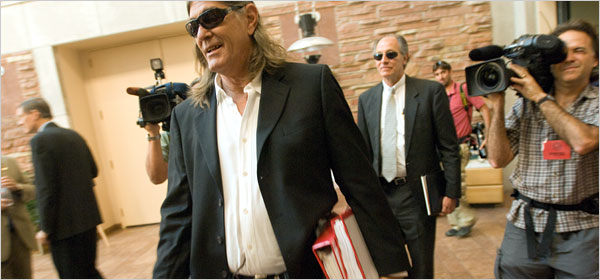
25professor.600.jpg
Kevin Moloney for The New York Times

The New York Times: Colorado Regents Vote to Fire a Controversial Professor

After more than two years of public tumult, the University of Colorado Board of Regents voted Tuesday to fire a professor whose remarks about the victims of the Sept. 11 attacks led to a national debate on free speech. But it was the professor’s problems with scholarship that the board cited as the cause for his termination.

Rocky Mountain News: CU regents fire Ward Churchill

The first, very long chapter of the Ward Churchill saga ended this afternoon as just about everybody — including Churchill — had predicted: He was fired from his job as ethnic studies professor at the University of Colorado.

The next chapter is set to begin Wednesday, when the controversial academic and his civil rights attorney, David Lane, sue the university in Denver District Court.

Denver Post: Regents ax prof; battle not yet settled

The nearly unanimous decision to fire professor Ward Churchill stirred discontent among some faculty Tuesday, many of whom vowed to fight the decision.

Many professors said they saw the decision coming and said they were crushed by what it might do to recruiting creative professors to the campus.

Already, as news bubbled out across the half-empty summer campus, several faculty said they will plan teach-ins and panel discussions about civil rights this fall.

Inside Higher Ed: Ward Churchill Fired

More than two and a half years after Ward Churchill’s writings on 9/11 set off a furor, and more than a year after a faculty panel at the University of Colorado at Boulder found him guilty of repeated, intentional academic misconduct, the University of Colorado Board of Regents voted 8-1 Tuesday evening to fire him.

The Chronicle: University of Colorado Board of Regents Fires Ward Churchill, Who Vows to Sue

Nearly six years after Ward Churchill compared some American victims of terrorism to Nazi bureaucrats, the Board of Regents of the University of Colorado voted Tuesday night to fire him. But the controversial ethnic-studies professor said he plans to sue.

PERU: Strike Ends as Teachers and Gov’t Sit Down to Talks

International Herald Tribune: Peru public school teachers agree to end 15-day strike

Peru’s public school teachers on Thursday ended a 15-day strike against a new law requiring them to take competency tests after government officials agreed to immediate talks on their demand for better training.

IPSnews.net: Strike Ends as Teachers and Gov’t Sit Down to Talks

Peru’s teachers’ union, which has been giving the Alan García administration its worst headache, decided to suspend its protests after 15 days of violence that resulted in three deaths and dozens of wounded across the country. But its battle with the government has barely begun.

“We will have ongoing and uninterrupted dialogue from today,” Education Minister José Antonio Chang said on Friday, after launching negotiations with the public school teachers who went on strike Jul. 5. They are protesting a new law on teacher education, which they regard as a move to “privatise” the sector.

“The strike is temporarily suspended until our claims are met in these talks,” Luis Muñoz , general secretary of the Unified Trade Union of Education Workers of Peru (SUTEP), told IPS, after meeting Thursday evening with the prime minister and president of the ministerial council, Jorge del Castillo.

California: CSU Faculty Warns of Strike Over Budget

News10.net: CSU Faculty Warns of Strike Over Budget

Budget talks at the state capitol have prompted threats of a strike at California State University.

The California Faculty Association which represents CSU faculty members says it’s learned that state lawmakers are considering cutting the state budget by 1 percent. CSU Chancellor Charles Reed said it would mean a $28 million loss for the general fund for the university system.

Missouri: UM faculty union opposes pay plan

AP: UM faculty union opposes pay plan

A faculty and staff union at the University of Missouri has come out against a plan to fund pay increases through cutbacks.

The university’s plan would free up about $7 million to increase professors’ salaries to make the school more competitive compared to other universities.

The university has not finalized how it will get the money, but has mentioned several ideas, including adopting a faculty hiring freeze on 30 to 35 positions, combining administrative functions or consolidating services.

Philippines: 2 professors suspended as AIM pay spat escalates

Philippine News: 2 professors suspended as AIM pay spat escalates

The Asian Institute of Management has suspended two top professors for a year, in the latest escalation over a P984-million back salary and tenure fight that has been brewing for years now in the region’s first business school.