Washington Post series: Angler: The Cheney Vice Presidency
The Nation: Cheney, Cornered
Critical Theories in Education
Washington Post series: Angler: The Cheney Vice Presidency
The Nation: Cheney, Cornered

Mark your calendars. The Rouge Forum will return to Louisville, KY for its main 2008 event.
The Rouge Forum will meet March 14-16 at Bellarmine University.
Thanks to Adam Renner and the PrESS Network for coordinating the conference.
Look for more details and the call for proposals in weeks to come.
Editorial: White Supremacy Is Not Color Blind
Spring 2007
By the Editors of Rethinking Schools
In the publishing industry, it’s customary to pre-write the obituaries of famous people who, due to either age or ill-health, are expected to die soon. Then, when death occurs, the obituary is ready to go.
Unfortunately, an obituary pre-write is needed for the 1954 Brown v. Board decision, in which the U.S. Supreme Court took aim at a major structure of Jim Crow racism and outlawed separate- but-equal schools for blacks and whites.
Over the years, the Court has so chipped away at Brown that it is a mere shell of a decision, honored in speeches every Martin Luther King Jr. holiday but ignored in practice 365 days of the year.
By summer, the Court is expected to issue a ruling that will get rid of even the shell. Brown will die.
The decision involves voluntary integration plans in Seattle and Louisville that have been challenged because race is one of several factors used to maintain diversity as students are assigned to schools. Few expect the court to uphold the Louisville and Seattle efforts.
“The only question was how far the court would go in ruling such plans unconstitutional,” the New York Times noted after the Dec. 4 oral arguments.
Widespread Repercussions
The significance of the cases goes beyond schools. As Theodore Shaw, president of the NAACP Legal Defense and Education Fund, has noted, opponents of voluntary integration make an argument that “if followed to its logical end, would make it illegal and unconstitutional in this country to do anything voluntarily and consciously about racial inequality.”
Shaw was one of several commentators at a November gathering in Washington to discuss the Supreme Court cases. At the meeting, Roger Clegg, president of the Center for Equal Opportunity, articulated the prevailing conservative view that those who promote race-conscious integration policies are no different than the segregationists of old because both make determinations based on skin color. What’s more, conservatives argue, race-conscious policies are no longer necessary because the United States is becoming a multiracial, multiethnic society.
But, as Shaw responded, “This country has always been a multiracial, multiethnic society. The problem in this country has never been mere race consciousness. It has been white supremacy.”
There is “no symmetry, moral or legal,” Shaw continued, between the race-consciousness of those struggling against institutions of white supremacy and the race-conscious discrimination of those who believe in the superiority of white people. The first is used to include, integrate, and promote equality for all, while the second is used to exclude, segregate, and subordinate those deemed inferior.
The seriousness of the Supreme Court’s likely U-turn on school integration is particularly apparent in the Louisville case. The school system had been under a federal court desegregation order from 1975 to 2000 — in other words, the courts mandated a race-conscious desegregation plan. When that court order expired, the district voluntarily adopted a plan to prevent resegregation. That plan is now under attack.
One of the most galling aspects of the attack is that conservatives are using the historically specific demands of Brown and the civil rights movement — that no one should be denied equal opportunity on the basis of the color of their skin — to argue against the substance of Brown and to bolster white supremacist policies that lock African Americans into segregated, inferior schools.
Justice Ruth Bader Ginsberg most articulately picked up on the Alice-in-Wonderland aspect to the oral arguments. “What’s constitutionally required one day gets constitutionally prohibited the next day,” she noted. “That’s very odd.”
Meanwhile, every year U.S. schools are increasingly segregated.
Given the Court’s hostility to race-conscious efforts to promote equality, the debate will of necessity have to focus on new ways to struggle against segregated schools. Merely decrying the Court’s direction is insufficient.
There are no easy answers, but clearly the debate must evolve. Public education plays a central role in our society. Just because the Court may declare voluntary integration policies illegal does not mean teachers and schools can give up the fight against white supremacy and racial inequality.
Spring 2007
Check out: www.rethinkingschools.org
“If you haven’t played a computer game since Frogger, then this two-part documentary detailing the contemporary gaming industry is sure to … all » astound. An industry that now rivals the wealth and reach of Hollywood – globally it’s worth US$25 billion (A$32 billion) a year and boasts 800 million regular players. This is an entertaining peek that looks at games as propaganda among other issues.”
Of particular interest is the section of the Gamer Revolution (Part 1), which describes how the US Army is investing millions of dollars to use computer games as recruiting tool, luring young people into the military—The battle for the hearts and minds of the gamers generation.
The Pentagon has bankrolled a computer game called “America’s Army,” which has been downloaded by more than seven million people and played on military’s own servers. The game is designed to put gamers in direct contact with soldiers and includes links to US Army recruiting web site.
Lot’s of good listening this month.
Here’s what I acquired in June:
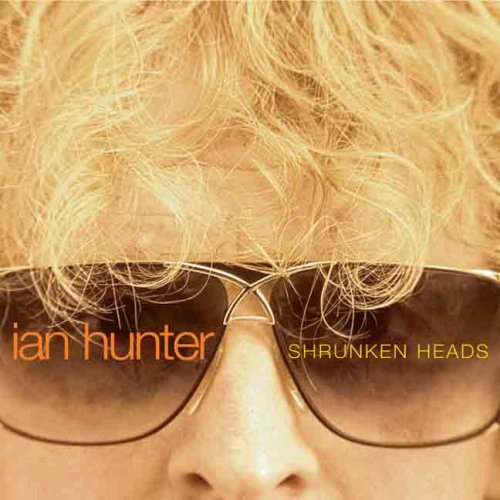 Shrunken Heads, Ian Hunter
Thanks to Perry for sending this one along with the classic Hunter Ronson Band album Yui Orta from 1989. Hunter is way underrated (don’t you really love Mott The Hopple?). I loved Hunter’s cover of Alejandro Escovedo’s “One More Night” on the Escovedo tribute cd from 2004. Anyway on to Shruken Heads, here’s the short review: Ian Hunter’s new album has at least two songs that Bruce Springsteen wishes he could write and the rest of the album is pretty darn good too.
 Yui Orta, The Hunter Ronson Band
“You’re never too small to hit the big time!” All Music Guide says: “YUI Orta remains an exciting album that is worthy of rediscovery by both anyone interested in Ian Hunter’s work and anyone interested in good, old-fashioned rock & roll.” And they’re right. Thanks Perry for pandoing these my way.
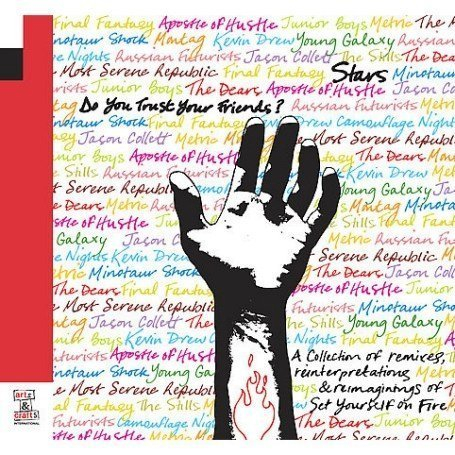 Do You Trust Your Friends, Stars
Remixes of Montreal indie electronica/chamber pop. Just okay, but I’ve not given it a fair listen really.
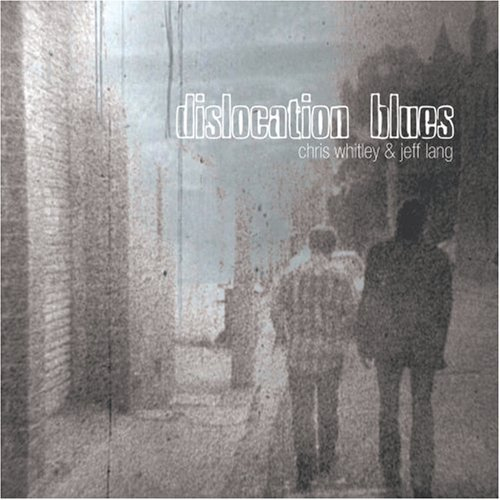 Dislocation Blues, Chris Whitley & Jeff Lang
Chris Whitley was great bluesman/singer-songwriter/roots rocker. This album was recorded with Jeff Lang just seven months before he died from lung cancer in 2005. If you don’t have his masterpiece Living With the Law do yourself a favor and go get. On Dislocation Blues he does to fantastic covers of Dylan (a radical reinterpretation of “When I Paint My Masterpiece” which I’ve played over and over and “Changing of the Guard”). Patti Smith’s recent cover of “Changing of the Guard” is also recommended. Plus Whitley and Lang covers Robert Johnson and do versions of Whitley’s own “Rocket House” and “Velocity Girl” that are riveting. Highly recommended.
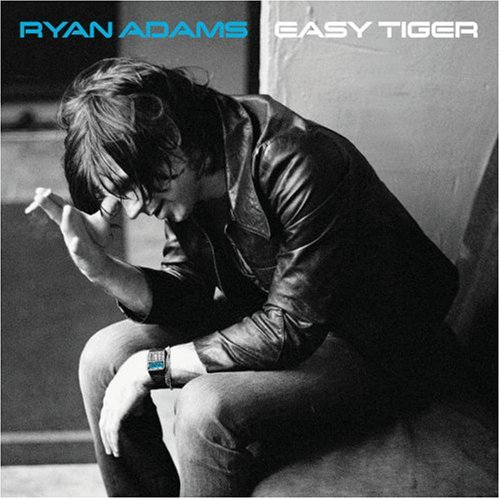 Easy Tiger, Ryan Adams
Ryan Adam’s Heartbreaker is considered classic and Gold is a great album, and Cold Roses and Jacksonville City Nights are superior records. Adams has been notoriously prolific and uneven the past few years, but on Easy Tiger he’s lean and mean. It’s not Heartbreaker but its pretty darn good.
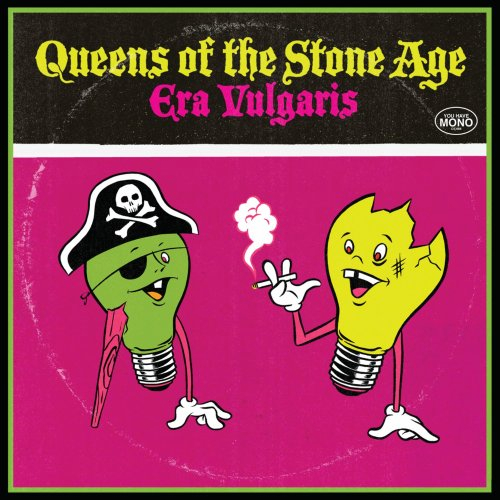 Era Vulgaris, Queens of the Stone Age
In the mood for some stoner metal? No pop/crossover stuff within miles…AMC says “it’s mercilessly tight and precise, relentless in its momentum and cheerful in its maliciousness…best rock & roll record yet released in 2007.” Thunderous!
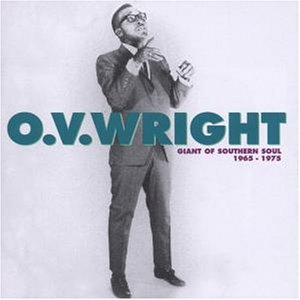 Giant of Southern Soul, 1965-1975, O. V. Wright
This is a UK compilation of one of the great unsung soul singers of the 60s and 70s. Absolutely mindblowing deep soul music from Overton Vertis Wright, whose gospel roots are never far from the surface. You may not know “Nickel and Nail” or “You’re Gonna Make Me Cry” or “Ace of Spades” or “I’d Rather Be Blind, Crippled or Crazy” or “I’ve Been Searching” or “What About You” (which I’ve played over and over and over lately), but you should! If you can’t find this comp, get The Soul of O.V. Wright.
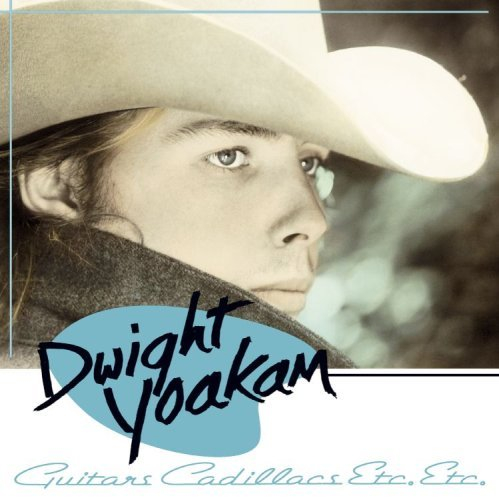 Guitars, Cadillacs, etc. etc. (20th Anniversary Deluxe Edition), Dwight Yoakam
Dwight is my hero, I held off picking up this deluxe reissue b/c I already had much of it, but there were some unreleased tunes and, well. Just had to have it. Everybody needs their guitars, Cadillacs and hillbilly music!
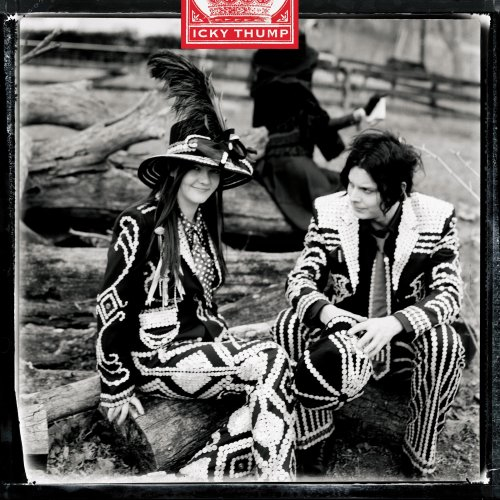 Icky Thump, The White Stripes
The White Stripes are touring Canada right now. Not just Toronto, Montreal and Vancouver, but they’re playing in every province and territory Including Iqaluit, Nunavut (63° north latitude, population 6,184). What’s red and white and rocks Canada?
 Propeller, Guided By Voices
Kings of lo-fi. This is a 1992 album, with the epic “Over the Neptune/Mesh Gear Fox,” and GBV classics “Exit Flagger” and “14 Cheerleader Coldfront”. I downloaded this from eMusic, which is a great (and cheap) music downloading service if you’re looking for stuff on independent labels (eMusic is not the site for your Hot 100 tracks, which is a good thing).
 1000 Years of Popular Music, Richard Thompson
It is what it says and it has loads of great covers including tunes by Britney Spears, The Easybeats, and Squeeze.
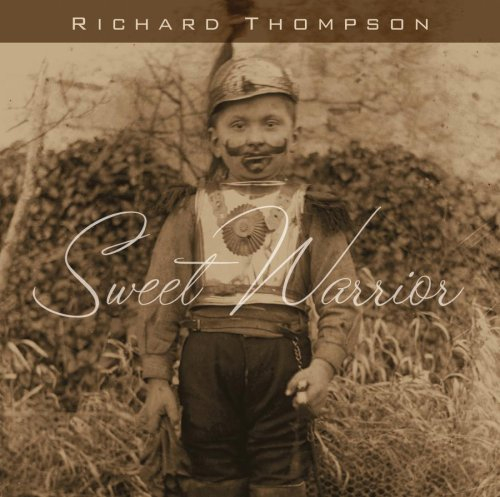 Sweet Warrior, Richard Thompson
There is not a bad Richard Thompson album. For his third post-Capitol records release he’s given us a rock album (hoo-ray!). I really liked his two previous albums, Old Kit Bag (a trio) and Front Parlour Ballads (acoustic), but Richard knows how to rock with the best of them. Hey Dave remember when he blew your ears out at The Egg in Albany? That was one loud concert, this album is more relaxed, in the mold of Rumor and Sigh. “Dad’s Gonna Kill Me” is a great anti-war song and there’s the ska-influenced of “Francesca” and other gems. Anyway, this is another “routine” four star album for a guy who should be a humongous star himself.
 The Wagonmaster, Porter Wagoner
Way back when in those pre-MTV days in West Columbia, SC I had my favorite music shows on TV: Sunday morning there was “Gospel Jubilee” (with the Blackwood Brothers, The Stamps, The Florida Boys, The Happy Goodmans, etc.) and there was Dick Clark’s “Where the Action Is” (with Paul Revere and the Raiders), and, of course, American Bandstand every Saturday. Shindig (which had The Rolling Stones AND Howlin’ Wolf! REALLY!), Hulabaloo. But then there was The Porter Wagoner Show, with Dolly Parton (and Mel Tillis) . The King of Country Gospel, member of the Grand Ole Opry, Country Music Hall of Fame and maker of some really weird country albums too. At 80 years of age, The Thin Man from West Plains as released a killer country record (on the ANTI- label). Produced by Marty Stuart, The Wagonmaster is straight ahead, no frills traditional country music. It includes the obligatory country gospel tunes, plus a sequel to the infamous “Rubber Room”—”Committed to Parkview,” which Johnny Cash wrote for Wagoner but never recorded himself—a creepy, sad, and powerful weeper. (Cash and Wagoner were both “guests” at Parkview). Might not be everyone’s cup of tea, but if you like real country you gotta have it.
 Sky Blue Sky, Wilco
Jeff Tweedy added ace guitarist Nels Cline to the Wilco line-up and shifted away from experimental pop to more of a California country/pop sound and it’s a nice change of pace. It’s not a retreat to the alt-country sound of Uncle Tupelo or early Wilco, which is fine with me. Beautiful music, dark lyrics.

Well, you could see this coming from a mile away. (At least Taco Bell High would come with a built in mascot and school slogan!)
“TACO BELL HIGH” OR “WAL-MART PUBLIC SCHOOL” SOON IN CANADA?
Canadian students could soon be graduating from “Taco Bell High” or “Wal-Mart Public School” if trustees here go ahead with a scheme to sell school naming rights to corporations to raise extra funds.
The proposal has pitted members of the cash-strapped Ottawa-Carleton (Ont.) District School Board with public education advocacy groups who fear it would jeopardize universal education.” No one wants to go to Taco Bell High,” Ellen Dickson, chair of the Ottawa Carleton Assembly of School Councils, told the daily Ottawa Citizen.
But proponents say it would help eliminate growing budget deficits at many of Canada’s school boards, hit by rising enrollment and cuts in provincial funding. The Ottawa school board, for example, passed a $701 million budget last week, but even after deep cuts, it as left with a deficit of $7.3 million.
Ottawa trustee Riley Brockington told the Citizen in support of the plan: “I have no problem with the Loeb Library or the Cognos Centre of Performing Arts,” invoking the names of a grocery chain and a software firm, respectively. But Annie Kidder of the parents group People for Education countered: “The minute you end up with a Wal-Mart Public School … you are taking away the notion of the importance of public education, which is to provide every child, no matter where they live or the income of their parents, with an equal chance at success.”

The effects of racism are undeniable. There are many, many, recent (and ongong) high profile (Katrina/New Orleans) and off the radar (The Jena 6) examples of how racism shapes live in the United States.
Today the US Supreme Court, in a case involving public schools in Louisville and Seattle, sharply limited the ability of school districts to manage the racial makeup of the student bodies in their schools. The supremes declared the districts had failed to meet “their heavy burden” of justifying “the extreme means they have chosen — discriminating among individual students based on race by relying upon racial classifications in making school assignments.”
The “extreme means” of “discrimination” the supremes refer to is the use of racial categories to create integrated school systems.
The result, at least in Louisville, will be the dismantling of one of the nation’s most fully integrated school districts and, with the sharp racial housing patterns in the Jefferson County, KY, yet another large apartheid school district.
This decision will further the well established pattern of US federal courts striking down desegregation plans and re-creating the apartheid schools of the pre-Civil Rights Era.
Harvard Civil Rights Project research shows that:
In addition to the “irony” of striking down school desegregation plans as the nation’s school’s are becoming both more multicultural and more segregated, there is the ongoing travesty of justice (and schooling) that is currently taking place in Jena, Louisiana.
In September 2006, a group of African American high school students in Jena, Louisiana, asked the school for permission to sit beneath a “whites only” shade tree. There was an unwritten rule that blacks couldn’t sit beneath the tree. The school said they didn’t care where students sat. The next day, students arrived at school to see three nooses (in school colors) hanging from the tree.
The boys who hung the nooses were suspended from school for a few days. The school administration chalked it up as a harmless prank, but Jena’s black population didn’t take it so lightly. Fights and unrest started breaking out at school. The District Attorney, Reed Walters, was called in to directly address black students at the school and told them all he could “end their life with a stroke of the pen.”
Black students were assaulted at white parties. A white man drew a loaded rifle on three black teens at a local convenience store. (They wrestled it from him and ran away.) Someone tried to burn down the school, and on December 4th, a fight broke out that led to six black students being charged with attempted murder. To his word, the D.A. pushed for maximum charges, which carry sentences of eighty years. Four of the six are being tried as adults (ages 17 & 18) and two are juveniles. [From WhileSeated.org
]
Here’s a photo story of the Jena Six:
Articles on the Jena Six:
The Town Talk (Alexandria, LA)
“All-white jury likely to hear racial fight case in Louisiana”, International Herald Tribune
“Looking for Justice in Jena, Louisiana”, CounterPunch
“Charges reduced for student in La. fight”, The Guardian
“Racism goes on trial again in America’s Deep South”, The Guardian
“‘Stealth racism’ stalks deep South”, BBC News
Dear Friends,
The NEA (largest union in the USA, by far) Representative Assembly opens in the coming week in Philadelphia. More than 10,000 school workers will witness, if not really participate in, what NEA calls the “largest truly democratic body in the USA.”
But not much will happen at this RA, unless delegates take direct action. Rather than presenting a critique of the many crises in North American education (rising segregation, inequality, imperialist wars and the militarization of campuses, the routine racist criminalization of children in urban schools, use of regimented curricula and high-stakes exams as pipelines to war and voluntary servitude, schools as missions for capitalism) NEA’s mis-leaders are going to parade a series of Democratic presidential candidates, each as dedicated as the next to the empire’s wars and exploitation–each determined to retain and expand the essence of the NCLB.
Rather than a powerful plan of direct action uniting students, educators, parents, and community people, action that could demonstrate the central role of school in de-industrialized USA, action that could be sustained no matter what politician betrays working people next, NEA’s leaders will urge school workers to solve our problems at the ballot box, where we will choose who will oppress us least in the next decade.
This makes no sense unless we grasp that the leadership of every major union in the US seeks to fuse unionism with the interests of corporations and the national government, at every level a government clearly just a weapon of the rich. The union leaders do this for a simple reason: they live well off their quisling role, pay at the top of NEA being around $450,000 with plenty of benefits. They can live this well, they know, because they exchange support for the empire’s wars, for example, and support for the persistent degradation of workers’ lives, for the imperial bribe. Every top union leader in the country denies the reason people form unions in the first place: workers and bosses have contradictory interests. And the union bosses get rich off the idea.
A prime example of corrupt teacher union leadership was Florida NEA’s Pat Tornillo, once a darling of the AFT and the Miami teachers’ union. Not only was Tornillo one of the godfathers of “new unionism,” (the unity of union bosses, government leaders, and corporate big-wigs) he was completely corrupt, stealing more than 2.5 million dollars from the education union, living an obviously lavish life that was tolerated for decades by NEA and AFT despite repeated offers of proof of corruption from members and union organizers going back as far as the early 1980’s. AFT has a pattern of corruption that exceeds most unions.
Tornillo, while he was looting a union made up of many members who are so poor they live in house trailers, helped lead the scheme to merge NEA and AFT, not to build educator solidarity, but to fill the AFL-CIO coffers, to feather the beds of labor bosses with teacher dues, and to wipe out what remained of union democracy in NEA. When that failed, Tornillo led the merger of the Florida NEA and AFT. Now the Miami Dade local is mired in debt.
Much earlier, in 1968, Tornillo also managed to take the lead in breaking the largest state wide teachers strike in US history, sending Dade teachers back to work.
Tornillo died on June 24 just after the vile crook got out of jail. No flowers.
NEA will entertain RA delegates with plenty of parties (sponsored by anti-union Target Corp), opportunities to hook up, nice per diems and often some free luggage, but NEA’s anointed leaders will do all they can to prevent the kind of strategic planning that education workers must do if we are to preserve our integrity, our students very lives, and our own livelihoods.
Rouge Forum members will join organizers from other groups at NEA, seeking to build a movement inside and outside NEA. Look for us and sign on. If you see a group storming the podium, help them out; let them speak!
Rouge Forum members played a numerically modest, if leadership, role in the United For Peace and Justice conference in Chicago this past weekend. Here are two sides of the flyers we distributed, urging a serious strategy for peace and justice work.
“Why Are Things As they Are? It’s Class Rule”
http://www.richgibson.com/rouge_forum/ClassRule.pdf
http://www.rohan.sdsu.edu/%7Ergibson/gotwar.pdf
Congratulations and solidarity to the radical leaders of the South African teachers’ unions who helped expose the policies of the Mandella-led African National Congress (Mandella is to the ANC what Tornillo was to AFT) by leading massive nation-wide strikes against the privatizing regime. Hundreds of thousands of South African workers shut down work places for 24 days.
Southern California grocery workers may strike again, as early as this week. Three years ago, the grocery workers carried out the longest and largest strike in the US in the last decade, only to see the strike systematically disorganized and sold out by the leadership of the United Food and Commercial Workers and the Teamsters. Here is a link to the history of that strike.
Rouge Forum members will be joining the picket lines, taking students to participate, and promoting a boycott of Vons, Ralphs, Albertsons, and related company Safeway–and we’ll bring strike literature to the picketers. An injury to one only goes before an injury to all.
We note the recent Supreme Court decisions demonstrate, again, that legal action, like electoral work, is a cul de sac, especially now, as the Supreme Court eradicates what little remains of civil liberties. The current demographics of the Court are especially worth examining.
On Monday, the Supremes voted to silence free speech for students, and to expand the sale of free speech to corporations, a clear indicator of the role of property rights in US jurisprudence.
Here is a current Harpers piece on the purchase of politicians:
For those with long memories, the trial of the Grenada 17 (now 13 as 4 have been released either for time served or humanitarian health reasons) is going on in Grenada now. The seventeen, the last prisoners of the cold war, were jailed and tortured after the illegal invasion of the island in 1983. Since then the political prisoners have turned their 17th century jail into one of the best schools on the island, often producing top scores on British exit exams—to the embarrassment of the US installed puppet government. The 17 made many errors as leaders of the New Jewel Movement, but they did not commit the murders their kangaroo court (judged bribed by the US, as documents released later revealed) convicted them of. We shall see if the retrial, ordered by the British high court, finally brings them relief.
Thanks to Judy P, Gil, Adam, Eric, John Dewitt, Kelly, Amber, Josh and Melissa (congratulations on the birth of Evelyn Skye), Sally, Beau, Sandy H., Laura C, Dave S, Sharon A, Connie and Doug, Tommie and Val, George, Big Al (just married), Beau, Rick J, Lynn G, Carol J, and Bill and Henry, Greg and Katie.
All the best,
r