
Noam Chomsky, AlterNet, Reader Supported News, March 1, 2014– The following is an edited transcript of remarks given by Noam Chomsky via Skype on 4 February 2014 to a gathering of members and allies of the Adjunct Faculty Association of the United Steelworkers in Pittsburgh, PA. The transcript was prepared by Robin J. Sowards and edited by Prof. Chomsky.
How America’s Great University System Is Getting Destroyed
On hiring faculty off the tenure track
That’s part of the business model. It’s the same as hiring temps in industry or what they call “associates” at Wal-Mart, employees that aren’t owed benefits. It’s a part of a corporate business model designed to reduce labor costs and to increase labor servility. When universities become corporatized, as has been happening quite systematically over the last generation as part of the general neoliberal assault on the population, their business model means that what matters is the bottom line. The effective owners are the trustees (or the legislature, in the case of state universities), and they want to keep costs down and make sure that labor is docile and obedient. The way to do that is, essentially, temps. Just as the hiring of temps has gone way up in the neoliberal period, you’re getting the same phenomenon in the universities. The idea is to divide society into two groups. One group is sometimes called the “plutonomy” (a term used by Citibank when they were advising their investors on where to invest their funds), the top sector of wealth, globally but concentrated mostly in places like the United States. The other group, the rest of the population, is a “precariat,” living a precarious existence.
This idea is sometimes made quite overt. So when Alan Greenspan was testifying before Congress in 1997 on the marvels of the economy he was running, he said straight out that one of the bases for its economic success was imposing what he called “greater worker insecurity.” If workers are more insecure, that’s very “healthy” for the society, because if workers are insecure they won’t ask for wages, they won’t go on strike, they won’t call for benefits; they’ll serve the masters gladly and passively. And that’s optimal for corporations’ economic health. At the time, everyone regarded Greenspan’s comment as very reasonable, judging by the lack of reaction and the great acclaim he enjoyed. Well, transfer that to the universities: how do you ensure “greater worker insecurity”? Crucially, by not guaranteeing employment, by keeping people hanging on a limb than can be sawed off at any time, so that they’d better shut up, take tiny salaries, and do their work; and if they get the gift of being allowed to serve under miserable conditions for another year, they should welcome it and not ask for any more. That’s the way you keep societies efficient and healthy from the point of view of the corporations. And as universities move towards a corporate business model, precarity is exactly what is being imposed. And we’ll see more and more of it.
That’s one aspect, but there are other aspects which are also quite familiar from private industry, namely a large increase in layers of administration and bureaucracy. If you have to control people, you have to have an administrative force that does it. So in US industry even more than elsewhere, there’s layer after layer of management-a kind of economic waste, but useful for control and domination. And the same is true in universities. In the past 30 or 40 years, there’s been a very sharp increase in the proportion of administrators to faculty and students; faculty and students levels have stayed fairly level relative to one another, but the proportion of administrators have gone way up. There’s a very good book on it by a well-known sociologist, Benjamin Ginsberg, called The Fall of the Faculty: The Rise of the All-Administrative University and Why It Matters (Oxford University Press, 2011), which describes in detail the business style of massive administration and levels of administration-and of course, very highly-paid administrators. This includes professional administrators like deans, for example, who used to be faculty members who took off for a couple of years to serve in an administrative capacity and then go back to the faculty; now they’re mostly professionals, who then have to hire sub-deans, and secretaries, and so on and so forth, a whole proliferation of structure that goes along with administrators. All of that is another aspect of the business model.
But using cheap labor-and vulnerable labor-is a business practice that goes as far back as you can trace private enterprise, and unions emerged in response. In the universities, cheap, vulnerable labor means adjuncts and graduate students. Graduate students are even more vulnerable, for obvious reasons. The idea is to transfer instruction to precarious workers, which improves discipline and control but also enables the transfer of funds to other purposes apart from education. The costs, of course, are borne by the students and by the people who are being drawn into these vulnerable occupations. But it’s a standard feature of a business-run society to transfer costs to the people. In fact, economists tacitly cooperate in this. So, for example, suppose you find a mistake in your checking account and you call the bank to try to fix it. Well, you know what happens. You call them up, and you get a recorded message saying “We love you, here’s a menu.” Maybe the menu has what you’re looking for, maybe it doesn’t. If you happen to find the right option, you listen to some music, and every once and a while a voice comes in and says “Please stand by, we really appreciate your business,” and so on. Finally, after some period of time, you may get a human being, who you can ask a short question to. That’s what economists call “efficiency.” By economic measures, that system reduces labor costs to the bank; of course it imposes costs on you, and those costs are multiplied by the number of users, which can be enormous-but that’s not counted as a cost in economic calculation. And if you look over the way the society works, you find this everywhere. So the university imposes costs on students and on faculty who are not only untenured but are maintained on a path that guarantees that they will have no security. All of this is perfectly natural within corporate business models. It’s harmful to education, but education is not their goal.
In fact, if you look back farther, it goes even deeper than that. If you go back to the early 1970s when a lot of this began, there was a lot of concern pretty much across the political spectrum over the activism of the 1960s; it’s commonly called “the time of troubles.” It was a “time of troubles” because the country was getting civilized, and that’s dangerous. People were becoming politically engaged and were trying to gain rights for groups that are called “special interests,” like women, working people, farmers, the young, the old, and so on. That led to a serious backlash, which was pretty overt. At the liberal end of the spectrum, there’s a book called The Crisis of Democracy: Report on the Governability of Democracies to the Trilateral Commission, Michel Crozier, Samuel P. Huntington, Joji Watanuki (New York University Press, 1975), produced by the Trilateral Commission, an organization of liberal internationalists. The Carter administration was drawn almost entirely from their ranks. They were concerned with what they called “the crisis of democracy,” namely that there’s too much democracy. In the 1960s there were pressures from the population, these “special interests,” to try to gain rights within the political arena, and that put too much pressure on the state-you can’t do that. There was one special interest that they left out, namely the corporate sector, because its interests are the “national interest”; the corporate sector is supposed to control the state, so we don’t talk about them. But the “special interests” were causing problems and they said “we have to have more moderation in democracy,” the public has to go back to being passive and apathetic. And they were particularly concerned with schools and universities, which they said were not properly doing their job of “indoctrinating the young.” You can see from student activism (the civil rights movement, the anti-war movement, the feminist movement, the environmental movements) that the young are just not being indoctrinated properly.
Well how do you indoctrinate the young? There are a number of ways. One way is to burden them with hopelessly heavy tuition debt. Debt is a trap, especially student debt, which is enormous, far larger than credit card debt. It’s a trap for the rest of your life because the laws are designed so that you can’t get out of it. If a business, say, gets in too much debt it can declare bankruptcy, but individuals can almost never be relieved of student debt through bankruptcy. They can even garnish social security if you default. That’s a disciplinary technique. I don’t say that it was consciously introduced for the purpose, but it certainly has that effect. And it’s hard to argue that there’s any economic basis for it. Just take a look around the world: higher education is mostly free. In the countries with the highest education standards, let’s say Finland, which is at the top all the time, higher education is free. And in a rich, successful capitalist country like Germany, it’s free. In Mexico, a poor country, which has pretty decent education standards, considering the economic difficulties they face, it’s free. In fact, look at the United States: if you go back to the 1940s and 50s, higher education was pretty close to free. The GI Bill gave free education to vast numbers of people who would never have been able to go to college. It was very good for them and it was very good for the economy and the society; it was part of the reason for the high economic growth rate. Even in private colleges, education was pretty close to free. Take me: I went to college in 1945 at an Ivy League university, University of Pennsylvania, and tuition was $100. That would be maybe $800 in today’s dollars. And it was very easy to get a scholarship, so you could live at home, work, and go to school and it didn’t cost you anything. Now it’s outrageous. I have grandchildren in college, who have to pay for their tuition and work and it’s almost impossible. For the students that is a disciplinary technique.
And another technique of indoctrination is to cut back faculty-student contact: large classes, temporary teachers who are overburdened, who can barely survive on an adjunct salary. And since you don’t have any job security you can’t build up a career, you can’t move on and get more. These are all techniques of discipline, indoctrination, and control. And it’s very similar to what you’d expect in a factory, where factory workers have to be disciplined, to be obedient; they’re not supposed to play a role in, say, organizing production or determining how the workplace functions-that’s the job of management. This is now carried over to the universities. And I think it shouldn’t surprise anyone who has any experience in private enterprise, in industry; that’s the way they work.
On how higher education ought to be
First of all, we should put aside any idea that there was once a “golden age.” Things were different and in some ways better in the past, but far from perfect. The traditional universities were, for example, extremely hierarchical, with very little democratic participation in decision-making. One part of the activism of the 1960s was to try to democratize the universities, to bring in, say, student representatives to faculty committees, to bring in staff to participate. These efforts were carried forward under student initiatives, with some degree of success. Most universities now have some degree of student participation in faculty decisions. And I think those are the kinds of things we should be moving towards: a democratic institution, in which the people involved in the institution, whoever they may be (faculty, students, staff), participate in determining the nature of the institution and how it runs; and the same should go for a factory.
These are not radical ideas, I should say. They come straight out of classical liberalism. So if you read, for example, John Stuart Mill, a major figure in the classical liberal tradition, he took it for granted that workplaces ought to be managed and controlled by the people who work in them-that’s freedom and democracy (see, e.g., John Stuart Mill, Principles of Political Economy, book 4, ch. 7). We see the same ideas in the United States. Let’s say you go back to the Knights of Labor; one of their stated aims was “To establish co-operative institutions such as will tend to supersede the wage-system, by the introduction of a co-operative industrial system” (“Founding Ceremony” for newly-organized Local Associations). Or take someone like, John Dewey, a mainstream 20th-century social philosopher, who called not only for education directed at creative independence in schools, but also worker control in industry, what he called “industrial democracy.” He says that as long as the crucial institutions of the society (like production, commerce, transportation, media) are not under democratic control, then “politics [will be] the shadow cast on society by big business” (John Dewey, “The Need for a New Party”[1931]). This idea is almost elementary, it has deep roots in American history and in classical liberalism, it should be second nature to working people, and it should apply the same way to universities. There are some decisions in a university where you don’t want to have [democratic transparency because] you have to preserve student privacy, say, and there are various kinds of sensitive issues, but on much of the normal activity of the university, there is no reason why direct participation can’t be not only legitimate but helpful. In my department, for example, for 40 years we’ve had student representatives helpfully participating in department meetings.
On “shared governance” and worker control
The university is probably the social institution in our society that comes closest to democratic worker control. Within a department, for example, it’s pretty normal for at least the tenured faculty to be able to determine a substantial amount of what their work is like: what they’re going to teach, when they’re going to teach, what the curriculum will be. And most of the decisions about the actual work that the faculty is doing are pretty much under tenured faculty control. Now of course there is a higher level of administrators that you can’t overrule or control. The faculty can recommend somebody for tenure, let’s say, and be turned down by the deans, or the president, or even the trustees or legislators. It doesn’t happen all that often, but it can happen and it does. And that’s always a part of the background structure, which, although it always existed, was much less of a problem in the days when the administration was drawn from the faculty and in principle recallable. Under representative systems, you have to have someone doing administrative work but they should be recallable at some point under the authority of the people they administer. That’s less and less true. There are more and more professional administrators, layer after layer of them, with more and more positions being taken remote from the faculty controls. I mentioned before The Fall of the Faculty by Benjamin Ginsberg, which goes into a lot of detail as to how this works in the several universities he looks at closely: Johns Hopkins, Cornell, and a couple of others.
Meanwhile, the faculty are increasingly reduced to a category of temporary workers who are assured a precarious existence with no path to the tenure track. I have personal acquaintances who are effectively permanent lecturers; they’re not given real faculty status; they have to apply every year so that they can get appointed again. These things shouldn’t be allowed to happen. And in the case of adjuncts, it’s been institutionalized: they’re not permitted to be a part of the decision-making apparatus, and they’re excluded from job security, which merely amplifies the problem. I think staff ought to also be integrated into decision-making, since they’re also a part of the university. So there’s plenty to do, but I think we can easily understand why these tendencies are developing. They are all part of imposing a business model on just about every aspect of life. That’s the neoliberal ideology that most of the world has been living under for 40 years. It’s very harmful to people, and there has been resistance to it. And it’s worth noticing that two parts of the world, at least, have pretty much escaped from it, namely East Asia, where they never really accepted it, and South America in the past 15 years.
On the alleged need for “flexibility”
“Flexibility” is a term that’s very familiar to workers in industry. Part of what’s called “labor reform” is to make labor more “flexible,” make it easier to hire and fire people. That’s, again, a way to ensure maximization of profit and control. “Flexibility” is supposed to be a good thing, like “greater worker insecurity.” Putting aside industry where the same is true, in universities there’s no justification. So take a case where there’s under-enrollment somewhere. That’s not a big problem. One of my daughters teaches at a university; she just called me the other night and told me that her teaching load is being shifted because one of the courses that was being offered was under-enrolled. Okay, the world didn’t to an end, they just shifted around the teaching arrangements-you teach a different course, or an extra section, or something like that. People don’t have to be thrown out or be insecure because of the variation in the number of students enrolling in courses. There are all sorts of ways of adjusting for that variation. The idea that labor should meet the conditions of “flexibility” is just another standard technique of control and domination. Why not say that administrators should be thrown out if there’s nothing for them to do that semester, or trustees-what do they have to be there for? The situation is the same with top management in industry: if labor has to be flexible, how about management? Most of them are pretty useless or even harmful anyway, so let’s get rid of them. And you can go on like this. Just to take the news from the last couple of days, take, say, Jamie Dimon, the CEO of JP Morgan Chase bank: he just got a pretty substantial raise, almost double his salary, out of gratitude because he had saved the bank from criminal charges that would have sent the management to jail; he got away with only $20 billion in fines for criminal activities. Well I can imagine that getting rid of somebody like that might be helpful to the economy. But that’s not what people are talking about when they talk about “labor reform.” It’s the working people who have to suffer, and they have to suffer by insecurity, by not knowing where tomorrow’s piece of bread is going to come from, and therefore be disciplined and obedient and not raise questions or ask for their rights. That’s the way that tyrannical systems operate. And the business world is a tyrannical system. When it’s imposed on the universities, you find it reflects the same ideas. This shouldn’t be any secret.
On the purpose of education
These are debates that go back to the Enlightenment, when issues of higher education and mass education were really being raised, not just education for the clergy and aristocracy. And there were basically two models discussed in the 18th and 19th centuries. They were discussed with pretty evocative imagery. One image of education was that it should be like a vessel that is filled with, say, water. That’s what we call these days “teaching to test”: you pour water into the vessel and then the vessel returns the water. But it’s a pretty leaky vessel, as all of us who went through school experienced, since you could memorize something for an exam that you had no interest in to pass an exam and a week later you forgot what the course was about. The vessel model these days is called “no child left behind,” “teaching to test,” “race to top,” whatever the name may be, and similar things in universities. Enlightenment thinkers opposed that model.
The other model was described as laying out a string along which the student progresses in his or her own way under his or her own initiative, maybe moving the string, maybe deciding to go somewhere else, maybe raising questions. Laying out the string means imposing some degree of structure. So an educational program, whatever it may be, a course on physics or something, isn’t going to be just anything goes; it has a certain structure. But the goal of it is for the student to acquire the capacity to inquire, to create, to innovate, to challenge-that’s education. One world-famous physicist, in his freshman courses if he was asked “what are we going to cover this semester?”, his answer was “it doesn’t matter what we cover, it matters what you discover.” You have gain the capacity and the self-confidence for that matter to challenge and create and innovate, and that way you learn; that way you’ve internalized the material and you can go on. It’s not a matter of accumulating some fixed array of facts which then you can write down on a test and forget about tomorrow.
These are two quite distinct models of education. The Enlightenment ideal was the second one, and I think that’s the one that we ought to be striving towards. That’s what real education is, from kindergarten to graduate school. In fact there are programs of that kind for kindergarten, pretty good ones.
On the love of teaching
We certainly want people, both faculty and students, to be engaged in activity that’s satisfying, enjoyable, challenging, exciting-and I don’t really think that’s hard. Even young children are creative, inquisitive, they want to know things, they want to understand things, and unless that’s beaten out of your head it stays with you the rest of your life. If you have opportunities to pursue those commitments and concerns, it’s one of the most satisfying things in life. That’s true if you’re a research physicist, it’s true if you’re a carpenter; you’re trying to create something of value and deal with a difficult problem and solve it. I think that’s what makes work the kind of thing you want to do; you do it even if you don’t have to do it. In a reasonably functioning university, you find people working all the time because they love it; that’s what they want to do; they’re given the opportunity, they have the resources, they’re encouraged to be free and independent and creative-what’s better? That’s what they love to do. And that, again, can be done at any level.
Read More: RSN




Reasonable hostility: Academic freedom & speech under threat #highered #edstudies #criticaled #bced #bcpoli #ubc #yteubc
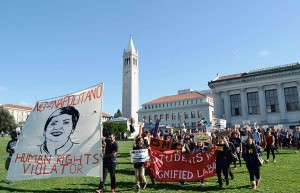
No disrespect, but… Politic for politic, as faculty and student activism over the last decade was generated in response to administrative measures taken to devalue academic budget lines and increase debt loads, administrators formed policies that shored up their powers to police campus speech and launch investigations. Following an introduction of a Respectful Environment policy in 2008, in anticipation of an upcoming political protest on campus in March 2009, the President of UBC circulated a “Respectful Debate” memo warning students and faculty to “pay special attention to the rules that govern our conduct” for speech. Legislation of respect entangles or snares the left and right in the same finely meshed dragnet attenuating civil liberties. This also recalibrates a network of surveillance media and technologies, challenging nearly all protections in the workplace. Some self-identified centrists or voices of reason welcome the new measures, adopting roles of third persons while reporting to administrators that loose lips sink scholar-ships.
In Canada and the US, these new respectful workplace policies, which anticipate or respond to workplace legislation and court decisions, mean that academic freedom and charter or constitutional rights noticeably contract at the campus gates. Watching postsecondary institution by institution adopt similar respectful workplace policies, the Executive Director of the Canadian Association of University Teachers (CAUT), issued a memorandum in late March 2009 advising vigilance: “the test of ‘disrespect’ identified in these policies is for the most part experiential and subjective – notions like ‘feelings of shame’ or ‘embarrassment’ crop up repeatedly.” He subsequently asserted, “a major problem in Canadian universities is not that too many people are asserting their academic freedom, but that too few are.”
Similar policies in the US are compounded by the Supreme Court’s 2006 Garcetti v. Ceballos opinion that “when public employees make statements pursuant to their official duties, the employees are not speaking as citizens for First Amendment purposes, and the Constitution does not insulate their communications from employer discipline,” reinforcing managerial discretion and prerogative. Although academic freedom remains a special concern of free speech rights and was deferred by the Court in Garcetti, legal analysts such as Harvey Gilmore concur that “Garcetti has now become the definitive statement on a public employer’s discretion in managing office operations, and that discretion includes controlling an employee’s speech made in the scope of the employee’s professional capacity.”
Following legislation in four other provinces, on 1 July 2012 new legislation in BC came into effect through an amendment of the mental disorder section of the Workers Compensation Act. The new amendment in Section 5.1 provides for potential compensation if the disorder
(i) is a reaction to one or more traumatic events arising out of and in the course of the worker’s employment, or
(ii) is predominantly caused by a significant work-related stressor, including bullying or harassment, or a cumulative series of significant work-related stressors, arising out of and in the course of the worker’s employment.
For legal preparation for this legislation now common across Canada, universities such as UBC folded a large scope of potential infractions into their respectful workplace policies. What stands as protection for disability or “mental disorder” and against “bullying or harassment” under the law is extended in higher education policy to common modes of academic speech—commentary and criticism—that might be articulated in the wrong tone.
Offices of Human Resources introducing or monitoring respectful workplace policies oversimplify speech by stressing, “it is not what you say but how you say it that counts.” Repeated in HR across higher education and curiously by some administrators, this folksy maxim come respectful workplace policy draws on centuries of etiquette texts. “Rather than seeing public talk occasions as needing politeness or civility, a better norm” Karen Tracy proposes, “is reasonable hostility.” She effectively hashes out parameters for democratic communicative practice and flips this “aphorism on its head, it is not merely how something is said, but what a person says that matters.”
Only certain types of face-attack are legitimate and desirable in local governance situations. ‘Reasonable hostility’ is the name for acts that are. Reasonable hostility involves person-directed attack; it is remarks that imply disrespectful, undesirable things about others. Targets of reasonable hostility will judge speakers uttering those remarks to be rude, disrespectful, unfair, and so on…. A speaker might be cognizant that his or her remarks may have this effect, but their purpose is to express outrage about a wrong. The speaker sees self’s central aim as witnessing a truth or expressing righteous indignation.
Faculty and students are bookended by a reformalization of academic speech on one side and a normalization of administrative equivocation, deception included, on the other. Can voices of critique and voices of liberty speak together, with reasonable hostility, as a voice of truth? Can the left and right speak (together)?
Read More: Petrina, S. & Ross, E. W. (2014). Critical University Studies: Workplace, Milestones, Crossroads, Respect, Truth. Workplace, 23, 62-71.
Comments Off on Reasonable hostility: Academic freedom & speech under threat #highered #edstudies #criticaled #bced #bcpoli #ubc #yteubc
Posted in Academic freedom, Accountability, Administration, Advocacy, BC Education, Censorship, Commentary, Critical University Studies, Ethics, Faculty, Free speech, Legal issues, Organizing, Solidarity, Student Movement, Students, Unions, Working conditions
Tagged Academic freedom, Administration, Ethics, Free speech, Legal issues, Organizing, Students, Working conditions