Categories
Summer Institute for Chinese Studies Librariship

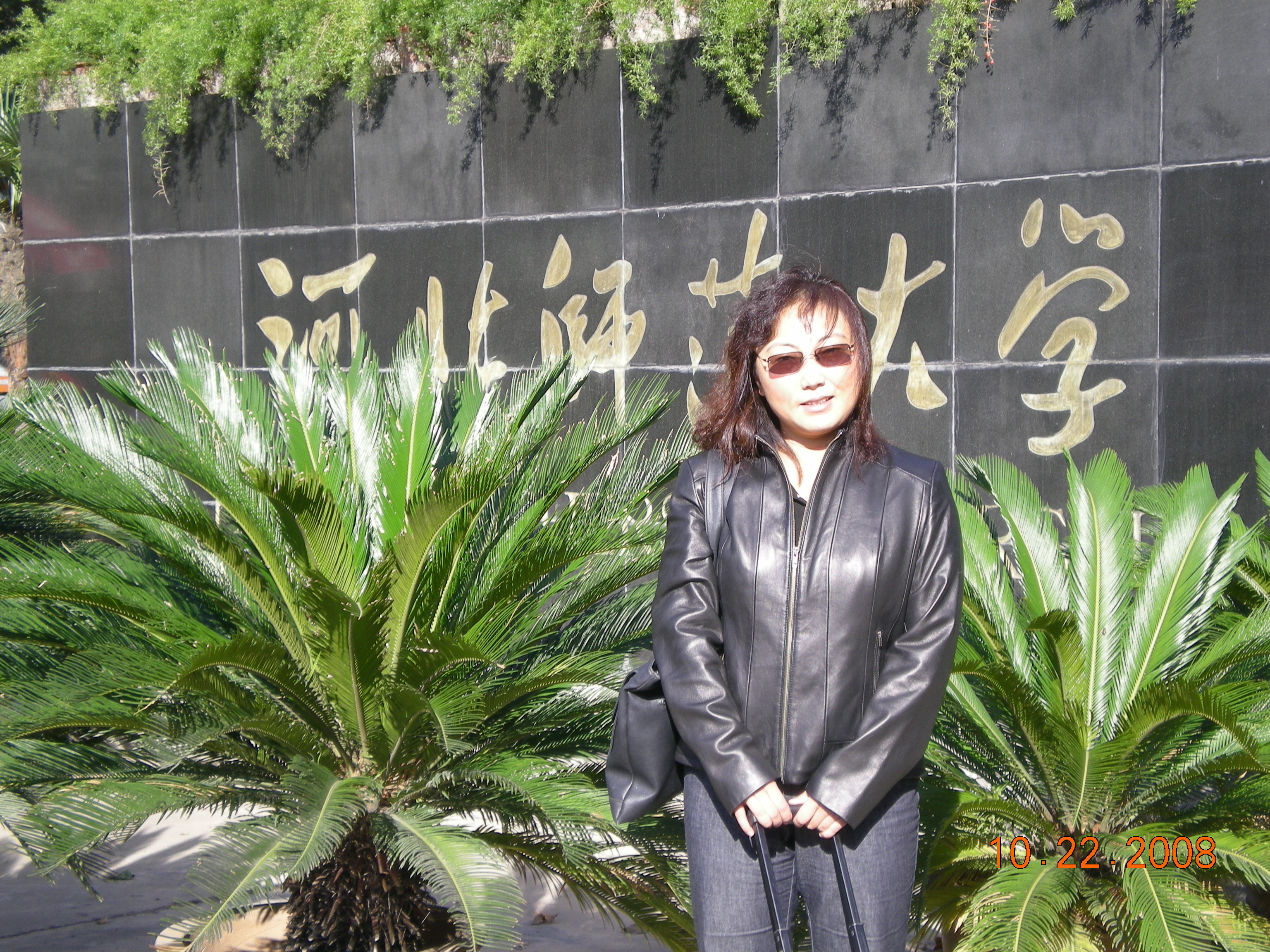
河北师范大学

Picture%20021.jpg

I was invited by the AUL, Shaorong, who was in my class for the Sino-American Librarians Workshop in 2005 at Wuhan U. She was working for Fudan Library then. I enjoyed exchanging emails with her when I prepared for this trip to Beijing. I was suprised by my own reply to her invitation and the trust between us. Kind of relieved when she approached me right before I presented at the Capital Normal U. She told me about her library’s plan for a new building (or learning centre) and subject librarians. Shaorong even bought me round-trip tickets to Shijiazhuang.

石家庄留着我童年的记忆。当年在郊区的大院里无忧无虑地成长,根本不知道有个师大这所名校。突然接到Cathy的电邮,说大连的明德新馆开放。但师大的邀请在先,只好忍痛割舍大连啦。石家庄自然不能与上海和北京比,但是让我感动的是同行们对我演讲的浓厚兴趣。大会场之后是小型的座谈,问题互动效果极佳,反馈回来也对我颇有启发。馆长最后不得不打断大家,我才意识到已经连续讲了三个小时,都是我的日常工作。 我真觉得累极了!到此两周的公事结束了,其中有多少文化和国情的区别,又有多少相见恨晚的新朋好友,不虚此行。

刘绍荣第二天又要回北京开会。听她谈对复旦的怀念和对新馆的憧憬,对燕赵文化古籍的责任,对家庭的付出,我的精神开始放松。

Categories
Summer Institute for Chinese Studies Librariship

Library of Central National University & Wanfang

十月二十一号下午我们来到中央民族大学图书馆。校园的绿草坪上欢跳的喜鹊们让我的精神一振。2003年落成的新馆高耸入云。该馆提醒了我在北美的英文环境中,中国信息服务的种种难处,因为它的一大特色就是少数民族文字的藏书:蒙、藏、维吾尔、哈萨克、柯尔克孜语、朝鲜、彝语等等。出乎我的意料的却是22万册的珍贵古籍,和管理这些宝藏的学姐李婷。两周来的疲劳似乎被学姐的激情介绍赶走了。大家把李婷团团围住,不停地提问,她似乎也被我们的强烈兴趣所感染,从本馆特藏讲到全国的珍本收藏情况。离开的时候大家意犹未尽,无奈为了赶万方的场。下次回京最想登门求教的就是这位学姐,浑身书卷气,见面又很亲热,顿时让我觉得找到组织啦!

万方的年轻人逐个介绍了新产品,人民日报社的电子产品也很棒,只是我的精力有些不济,为Heinrich 博士的翻译也越来越差,会后她提前回饭店休息。她的谢辞和拥抱勾起了大家分别前的感伤。我甚至没有勇气和他们道别。好在明年三月芝加哥会重聚!

Categories
Summer Institute for Chinese Studies Librariship

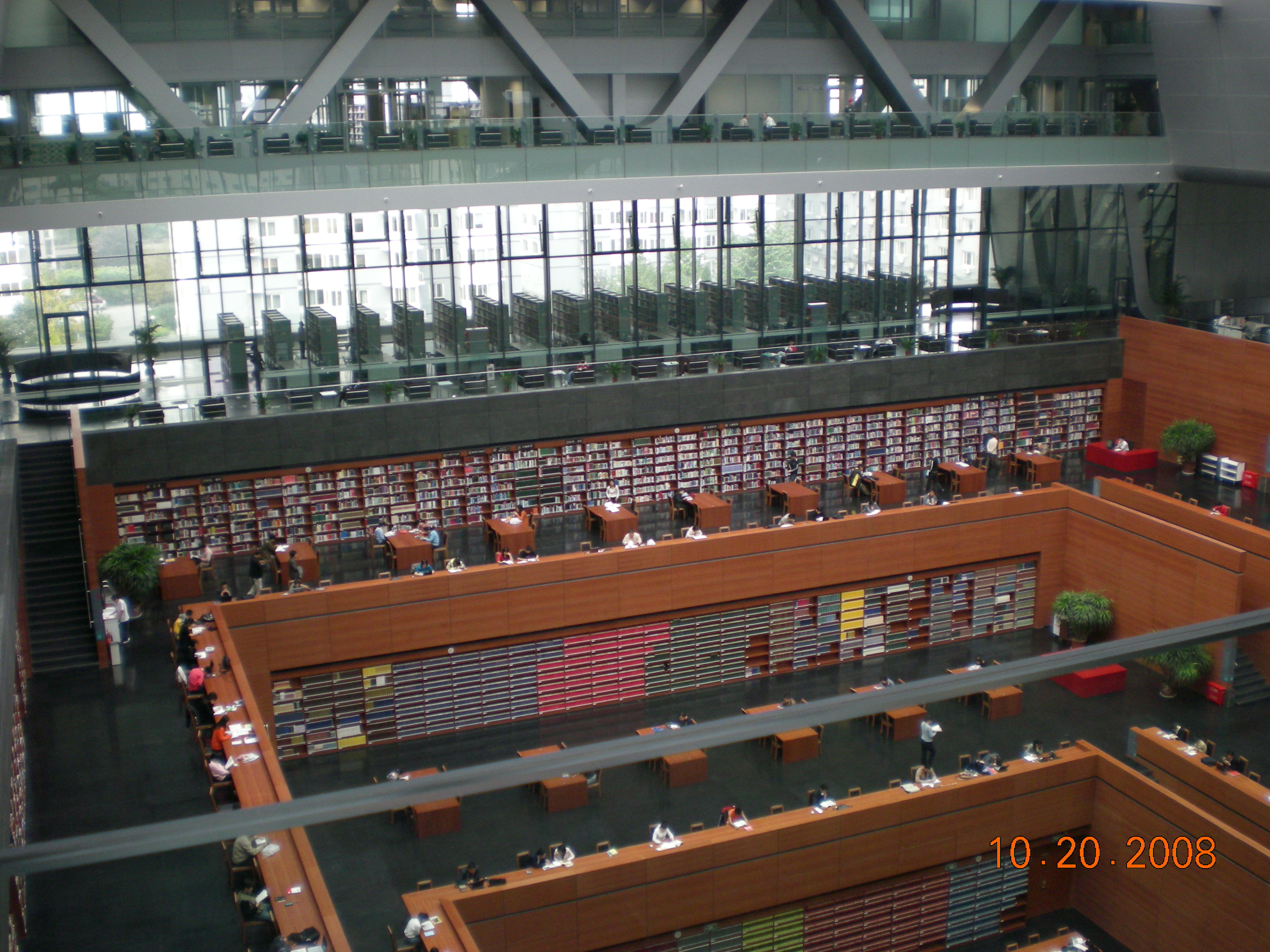
Brand New NLC and World Digital Library Agreement

DSCN0681.JPG
We met Dir. Zhan Furui at the National Library of China on October 21 in its new building, followed by a series of PPT presentations on digital libraries and overseas Chinese study projects. I am glad to learn that Mr. Zhan just signed the World Digital Library agreement at LC.

Categories
Summer Institute for Chinese Studies Librariship

Optimism and Collaboration

Good to be home! and great to be back in sunny Richmond BC! The Institute has been wrapped up on August 2nd with many songs and hugs, although related phone and email messages are following me home.

Tim Jewel used the two words describing the UW library leader, Betsy Wilson. Back to his session on licensing, Tim encouraged us to form e-resource consortia. When Jennifer popped up the similar question, the class was silent. I wonder if we are known as a group of special libraries that are lack of collaboration. Optimism and collaboration set the right tone wrapping up the Summer Institute 2008. We lined up to accept the diploma from Betsy on the stage. It felt just like the UBC official congregation last may, only in small scale. The VIPs’ talk re-examined our profession and looked into the future. Ye Ding’ speech almost brought me to tears.I was thrilled to see Bill and Yen-mei who retired young from UW. I thanked Yen-mei for her Chinese Studies Librarian Lesson 101 before I had the interview for my current job. I thanked Betsy for giving me opportunity talking in front of hundreds of international students about UW libraries in 1992 when I was a newbie myself, which made my very first speech in English in the US. She still remembers for it was the first library orientation for international students at UW. Cathy asked for all of us on how to get support from ULs, Betsy said, “Never complain, just do what you can.”

Besides its purple and yellow color, UW is also red, Red Square, red Gothic buildings. In the past two weeks, paper cutting exhibition in Suzzallo 102, Prof. Gu Xiong’s exhibition in Kane Hall, Ms. Yu Dan’s full-house event, and our Institute, all China related activities added more Chinese color. Betsy was right, “There’s no better place for this institute“.

Categories
Summer Institute for Chinese Studies Librariship

Reunion on Microsoft Campus

Small world! The largest research group of MS is in Beijing, and the most UW school friends work for MS. The headquarter campus visit is like a library school reunion party. When Linda Shaw reminded me our group study back at school, all those gentle smiling faces came to my mind again. Besides profs and co-workers, my kind classmates helped me through the MLS program. They tried their best to make sure I understand all the lectures and discussions, and to guess what the poor Chinese girl struggled to express in English.

I am so happy for Linda who built the way up to the head librarian in Microsoft. Jennifer, as 学妹, Xia as 学姐,luckily work together and hang out together. They all like where I settled, and will drive up soon. Linda’s happy receiving our name list from Zhijia and told me the challenge to hire for Beijing. Intel tried recently.Microsoft employees do read books. They often find books online, then request for print copies. The 12,000/month circulation rate is high. Mr. Dirks from External Research delivered a passionate PPT on applied projects to enhance academic prodctivity by evolving MS scholarly communication offerings.

Categories
Summer Institute for Chinese Studies Librariship

Institutional Repositories & Web Management

Like UBC, UW faculty hasn’t got to buy in. ( Blue Angels just flew by and made the noise. ) Librarians try to help Graduate School on Electronic Theses and Dissertations. Relevant work is being handled by committees and subject librarians.

About 80 web authors across the system, look and feel is handled by the system, although a variety of content management systems are being used, Plone, Drupal, Moddle, Joomla, iSite.
Then Jennifer showed us her Facebook with bunch of Web2.0 integration: RSS Feed (of new Japanese arrivals), Del.icio.us and Flickr and Flickrvision.

Categories
Summer Institute for Chinese Studies Librariship

OpenURL and OAI

OpenURL is transferring the information about an item from the information provider via a Link- Server. OpenURL can embed CrossRef DOI’s, and CrossRef DOI’s can be used to send OpenURL to libraries. This helps publishers and libraries collaborate to optimize the services for the ultimate consumers of their information.

The Open Archives Initiative Protocol for Metadata Harvesting (OAI-PMH) offers a simple technical option for catalogue and repository services to make their metadata available to other services. The OAI framework distinguishes between data providers and service providers. Data providers have metadata that they wish to make available, service provider grabs metadata regularly from data provider, but original full-text sits in the repository.

The basic concept of image and the workflow of scanning is covered by Prof. Chen’s PPT.

Categories
Summer Institute for Chinese Studies Librariship

Fun Story from Aggregators in China

Chinese Medical Association Journal bought by Wanfang created the first ejournal publisher, and traditional publishers started to withdraw from the Big Three and transform to e-publishing. Is this the main reason of missing titles and issues from CNKI?

Categories
Summer Institute for Chinese Studies Librariship

Trends in Chinese Studies

Prof. Madeleine Dong, Professor of History and Chair of the China Studies Program at UW thinks that Chinese historical studies is influenced by Sino-American relationship, not really history itself. Unlike Japan, China was studied as a model of failure. Its starting point is China’s reaction to Western influcence. Social history was developed a great deal in 1980’s with extensive field research. The focus shift from intellectual to social history is based on different primary sources and different locations. After 1989, public space, local elites, religions, government vs. citizens in China have gained attention. City history is one of main fruitful areas in recent Chinese history studies. Tani Barlow’s Colonial Modernity has evolved from and into unique forms throughout Asia. Dong uses Tian Min’s book about Mei Lanfang’s Peking Opera in Shanghai and the US as a sample.
Information technology has brought online searching to the field, especially the early history. Minguo study has been speeding up by e-resources, but still leaves out many subjects, such as, the beginning of 19th century. Of course PRC period is the weakest with limited methods. Scholars are going to the countryside and minority areas, which could be political and national sensitive. Libraries are lack of minority materials. Manchuria studies became an interesting globalized phenomenon, which attract scholars from Japan and Korea. Besides, economic and political studies suffer from lack of reliable resources.

Religious studies need primary resources from China, not only from the European missionaries documents. Why French missionaries in Northeastern China is particular interesting? Some of them went with Kangxi, and made advanced maps. P. Jartoux discovered Ginseng; F.Lafitau started the business between Canada and China. Sino-US Ginseng trade was really started by the French in mid-18 century.

Zhaohui’s question is excellent! How does Prof. Dong consider scholars like herself? comparing with the Western. She thinks Chinese students are familar with Western theories, and they tend to choose Western popular topics.

Dong mentioned the difference between her book on Beijing and Yeh Wenhsin’s Shanghai. She depends on archives and folk traditions in Tianqiao, but sounds like to get stuck with unoffical or folk history. I don’t agree with the criticism on Shanghai studies and doubts about whether or not Shanghai can represent China. I think the boom is resource related, Yeh’s studies not only depend on archives, but also radio show, movies, Tanci, newspapers, etc, wow, already multi-media. Dong agreed and told us her own miserable story with NLC.

Prof. Dong doesn’t encourage us to buy large sets, but interlibrary cooperation.
Categories
Summer Institute for Chinese Studies Librariship

Chinese Digitization

Prof. Joyce Chen shifts her topic to technical side today. Stanford made Guomindang archive into 35 mm microfilm first, microfilm readers can make into digital files. Ming archives with colorful seals should be scanned directly. Workflow includes:

Metadata, digital objects and handle system
Ontology, clustering, etc organized information
Searching, browsing, portal, Web2.0

Digitizing text needs to save the original file first and then convert it to HTML, PDF or RTF, etc; Manuscripts need re-enter or OCR; image if full-text searching is not required. E-books use XML files (OEBPS structure). The format (TIFF, JFIF, GIF) is decided by the usage of preservation, download or just preview. Prof. Chen touches on av digitization technology as well.Deep link between different digital content products are based on OpenURL. It’s not free for DOI, at least $1. Unique identifier is needed at the very beginning, such as the National Cutural Heritage Project names its all artifacts.

Tim Berners-Lee’s semantic web is still a concept. Is Clusty representing this concept? or there should be more possibilities? Yunshan showed me Cuil, which was developed by Google Veteran, really Cool!

Spam prevention powered by Akismet