Categories
English

Narrative Texts

Listed below are selected teacher resources, picture books, and non-fiction related to narrative genre texts.

Teacher Resources Related to Narrative Texts
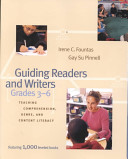
Guiding readers and writers, grades 3-6: Teaching Comprehension, Genre, and Content Literacy

by Irene C. Fountas and Gay Su Pinnell

Grades: 3-6

The authors explore six essential components of a literacy program: breakthrough to literacy, independent reading, guided reading, literature study, teaching for comprehension and word analysis, and the reading and writing connection.
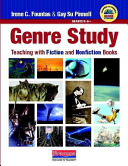
Genre study: teaching with fiction and non-fiction books, grades K-8+

by Irene C. Fountas and Gay Su Pinnell

Grades: K-8

This book uses an inquiry approach to engage students in exploring texts so that they can notice and name the characteristics of each genre and construct a working definition that guides their thinking of reading and writing.
Wordtamer: Activities to inspire creative thinking and learning

by Judy Waite

Grades: K-12

Drawing on the author’s experiences of writing for children, this book considers how teachers and students can incorporate authors’ techniques into their own work to improve creative writing. It provides suggestions on how to set up and run writing lessons and workshops that connect with the school curriculum and engage all student writers. (E-book only)
Narrative, literacy and other skills: Studies in intervention

edited by Edy Veneziano and Ageliki Nicolopoulou

Grades: K-8

This volume brings together research focusing on two key issues in the development of children’s narrative skills: the issue of the interrelatedness between narrative skills and literacy, language and socio-cognitive development; and the issue of how early interactional experiences, particular contextual settings and specific intervention procedures, can help children promote their narrative skills. (E-book only)
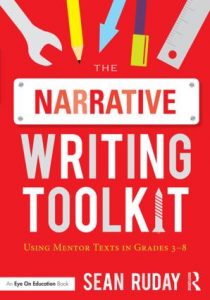
The narrative writing toolkit: Using mentor texts in grades 3-8

by Sean Ruday

Grades: 3-8

The author demonstrates how to teach elementary and middle school students to analyze the qualities of effective narratives through mentor texts, and then help them think of those qualities as tools to improve their own writing. The end goal is to make narrative writing an interactive, student-driven exercise in which students pursue their own writing projects. (E-book only)
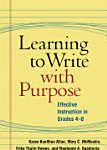
Learning to write with purpose: Effective instruction in grades 4-8

by Karen Kuelthau Allan et al.

Grades: 4-8

Communicating ideas and information is what makes writing meaningful, yet many students write without considering the aims of their writing or the needs of their readers. This book shares techniques to promote the skills and strategies need to write and revise effectively in a range of genres, including persuasive, expository and procedural writing; narratives; and poetry.
Using picture books to teach narrative writing: Engaging mini-lessons and activities to teach students about key story elements

by Naomi Laker

Grades: 1-3

This book shows how students can learn how to write personal narratives, using picture books as models. After being immersed in read-alouds that focus on key story elements—character, plot, setting, movement through time, and change—students create their own story time lines, write promise sentences, stretch their stories, and more.
100 writing lessons: Narrative, descriptive, expository, persuasive

by Tara McCarthy

Grades: 4-8

This collection of quick writing lessons and activities will help teachers to find exactly what they need for teaching writing, whether it’s a lesson on using exact words, writing an essay, developing a plot, or organizing a report. The author shares dozens of ideas for teaching students the persuasive, narrative, descriptive, and expository writing skills they need.
Narrative writing: Learning a new model for teaching

by George Hillocks Jr.

Grades: 9-12

This book demonstrates how focusing classroom activities on producing content, rather than form, boosts students’ engagement and makes them active learners. The author shows how “at-risk” kids’ competencies increase significantly as they are taught how to complete important writing tasks such as incorporating detail and figurative language, creating dialogue, expressing inner thoughts, portraying people and action, and more.

Picture Books Demonstrating Narrative
Shin-chi’s canoe

written by Nicola I. Campbell, illustrated by Kim LaFave

Forced to use only people’s English names and not speak to his siblings at school, Shin-chi holds fast to the canoe given to him by his father, hopeful that things will then improve for his family and the people he loves. (Also available in French.)
The harmonica

written by Tony Johnston, illustrated by Ron Mazellan

Categories
English

Poetry

Listed below are selected teacher resources, picture books, poetry for older readers, and non-fiction related to poetry.

Teacher Resources

Learning to write with purpose: Effective instruction in grades 4-8

by Karen Kuelthau Allan et al.

Grades: 4-8

Communicating ideas and information is what makes writing meaningful, yet many students write without considering the aims of their writing or the needs of their readers. This book shares techniques to promote the skills and strategies need to write and revise effectively in a range of genres, including persuasive, expository and procedural writing; narratives; and poetry.

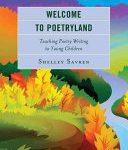
Welcome to Poetryland: Teaching poetry writing to young children

by Shelly Savren

Grades: K-6

The author begins each chapter in this book with a student quote and an original poem, followed by stories of working with that particular group. She provides 38 lesson plans, complete with introductions of poetic concepts, model poems by professionals, open-ended writing assignments, methods for sharing and critiquing, and one or two student poems. Designed for use in a classroom, this book also features 23 additional poetry workshop ideas.

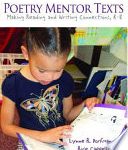
Poetry mentor texts: Making reading and writing connections, K-8

by Lynne R. Dorfman and Rose Cappelli

Grades: K-8

This book explores a variety of poetic forms, including poems that inspire response, list poems, acrostic poems, persona poems, and poems for two voices. Each of these poetic forms has its own chapter featuring five poems with applications for both reading and writing classrooms. Reading connections present skills and strategies to help students build fluency, vocabulary, comprehension, phonemic awareness, and phonics. Writing connections help students discover their own voices and grow as poets and wordsmiths.

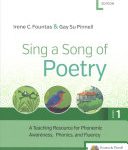
Sing a song of poetry: A teaching resource for phonemic awareness, phonics, and fluency, Grade 2

by Irene C. Fountas and Gay Su Pinnell

Grades: 2

The 225 poems in this book immerse students in rich, rhythmical language, providing age appropriate opportunities to enjoy language through shared reading, stimulate oral language development, connect words, and much more.

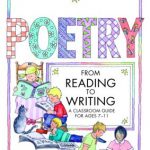
Poetry – From reading to writing: A classroom guide for ages 7-11

by Robert Hull

Grades: 2-6

The author uses poems from a range of authors to show how creative readings of poems can spark a child’s imagination and lead to original writing. Students are encouraged to write different forms of poetry, including rhyming and non-rhyming poems, haiku, free verse, narrative poems, and more. (E-book only)

Teaching poetry: Reading and responding to poetry in the secondary classroom

by Amanda Naylor and Audrey B. Wood

Grades: 9-12

This guide helps teachers support pupils as they access, understand, discuss and enjoy classic and contemporary poetry. The authors provide an introduction to the major ideas and theory about teaching poetry, cover the key genres and periods through both well-known and less-well-known poems, and illustrate good practice for every approach covered through case studies of theory and ideas in action in the classroom. (E-book only)

The poetry experience: Choosing and using poetry in the classroom

by Sheree Fitch and Larry Swartz

Grades: K-12

This book explores all aspects of poetry — from guidelines and an overview of poetic forms to the Top Ten lists of various poetry favorites. Handy reproducible masters are also provided which include a poetry timetable, ten questions to ask about any poem, an observation checklist for teachers, and a personal poetry inventory for students. The authors – poets themselves – focus on both reading and writing poetry, and on experiencing poetry both on the page and read aloud.

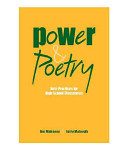
Power & poetry: Best practices for high school classrooms

by Jim Mahoney and Jerry Matovcik

Grades: 9-12

The authors discard the scary parts of teaching poems – the symbolism and the technical language – and instead focus on poetry as a natural expression of individual curiosity, emotion, and observation. The book includes ideas for weaving poetry into lesson planning, including instructional suggestions for helping students understand poems and generate content through journaling; studying and writing poems intertextually; and creating prompts that engage student poets.

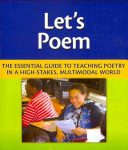
Let’s poem: The essential guide to teaching poetry in a high-stakes, multimodal world

by Mark Dressman

Grades: 7-12

This guide presents multiple approaches to teaching poetry at the middle and high school levels. The author explores how to preserve the fun of poetry while also developing critical writing and analysis skills, how to introduce students to the basic formal elements of classic and contemporary poetry, and how to expand their repertoires through the use of digital technology and the Internet.

Picture Books

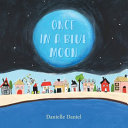
Once in a blue moon

by Danielle Daniel

Each of these short poems describes an experience that turns an ordinary day into a special one, like seeing a double rainbow or a shooting star, or even just a family of ducks waddling across the road.

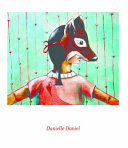
Sometimes I feel like a fox

by Danielle Daniel

In this introduction to the Anishinaabe tradition of totem animals, young children explain why they identify with different creatures such as a deer, beaver or moose. Illustrations show the children wearing masks representing their chosen animal, while the few lines of text on each page work as a series of simple poems throughout the book. Also available in French.

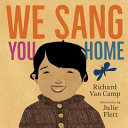
We sang you home,

written by Richard van Camp, illustrated by Julie Flett

In this lyrical board book, gentle rhythmic text captures the wonder new parents feel as they welcome baby into the world, in a celebration of the bond between parent and child.

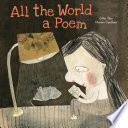
All the world a poem

written by Gilles Tibo, illustrated by Manon Gauthier, translated by Erin Woods

In this book, poems bloom in fields, fly on the wings of birds, and float on the foam of the sea. They are written in the dark of night, in the light of happiness, and in the warmth of the writer’s heart. Rhymed or unrhymed, regular or irregular, the verses bring not just poems but the very concept of poetry to the level of a child, making them accessible to all.

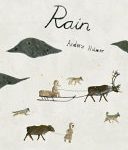
Rain

by Anders Holmer

This haiku collection describes a series of short vignettes, each of them taking place in a different kind of rain, from thunderstorms to falling flower petals. The poems–some serious, some gently humorous–depict scenes from all over the globe: a horse struggling to plow a field, a father changing a tire while his children play, and two friends making up after a fight.

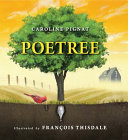
Poetree

written by Caroline Pignat, illustrated by François Thisdale

The poem is both about the yearly cycle in the life of a tree and an intriguing poetic concoction. The initial letters of each line in each stanza spell out a word that pertains to that tree’s life cycle – it’s a kids’ acrostic.

The lost words: A spell book

written by Robert Macfarlane, illustrated by Jackie Morris

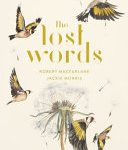
In 2007, when a new edition of the Oxford Junior Dictionary was published, a sharp-eyed reader soon noticed that around forty common words concerning nature had been dropped. The list of included acorn, dandelion, fern, heron, otter, and willow. The authors set out to make a “spell book” that conjure back twenty of these lost words, and the beings they name, through poems.

Noisy poems for a busy day

written by Robert Heidbreder, illustrated by Lori Joy Smith

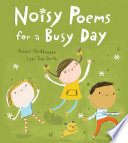
From sunup to bedtime, this collection of 30 lively short poems follows young children throughout their day, celebrating all of the seemingly small, but potentially special, moments they experience. Each poem is easy to remember, rhythmic and action-filled, and reflects a child’s-eye view of both the activity and how it makes them feel.

This is a poem that heals fish

written by Jean-Pierre Siméon, illustrated by Olivier Tallec, trranslated by Claudia Zoe Bedrick

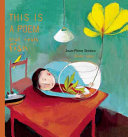
After his mother, hurrying to her tuba lesson, tells him that a poem will cure his pet fish’s boredom, a little boy tries to find out what a poem is by asking friends, neighbors, and other members of his family. Playful, funny, and lyrical, this is a wonderful read-aloud book for children to share, discuss and be inspired by.

Poetry for Older Readers

For every one

by Jason Reynolds

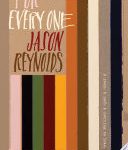
Originally performed at the Kennedy Center for the unveiling of the Martin Luther King Jr. Memorial, this stirring and inspirational poem is Jason Reynolds’s rallying cry to the dreamers of the world. It is for every one. For every one person. For every one dream. But especially for every one kid. The kids who dream of being better than they are – of doing more than they almost dare to dream.

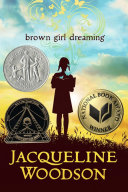
Brown girl dreaming

by Jacqueline Woodson

In vivid poems, Woodson shares what it was like to grow up as an African American in the 1960s and 1970s, living with the remnants of Jim Crow and her growing awareness of the Civil Rights movement. Woodson’s eloquent poetry also reflects the joy of finding her voice through writing stories, despite the fact that she struggled with reading as a child.

Voices in the air: Poems for listeners

by Naomi Shihab Nye

The nearly 100 poems here were written by Naomi Shihab Nye in honour of the artists, writers, poets, historical figures, and ordinary people from past and present who have inspired her. Full of words of encouragement, solace, and hope, this collection offers a message of peace and empathy. Includes short informational bios about the influential figures behind each poem, and an introduction by the poet.

Whispers of mermaids and wonderful things: Children’s poetry and verse from Atlantic Canada

edited by Sheree Fitch and Anne Hunt, illustrated by Lloyd Fitzgerald

Spanning centuries of work from Milton Acorn to Kathleen Winter, and with a broad thematic scope–from soft lullabies to silly, jiggly lyrics, poignant meditations on nature, loss, and love–over 100 poems from Atlantic Canada are sure to delight and young readers everywhere.

The crossover

by Kwame Alexander

14-year-old twins Josh and Jordan Bell are basketball stars, but their dad’s failing health is taking a toll on their family. Josh relates the highs and lows of his family’s journey in a series of connected poems.

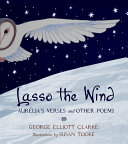
Lasso the wind: Aurélia’s verses and other poems

written by George Elliott Clarke, illustrated by Susan Tooke

This is is the first collection of children’s poetry by renowned Canadian poet and playwright George Elliott Clarke, the former Parliamentary Poet Laureate. By turns absurd, witty, playful, and profound, Clarke’s poems speak to the vivid wonder, the bright joys, and the secret pains of growing up in this world.

Voices visible: The BCTELA student writing journal, by various authors

These volumes collect poems from young writers from around British Columbia.

Non-Fiction

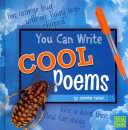
You can write cool poems

by Jennifer Fandel

Grades: 1-3

Through examples and exercises, this book shows how young writers can make readers smile, give them goosebumps or the giggles, or even make them cry, all through poetry.

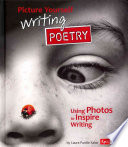
Picture yourself writing poetry: Using photos to inspire writing

by Laura Purdie Salas

Grades: 3-6

Poetry is more than rhyming words on a page. A poem is crafted by carefully selecting each word and rhythm. But how does a poet get started? Finding inspiration is as easy as looking at a picture.

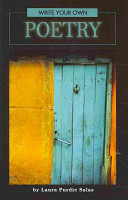
Write your own poetry

by Laura Purdie Salas

Grades: 4-7

You can write about anything in poetry. Whether you want to write poems that make people laugh out loud, gasp in surprise, or see things in a new way, this book is for you. Conquer the blank page and express your thoughts, feelings, and observations through poetry.


Finding More Resources

To find more resources in this area, try the following:

  • Search using the General tab on the UBC Library website to look for material in all UBC Library branches.
  • Search using “Search Education Resources” box in the left hand bar on the Education Library website to limit your results to materials in the Education Library.
  • Use specific search terms to narrow your results, such as “poetry–authorship”, “poetry–study and teaching”, “English language — composition and exercises”, “creative writing”, or “children’s poetry”.
  • To find lesson plans, include “lesson plans”, “lesson planning”, or “activity programs” in your search terms.

For more help with searching, please visit the Library Service Desk or e-mail ed.lib@ubc.ca.

Spam prevention powered by Akismet