Categories
Applied Design Skills and Technology

Technology Education

Listed below are selected teacher resources, picture books, and non-fiction related to technology education.

Teacher Resources
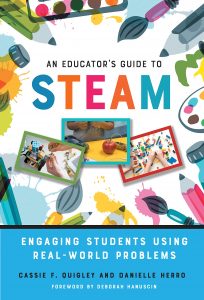
An educator’s guide to STEAM: Engaging students using real-world problems

by Cassie F. Quigley and Danielle Herro

Grades: K-8

A comprehensive look at the difference between STEM and STEAM, and the value of arts integration alongside science, technology, engineering, and math. Includes sections on conceptualizing STEAM, developing STEAM classrooms, assessing STEAM learning, how to make STEAM relevant to students, as well as specific strategies and classroom examples to utilize.
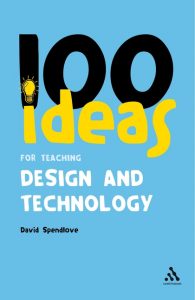
100 ideas for teaching design and technology

by David Spendlove

Grades: K-12.

This book provides practical ideas to implement, but also encourages teachers to consider the place of design and technology education in schools and society today. For more in the Continuum one hundreds series, click here.
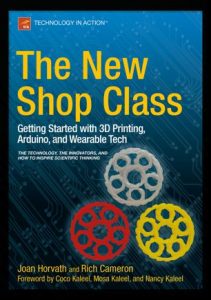
The new shop class: Getting started with 3D printing, Arduino, and wearable tech

by Joan Horvath and Rich Cameron

Grades: K-12

This book explores the connection between making, hacking, science, and engineering, and the benefits of hands-on technology instruction. Covers topics such as 3D printing, drones, cosplay, female makers and scientists, circuits and programming, open source, makerspaces, and more. eBook only.
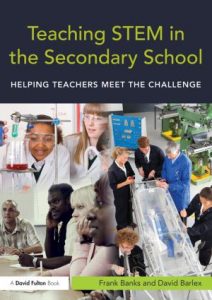
Grades: 8-12

How can we reach across subjects to create STEM curriculum? What’s the value of STEM in today’s world? How can we reach all students with STEM? These are some of the questions being explored in this text, which takes a practical approach to exploring the necessity of STEM and how to effectively teach it. Includes a specific chapter on “teaching design & technology in the light of STEM”. eBook only.

Picture Books
Rosie Revere, engineer

written by Andrea Beaty, illustrated by David Roberts

Rosie seems quiet during the day, but at night she’s a brilliant inventor of gizmos and gadgets. When her great-great-aunt Rose comes for a visit and mentions her one unfinished goal—to fly—Rosie sets to work building a contraption to make her aunt’s dream come true. When her contraption only hovers for a moment and then crashes, Rosie deems the invention a failure – but was it really? See also, Rosie Revere’s Big Project Book for Bold Engineers.
Inuksiutiit [Inuit tools]

by Inhabit Media Inc.

This counting book showcases the tools that are essential to life in the Arctic, including sleds, kayaks, the ulu, and a stone cooking lamp. Book contains Inuktitut and English.
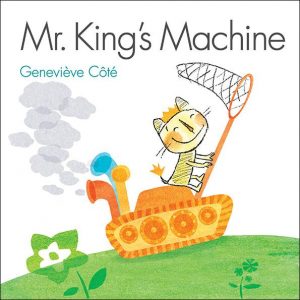
Mr. King’s machine

by Geneviève Côté

Mr. Kings loves collecting pretty things and building machines. So, one day he decides to build a Caterpillar-Catcher. Mr. King doesn’t realize the machine is filling up the air with smoke and his friends aren’t happy about it. This picture book introduces students to design, invention, and the need to consider the impact of our creations.
Whose tools are these?: A look at tools workers use–big, sharp, and smooth

written by Sharon Katz Cooper, illustrated by Amy Bailey Muehlenhardt

Explores the tools that workers use, whether big, sharp, or smooth, to get the job done!

Non-Fiction
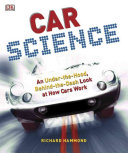
Car science

by Richard Hammond

Grades: 2-6

This book is divided into four sections which explore the invention of vehicles, how modern vehicles work, the physics of vehicles, and what the future of vehicles might look like. This book blends science, design, and mechanics, appealing to a wide range of students.
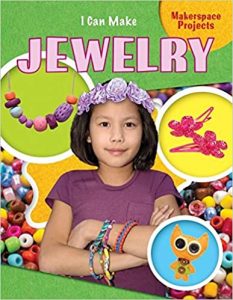
I can make jewelry

by Emily Reid

Grades: 3-6

Provides step-by-step instructions to make various kinds of jewelry, including necklaces, bracelets, and headbands. For more in the Makerspace projects series, click here.
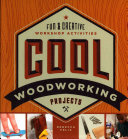
Cool woodworking projects: Fun & creative workshop activities

by Rebecca Felix

Grades: 3-6.

This book offers a basic introduction to woodworking for kids, including safety considerations, materials needed, and fun project ideas like a mini skateboard. Each activity includes step-by-step instructions and photographs. See also Maker Projects for Kids who Love Woodworking.
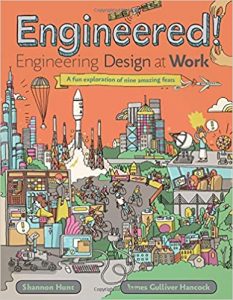
Engineered!: Engineering design at work

written by Shannon Hunt, illustrated by James Gulliver Hancock

Grades: 3-7

Using real-life examples from different fields of engineering, such as civil, mechanical, and environmental, this book introduces students to the engineering design process and the skills it takes to be a great engineer. See also, the Be an Engineer! Designing to solve problems series.
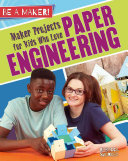
Be a maker! series

by various authors

Grades: 4-6

This series has 15 books on various making-related topics, including robotics, paper engineering, graphic design, woodworking, and more.
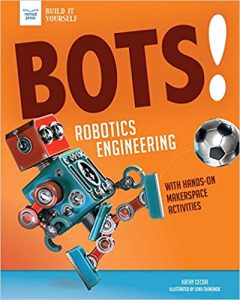
Bots!: Robotic engineering with hands-on makerspace activities

written by Kathy Ceceri, illustrated by Lena Chandhok

Grades: 4-6

This book offers a variety of hands-on activities, most of which can be done with materials found around the classroom or home, that encourage students to invent and explore. Also provides a look at interesting aspects of robots and technology, such as robots throughout history and the ethical implications of artificial intelligence. See also Robotics Engineering and Our Automated World.
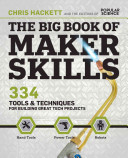
The big book of maker skills: Tools & techniques for building great tech projects

by Chris Hackett and the editors of Popular Science

Grades: 10-12

This tip-packed guide will help students and teachers take do-it-yourself projects to the next level: from basic wood- and metalworking skills to plugged-in fun with power tools, and from cutting-edge electronics play to 3-D printing wizardry.

Make: magazine 

Grades: 11-12

A magazine all about making and makers. Each issue includes project ideas with instructions on topics such as robots, drones, 3D printing, craft, and more based around a theme such as climate change or space.


Finding More Resources

To find more resources in this area, try the following:

  • Search using the General tab on the UBC Library website to look for material in all UBC Library branches.
  • Search using “Search Education Resources” box in the left hand bar on the Education Library website to limit your results to materials in the Education Library.
  • Use specific search terms to narrow your results, such as “Engineering–Juvenile literature”, “Woodwork–Juvenile literature”, “Technology–Study and teaching”.
  • To find lesson plans, include “lesson plans”, “lesson planning”, or “activity programs” in your search terms.

For more help with searching, please visit the Library Service Desk or e-mail ed.lib@ubc.ca.

Categories
Applied Design Skills and Technology

Information and Communications Technology

Listed below are selected teacher resources, picture books, and non-fiction related to information and communications technology.

Teacher Resources

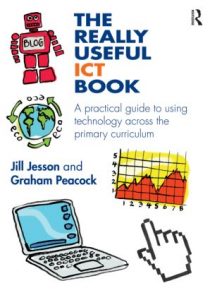
The really useful ICT book: A practical guide to using technology across the primary curriculum

by Jill Jesson and Graham Peacock

Grades: K-6

This book provides an easy to follow guide for both using and teaching ICT in the classroom. Emphasizes the use of ICT as a way to encourage teacher and student creativity to enhance existing lessons and develop new ones. Available in print and as an eBook. For more in the Really useful series, click here.

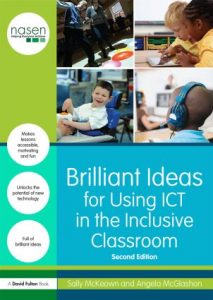
Brilliant ideas for using ICT in the inclusive classroom

by Sally McKeown and Angela McGlashon

Grades: K-7.

This book illustrates how ICT can be used to engage all learners and create inclusive classrooms. Takes a practical approach, using 50 case studies to illustrate how to incorporate technology into the classroom in a meaningful way for all students. eBook only.

Improving students’ web use and information literacy: A guide for teachers and teacher librarians

by James E. Herring

Grades: K-12

This book focuses on how teachers and teacher librarians can assist students in becoming literate and critical web users. Includes chapters on using technology in the classroom, finding and evaluating information on the web, information literacy, the future of ICT in schools, and more. eBook only.

Creative coding: lessons and strategies to teach computer science across the 6-8 curriculum

by Josh Caldwell

Grades: 6-8

Many students now start middle school with some foundational knowledge of computer science and coding. This new set of creative skills empowers students to express themselves in powerful ways, but students still need opportunities and support to develop and hone those skills. This book helps classroom teachers in several core content areas develop activities and projects to encourage computational thinking and coding skills, and to build bridges between those skills and practice.

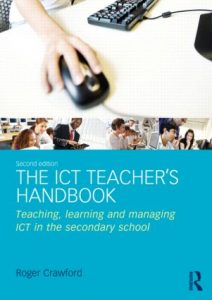
Grades: 8-12

This book provides useful information on utilizing and teaching ICT both in the classroom and school-wide. Includes discussions of assessment in ICT, specific hardware and software, teaching in a Virtual Learning Environment, incorporating social networking and mobile technologies in the classroom, and more. eBook only.

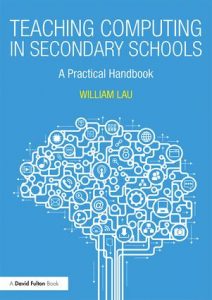
Teaching computing in secondary schools: A practical handbook

by William Lau

Grades: 8-12

A comprehensive guide to teaching computing in secondary schools which emphasizes the benefits of hands on learning opportunities that allow students to think, build, and create. Includes content on lesson planning, developing assessment tools, meeting the needs of students with diverse needs and abilities, and how to develop students’ computational thinking. eBook only.

Picture Books

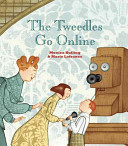
The Tweedles go online,

written by Monica Kulling, illustrated by Marie Lafrance

Some of the Tweedles are excited to get a telephone, or as they call it “go online”, but others are weary. This tale grapples with the challenges of changing technologies, and their positives and negatives, in a fun and all too familiar way.

Non-Fiction

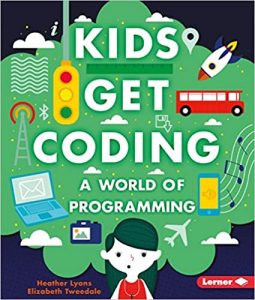
A world of programming

written by Heather Lyons and Elizabeth Tweedale, illustrated by Alex Westgate

Grades: K-3

Learn about programming and computer basics, including types of information, file size, and bits using real-world examples and fun illustrations. Also includes activities for both online and offline to solidify learning. For more in the Kids get coding series, click here.

Communication inventions: The talk of the town

by Alexander Offord

Grades 3-6

This book provides a timeline of communication and the inventions that have shifted the ways in which we communicate. Discusses both digital and analog forms of communication, including the telegraph, text messages, mail, email, and more. For more in the Inventions that shaped the modern world series, click here.

Innovations in communication

by Cynthia O’Brien

Grades: 4-6

Covers changes in communication technologies throughout history, including profiles of the inventors, scientists, and engineers who pioneered these technologies. Also encourages students to consider how communication technologies may change going forward and how they can contribute to these changes.

How to code in 10 easy lessons

by Sean McManus

Grades: 6-8

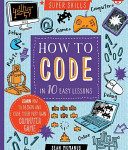
This book starts by asking the question, “What is coding?” and shows what coding skills are. Then readers get to see how to use Scratch coding software to write simple code, use loops, and debug, to create a webpage, and even make a computer game. Includes easy-to-follow instructions and step-by-step graphics.

Digital world

by Glen Downey

Grades: 6-9

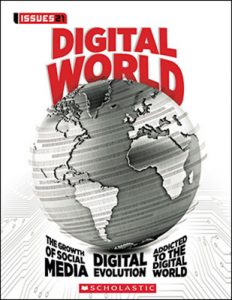
Part of the Issues 21 series, which examines contemporary issues in society in order to develop students’ skills in the areas of critical thinking, creativity, communication, collaboration, ethical citizenship and activism. Digital World explores how technology has changed the way we communicate and interact with others. Includes 6 student books and a teacher’s guide.

Python for teenagers: Learn to program like a superhero!

by James R. Payne

Grades: 7-12

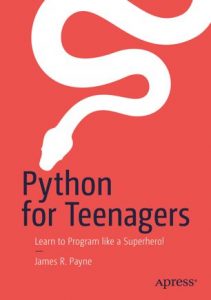
This books is specifically designed for teens, introducing them to Python with examples and activities that are age and interest appropriate. Covers Python basics and teaches teens how to build websites, fix bugs and errors, and create their own games. eBook only.


Finding More Resources

To find more resources in this area, try the following:

  • Search using the General tab on the UBC Library website to look for material in all UBC Library branches.
  • Search using “Search Education Resources” box in the left hand bar on the Education Library website to limit your results to materials in the Education Library.
  • Use specific search terms to narrow your results, such as “Educational technology”, “Information technology–Study and teaching”, “Computers–Juvenile literature”.
  • To find lesson plans, include “lesson plans”, “lesson planning”, or “activity programs” in your search terms.

For more help with searching, please visit the Library Service Desk or e-mail ed.lib@ubc.ca.
Categories
Applied Design Skills and Technology

Computational Thinking

Listed below are selected teacher resources, picture books, fiction, and non-fiction related to computational thinking.

Teacher Resources

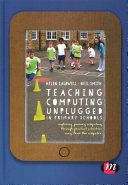
Teaching computing unplugged in primary schools: Exploring primary computing through practical activities away from the computer

by Helen Caldwell and Neil Smith

Grades: K-6

Computing is about more than computers. Children can learn to analyze problems and computational terms and apply computational thinking to solve problems without turning on a computer. This book provides lesson examples and everyday activities to help teachers and students explore computing concepts such as abstraction, logic, algorithms and data representation.

Teaching computational thinking in primary education

edited by Huseyin Ozcinar, Gary Wong, and H. Tugba Ozturk 

Grades: K-6

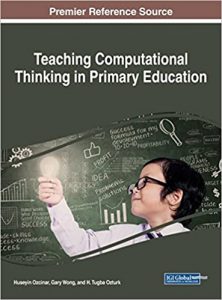
This book explores the latest research on teaching computational thinking in primary education, emphasizing the importance of building computational thinking skills early on. Includes discussions of multifaceted skillsets, coding, programming methods, and digital games. eBook only.

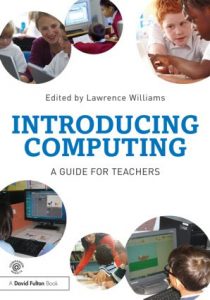
Introducing computing: A guide for teachers

edited by Lawrence Williams

Grades: K-7

This book offers practical information, advice, and examples to help non-experts introduce computing as early as age 5. Includes key concepts of computing and computational thinking, ways to integrate computing across different disciplines, links to the curriculum, and how to use technology to develop higher thinking skills. eBook only.

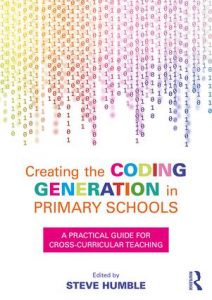
Creating the coding generation in primary schools: A practical guide for cross-curricular teaching

edited by Steve Humble

Grades: K-7

A comprehensive overview of coding in the elementary class which provides the what, why, and how of coding in the classroom. Includes sections on what is coding?, teaching computational thinking, gender bias in coding, teaching with Minecraft, and more. eBook only.

Creative coding: lessons and strategies to teach computer science across the 6-8 curriculum

by Josh Caldwell

Grades: 6-8

Many students now start middle school with some foundational knowledge of computer science and coding. This new set of creative skills empowers students to express themselves in powerful ways, but students still need opportunities and support to develop and hone those skills. This book helps classroom teachers in several core content areas develop activities and projects to encourage computational thinking and coding skills, and to build bridges between those skills and practice.

Teaching computing in secondary schools: A practical handbook
by William Lau

Grades: 8-12

A comprehensive guide to teaching computing in secondary schools which emphasizes the benefits of hands on learning opportunities that allow students to think, build, and create. Includes content on lesson planning, developing assessment tools, meeting the needs of students with diverse needs and abilities, and how to develop students’ computational thinking. eBook only.

Picture Books

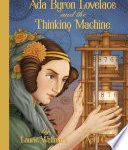
Ada Byron Lovelace and the thinking machine

written by Laurie Wallmark, illustrated by April Chu

Ada Lovelace, the daughter of the famous romantic poet Lord Byron, develops her creativity through science and math. When she meets Charles Babbage, the inventor of the first mechanical computer, Ada understands the machine better than anyone else and writes the world’s first computer program in order to demonstrate its capabilities.

Fiction

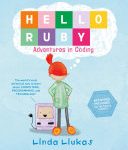
Hello Ruby: Adventures in coding

by Linda Liukas

Grades: K-3

Meet Ruby, a small girl with a huge imagination, and the determination to solve any puzzle. As Ruby stomps around her world making new friends, including the Wise Snow Leopard, the Friendly Foxes, and the Messy Robots, kids are introduced to the fundamentals of computational thinking, like how to break big problems into small ones, create step-by-step plans, and look for patterns. These basic concepts at the core of coding and programming are reinforced through exercises and activities that encourage exploration and creativity.

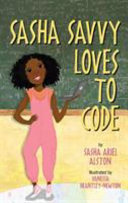
Sasha Savvy loves to code

written by Sasha Ariel Alston, illustrated by Vanessa Brantley-Newton

Grades: 2-5

Sasha isn’t looking forward to Coding Camp, she’s worried it will be boring and doesn’t think she’s very good with computers. Sasha’s mom, who is a Software Developer, helps her build her confidence and prepares Sasha to tackle any bugs that may arise. This book will help students build confidence related to computational thinking and serve as a reminder that everyone can code.

Non-Fiction

How coding works

by Ben Hubbard

Grades: K-3

Learn about some of the key areas of coding, including what programs, codes, and algorithms are; what coding is like; how coding languages are different, and how one becomes a programmer.

Coding, bugs, and fixes

written by Heather Lyons and Elizabeth Tweedale, illustrated by Alex Westgate.

Grades: K-3

How do computers know what you want them to do? They receive instructions called code with the specific steps needed to perform a task. Learn how to create codes, what happens when instructions are out of order, and how mistakes are fixed. For more in the Kids get coding series, click here.

A world of programming

written by Heather Lyons and Elizabeth Tweedale, illustrated by Alex Westgate

Grades: K-3

Learn about programming and computer basics, including types of information, file size, and bits using real-world examples and fun illustrations. Also includes activities for both online and offline to solidify learning. For more in the Kids get coding series, click here.

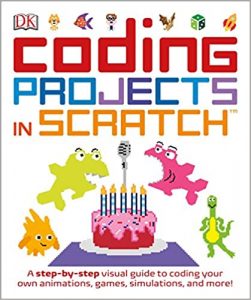
Coding projects in Scratch

by Jon Woodcock

Grades: 3-7

This book provides step-by-step instructions for students to create their own artwork, animations, sounds, and more in Scratch, a free and fun programming language. Introduces students to the basics of coding while promoting problem solving and collaboration. See also, Coding Games in Scratch and Coding in Scratch: Projects Workbook.

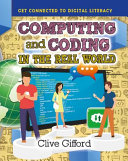
Computing and coding in the real world

by Clive Gifford

Grades: 4-6

This book uses everyday objects, such as scanners at the grocery store or street lights, to show students how computing and coding is used in the real world. Also helps to acquaint students with the rules of coding which they can apply in future projects. For more in the Get connected to digital literacy series, click here.

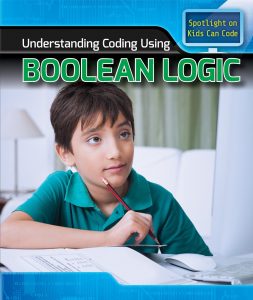
Understanding coding using Boolean logic

by Patricia Harris

Grades: 4-7

George Boole, for whom Boolean logic is named, developed the idea of expressing any idea as a mathematical or logical statement. Today, Boolean logic is foundational to computer programs and computer hardware, but it is also important in our everyday thinking. This guide includes an overview of logic gates and a review of differences between computer logic and human logic. For more in the Spotlight on kids can code series, click here.

How to code in 10 easy lessons

by Sean McManus

Grades: 6-8

This book starts by asking the question, “What is coding?” and shows what coding skills are. Then readers get to see how to use Scratch coding software to write simple code, use loops, and debug, to create a webpage, and even make a computer game. Includes easy-to-follow instructions and step-by-step graphics.

Python for teenagers: Learn to program like a superhero!
by James R. Payne

Grades: 7-12

This books is specifically designed for teens, introducing them to Python with examples and activities that are age and interest appropriate. Covers Python basics and teaches teens how to build websites, fix bugs and errors, and create their own games. eBook only.


Finding More Resources

To find more resources in this area, try the following:

  • Search using the General tab on the UBC Library website to look for material in all UBC Library branches.
  • Search using “Search Education Resources” box in the left hand bar on the Education Library website to limit your results to materials in the Education Library.
  • Use specific search terms to narrow your results, such as “Computer programming — Juvenile literature”, “Computer science–Study and teaching”.
  • To find lesson plans, include “lesson plans”, “lesson planning”, or “activity programs” in your search terms.

For more help with searching, please visit the Library Service Desk or e-mail ed.lib@ubc.ca.

Spam prevention powered by Akismet