Listed below are selected resources for teachers, picture books, fiction, and non-fiction related to neurodiversity.
Teacher Resources
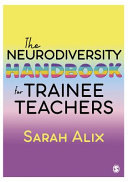 The neurodiversity handbook for trainee teachers
by Sarah Alix
Considering a neurodivergent world is vital in society today, and even more so in the classroom. This book will support your knowledge and development as a trainee teacher so you can better understand the complexities of working with neurodivergent pupils. Starting with a model of difference rather than deficit, this book will guide trainee teachers to understand neurodiversity within the classroom, providing strategies which aim to support their students.
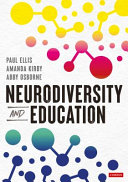
by Paul Ellis, Amanda Kirby, Abby Osborne
Human brains are diverse: each one of us has a unique set of connections between billions of nerve cells. Neurodiversity is about us all. It is not an exclusive club or one condition, difficulty, difference, or disorder. Understanding more about the concept of neurodiversity helps us consider, respect and appreciate these differences. It helps us see potential rather than deficit. This clear and practical book, which is useful for all aspects of learning and education discusses how an emphasis on neurodiverse ′ability′ can cultivate a better world.
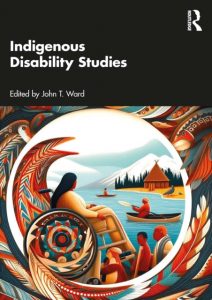
edited by John T. Ward
This book provides a comprehensive approach to the perspectives, lived experiences, and socio-cultural beliefs of Indigenous scholars regarding disabilities through a distinctions-based approach. It contains chapters pertaining directly to neurodiversity, such as “Neurodiversity from an Indigenous perspective.”
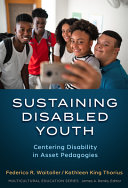 Sustaining disabled youth: centering disability in asset pedagogies
edited by Frederico R. Waitoller, Kathleen A. King Thorius ; series foreword by James A. Banks
This book brings together a collection of work that situates disability as a key aspect of children and youth’s cultural identity construction. It explores how disability intersects with other markers of difference to create unique cultural repertoires to be valued, sustained, and utilized for learning. The book contains chapters pertaining directly to neurodiversity, such as “Smooth and Striated Spaces: Autistic (Ill)legibility as a Deterritorializing Force.”
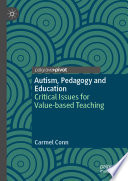 Autism, Pedagogy and Education: Critical Issues for Value-based Teaching
by Carmell Conn
This book discusses critical issues concerning autism and education, and what constitutes effective pedagogy for this group of learners. Autism is a high-profile area within the discipline of special education, and the issue of how to teach autistic learners remains a contested one: recent theorising has questioned a techno-rationalist approach that places the burden of change on the autistic pupil. The author explores the values that underpin educational approaches within existing pedagogical practice: while these approaches have their individual merits and shortcomings, this book introduces and expands upon a strengths-based approach.
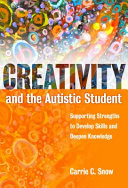
by Carrie C. Snow
Using creativity as a lens to explore the meaningful learning experiences of autistic youth, Carrie Snow evaluates and challenges common conceptions about autism and offers a strengths-based demonstration of the many ways that autistic people express creativity and imagination. She then identifies key qualities of education that are commonly cited by autistic people to be significant to the development of fulfilling lives, healthy identities, promising careers and vocations, and creativity in general.
 DisCrit : disability studies and critical race theory in education
edited by David J. Connor, Beth A. Ferri, and Subini A. Annamma
This book brings together major figures in Disability Studies in Education (DSE) and Critical Race Theory (CRT) to explore some of today’s most important issues in education. Scholars examine the achievement/opportunity gaps from both historical and contemporary perspectives, as well as the overrepresentation of minority students in special education and the school-to-prison pipeline.
Picture Books
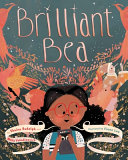
Niveau scolaire (Grade level): Preschool-3
Despite her struggles with reading and writing, Beatrice is a natural and brilliant storyteller. With the help of a kind-hearted teacher, Beatrice uses an old-fashioned tape recorder so she can speak her words and then play them back, as a technique for learning in whole new way. With her new approach, Beatrice is able to show her classmates who she really has been all along. This book is set in EasyReading, a dyslexia-friendly font.
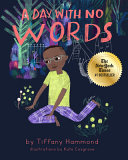
Niveau scolaire (Grade level): Preschool-3
Young children will learn what life can look like for an autistic child who uses nonverbal communication by following a mother and child on a day where they use a tablet to communicate with others.
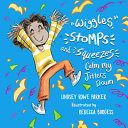 Wiggles, stomps, and squeezes calm my jitters down
Niveau scolaire (Grade level): Preschool-2
This is a story about sensory differences and how some children experience their world, told from a child’s perspective. The vibration in her feet when she runs, the tap-tap-tap of her fork on the table at mealtime, the trickle of cool water running over her hands—these are the things that calm her jitters down. This book is for anyone who has ever felt the need for a wiggle, stomp, or squeeze!
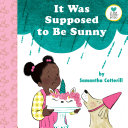
Niveau scolaire (Grade level): Preschool-1
Laila’s birthday party, perfectly planned with her autism in mind, goes awry due to a change in weather and an accident with her cake, but with the help of her mom and her service dog, Laila knows she can handle this.
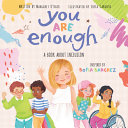 You are enough: a book about inclusion
Niveau scolaire (Grade level): Preschool-3
It can be hard to be different — whether because of how you look, where you live, or what you can or can’t do. But wouldn’t it be boring if we were all the same? Being different is great! Being different is what makes you YOU. This inclusive and empowering picture book from Sofia Sanchez — an 11-year-old model and actress with Down syndrome — reminds readers how important it is to embrace your differences, be confident, and be proud of who you are.
Fiction
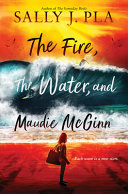 The fire, the water, and Maudie McGinn
Niveau scolaire (Grade level): 3-8
Follows thirteen-year-old neurodivergent Maudie during an eventful summer in California with her father, where she struggles with whether to share a terrible secret about life with her mom and stepdad.
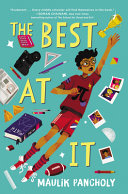
Niveau scolaire (Grade level): 4-9
Rahul Kapoor is heading into seventh grade in a small town in Indiana. The start of middle school is making him feel increasingly anxious, so his favorite person in the whole world, his grandfather Bhai, gives him some well-meaning advice: Find one thing you’re really good at. And become the BEST at it. Those four little words sear themselves into Rahul’s brain. While he’s not quite sure what that special thing is, he is convinced that once he finds it, bullies like Brent Mason will stop torturing him at school. And he won’t be worried about staring too long at his classmate Justin Emery. With his best friend, Chelsea, by his side, Rahul is ready to crush this challenge. … But what if he discovers he isn’t the best at anything?

Niveau scolaire (Grade level): 7-12
Fifteen-year-old Jessie, a quirky loner obsessed with the nineties, is diagnosed as autistic just weeks before starting high school. Determined to make a fresh start and keep her diagnosis a secret, Jessie creates a list of goals that range from acquiring two distinct eyebrows to getting a magical first kiss and landing a spot in the school play. Within the halls of Holy Trinity High, she finds a world where things are no longer black and white and quickly learns that living in color is much more fun. But Jessie gets more than she bargained for when two very different boys steal her heart, forcing her to go off-script.
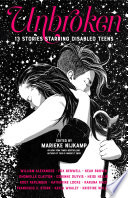 Unbroken: 13 stories starring disabled teens
Niveau scolaire (Grade level): 7-12
This anthology explores disability in fictional tales told from the viewpoint of disabled characters, written by disabled creators. With stories in various genres about first loves, friendship, war, travel, and more, Unbroken will offer today’s teen readers a glimpse into the lives of disabled people in the past, present, and future.
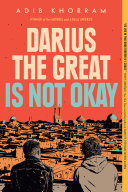
Niveau scolaire (Grade level): 6-12
Darius Kellner speaks better Klingon than Farsi, and he knows more about Hobbit social cues than Persian ones. He’s a Fractional Persian–half, his mom’s side–and his first-ever trip to Iran is about to change his life. Darius has never really fit in at home, and he’s sure things are going to be the same in Iran. His clinical depression doesn’t exactly help matters, and trying to explain his medication to his grandparents only makes things harder. Then Darius meets Sohrab, the boy next door, and everything changes. Soon, they’re spending their days together, playing soccer, eating faludeh, and talking for hours on a secret rooftop overlooking the city’s skyline. Sohrab calls him Darioush–the original Persian version of his name–and Darius has never felt more like himself than he does now that he’s Darioush to Sohrab.

Niveau scolaire (Grade level): 6-12
On a perfect summer day, wrapped in her girlfriend’s arms, Sadie feels safe. She’s been struggling to manage her chronic anxiety, and is hopeful better times are ahead. When her girlfriend reveals some unexpected news, and the two witness a violent incident of police brutality, Sadie’s whole world is upended in an instant. Not feeling safe anywhere, Sadie retreats inside her self. When her therapist diagnoses Sadie with agoraphobia, she starts on a path of healing. Her best friend, Evan, updates her on the protests taking place in their city. How can you show up for your community when you can’t even leave your house?
Non-Fiction
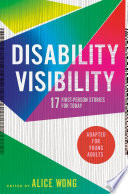 Disability visibility: 17 first-person stories for today: adapted for young adults
Niveau scolaire (Grade level): 6-12
The seventeen eye-opening essays in Disability Visibility, all written by disabled people, offer keen insight into the complex and rich disability experience, examining life’s ableism and inequality, its challenges and losses, and celebrating its wisdom, passion, and joy. The accounts in this collection ask readers to think about disabled people not as individuals who need to be “fixed,” but as members of a community with its own history, culture, and movements. They offer diverse perspectives that speak to past, present, and future generations.
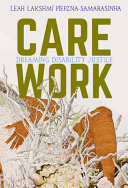 Care work: dreaming disability justice
Niveau scolaire (Grade level): Adult
In her latest book of essays, Leah writes passionately and personally about disability justice, on subject such as the creation of care webs, collective access, and radically accessible spaces. She also imparts her own survivor skills and wisdom based on her years of activist work, empowering the disabled–in particular, those in queer and/or BIPOC communities–and granting them the necessary tools by which they can imagine a future where no one is left behind.
Trouver d’autres ressources
Voici quelques conseils pour trouver d’autres ressources dans ce domaine :
- Sur la page principale du site de la bibliothèque de l’UBC, utilisez la boîte de recherche générale pour rechercher des matériaux à travers toutes les succursales de la bibliothèque de l’UBC.
- Pour limiter vos résultats aux matériels disponibles à la Bibliothèque de l’éducation, visitez le site web de la Bibliothèque de l’éducation et effectuez une recherche à l’aide de la case “Search Education Resources” située dans la bande à gauche de l’écran.
- Remarque : les ressources étant principalement cataloguées en anglais, les termes ci-dessous donnent généralement plus de résultats que les recherches effectuées en français. Vous pouvez filtrer votre liste de résultats par langue dans la barre latérale de gauche.
- Utilisez des termes de recherche spécifiques, tels que
- “neurodiversity”, “neurodivergent”, “disability justice”, “disability”, “accessibility”, or “neurodiversity AND juvenile literature”
- Pour trouver des plans de cours, incluez “lesson plans”, “lesson planning”, or “activity programs” dans vos termes de recherche.
Finding More Resources
To find more resources in this area, try the following:
- Search using the General tab on the UBC Library website to look for material in all UBC Library branches.
- Search using “Search Education Resources” box in the left hand bar on the Education Library website to limit your results to physical materials in the Education Library.
- Use specific search terms, such as
- “neurodiversity”, “neurodivergent”, “disability justice”, “disability”, “accessibility”, or “neurodiversity AND juvenile literature”
- You may also choose to narrow your search with more specific terms, such as “dyslexia AND picture books” or “bipolar disorder AND juvenile literature”
- To find lesson plans, include “lesson plans”, “lesson planning”, or “activity programs” in your search terms.
Header image: Neurodiversity Symbol, by MissLunaRose12, CC0, via Wikimedia Commons