Listed below are selected teacher resources and non-fiction related to incorporating principles of truth and reconciliation with Indigenous peoples into the classroom.
Vous trouverez ci-dessous une sélection de ressources pour enseignants et d’ouvrages non romanesques relatifs à l’intégration des principes de vérité et de réconciliation avec les peuples autochtones dans la salle de classe.
Teacher Resources (Ressources pour les enseignants)
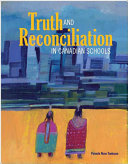 Truth and reconciliation in Canadian schools,
by Pamela Rose Toulouse
Niveau scolaire (Grade level): Kindergarten – 12 (K-12)
This book provides current information, personal insights, authentic resources, interactive strategies and lesson plans that support Indigenous and non-Indigenous learners in the classroom. Toulouse presents a culturally relevant and holistic approach that facilitates relationship building and promotes ways to engage in reconciliation activities.
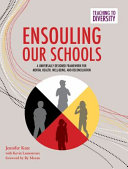
by Jennifer Katz, Kevin Lamoureux & Ry Moran
Niveau scolaire (Grade level): Kindergarten – 12 (K-12)
The authors share methods of creating schools that engender mental, spiritual, and emotional health while developing intellectual thought and critical analysis, as well as Indigenous approaches to mental and spiritual health that benefit all students and address the Truth and Reconciliation Commission Calls to Action.
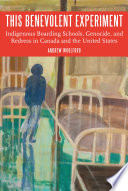
by Andrew Woolford
Niveau scolaire (Grade level): Kindergarten – 12 (K-12)
This Benevolent Experiment offers a multilayered, comparative analysis of Indigenous boarding schools in the United States and Canada. Because of differing historical, political, and structural influences, the two countries have arrived at two very different responses to the harms caused by assimilative education.
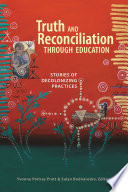 Truth and reconciliation through education: stories of decolonizing practices,
by Yvonne Poitras Pratt and Sulyn Bodnaresko
Niveau scolaire (Grade level): Kindergarten – 12 (K-12)
Educators have a special role in furthering truth and reconciliation in education, but many struggle to understand exactly what that means and how to accomplish it. There is no step-by-step guide to getting it right. Educators can only meaningfully accomplish truth and reconciliation in education by seeking out truth and reconciliation through education: an ongoing process of amplifying Indigenous voices and experiences, allowing oneself to be changed by them, and being guided by this learning both personally and professionally.
by the BC Ministry of Education
Niveau scolaire (Grade level): Préscolaire – Kindergarten (PreK-K)
A brief report on the BC Ministry of Education’s efforts to implement several calls to action regarding truth and reconciliation in education. (Online only)
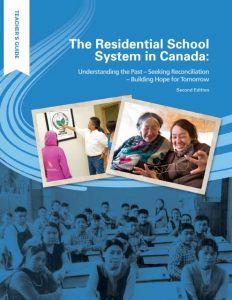
by Government of Northwest Territories, Government of Nunavut, and the Legacy of Hope Foundation
Niveau scolaire (Grade level): 10
A teacher guide with twelve activities, each of which helps students examine and develop an understanding of aspects of the history and legacy of the residential school system and participate in the journey towards reconciliation.
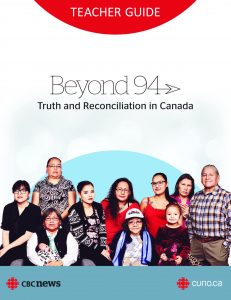
by the CBC Indigenous Unit
Niveau scolaire (Grade level): 9 – 12
CBC’s Beyond 94 is an immersive, interactive and comprehensive website that monitors the progress of the Truth and Reconciliation Commission’s 94 Calls to Action. Beyond 94 highlights concrete suggestions, resources and examples of what reconciliation is, and how Indigenous and non‐Indigenous Canadians can work together on the path of reconciliation. Includes short documentaries available through Curio and a comprehensive teacher’s guide.
Non-Fiction
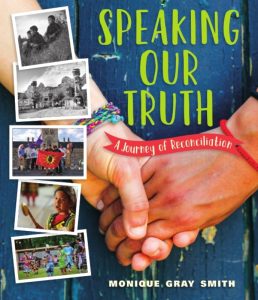 Speaking our truth: A journey of reconciliation,
by Monique Gray Smith
Niveau scolaire (Grade level): 4 – 8
Guided by acclaimed Indigenous author Monique Gray Smith, readers will learn about the lives of residential school survivors and listen to allies who are putting the findings of the Truth and Reconciliation Commission into action. (Teacher’s guide also available.)
by Rita Joe; art by Pauline Young
Niveau scolaire (Grade level): PreK-12
An often quoted piece in this era of truth and reconciliation, Joe’s powerful words explore and celebrate the survival of Mi’kmaw culture and language despite its attempted eradication. A companion book to the simultaneously published I’m Finding My Talk by Rebecca Thomas, I Lost My Talk is a necessary reminder of a dark chapter in Canada’s history, a powerful reading experience, and an effective teaching tool for young readers of all cultures and backgrounds.
by Simon Rose
Niveau scolaire (Grade level): 4 – 6
Explores the impact of residential schools on the Indigenous people of Canada as well as efforts by the Canadian government to mend the damaged relationships caused by these schools. Part of the Indigenous Life in Canada series.
by the National Centre for Truth and Reconciliation
Niveau scolaire (Grade level): 9 – 12
Explores a range of areas studied by the TRC, including the history of residential schools, the students’ experiences, the schools’ legacy, and reconciliation and calls to action. (E-book only)
 The Witness Blanket: truth, art and reconciliation,
by Carey Newman and Kirstie Hudson
Niveau scolaire (Grade level): 8 – 12
The Blanket is a living work of art–a collection of hundreds of objects from those schools. It includes everything from photos, bricks, hockey skates, graduation certificates, dolls and piano keys to braids of hair. Behind every piece is a story. And behind every story is a residential school Survivor, including Carey’s father. This book is a collection of truths about what happened at those schools, but it’s also a beacon of hope and a step on the journey toward reconciliation.
 Truth and indignation: Canada’s Truth and Reconciliation Commission on Indian residential schools,
by Ronald Niezen
Niveau scolaire (Grade level): 10 – 12
Using interviews with survivors and oblate priests and nuns, as well as testimonies, texts, and visual materials produced by the Commission, Niezen raises some very important questions: What makes Canada’s TRC different than others around the world? What kinds of narratives are emerging and what do they mean for reconciliation, justice, and conceptions of traumatic memory? And what happens to the ultimate goal of reconciliation when a large part of the testimony–that of nuns, priests, and government officials–is scarcely evident?
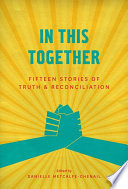 In this together: Fifteen stories of truth & reconciliation,
edited by Danielle Metcalfe-Chenail
Niveau scolaire (Grade level): 10 – 12
Reflective and personal pieces from both Indigenous and non-Indigenous journalists, writers, academics, visual artists, filmmakers, city planners, and lawyers, all of whom share their personal light-bulb moments regarding when and how they grappled with the harsh reality of colonization in Canada, and its harmful legacy. This book acts as a call for all Canadians to make reconciliation and decolonization a priority. (eBook edition)
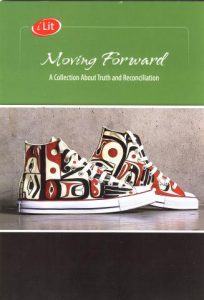 Moving Forward: A collection about truth and reconciliation,
by Tracey MacDonald
Niveau scolaire (Grade level): 10 – 12
This collection includes short stories, poems, essays, and art created by First Nations, Inuit, and Métis authors and artists on the topics of truth and reconciliation as they relate to residential schools. Each selection includes before, during, and after questions and activities that support English Language Arts grades 10 to 12 curricula from across the country. (Teacher’s Resource also available)
Original reports from the Truth and Reconciliation Commission of Canada
Niveau scolaire (Grade level): 10 – 12
A summary of the final report of the Truth and Reconciliation Commission (TRC) of Canada. Includes a summary of the commission’s activities, a detailed account of the history and legacy of residential schools, the challenges of reconciliation, and 94 calls to action.
 Survivors speak: A report of the Truth and Reconciliation Commission of Canada,
de Cecilia John
Niveau scolaire (Grade level): 10 – 12
As part of its work, the Truth and Reconciliation Commission of Canada provided former students—the Survivors of residential schools—with an opportunity to provide a statement on their experience of residential schooling. This is a volume of excerpts from those statements that was published as part of the Commission’s final report.
Trouver d’autres ressources
Voici quelques conseils pour trouver d’autres ressources dans ce domaine :
- Sur la page principale du site de la bibliothèque de l’UBC, utilisez la boîte de recherche générale pour rechercher des matériaux à travers toutes les succursales de la bibliothèque de l’UBC.
- Pour limiter vos résultats aux matériels disponibles à la Bibliothèque de l’éducation, visitez le site web de la Bibliothèque de l’éducation et effectuez une recherche à l’aide de la case “Search Education Resources” située dans la bande à gauche de l’écran.
- Remarque : les ressources étant principalement cataloguées en anglais, les termes ci-dessous donnent généralement plus de résultats que les recherches effectuées en français. Vous pouvez filtrer votre liste de résultats par langue dans la barre latérale de gauche.
- Utilisez des termes de recherche spécifiques, tels que
- “Truth and Reconciliation Commission of Canada”, “Truth commissions — Canada”, “Indigenous peoples AND Canada AND Residential schools”, “Native peoples AND Canada AND Residential schools”, ou “Indigenous peoples AND Education AND Canada”
- Pour trouver des plans de cours, incluez “lesson plans”, “lesson planning”, or “activity programs” dans vos termes de recherche.
Finding More Resources
To find more resources in this area, try the following:
- Search using the General tab on the UBC Library website to look for material in all UBC Library branches.
- Search using “Search Education Resources” box in the left hand bar on the Education Library website to limit your results to physical materials in the Education Library.
- Use specific search terms, such as
- “Truth and Reconciliation Commission of Canada”, “Truth commissions — Canada”, “Indigenous peoples AND Canada AND Residential schools”, “Native peoples AND Canada AND Residential schools”, or “Indigenous peoples AND Education AND Canada”
- To find lesson plans, include “lesson plans”, “lesson planning”, or “activity programs” in your search terms.