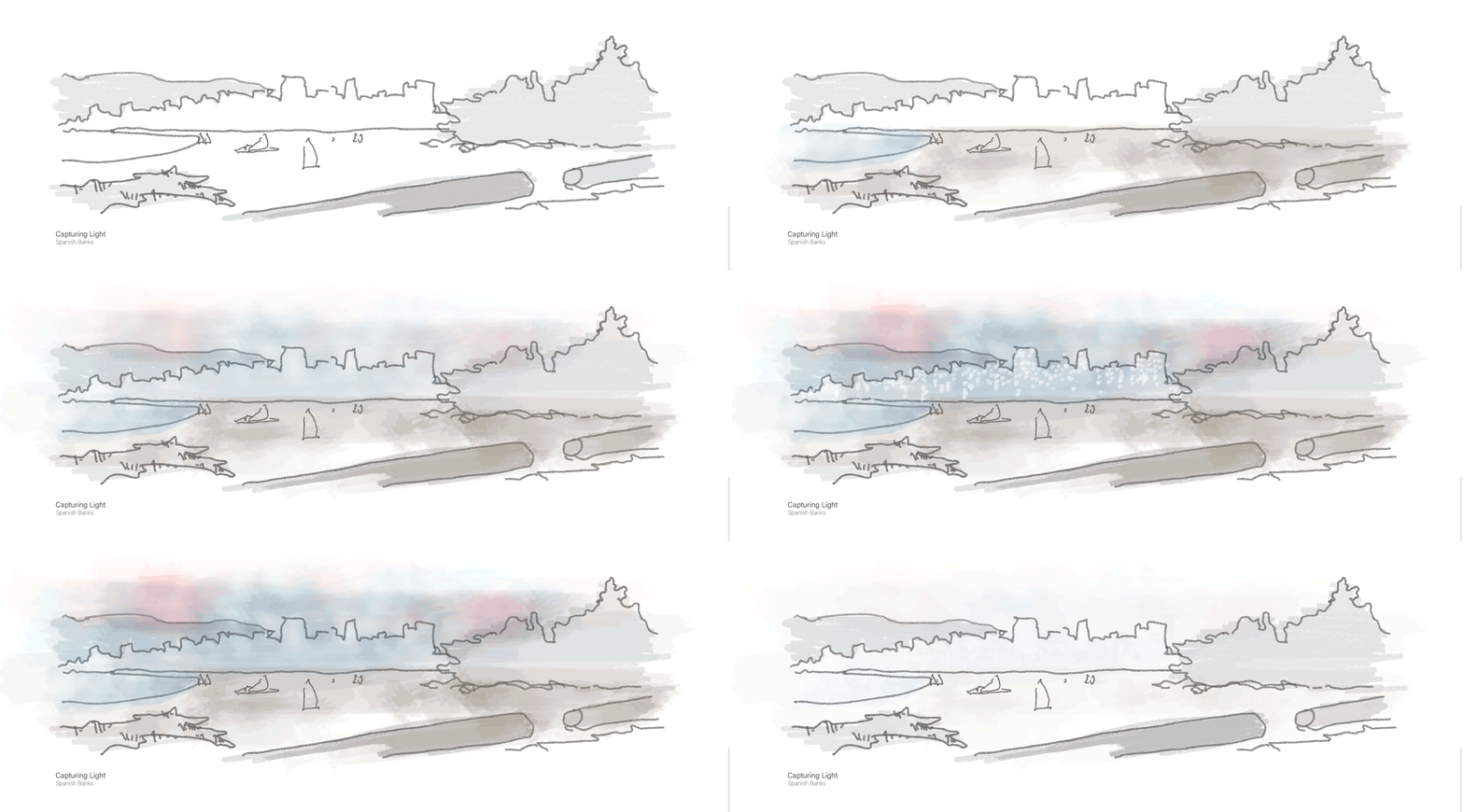





Watercolour 11 x 8.5
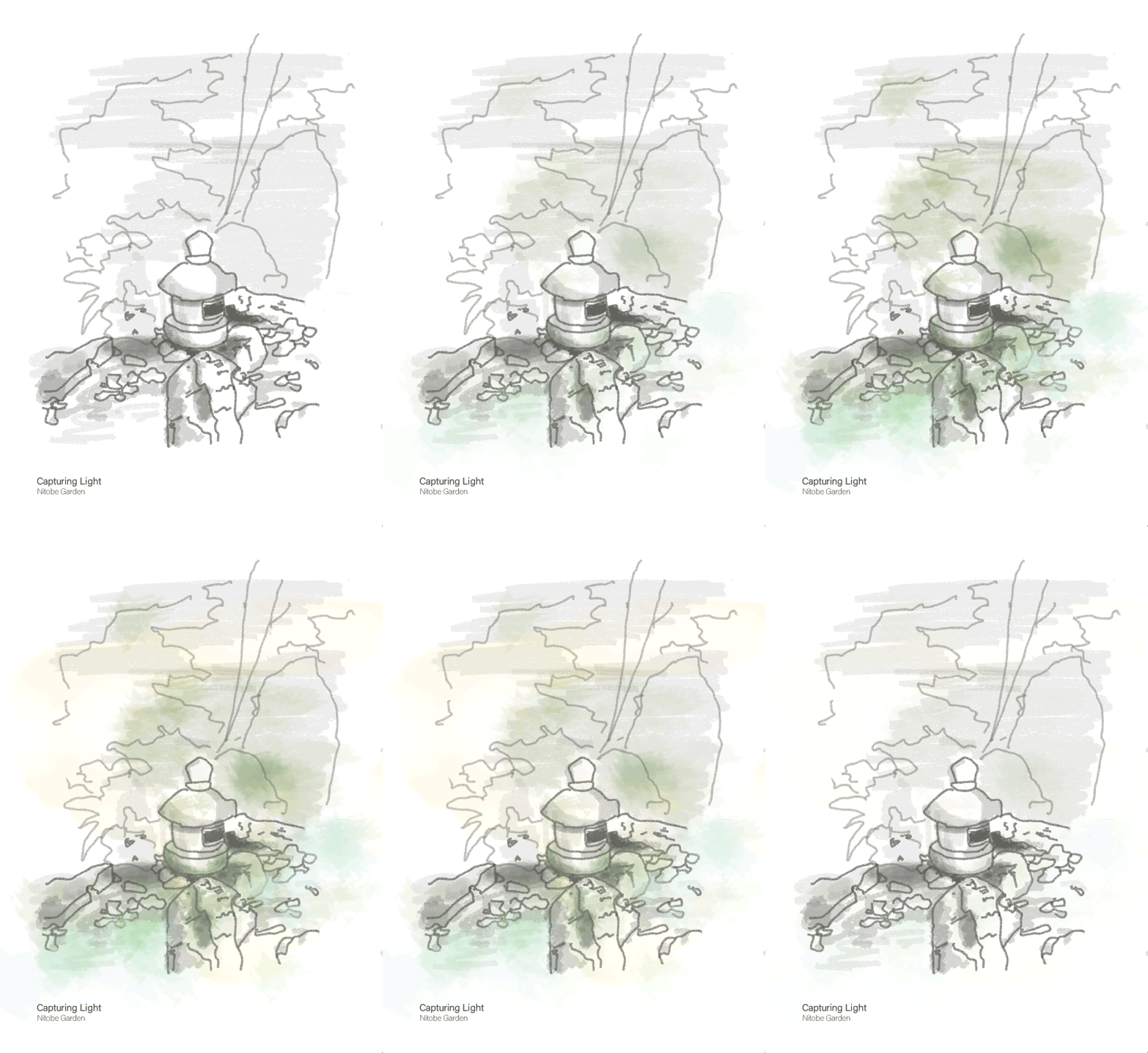
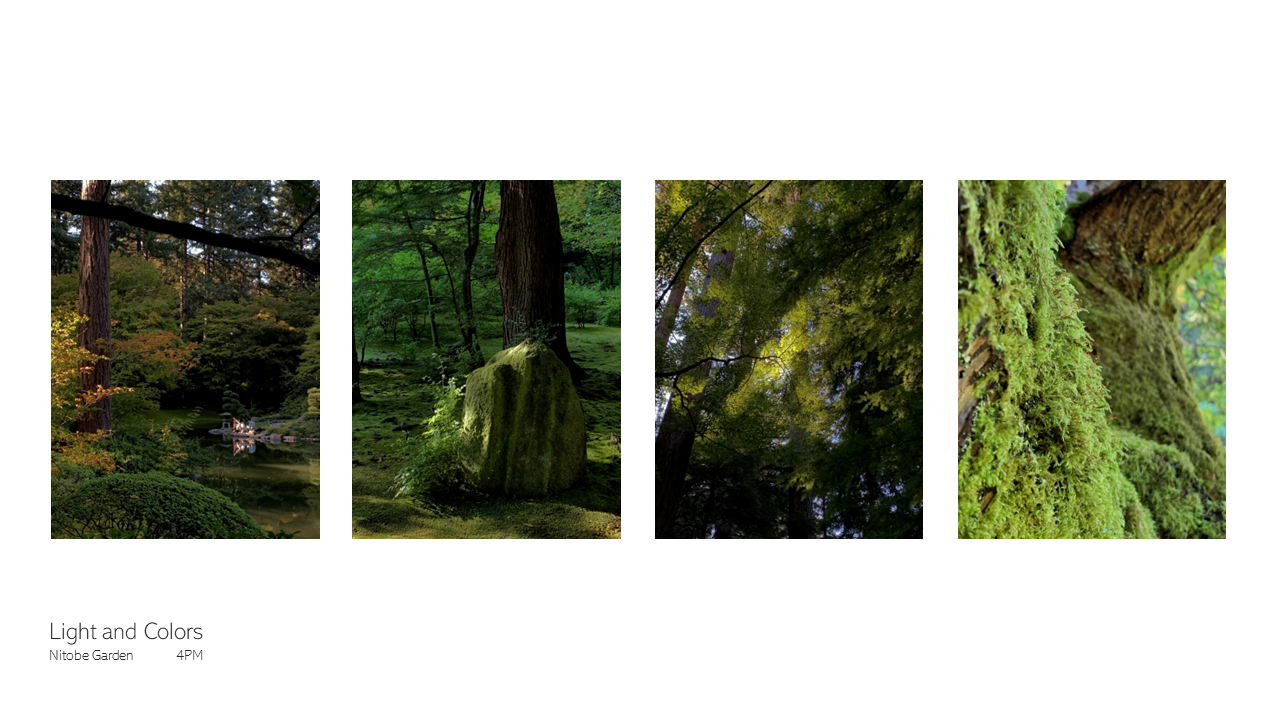
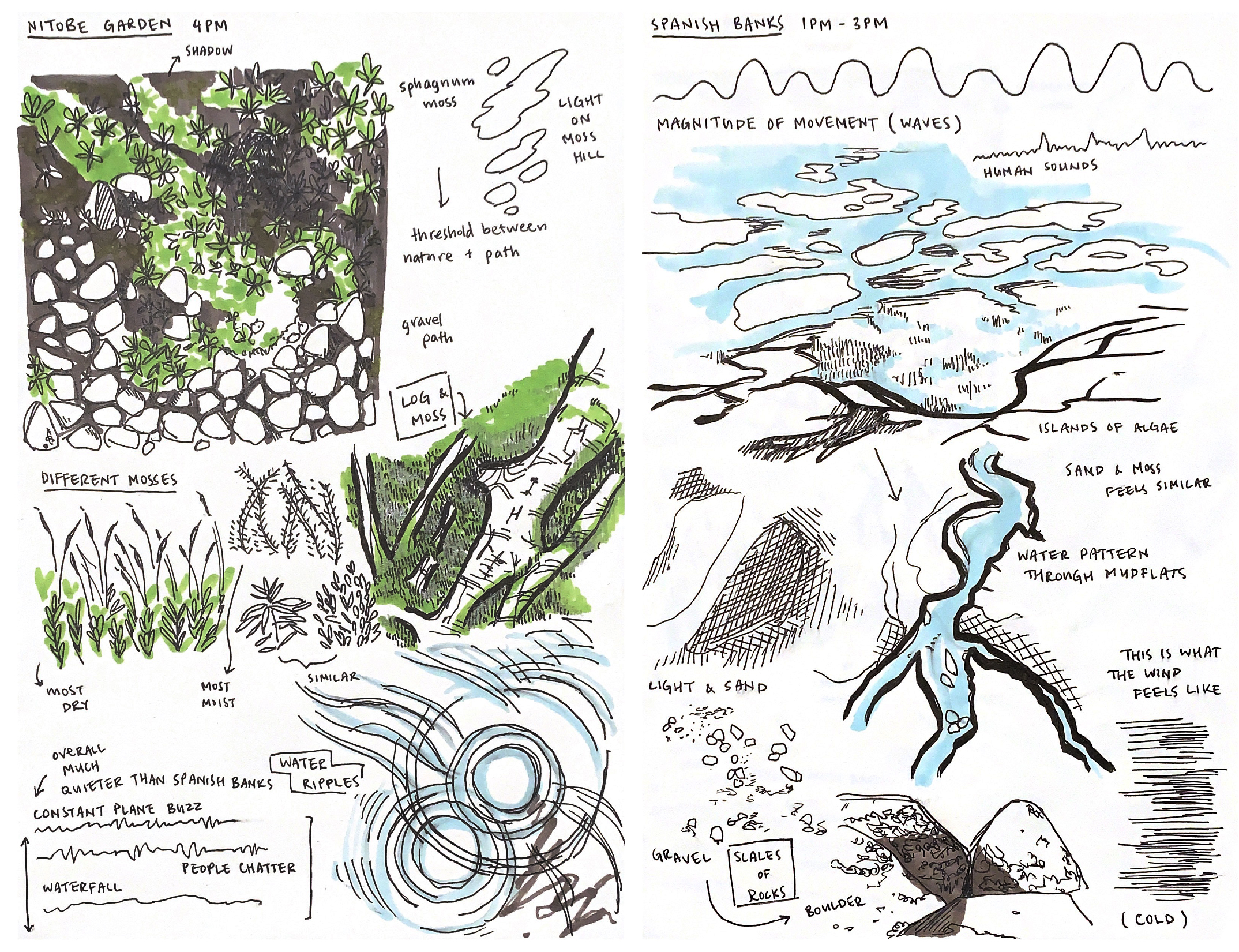
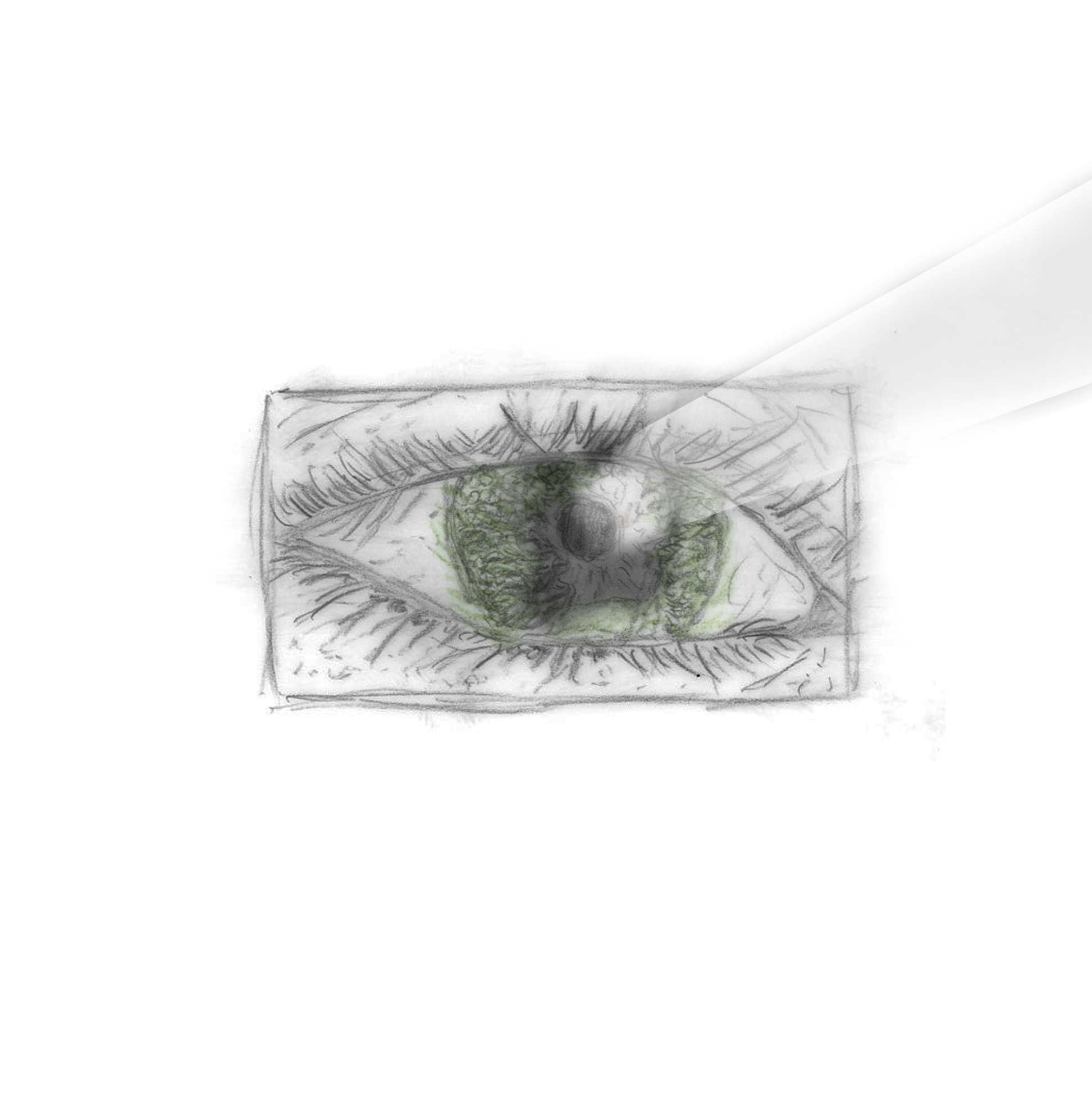
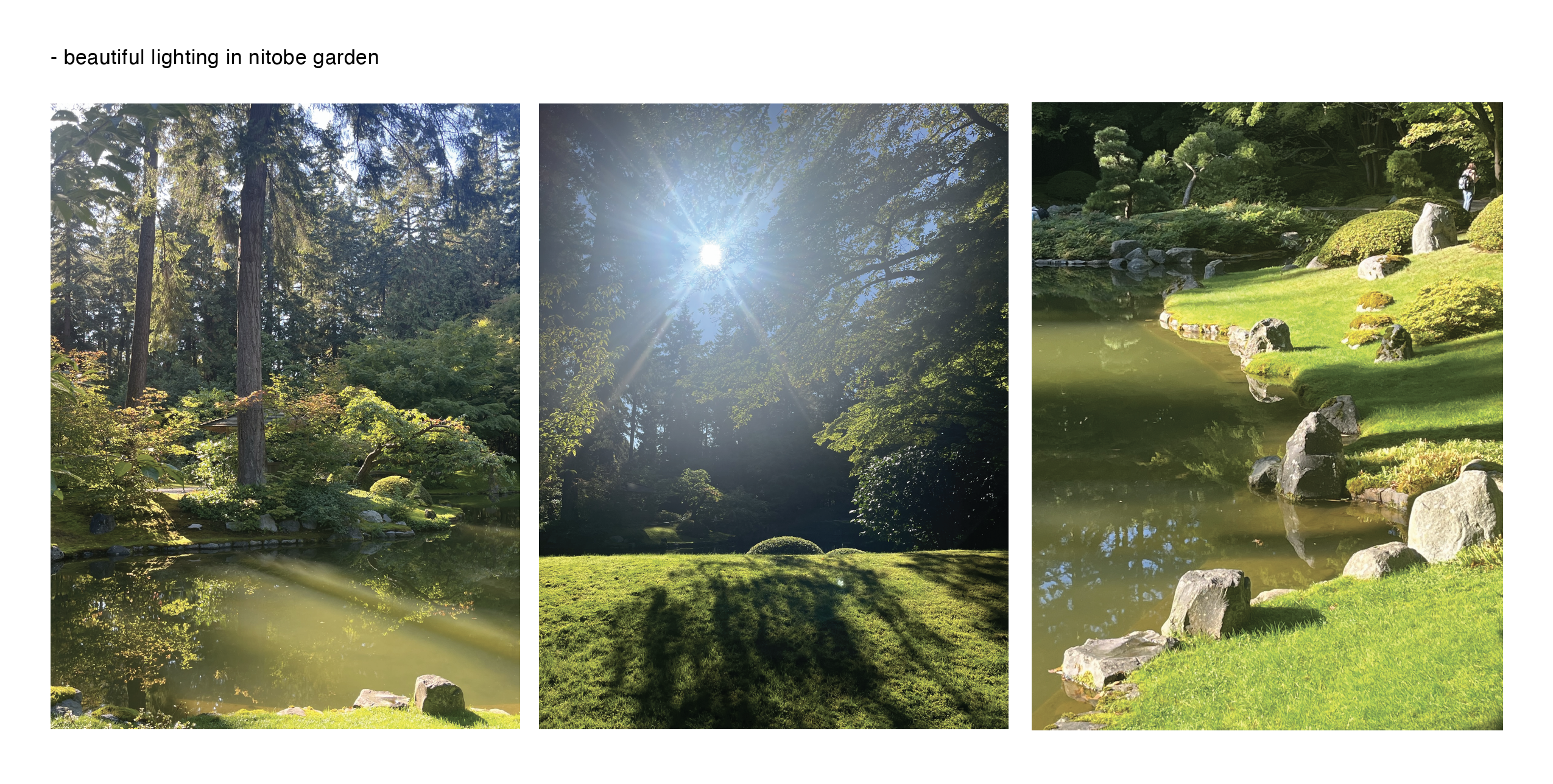
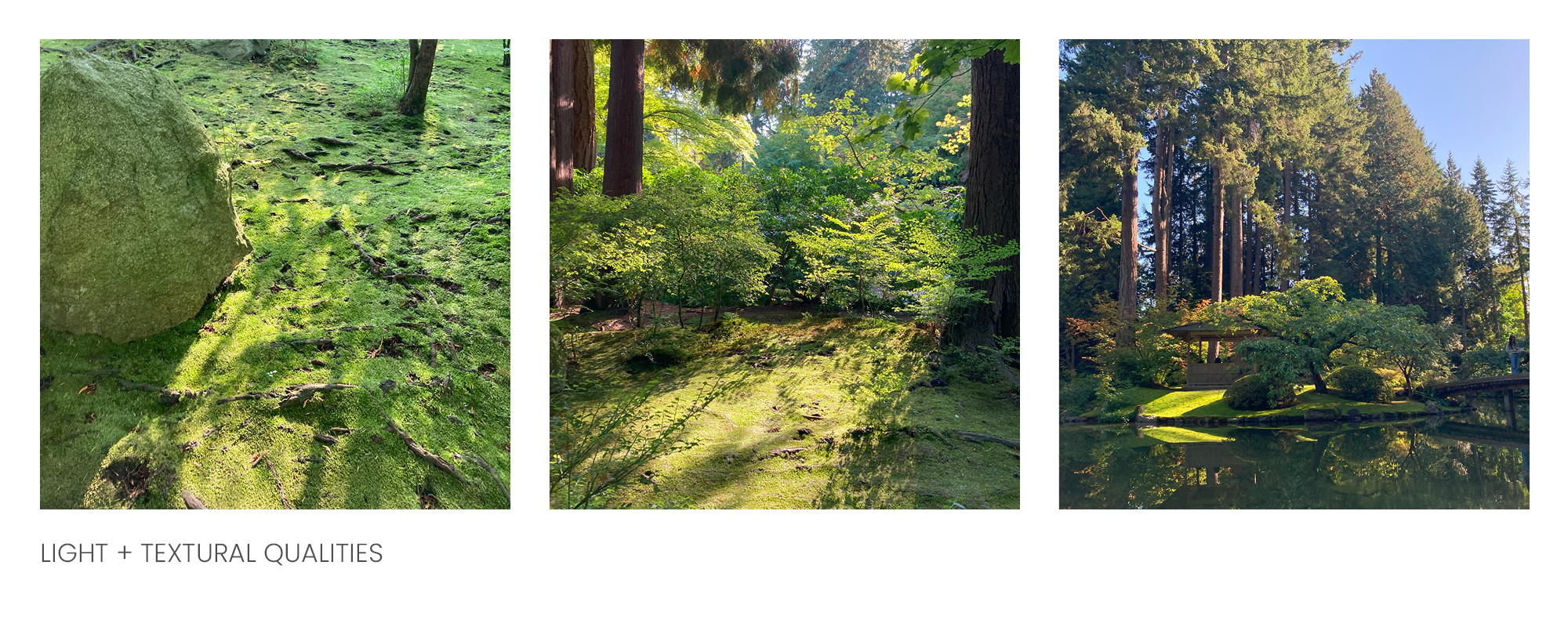
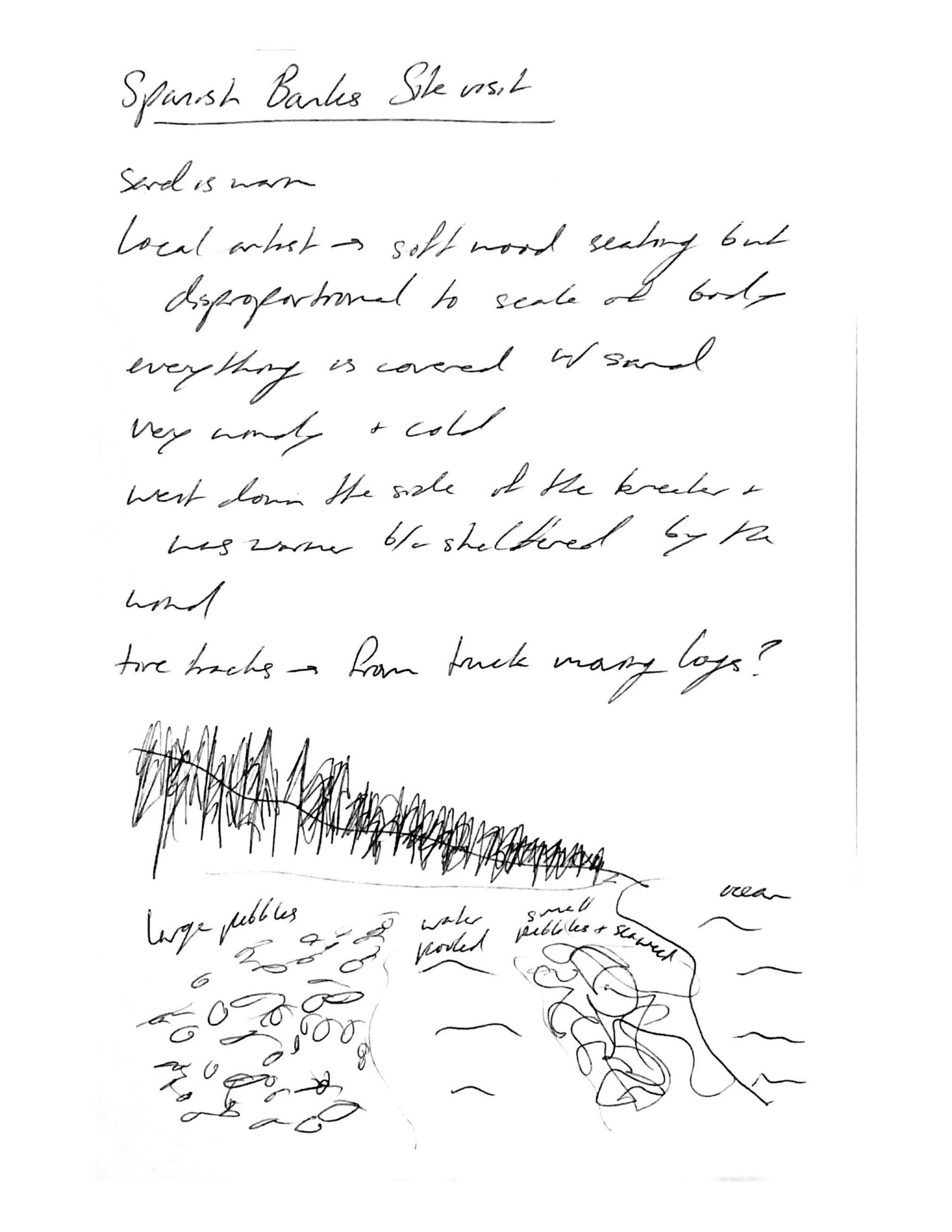
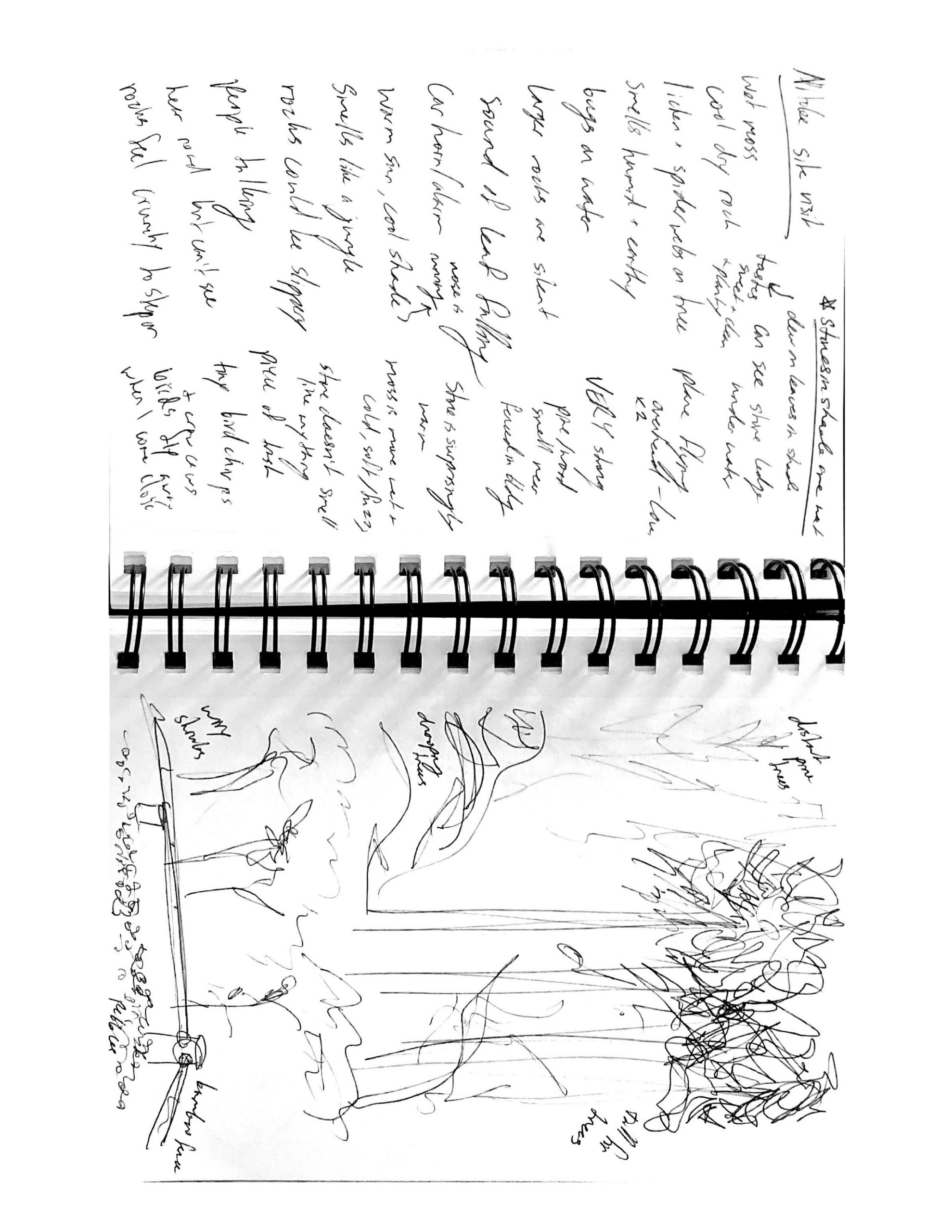
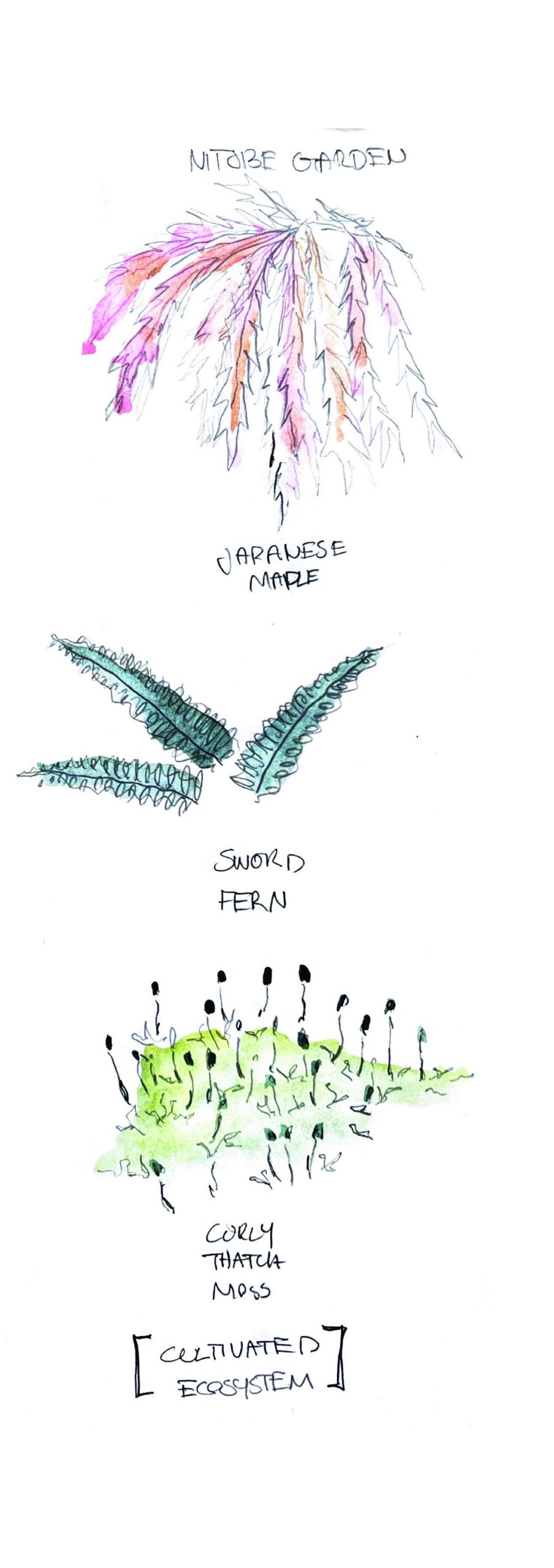
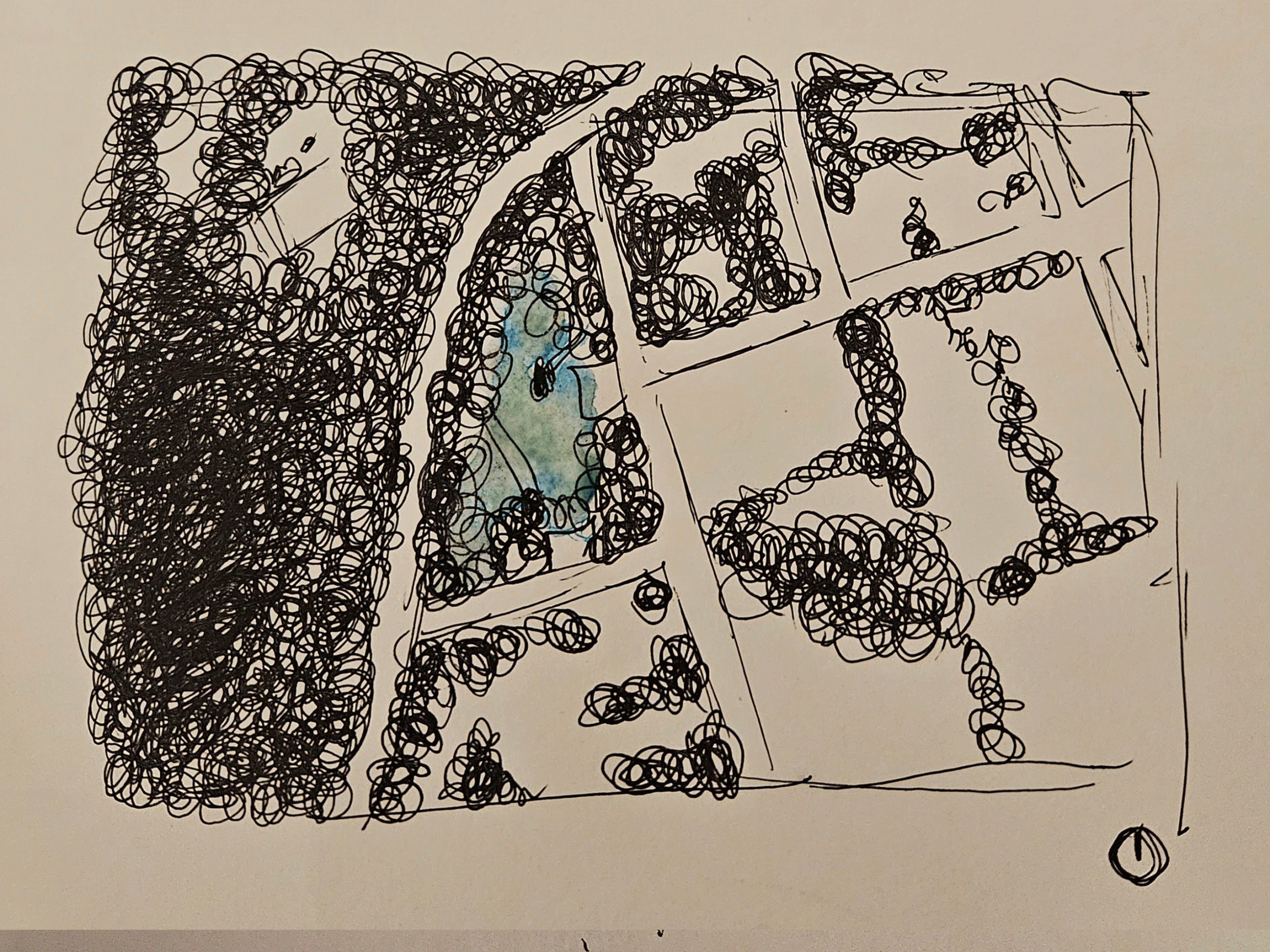
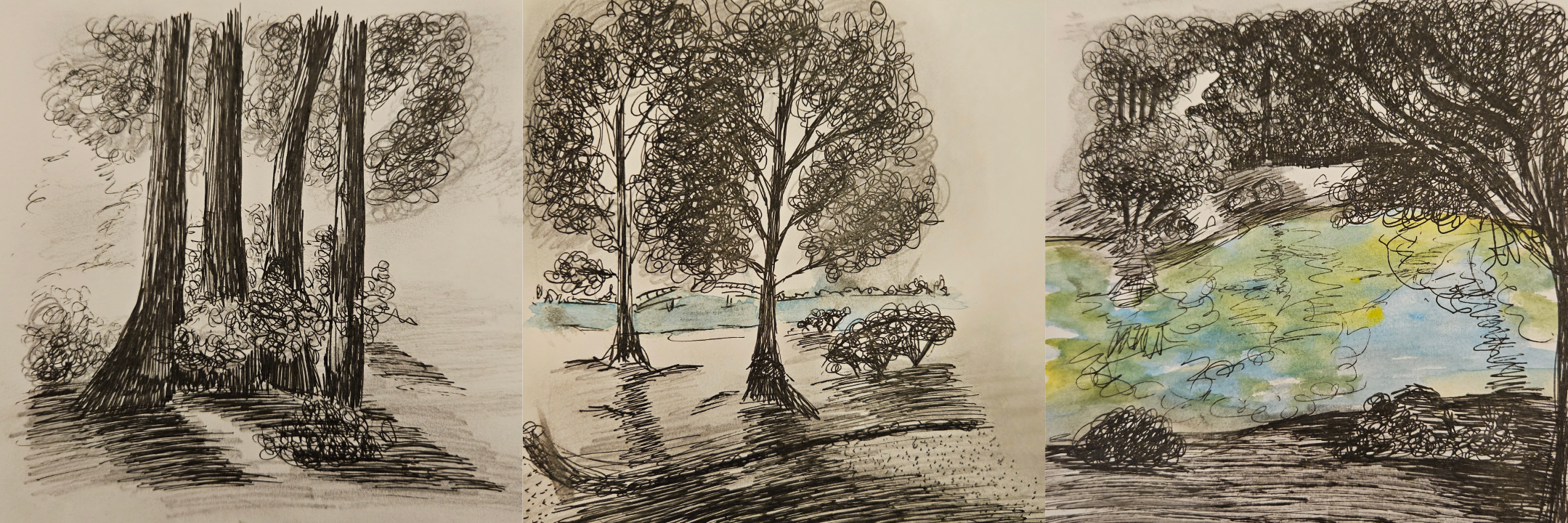
When I went to Spanish Banks it was quite rainy and I wanted to capture the gloomy feeling with watercolour. In contrast at Nitobe Gardens, it was sunny when I went, and I drew the overall beautiful, lush greens. I went over the watercolor with a black pen after, trying to capture more of the textures that I felt when on the site. At Nitobe, we couldn’t touch the moss but I could still perceive it to be soft through my sight. While I was at Spanish Banks the rain didn’t completely deter me from immersing myself in the landscape and using my sense of touch but it was definitely a hindrance. The wooden logs while rough, felt smoother with the rain on them.


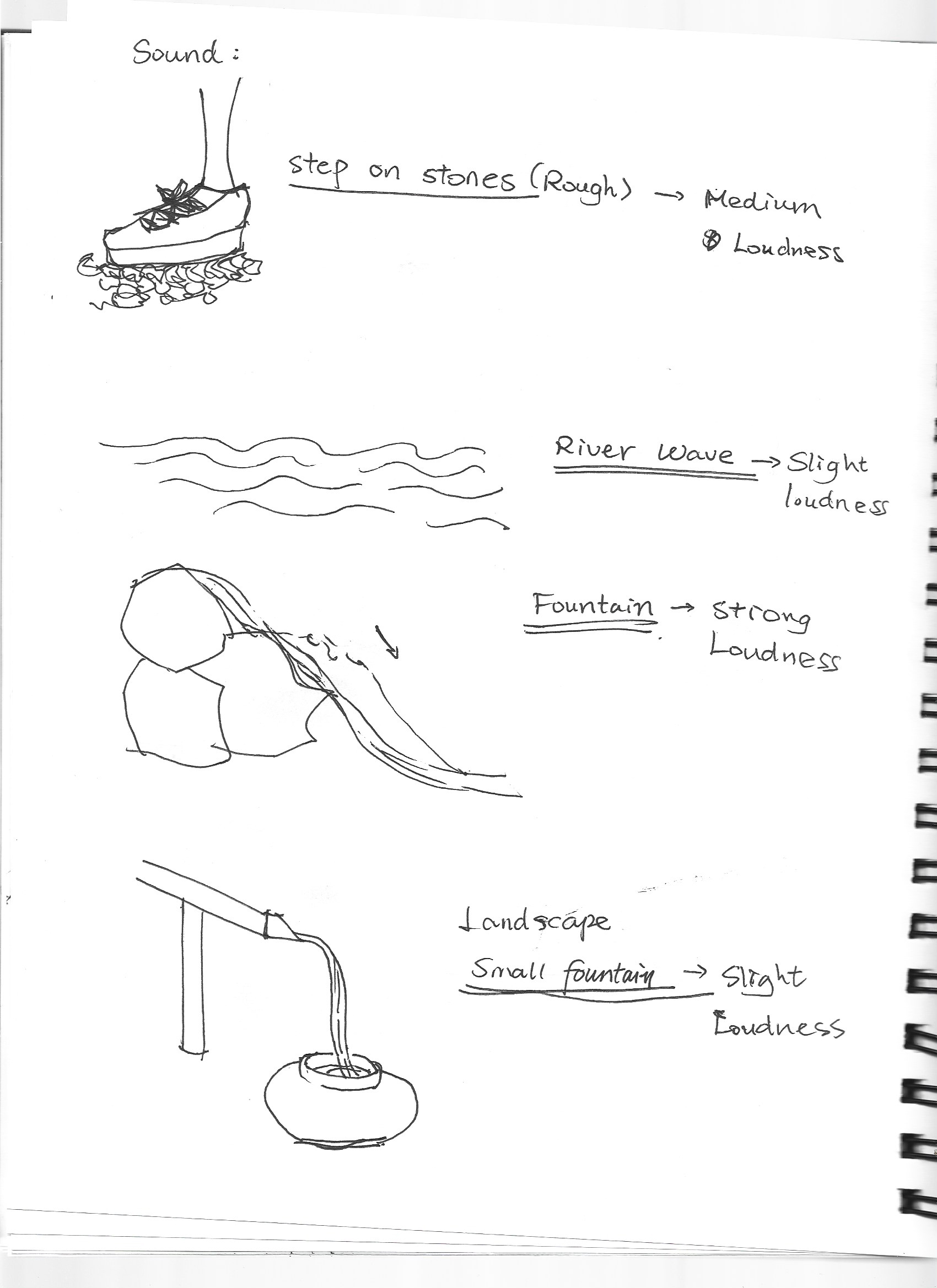
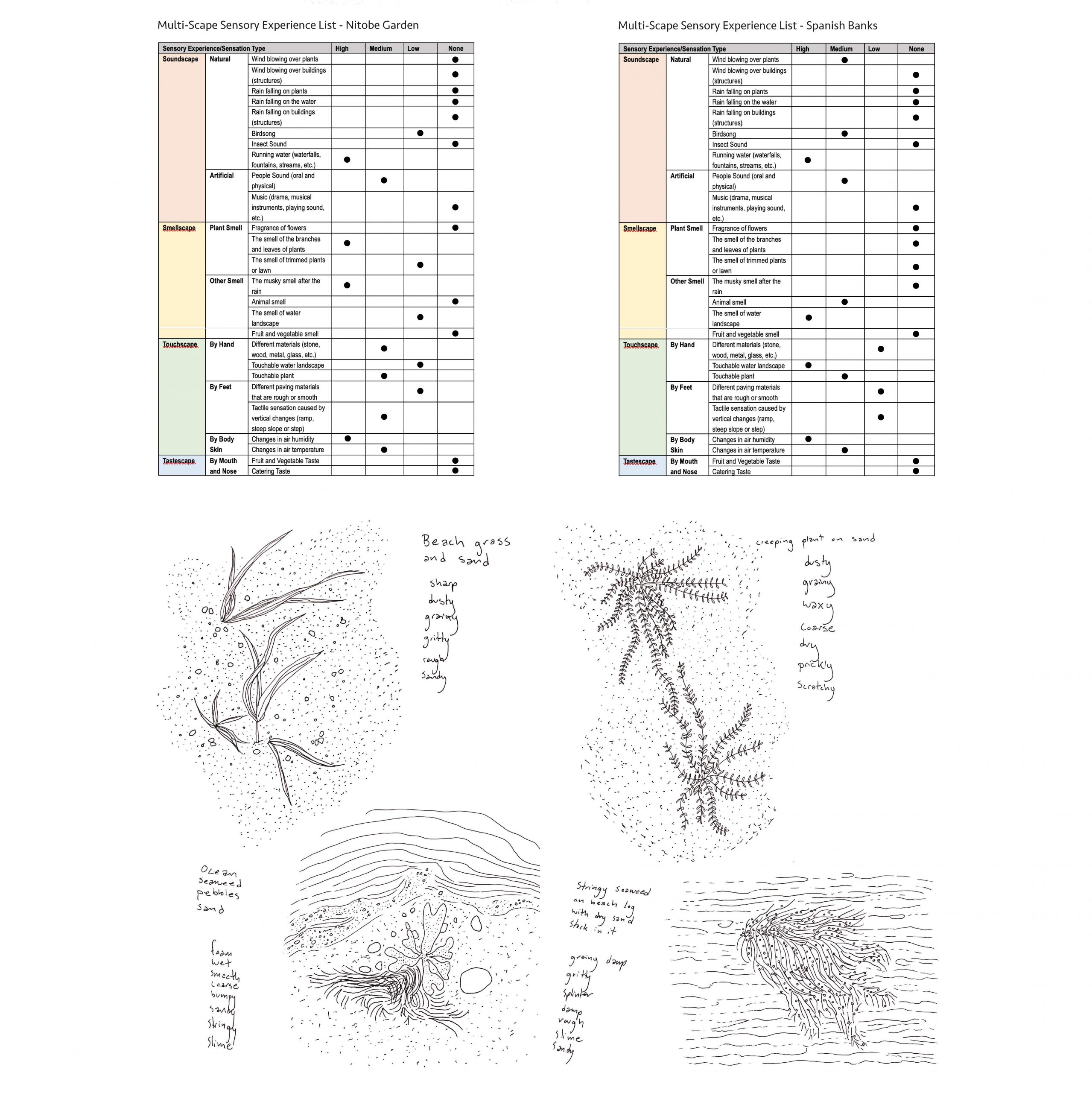
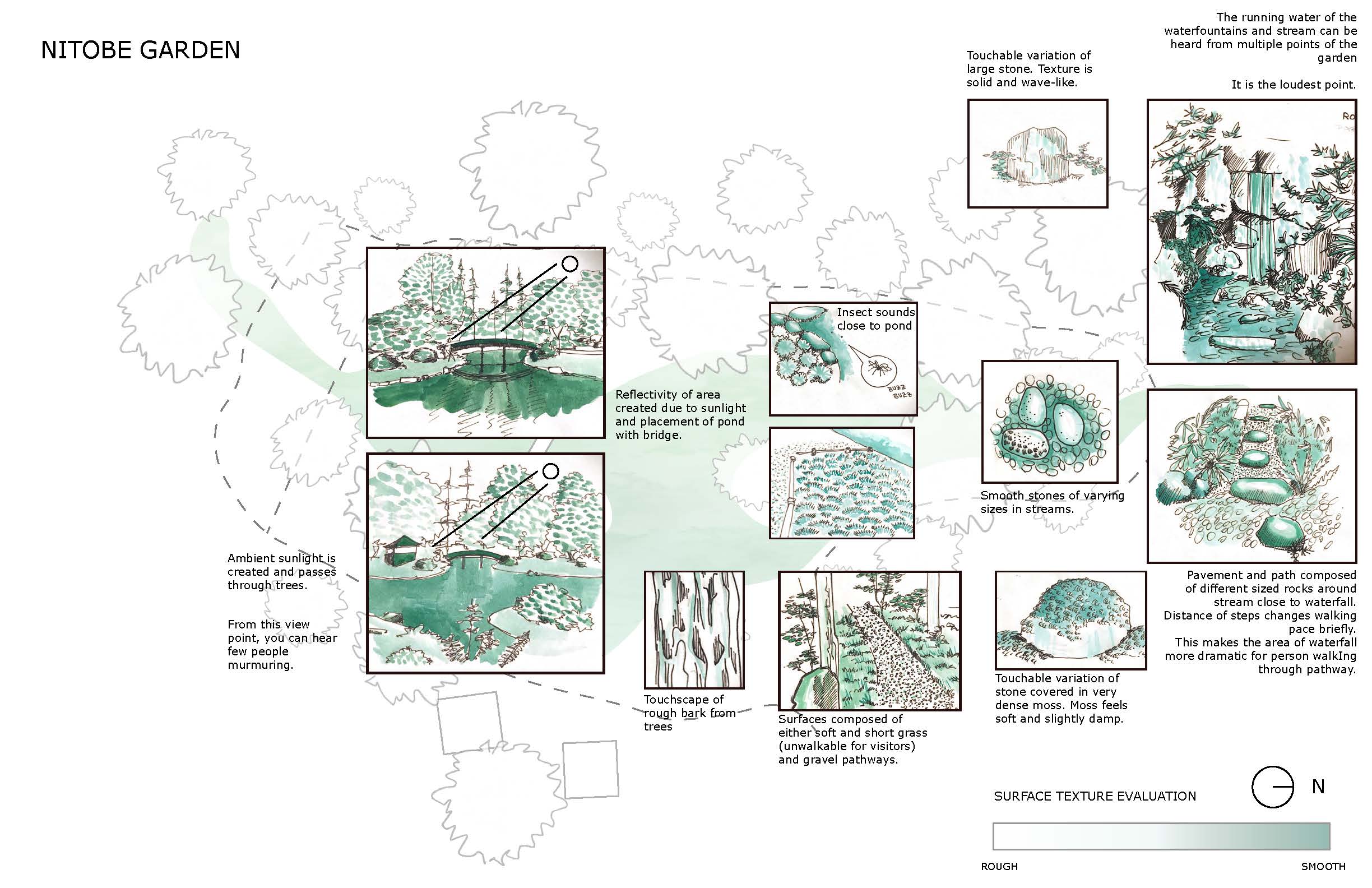
Drawings and Notes:


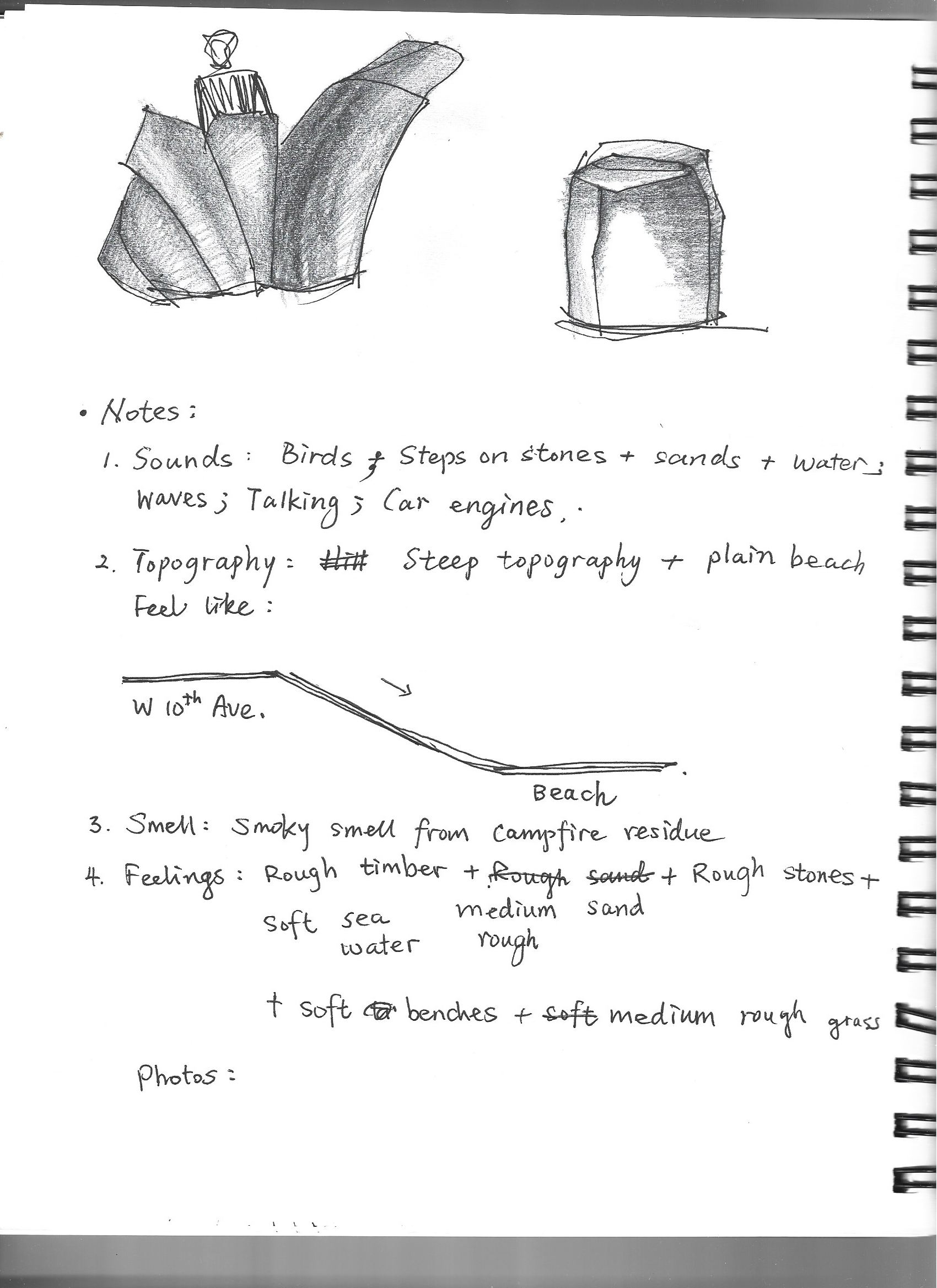
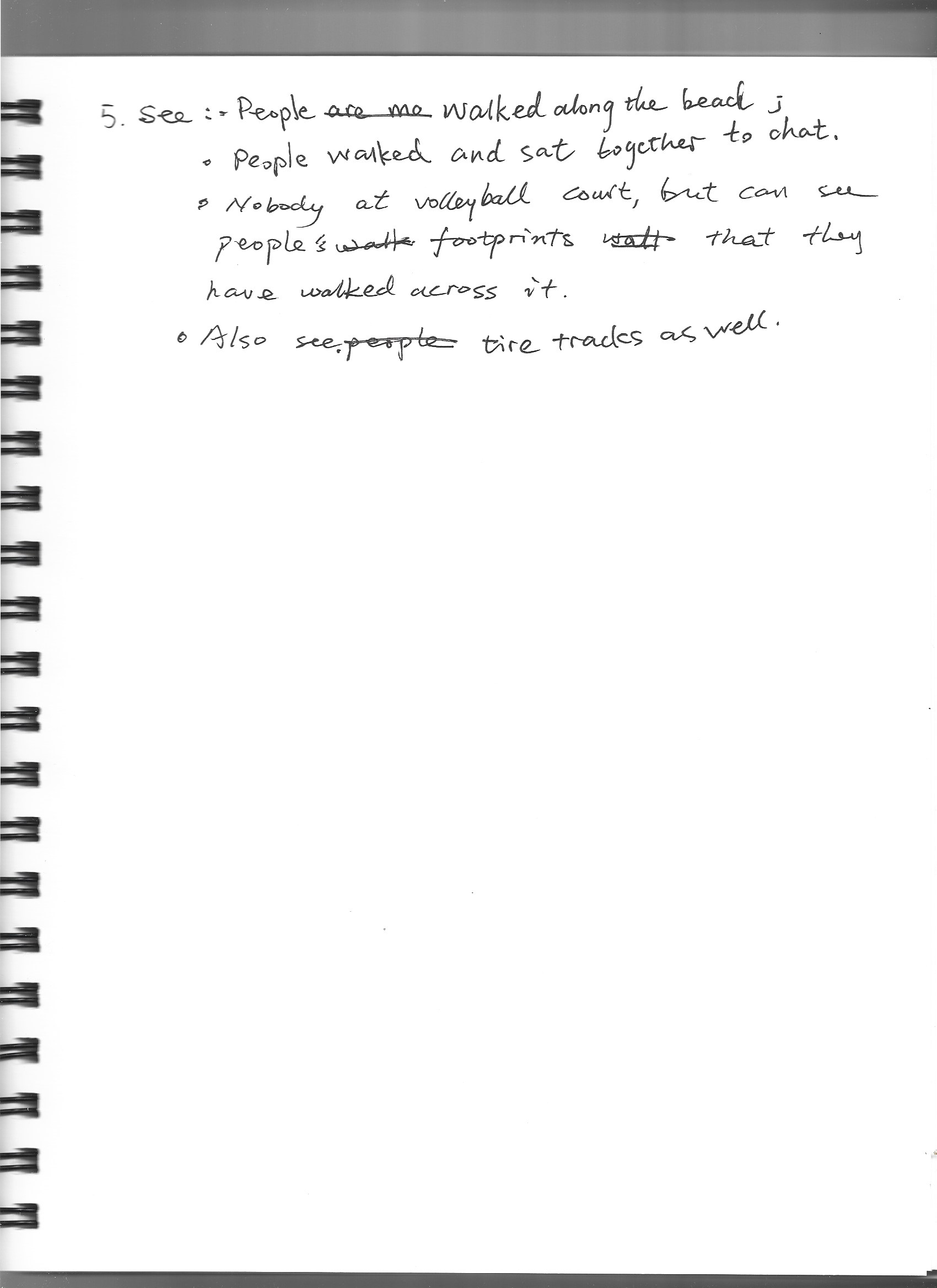
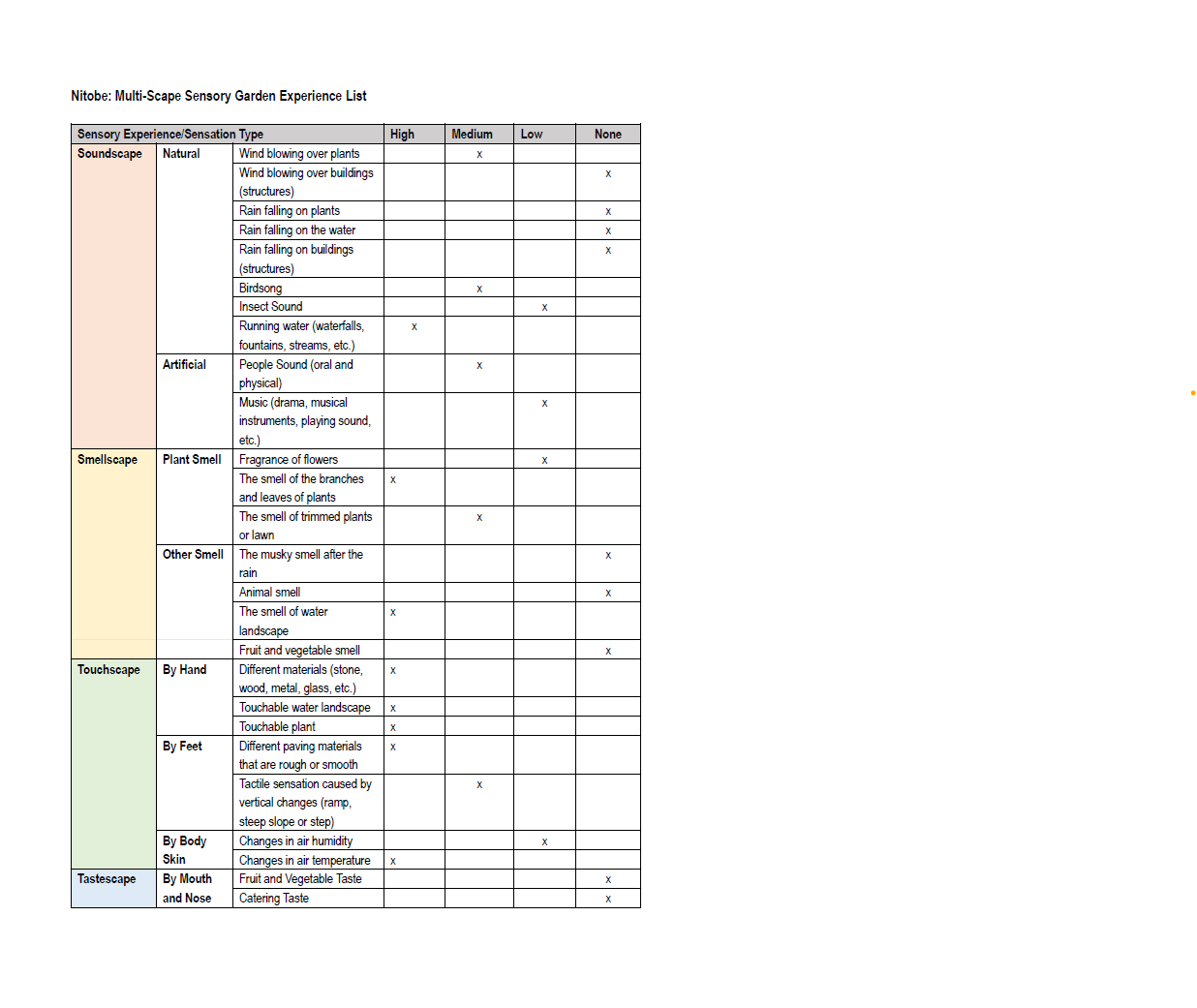
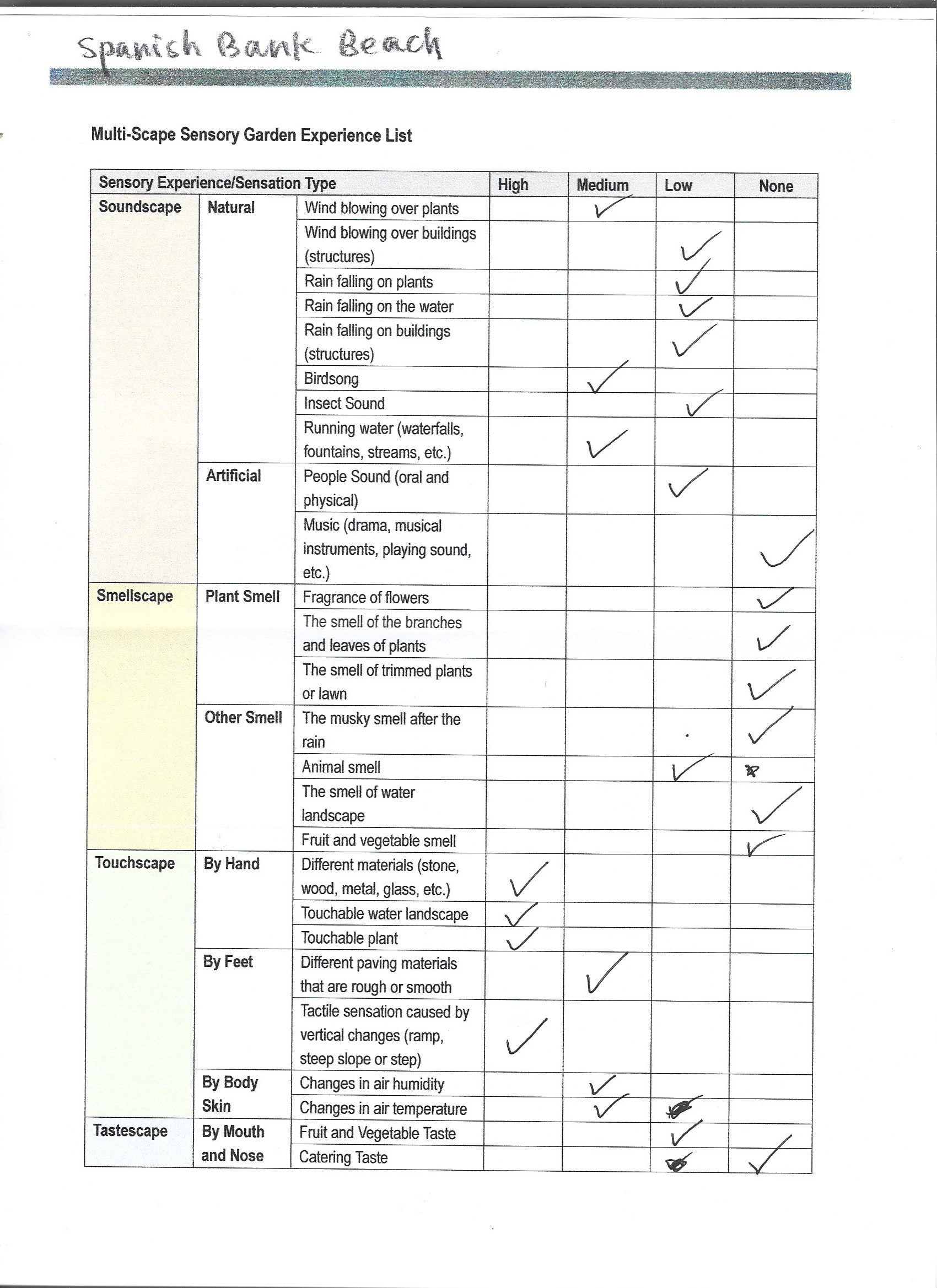
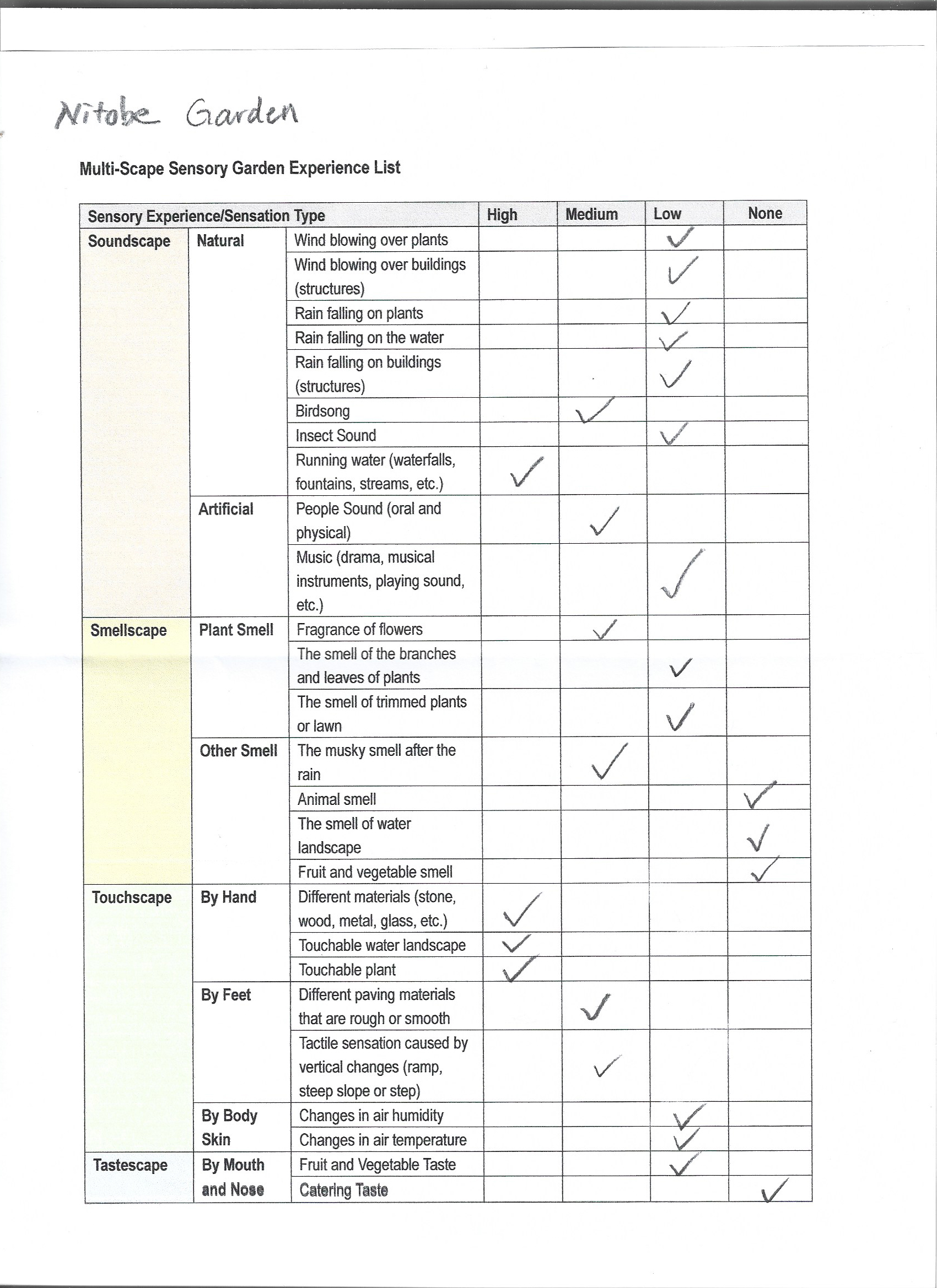
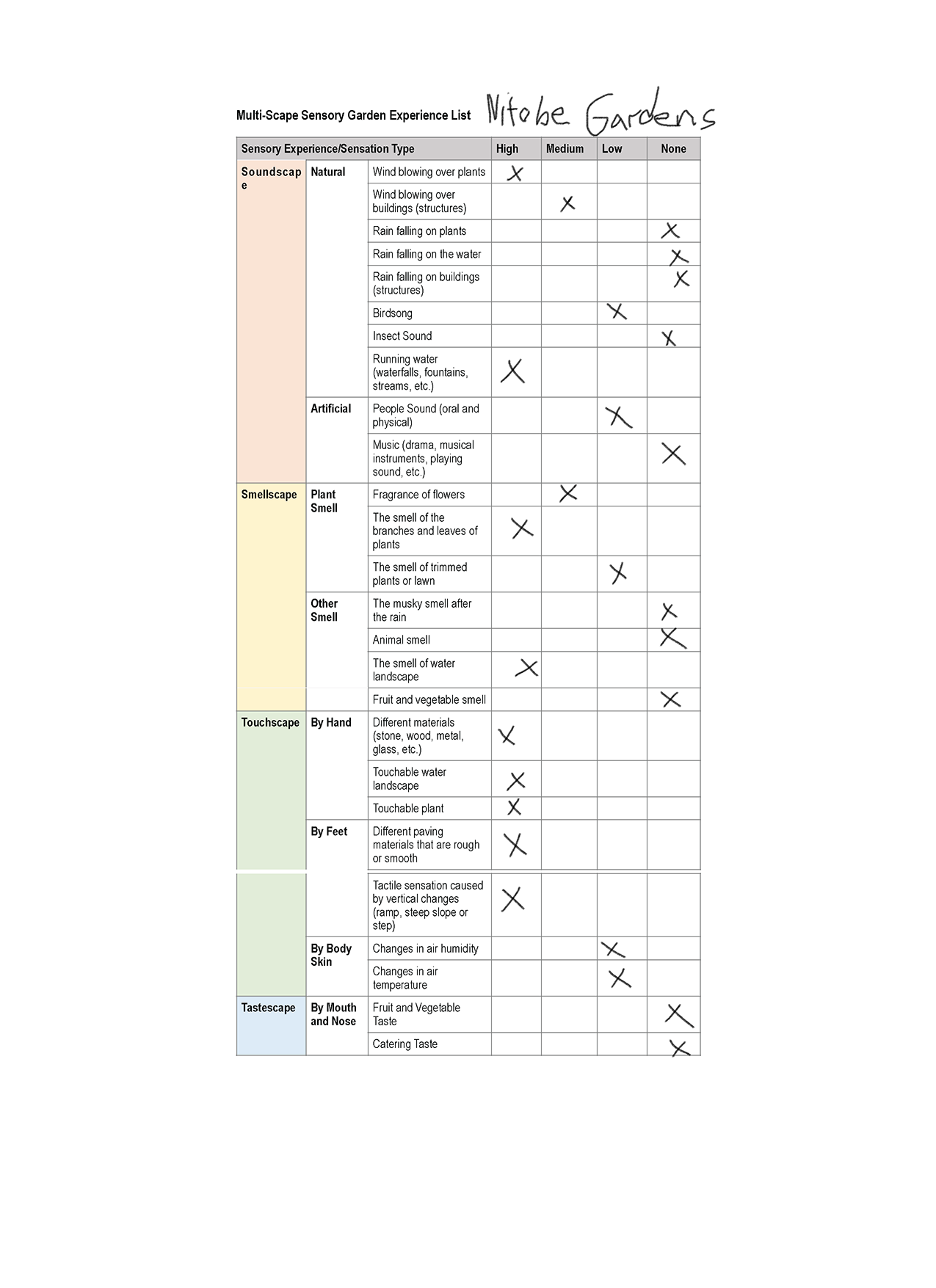
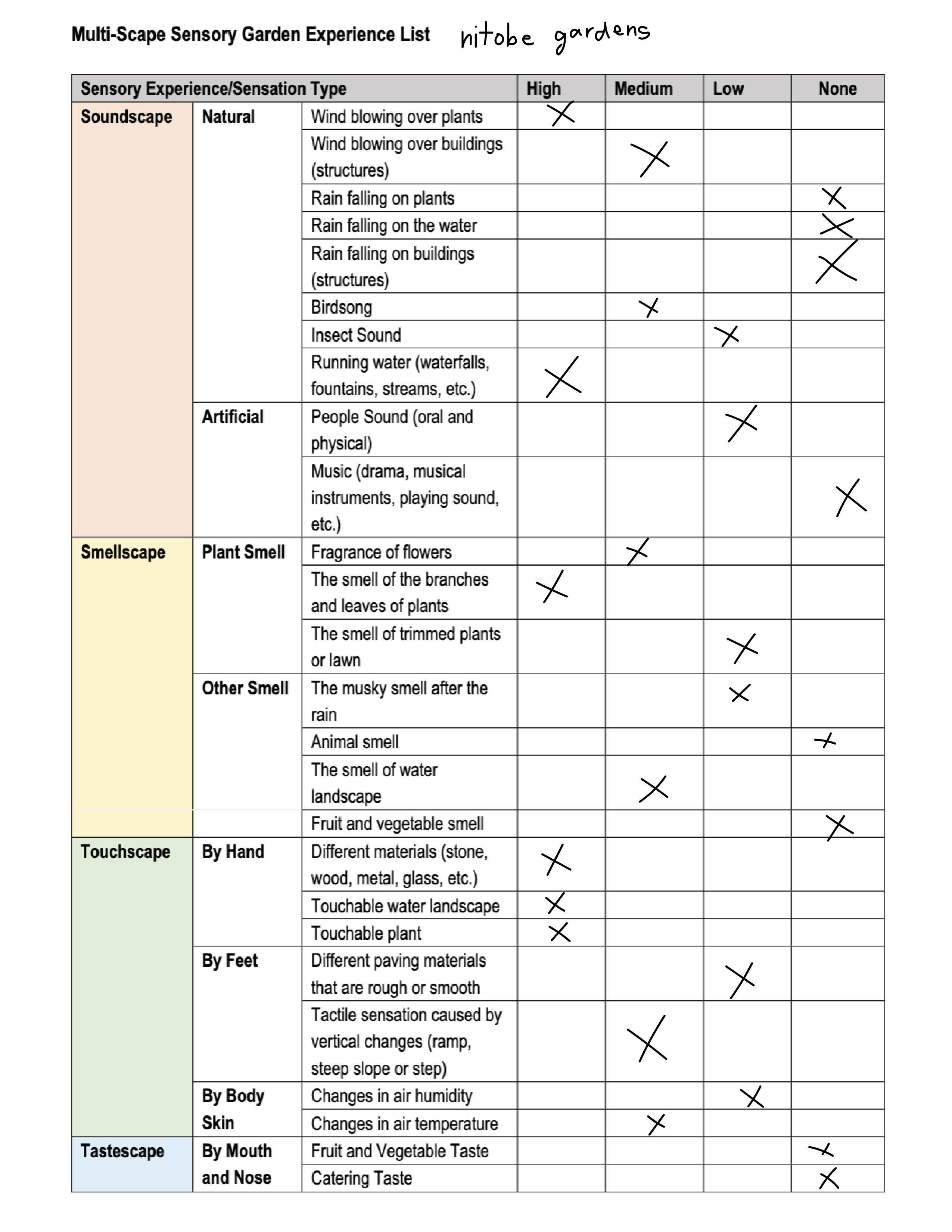
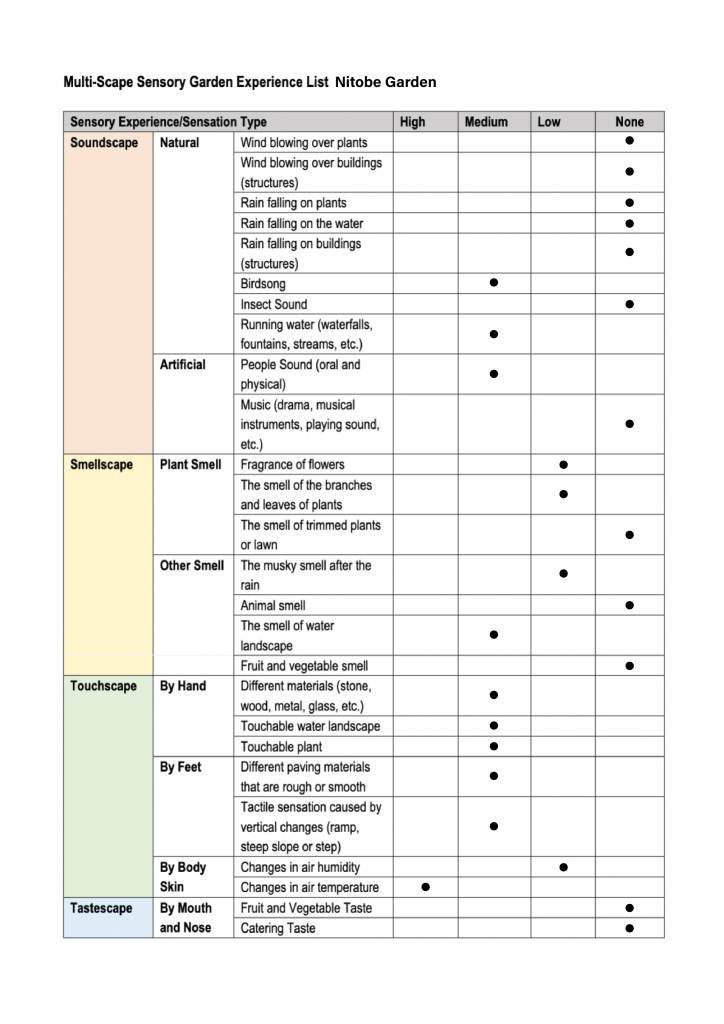
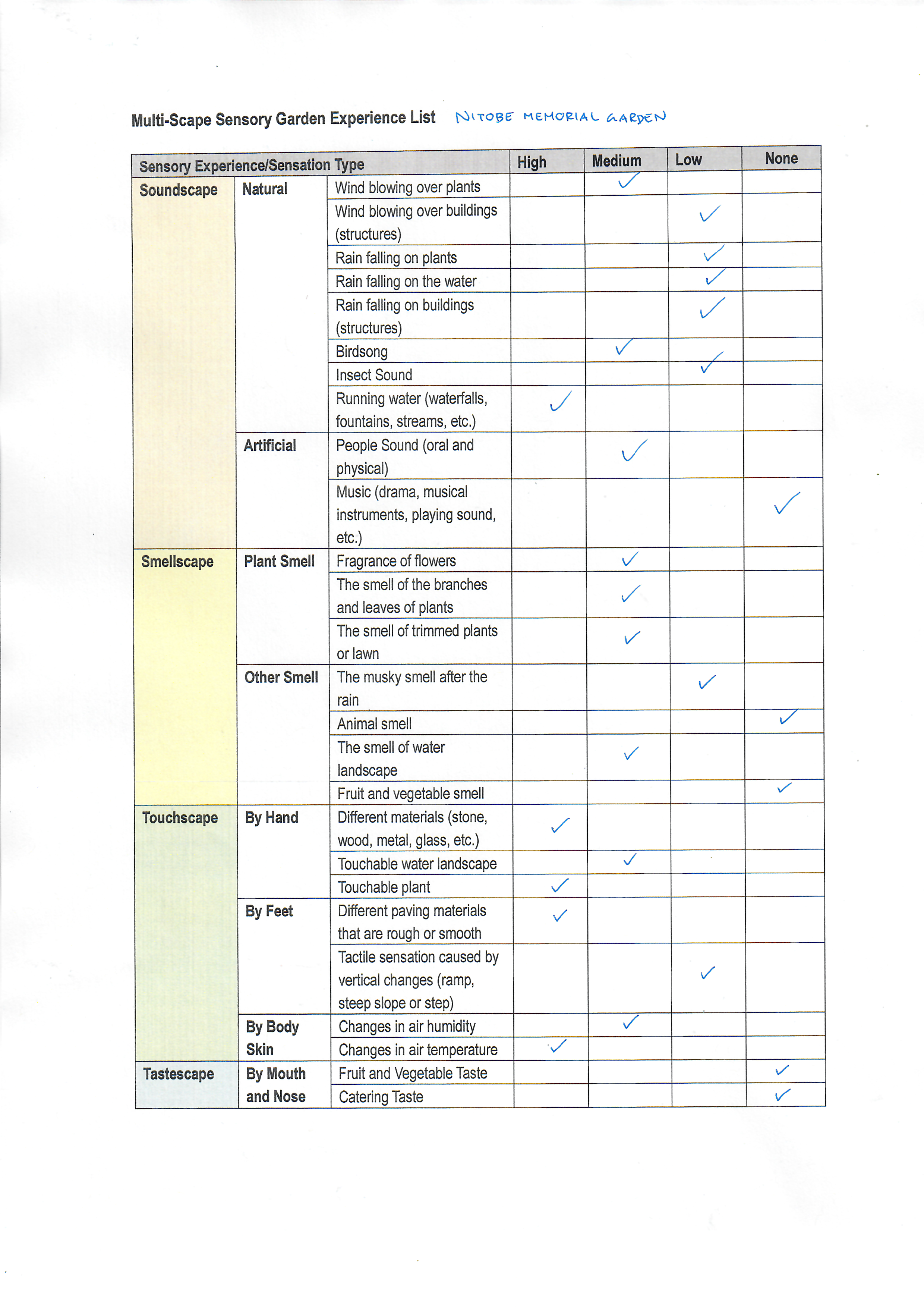
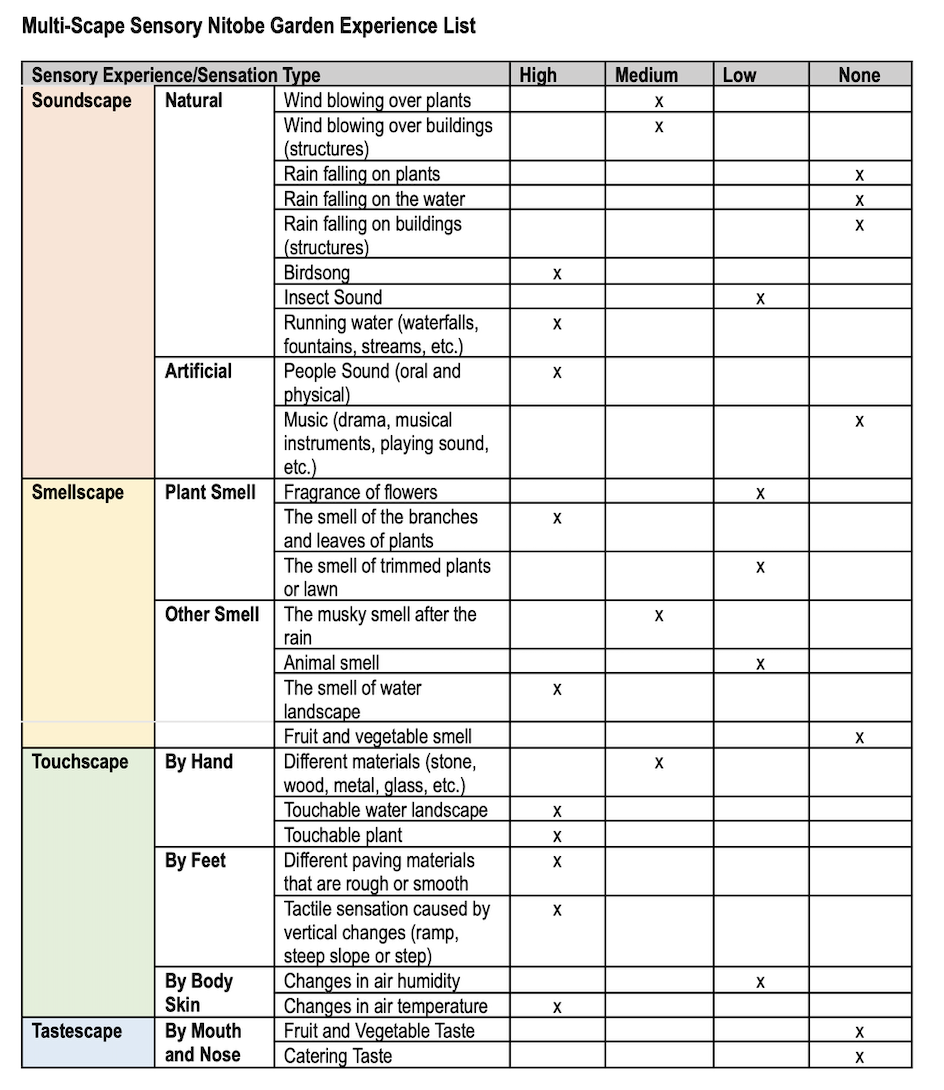
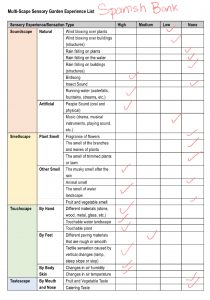
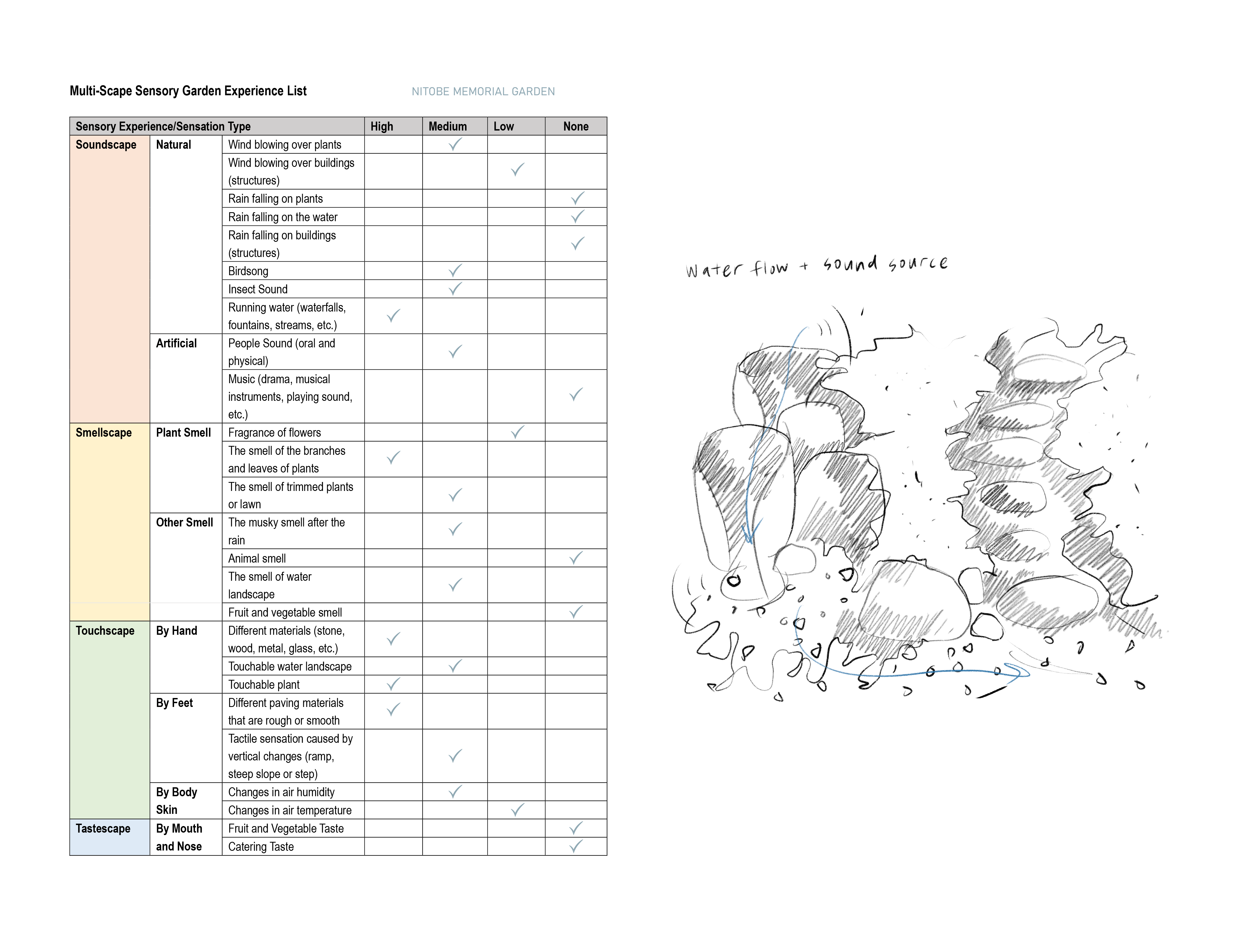
Experience List:
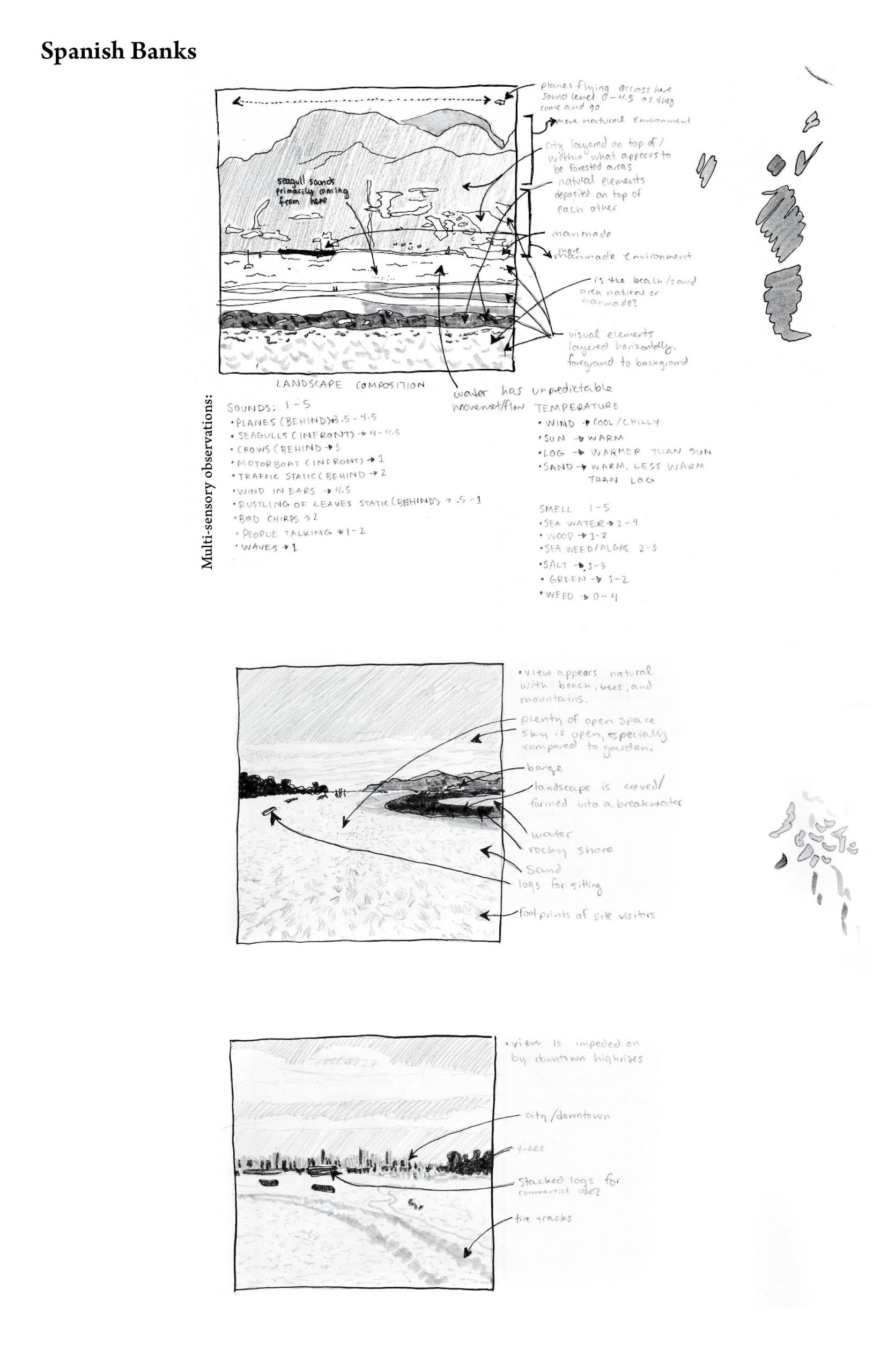
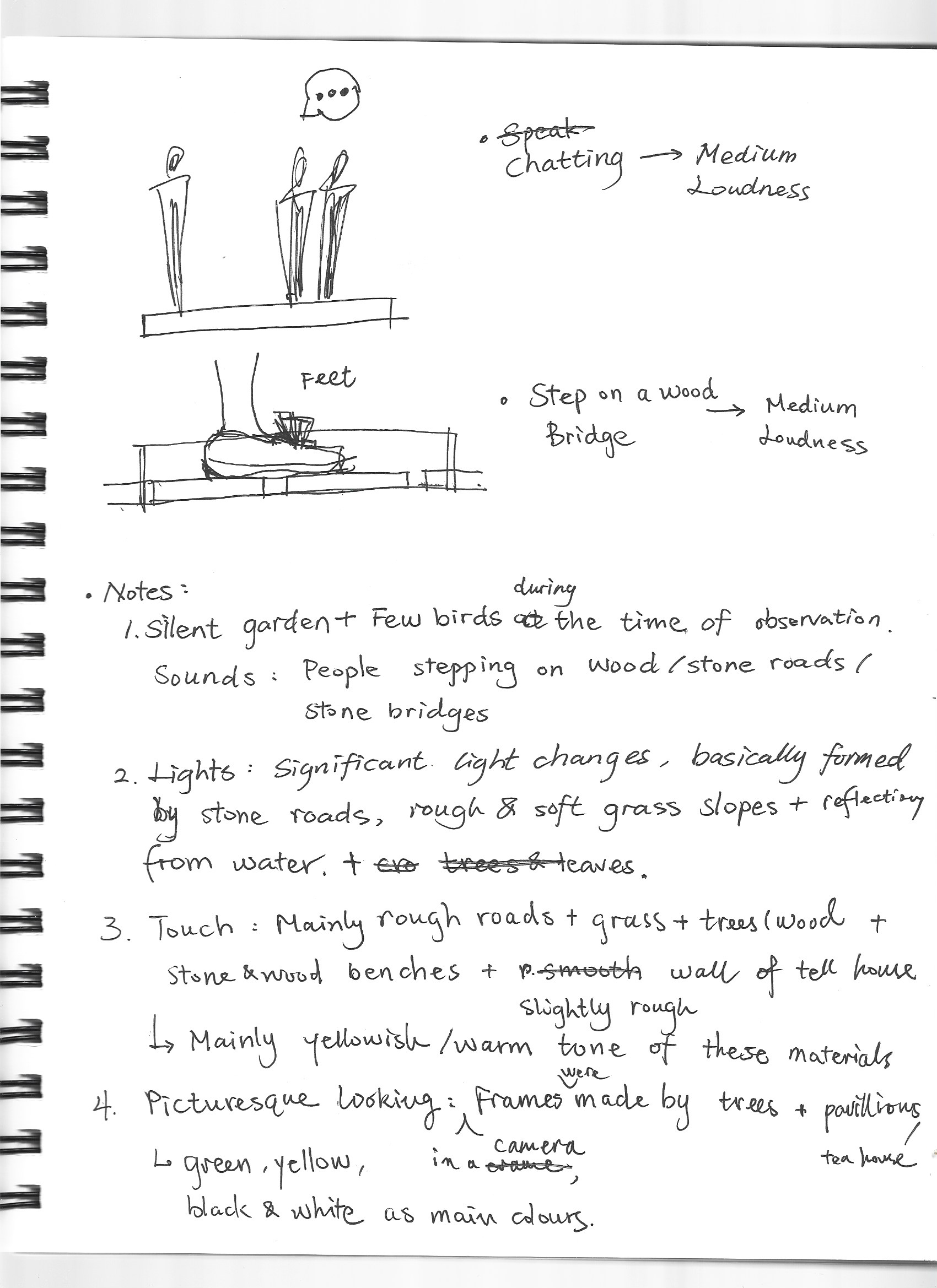
Drawings and Notes:

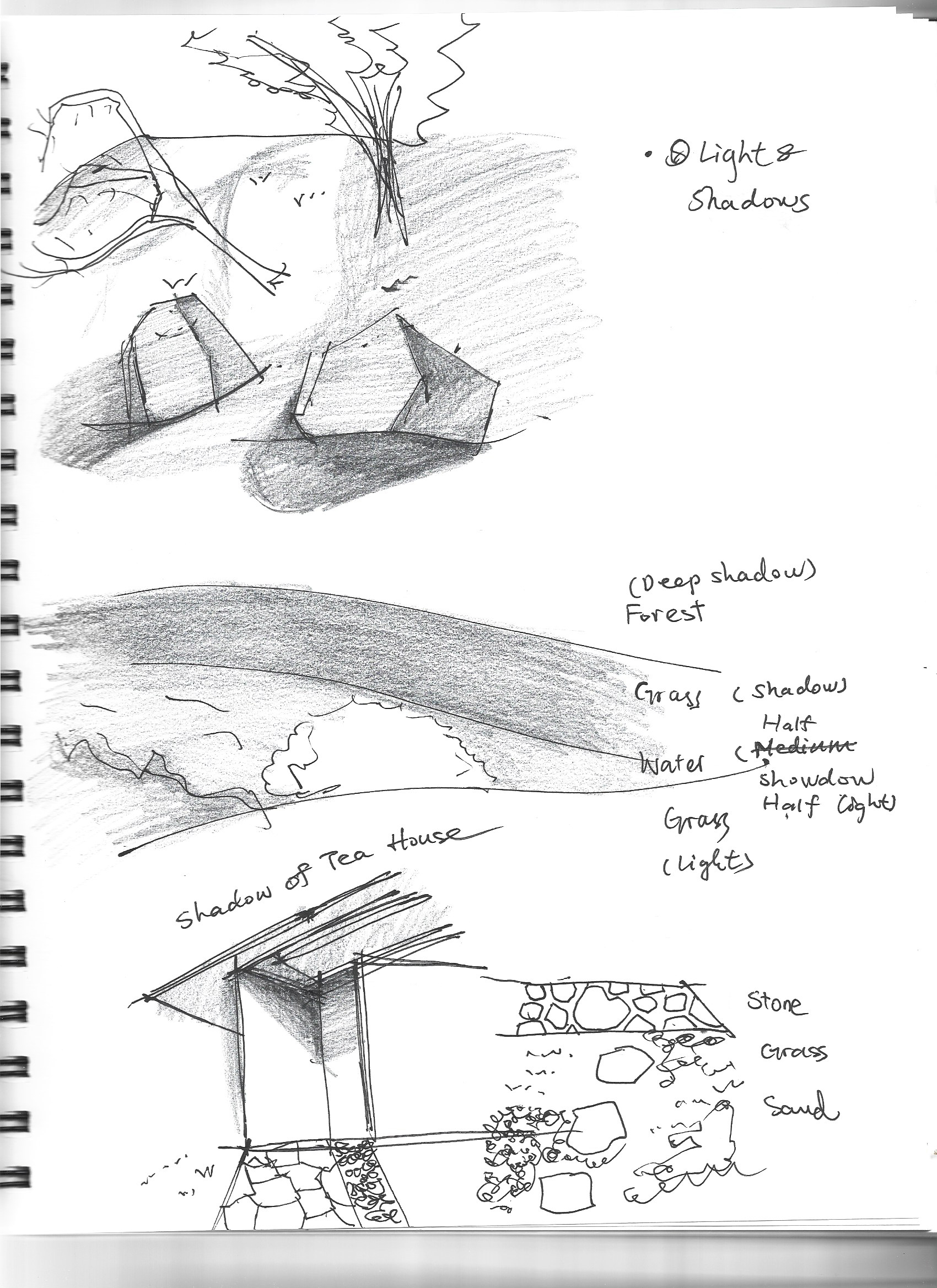
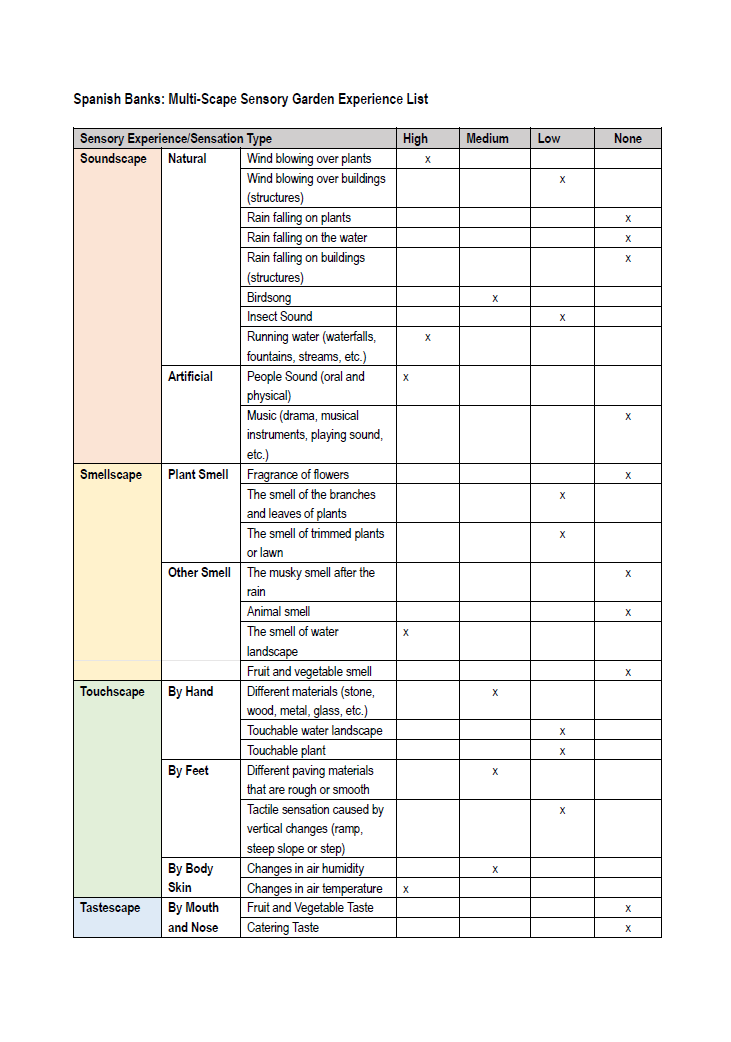
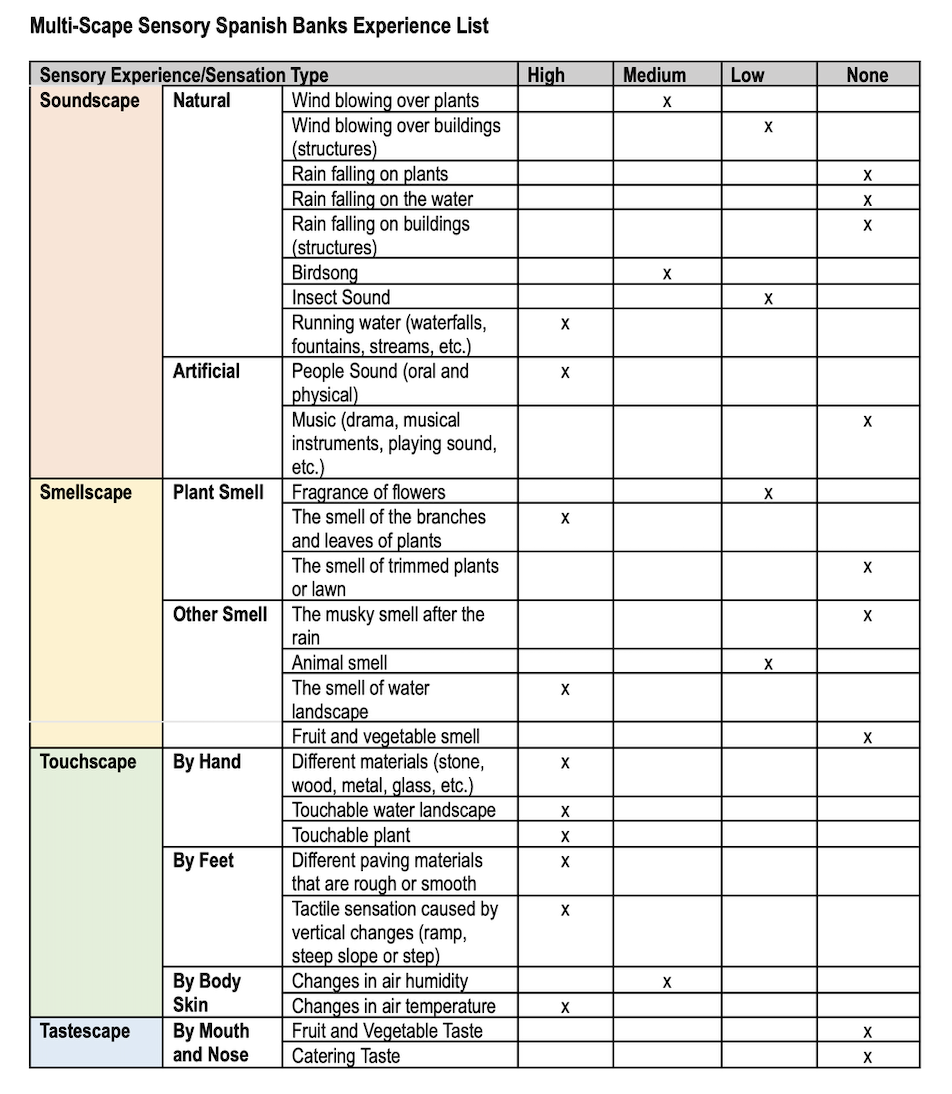
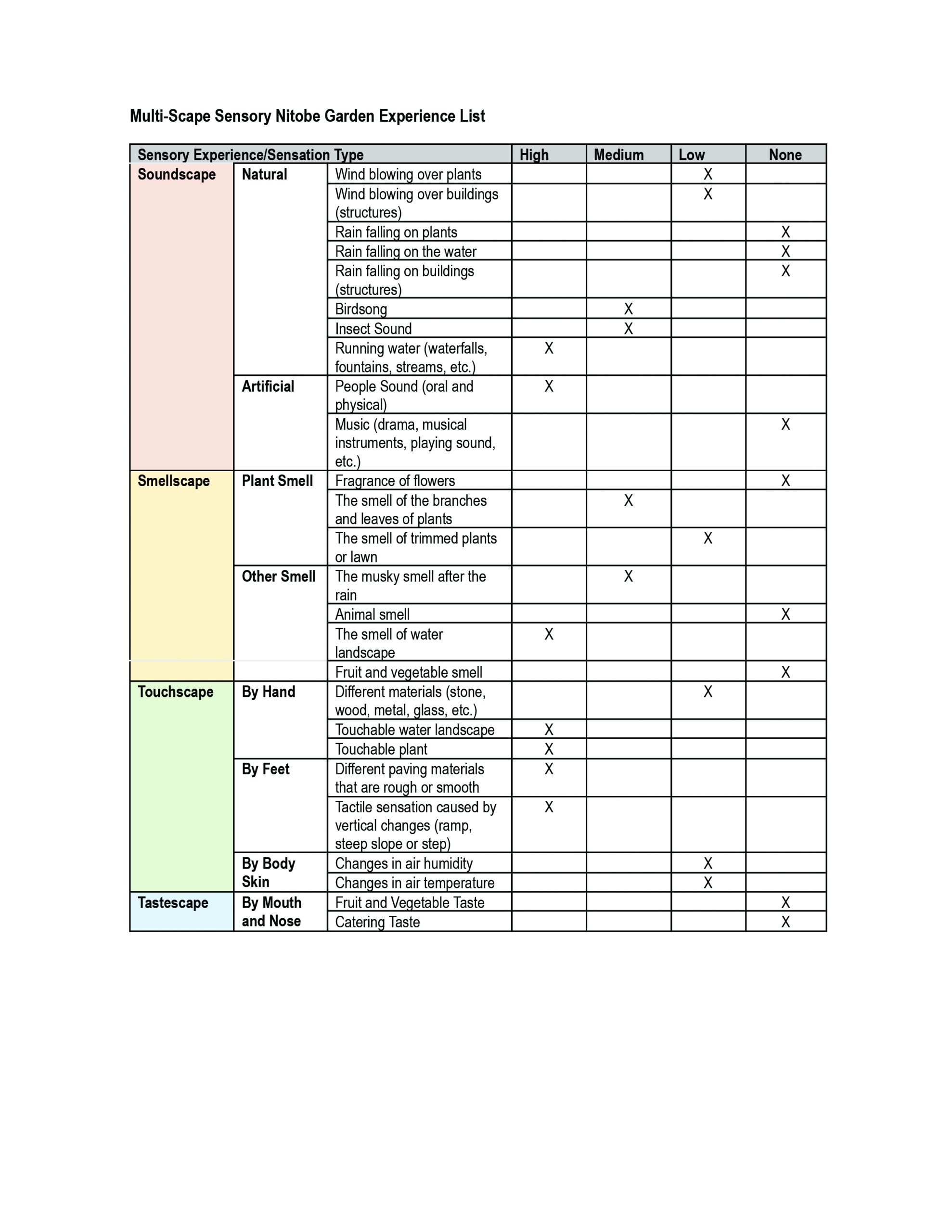
Experience List:
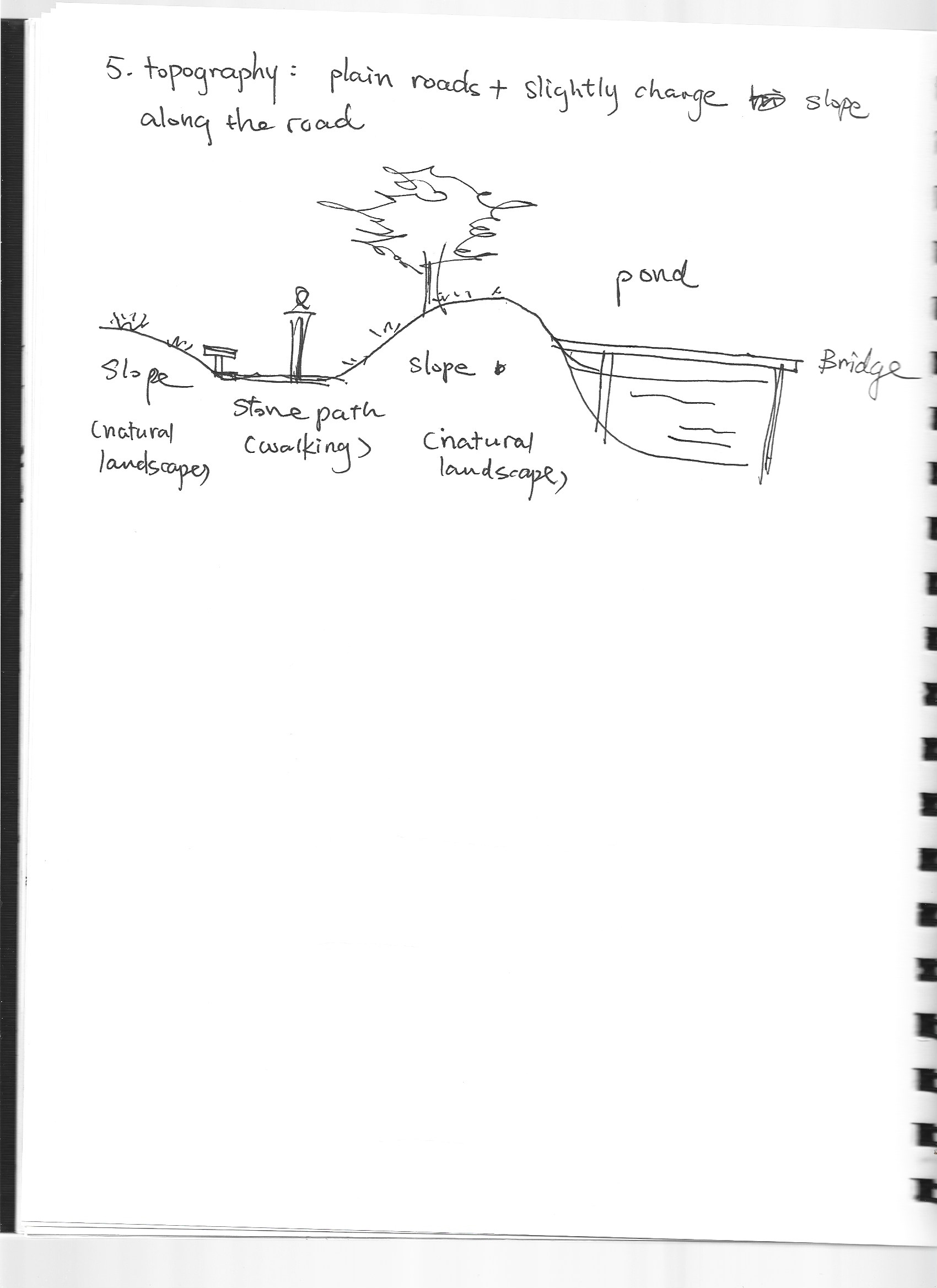
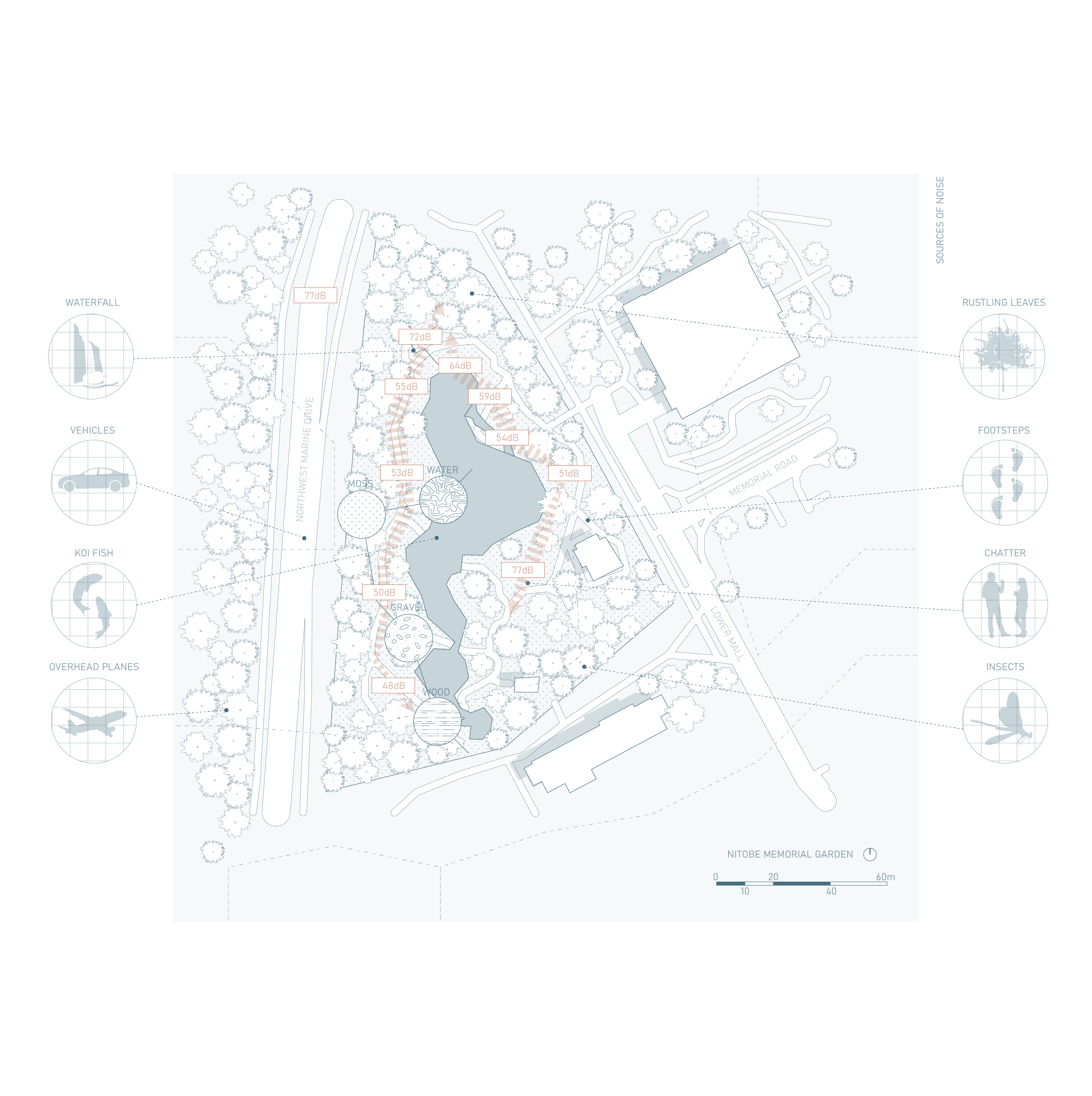
Discovering Nitobe Through Sound:
Exploring Hard/ Soft -scapes with pen and watercolour

Topography

Site Sketches/ Notes
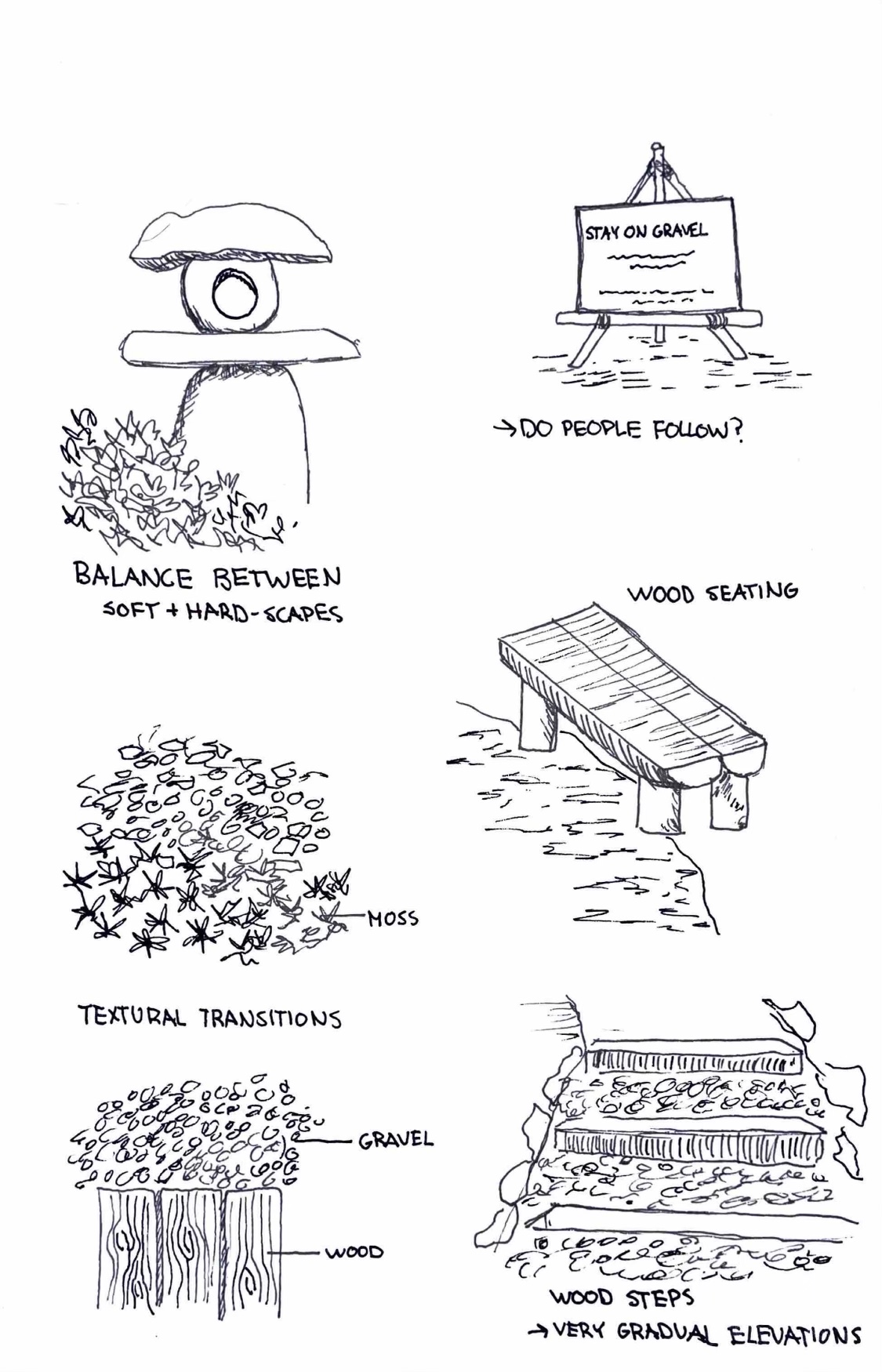 .
. 
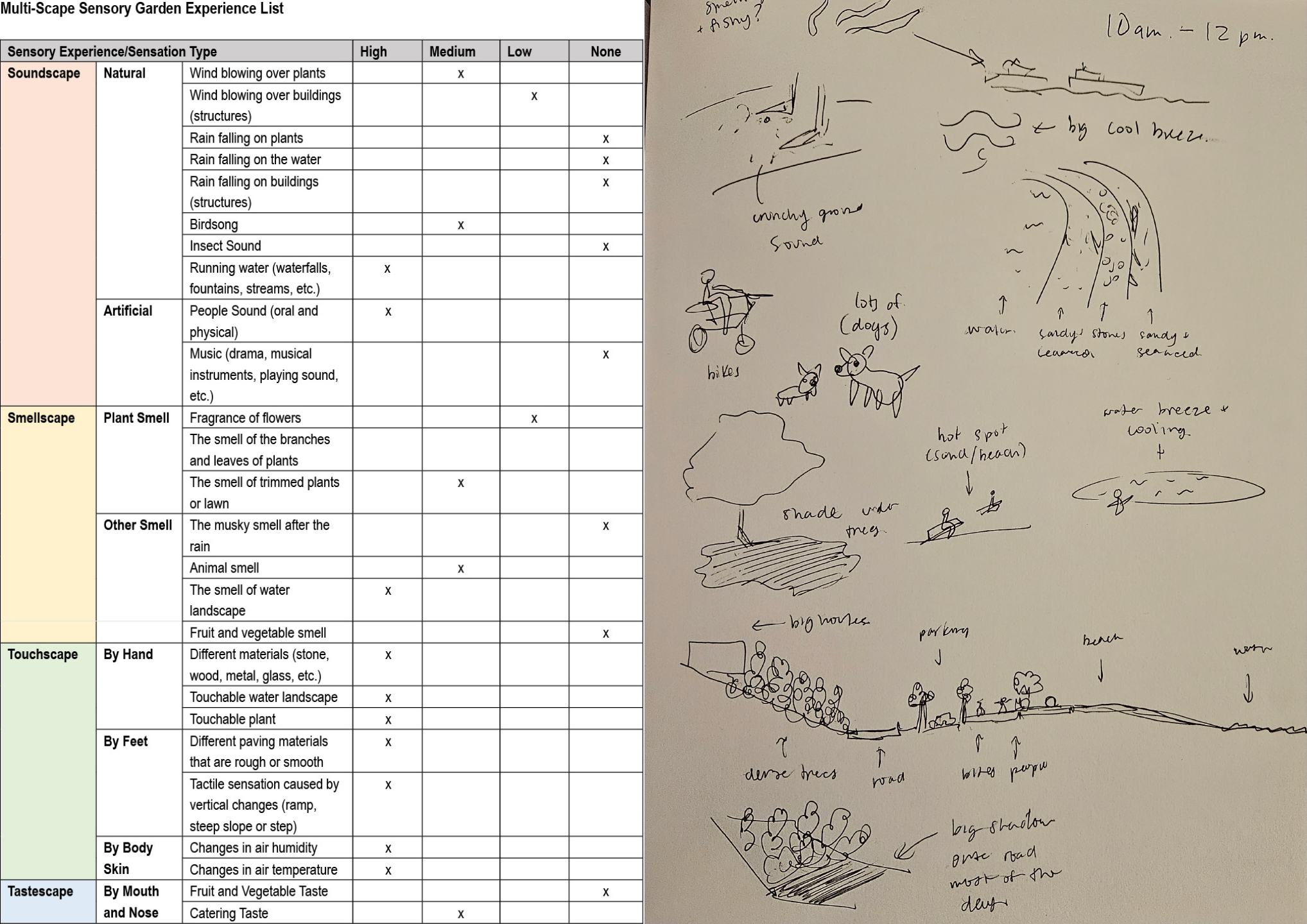
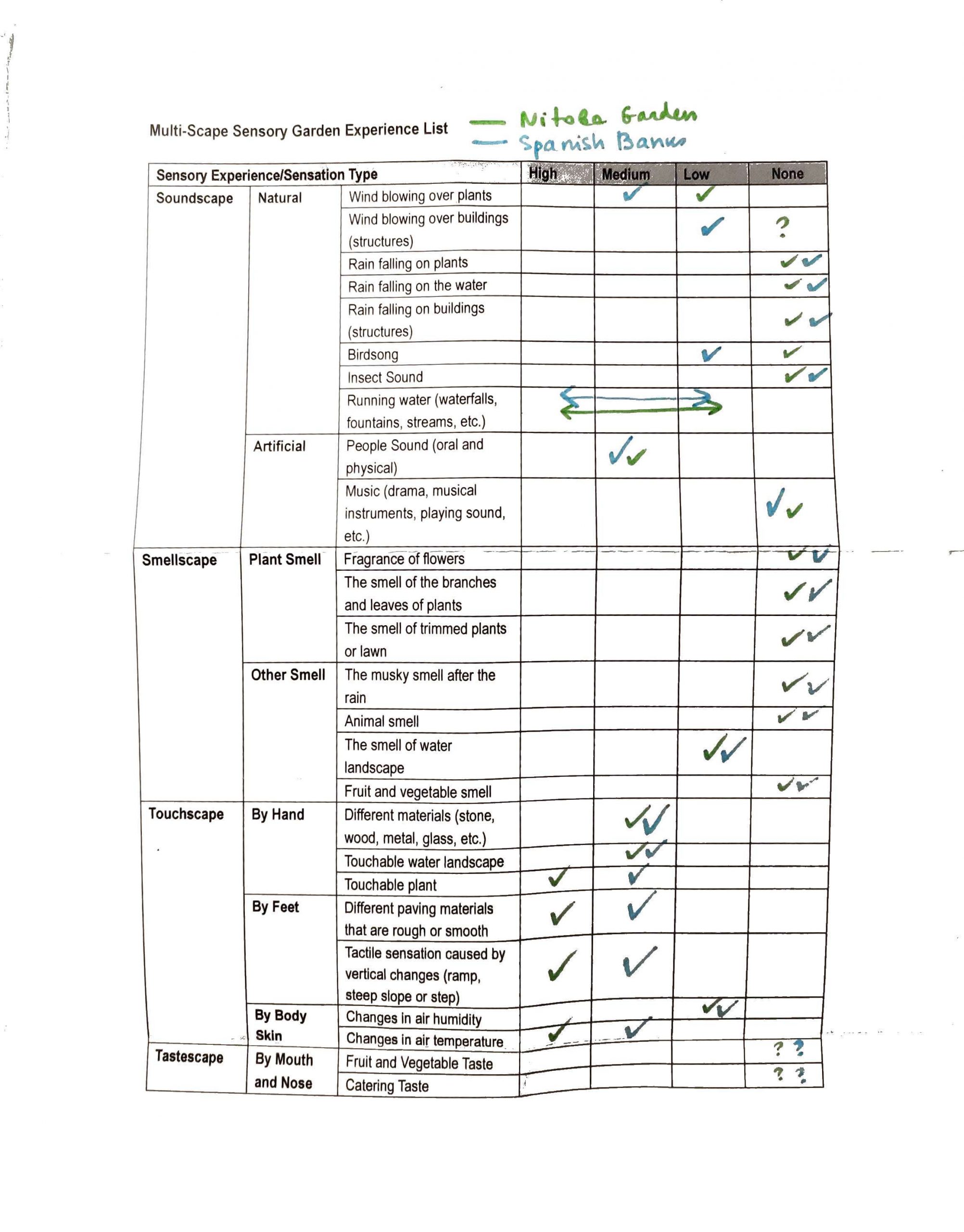
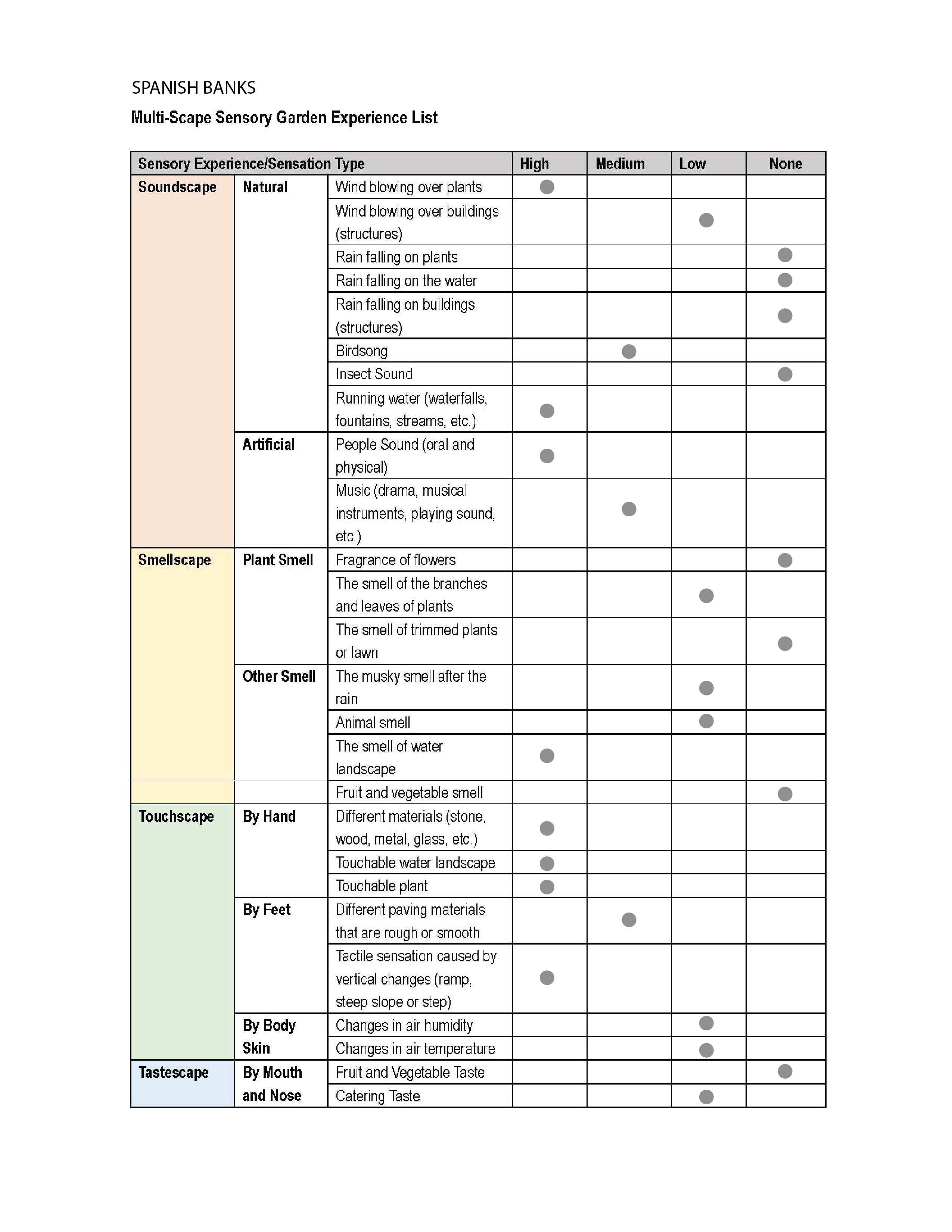
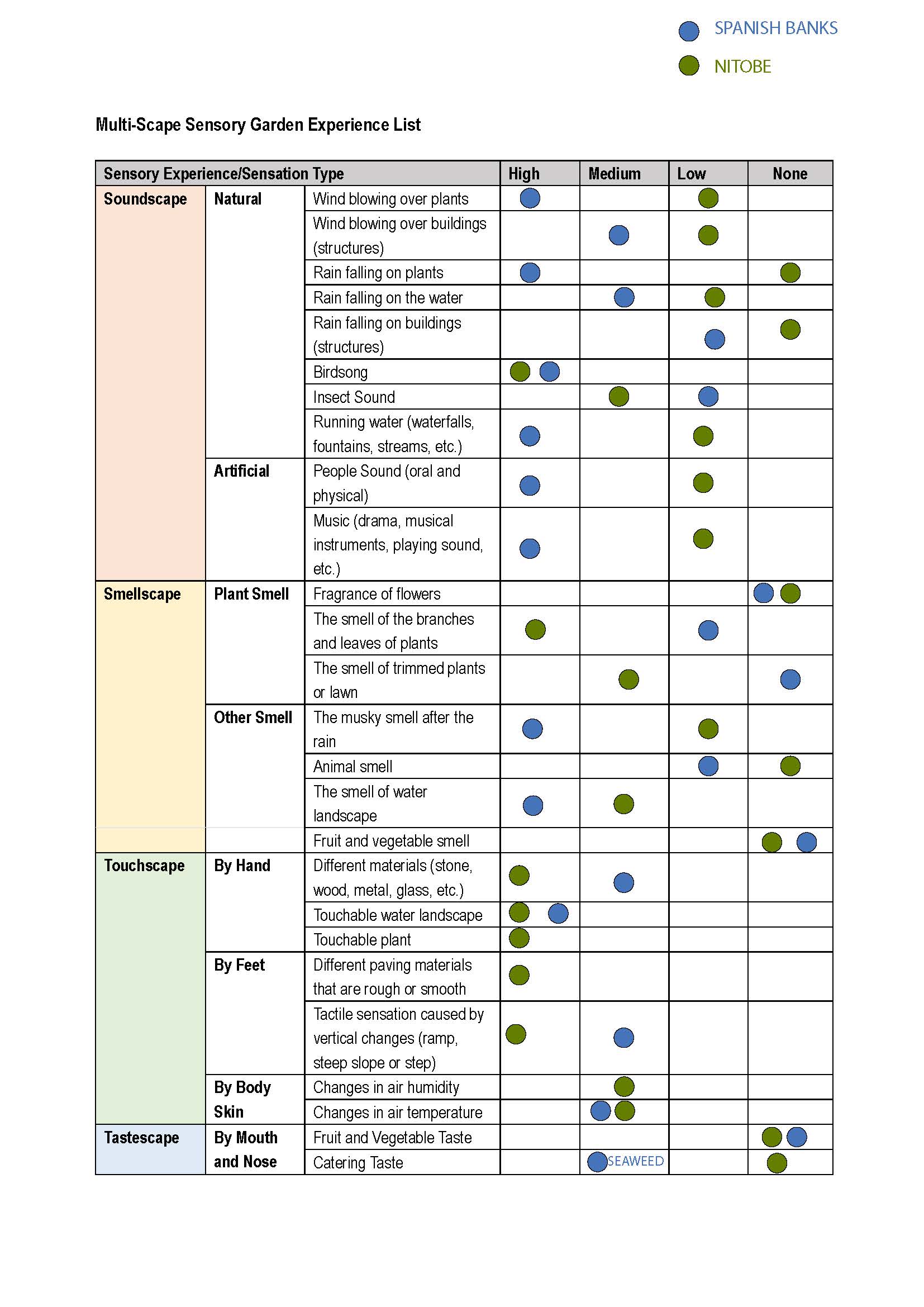
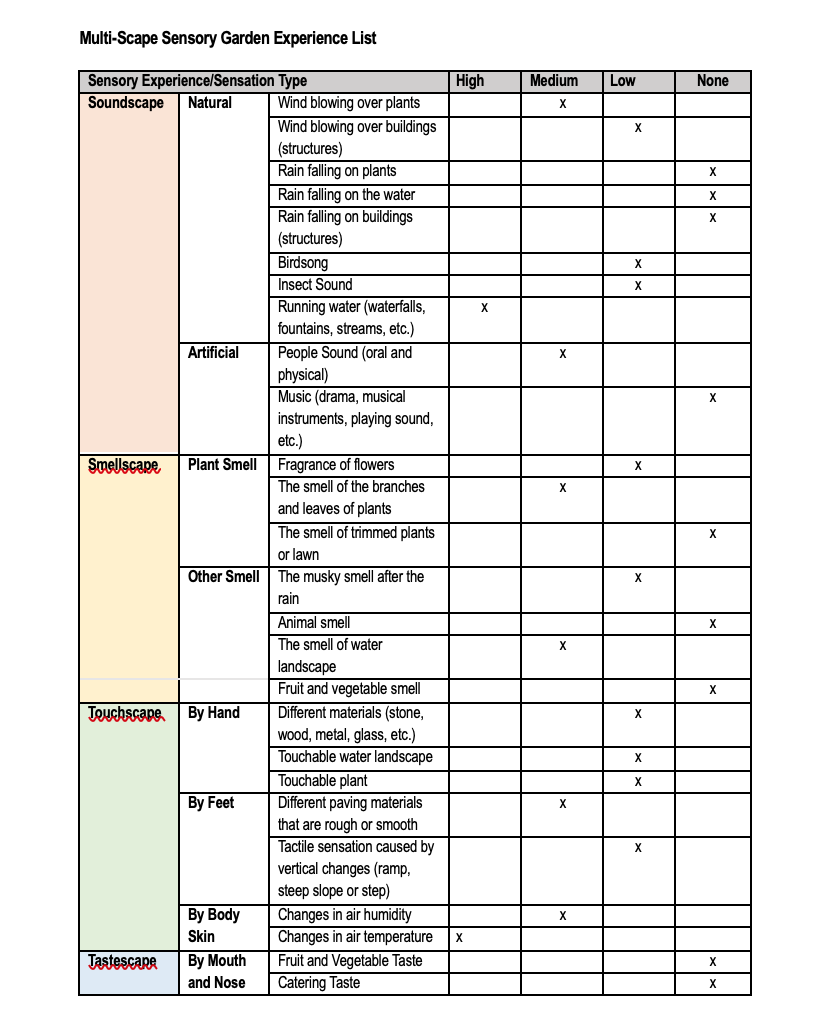
Multi-Scape Sensory List
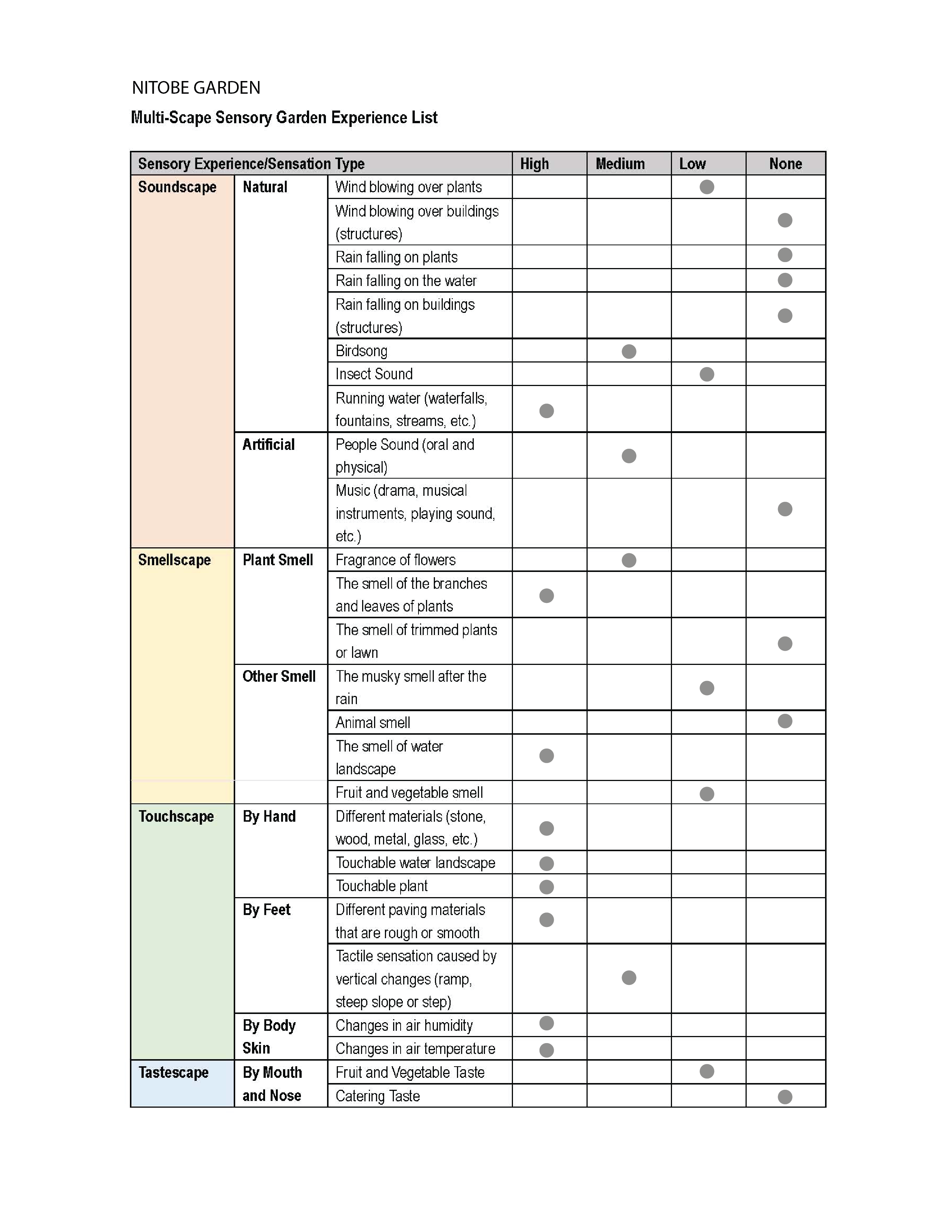
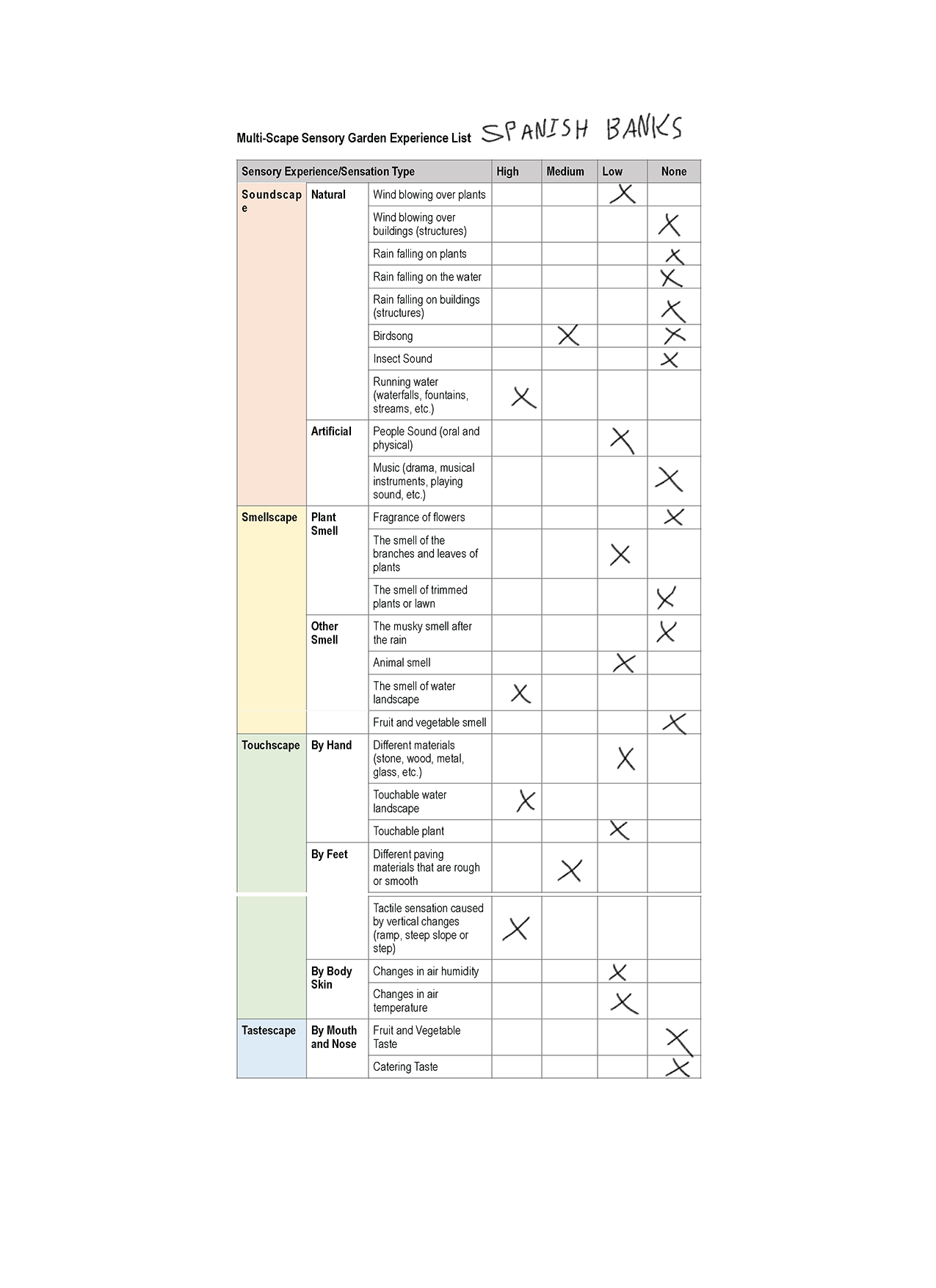
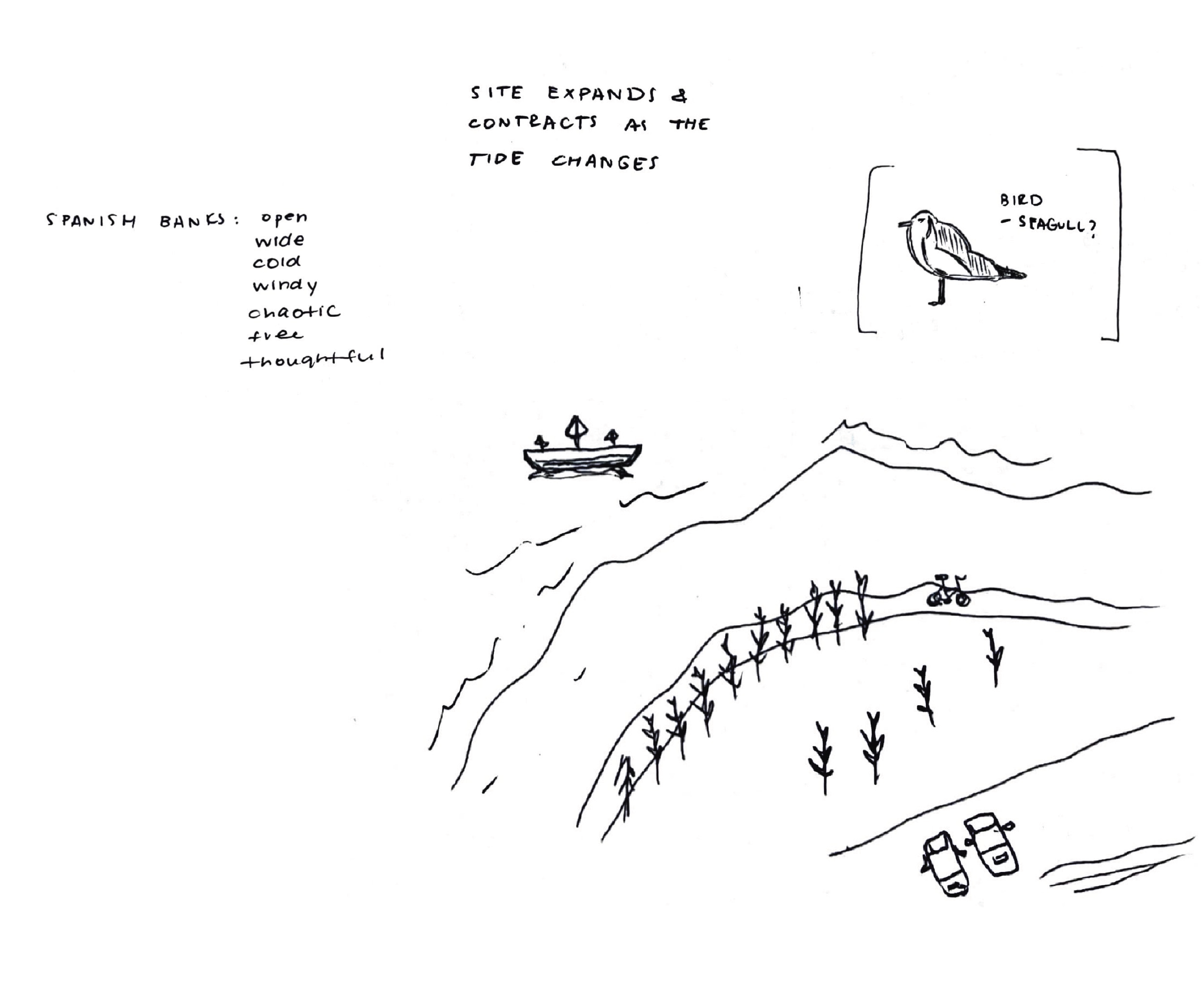
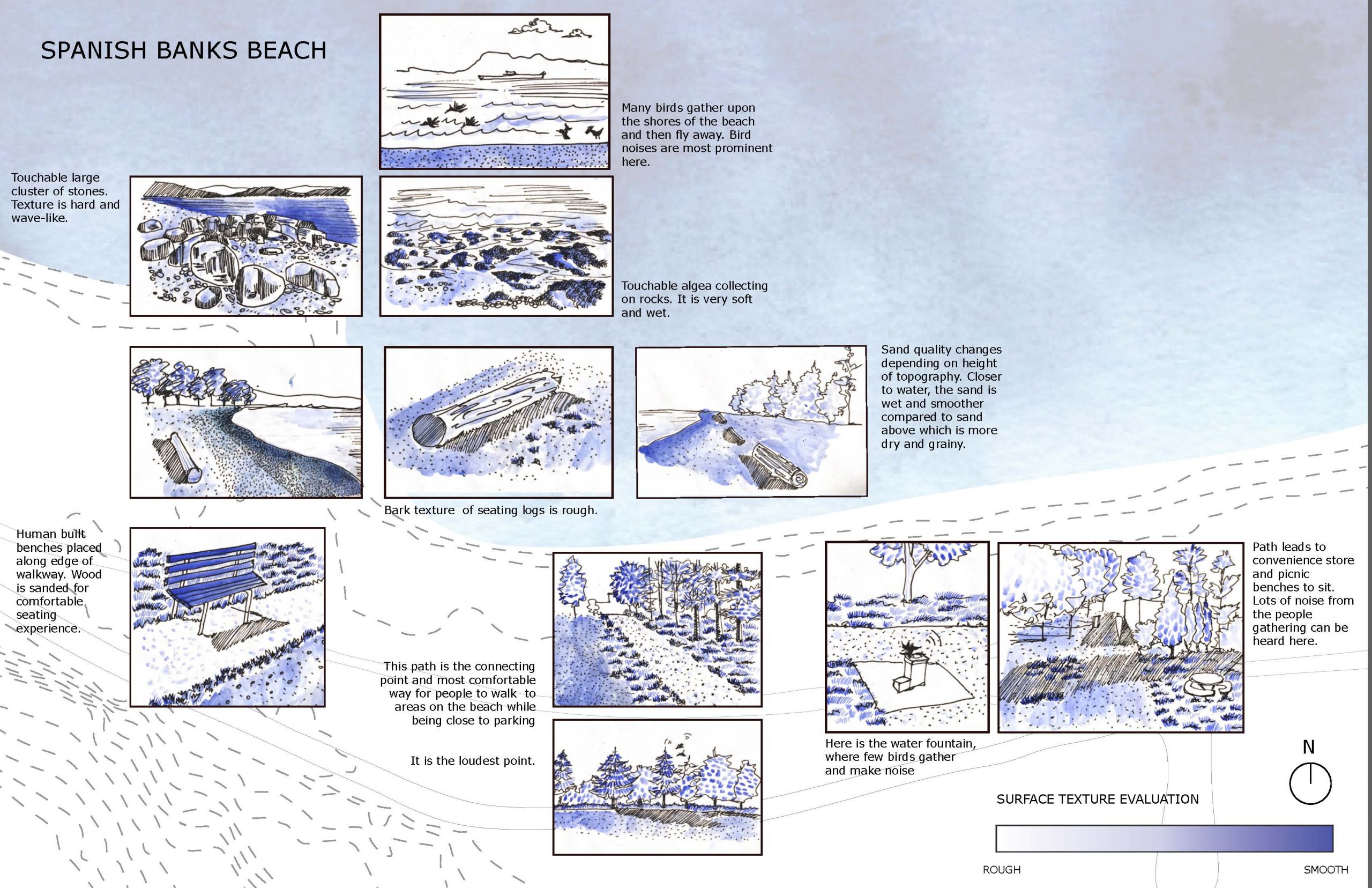
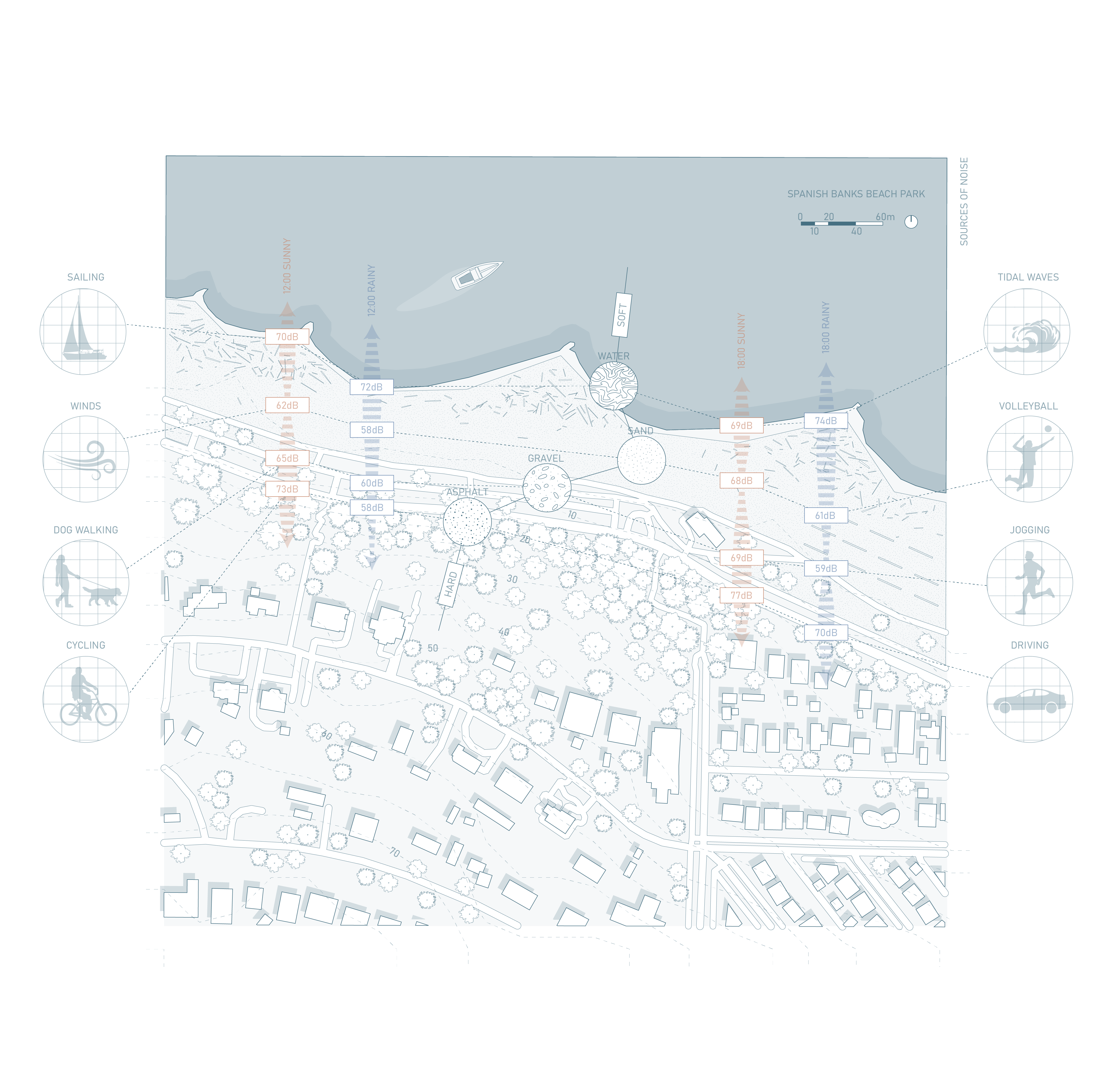
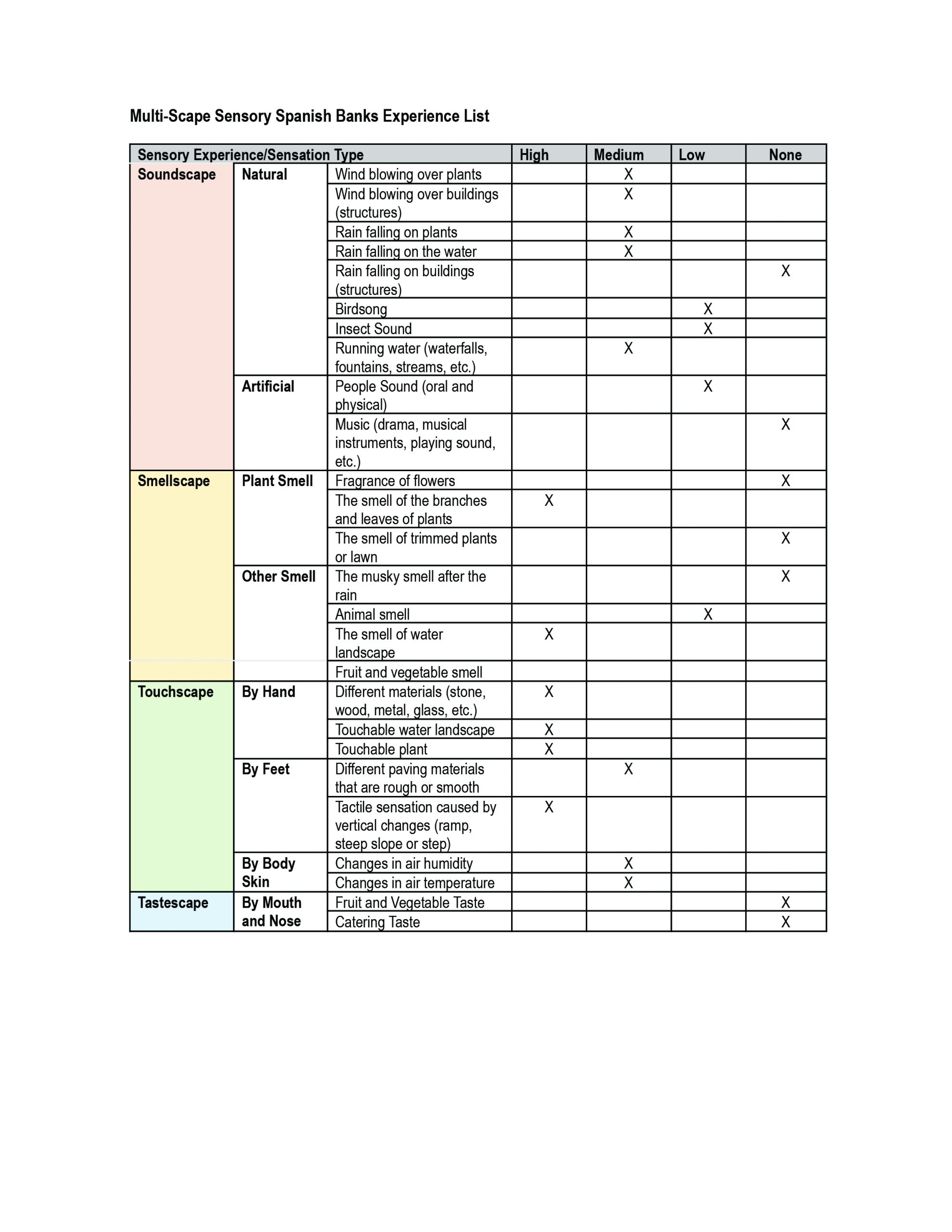
Discovering Spanish Banks Through Sound:
Exploring Hard/ Soft -scapes with pen and watercolour
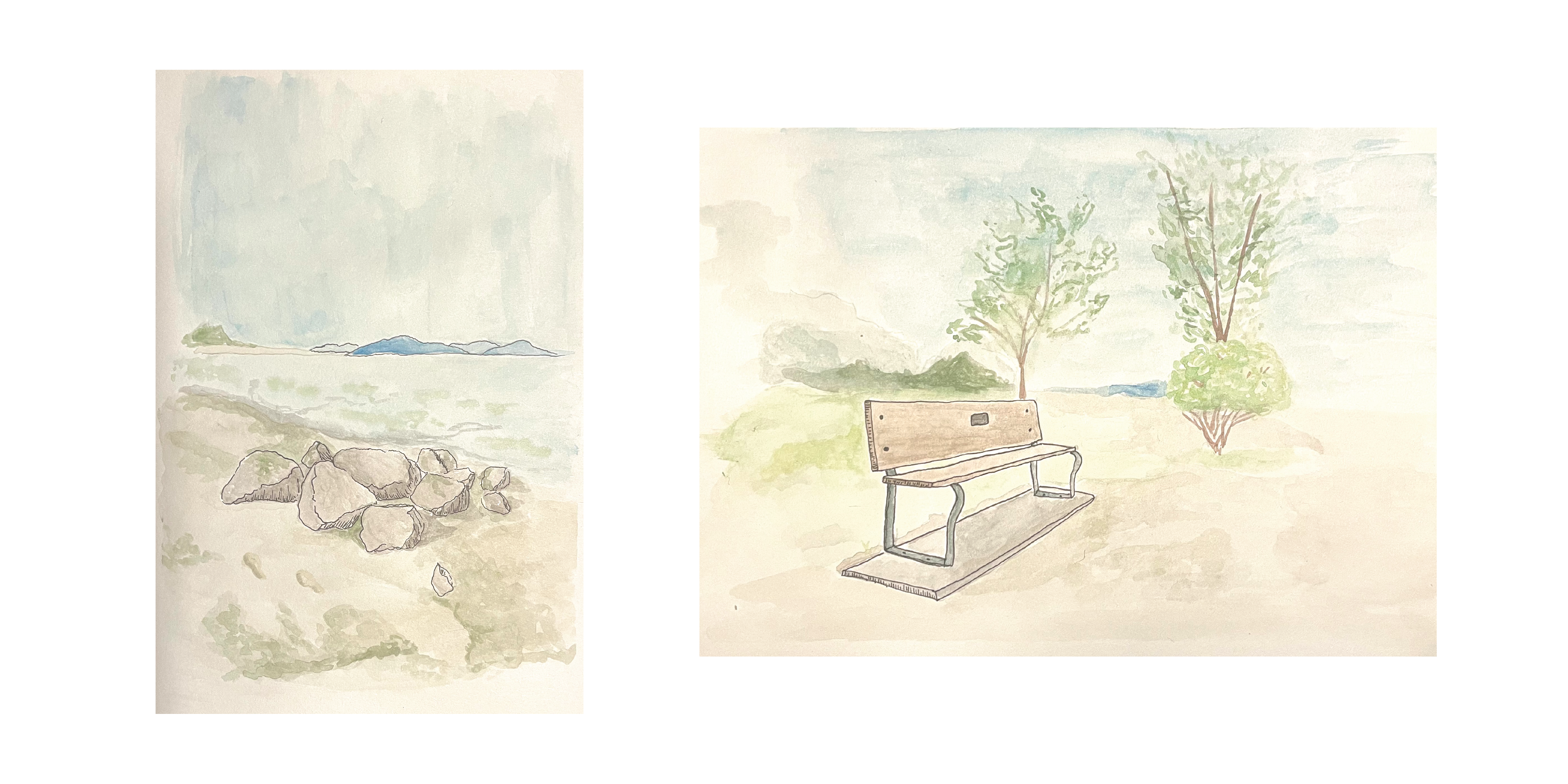
Topography
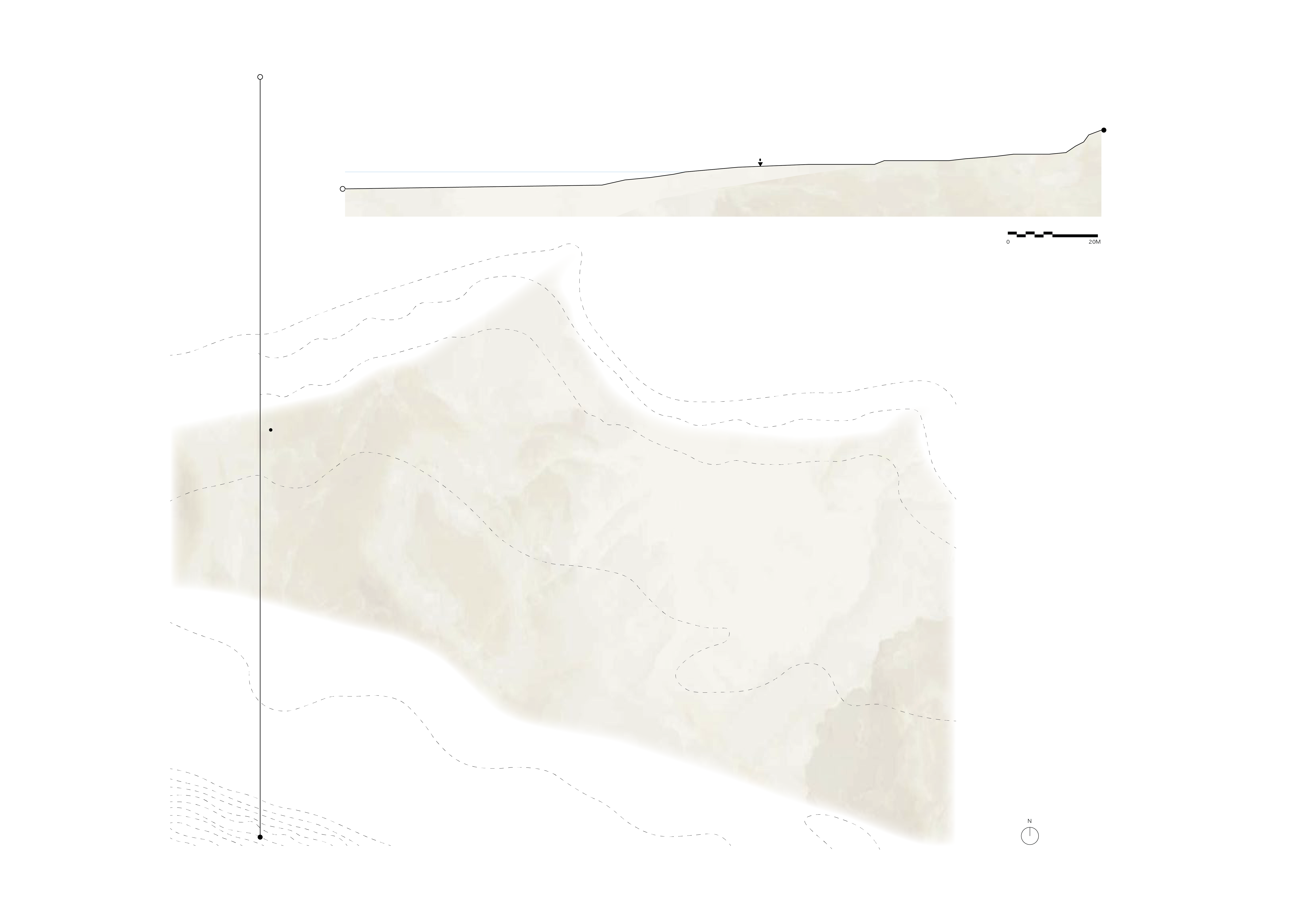
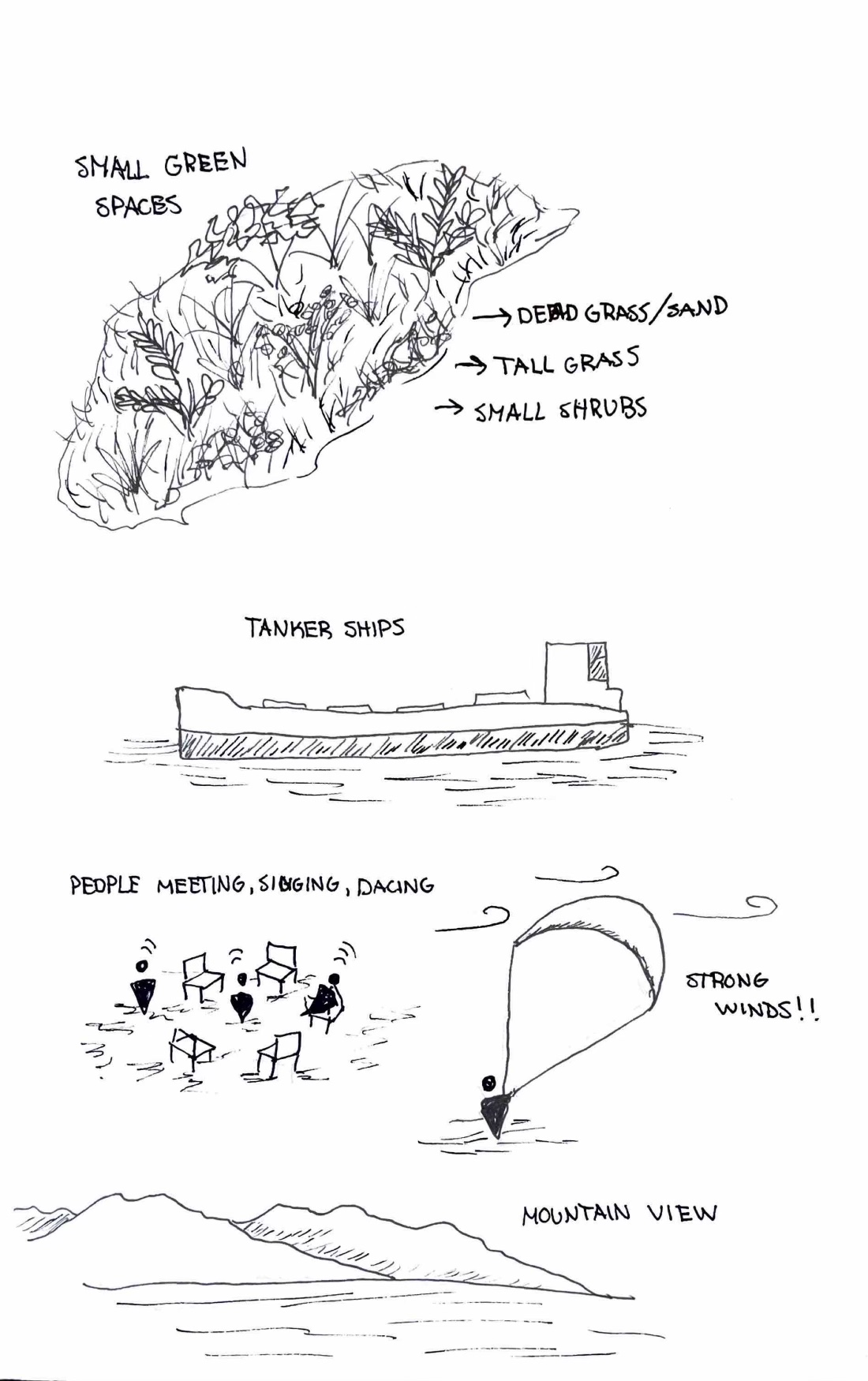
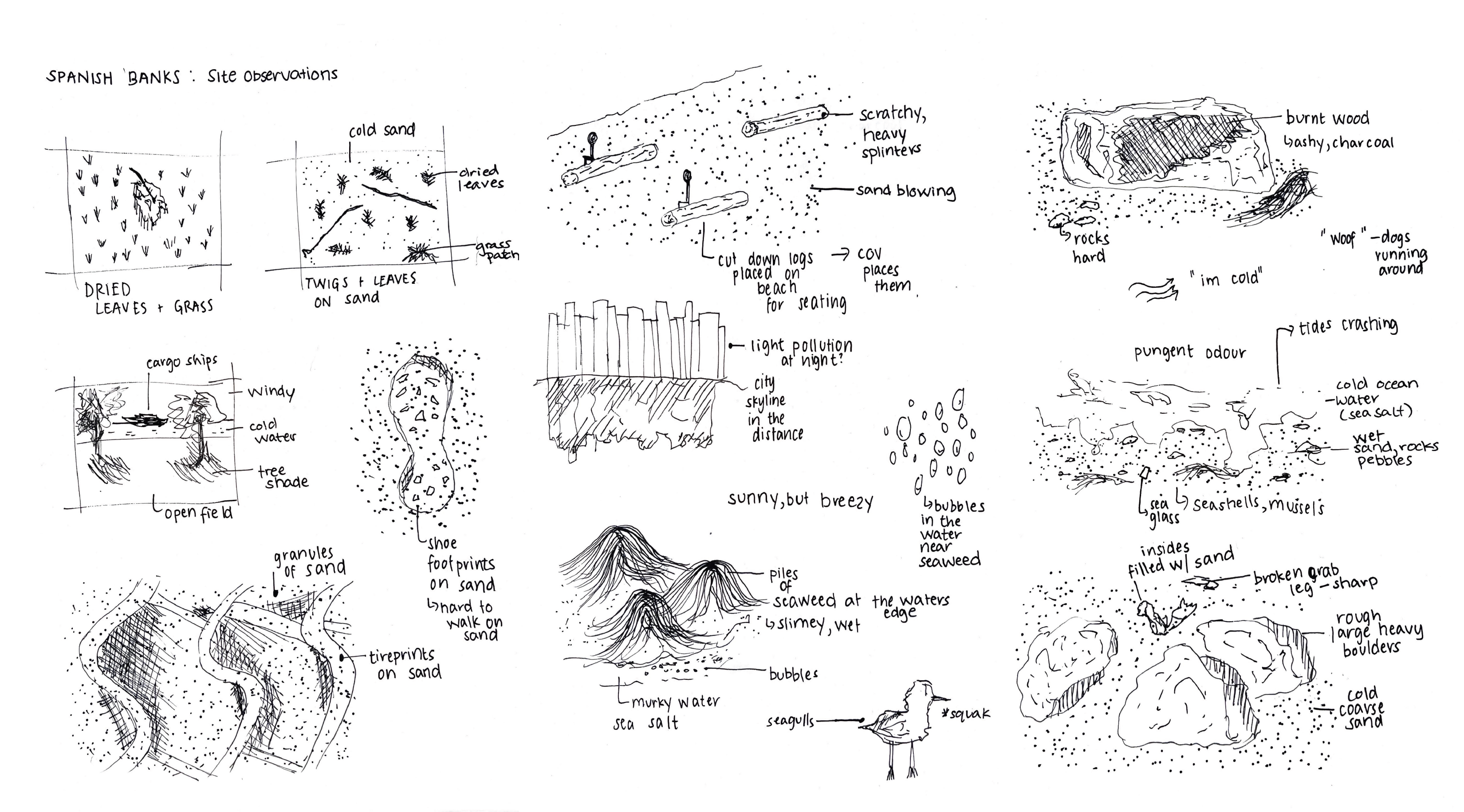
Site Sketches/Notes

Multi-Scape Sensory List

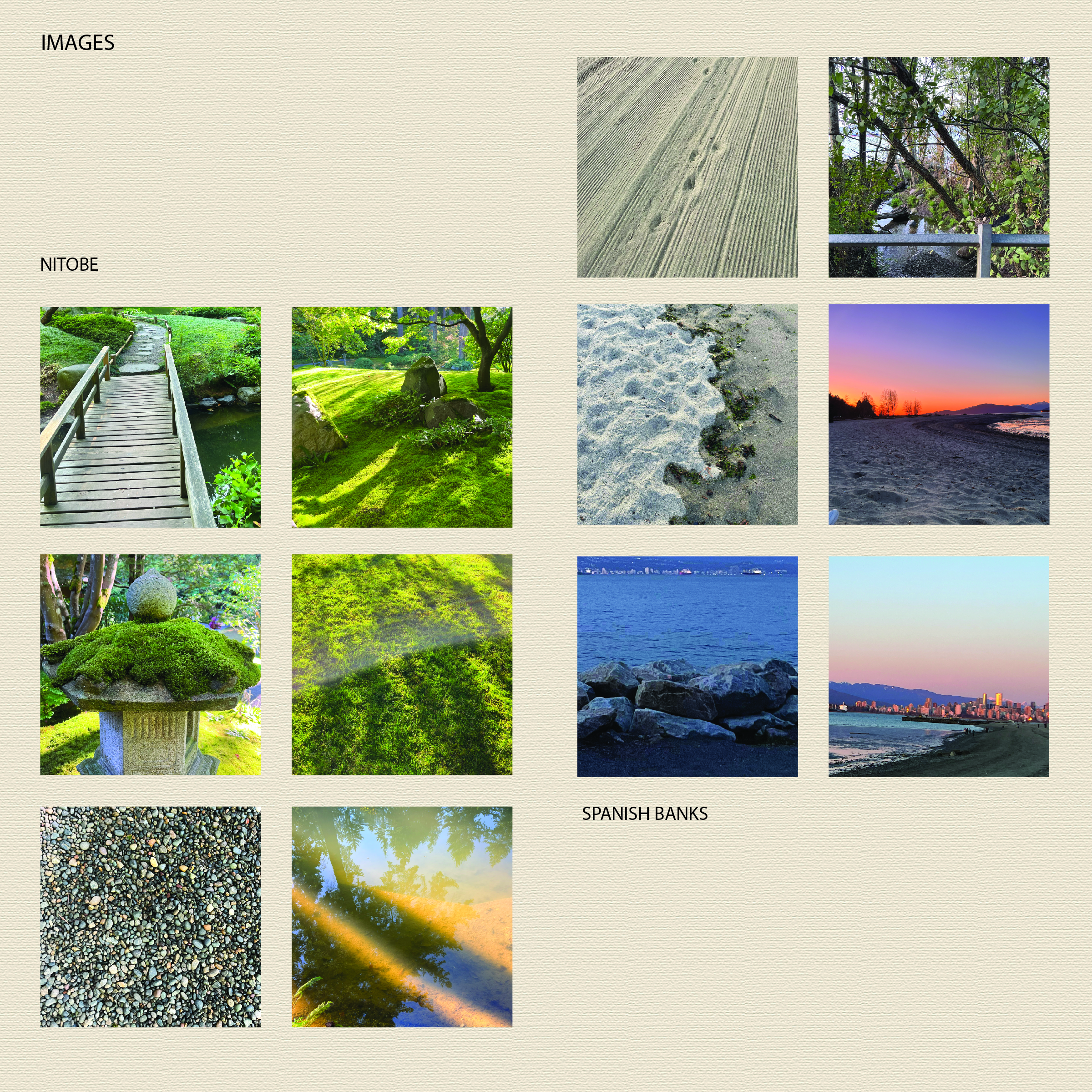



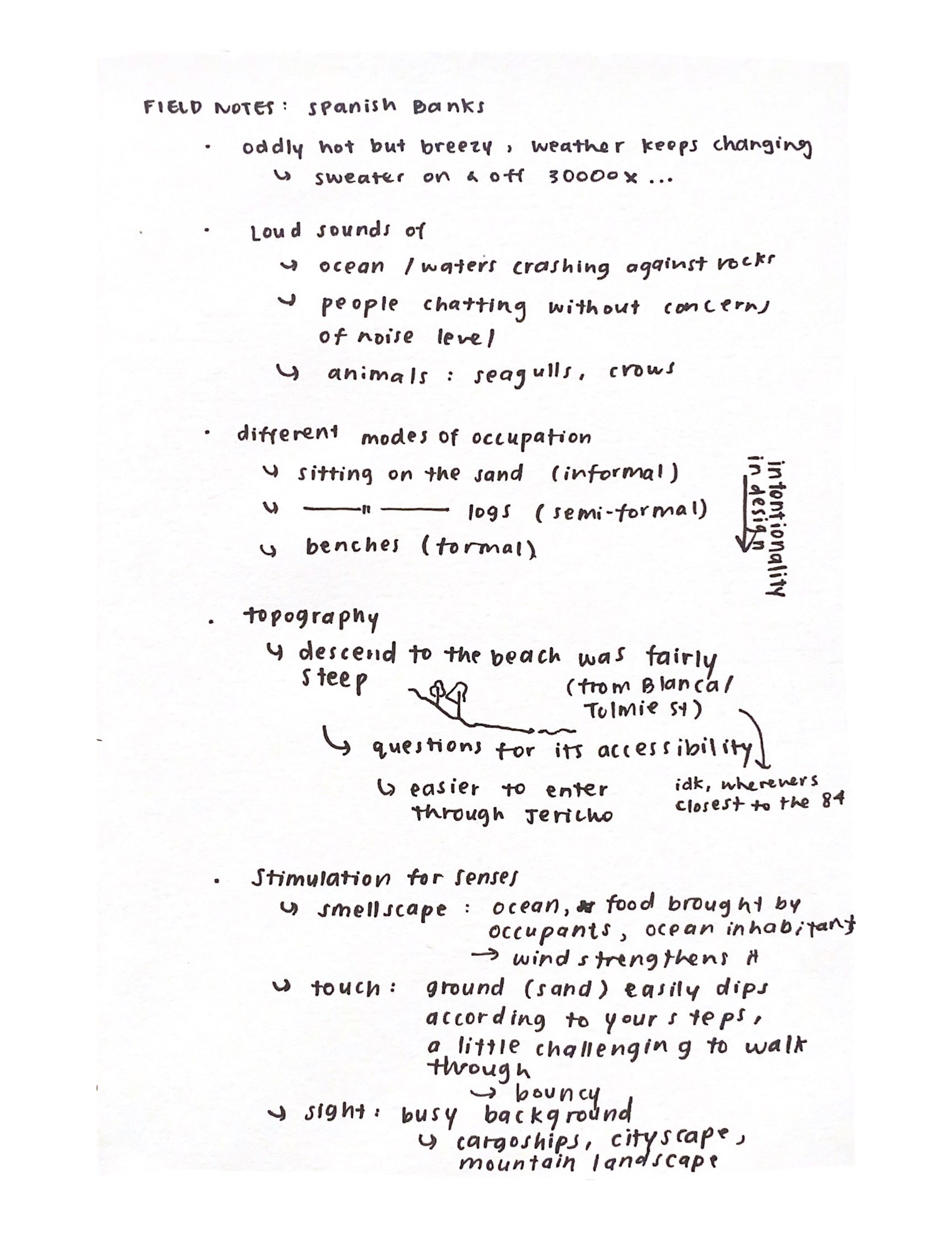
Site visit notes:
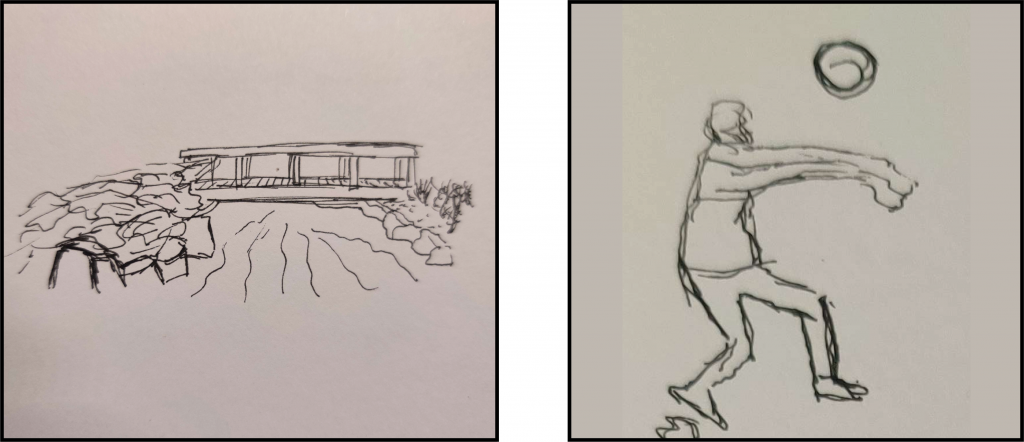
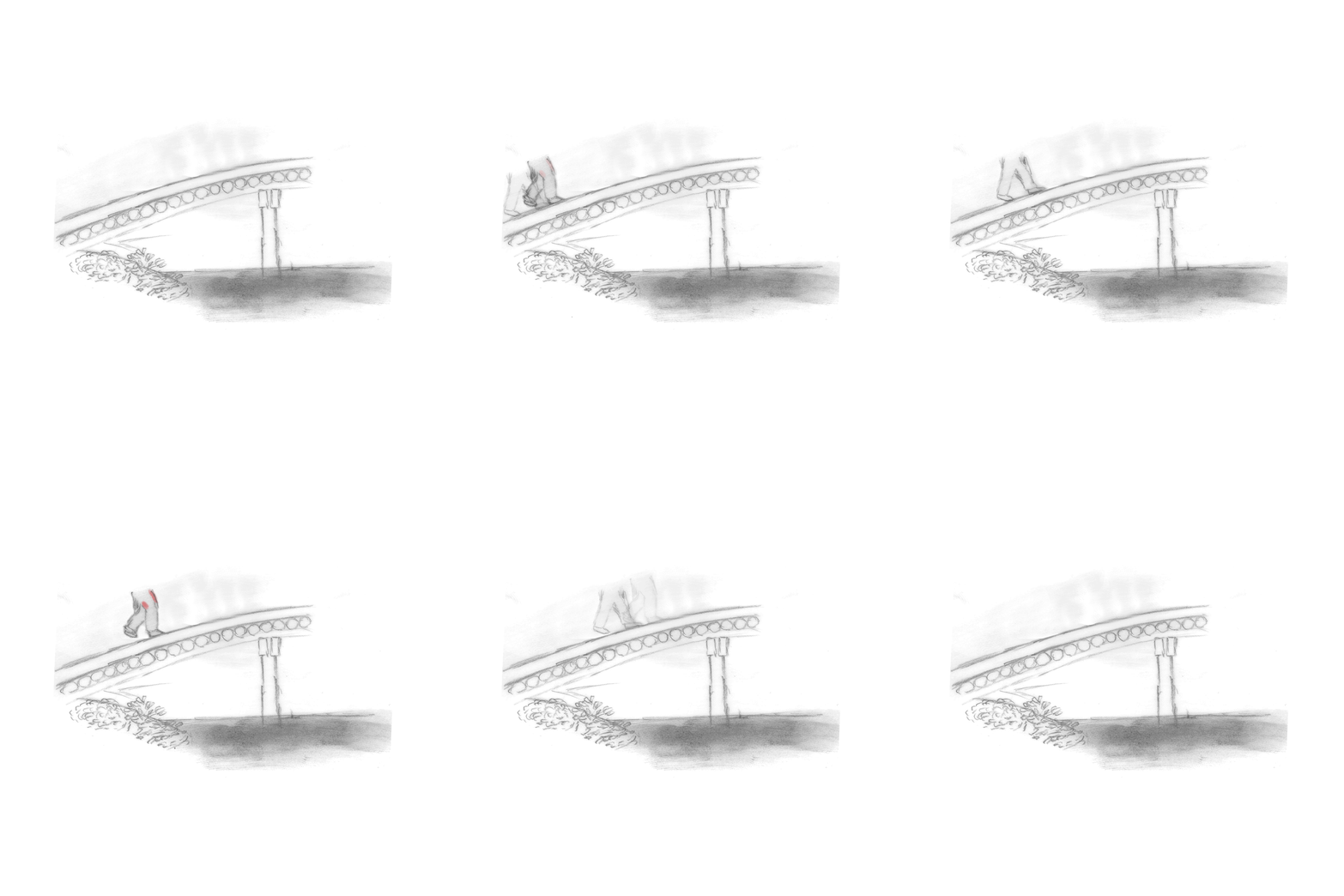
Through the experience of Nitobe and Spanish banks, similarities can be seen between the designed bridges and the human movement.
On the passive level, bridges are stationary entities, and serve to transition between space. On the active level, human movement, especially when playing sports seem to have frames which with the shape of the passive landscape. When the player is awaiting the ball and forms a platform with their arm; when they are at maximum elasticity and anticipating the ball mid-air; when they are going for a block…
The weather and immediate conditions of the site such as wind/rain tend to affect the human movement more than the built environment.
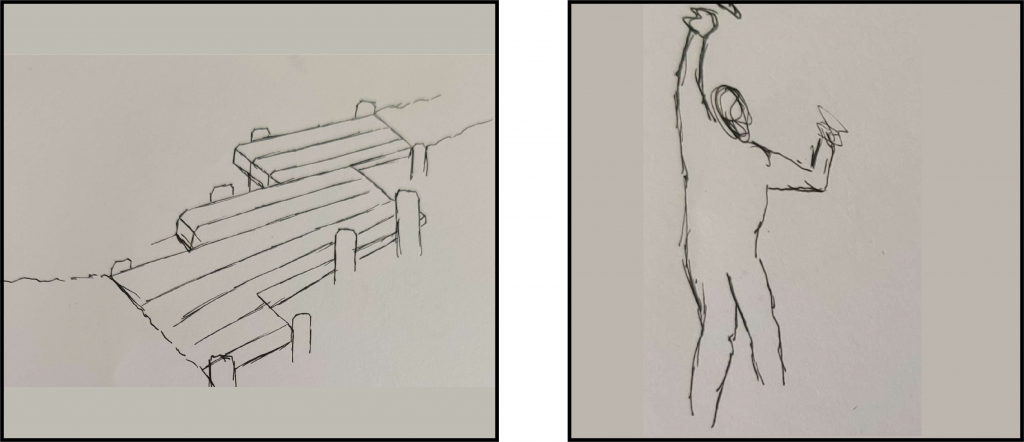



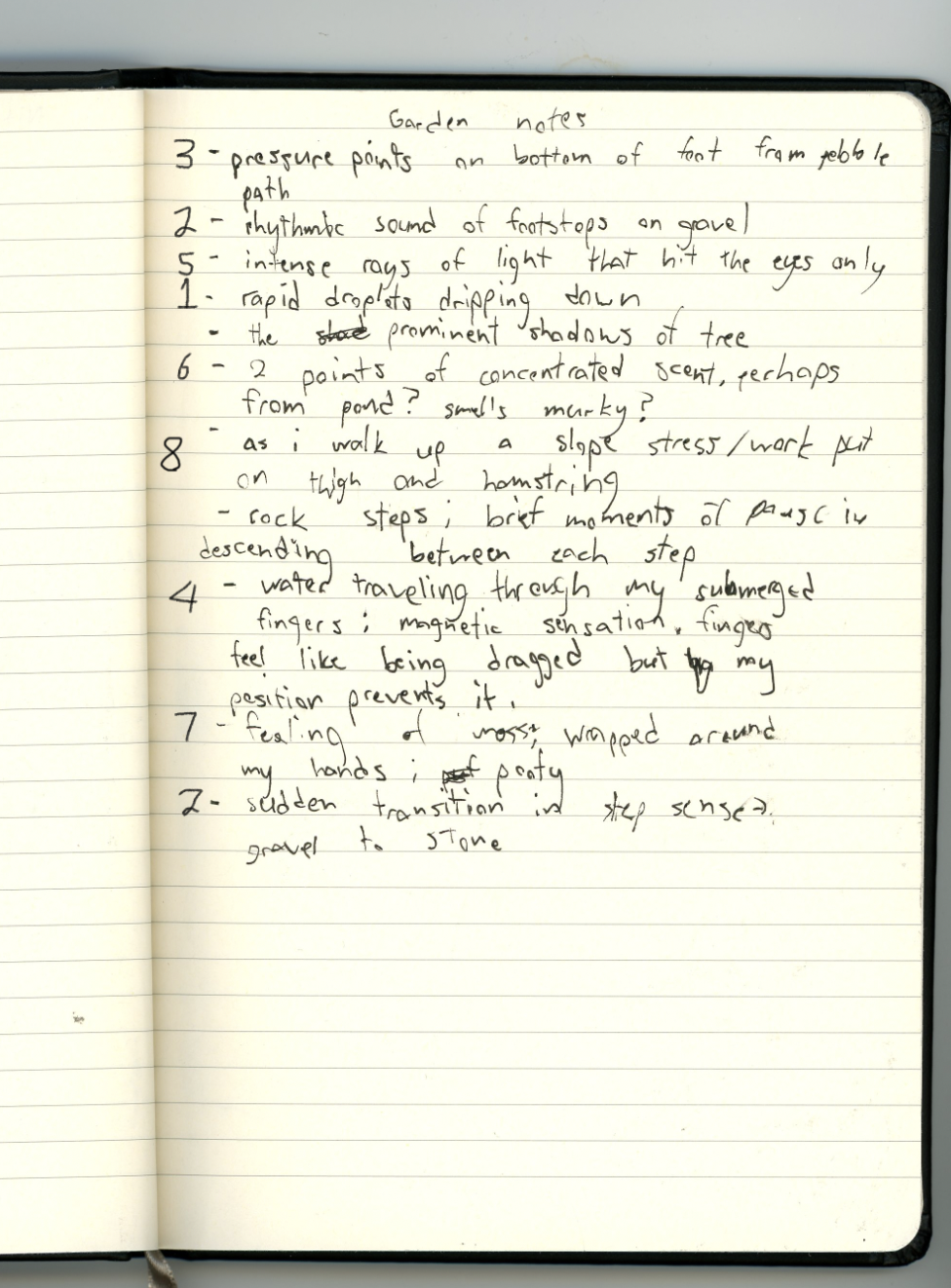
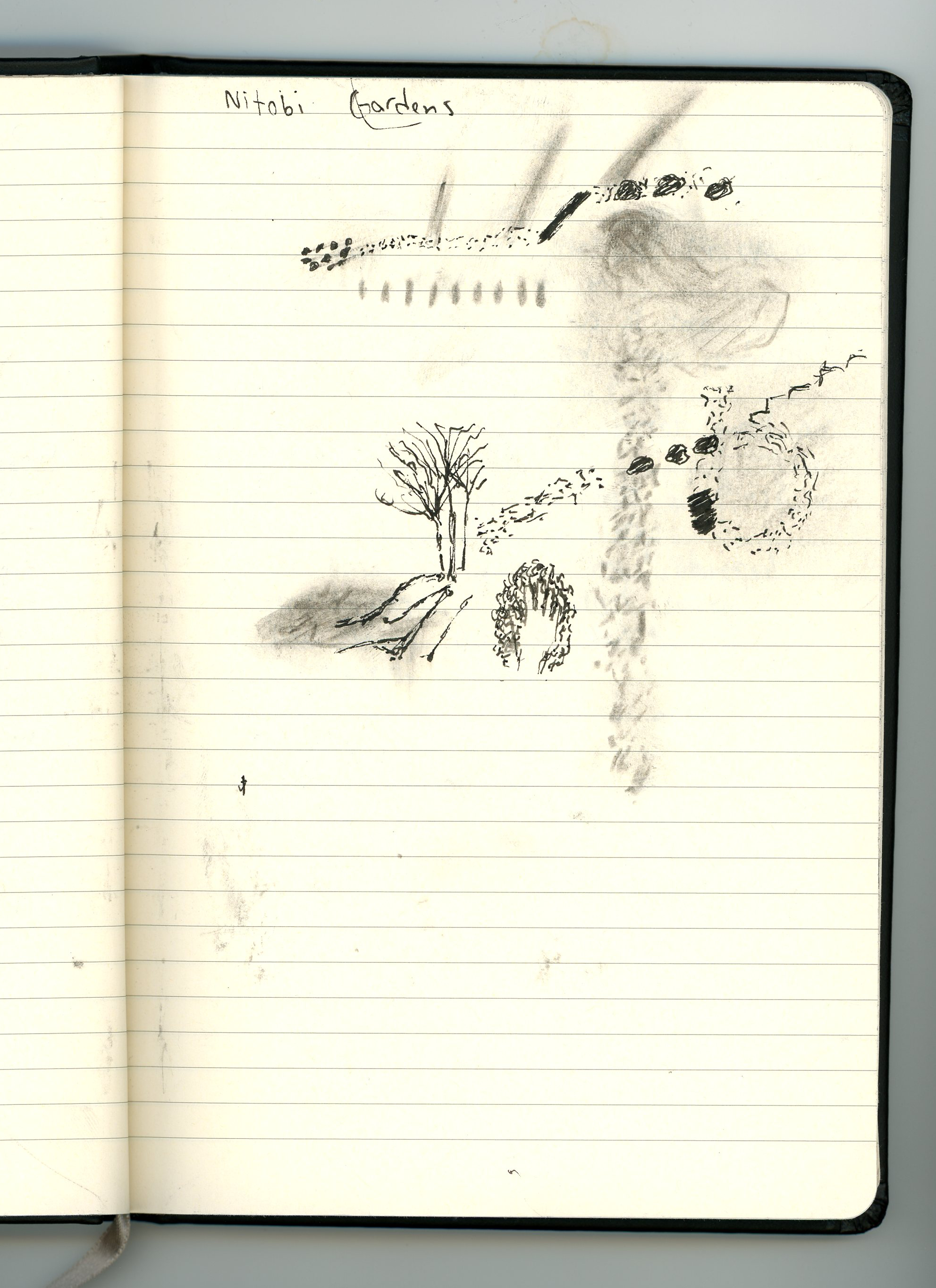




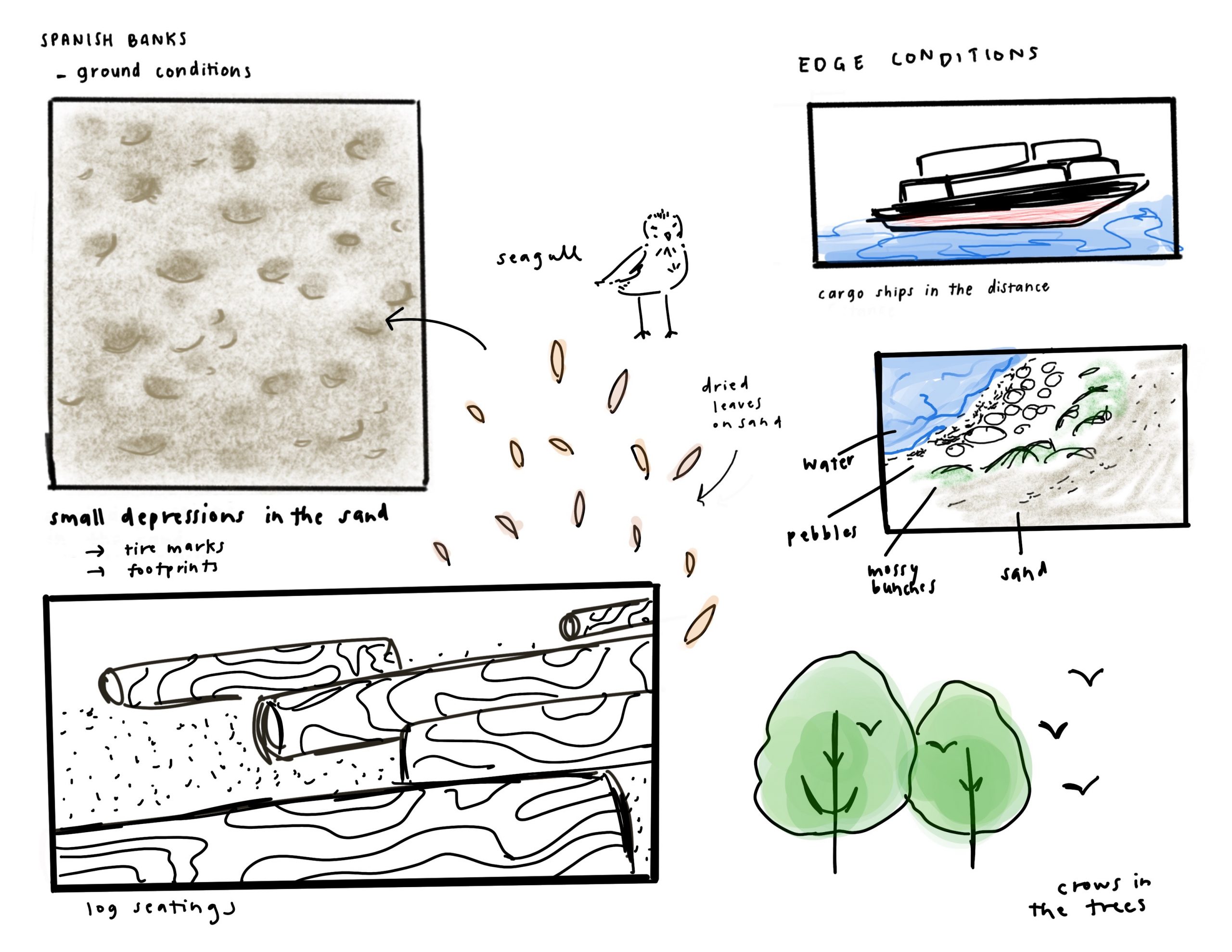
spanish banks



nitobe gardens




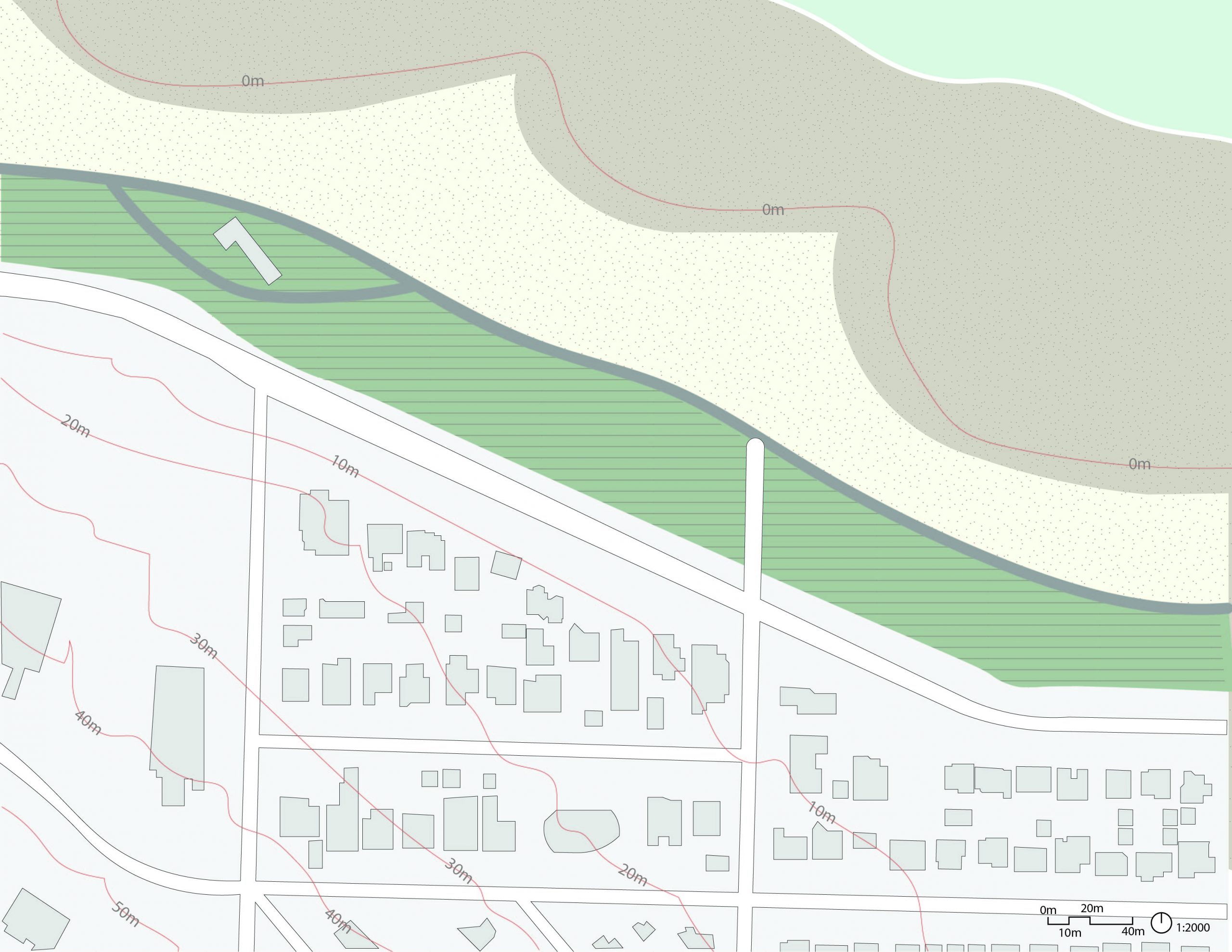
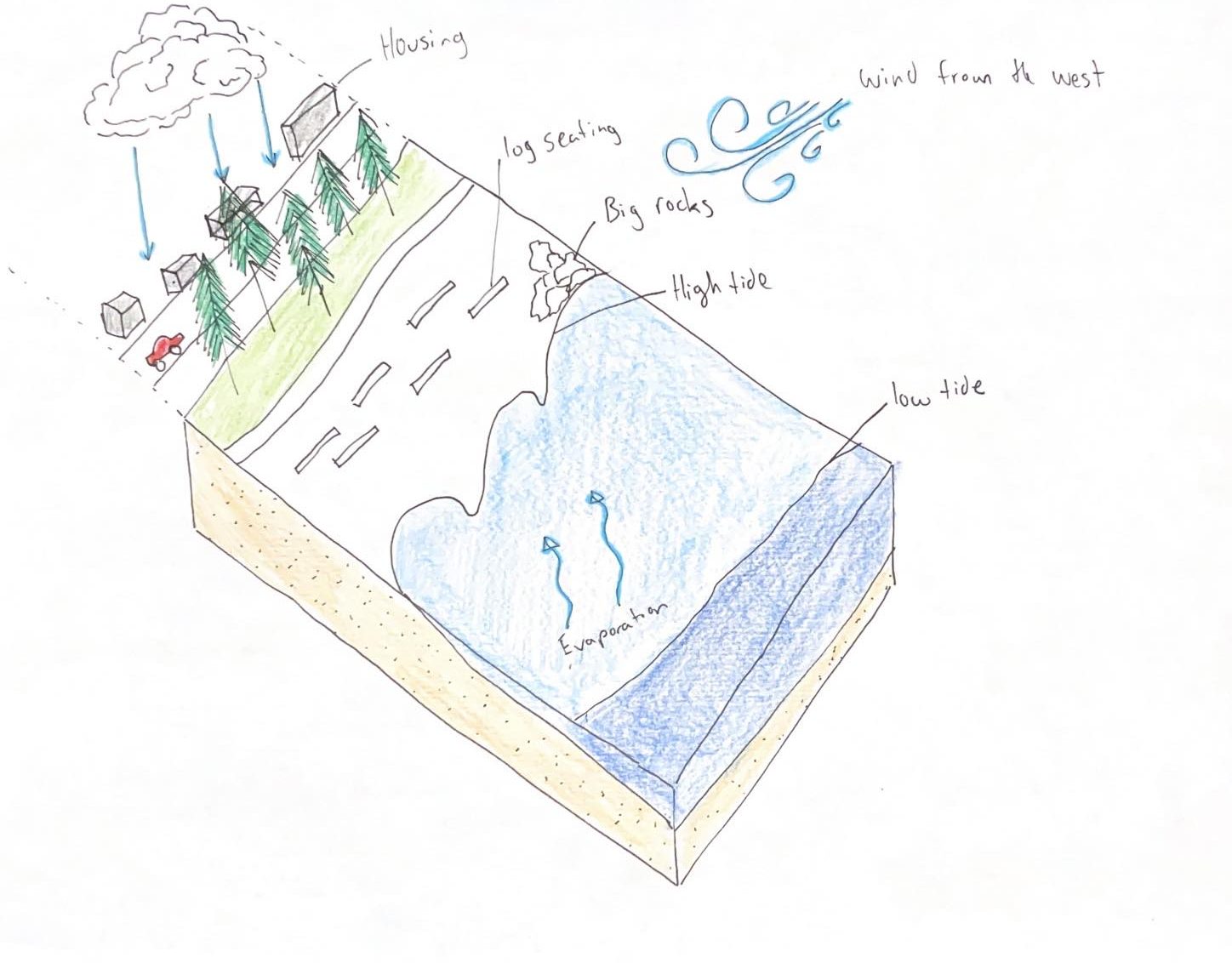


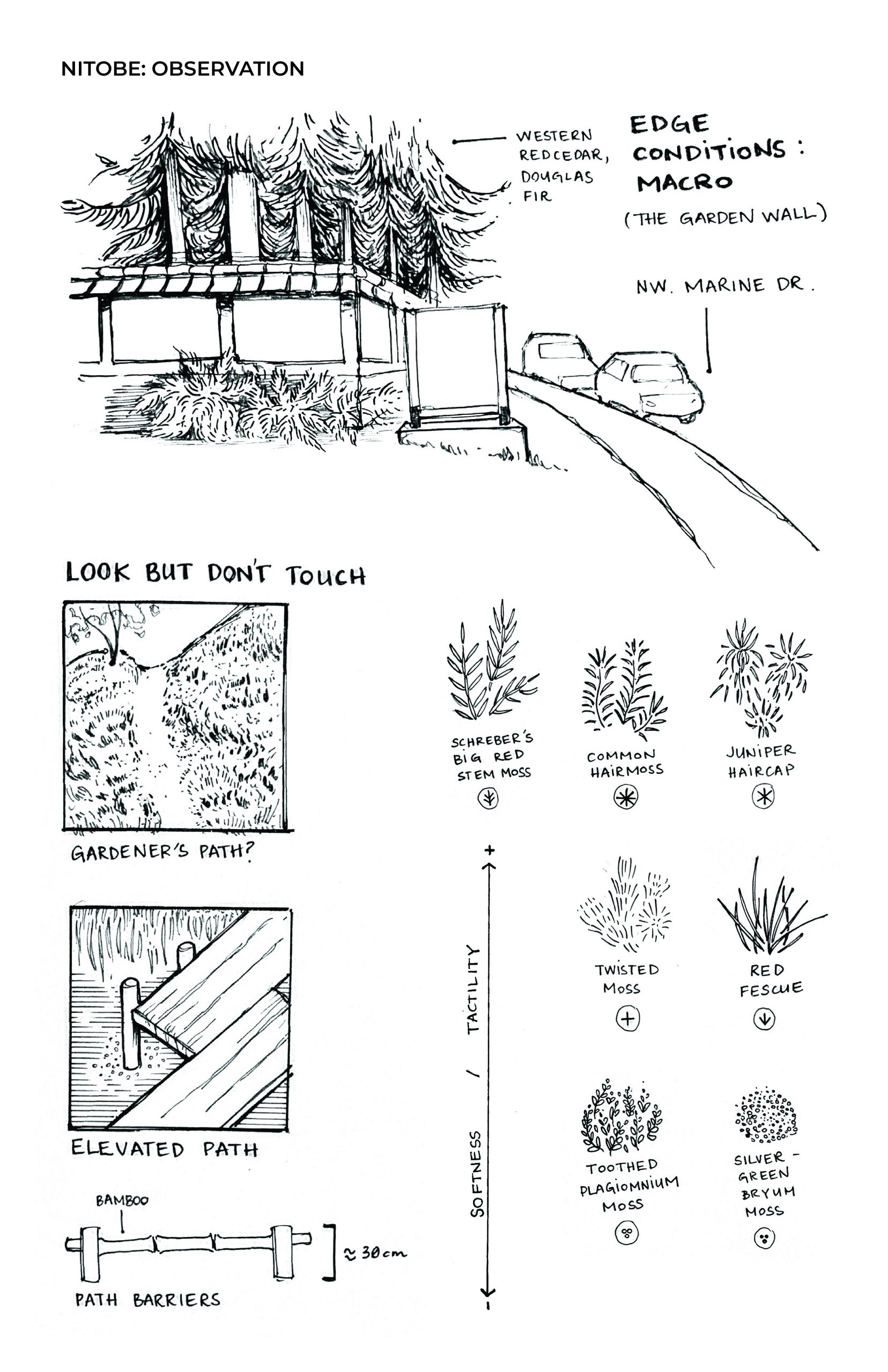
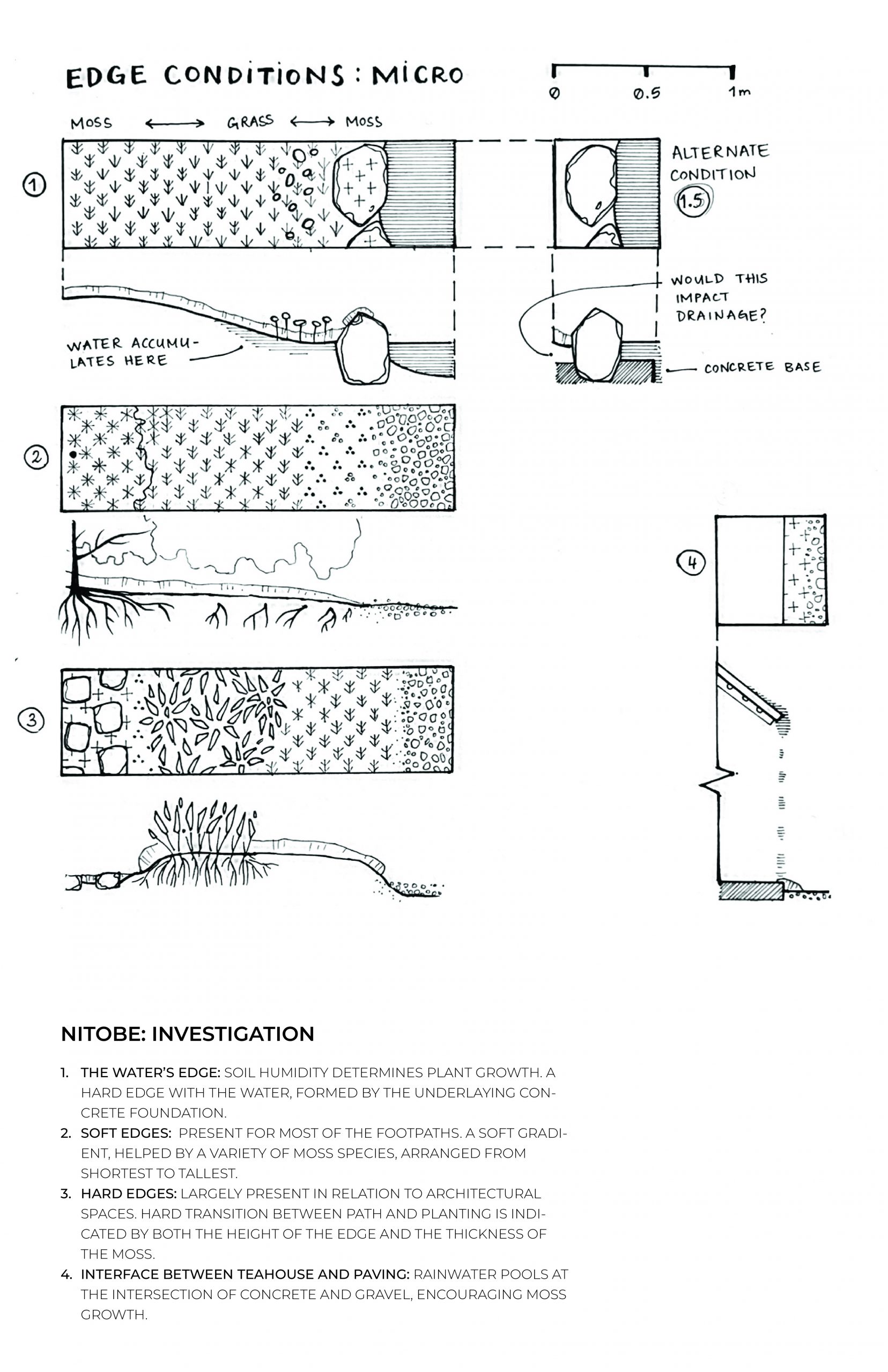

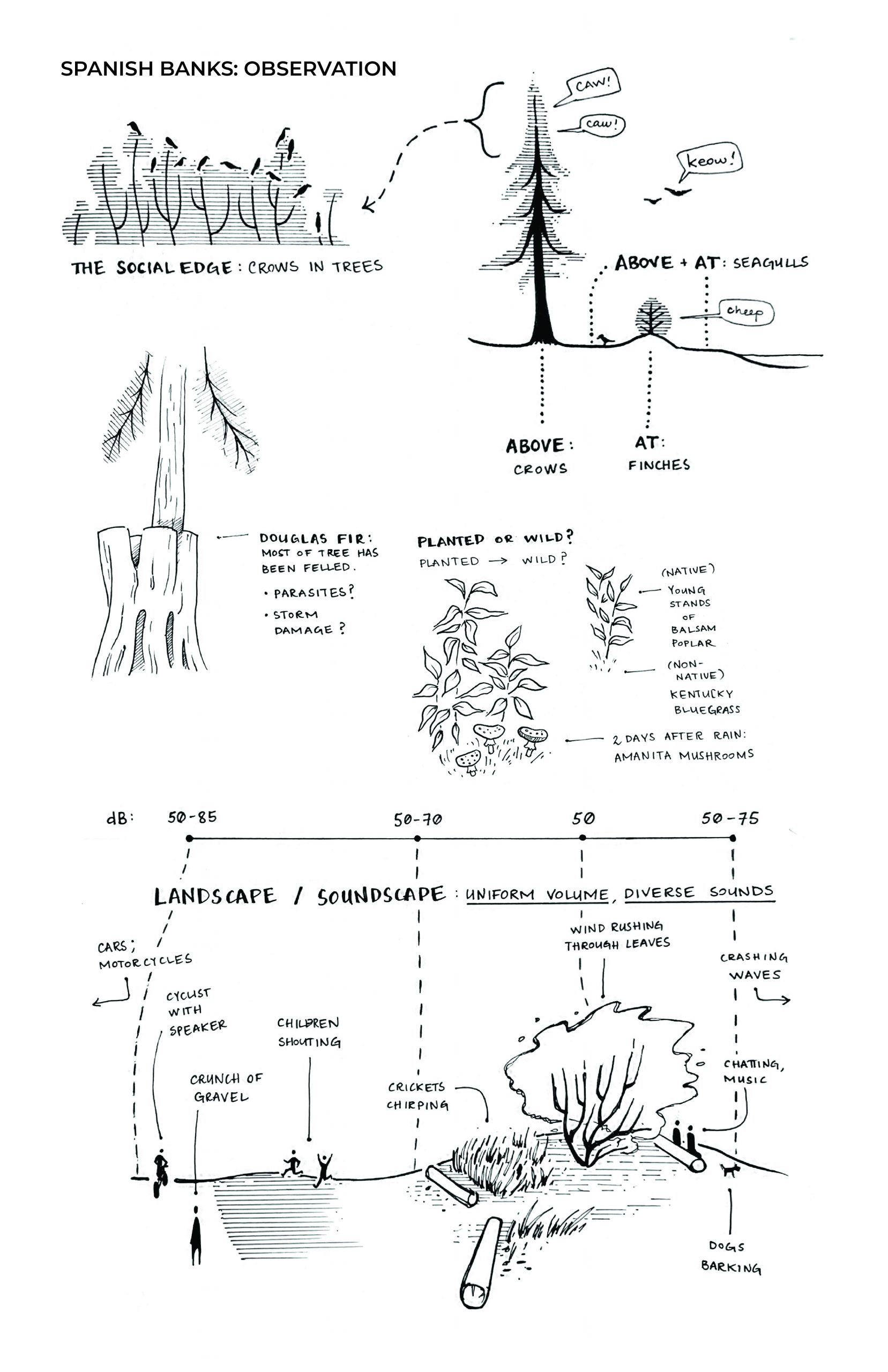
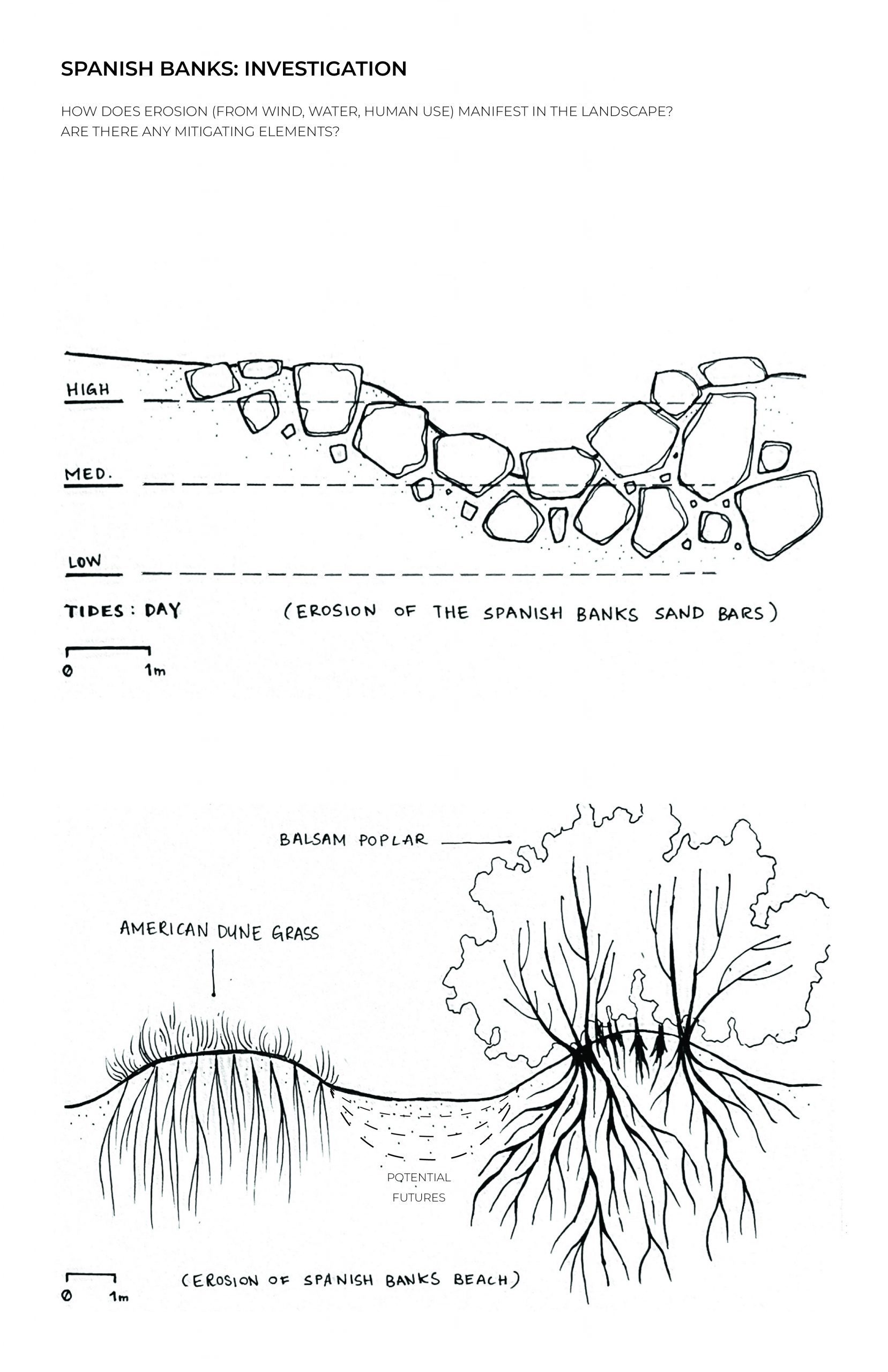


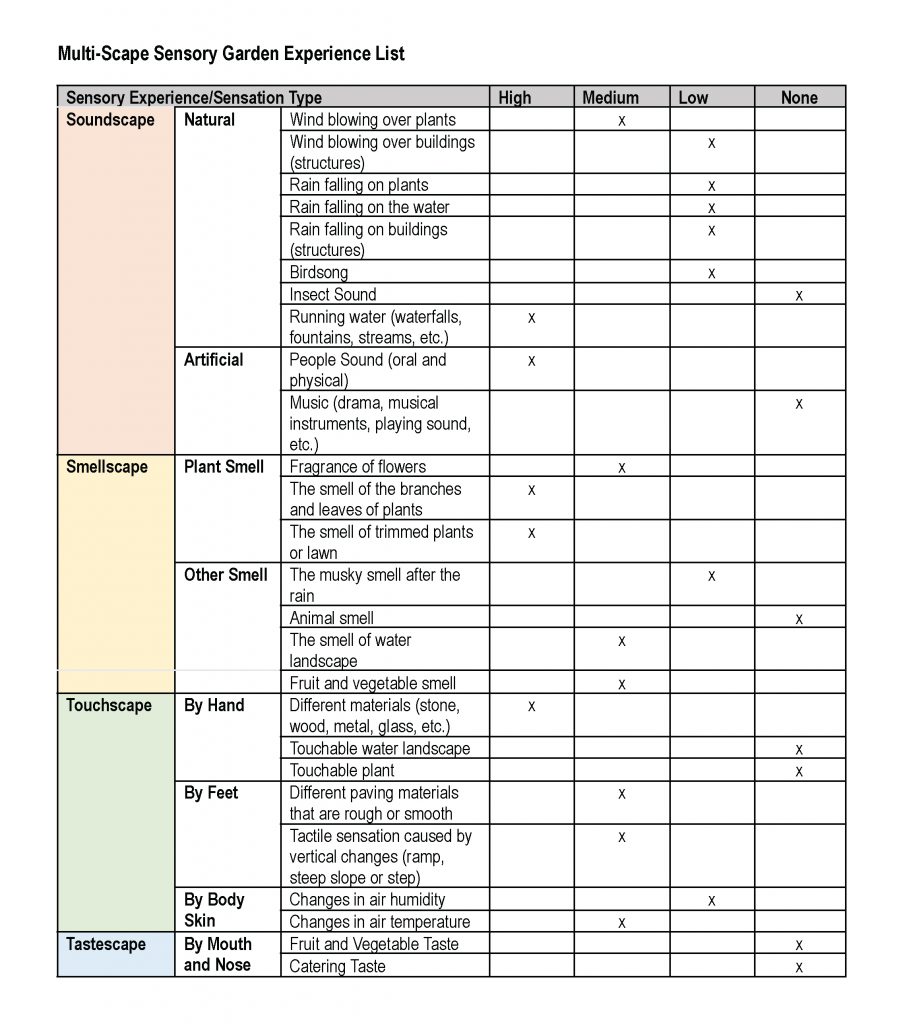

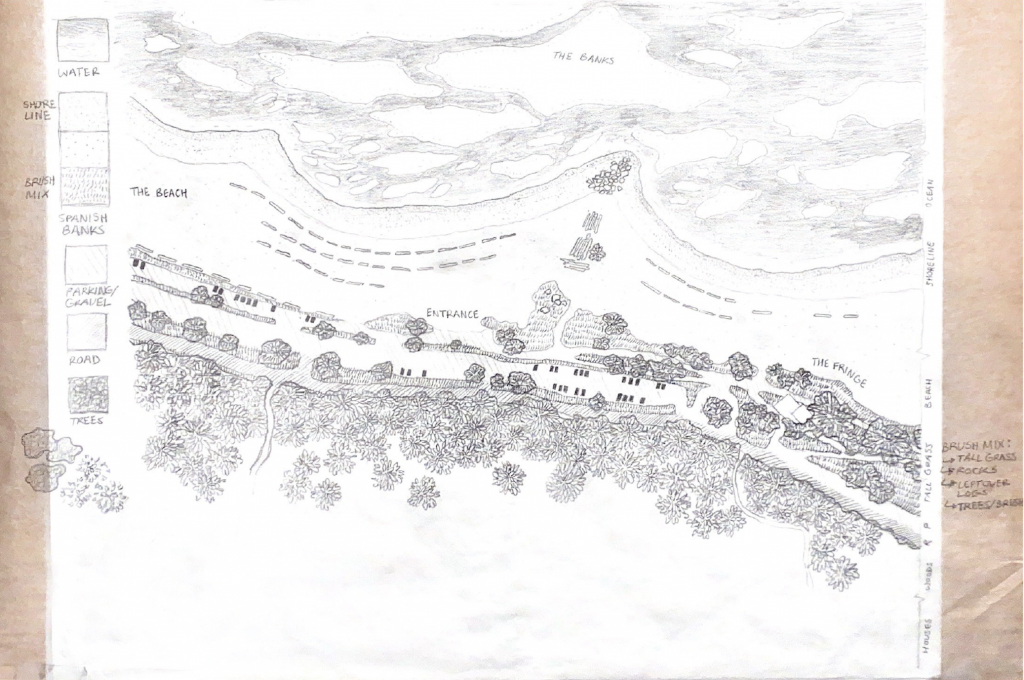

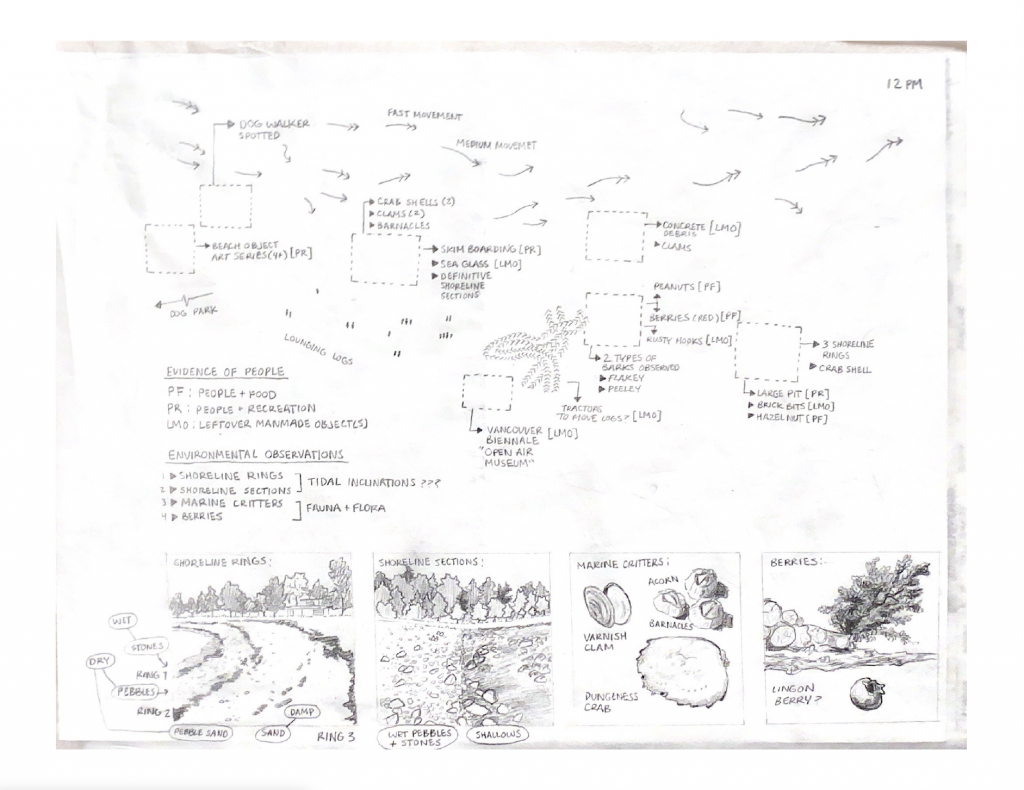
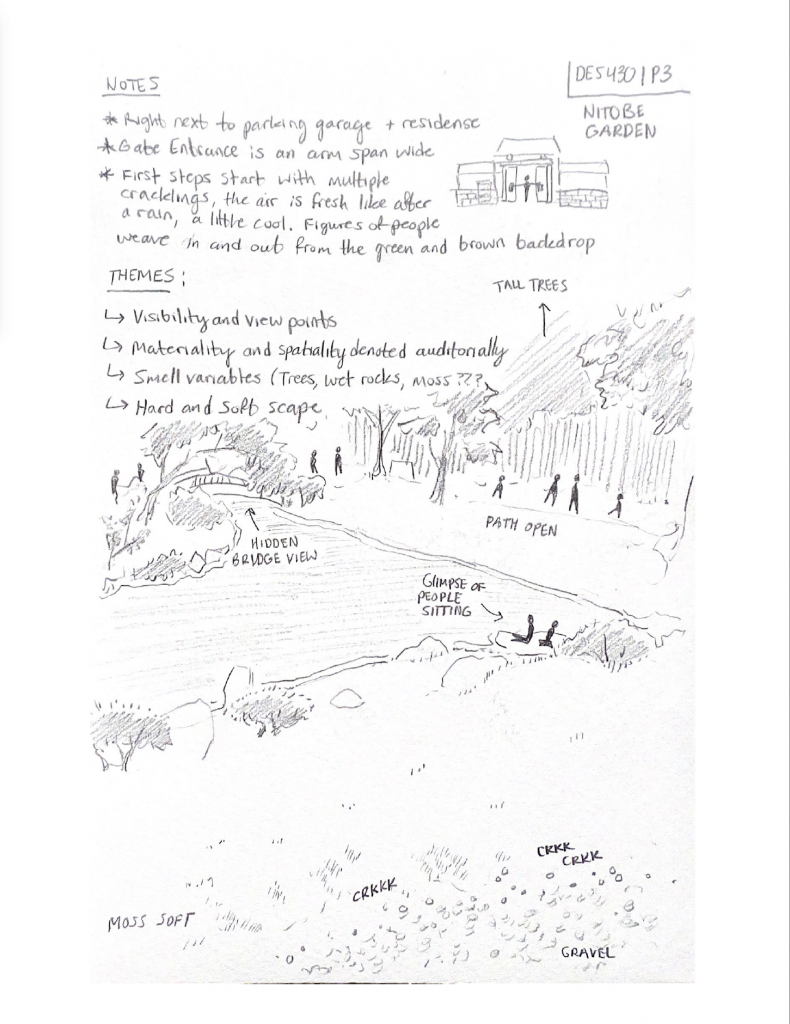
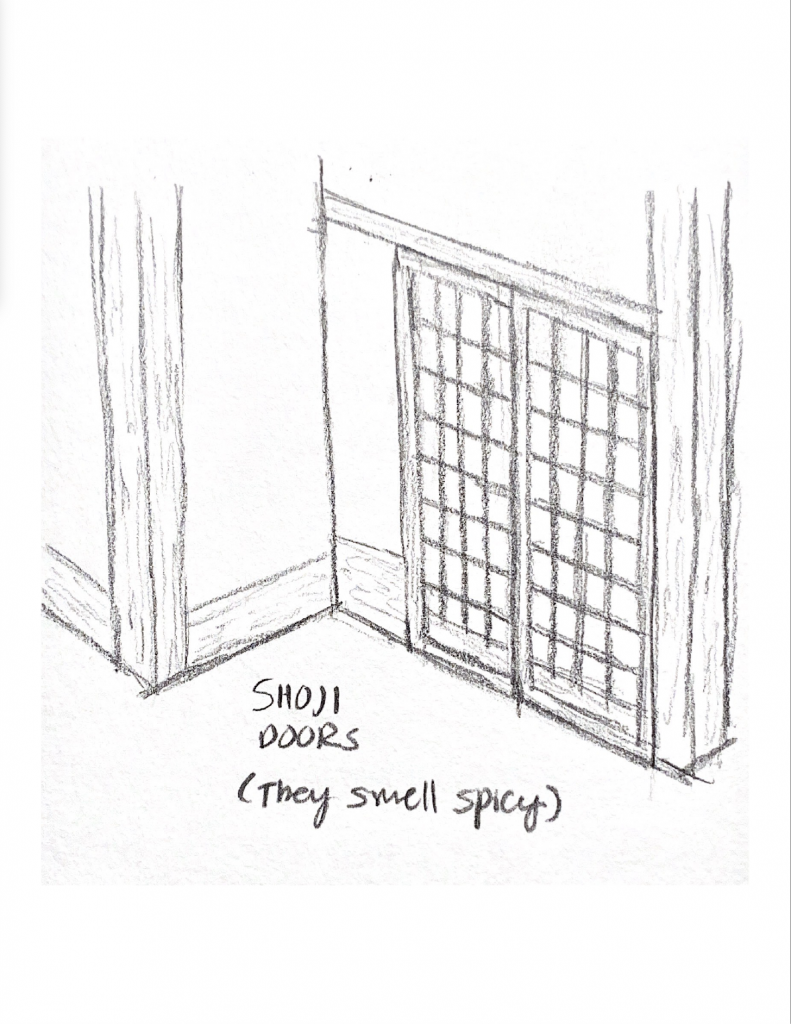

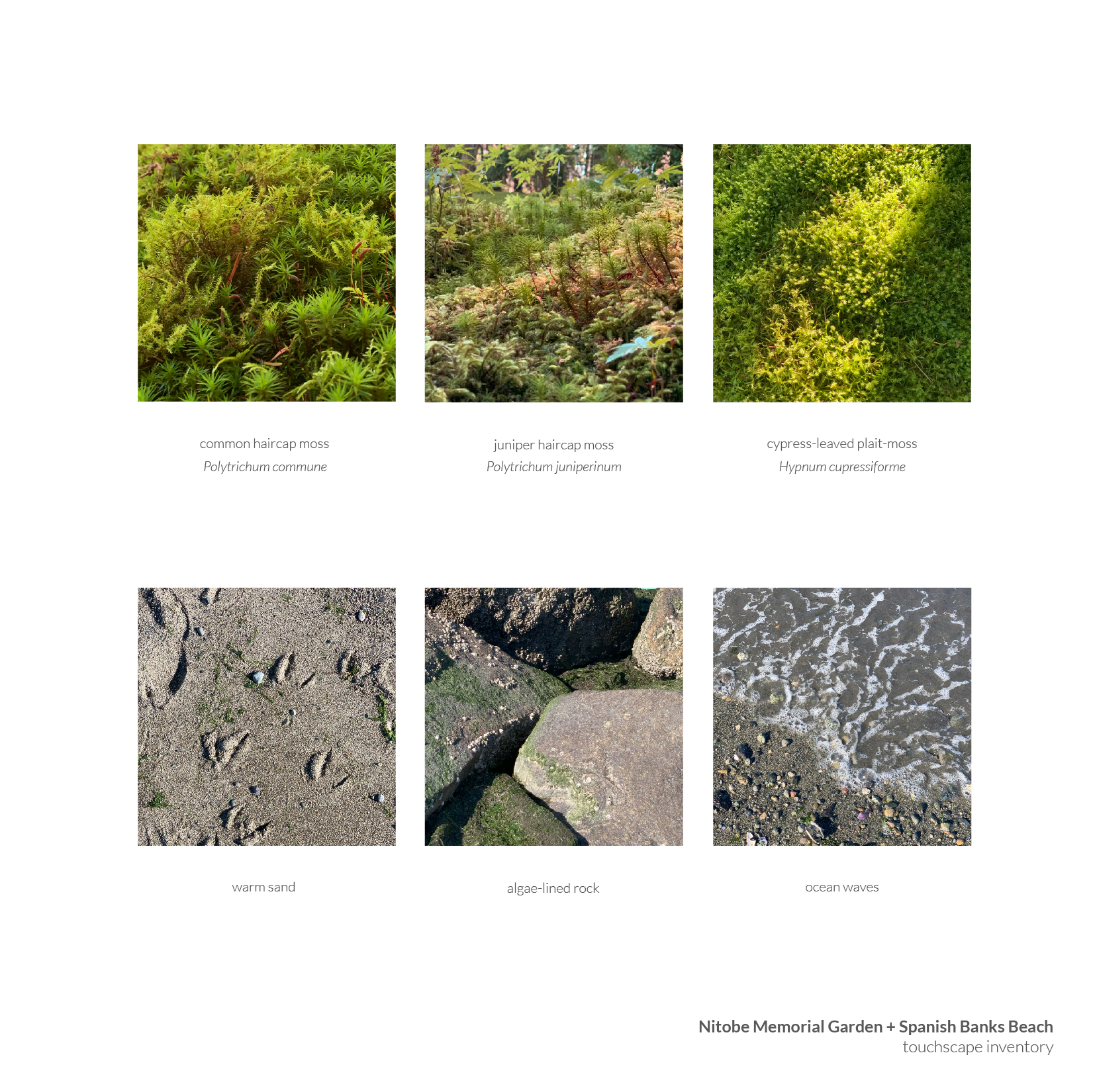
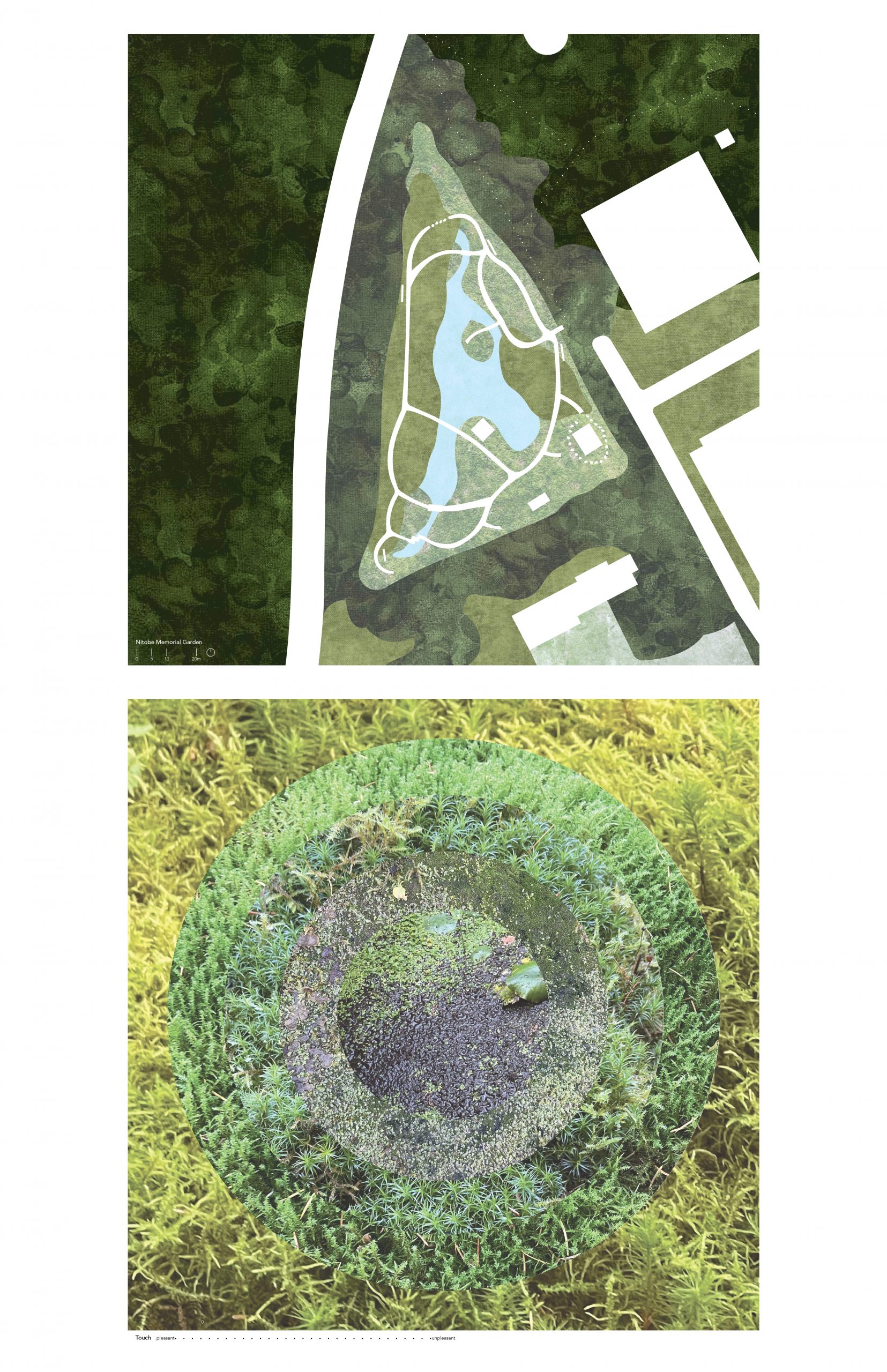
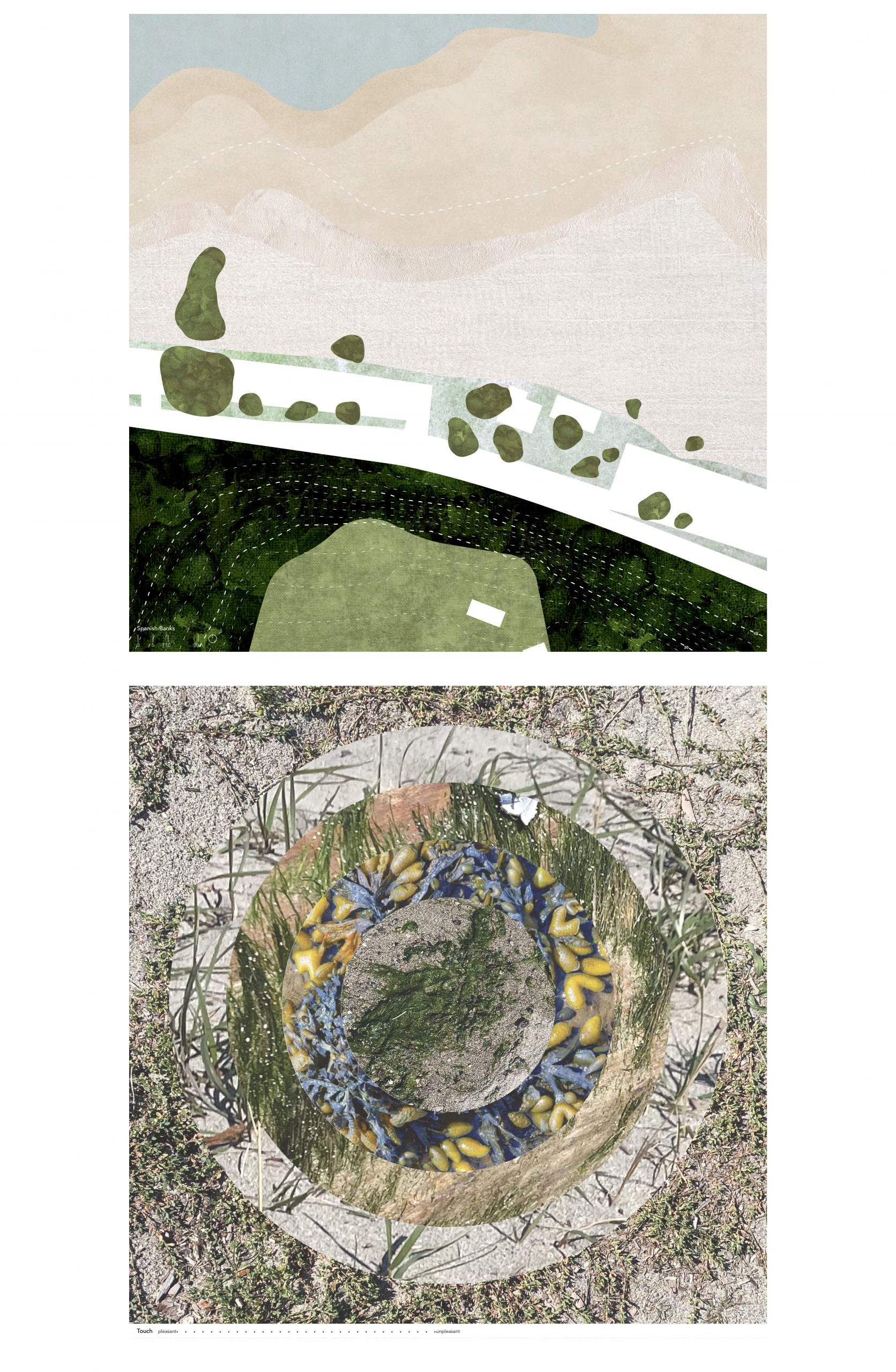
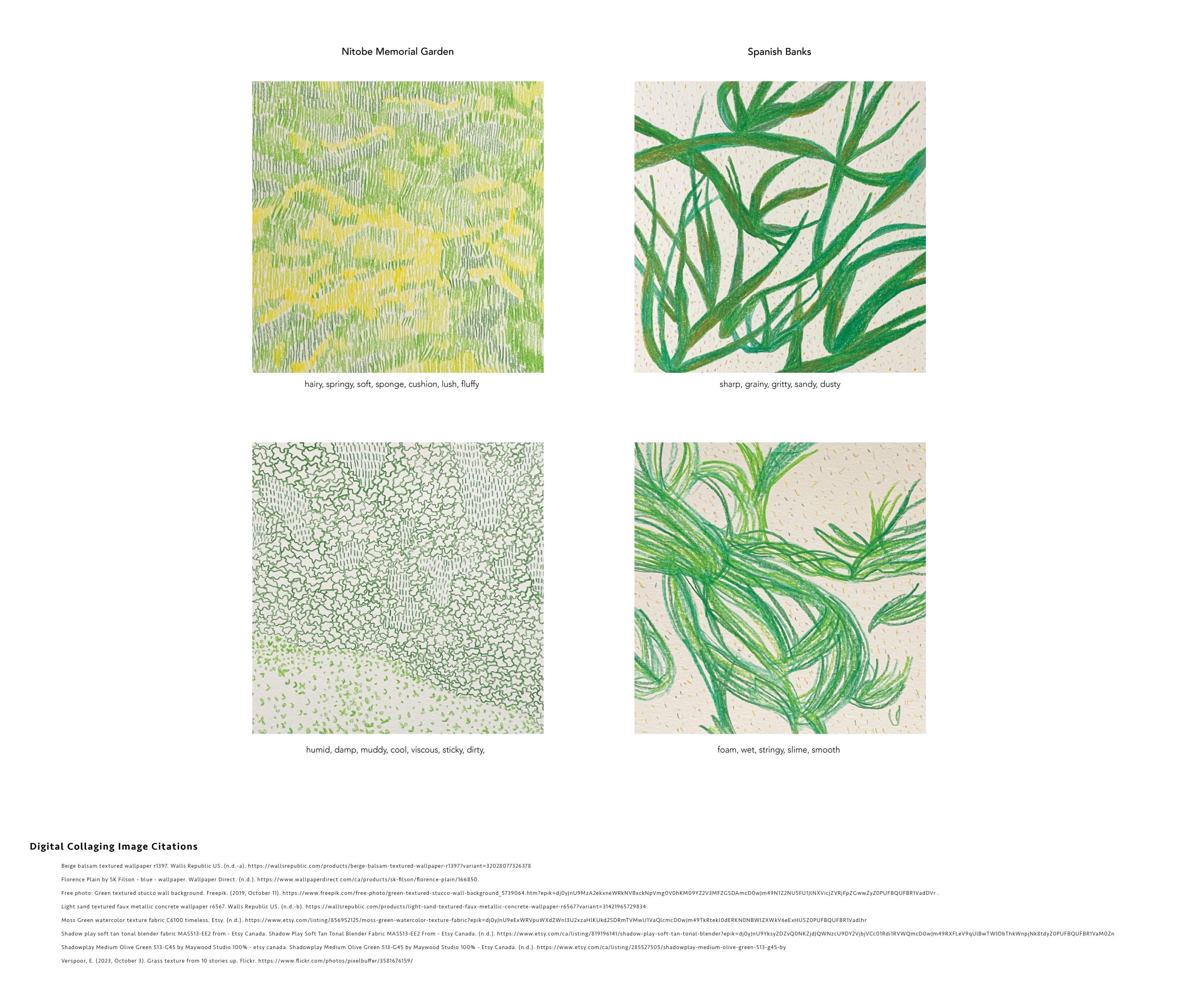
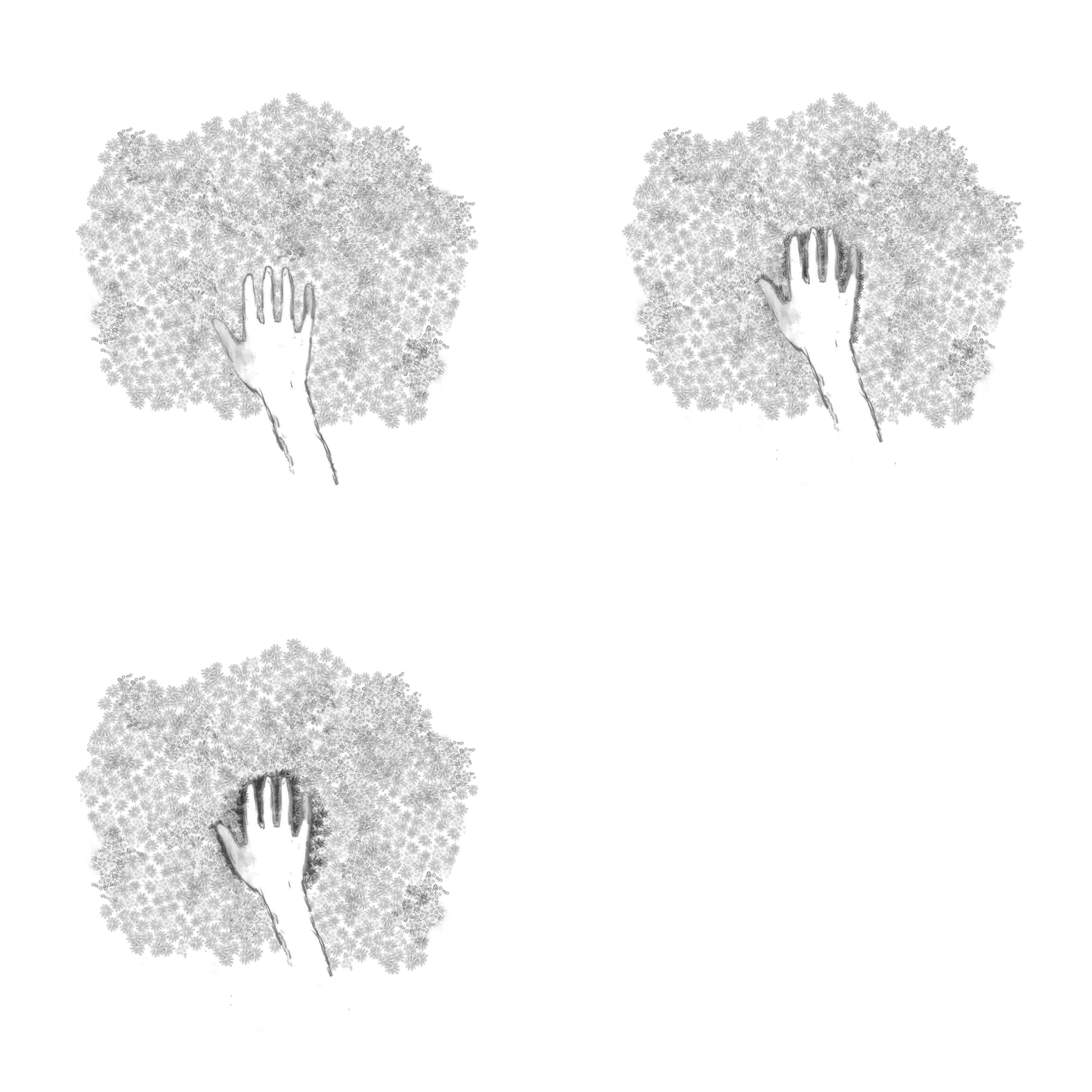
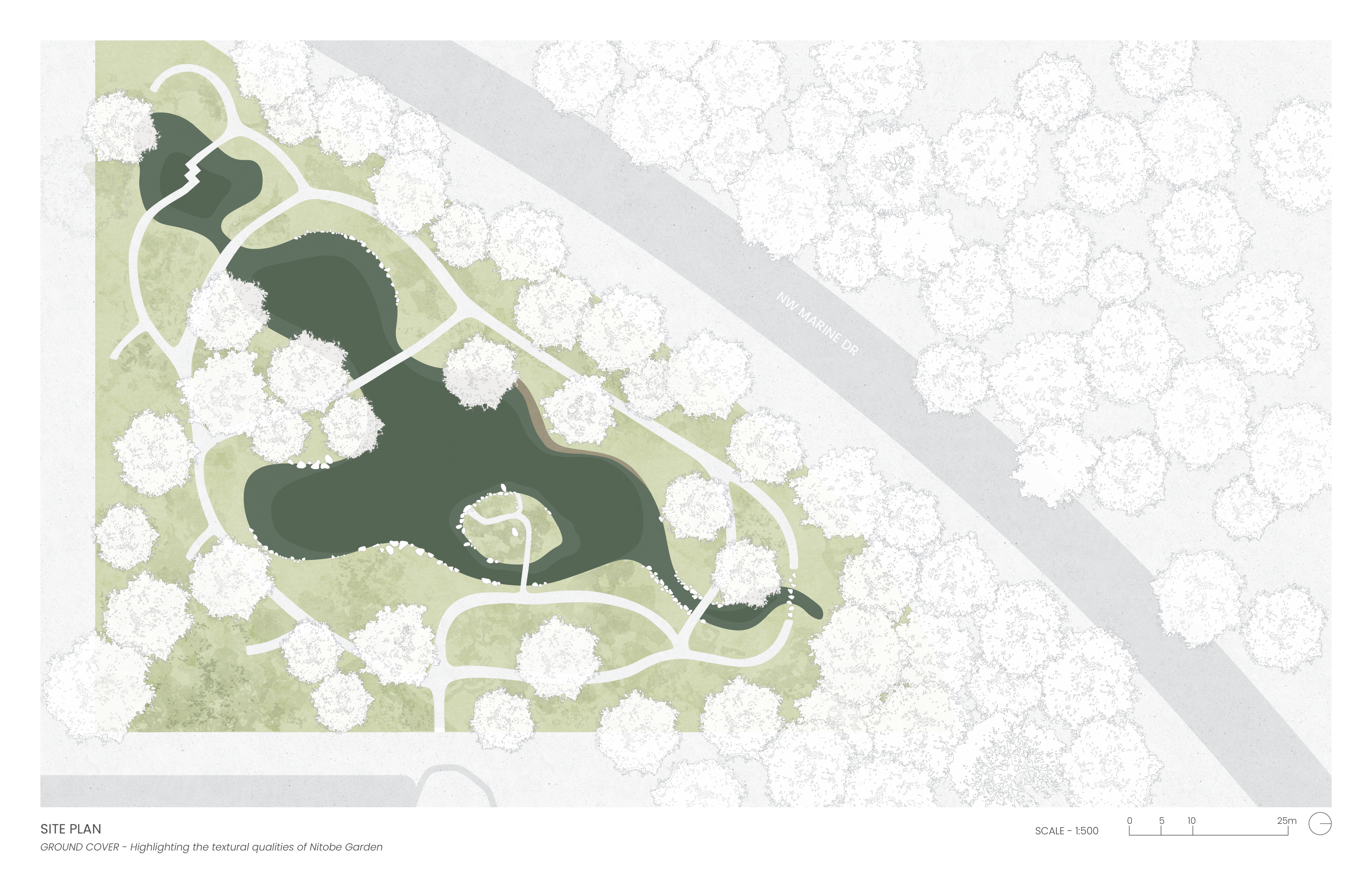
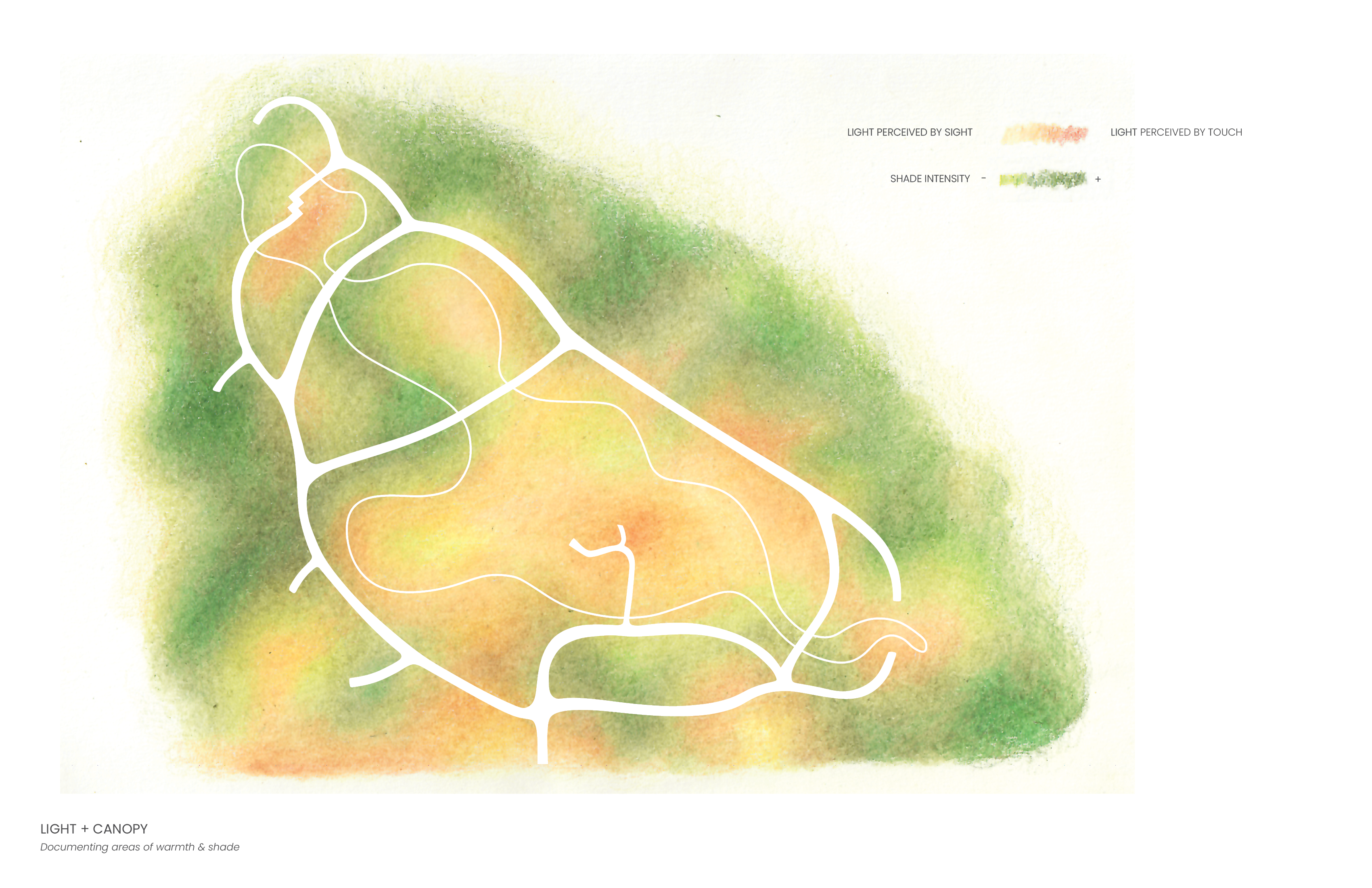
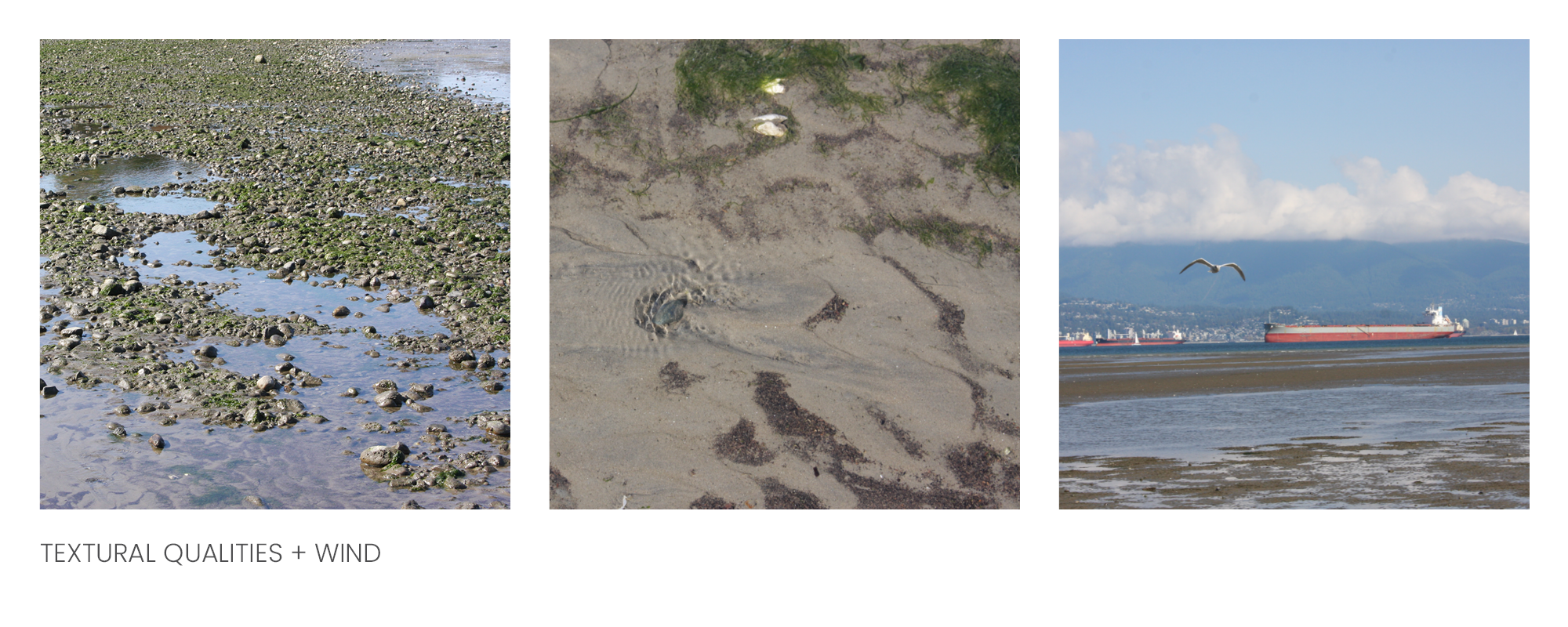
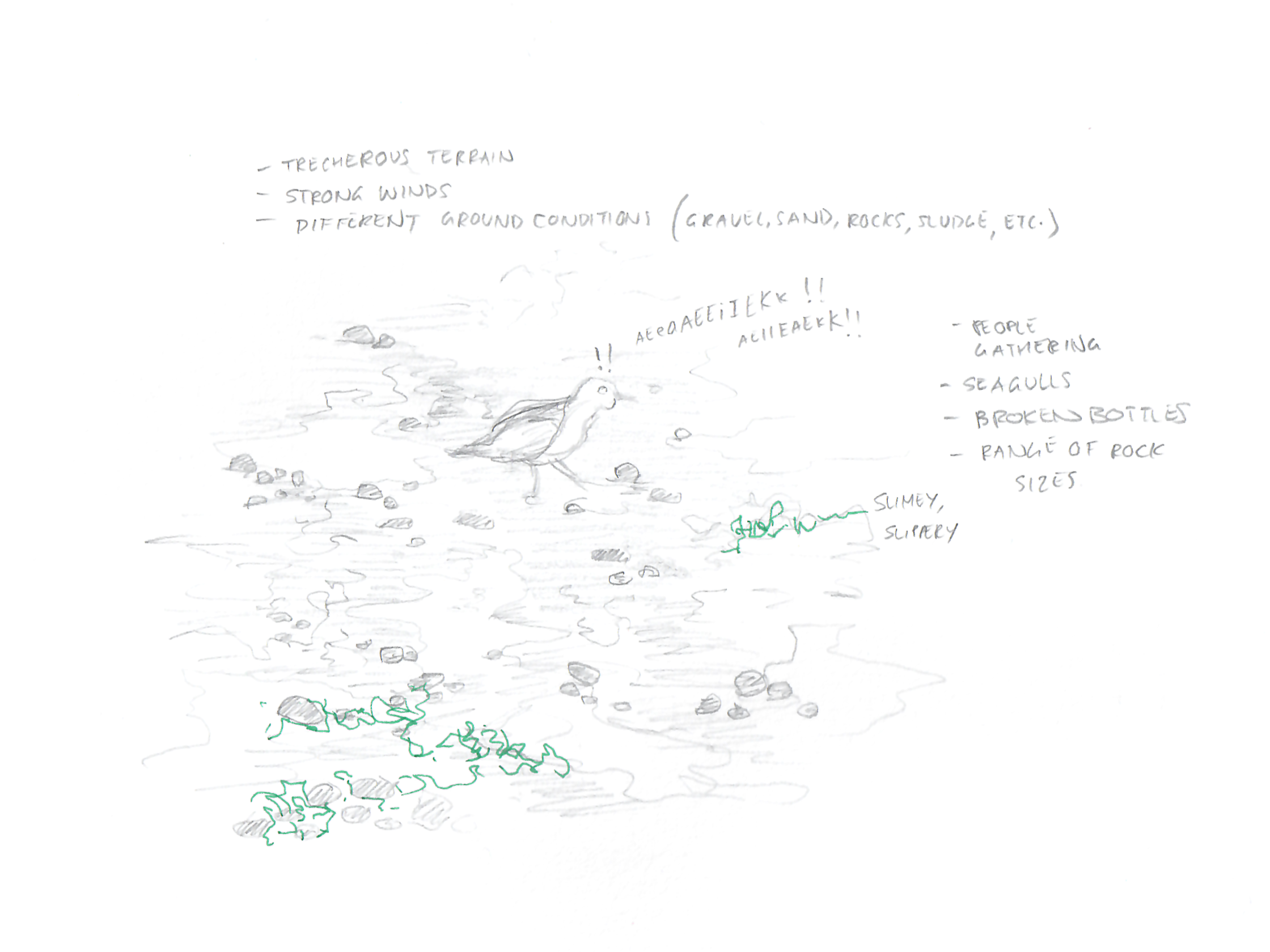
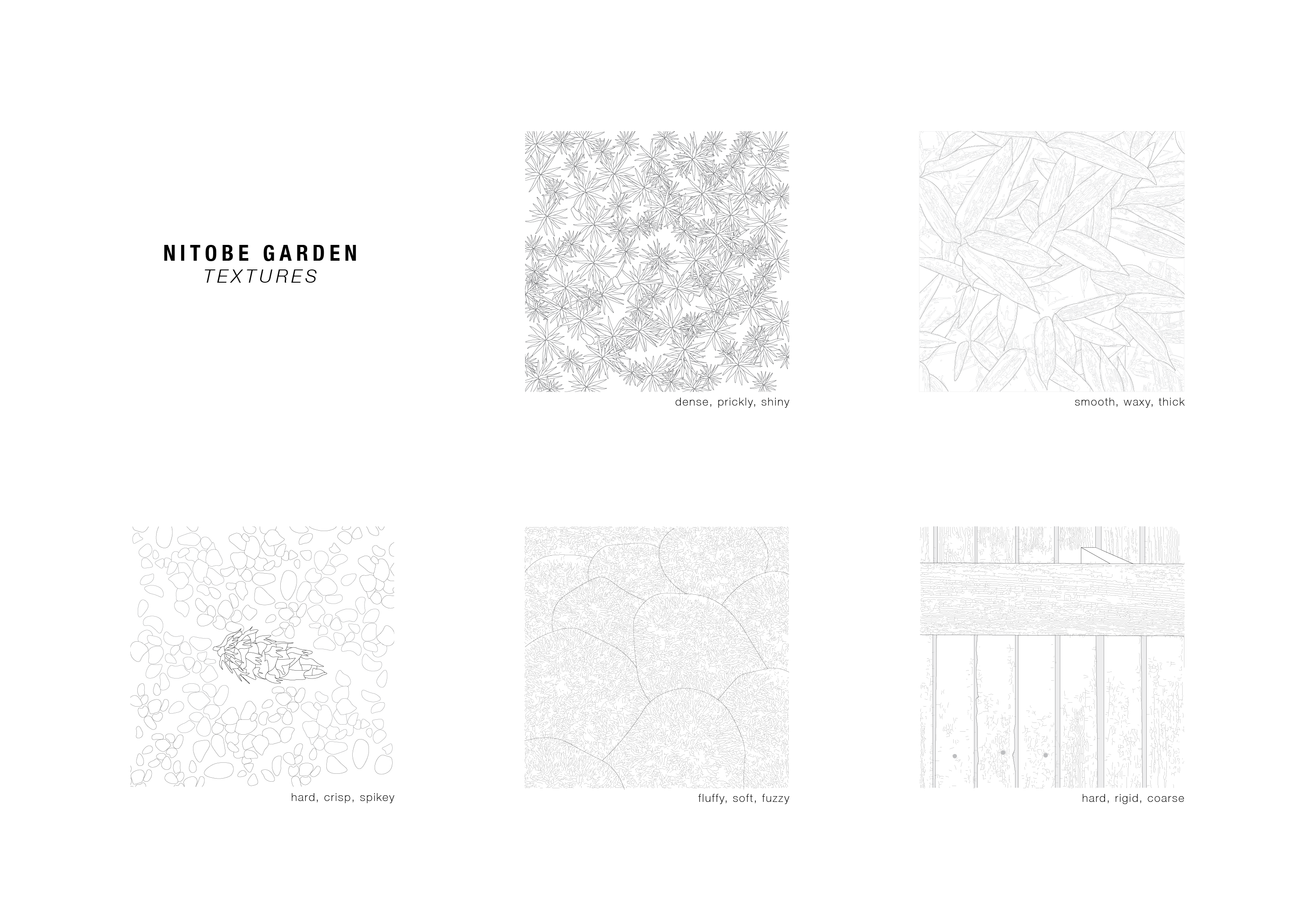
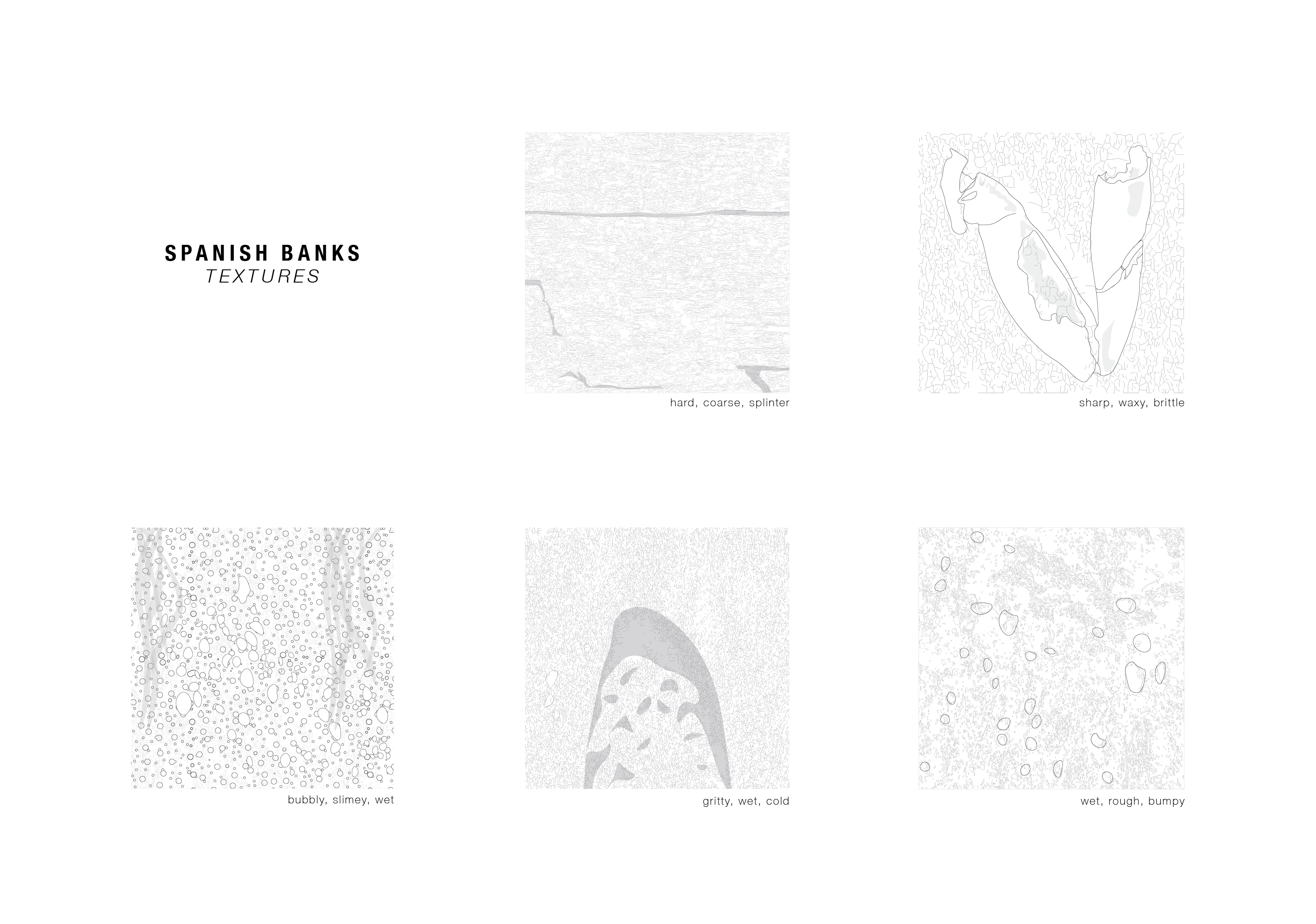
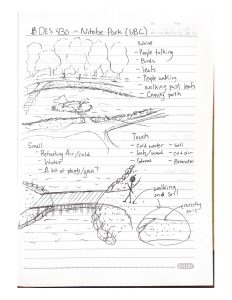
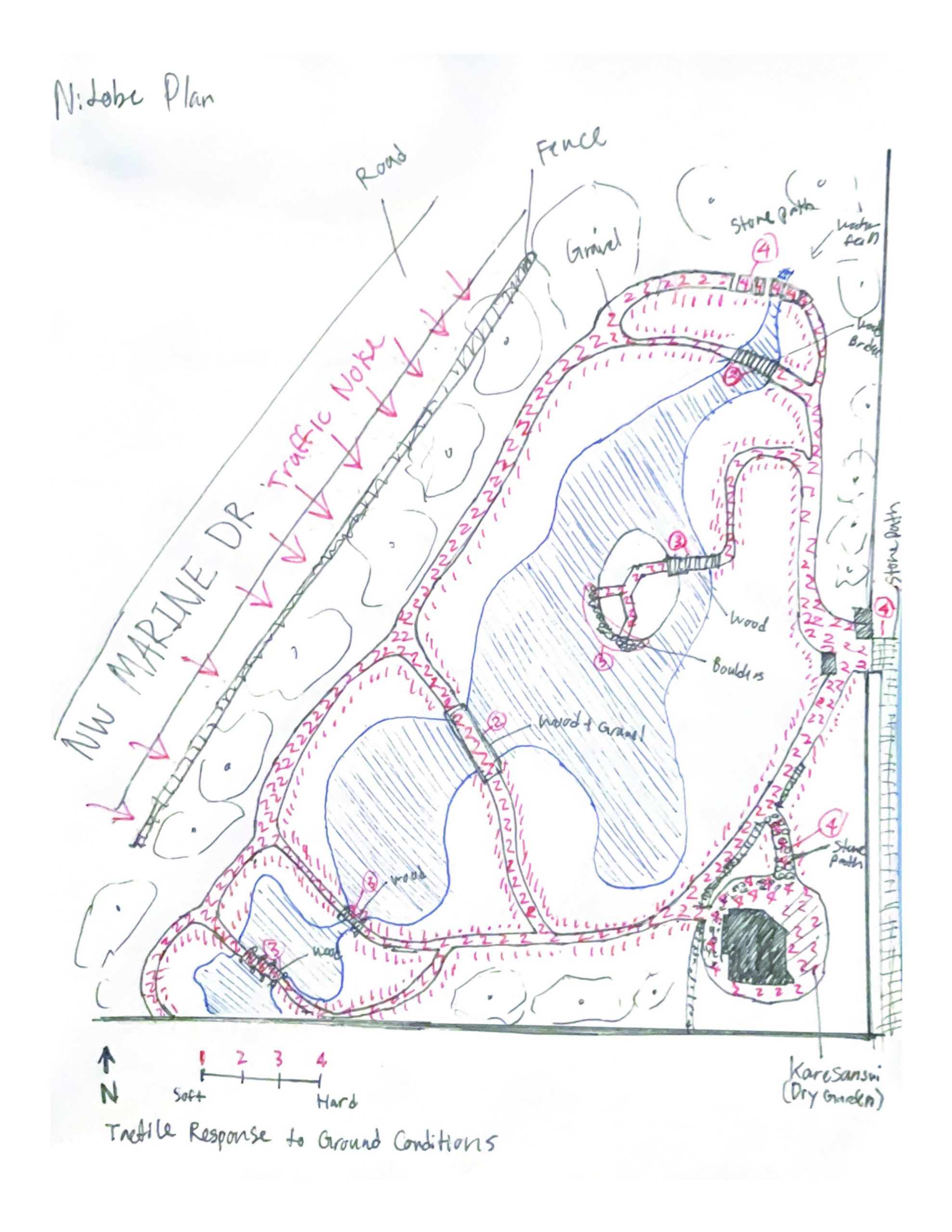
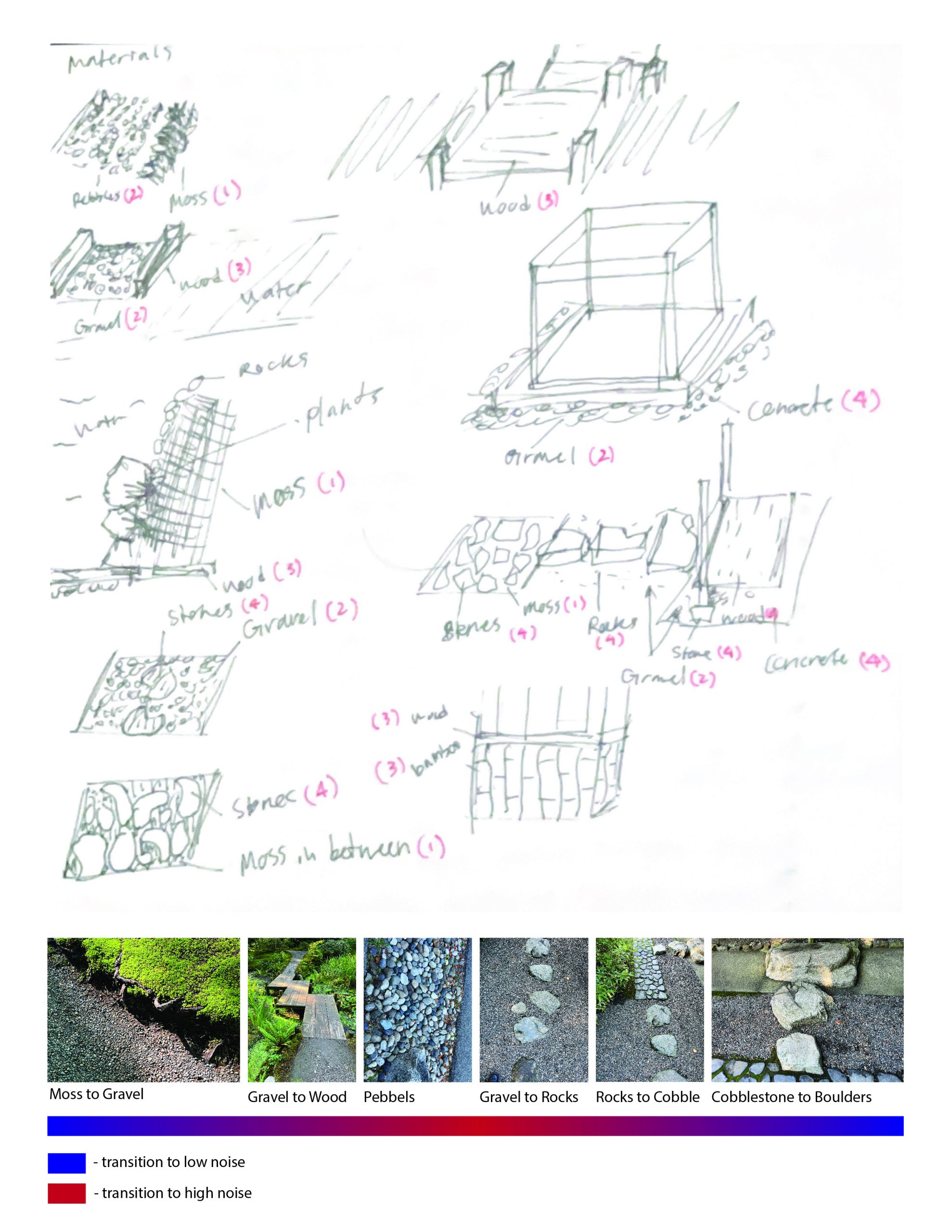
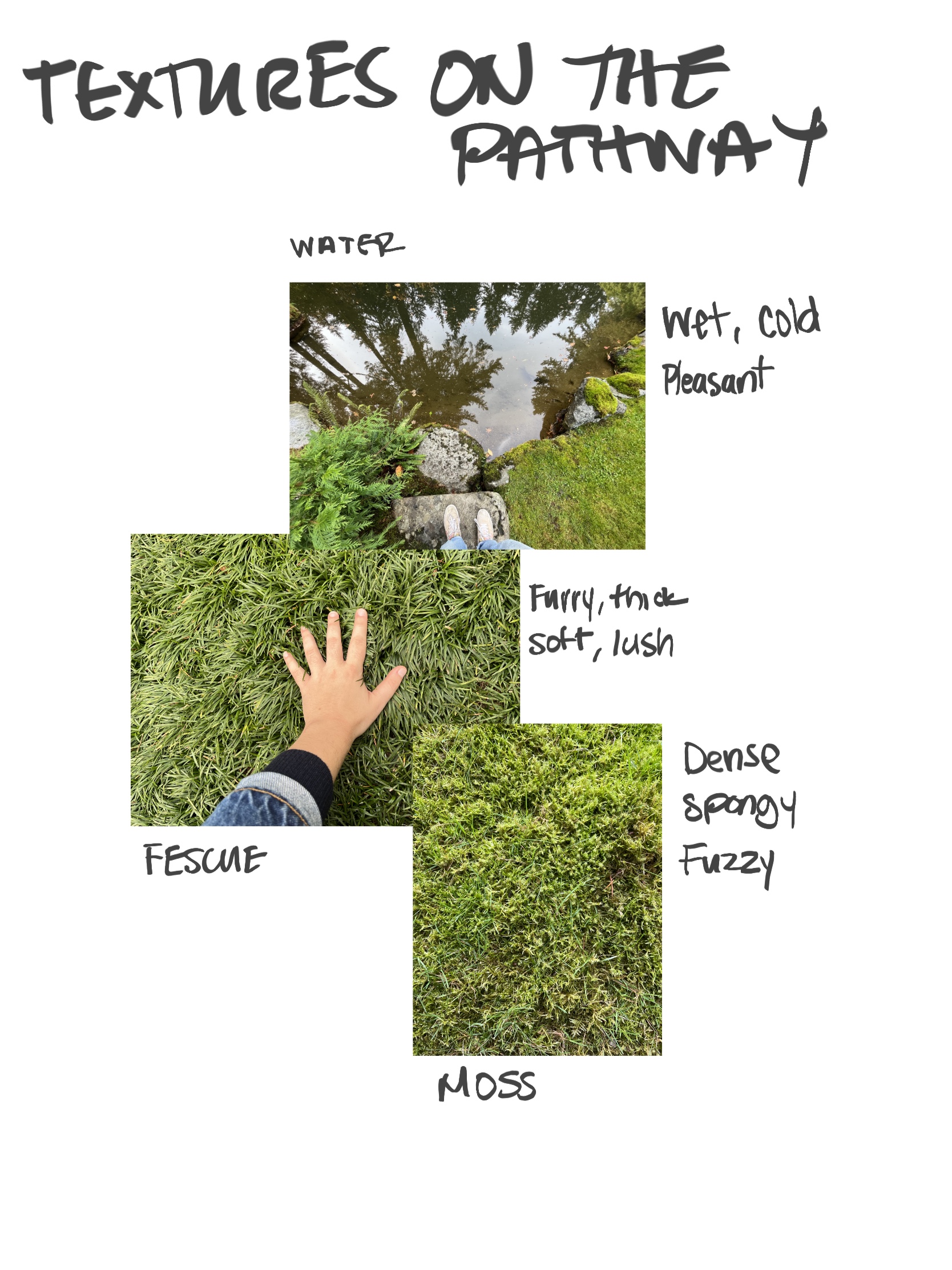
For this assignment, I focused on exploring different ways our sense of touch perceives our surroundings. I categorized my experience of touch in two main ways, the first one being physical touch, to which I interpret as our encounter with nature (groundscape) and the second being atmospheric touch, or in other words nature’s encounter with us (intensities of light and wind).





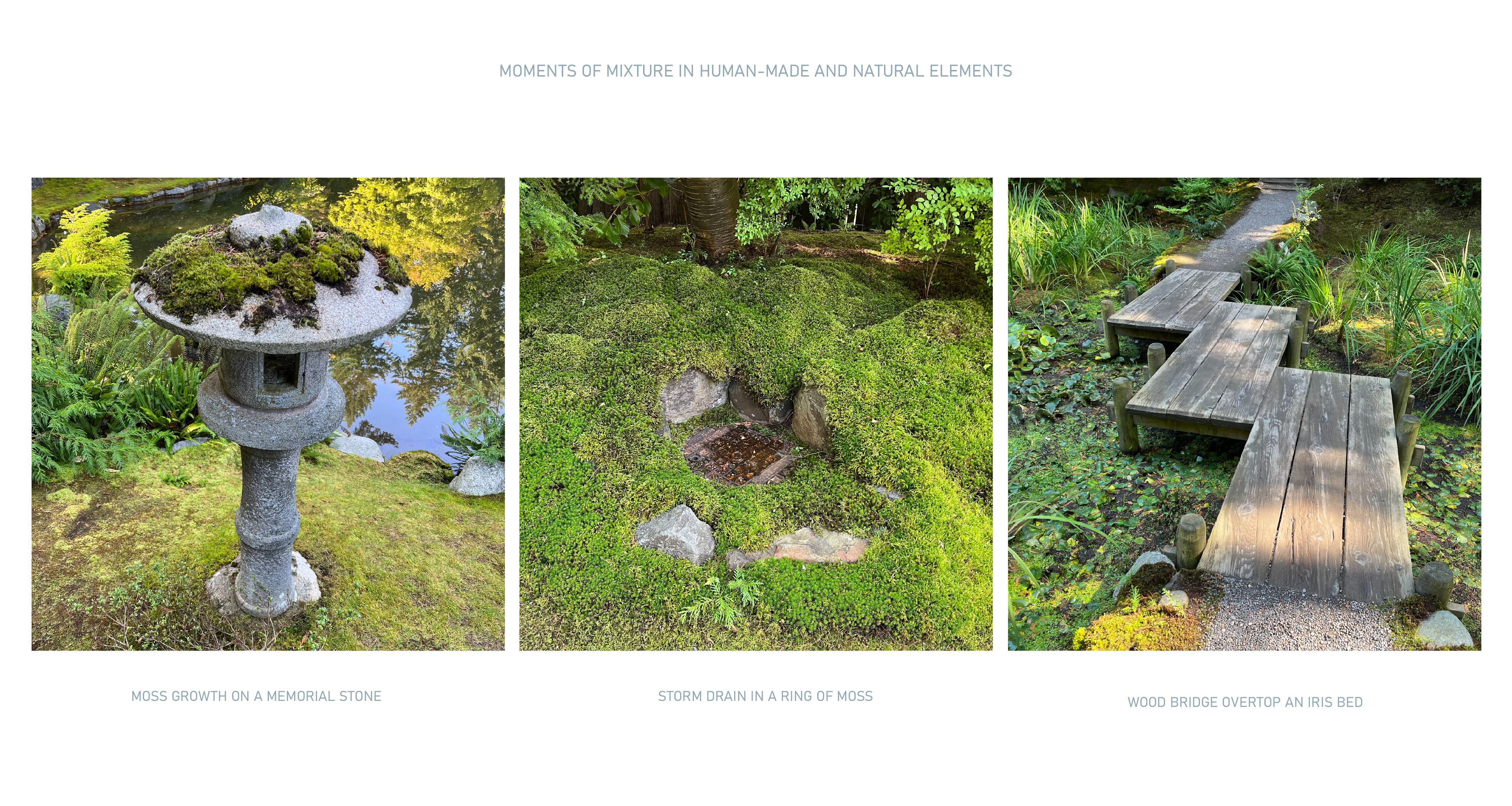
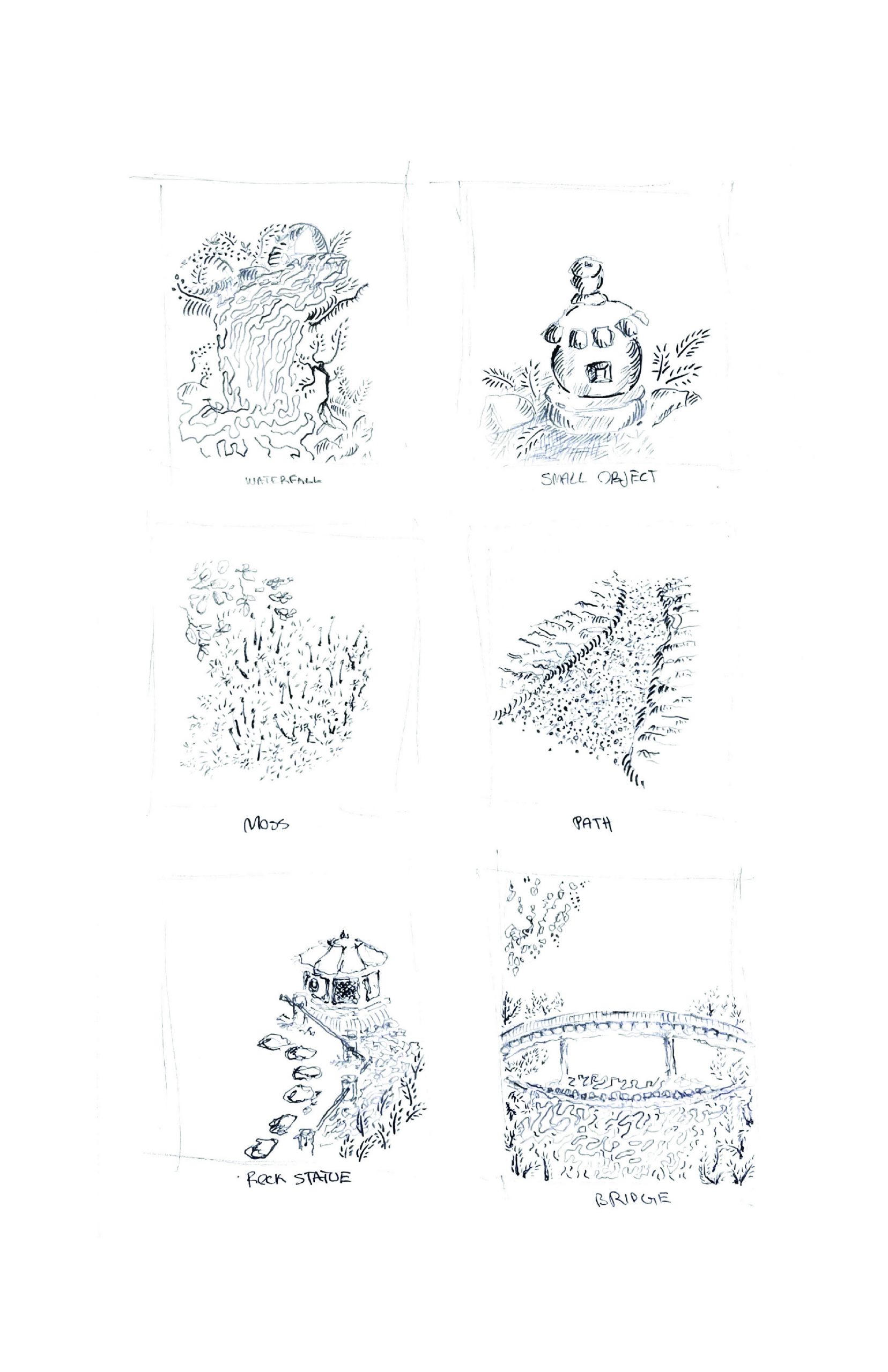
Exploring the natural and manmade elements in the Nitobe Garden and Spanish Banks Beach, I focused on how their physical elements create visual compositions (as if in a painting or, well, drawing…) and how these moments may be observed by visitors. 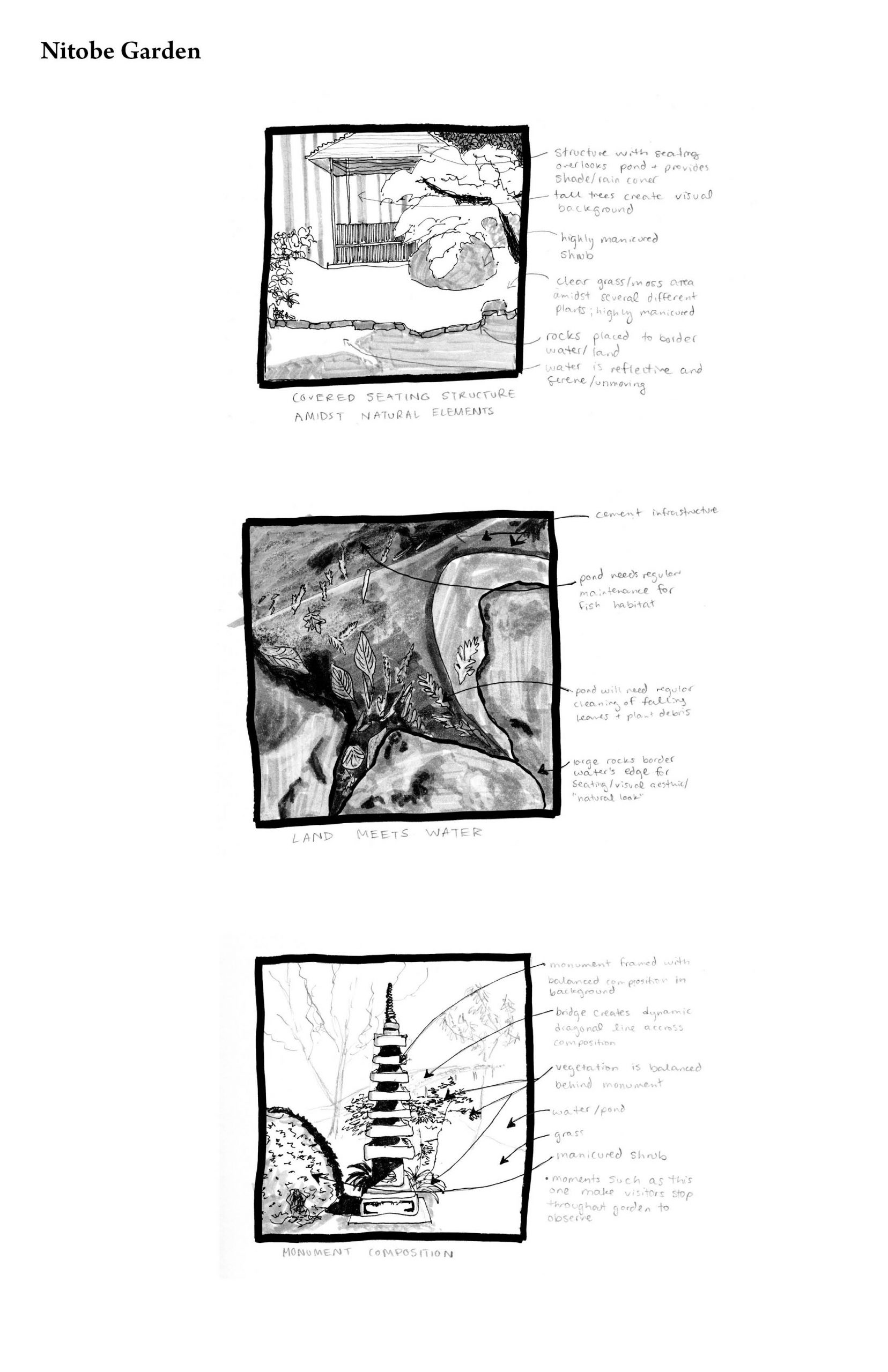
While the Nitobe Garden is undoubtedly a visually stunning landscape that is highly manicured, seeing its hidden infrastructure is like catching it tell a secret. Duly hidden so as to not take away from the garden’s serenity, but equally necessary for the maintenance of the garden year-round, the infrastructural elements are various and numerous throughout and can pull visitors out of the garden’s crafted “natural” landscape.
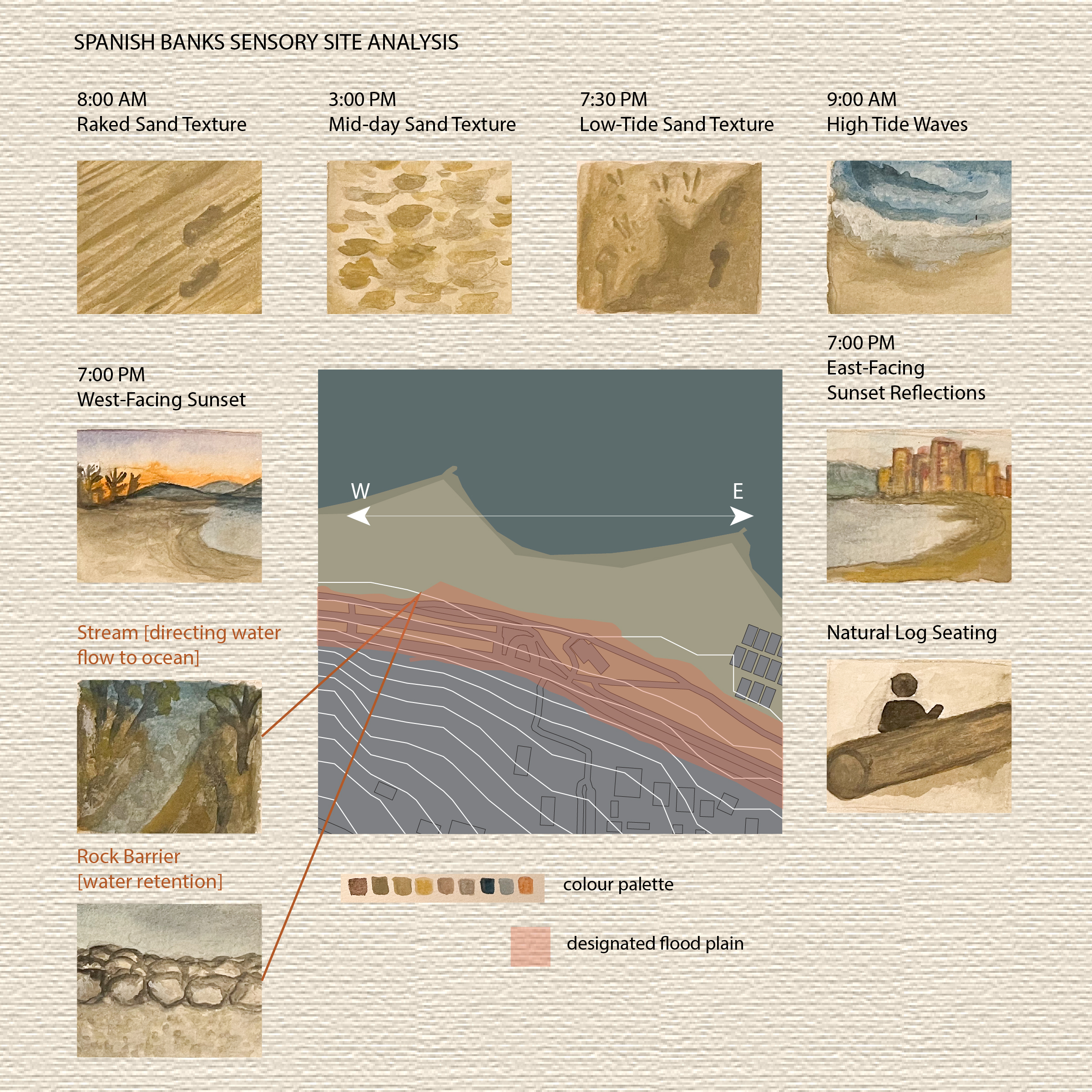
The two views above show the west and east views of the beach. The first one looks west toward the UBC peninsula where no development is seen on the mountain across the water. Compared to the east-facing view, the landscape reads differently on the ground as the downtown highrises fill the horizon. I found I spent most of my time looking away from the east view as I preferred the “natural” landscape more.
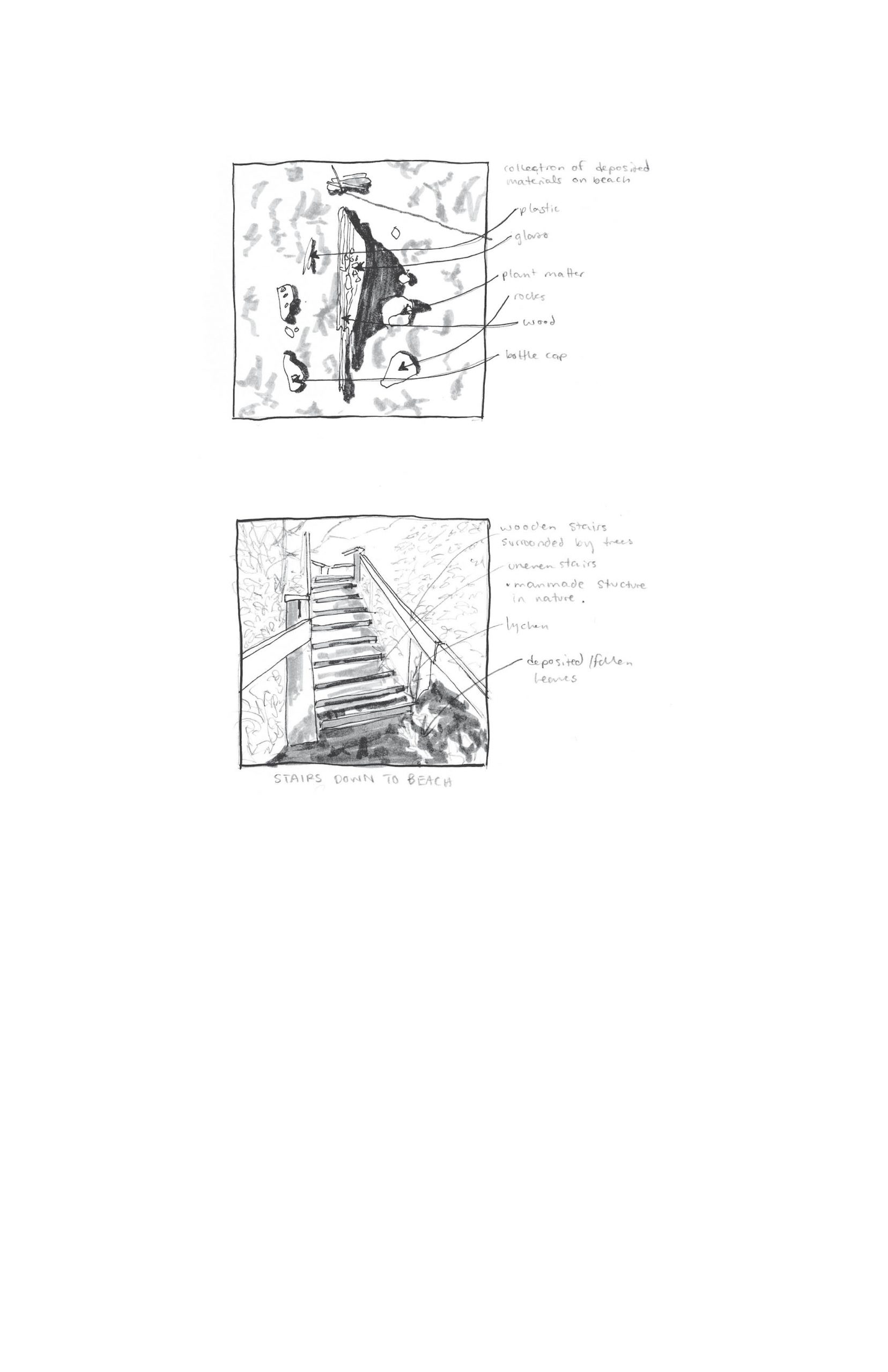
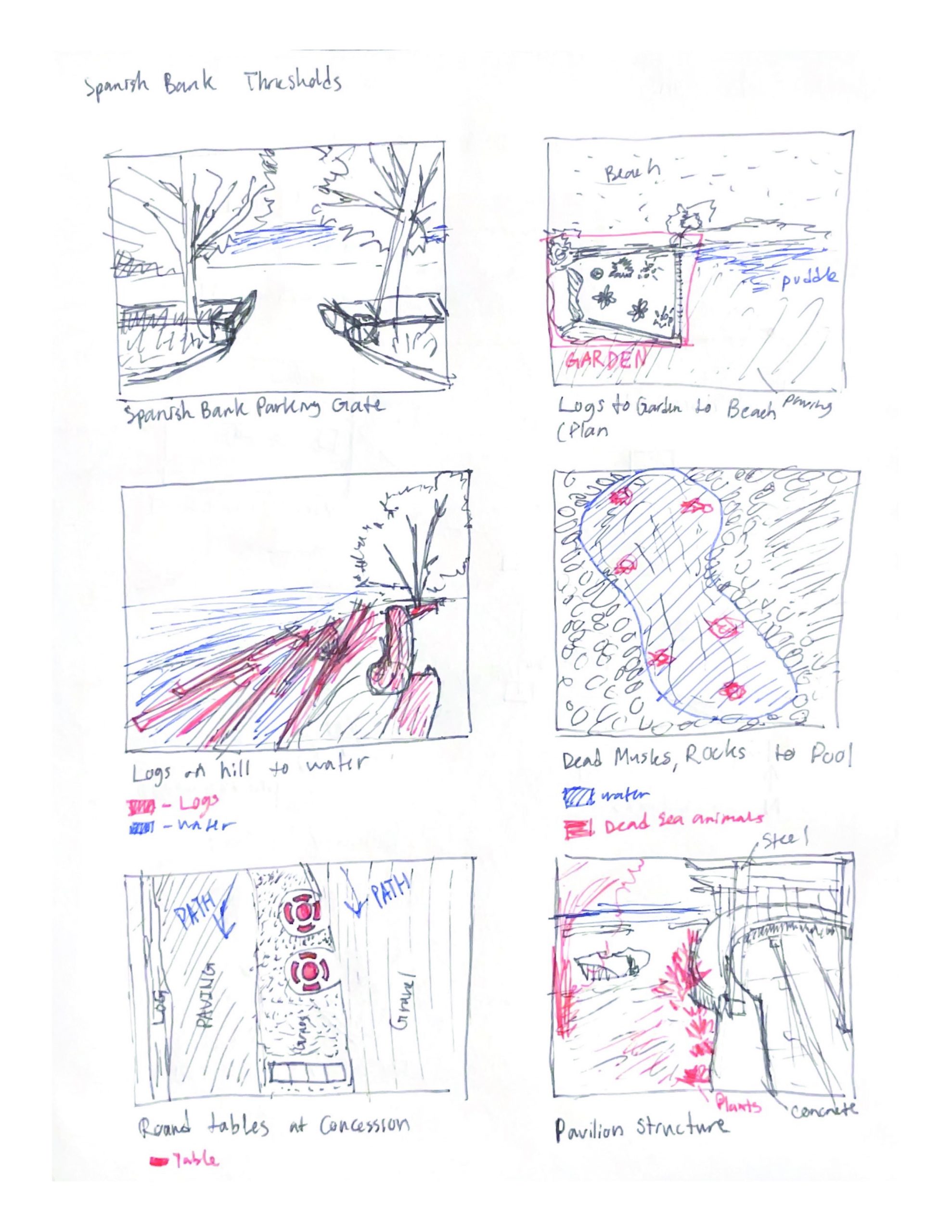
I chose to capture the instances below as they are human interventions with visual compositions that were made of natural and manmade objects created by and experienced by people.


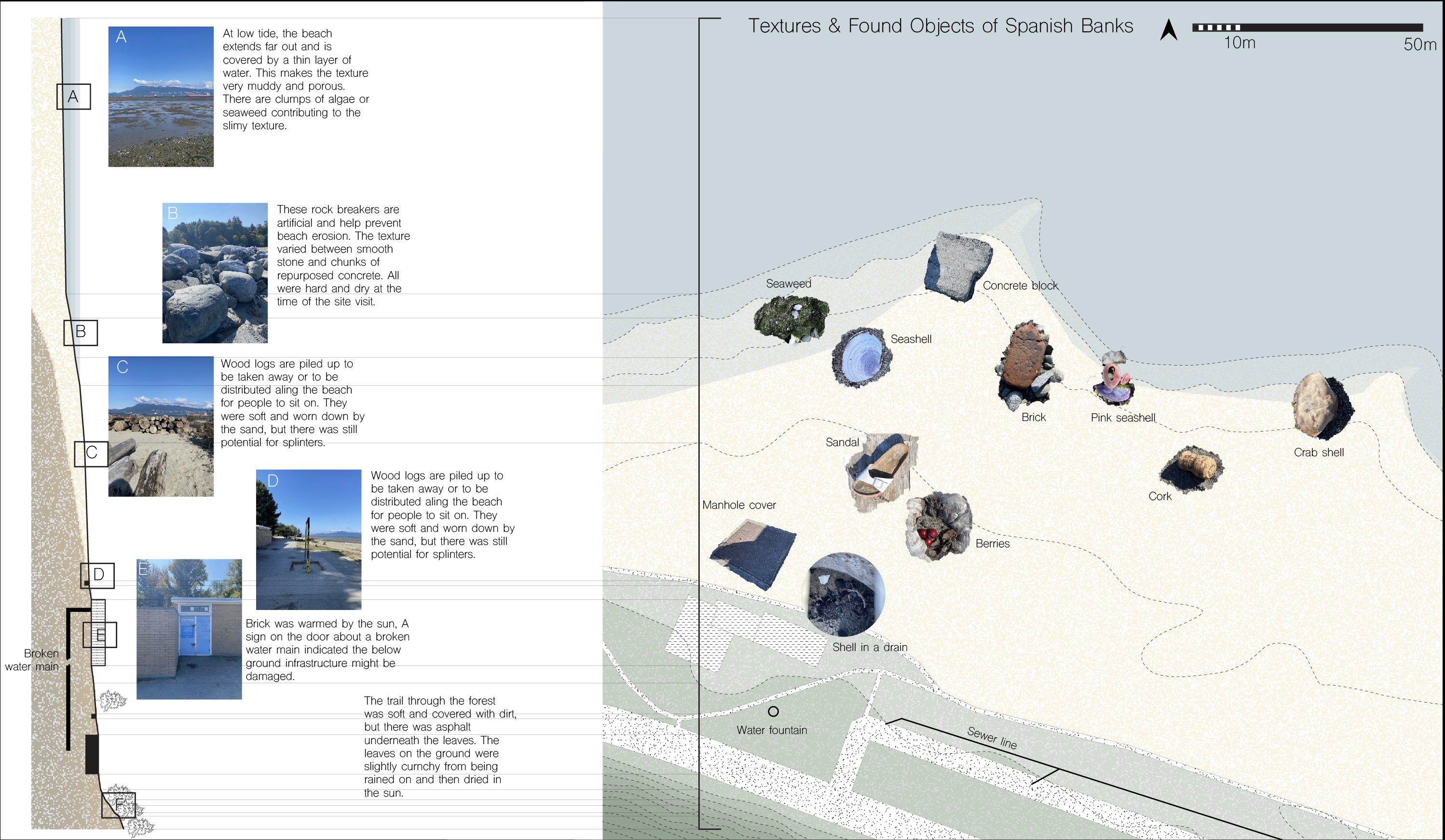
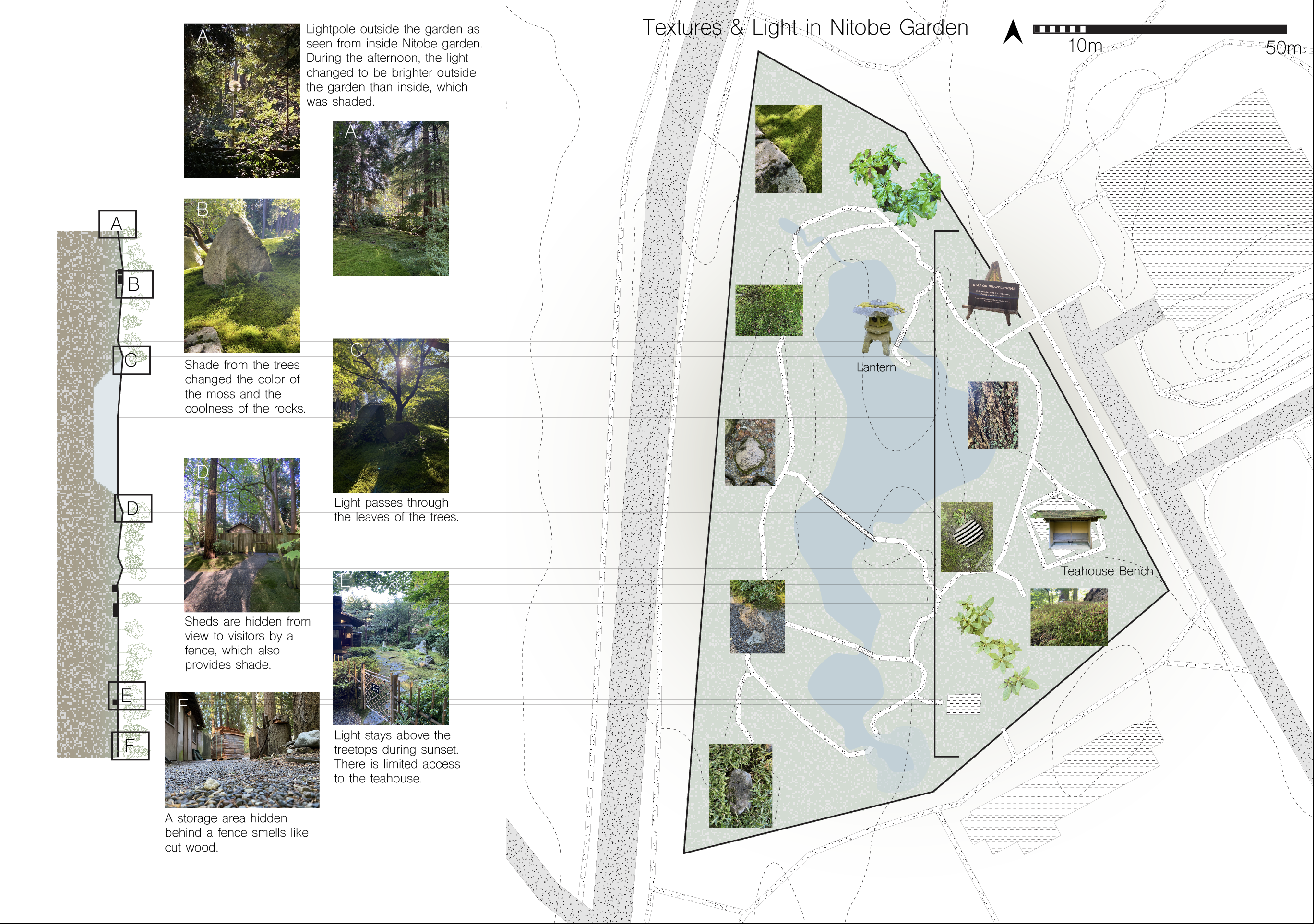
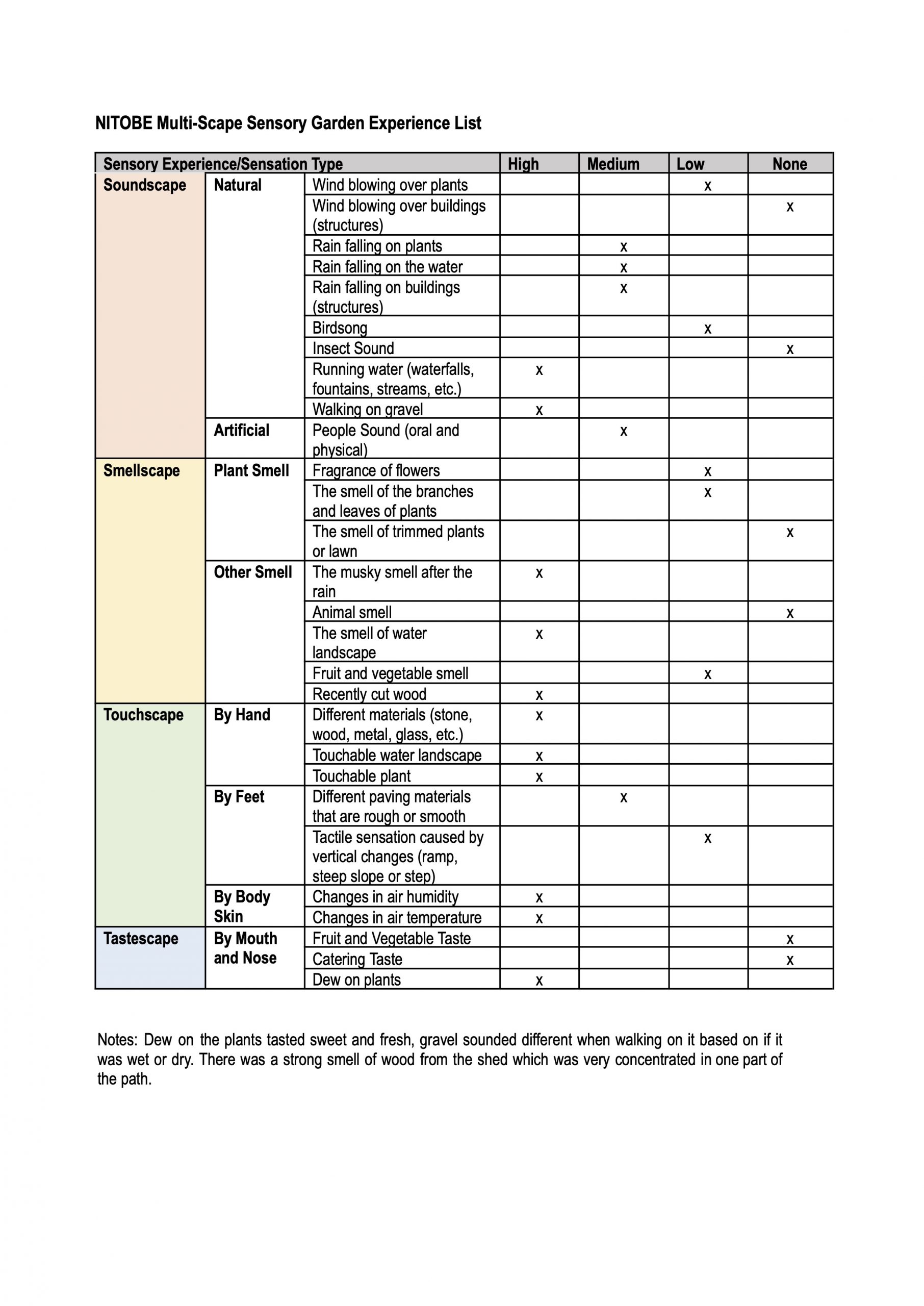
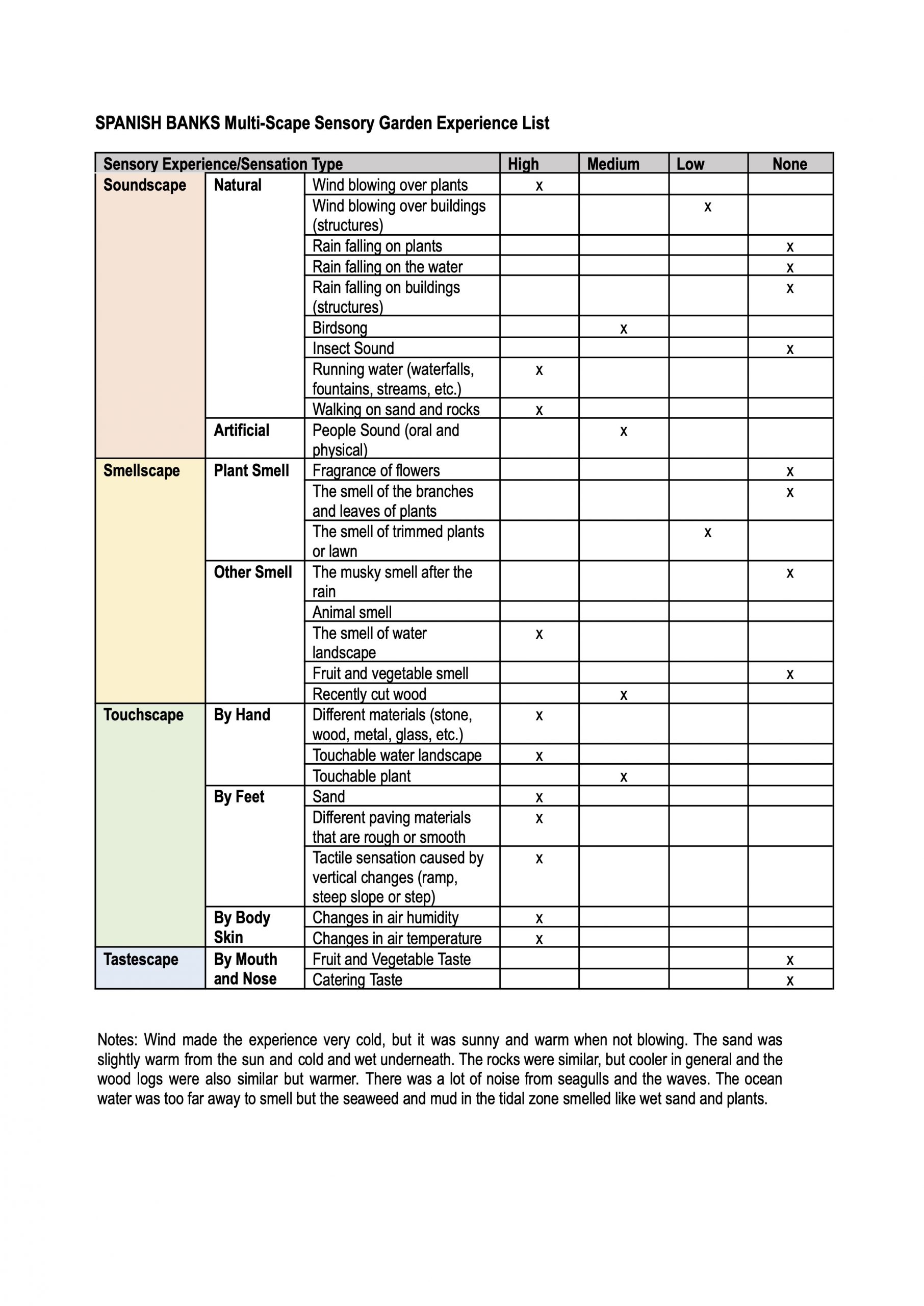

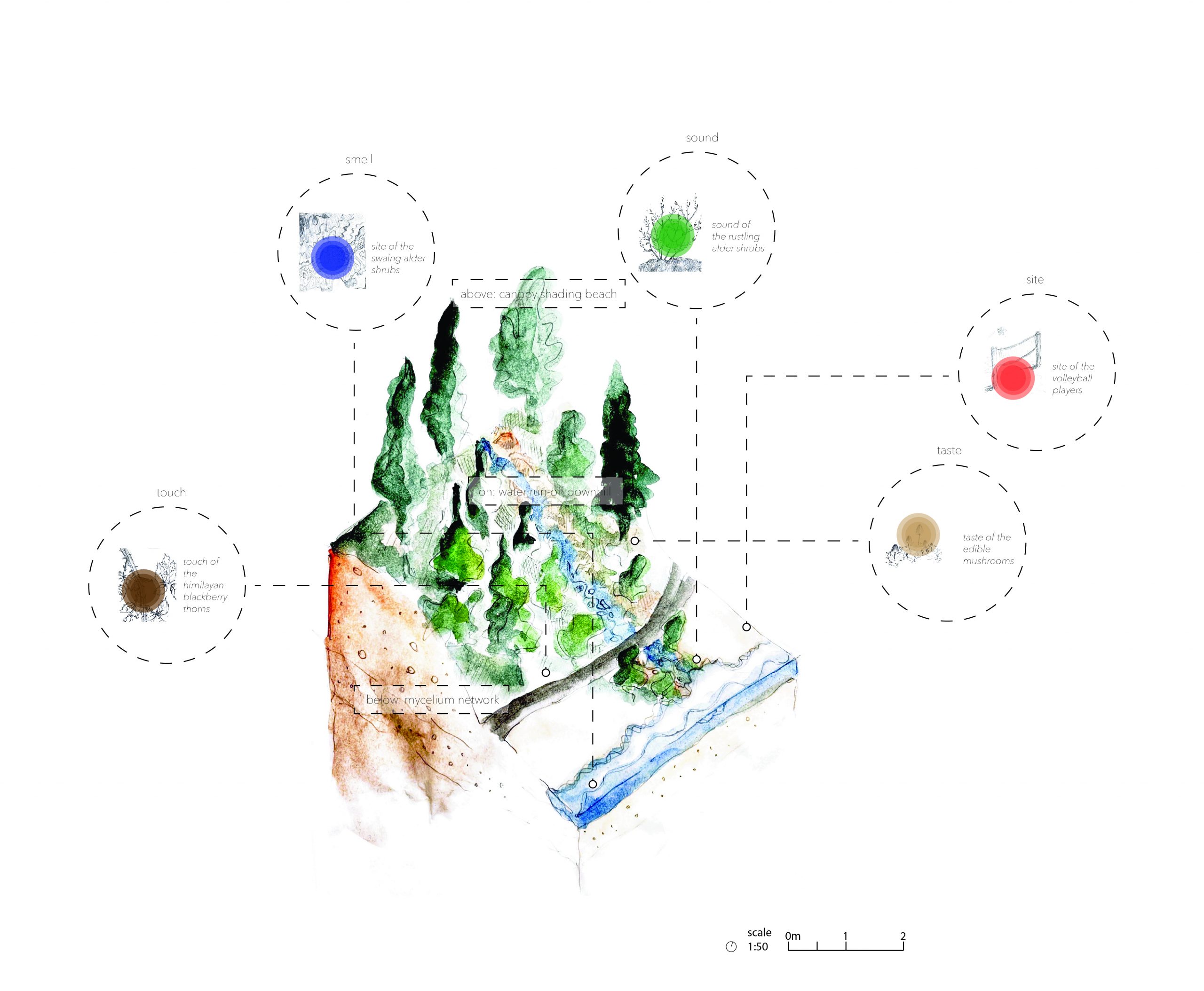
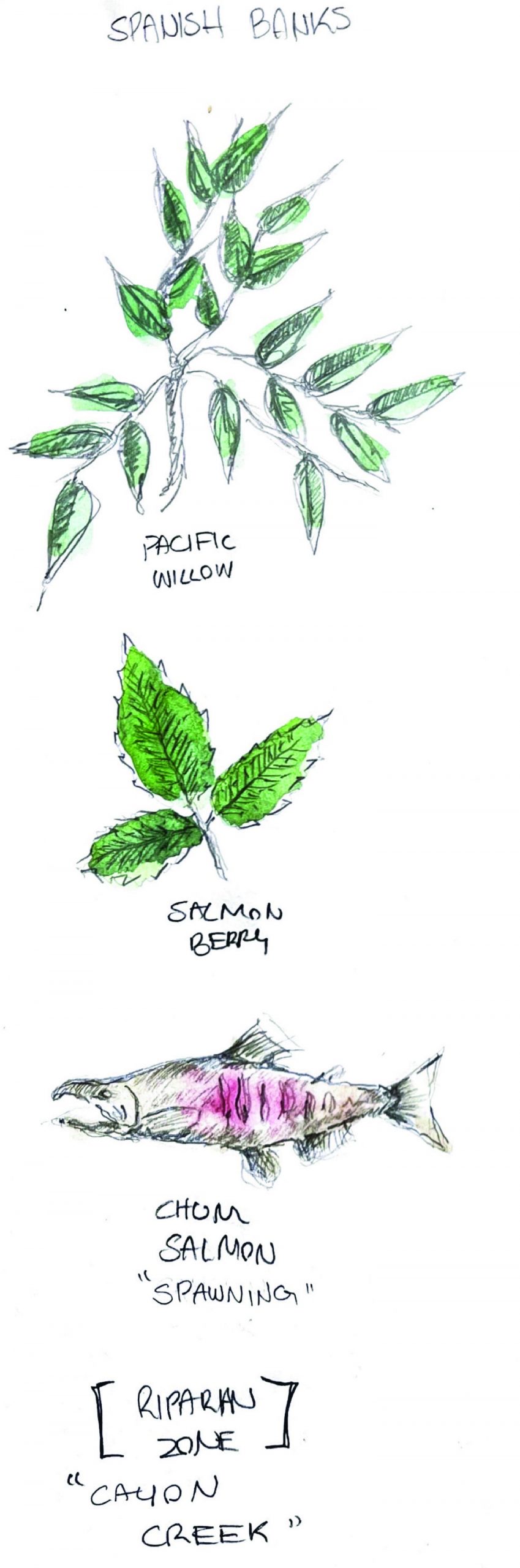
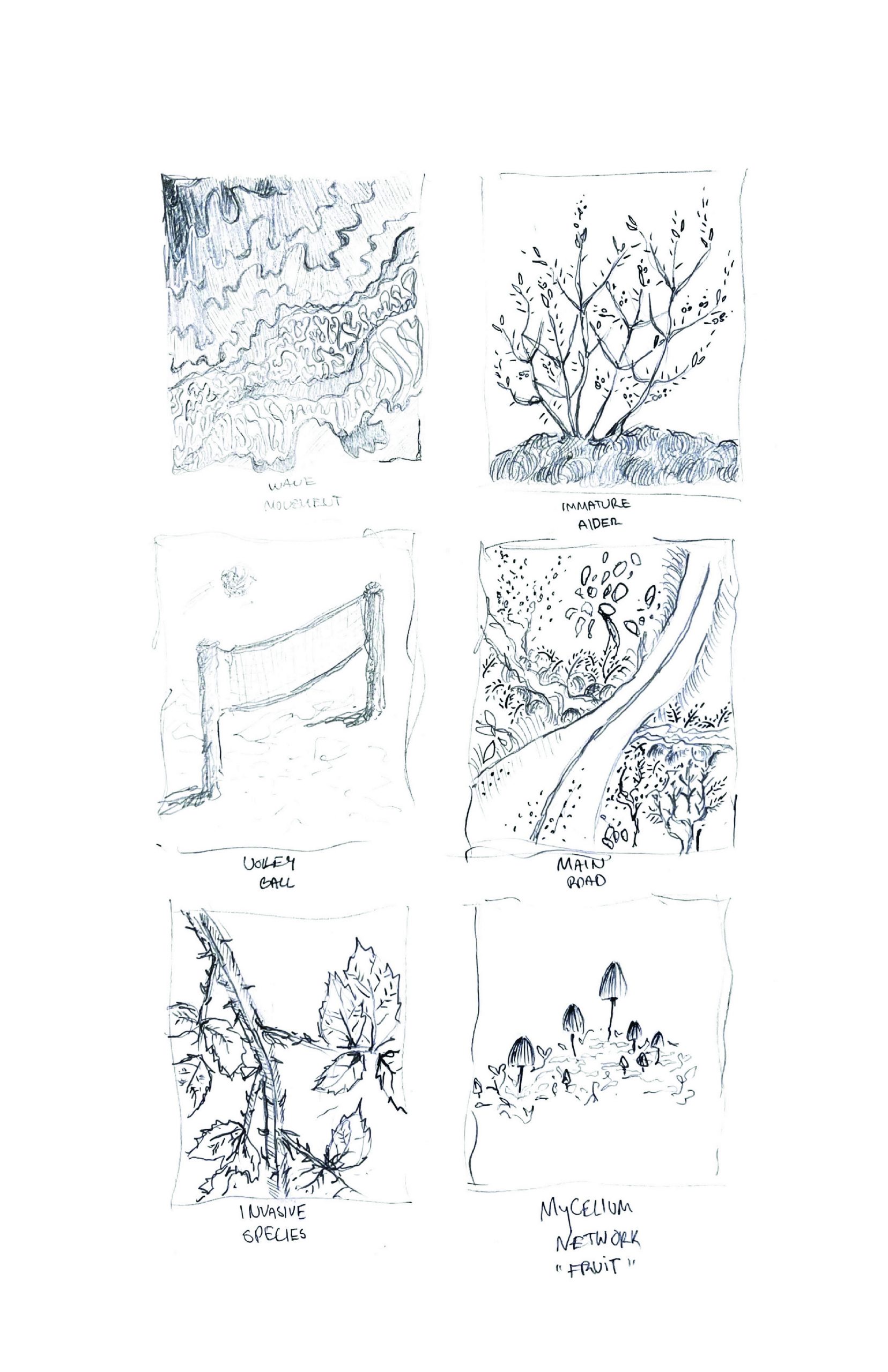


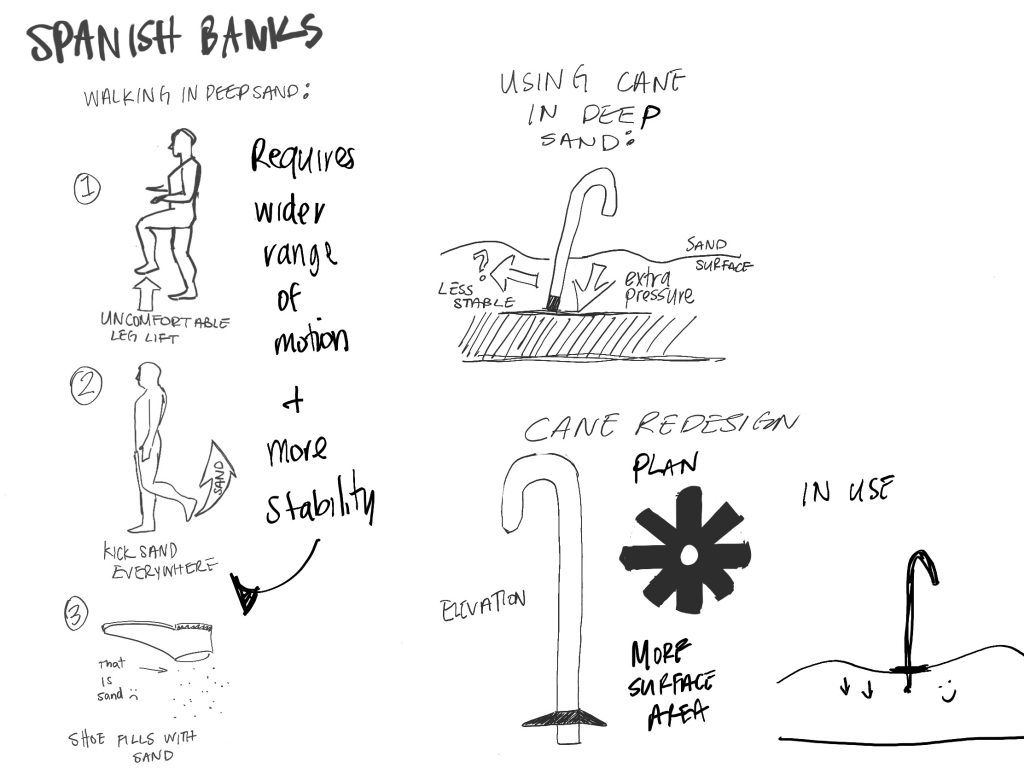
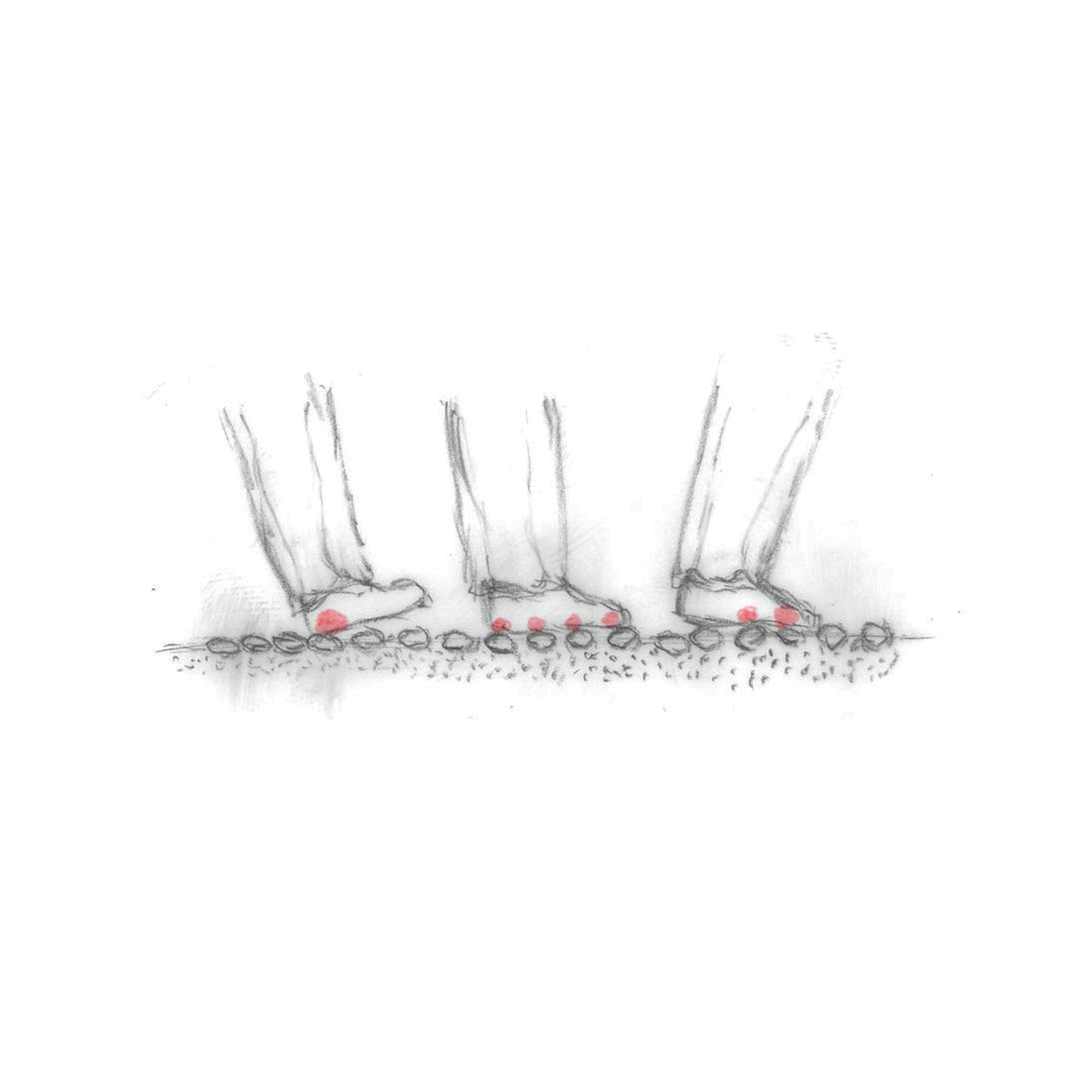
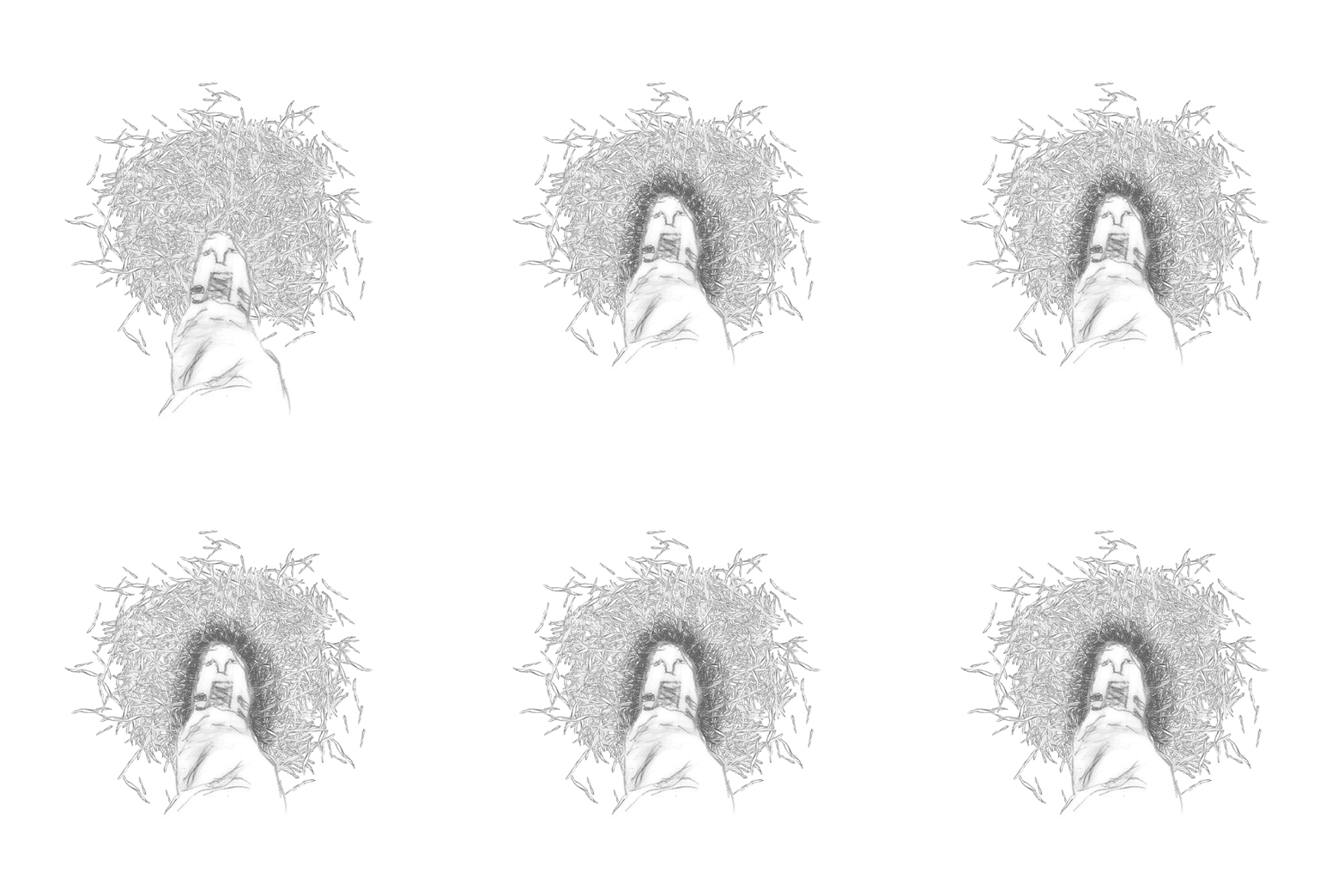
While walking on the beach, I couldn’t help but notice I was becoming exhausted very quickly. It is more difficult to keep stability on deep sand than it is on solid ground, and requires more energy as well. You have to lift your foot vertically out of the sand as well which requires knee bending that many people may not be capable of doing comfortably or without pain.
Farther from the beach, on the sidewalk adjacent to the road, I saw someone using a walking cane and realized that it must be pretty difficult to use a cane on a sandy beach. The lack of a solid surface to plant the cane on for stability seems like it would clearly pose some issues. It is unfortunate that there aren’t many solid walking paths within the sandy area. However, I think it might be possible to adapt the traditional walking cane to be better built for sandy terrain.
The issue might be addressed by creating a larger surface area that would come in contact with the ground. I modeled the new cane after ski poles – for deep powder you typically want to use a similar style basket a the tips of your ski poles, the increased surface area helps with stability so your poles can compact the snow instead of sinking.


Nitobe Garden
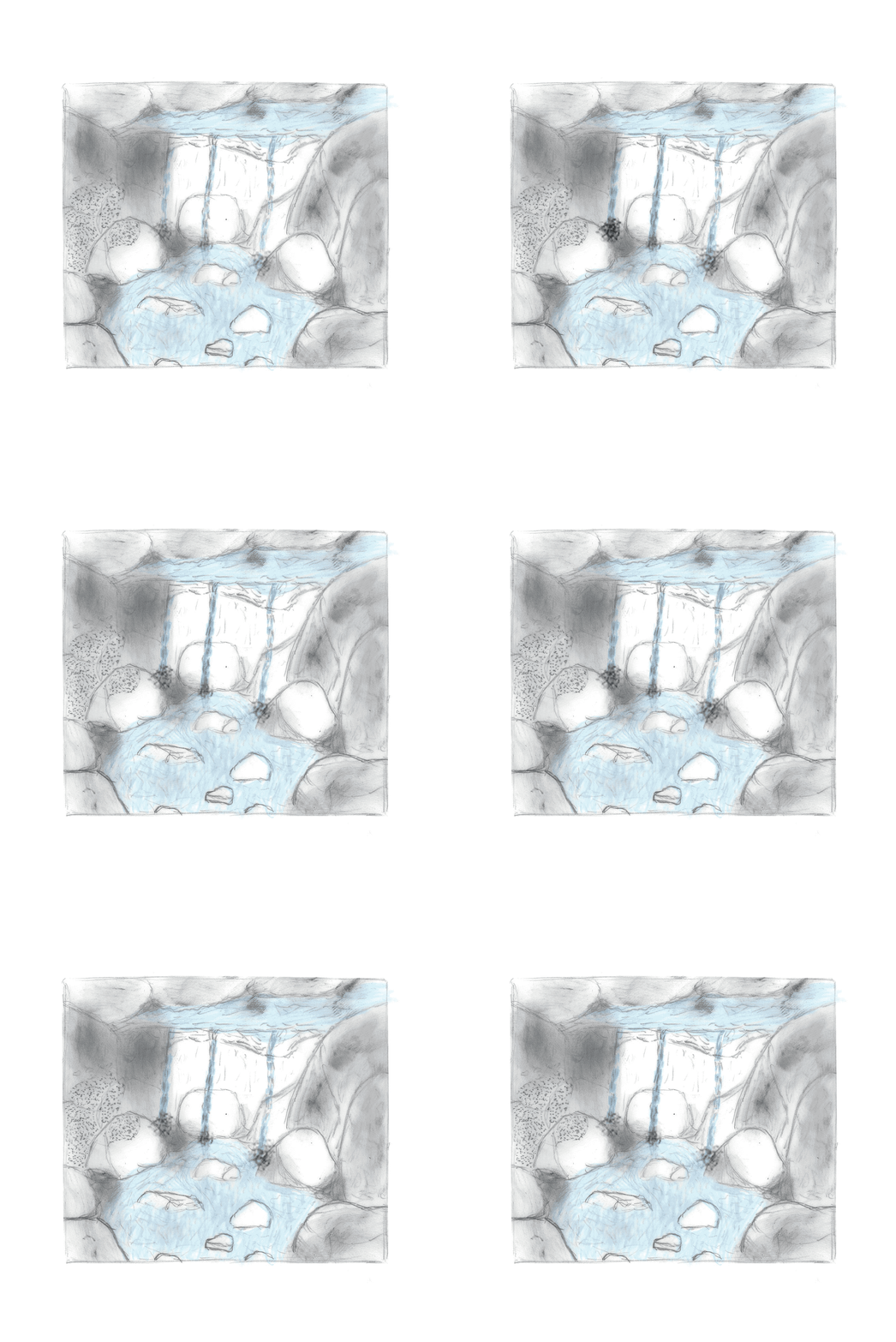
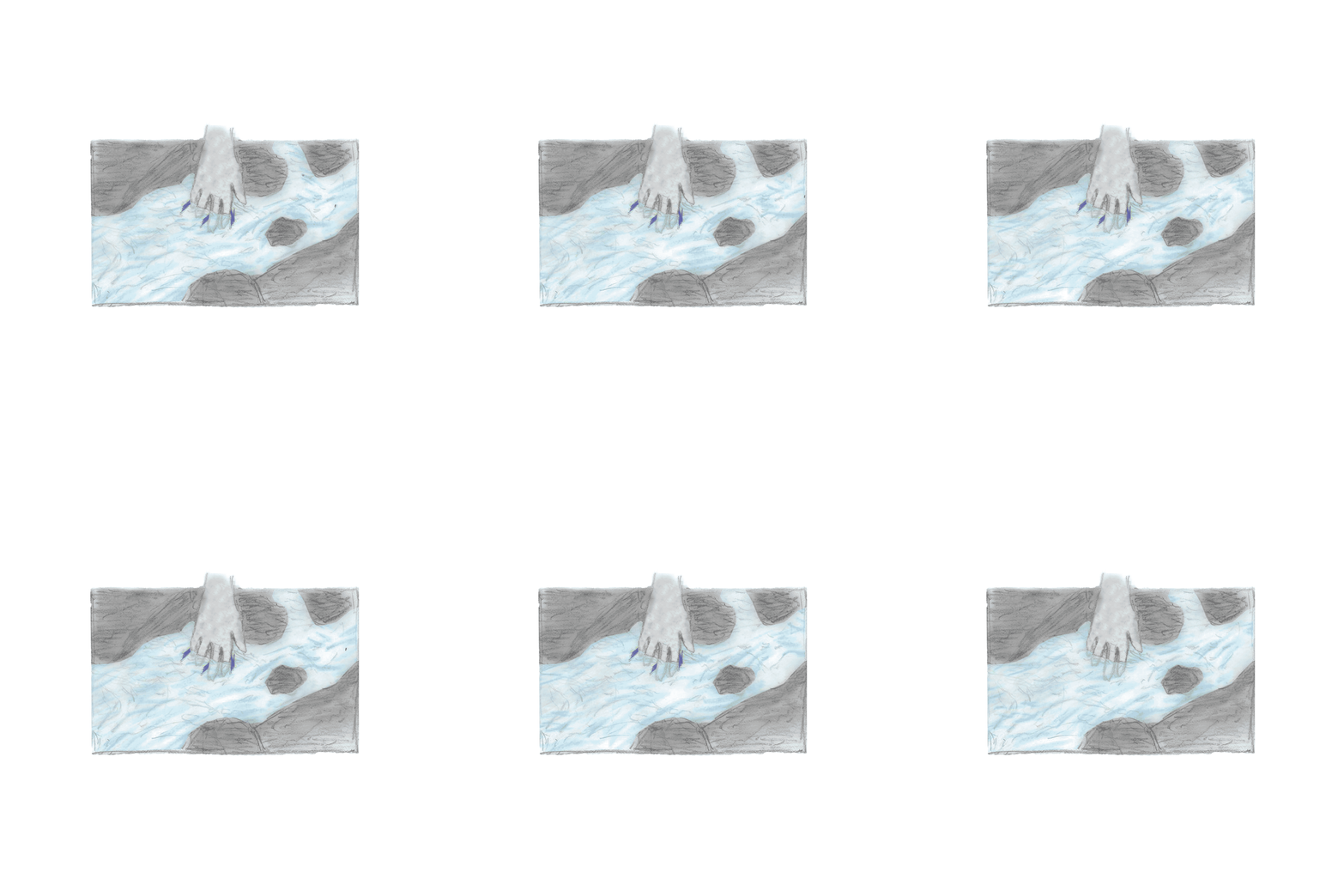
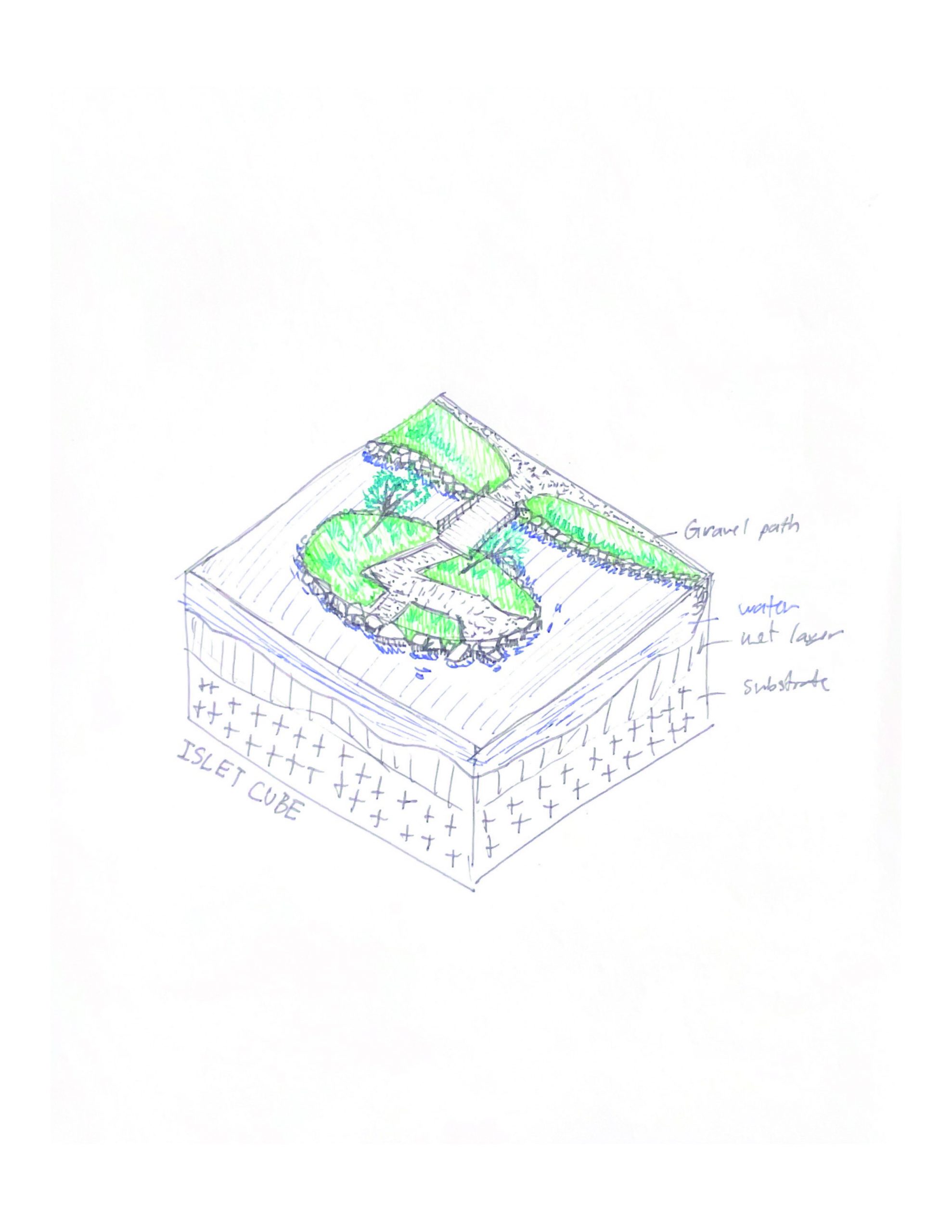
The water features are central to the site and situated between the green landscapes. These conditions of the large tree canopies and pools of water creates a very cool and crisp environment on humid days for humans and animals.

Spanish Banks
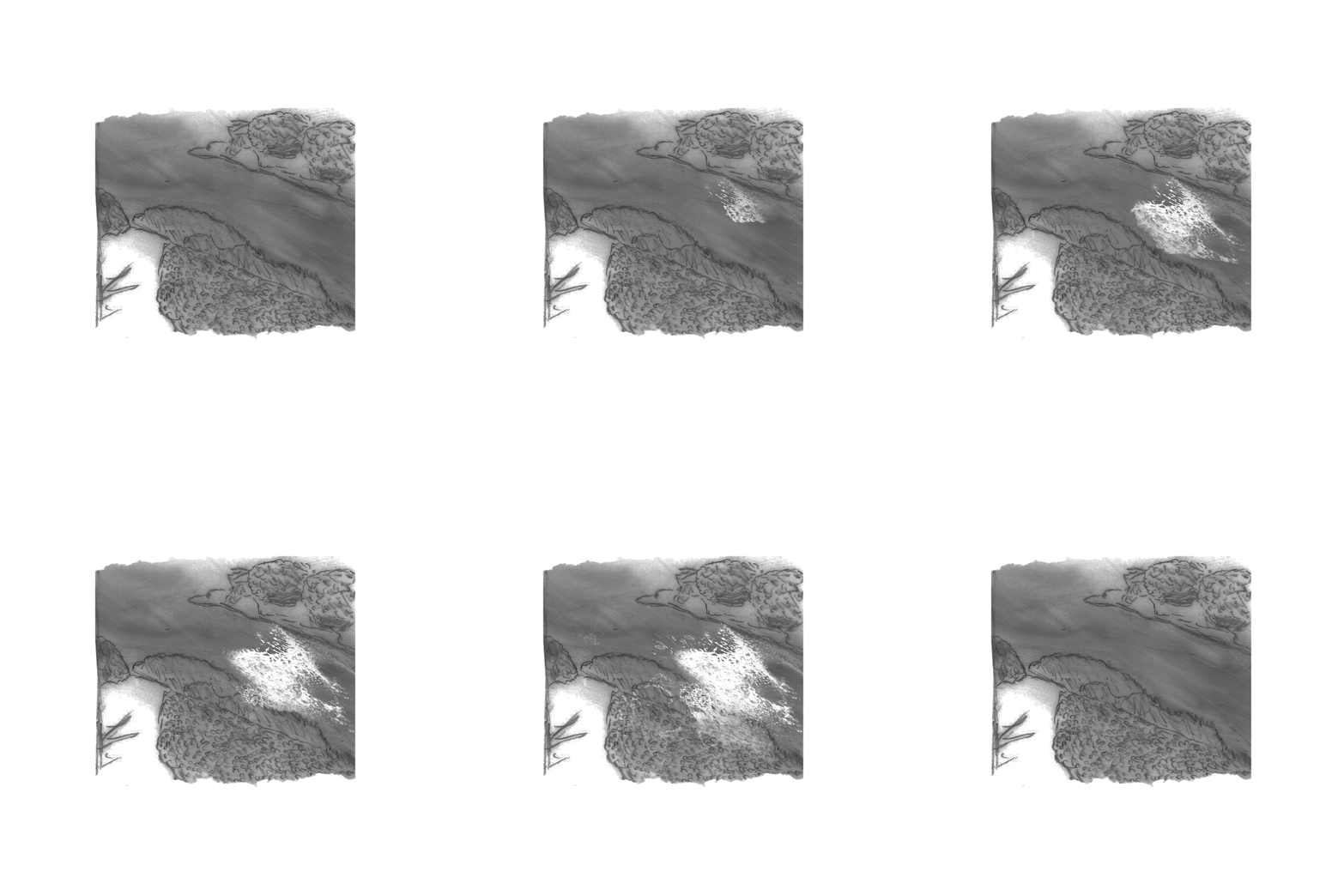
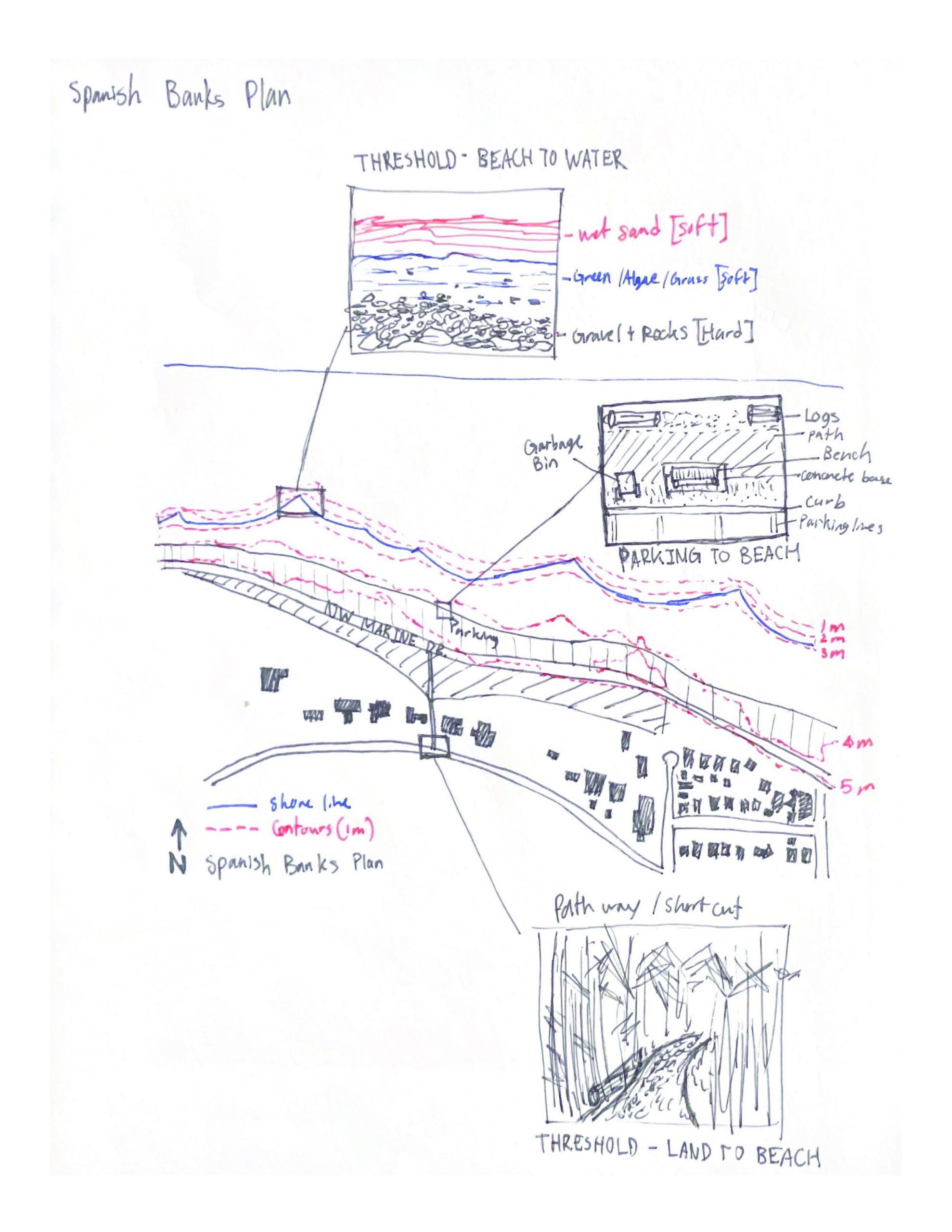
In contrast, the body of water is separated from the green landscape by the beach. The majority of trees on this site are situated along the road and at a higher elevation, casting constant shadows throughout the day onto the road below. While the beach itself gets quite hot, there is a constant breeze as I near the water.