Categories
Assessment

Student Self-Assessment and Peer Feedback

Listed below are selected teacher resources related to student self-assessment and peer feedback.
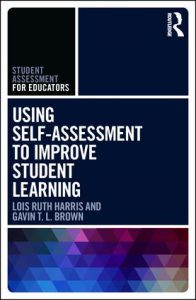
Using self-assessment to improve student learning

by Lois R. Harris and Gavin T. L. Brown

Grades: K-12.

This book synthesizes research on self-assessment and translates it into actionable guidelines and principles for pre-service and in-service teachers and for school leaders, teacher educators, and researchers.The authors explore self-assessment’s complexities and substantial promise to strategically move students toward self-regulated learning and internalized goals. (E-book only.)
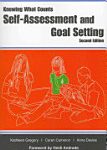
Self-assessment and goal setting

by Kathleen Gregory, Caren Cameron, and Anne Davies

Grades: K-12

The authors describe ways for teachers to create more involved students by including them in the assessment of their own work. The book provides ten self-assessment activities for students and details how to introduce the purpose of the activities to students, implement the activities, and provide different opportunities for practice. How to make goal setting a logical extension of self-assessment is also explored. Part of the Knowing what counts series.
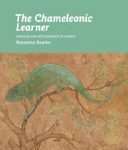
The chameleonic learner: Learning and self-assessment in context

by Roseanna Bourke

Grades: 6-9

What do you say to a young person who tells you her brain is an eighth full? Or to the one who says he only knows he has learned something when he receives a stamp or a sticker? This book is about how learners conceptualize learning, how they self-assess their own learning and why context matters. It shows how, just as a chameleon changes colour, learners change and adapt their approach to learning depending on the situation.
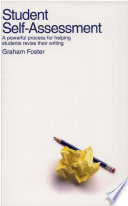
Student self-assessment: A powerful process for helping students revise their writing

by Graham Foster

Grades: K-12

This book focuses on students’ self-assessment of their written work, including the type of criteria that can be used for assessment in different genres of writing. The author also explores the links between self-assessment in writing and self-assessment in other areas of the curriculum.
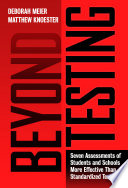
Beyond testing: Seven assessments of students and schools more effective than standardized tests

by Deborah Meier and Matthew Knoester

Grades: K-12

This book focuses on a range of non-traditional ways in which teachers (and others) can assess students and school programs, including a chapter dedicated to student self-assessment.
Becoming reflective students and teachers: With portfolios and authentic assessment

by Scott G. Paris and Linda R. Ayres

Grades: K-6

The authors encourage teachers and parents to reflect on their own ideas about education and to encourage greater self-assessment by students through deeper engagement with meaningful learning in classrooms. They describe a variety of possible activities to provoke students’ review of their own work, analyses of their motivation, appraisal of their learning strategies, and collaboration with others.
Peer coaching for adolescent writers

by Susan Ruckdeschel

Grades: 8-12

This book shows teachers how to teach students to articulate a purpose for their writing, formulate questions for feedback, provide constructive comments to their peers, and incorporate the critiques of their peers into their writing. It offers clear, step-by-step tips for implementing the peer coaching process, as well as ideas for using peer coaching across content areas.
Peer feedback in the classroom

by Starr Sackstein

Grades: 7-12

Peer feedback gives students control over their learning, and increases their engagement and self-awareness as learners. This book will help teachers establish a respectful, student-led learning environment that supports risk taking and honest sharing, and teach students to be adept peer strategists who can pinpoint areas of needed growth and move forward with specific strategies for improvement. (E-book only)
Effective peer learning: From principles to practical implementation

by Keith Topping et al.

Grades: K-12

Peer learning allows a positive use of differences between pupils, turning them into learning opportunities. This book will help practitioners establish well-structured and effective peer learning projects using a variety of methods. It introduces and defines cooperative learning (mutual peer interaction) and peer tutoring (directional peer interaction) – outlining general organizational principles that will help practitioners implement peer learning in either of these forms. (E-book only)
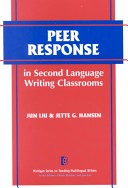
Peer response in second language writing classrooms

by Jun Liu and Jette G. Hansen

Grades: 6-12

The authors present a comprehensive survey of the research on peer response in second language writing instruction. They provide teachers with practical guidelines for making peer response effective in the classroom and offer a theoretical grounding on the purposes and importance of peer review, or feedback, as it relates to current writing instruction pedagogy.
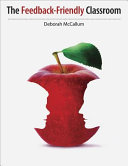
The feedback-friendly classroom: How to equip students to give, receive, and seek quality feedback that will support their social, academic, and developmental needs

by Deborah McCallum

Grades: K-6

This book explores using feedback to help students become better learners, examines the crucial use of verbal and nonverbal language to engage and guide students, and shows strategies and activities to establish and promote effective feedback within the classroom. It explores all types of feedback: from teacher to student, between students, and from student to teacher.


Finding More Resources

To find more resources in this area, try the following:

  • Search using the General tab on the UBC Library website to look for material in all UBC Library branches.
  • Search using “Search Education Resources” box in the left hand bar on the Education Library website to limit your results to materials in the Education Library.
  • Use specific search terms to narrow your results, such as “self-assessment”, “Students–Self-rating of”, “peer feedback”, “peer teaching”, or “peer coaching”.
  • To find lesson plans, include “lesson plans”, “lesson planning”, or “activity programs” in your search terms.

For more help with searching, please visit the Library Service Desk or e-mail ed.lib@ubc.ca.

Categories
Assessment

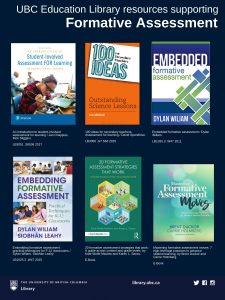
Formative Assessment

Listed below are selected resources for teachers related to formative assessment.

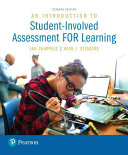
An introduction to student-involved assessment for learning

by Jan Chappuis and Richard J. Stiggins

Grades: K-12

This book is intended to help teachers establish clear learning targets as the basis for instruction and assessment, select assessment methods that align with those targets, select and/or create high-quality assessments that accurately measure student progress to the learning targets, clearly communicate assessment results to learners for both formative and summative purposes, and involve students in the assessment process to develop their capabilities to be self-directed learners.

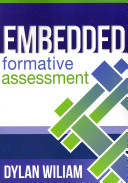
Embedded formative assessment

by Dylan Wiliam

Grades: K-12

The author introduces five strategies are introduced building formative assessment into the classroom: clarifying, sharing and understanding learning intentions and success criteria; engineering discussions and activities that elicit evidence of learning; providing feedback that moves learners forward; activating students as learning resources for each other; and activating students as owners of their own learning.

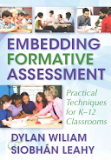
Embedding formative assessment: Practical techniques for F-12 classrooms,

by Dylan Wiliam and Siobhan Leahy

Grades: K-12

Building on the five strategies for formative assessment described in Embedded formative assessment, the authors provide an overview of each strategy and a number of practical formative assessment techniques for implementing the strategies in the classroom. Along with guidance on when and how to use the specific techniques, they provide tips, cautions and enhancements to sustain formative assessment. A student reflection form, peer observation form and self-reflection checklist accompany each strategy.

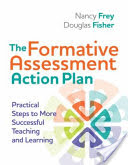
The formative assessment action plan: Practical steps to more successful teaching and learning

by Nancy Frey and Douglas Fisher

Grades: K-12

The book describes a four-step approach to implementing formative assessment in the classroom: ensuring that students understand the purpose of an assignment, task, or lesson, including how they will be assessed; checking for understanding to guide instruction and determine if students are making progress toward their goals; providing feedback to students; and building on that feedback to facilitate student achievement.

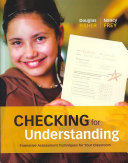
Checking for understanding: Formative assessment techniques for your classroom

by Douglas Fisher and Nancy Frey

Grades: K-12

The authors present five formative assessment techniques that can be used to check for understanding: oral language strategies that close the gap between what students need to know and what they already know; using writing to check for understanding in any subject; student response techniques that increase participation and engagement; projects and performances that are easily integrated into daily classroom practice; and test items that help plan further instruction.

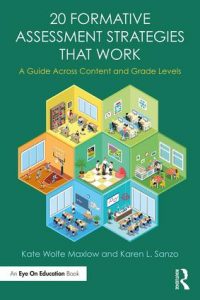
20 formative assessment strategies that work: A guide across content and grade levels

by Kate Wolfe Maxlow and Karen L. Sanzo

Grades: K-12

The authors present a range of formative assessment strategies and ways to implement them, using activities involving collaboration, movement, and/or selecting and supplying responses. (E-book)

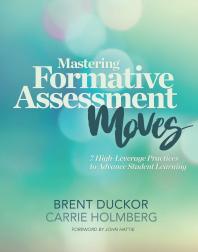
Mastering formative assessment moves: 7 high-leverage practices to advance student learning

by Brent Duckor and Carrie Holmberg

Grades: K-12

The authors present seven strategies that can be used as part of formative assessment: priming (building on background knowledge), posing (asking questions), pausing (waiting after questions), probing (deepening discussions), bouncing (sampling student responses), tagging (recording student responses), and binning (interpreting student responses). (E-book)

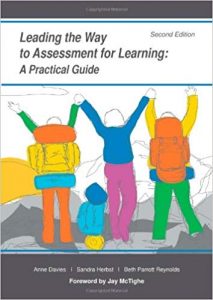
Leading the way to assessment for learning: A practical guide

by Anne Davies, Sandra Herbst, and Beth Parrott Reynolds

Grades: K-12

This book presents a number of strategies for formative assessment, including describing success, beginning with the end in mind, involving students in instruction, and using assessment to guide instruction.

100 ideas for secondary teachers: Assessment for learning

by David Spendlove

Grades: 9-12

The author suggests that assessment for learning (AfL) can help to increase student autonomy and ensure progress is taking place for every student. Key topics covered are questioning and dialogue, written and verbal feedback, and improving behaviour using AfL strategies and explaining its importance to parents.

Formative classroom assessment: Theory into practice

edited by James H. McMillan

Grades: K-12

The essays in this book present a state-of-the-art review of formative assessment in the classroom. Experts examine what is currently known about formative assessment and its application to teaching, balancing theory and research with practical applications.

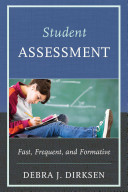
Student assessment: Fast, frequent, and formative

by Debra J. Dirksen

Grades: K-12

Just as video games often have a ‘reset button’, this book suggests that formative assessment can be used in the classroom as a virtual ‘reset button’ for student learning. A range of formative assessment strategies and techniques are discussed, such as the use of graphic organizers, quick writes, and journaling.


Finding More Resources

To find more resources in this area, try the following:

  • Search using the General tab on the UBC Library website to look for material in all UBC Library branches.
  • Search using “Search Education Resources” box in the left-hand bar on the Education Library website to limit your results to physical materials in the Education Library.
  • Use specific search terms, such as “formative assessment”, “formative assessment techniques”, or “educational tests and measurements”.
  • To find lesson plans, include “lesson plans”, “lesson planning”, or “activity programs” in your search terms.

PDF Booklist

For more help with searching, please visit the Library Service Desk or e-mail ed.lib@ubc.ca.
Categories
Assessment

Assessment Design

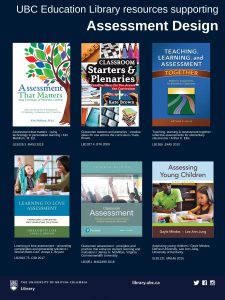
Listed below are selected resources for teachers related to assessment design.

Assessment: Evidence-based teaching for enquiring teachersCover of "Assessment", by Chris Atherton

by Chris Atherton

Grades: K-12

Provides a critical overview of assessment, taking an evidence-based approach, with balanced and reflective consideration given to arguments around various approaches to assessment in schools. Offers practical advice on how to implement such evidence-based models reflectively evaluating their success.

Assessment that matters: Using technology to personalize learning

by Kim Meldrum

Grades: K-12

This book provides readers with an understanding of the role that technology as a tool for learning must play in the education of today’s students. It details three types of assessment that richly inform teacher practice: assessment as learning, assessment for learning, and assessment of learning.

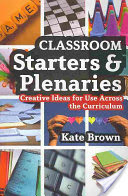
Classroom starters and plenaries: Creative ideas for use across the curriculum

by Kate J. Brown

Grades: K-12

The author presents a variety of techniques for kickstarting students’ demonstrations of what they’ve learned, including “in your own words” activities, physical activities, games and game shows, and more.

More secondary starters and plenaries: Creative activities, ready-to-use in any subject

by Mike Gershon

Grades: 9-12

This book includes 50 starters and 50 plenaries which have been crafted to fit with the structure of teaching, rather than specific content. The activities are organized into useful divisions such as Assessment for Learning, Concepts, and Learning Objectives, and each includes a brief rationale for the activity.

Teaching, learning and assessment together: Reflective assessments for elementary classrooms

by Arthur K. Ellis

Grades: K-6

The author presents strategies for the elementary classroom which engage students in activity and reflection, and which allow for the integration of teaching, learning and assessment. Strategies include such things as “the week in review”, “I can teach”, “letting questions percolate”, and more.

Learning to love assessment: Unraveling complexities and generating solutions

by Sherah Betts Carr and Anaya L. Bryson

Grades: K-12

The authors offer concrete techniques for educators at all levels to cultivate and implement over 50 effective classroom assessment strategies, including formative, student peer and self-assessment; data dialogues, technological tools, and PBL3 (problem, project and performance-based) assessments.

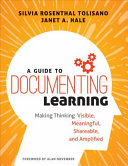
 A guide to documenting learning: Making thinking visible, meaningful, shareable, and amplified

by Silvia Rosenthal Tolisano and Janet A. Hale

Grades: K-12

This book helps educators explore what learning is by presenting ways in which they can look for, capture, reflect on, and share learning to foster meaningful and active student engagement.

Classroom assessment: Principles and practice that enhance student learning and motivation

by James H. McMillan

Grades: K-12

The new edition of this book emphasizes formative assessment, and includes in-depth coverage of self-assessment; the impact of standards-based accountability testing, 21st-century knowledge, dispositions and skills; technology-enhanced items; and assessment of culturally diverse students.

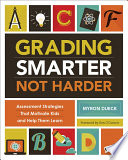
Grading smarter, not harder: Assessment strategies that motivate kids and help them learn

by Myron Dueck

Grades: K-12

The author offers strategies for ensuring that grades measure what students know without punishing them for factors outside their control; examining the fairness and effectiveness of grading homework assignments; designing and distributing unit plans that make assessment criteria clear to students; and creating a flexible and modular retesting system so that students can improve their scores on individual sections of important tests.

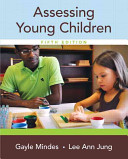
Assessing young children

by Gayle Mindes and Lee Ann Jung

Grades: K-3

This book addresses a broad range of assessment issues in early childhood and discusses how to deliver an effective educational program for all young children It prepares teachers to assess young children in a variety of settings, including inclusive environments, and also discusses working with children from diverse cultural backgrounds.

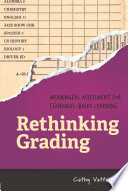
Rethinking grading: Meaningful assessment for standards-based learning,

by Cathy Vatterott

Grades: K-12

The author examines and debunks traditional practices and policies of grading in K-12 schools, offering a new paradigm for standards-based grading that focuses on student mastery of content and gives concrete examples from elementary, middle, and high schools. (Also available online.)

Restorative assessment: Strengths-based practices that support all learners,

by Laura M. Greenstein

Grades: K-12

Unlike ordinary testing, restorative assessments offer students multiple ways to demonstrate their learning, which promotes equity and reduces conflict. This book provides real-world examples of restorative assessment in practice, research on personalized learning and assessment, and practical strategies for implementation.

Cripping labor-based grading for more equity in literacy courses,

by Asao B. Inoue

Grades: Higher education

This book offers an expanded and compassionate discussion of labor-based grading, a practice that involves negotiating a set of classroom agreements with all of the students in a course to determine how much labor will be expected of students and how it will be accounted for or identified to earn particular final course grades. Inoue focuses his exploration of labor-based grading by asking, “How can labor-based grading evolve so that it addresses the concerns around inequitable access to or expectations of labor that students with disabilities, neurodivergencies, illnesses, or limited time in the semester may face?”

Note: you may find the subject heading “educational tests and measurements” to be useful in finding additional materials.


Finding More Resources

To find more resources in this area, try the following:

  • Search using the General tab on the UBC Library website to look for material in all UBC Library branches.
  • Search using “Search Education Resources” box in the left hand bar on the Education Library website to limit your results to physical materials in the Education Library.
  • Use specific search terms, such as “assessment design”, “educational tests and measurements”, “educational evaluation”, or “grading and marking (students)”.
  • To find lesson plans, include “lesson plans”, “lesson planning”, or “activity programs” in your search terms.

PDF Booklist

For more help with searching, please visit the Library Service Desk or e-mail ed.lib@ubc.ca.
Spam prevention powered by Akismet