Categories
English

Poetry

Listed below are selected teacher resources, picture books, poetry for older readers, and non-fiction related to poetry.

Teacher Resources
Learning to write with purpose: Effective instruction in grades 4-8

by Karen Kuelthau Allan et al.

Grades: 4-8

Communicating ideas and information is what makes writing meaningful, yet many students write without considering the aims of their writing or the needs of their readers. This book shares techniques to promote the skills and strategies need to write and revise effectively in a range of genres, including persuasive, expository and procedural writing; narratives; and poetry.
Welcome to Poetryland: Teaching poetry writing to young children

by Shelly Savren

Grades: K-6

The author begins each chapter in this book with a student quote and an original poem, followed by stories of working with that particular group. She provides 38 lesson plans, complete with introductions of poetic concepts, model poems by professionals, open-ended writing assignments, methods for sharing and critiquing, and one or two student poems. Designed for use in a classroom, this book also features 23 additional poetry workshop ideas.
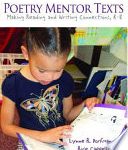
Poetry mentor texts: Making reading and writing connections, K-8

by Lynne R. Dorfman and Rose Cappelli

Grades: K-8

This book explores a variety of poetic forms, including poems that inspire response, list poems, acrostic poems, persona poems, and poems for two voices. Each of these poetic forms has its own chapter featuring five poems with applications for both reading and writing classrooms. Reading connections present skills and strategies to help students build fluency, vocabulary, comprehension, phonemic awareness, and phonics. Writing connections help students discover their own voices and grow as poets and wordsmiths.
Sing a song of poetry: A teaching resource for phonemic awareness, phonics, and fluency, Grade 2

by Irene C. Fountas and Gay Su Pinnell

Grades: 2

The 225 poems in this book immerse students in rich, rhythmical language, providing age appropriate opportunities to enjoy language through shared reading, stimulate oral language development, connect words, and much more.
Poetry – From reading to writing: A classroom guide for ages 7-11

by Robert Hull

Grades: 2-6

The author uses poems from a range of authors to show how creative readings of poems can spark a child’s imagination and lead to original writing. Students are encouraged to write different forms of poetry, including rhyming and non-rhyming poems, haiku, free verse, narrative poems, and more. (E-book only)
Teaching poetry: Reading and responding to poetry in the secondary classroom

by Amanda Naylor and Audrey B. Wood

Grades: 9-12

This guide helps teachers support pupils as they access, understand, discuss and enjoy classic and contemporary poetry. The authors provide an introduction to the major ideas and theory about teaching poetry, cover the key genres and periods through both well-known and less-well-known poems, and illustrate good practice for every approach covered through case studies of theory and ideas in action in the classroom. (E-book only)
The poetry experience: Choosing and using poetry in the classroom

by Sheree Fitch and Larry Swartz

Grades: K-12

This book explores all aspects of poetry — from guidelines and an overview of poetic forms to the Top Ten lists of various poetry favorites. Handy reproducible masters are also provided which include a poetry timetable, ten questions to ask about any poem, an observation checklist for teachers, and a personal poetry inventory for students. The authors – poets themselves – focus on both reading and writing poetry, and on experiencing poetry both on the page and read aloud.
Power & poetry: Best practices for high school classrooms

by Jim Mahoney and Jerry Matovcik

Grades: 9-12

The authors discard the scary parts of teaching poems – the symbolism and the technical language – and instead focus on poetry as a natural expression of individual curiosity, emotion, and observation. The book includes ideas for weaving poetry into lesson planning, including instructional suggestions for helping students understand poems and generate content through journaling; studying and writing poems intertextually; and creating prompts that engage student poets.
Let’s poem: The essential guide to teaching poetry in a high-stakes, multimodal world

by Mark Dressman

Grades: 7-12

This guide presents multiple approaches to teaching poetry at the middle and high school levels. The author explores how to preserve the fun of poetry while also developing critical writing and analysis skills, how to introduce students to the basic formal elements of classic and contemporary poetry, and how to expand their repertoires through the use of digital technology and the Internet.

Picture Books
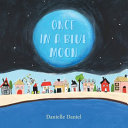
Once in a blue moon

by Danielle Daniel

Each of these short poems describes an experience that turns an ordinary day into a special one, like seeing a double rainbow or a shooting star, or even just a family of ducks waddling across the road.
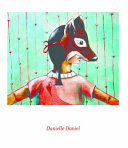
Sometimes I feel like a fox

by Danielle Daniel

In this introduction to the Anishinaabe tradition of totem animals, young children explain why they identify with different creatures such as a deer, beaver or moose. Illustrations show the children wearing masks representing their chosen animal, while the few lines of text on each page work as a series of simple poems throughout the book. Also available in French.
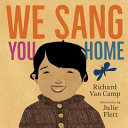
We sang you home,

written by Richard van Camp, illustrated by Julie Flett

In this lyrical board book, gentle rhythmic text captures the wonder new parents feel as they welcome baby into the world, in a celebration of the bond between parent and child.
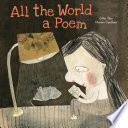
All the world a poem

written by Gilles Tibo, illustrated by Manon Gauthier, translated by Erin Woods

In this book, poems bloom in fields, fly on the wings of birds, and float on the foam of the sea. They are written in the dark of night, in the light of happiness, and in the warmth of the writer’s heart. Rhymed or unrhymed, regular or irregular, the verses bring not just poems but the very concept of poetry to the level of a child, making them accessible to all.
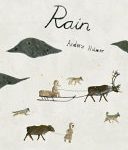
Rain

by Anders Holmer

This haiku collection describes a series of short vignettes, each of them taking place in a different kind of rain, from thunderstorms to falling flower petals. The poems–some serious, some gently humorous–depict scenes from all over the globe: a horse struggling to plow a field, a father changing a tire while his children play, and two friends making up after a fight.
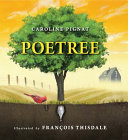
Poetree

written by Caroline Pignat, illustrated by François Thisdale

The poem is both about the yearly cycle in the life of a tree and an intriguing poetic concoction. The initial letters of each line in each stanza spell out a word that pertains to that tree’s life cycle – it’s a kids’ acrostic.
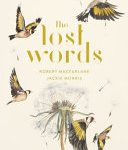
The lost words: A spell book

written by Robert Macfarlane, illustrated by Jackie Morris

In 2007, when a new edition of the Oxford Junior Dictionary was published, a sharp-eyed reader soon noticed that around forty common words concerning nature had been dropped. The list of included acorn, dandelion, fern, heron, otter, and willow. The authors set out to make a “spell book” that conjure back twenty of these lost words, and the beings they name, through poems.
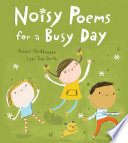
Noisy poems for a busy day

written by Robert Heidbreder, illustrated by Lori Joy Smith

From sunup to bedtime, this collection of 30 lively short poems follows young children throughout their day, celebrating all of the seemingly small, but potentially special, moments they experience. Each poem is easy to remember, rhythmic and action-filled, and reflects a child’s-eye view of both the activity and how it makes them feel.
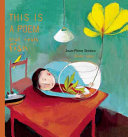
This is a poem that heals fish

written by Jean-Pierre Siméon, illustrated by Olivier Tallec, trranslated by Claudia Zoe Bedrick

After his mother, hurrying to her tuba lesson, tells him that a poem will cure his pet fish’s boredom, a little boy tries to find out what a poem is by asking friends, neighbors, and other members of his family. Playful, funny, and lyrical, this is a wonderful read-aloud book for children to share, discuss and be inspired by.

Poetry for Older Readers
For every one

by Jason Reynolds

Originally performed at the Kennedy Center for the unveiling of the Martin Luther King Jr. Memorial, this stirring and inspirational poem is Jason Reynolds’s rallying cry to the dreamers of the world. It is for every one. For every one person. For every one dream. But especially for every one kid. The kids who dream of being better than they are – of doing more than they almost dare to dream.
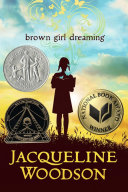
Brown girl dreaming

by Jacqueline Woodson

In vivid poems, Woodson shares what it was like to grow up as an African American in the 1960s and 1970s, living with the remnants of Jim Crow and her growing awareness of the Civil Rights movement. Woodson’s eloquent poetry also reflects the joy of finding her voice through writing stories, despite the fact that she struggled with reading as a child.
Voices in the air: Poems for listeners

by Naomi Shihab Nye

The nearly 100 poems here were written by Naomi Shihab Nye in honour of the artists, writers, poets, historical figures, and ordinary people from past and present who have inspired her. Full of words of encouragement, solace, and hope, this collection offers a message of peace and empathy. Includes short informational bios about the influential figures behind each poem, and an introduction by the poet.
Whispers of mermaids and wonderful things: Children’s poetry and verse from Atlantic Canada

edited by Sheree Fitch and Anne Hunt, illustrated by Lloyd Fitzgerald

Spanning centuries of work from Milton Acorn to Kathleen Winter, and with a broad thematic scope–from soft lullabies to silly, jiggly lyrics, poignant meditations on nature, loss, and love–over 100 poems from Atlantic Canada are sure to delight and young readers everywhere.
The crossover

by Kwame Alexander

14-year-old twins Josh and Jordan Bell are basketball stars, but their dad’s failing health is taking a toll on their family. Josh relates the highs and lows of his family’s journey in a series of connected poems.
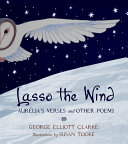
Lasso the wind: Aurélia’s verses and other poems

written by George Elliott Clarke, illustrated by Susan Tooke

This is is the first collection of children’s poetry by renowned Canadian poet and playwright George Elliott Clarke, the former Parliamentary Poet Laureate. By turns absurd, witty, playful, and profound, Clarke’s poems speak to the vivid wonder, the bright joys, and the secret pains of growing up in this world.

Voices visible: The BCTELA student writing journal, by various authors

These volumes collect poems from young writers from around British Columbia.

Non-Fiction
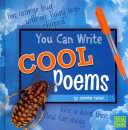
You can write cool poems

by Jennifer Fandel

Grades: 1-3

Through examples and exercises, this book shows how young writers can make readers smile, give them goosebumps or the giggles, or even make them cry, all through poetry.
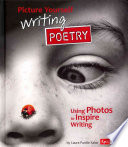
Picture yourself writing poetry: Using photos to inspire writing

by Laura Purdie Salas

Grades: 3-6

Poetry is more than rhyming words on a page. A poem is crafted by carefully selecting each word and rhythm. But how does a poet get started? Finding inspiration is as easy as looking at a picture.
Write your own poetry

by Laura Purdie Salas

Grades: 4-7

You can write about anything in poetry. Whether you want to write poems that make people laugh out loud, gasp in surprise, or see things in a new way, this book is for you. Conquer the blank page and express your thoughts, feelings, and observations through poetry.


Finding More Resources

To find more resources in this area, try the following:

  • Search using the General tab on the UBC Library website to look for material in all UBC Library branches.
  • Search using “Search Education Resources” box in the left hand bar on the Education Library website to limit your results to materials in the Education Library.
  • Use specific search terms to narrow your results, such as “poetry–authorship”, “poetry–study and teaching”, “English language — composition and exercises”, “creative writing”, or “children’s poetry”.
  • To find lesson plans, include “lesson plans”, “lesson planning”, or “activity programs” in your search terms.

For more help with searching, please visit the Library Service Desk or e-mail ed.lib@ubc.ca.

Categories
Social Studies

Media Literacy and Media Studies

Listed below are selected teacher resources, picture books, fiction, and non-fiction related to media literacy and media studies.

Teacher Resources

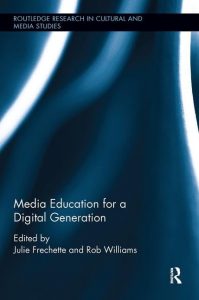
Media education for a digital generation

edited by Julie Frechette and Rob Williams

Grades: 6-12

This book argues that the goals for comprehensive and critical digital literacy require grasping the means through which communication is created, deployed, used, and shared, regardless of which tools or platforms are used for meaning making and social interaction. Drawing upon the intersecting matrices of digital literacy and media literacy, the volume provides a framework for developing critical digital literacies by exploring the necessary skills and competencies for engaging students as citizens of the digital world. (E-book only)

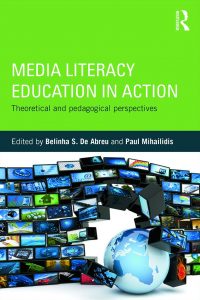
Media literacy education in action: Theoretical and pedagogical perspectives

edited by Belinha S. DeAbreu and Paul Mihailidis

Grades: K-12

Featuring a mix of perspectives, this book explores the divergent ways in which media literacy is connected to educational communities and academic areas in both local and global contexts. The volume is structured around seven themes: Media Literacy: Past and Present; Digital Media and Learning; Global Perspectives; Public Spaces; Civic Activism; Policy and Digital Citizenship; and Future Connections. (E-book only)

Media literacy, social networking, and the Web 2.0 environment for the K-12 educator

by Belinha S. DeAbreu

Grades: K-12

This book uses the theme of media literacy as a lens through which to view and discuss social networking and Web 2.0 environments. There is ongoing and positive research on the participatory culture created by youth who are heavily involved in the new digital technologies, yet schools tend to avoid these mediums for fear of the unknown. Can students learn within this context? This book posits that indeed they can, using media literacy as a way to provide a framework for these mediated environments.

Global media literacy in a digital age: Teaching beyond borders

edited by Belinha S. DeAbreu and Melda N. Yildiz

Grades: K-12

How do we connect with one another? How do the media portray different cultures and beliefs? What messages are often omitted from media? How do we connect what we see in the worldwide media to the classroom? This book, divided into four parts, serves to answer many of these questions. This resource provides a look at how media literacy education has become a global and interconnected dialogue brought about by the evolution of technology.

Close reading the media: Literacy lessons and activities for every month of the school year

by Frank W. Baker

Grades: 6-9

This book will help teachers work with middle school students to become savvy consumers of the TV, print, and online media bombarding them every day. Students will learn to think critically about photos, advertisements, and other media and consider the intended purposes and messages. Topics include helping students detect fake news, unraveling the messages in TV advertising, and looking at truth vs propaganda in political ads and debates. (E-book only)

Media literacy: New agendas in education

edited by Kathleen Tyner

Grades: K-12

This volume explores how educators can leverage student proficiency with new literacies for learning in formal and informal educational environments. It also investigates critical literacy practices that can best respond to the proliferation of new media in society, and what sorts of media education are needed to deal with the rapid influx of intellectual and communication resources. (E-book only)

Media and digital literacies in secondary school

by Reijo Kupiainen

Grades: 9-12

Young people bring their own media and literacy practices to the school as an important part of an identity, taste, and social life. This book highlights youth’s media production practices, from photography and video making to fan fiction writing and online role-playing, and shows how these practices make a dialog between informal and formal learning and that teachers have an important part in collaborative relationships with pupils when teachers encourage and motivate pupils and help them to understand media phenomena.

Argument in the real world: Teaching adolescents to read and write using digital texts

by Kristin Hawley Turner and Troy Hicks

Grades: 9-12

Digital texts influence what students buy, who they vote for, and what they believe about themselves and their world. In this book, the authors draw from real world texts and samples of student work to share insights and practical strategies in teaching students the logic of argument, whether those arguments are streaming in through a Twitter feed, a viral videos, or internet memes.

Fiction

Media meltdown: A graphic guide adventure

written by Liam O’Donnell, illustrated by Mike Deas

Grades: 4-8

When Karl Reed, Owner of Oasis Developments, tries to force the sale of a local fruit farm — through whatever means necessary — Pema, Bounce and Jagroop decide to expose him through the media. Little do they realize that when it comes to the news and the advertisers who make it possible, the truth is not always part of the story and nothing can be taken at face value.

Non-fiction

Power of the media

by Brooke Moore and Tara Smith

Grades: 6-9

Part of the Issues 21 series, which examines contemporary issues in society in order to develop students’ skills in the areas of critical thinking, creativity, communication, collaboration, ethical citizenship and activism. Includes 6 student books and a teacher’s guide.

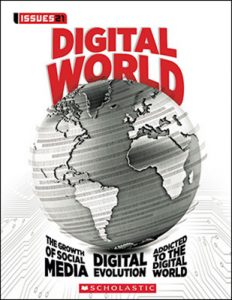
Digital world

by Glen Downey

Grades: 6-9

This book explores how to evaluate the effect of digital technologies on the way we think and interact. Part of the Issues 21 series. Includes 6 student books and a teacher’s guide.

Choosing news: What gets reported and why

by Barb Palser

Grades: 5-8

More news sources are available to us than ever before. But who decides what is news? Learn to identify good news sources and watch for slant. Don’t be fooled! Make sure your sources tell the real story. Part of the Exploring media literacy series.

Advertising attack

by Laura J. Hensley

Grades: 5-8

From simple signs to risky stunts, advertising takes many forms. Sometimes the message is confusing; sometimes it’s unforgettable. This book explores, the strategies, techniques, and tricks companies use to influence what we buy.

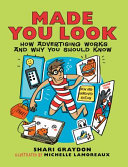
Made you look: How advertising works and why you should know

written by Shari Graydon, illustrated by Michelle Lamoreaux

Grades: 5-8

From the earliest roots of advertising to the undercover marketers of the 21st century, the authors shows where ads come from, how they work, and why kids need to be informed. Bursting with real-life examples, thought-provoking questions, and plenty of tips to empower young consumers, this book is every kid’s ultimate guide to the advertising universe.


Finding More Resources

To find more resources in this area, try the following:

  • Search using the General tab on the UBC Library website to look for material in all UBC Library branches.
  • Search using “Search Education Resources” box in the left hand bar on the Education Library website to limit your results to materials in the Education Library.
  • Use specific search terms to narrow your results, such as “digital media”, “social media”, “effect of technological innovations on popular culture”, “media literacy – study and teaching”, or “mass media in education”.
  • To find lesson plans, include “lesson plans”, “lesson planning”, or “activity programs” in your search terms.

For more help with searching, please visit the Library Service Desk or e-mail ed.lib@ubc.ca.
Categories
Core Competencies

Communicating

Communication is one of the three Core Competencies in the BC Curriculum; Communicating is one of two components of this competency. Listed below are selected teacher resources and picture books related to communication and communicating.

La communication est l’une des trois compétences de base du programme d’études de la Colombie-Britannique ; la communication est l’une des deux composantes de cette compétence. Vous trouverez ci-dessous une sélection de ressources pour les enseignants et de livres d’images liés à la communication et au fait de communiquer.

Ressources pour les enseignant (Teacher Resources)

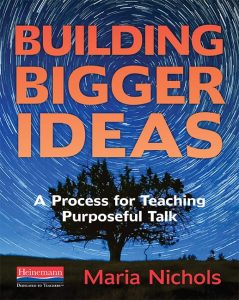
Building bigger ideas: a process for teaching purposeful talk,

by Maria Nichols

Niveau scolaire (Grade level): K – 6

Maria Nichols guides us beyond teaching students to talk politely about books to teaching them to have meaningful conversations-purposeful talk that serves as a tool for constructing understanding with others. She provides a flexible process that gives teachers a solid foundation in facilitating discussions, allowing them to meet the challenges of unpredictable, exploratory talk in the elementary classroom.

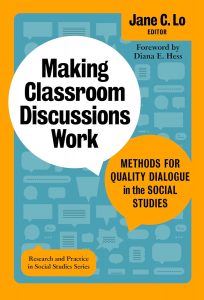
Making Classroom Discussions Work: Methods for Quality Dialogue in the Social Studies,

by Jane Lo

Niveau scolaire (Grade level): K – 12

For the past 2 decades, the field of social studies education has seen an increase in research on the use of discussions as an essential instructional technique. This book examines the importance of using quality dialogue as a tool to help students understand complex issues in social studies.

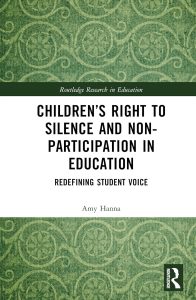
Children’s Right to Silence and Non-Participation in Education: Redefining Student Voice,

by Amy Hanna

Niveau scolaire (Grade level): K – 12

This insightful book re-examines the concept of student voice through an exploration of children’s implicit right to silence and non-participation. Responding to calls for more critical approaches to children’s participation under the UN Convention on the Rights of the Child, this unique exposition of silence ventures beyond traditional notions of voice as a defining term for justice and participation, and traditional understandings of silence as powerlessness.

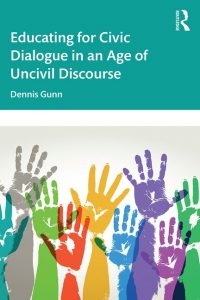
Educating for Civic Dialogue in an Age of Uncivil Discourse,

by Dennis Gunn

Niveau scolaire (Grade level): K – 12

As an invitation to ongoing civil dialogue with diverse voices in the classroom, the book aims to foster the skills of democratic and global citizenship that allow students to find their voice as local, national, and global citizens outside of the classroom. It suggests practical ways that teachers can promote the skills of attentive listening, intelligent questioning, reasonable positioning, and responsible dialogue in order to encourage authentic civic discourse.

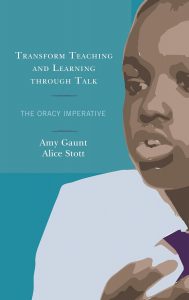
Transform teaching and learning through talk: the oracy imperative,

by Amy Gaunt & Alice Stott

Niveau scolaire (Grade level): K – 12

Transform Teaching and Learning Through Talk describes how to: Identify and teach good talk (and listening!)Build a classroom culture which values talk. Create meaningful and authentic contexts for oracy. Support your quietest students to speak up too! This book is a rich resource for teachers, drawing upon key academic research and outlining what this could look like in your classroom.

Dialogic Pedagogy: Discourse in Contexts from Pre-school to University,

by Anne Thwaite, Alyson Simpson & Pauline Jones

Niveau scolaire (Grade level): Préscolaire – 12 (Pre-K – 12)

Taking a dialogic approach, this edited book engages in analysis and description of dialogic discourse in a number of different educational contexts, from early childhood to tertiary, with an international team of contributors from Australia, Finland, New Zealand and the United Kingdom. The chapters focus mostly on dialogic face-to-face discourse, with some examples of online interactions, and feature insights from educational linguistics, particularly the work of Michael Halliday.

Unpacking Students’ Engagement with Feedback: Pedagogy and Partnership in Practice,

by Anastasiya Lipnevich, Jessica To & Kelvin Tan Heng Kiat

Niveau scolaire (Grade level): K – 12

Learners of all levels receive a plethora of feedback messages on a daily – or even hourly – basis. Teachers, coaches, parents, peers – all have suggestions and advice on how to improve or sustain a certain level of performance. This volume offers insights into the complexity of students’ engagement with feedback, the diversity of teachers’ feedback practices, and the influence of personal assessment beliefs in tension with prevailing contexts.

Les livres d’images (Picture Books) 

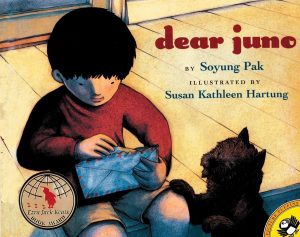
Dear Juno,

by Soyung Pak; illustrated by Susan Kathleen Hartung

Niveau scolaire (Grade level): Préscolaire – 2 (Pre-K – 2)

Although Juno, a Korean American boy, cannot read the letter he receives from his grandmother in Seoul, he understands what it means from the photograph and dried flower that are enclosed and decides to send a similar letter back to her.

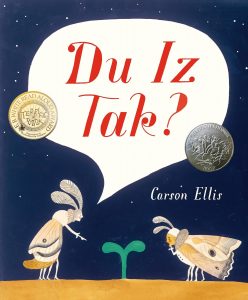
Du iz tak?,

by Carson Ellis

Niveau scolaire (Grade level): Préscolaire – 12 (Pre-K – 12)

Readers are invited to imagine the dramatic possibilities to be found in the natural world, even the humblest back garden! With exquisitely-detailed illustration that will appeal to children and art-lovers alike, and a wonderfully playful invented language, we soon find ourselves speaking “Bug” … Du iz tak? What is that?

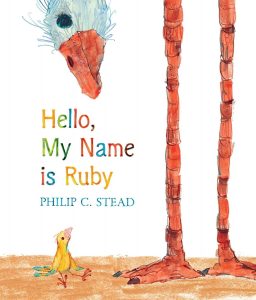
Hello, my name is Ruby,

by Philip C. Stead

Niveau scolaire (Grade level): Préscolaire – 2 (Pre-K – 2)

Join Ruby, a plucky little bird, as she ventures through life, making new friends, learning new skills and asking questions which may have some very surprising results.

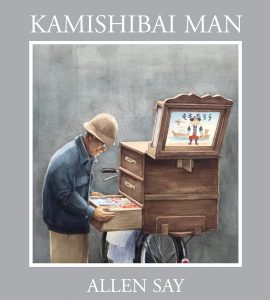
Kamishibai man,

by Allen Say

Niveau scolaire (Grade level): Préscolaire – 6 (Pre-K – 6)

The Kamishibai man used to ride his bicycle into town where he would tell stories to the children and sell them candy, but gradually, fewer and fewer children came running at the sound of his clappers. They were all watching their new televisions instead. Years later, the Kamishibai man and his wife made another batch of candy, and he pedaled into town to tell one more story—his own.

Taan’s moons: a Haida moon story,

by Alison Gear; illustrated by Kiki van der Heiden with the Children of Haida Gwaii; foreword by Richard Van Camp

Niveau scolaire (Grade level): 2 – 5

“There’s a moon in the sky. It looks like a drum, which guides the earth where Taan is from.” In the Haida language, ‘taan’ means bear; the Haida people record time according to the way the bear follows the seasons of the year. This is a story of the bear and the seasons – or moons – of the year.

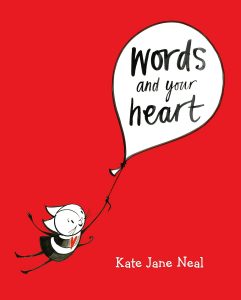
Words and your heart,

by Kate Jane Neal

Niveau scolaire (Grade level): Préscolaire – 2 (Pre-K – 2)

This book is about your heart (the little bit inside of you that makes you, you!) The words we listen to can affect how we feel. Some words can do amazing things and make us happy. And some words can really hurt us (we all know what sort of words those are). Our words have power, and we can choose to use them to make the world a better place.


Trouver d’autres ressources

Voici quelques conseils pour trouver d’autres ressources dans ce domaine :

  • Sur la page principale du site de la bibliothèque de l’UBC, utilisez la boîte de recherche générale pour rechercher des matériaux à travers toutes les succursales de la bibliothèque de l’UBC.
  • Pour limiter vos résultats aux matériels disponibles à la Bibliothèque de l’éducation, visitez le site web de la Bibliothèque de l’éducation et effectuez une recherche à l’aide de la case “Search Education Resources” située dans la bande à gauche de l’écran.
  • Remarque : les ressources étant principalement cataloguées en anglais, les termes ci-dessous donnent généralement plus de résultats que les recherches effectuées en français. Vous pouvez filtrer votre liste de résultats par langue dans la barre latérale de gauche.
  • Utilisez des termes de recherche spécifiques, tels que
    • “communication in education”, “communication” OR “conduct of life” OR “caring” AND “child*”, “friendship” AND “juvenile fiction” OR “picturebooks”, ou “dialogic approach” OR “dialogic discourse” OR “dialogic perspectives” AND “education”
  • Pour trouver des plans de cours, incluez “lesson plans”, “lesson planning”, or “activity programs” dans vos termes de recherche.

Finding More Resources

To find more resources in this area, try the following:

  • Search using the General tab on the UBC Library website to look for material in all UBC Library branches.
  • Search using “Search Education Resources” box in the left hand bar on the Education Library website to limit your results to physical materials in the Education Library.
  • Use specific search terms, such as
    • “communication in education”, “communication” OR “conduct of life” OR “caring” AND “child*”, “friendship” AND “juvenile fiction” OR “picturebooks”, and “dialogic approach” OR “dialogic discourse” OR “dialogic perspectives” AND “education”
  • To find lesson plans, include “lesson plans”, “lesson planning”, or “activity programs” in your search terms.
Categories
Accessibility Diversity and Diverse Learners

English Language Learners

Listed below are selected resources for teachers related to working with English Language Learners.

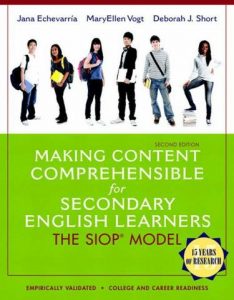
Making content comprehensible for secondary English learners: the SIOP model

by Jana Echevarría

This book is written to give middle and secondary school teachers lesson plans, teaching ideas, and many effective activities for working successfully with adolescents who are English learners or who struggle with academic literacy. Several sample lessons and activities show the alignment of the SIOP Model to the Common Core State Standards (CCSS). Based on research that confirms that the SIOP Model (Sheltered Instruction Observation Protocol) makes a positive difference academically for all students-and what works well for English learners will work equally well with other students-the book is ideal both for teachers who are already familiar with the SIOP Model, and those who are just learning about it. It gives educators a model for planning and implementing lessons that help the English learners in their charge gain access to grade-level content standards, and ultimately prepare them for life after high school, in college or a career.

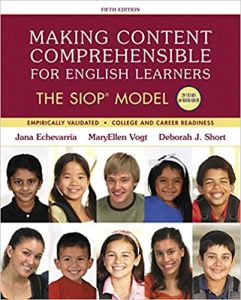
Making content comprehensible for English learners: the SIOP Model

by Jana Echevarría

“This book introduces and explains the SIOP® (Sheltered Instruction Observation Protocol) Model, a comprehensive, coherent, research-validated model of sheltered instruction, no implemented in districts throughout all 50 states and in multiple countries and territories. The SIOP Model improves teaching effectiveness and results in academic gains for students.”–From the back cover.

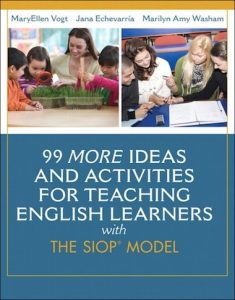
99 more ideas and activities for teaching English learners with the SIOP® model

by MaryEllen Vogt

The SIOP ® model is proven to be one of the most effective methods of teaching our English learners. Now teaching with SIOP is even easier with the second volume of Vogt, Echevarria, and Washam’s 99 MORE Ideas and Activities for Teaching English Learners with the SIOP ® Model. Offering brand new, classroom-ready activities, this indispensable resource revisits SIOP ® and shows how to use it each day in the classroom. Whether searching for activities that build vocabulary, keep students highly engaged, or make content concepts clear, these teacher-tested strategies adhere to SIOP ® principles and reinforce best practice. Chapters are organized around SIOP’s eight components and thirty features, so teachers learn not only what activities to try, but also why they work.

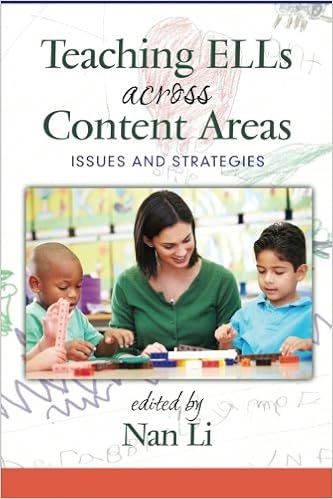
Image result for teaching ELLs content areasTeaching ELLs Across Content Areas: Issues and Strategies

edited by Nan Li

Grades: K-12

This book gathers professional knowledge, expertise, and experience from authors who represent the entire range of content areas, including language arts, science, mathematics, technology, arts, psychology, and Hispanic studies.

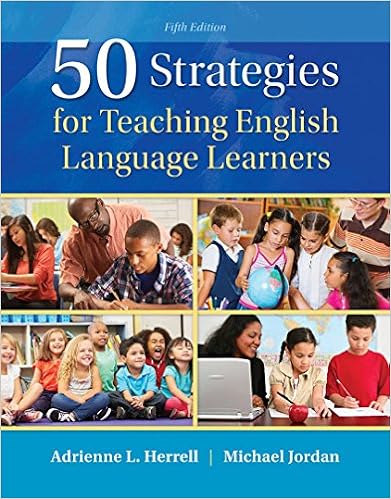
50 Strategies for Teaching English Language Learners

by Adrienne L. Herrell & Michael Jordan

Grades: K-12

This book provides an assortment of practical strategies aligned to TESOL standards, each including a brief explanation, step-by-step instructions on how to plan and use the strategy, and classroom scenarios demonstrating how the strategy can be adapted for different grade levels and content areas. Additional strategies in language and literacy development, technology, and assessment are also included.

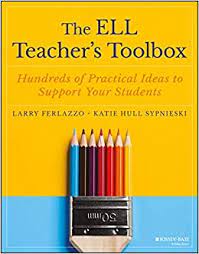
ELL Teacher's Toolbox cover art The ELL teacher’s toolbox: Hundreds of practical ideas to support your students

by Larry Ferlazzo & Katie Hull Sypnieski

Grades: K-12

The ELL Teacher’s Toolbox provides hundreds of innovative and research-based instructional strategies you can use to support all levels of English Language Learners….[T]he book is divided into two main sections: Reading/Writing and Speaking/Listening. Each of those sections includes “Top Ten” favorites and between 40 and 70 strategies that can be used as part of multiple lessons and across content areas.

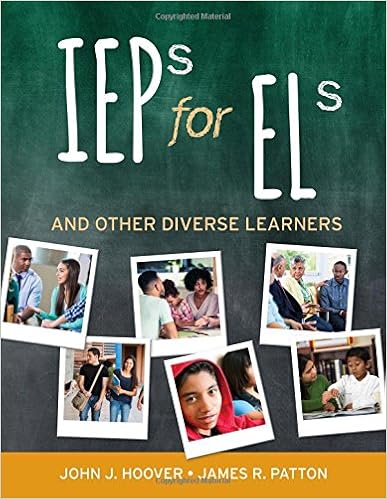
IEPs for ELs and Other Diverse Learners

by John J. Hoover & James R. Patton

Grades: K-12

Individualized Education Programs (IEPs) are fundamental for guiding the educational process of and developing goals for students who require special education services. This book guides educators through the process for creating high-quality IEPs for both English learners (ELs) and for students with learning, emotional, or behavioral disabilities.

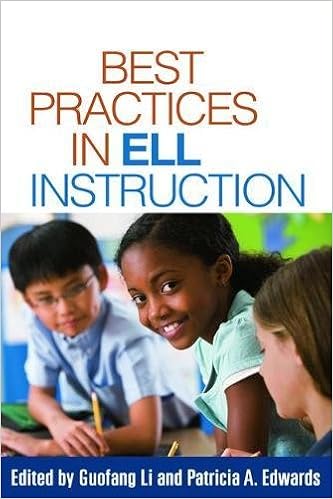
Best Practices in ELL Instruction

edited by Guofang Li and Patricia A. Edwards

Grades: K-12

Provides best-practice guidelines for targeting reading, writing, oral language, vocabulary, content-domain literacies, and other core skill areas; assessing culturally and linguistically diverse students; and building strong school-home-community partnerships. Chapters include clear-cut recommendations for teaching adolescent ELLs and those with learning disabilities.

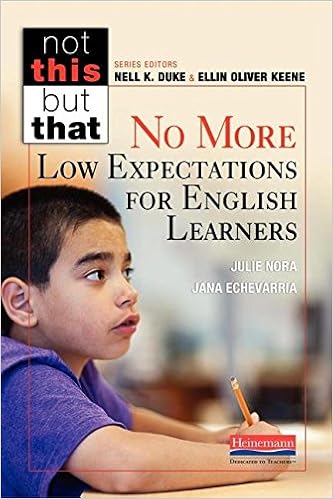
No More Low Expectations for English Learners 

by Julie Nora and Jana Echevarria

Grades: K-12

Nora and Echevarria describe what best practice methods for supporting ELs’ academic achievement look like, and offer strategies to provide the instructional supports ELs need for both language acquisition and content-area learning.

Show, tell, build: Twenty key instructional skills and techniques for educating English learners

by Joyce W. Nutta et al.

Grades: K-12

This book is organized around two decision maps for planning and implementing differentiated instruction for ELs: the Academic Subjects Protocol (for teachers of academic subjects) and the Language Arts Protocol (for teachers of language arts). The instructional tools and techniques described in each chapter help teachers provide communication support for ELs through showing and telling, and develop students’ language proficiency through building their skills.

Inclusive literacy teaching: Differentiating approaches in multilingual elementary classrooms

by Lori Helman et al.

Grades: 1-6

The authors present key foundational principles in language and literacy development for linguistically diverse students. They demonstrate both a “big picture” and an “up close and personal” look at the successes, obstacles, and developmental nuances for students learning to read and write in a new language in inclusive classrooms. (E-book)

 A book for every teacher: Teaching English language learners

by Nan Li

Grades: K-12

The book is designed for all teachers who have or will have ELLs in their classrooms and who seek information and strategies to better work with and serve their ELLs to achieve academic success. With this design, teachers can use the book as a text or reference tool, or for professional development materials.

Scaffolding language, scaffolding learning: Teaching English language learners in the mainstream classroom

by Pauline Gibbons

Grades: K-6

With clear directions and classroom tested strategies for supporting students’ academic progress, the author shows how the teaching of language can be integrated seamlessly with the teaching of content. Examples of classroom discourse illustrate how the scaffolding process works, while activities to facilitate conversation and higher-level thinking put the latest research on second language learning into action.

Book cover120 content strategies for English language learners: Teaching for academic success in secondary school

by Jodi Reiss

Grades: 9-12

Offers practical instructional and assessment strategies built on a foundation of second language acquisition theories and principles that teachers can incorporate into daily classroom instruction. These strategies address how to build background knowledge and learning strategies, read for comprehension, give clear instructions, assess learning, consider culture & its impact on learning, and more.

book coverBeyond “teaching to the test”: Rethinking accountability and assessment for English language learners

by Betsy Gilliland and Shannon Pella

Grades: K-12

This book gives teachers the background and strategies to make their teaching and support equitable for ELLs. Examining how teachers can support learners’ reading, writing, and academic language development, and illustrated with examples of real teachers at work, the authors explain teaching for accountability, formative and summative assessment, and preparation for high-stakes testing, as well as provide suggestions for teaching, guiding questions for discussion, and resource recommendations. Part of the Principles in practice series.

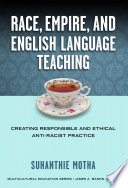
Race, empire, and English language teaching: creating responsible and ethical anti-racist practice

by Suhanthie Motha

This timely book takes a critical look at the teaching of English, showing how language is used to create hierarchies of cultural privilege in public schools across the country. Motha closely examines the work of four ESL teachers who developed anti-racist pedagogical practices during their first year of teaching.


Finding More Resources

To find more resources in this area, try the following:

  • Search using the General tab on the UBC Library website to look for material in all UBC Library branches.
  • Search using “Search Education Resources” box in the left hand bar on the Education Library website to limit your results to physical materials in the Education Library.
  • Use specific search terms to narrow your results, such as “English language–Study and teaching–Foreign speakers”.
  • To find lesson plans, include “lesson plans”, “lesson planning”, or “activity programs” in your search terms.

For more help with searching, please visit the Library Service Desk or e-mail ed.lib@ubc.ca.
Spam prevention powered by Akismet