Categories
Sciences

Teaching Science Disciplines

Listed below are selected teacher resources for teaching the Science disciplines.

Teacher Resources
Inspiring young minds: Scientific inquiry in the early years

by Julie Smart

Grades: K-3

This book provides a concrete guide to using research-based principles of inquiry to help children explore their world, using case studies to focus on the teacher’s interaction with children.
Whole-class inquiry: Creating student-centered science communities

by Dennis Smithenry and Joan Gallager-Bolos

Grades: 7-12

The authors present ideas, techniques and resources for implementing whole-class inquiry in the middle and high school science classroom.
Science stories: Science methods for elementary and middle school teachers

by Janice Koch

Grades: K-8

Through narratives about science teaching and learning in real-world classrooms, this text demonstrates learning, important content, and strategies in action. Koch’s approach guides teachers in discovering and exploring their scientific selves, enabling them to learn from students’ experiences and become effective scientific explorers in their own classrooms.
Kid’s eye view of science: A conceptual, integrated approach to teaching science, K-6

by Susan J. Kovalik and Karen D. Olsen

Grades: K-6

The authors demonstrate how to teach science conceptually through the lens of “big ideas” such as change, interdependence, and adaptation. The book includes charts, graphics, forms, and summaries that help teachers translate abstract concepts into concrete lessons; a comprehensive discussion of brain research, including helpful tips to assimilate 10 body-brain-compatible elements into the classroom; and practical hands-on guidance for enriching science programs and improving student outcomes.
Formative assessment for secondary science teachers

by Erin Marie Furtak

Grades: 7-12

The author demonstrates how to create and implement formative assessments in all science content areas – physics/physical science, life science/biology, earth and space science, and chemistry – in middle and high school science classrooms. Five types of formative assessments are discussed: big idea questions, concept maps, evidence-to-explanation, predict-observe-explain, and multiple choice.
The really useful book of science experiments: 100 easy ideas for primary school teachers

by Tracy-ann Aston

Grades: K-6

This book provides simple-to-do science experiments that can be carried out by any teacher in a primary school classroom with minimal or no specialist equipment needed. Each experiment is accompanied by a subject knowledge guide, as well as suggestions for how to adapt each experiment to increase or decrease the challenge. (E-book)
Teaching science for understanding in elementary and middle schools

by Wynne Harlen

Grades: K-8

This book explores how to build on the ideas students already have to cultivate the thinking and skills necessary for developing an understanding of scientific aspects of the world, including investigating and drawing conclusions from data through analyzing, interpreting, and explaining.
Becoming scientists: Inquiry-based teaching in diverse classrooms, grades 3-5

by Rusty Bresser and Sharon Fargason.

Grades: 3-5

Using examples from classrooms where teachers practice inquiry science and engage students in science and engineering practices, the authors show teachers how to build on students’ varied experiences, background knowledge, and readiness; respond to the needs of students with varying levels of English language proficiency; manage a diverse classroom during inquiry science exploration; and facilitate science discussions.
Differentiated science inquiry

by Douglas Llewellyn

Grades: K-8

The author gives teachers standards-based strategies for differentiating inquiry-based science instruction to more effectively meet the needs of all students. This book takes the concept of inquiry-based science education to a deeper level with the author’s unique model, including fresh ideas for engaging students and practical tools for differentiating inquiry instruction.
99 jumpstarts for kids’ science research

by Peggy J. Whitley and Susan Williams Goodwin

Grades: 4-8

The authors’ pathfinder approach aids students in the research process, helping them define important terms, offer beginning questions to help narrow their topic, furnish source ideas, and engage in fun activities to explore each topic.
Science formative assessment: 75 practical strategies for linking assessment, instruction, and learning

by Page Keeley

Grades: K-12

This book presents 75 specific formative assessment classroom techniques (FACTs) to help K–12 science teachers determine students’ understanding of key scientific concepts.

Scaffolding science inquiry through lesson design

by Michael Klentschy and Laurie Thompson

Grades: K-8

The authors explore the approach taken in the El Centro, California school district to create a well-designed, inquiry-based science curriculum, which raised student achievement in K-8 science across the district.
100 ideas for secondary teachers: Outstanding science lessons

by Ian McDaid

Grades: 9-12

This book presents 100 practical ideas and activities for science teachers to use in their daily lessons, as well as teaching and planning strategies for those lessons.
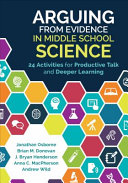
Arguing from evidence in middle school science: 24 activities for productive talk and deeper learning

by Jonathan Osborne, Brian M. Donovan, J. Bryan Henderson, et al.

Grades: 5-8

The authors share strategies and activities to help engage students in arguments about competing data sets, opposing scientific ideas, applying evidence to support specific claims, and more. The activities are drawn from the physical sciences, life sciences, and earth and space sciences.


Finding More Resources

To find more resources in this area, try the following:

  • Search using the General tab on the UBC Library website to look for material in all UBC Library branches.
  • Search using “Search Education Resources” box in the left hand bar on the Education Library website to limit your results to physical materials in the Education Library.
  • Use specific search terms to narrow your results, such as “science – study and teaching”, “creative ability in science”, “science – examinations, questions”, etc.
  • To find lesson plans, include “lesson plans”, “lesson planning”, or “activity programs” in your search terms.

For more help with searching, please visit the Library Service Desk or e-mail ed.lib@ubc.ca.
Categories
Mathematics

Teaching Mathematics

Listed below are selected resources related to teaching mathematics.

Challenging mathematical tasks: Unlocking the potential of all students

by Peter Sullivan

Sullivan’s research shows that many students do not fear challenges in mathematics, but welcome them, and rather than having teachers instruct them, prefer to work out solutions for themselves. This book includes activities that allow for sustained thinking, decision-making and risk-taking by the students, and features a ‘Learning Focus’, ‘Key Mathematical Language’, ‘Pedagogical Considerations’, and ‘Enabling and Extending Prompts’ for each task.

Teaching student-centered mathematics: Developmentally appropriate instruction for grades pre-K – 2

by John A. Van de Walle, LouAnn H. Lovin, Karen S. Karp, and Jennifer M. Bay-Williams

Grades: K-2

Part of the Student-Centered Mathematics Series, this book is designed to illustrate what it means to teach student-centered, problem-based mathematics, to serve as a reference for the mathematics content and research-based instructional strategies suggested for the specific grade levels, and to present a large collection of high quality tasks and activities that can engage students in the mathematics that is important for them to learn.

Teaching student-centered mathematics: Developmentally appropriate instruction for grades 3-5

by John A. Van de Walle, Karen S. Karp, LouAnn H. Lovin, and Jennifer M. Bay-Williams.

Grades: 3-5

Part of the Student-Centered Mathematics Series, this book is designed to illustrate what it means to teach student-centered, problem-based mathematics, to serve as a reference for the mathematics content and research-based instructional strategies suggested for the specific grade levels, and to present a large collection of high quality tasks and activities that can engage students in the mathematics that is important for them to learn.

Math Teacher's Toolbox Cover ArtThe math teacher’s toolbox: Hundreds of practical ideas to support your students

by Bobson Wong & Larisa Bukalov

Grades: K-12

The Math Teacher’s Toolbox contains hundreds of student-friendly classroom lessons and teaching strategies….Topics range from the planning of units, lessons, tests, and homework to conducting formative assessments, differentiating instruction, motivating students, dealing with “math anxiety,” and culturally responsive teaching.

Every math learner: A doable approach to teaching with learning differences in mind, grades K-5

by Nanci N. Smith

Grades: K-5

Smith debunks the myths around what math differentiation is and is not, and offers a practical approach to teaching mathematics for real learning differences.

Good questions: Great ways to differentiate mathematics instruction in the standards-based classroom

by Marian Small

Grades: K-8

This resource helps experienced and novice teachers to effectively and efficiently differentiate mathematics instruction in grades K-8 using two strategies: Open Questions and Parallel Tasks.

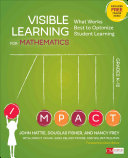
Visible learning for mathematics, grades K-12: What works best to optimize student learning

by John Hattie, Douglas Fisher, and Nancy Frey

Grades: K-12

The authors discuss three important phases of learning mathematics: the surface learning phase, where students explore new concepts and make connections to procedural skills; the deep learning phase, where students make connections among conceptual ideas and form generalizations; and the transfer phase, when they can independently approach more complex concepts and situations.

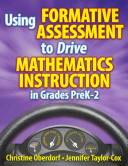
Using formative assessment to drive mathematics instruction in grades preK-2

by Christine Oberdorf and Jennifer Taylor-Cox

Grades: K-2

The authors illustrate the distinction between a “traditional” assessment and an “enhanced” assessment; describe specific differentiated activities; provide “Questions to Assess” to determine what each child understands about the math concept; show how to move students to higher-level mathematics thinking and to apply math concepts; and share extension activities to offer challenging work for children who have achieved skill mastery level.

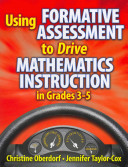
Using formative assessment to drive mathematics instruction in grades 3-5

by Christine Oberdorf and Jennifer Taylor-Cox

Grades: 3-5

The authors illustrate the distinction between a “traditional” assessment and an “enhanced” assessment; describe specific differentiated activities; provide “Questions to Assess” to determine what each child understands about the math concept; show how to move students to higher-level mathematics thinking and to apply math concepts; and share extension activities to offer challenging work for children who have achieved skill mastery level.

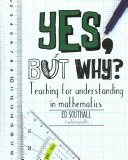
Yes, but why? Teaching for understanding in mathematics

by Ed Southall

Grades: K-12

Getting the right answers in math is only half the problem; understanding why the processes work is the part that often stumps students and teachers alike. This book answers a range of questions about why mathematics works, and sheds light on the hidden connections between everything in mathematics at school.

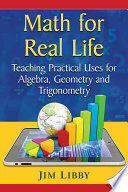
Math for real life: Teaching practical uses for algebra, geometry and trigonometry

by Jim Libby

Grades: 7-12

This book presents hundreds of practical applications for mathematics—from baseball statistics to the theory of relativity—that can be understood by anyone with a knowledge of high school algebra, geometry and trigonometry. It will help teachers to answer the inevitable question “When are we ever going to use this?”

We reason & we prove for ALL mathematics: Building students’ critical thinking, grades 6-12

by Fran Arbaugh et al.

Grades: 6-12

This book spans all mathematical content areas to provide teachers with strategies to help build students’ reasoning and proving skills. Activities include solving and discussing high-level mathematical tasks; analyzing narrative cases that make the relationship between teaching and learning salient; examining and interpreting student work; and modifying curriculum materials and evaluating learning environments to better support students.

Math wise! Over 100 hands-on activities that promote real math understanding, grades K-8

by Jim Overholt and Laurie Kincheloe

Grades: K-8

This activity book is a resource teachers can use to give students a firm grounding to work with more advanced math concepts. Contains over 100 activities that address topics like number sense, geometry, computation, problem-solving, and logical thinking. Activities are presented in order of difficulty and address different learning styles


Finding More Resources

To find more resources in this area, try the following:

  • Search using the General tab on the UBC Library website to look for material in all UBC Library branches.
  • Search using “Search Education Resources” box in the left hand bar on the Education Library website to limit your results to physical materials in the Education Library.
  • Use specific search terms, such as “mathematics – study and teaching” or “mathematical ability – testing”.
  • To find lesson plans, include “lesson plans”, “lesson planning”, or “activity programs” in your search terms.

For more help with searching, please visit the Library Service Desk or e-mail ed.lib@ubc.ca.
Categories
Planning for Teaching and Learning

Differentiated and Personalized Learning

Listed below are selected resources for teachers related to Differentiated and Personalized Learning.

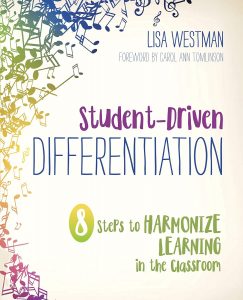
Student-driven differentiation: 8 steps to harmonize learning in the classroom

by Lisa Westman

Grades: K-12

This book demonstrates how to incorporate student voice and choice in the process of planning for student-driven differentiation, starting with building collaborative student-teacher relationships as a precursor to student growth.

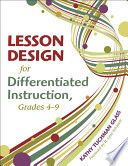
Lesson design for differentiated instruction, grades 4-9

by Kathy Tuchman Glass, foreword by H. Lynn Erickson

Grades: 4-9

Designed for teachers who are new to differentiating instruction, this book provides step-by-step guidance for creating meaningful lessons in language arts, math, science, and social studies at the upper elementary and middle school levels.

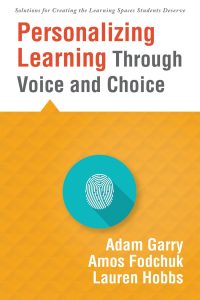
Personalizing learning through voice and choice

by Adam Garry, Amos Fodchuk, and Lauren Hobbs

Grades: K-12

This book introduces the key concepts of personalized learning and breaks down what personalized learning looks, sounds, and feels like in the classroom. The authors discuss structures that empower student voice and choice across a school, and lead to increased motivation for students.

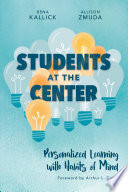
Students at the Center: Personalized Learning with Habits of Mind

by Bena Kallick and Allison Zmuda

Grades: K-12

The authors map out a model of personalization that puts students at the center, and highlight the habits that empower students to pursue aspirations, investigate problems, design solutions, chase curiosities, and create performances.

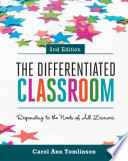
The differentiated classroom: responding to the needs of all learners

by Carol Ann Tomlinson (E-book available here)

Grades: K-12

This book explains the theoretical basis of differentiated instruction, explores the variables of curriculum and learning environment, shares a range of instructional strategies, and then goes inside elementary and secondary classrooms in many subject areas to illustrate how teachers are applying differentiation principles and strategies to respond to the needs of all learners.

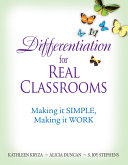
Differentiation for real classrooms: Making it simple, making it work

by Kathleen Kryza, Alicia Duncan, and S. Joy Stephens

Grades: K-12

Based on the authors’ “C U KAN” and “Chunk, Chew, and Check” frameworks, this book helps teachers to implement effective, differentiated instruction by identifying a clear learning target, getting to know their students as people and as learners, and understanding how to vary the learning pathways to the same target for different learners.

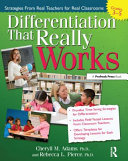
Differentiation that really works, Grades 3-5: Strategies from real teachers for real classrooms

by Cheryll M. Adams and Rebecca L. Pierce

Grades: 3-5

This book provides strategies and lesson ideas created and field-tested for heterogeneous classrooms, including exit cards, choice boards, cubing, graphic organizers, learning contracts, and tiered lessons. It also provides templates that can be used to develop new lessons using each strategy.

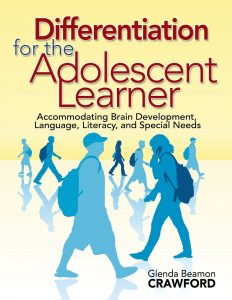
Differentiation for the adolescent learner: Accommodating brain development, language, literacy, and special needs

by Glenda Beamon Crawford

Grades: 7-12

The author focuses on the adolescent learner and outlines brain-compatible instructional strategies applicable to all students, including English Language Learners, gifted populations, and others with special needs. Readers will encounter a six-point differentiated model based on adolescents′ need for personal connection, appropriate intellectual challenge, emotional engagement, guided social interaction, metacognitive development, and a supportive learning environment.

Differentiated instruction made practical: Engaging the extremes through classroom routines

by Rhonda Bondie and Akane Zusho

Grades: K-12

This book introduces teachers to the All Learners Learning Every Day (ALL-ED) framework, which enables tailored instruction for every learner, not just the middle of the pack.

Note:

When you search for materials in this area, you may also want to search for “individualized instruction”, which is an older but still frequently used term.


Finding More Resources

To find more resources in this area, try the following:

  • Search using the General tab on the UBC Library website to look for material in all UBC Library branches.
  • Search using “Search Education Resources” box in the left hand bar on the Education Library website to limit your results to physical materials in the Education Library.
  • Use specific search terms, such as “individualized instruction”, “differentiated learning”, “personalized learning”, “equitable”, or “diversity”.
  • To find lesson plans, include “lesson plans”, “lesson planning”, or “activity programs” in your search terms.

PDF Booklist

For more help with searching, please visit the Library Service Desk or e-mail ed.lib@ubc.ca.
Spam prevention powered by Akismet