Categories
Sciences

Forces and Motion

Listed below are selected teacher resources, picture books, fiction, and non-fiction related to forces and motion.

Teacher Resources
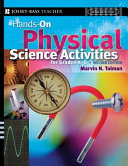
Hands-on physical science activities for grades K-6

by Marvin N. Tolman

Grades: K-6

This book’s activities follow the discovery/inquiry approach and encourage students to analyze, synthesize, and infer based on their own hands-on experiences. Topics include the nature of matter, energy, light, sound, simple machines, magnetism, static electricity, and current electricity.
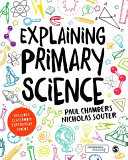
Explaining primary science

by Paul Chambers and Nicholas Souter

Grades: K-6

The authors cover all the major areas of science relevant for beginning primary/elementary school teachers, explaining key concepts from the ground up. Topics include forces, matter, energy, biodiversity and ecosystems, water, light, sound, and more.
Making physics fun: Key concepts, classroom activities, & everyday examples, grades K-8

by Robert Prigo

Grades: K-8

The author provides fun and engaging activities using safe, available materials that educators can easily incorporate into lesson plans. Extensive examples, sample inquiry questions, and ideas for initiating units are available for teachers to pick and choose from to meet student needs. This resource addresses specific areas of physical science, including motion and force, waves and sound, light and electromagnetic waves, and more.
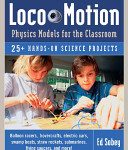
Loco-motion: Physics models for the classroom

by Ed Sobey

Grades: 5-8

This activity book contains  instructions and guidelines for building physics models that fly through the air, drive on the ground, or paddle through water. Each model is presented in a specific educational context, so teachers can instruct with hands-on experimentation. Students will explore science concepts such as gravity, air pressure, kinetic energy, Newton’s laws, electrical circuitry, buoyancy, and inertia.
Simple machines

by Steven Souza and Joseph Shortell

Grades: 7-12

This book allows students to investigate force and motion through 17 activities that explore the mechanical advantage of the six types of simple machines: inclined planes, pulleys, gears, screws, levers and the wheel. The concepts of force, work and power are also explored.

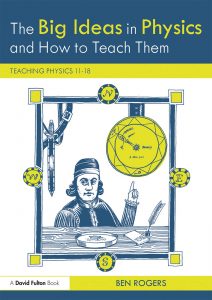
The big ideas in physics and how to teach them: Teaching physics 11-18
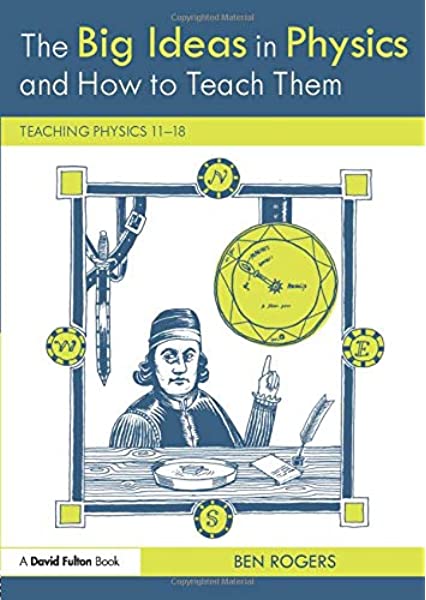
by Ben Rogers

Grades: 7-12

Each chapter of this book provides the historical narrative behind a Big Idea, explaining its significance, the key figures behind it, and its place in scientific history. Accompanied by detailed ready-to-use lesson plans and classroom activities, the book contains not only a thorough explanation of physics, but also the applied pedagogy to ensure its effective translation to students in the classroom. Each of the five big ideas in physics are covered in detail: electricity, forces, energy, particles, and the universe. (E-book only.)

Picture Books
 I fall down

written by Vicky Cobb, illustrated by Julia Gorton

What happens when you trip or when you drop a ball? When something falls, which way does it fall? Down, down, down! Explore the force of gravity through this book.
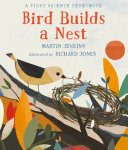
Bird builds a nest

written by Martin Jenkins, illustrated by Richard Jones

Follow Bird as she spends the day building her nest, making sure that everything is in the right place to hold it together. Using a falling twig as an example, this book provides an introduction to physical forcers for early readers.

Fiction
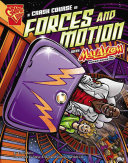
 A crash course in forces and motion with Max Axiom, super scientist,

written by Emily Sohn, illustrated by Steve Erwin and Charles Barnett III

Grades: 3-9

Zoom along as Max Axiom rides his way through a lesson in speed, acceleration, inertia, friction, and gravity. Young readers will discover the complex forces that keep the world running. Part of the Graphic Library series.

Non-Fiction
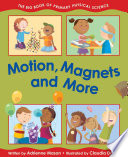
Motion, magnets and more: The big book of primary physical science,

written by Adrienne Mason, illustrated by Claudia Dávila

Grades: K-6

Where do the bubbles come from in a piece of cake? Why do triangles make a structure stronger? And how come magnets don’t stick to the wall? This introduction to the physical sciences gives young readers an easy-to-understand overview of such concepts as materials, forces, structures, solids, liquids and gases.
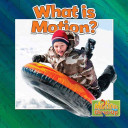
What is motion?

by Natalie Hyde

Grades: K-3

This book explores how objects are moved by a change in energy. Simple activities show young readers how energy is changed by applying a force, either by coming in contact with an object or by a force that does not touch it physically, like gravity.
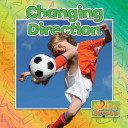
Changing direction

by Natalie Hyde

Grades: K-3

This book explains how forces can change the direction of an object in motion. Simple explanations and activities help children understand the science behind forces.
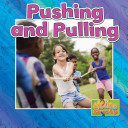
Pushing and pulling

by Natalie Hyde

Grades: K-3

This book explains how a force, such as a push or a pull, can put an object in motion. Simple activities show how a force can move an object that is not moving or stop one that is moving.
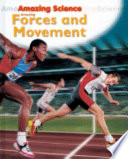
Amazing forces and movement

by Sally Hewitt

Grades: 3-6

This new book introduces children to the concepts of push and pull, friction, and gravity, as well as how our own muscles use force to push us along. Examples include a huge magnet that attracts or pulls iron, wind pushing a water wheel to make it turn, and a skydiver’s parachute slowing down the pull of gravity toward the ground.
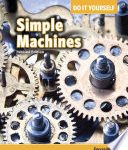
Simple machines: Forces in motion

by Buffy Silverman

Grades: 3-6

How did the Ancient Egyptians build the pyramids? What is an Archimedes’ screw? Which wedge do you use every time you eat? This book helps you answer these questions and more through experiments and activities. Part of the Do it yourself series.
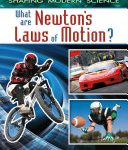
What are Newton’s laws of motion?

by Denyse O’Leary

Grades: 5-8

This book examines how Sir Isaac Newton developed three basic laws that explain the way in which objects move. Readers will learn how Newton expanded on the work of other great scientists to make his important discovery, as well as how Newton’s laws have influenced modern science and technology in areas such as sports and transportation. Part of the Shaping modern science series.
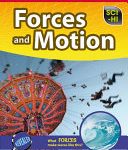
Forces and motion

by Casey Rand.

Grades: 5-8

This book explores questions such as how friction helps you ride a bicycle, how submarines keep from sinking, and what equilibrium is. Part of the Sci-Hi series, which presents middle-school science topics in a format appropriate for less skilled readers.


Finding More Resources

To find more resources in this area, try the following:

  • Search using the General tab on the UBC Library website to look for material in all UBC Library branches.
  • Search using “Search Education Resources” box in the left hand bar on the Education Library website to limit your results to materials in the Education Library.
  • Use specific search terms to narrow your results, such as “force and energy–juvenile literature”, “motion–juvenile literature”, or “physics–study and teaching”.
  • To find lesson plans, include “lesson plans”, “lesson planning”, or “activity programs” in your search terms.

For more help with searching, please visit the Library Service Desk or e-mail ed.lib@ubc.ca.

Categories
Sciences

Matter

Listed below are selected teacher resources, picture books, fiction, and non-fiction related to matter.

Teacher Resources

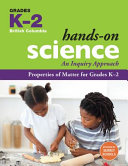
Properties of Matter for Grades K-2: An Inquiry Approach

by Jennifer Lawson

Grades: K-2

This book covers how to teach about matter in alignment with the current BC curriculum. Uses the Know-Do-Understand model, First Peoples Principles of Learning, and an inquiry approach. Part of the Hands-on Science series.

Hands-on physical science activities for grades K-6

by Marvin N. Tolman

Grades: K-6

This book’s activities follow the discovery/inquiry approach and encourage students to analyze, synthesize, and infer based on their own hands-on experiences. Topics include the nature of matter, energy, light, sound, simple machines, magnetism, static electricity, and current electricity.

Explaining primary science

by Paul Chambers and Nicholas Souter

Grades: K-6

The authors cover all the major areas of science relevant for beginning primary/elementary school teachers, explaining key concepts from the ground up. Topics include forces, matter, energy, biodiversity and ecosystems, water, light, sound, and more.

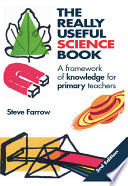
The really useful science book: Framework of knowledge for primary teachers

by Steve Farrow

Grades: K-6

A practical guide to science in the primary classroom which includes key ideas, related science concepts, and everyday activities to solidify concepts. The book is broken into three sections, life and living processes, materials and their properties, and physical processes, and is especially useful for non-specialists. Also available as an eBook, here.

Concepts of matter in science education

edited by Georgios Tsaparlis and Hannah Sevian

Grades: K-12

This text provides a science education perspective on the teaching and learning of particulate and structural concepts of matter from Pre-K through higher education, with reviews and analyses of current literature as well as previously unpublished research. eBook only.

The big ideas in physics and how to teach them: Teaching physics 11-18

by Ben Rogers

Grades: 7-12

Each chapter of this book provides the historical narrative behind a Big Idea, explaining its significance, the key figures behind it, and its place in scientific history. Accompanied by detailed ready-to-use lesson plans and classroom activities, the book contains not only a thorough explanation of physics, but also the applied pedagogy to ensure its effective translation to students in the classroom. Each of the five big ideas in physics are covered in detail: electricity, forces, energy, particles, and the universe. eBook only

Picture Books

Joe-Joe the wizard brews up solids, liquids and gases

written by Eric Braun, illustrated by Robin Boyden

Grades: K-3

Joe-Joe the student wizard has a problem: he tried to turn his homework into chocolate bars but instead transformed it into syrup! What can he do to set matter(s) right?

What’s the matter in Mr. Whisker’s room?

written by Michael Elsohn Ross, illustrated by Paul Meisel

Grades: K-3

Follow Mr. Whisker and his students as use their sense to make observations and draw conclusions at seven stations all about matter. Includes activities and instructions at the back.

Non-Fiction

Looking at solids, liquids and gases: How does matter change?

by Jackie Gaff

Grades: 2-4

This book explores the different states of matter and how factors such as temperature and pressure can change solids to liquids to gases and back again. Explains freezing, melting, evaporation, and condensation.

Motion, magnets and more: The big book of primary physical science

written by Adrienne Mason, illustrated by Claudia Dávila

Grades: K-6

Where do the bubbles come from in a piece of cake? Why do triangles make a structure stronger? And how come magnets don’t stick to the wall? This introduction to the physical sciences gives young readers an easy-to-understand overview of such concepts as materials, forces, structures, solids, liquids and gases.

Amazing materials

by Sally Hewitt

Grades: 3-6

This book introduces children to the concepts of solid, liquid, and gas, as well as to the different kinds of materials that things are made from. Photographs help show how things can change shape, which materials are natural and which are man-made, and which kind of materials can be recycled and why.

Atoms and molecules

by Molly Aloian

Grades: 4-6

What is matter made of? Young readers will be amazed to learn about the tiny particles that make up everything from this book to their very own bodies. Topics include the discovery of the atom, the parts of an atom, how atoms combine to form molecules, and how atoms relate to elements and the periodic table.

Properties of matter

by Aaron Carr and Lesley Evans Ogden

Grades: 4-6

What’s the matter? Almost everything we can see and touch around us is matter, that’s what! This book explores some of matter’s amazing properties that are studied in the physical sciences.

States of matter

by Lynette Brent

Grades: 4-6

This book will give readers a deeper understanding of the different states of matter. Topics include understanding matter, mass, volume, and density; differences between solids, liquids, and gases; how matter passes from one state to another; and properties of matter, such as hardness and viscosity.


Finding More Resources

To find more resources in this area, try the following:

  • Search using the General tab on the UBC Library website to look for material in all UBC Library branches.
  • Search using “Search Education Resources” box in the left hand bar on the Education Library website to limit your results to materials in the Education Library.
  • Use specific search terms to narrow your results, such as “matter–properties–juvenile literature”, “inclusion”, “equitable”, “diversity”, or “supportive”.
  • To find lesson plans, include “lesson plans”, “lesson planning”, or “activity programs” in your search terms.

For more help with searching, please visit the Library Service Desk or e-mail ed.lib@ubc.ca.
Categories
Sciences

Energy

Listed below are selected teacher resources, picture books, fiction, and non-fiction related to energy.

Teacher Resources

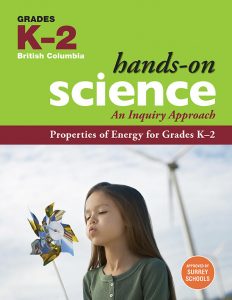
Hands-on Science: An Inquiry Approach – Properties of Energy for Grades K-2

by Jennifer Lawson

Grades: K-2

This book covers how to teach about the properties of energy in alignment with the current BC curriculum. Uses the Know-Do-Understand model, First Peoples Principles of Learning, and an inquiry approach. Part of the Hands-on Science series.

Hands-on physical science activities for grades K-6

by Marvin N. Tolman

Grades: K-6

This book’s activities follow the discovery/inquiry approach and encourage students to analyze, synthesize, and infer based on their own hands-on experiences. Topics include the nature of matter, energy, light, sound, simple machines, magnetism, static electricity, and current electricity.

Explaining primary science

by Paul Chambers and Nicholas Souter

Grades: K-6

The authors cover all the major areas of science relevant for beginning primary/elementary school teachers, explaining key concepts from the ground up. Topics include forces, matter, energy, biodiversity and ecosystems, water, light, sound, and more.

Making physics fun: Key concepts, classroom activities, & everyday examples, grades K-8

by Robert Prigo

Grades: K-8

The author provides fun and engaging activities using safe, available materials that educators can easily incorporate into lesson plans. Extensive examples, sample inquiry questions, and ideas for initiating units are available for teachers to pick and choose from to meet student needs. This resource addresses specific areas of physical science, including motion and force, waves and sound, light and electromagnetic waves, and more.

Teaching and learning of energy in K-12 education

edited by Robert F. Chen et al.

Grades: K-12

Energy is one of the most important ideas in all of science and it is useful for predicting and explaining phenomena within every scientific discipline. Teaching energy as a crosscutting concept can equip a new generation of scientists and engineers to think about the latest cross-disciplinary problems, and it requires a new approach to the idea of energy. This book examines the latest challenges of K-12 teaching about energy, including how a comprehensive understanding of energy can be developed. eBook only

The big ideas in physics and how to teach them: Teaching physics 11-18

by Ben Rogers

Grades: 7-12

Each chapter of this book provides the historical narrative behind a Big Idea, explaining its significance, the key figures behind it, and its place in scientific history. Accompanied by detailed ready-to-use lesson plans and classroom activities, the book contains not only a thorough explanation of physics, but also the applied pedagogy to ensure its effective translation to students in the classroom. Each of the five big ideas in physics are covered in detail: electricity, forces, energy, particles, and the universe. eBook only

Picture Books

My light

by Molly Bang

The sun itself narrates an explanation of light and energy in which the generation of electricity can be traced back to it. Tiny yellow dots represent the sun’s power as it streams from light, water, wind, and electricity. Endnotes are used to illuminate everything from dark matter to atoms to pollution.

Energy Island: How one community harnessed the wind and changed their world

by Allan Drummond

Hold onto your hats! It’s windy on the Danish island of Samsø. At a time when most countries are producing ever-increasing amounts of CO2, the rather ordinary citizens of Samsø accomplished something extraordinary: in just ten years they reduced their carbon emissions by 140% and became almost completely energy independent. With a little hard work and a big idea, anyone can make a huge step towards energy conservation.

Fiction

 A refreshing look at renewable energy with Max Axiom, super scientist,

written by Katherine Krohn, illustrated by Cynthia Martin and Barbara Schulz

Grades: 3-9

Charge up with Max Axiom as he explores the globe to understand renewable energy. Learn about all kinds of renewable energy sources and the benefits of using them. Max helps young readers understand how renewable energy could change our lives and take care of our world. Part of the Graphic Library series.

Non-Fiction

Energy

by Amy Farrell-Morneau

Grades: 6-9

Part of the Issues 21 series, which examines contemporary issues in society in order to develop students’ skills in the areas of critical thinking, creativity, communication, collaboration, ethical citizenship and activism. Includes 6 student books and a teacher’s guide.

Energy from the sun: Solar power

by James Bow

Grades: 5-8

The endless and enormous power of the sun provides life to all organisms on Earth, from the smallest plant to the largest animal. This awesome power is being used today to provide a rich and abundant source of energy in many parts of the world, and to operate machinery and heat and light buildings. Discover how the sun is powering our planet, the technology used to harness it, and what the future of solar power could be. Part of the Next generation energy series.

Brilliant! Shining a light on sustainable energy

by Michelle Mulder

Grades: 3-7

Did you know that cars can run on french fry grease, or that kids in Mexico help light up their houses by playing soccer? This book is full of examples of unusual (and often peculiar) power sources, and encourages kids to look around for sustainable ways to light up the world. Part of the Orca footprints series.

Energy engineering and powering the future

by Jonathan Nixon

Grades: 5-9

Readers will learn how energy engineers help make sure that our energy demands are met in a number of different ways. Real-life examples and a design challenge help students understand key concepts related to the engineering process, and how energy engineers will play a vital role in our future.

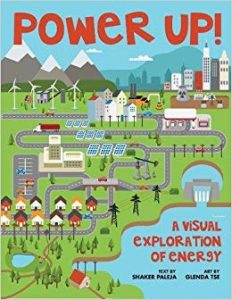
Power up! A visual exploration of energy

written by Shaker Paleja, illustrated by Glenda Tse

Grades: 4-7

It’s impossible to imagine our lives without energy, but how often do we really think about where it comes from? This book illustrates cool facts about energy use with colorful infographics, including charts, diagrams, and maps. Topics include the pros and cons of the top energy sources, like fossil fuels, nuclear energy, and hydropower; information on hot issues like oil sands, fracking, and greenhouse gases; and discussions of where energy of the future will come from.


Finding More Resources

To find more resources in this area, try the following:

  • Search using the General tab on the UBC Library website to look for material in all UBC Library branches.
  • Search using “Search Education Resources” box in the left hand bar on the Education Library website to limit your results to materials in the Education Library.
  • Use specific search terms to narrow your results, such as “renewable energy sources–juvenile literature”, “physics–study and teaching”, “inclusion”, “equitable”, “diversity”, or “supportive”.
  • To find lesson plans, include “lesson plans”, “lesson planning”, or “activity programs” in your search terms.

For more help with searching, please visit the Library Service Desk or e-mail ed.lib@ubc.ca.
Spam prevention powered by Akismet