Listed below are selected picture books by Indigenous Canadians.
Vous trouverez ci-dessous une sélection de livres d’images écrits par des Canadiens autochtones.
Picturebooks
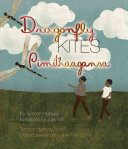 Dragonfly kites,
by Tomson Highway, illustrations by Julie Flett
Niveau scolaire (Grade level): 1 – 3
Dragonfly Kites refers to “kites” made by tying a string around the middles of dragonflies. Two Cree brothers in northern Manitoba fly these kites during the day, but at night fly themselves in their dreams.
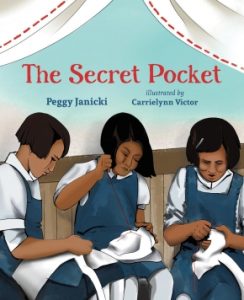 The secret pocket,
by Peggy Janicki; illustrated by Carrielynn Victor
Niveau scolaire (Grade level): 1 – 3
Based on the author’s mother’s experience at residential school, The Secret Pocket is a story of survival and resilience in the face of genocide and cruelty. But it’s also a celebration of quiet resistance to the injustice of residential schools and how the sewing skills passed down through generations of Indigenous women gave these girls a future, stitch by stitch.
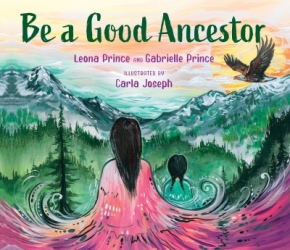 Be a good ancestor,
by Leona Prince & Gabrielle Prince; illustrated by Carla Joseph
Niveau scolaire (Grade level): Préscolaire – 1 (PreK-1)
Addressing environmental issues, animal welfare, self-esteem and self-respect, and the importance of community, the authors deliver a poignant and universal message in an accessible way: Be a good ancestor to the world around you.
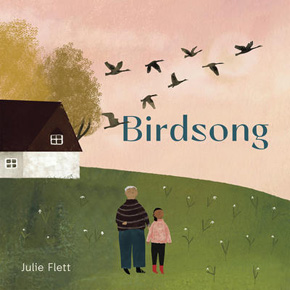 Birdsong,
by Julie Flett
Niveau scolaire (Grade level): Préscolaire – 3 (PreK-3)
When a young girl moves from the country to a small town, she feels lonely and out of place. But soon she meets an elderly woman next door, who shares her love of arts and crafts. Can the girl navigate the changing seasons and failing health of her new friend?
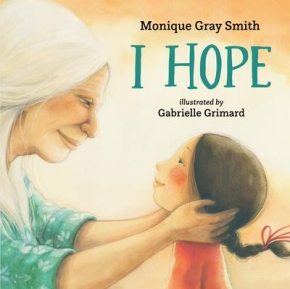 I hope,
by Monique Gray Smith; illustrated by Gabrielle Grimard
Niveau scolaire (Grade level): Préscolaire – Kindergarten
The hopes we have for the children in our lives are endless. We want our young people to thrive and experience all that life has to offer, but we also feel protective of them.
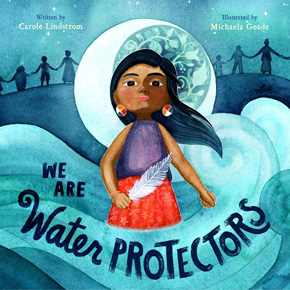 We are water protectors,
by Carole Lindstrom; illustrated by Michaela Goade
Niveau scolaire (Grade level): Préscolaire – 1 (PreK-1)
Inspired by the many Indigenous-led movements across North America, Carole Lindstrom’s bold and lyrical picture book We Are Water Protectors issues an urgent rallying cry to safeguarding the Earth’s water from harm and corruption.
 Spirit bear and children make history: Based on a true story,
by Cindy Blackstock and Eddy Robinson, illustrated by Amanda Strong
Niveau scolaire (Grade level): 1 – 6
When Spirit Bear’s mom tells him about an important human rights case happening in Ottawa, Ontario, he makes the long trip to go and watch, and to stand up for First Nations kids. And he isn’t the only one. Lots of children come too — to listen, and to show they care. Spirit Bear knows that children can change the world because he’s there to see it happen.
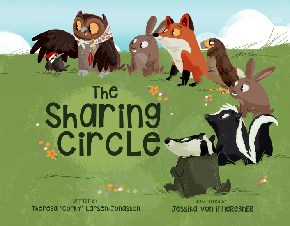 The sharing circle,
by Theresa “Corky” Larsen-Jonasson, illustrated by Jessika Von Innerebner
Niveau scolaire (Grade level): Préscolaire – 5 (PreK-5)
When two red foxes have an argument which breaks apart their community, a gentle buffalo decides to take a braid of sweetgrass to a local elder and asks her to help with a sharing circle for all the animals. Includes teacher’s guide.
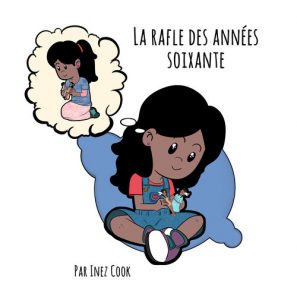 Sixties scoop,
by Inez Cook
Niveau scolaire (Grade level): K – 12
For decades “scooping up” (taking) indigenous children from their families for placement in foster homes or adoption, was commonplace. This is a story of one of those 20,000 children.
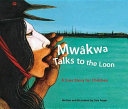 Mwâkwa talks to the loon: a Cree story for children,
by Dale Auger
Niveau scolaire (Grade level): 1 – 4
The timeless story of Kayas, a young Cree man who is blessed with the ability to hunt well and provide for his People. With the help of the Elders and the Beings that inhabit the water, young Kayas is taught to respect his abilities and to realize that in order to live a life of success, fulfillment and peace, we must always remember to cherish and respect the talents and skills we have been given. Includes Cree words and phrases, along with a glossary and Cree pronunciation guide.
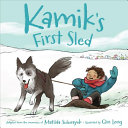 Kamik’s first sled,
by Matilda Sulurayok, illustrated by Qin Leng
Niveau scolaire (Grade level): K – 5
All Jake wants is to raise his puppy into a strong, fast sled dog, but Kamik is far from ready to pull a sled with a dog team. With some advice and a little help from his grandmother, Jake learns basic principles of how to begin training a dog to pull. Kamik finally has his first sled, and he and Jake can finally begin exploring the tundra together.
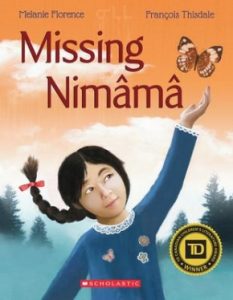 Missing Nimâmâ,
by Melanie Florence, illustrated by François Thisdale
Niveau scolaire (Grade level): 3 – 12
A young mother, one of the many missing Indigenous women, watches over her small daughter as she grows up without her nimama, experiencing important milestones – her first day of school, first dance, first date, wedding, first child – from afar. A free verse story of love, loss, and acceptance told in alternating voices. Missing Nimama shows the human side of a tragic set of circumstances.
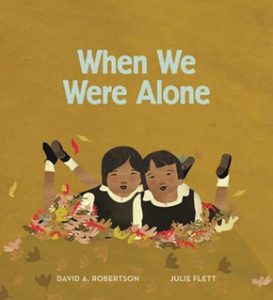 When we were alone,
by David Robertson, illustrated by Julie Flett
Niveau scolaire (Grade level): 1 – 12
When a young girl helps tend to her grandmother’s garden, she begins to notice things that make her curious. Why does her grandmother have long, braided hair and beautifully coloured clothing? Why does she speak another language and spend so much time with her family? As she asks her grandmother about these things, she is told about life in a residential school a long time ago, where all of these things were taken away.
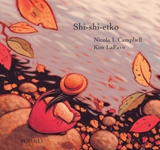 Shi-shi-etko,
by Nicola I. Campbell, illustrated by Kim LaFave
Niveau scolaire (Grade level): 1 – 10
Shi-shi-etko just has four days until she will have to leave her family and everything she knows to attend residential school. She spends her last precious days at home treasuring and appreciating the beauty of her world: the dancing sunlight, the tall grass, each shiny rock, the tadpoles in the creek, her grandfather’s paddle song. Her mother, father, and grandmother, each in turn, share valuable teachings that they want her to remember.
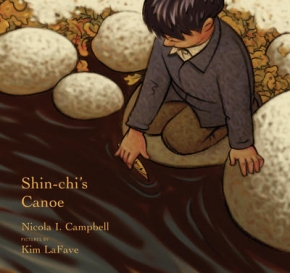 Shin-chi’s canoe,
by Nicola I. Campbell, illustrated by Kim LaFave
Niveau scolaire (Grade level): 1 – 10
A sequel to Shi-shi-etko. Forced to use only people’s English names and not speak to his siblings at school, Shin-chi holds fast to the canoe given to him by his father, hopeful that things will then improve for his family and the people he loves. (Also available in French.)
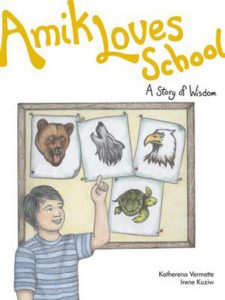 Amik loves school: A story of wisdom,
by Katharina Vermette, illustrated by Irene Kuziw
Niveau scolaire (Grade level): Préscolaire – 3 (PreK-3)
Amik tells Moshoom about his wonderful school. Then his grandfather tells him about the residential school he went to, so different from Amik’s school, so Amik has an idea…
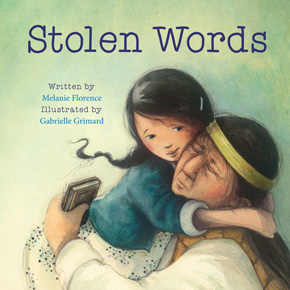 Stolen words,
by Melanie Florence, illustrated by Gabrielle Grimard
Niveau scolaire (Grade level): 1 – 4
When a little girl asks her grandfather how to say something in his language – Cree – he admits that his language was stolen from him when he was a boy. The little girl then sets out to help her grandfather find his language again. (Also available in French.)
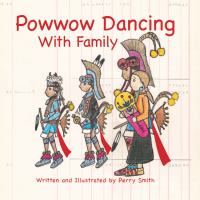 Powwow dancing with family,
by Perry Smith
Niveau scolaire (Grade level): K – 3
Drumming, singing, and dancing are all part of being at a Powwow. Perry and his family travel all over North America to participate in these family and community gatherings. Join Perry’s two boys as they share their treasured memories of being at Powwows with their family and learning how to dance.
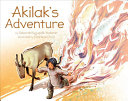 Akilak’s adventure,
by Deborah Kigjugalik Webster, illustrated by Charlene Chua
Niveau scolaire (Grade level): K – 2
When Akilak must travel a great distance to another camp to gather food, she’s not sure she will be able to make it. But with a little help from her grandmother’s spirit, and her own imagination to keep her entertained, Akilak manages to turn a long journey into an adventure.
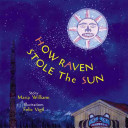 How Raven stole the sun,
by Maria Williams, illustrated by Felix Vigil
Niveau scolaire (Grade level): 1 – 4
A long time ago, Raven was pure white, like fresh snow in winter. This was so long ago that the only light came from campfires, because a greedy chief kept the stars, moon, and sun locked up in elaborately carved boxes. This engaging Tlingit story is brought to life in painterly illustrations that convey a sense of the traditional life of the Northwest Coast peoples.
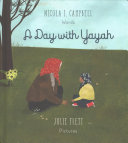 A day with Yayah,
by Nicola I. Campbell, illustrated by Julie Flett
Niveau scolaire (Grade level): Préscolaire – 2 (PreK-2)
On an outing in Nicola Valley, British Columbia, a Native American family forages for herbs and mushrooms while the grandmother passes down her language and knowledge to her young grandchildren.
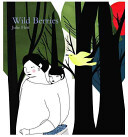 Wild berries = Pikaci-Mīnisa,
by Julie Flett, translated by Earl N. Cook
Niveau scolaire (Grade level): K – 2
Clarence and his grandmother pick wild blueberries and meet ant, spider, and fox in a beautiful woodland landscape.
Trouver d’autres ressources
Voici quelques conseils pour trouver d’autres ressources dans ce domaine :
- Sur la page principale du site de la bibliothèque de l’UBC, utilisez la boîte de recherche générale pour rechercher des matériaux à travers toutes les succursales de la bibliothèque de l’UBC.
- Pour limiter vos résultats aux matériels disponibles à la Bibliothèque de l’éducation, visitez le site web de la Bibliothèque de l’éducation et effectuez une recherche à l’aide de la case “Search Education Resources” située dans la bande à gauche de l’écran.
- Remarque : les ressources étant principalement cataloguées en anglais, les termes ci-dessous donnent généralement plus de résultats que les recherches effectuées en français. Vous pouvez filtrer votre liste de résultats par langue dans la barre latérale de gauche.
- Utilisez des termes de recherche spécifiques, tels que
- “First nations”, “Indigenous”, “Aboriginal”, “Indians of North America”, ou “Musqueam (or any nation)”
- Pour trouver des plans de cours, incluez “lesson plans”, “lesson planning”, or “activity programs” dans vos termes de recherche.
Finding More Resources
To find more resources in this area, try the following:
- Search using the General tab on the UBC Library website to look for material in all UBC Library branches.
- Search using “Search Education Resources” box in the left hand bar on the Education Library website to limit your results to physical materials in the Education Library.
- Use specific search terms, such as
- “First nations”, “Indigenous”, “Aboriginal”, “Indians of North America”, and “Musqueam (or any nation)”
- To find lesson plans, include “lesson plans”, “lesson planning”, or “activity programs” in your search terms.