Categories
Social Studies

Teaching History and Social Studies

Listed below are selected teacher resources for teaching History and Social Studies.
Engagement in teaching history: Theory and practice for middle and secondary teachers

by Frederick D. Drake and Lynn R. Nelson

Grades: 7-12

This book presents key elements of history instruction, including the use of primary sources and narratives, involving students in the historical inquiry through classroom discussions, teaching toward chronological thinking, and the use of historical documents.
Stirring up justice: Writing and reading to change the world

by Jessica Singer

Grades: 7-12

This book introduces a range of tools and strategies to improve students’ critical awareness, helping them to understand their world and become educated, engaged citizens.
Tools for teaching social studies: A how-to book of useful ideas and practical solutions

by Jim Parsons with Mariah Schroder

Grades: K-12

The authors present a number of teaching principles for use in social studies classes, including discovering one’s unique teaching style, connecting with one’s students, setting and achieving realistic goals, facilitating effective group work, and more.
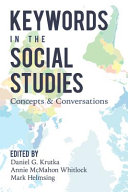
Keywords in the social studies: Concepts and conversations

edited by Daniel G. Krutka, Annie McMahon Whitlock, and Mark Helmsing

Grades: K-12

Over fifty authors discuss complex and contested components of keywords in social studies – such as “indigenous”, “home”, “race”, and “community” – by way of offering diverse accounts that range from autobiographical narratives to historical genealogies, from critical implications of specific curriculum texts to offering vignettes of classroom teaching that deploy a keyword concept in practice.
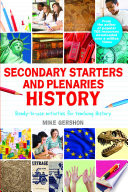
Secondary starters and plenaries: History

by Mike Gershon

Grades: 9-12

The 25 starter ideas in this book will help to ensure that the first five minutes of any History class are motivating and energizing, while the 25 plenaries will students to reflect on and embed their learning at the end of the lesson.
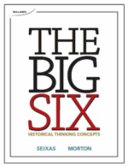
The big six: Historical thinking concepts

by Peter Seixas and Tom Morton

Grades: K-12

The authors discuss six historical thinking concepts which students should become familiar with: historical significance, evidence, continuity and change, cause and consequence, historical perspectives, and the ethical dimension.
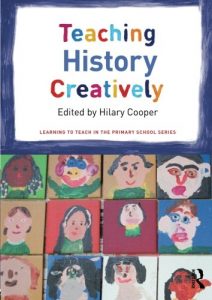
Teaching history creatively (2nd ed,)

edited by Hilary Cooper

Grades: K-12

This book introduces teachers to a range of available approaches to historical inquiry which involve creative, active and effective learning. Topics include the link between history education and creativity, investigating sources, using archives, using drama to explore events, and more. (E-book only.)
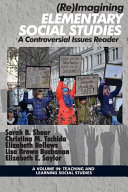
(Re)imagining elementary social studies: a controversial issues reader

edited by Sarah B. Shear, Christina M. Tschida, Elizabeth Bellows, Lisa Brown Buchanan, Elizabeth E. Saylor

Grades: Elementary

This reader stands out as a collection of approaches aimed specifically at teaching controversial issues in elementary social studies. This reader challenges social studies education (i.e., classrooms, teacher education programs, and research) to engage controversial issues–those topics that are politically, religiously, or are otherwise ideologically charged and make people, especially teachers, uncomfortable–in profound ways at the elementary level.
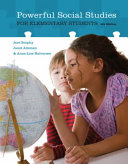
Powerful social studies for elementary students

by Jere Brophy, Janet Alleman, and Anne-Lise Halvorsen

Grades: K-6

This book combines theory and research with examples from classroom practice, and outlines ways to select content and teach history, geography, and social sciences meaningfully in the elementary classroom.

Social studies: Innovative approaches for teachers

by Nancy A. Maynes and Jennifer M. Straub

Grades: K-6

The authors focus on two important approaches to teaching social studies: the value and flexibility of social studies as a broad medium for teaching a range of skills and concepts, including literacy and numeracy; and the human aspect of social studies, in its relation to people and their activities, challenges, and choices.
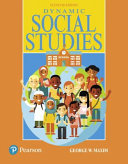
Dynamic social studies

by George W. Maxim

Grades: K-6

This book presents a range of effective ways to teach social studies to elementary school students, with the hope of inspiring them to become informed, rational, and culturally responsive citizens. It focuses on motivation, creativity, and the examples of experienced teachers to help readers breathe life into their social studies teaching.


Finding More Resources

To find more resources in this area, try the following:

  • Search using the General tab on the UBC Library website to look for material in all UBC Library branches.
  • Search using “Search Education Resources” box in the left hand bar on the Education Library website to limit your results to physical materials in the Education Library.
  • Use specific search terms to narrow your results, such as “social studies”, “social sciences – study and teaching”, etc.
  • To find lesson plans, include “lesson plans”, “lesson planning”, or “activity programs” in your search terms.

For more help with searching, please visit the Library Service Desk or e-mail ed.lib@ubc.ca.

Categories
Planning for Teaching and Learning

Understanding by Design (Backwards Design)

Listed below are selected resources for teachers related to Understanding by Design, also known as Backwards Design or UbD.

Understanding by design

by Grant Wiggins and Jay McTighe

Grades: K-12

A foundational text in the understanding by design/backwards design approach, the book explains the rationale of backward design and explores in greater depth the meaning of such key ideas as ‘essential questions’ and ‘transfer tasks’. Readers will learn why the familiar coverage- and activity-based approaches to curriculum design fall short, and how a focus on the six facets of understanding can enrich student learning.

The understanding by design guide to creating high-quality units

by Grant Wiggins and Jay McTighe (E-book available here)

Grades: K-12

This companion to Understanding by design offers instructional modules on the basic concepts and elements of the approach. The eight modules are organized feature components similar to what is typically provided in an understanding by design workshop, including discussion and explanation of key ideas in the module; guiding exercises, worksheets, and design tips; examples of unit designs; and review criteria with prompts for self-assessment.

The understanding by design guide to advanced concepts in creating and reviewing units

by Grant Wiggins and Jay McTighe

Grades: K-12

This companion to Understanding by design and The understanding by design guide to creating high-quality units offers instructional modules on how to refine units created using this approach and how to effectively review them using self-assessment and peer review. The modules include narrative discussion of key ideas in the module; exercises, worksheets, and design tips: examples of unit designs; and review criteria for self- and peer assessment.

Integrating differentiated instruction and understanding by design: Connecting content and kids

by Carol Ann Tomlinson and Jay McTighe

Grades: K-12

Understanding by Design is predominantly a curriculum design model that focuses on what teachers teach. Differentiated Instruction focuses on who, where, and how teachers teach. This book shows teachers how to use the principles of backward design and differentiation together to craft lesson plans that will teach essential knowledge and skills for the full spectrum of learners.

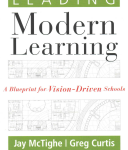
Leading modern learning: A blueprint for vision-driven schools

by Jay McTighe and Greg Curtis

Grades: K-12

Through this book, readers will understand backward design and how it aligns instruction with the principles of modern learning; learn about the history of curriculum mapping and explore each element of curriculum blueprints; examine the principles and goals of effective assessment and look at a framework for setting up assessments; review sample maps and rubrics for encouraging and interpreting modern learning; and explore ways to report data.

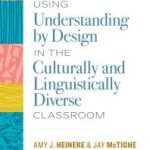
Using understanding by design in the culturally and linguistically diverse classroom

by Amy J. Heineke and Jay McTighe

Grades: K-12

Through the UbD framework, this book explores the fundamentals of language and language development; using students’ diversity as a resource for instruction; designing units and lessons that integrate language development with content learning in the form of essential knowledge and skills; and assessing in ways that enable language learners to reveal their academic knowledge.

Schooling by design: Mission, action and achievement

by Grant Wiggins and Jay McTighe

Grades: K-12

This book applies the principles of understanding by design in the classroom to the reform of schooling as a whole.


Finding More Resources

To find more resources in this area, try the following:

  • Search using the General tab on the UBC Library website to look for material in all UBC Library branches.
  • Search using “Search Education Resources” box in the left hand bar on the Education Library website to limit your results to physical materials in the Education Library.
  • Use specific search terms to narrow your results, such as “curriculum planning” or “curriculum-based assessment”.
  • To find lesson plans, include “lesson plans”, “lesson planning”, or “activity programs” in your search terms.

For more help with searching, please visit the Library Service Desk or e-mail ed.lib@ubc.ca.
Categories
Planning for Teaching and Learning

Project-Based Learning

Listed below are selected resources for teachers related to Project-Based Learning.

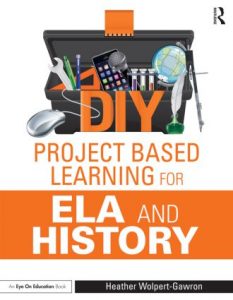
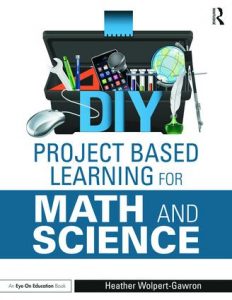
DIY project based learning for ELA and history

by Heather Wolpert-Gawron

Grades: K-12

This book will help teachers who want to incorporate project-based learning into their English Language Arts and History classrooms to create units, ground lessons in real-world problems, incorporate role-playing into everyday learning, and assess multiple skills and subject areas in an integrated way. (E-book only)

Project based teaching: How to create rigorous and engaging learning experiences

by Suzie Boss and John Larmer

Grades: K-12

The authors explore practices integral to project based teaching, including building the culture, designing and planning, managing activities, assessing and scaffolding student learning, and engaging and coaching students.

Setting the standard for project based learning

by John Larmer, John Mergendoller, and Suzie Boss

Grades: K-12

The authors take readers through the step-by-step process of how to create, implement, and assess project-based learning using a classroom-tested framework. Also included are chapters for school leaders on implementing project-based learning systemwide, and the use of this approach in informal settings.

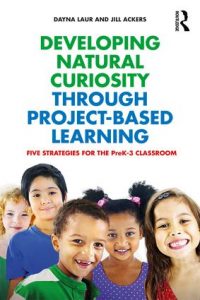
Developing natural curiosity through project-based learning: Five strategies for the preK-3 classroom

by Dayna Laur and Jill Ackers.

Grades: K-3

This guide provides step-by-step instructions for PreK–3 teachers interested in embedding project-based learning in their daily classroom routine, showing five steps teachers can use to create authentic challenges for their learners. (E-book only)

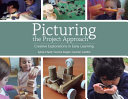
Picturing the project approach: Creative explorations in early learning

by Sylvia C. Chard, Yvonne Kogan, and Carmen A. Castillo

Grades: K-6

This book will help teachers in toddler, preschool or elementary classrooms incorporate project-based learning by identifying a topic, deciding on and developing a project, sharing the learning, and closing the project.

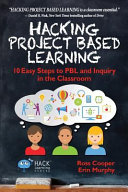
Hacking project based learning: 10 easy steps to PBL and inquiry in the classroom

by Ross Cooper and Erin Murphy

Grades: K-12

The authors provide 10 techniques for teachers to use to bring project-based learning into their classrooms, including creating umbrella questions to drive the project, building progress assessment tools, teaching and embracing reflection, and more.

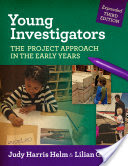
Young investigators: The project approach in the early years

by Judy Harris Helm and Lilian G. Katz

Grades: K-2

The third edition of this book gives teachers guidance on conducting meaningful project-based investigation with young children, and identifies activities and experiences that will help children grasp key concepts and skills.

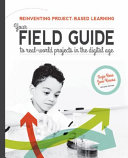
Reinventing project-based learning: Your field guide to real-world projects in the digital age

by Suzie Boss and Jane Krauss

Grades: K-12

The authors explore strategies for overcoming the limitations of the traditional classroom, including technology tools for inquiry, collaboration and global connection.

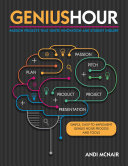
Genius hour: Passion projects that ignite innovation and student inquiry

by Andi McNair

Grades: K-12

This book provides educators with the tools to implement genius hour, or passion projects, in the classroom, using the six P’s–passion, pitch, plan, project, product, and presentation–as a map for students to follow as they create, design, and carry out projects.

Note: when you search for materials in this area, you may also want to search for “project method in teaching”, which is an older but still frequently used term.


Finding More Resources

To find more resources in this area, try the following:

  • Search using the General tab on the UBC Library website to look for material in all UBC Library branches.
  • Search using “Search Education Resources” box in the left hand bar on the Education Library website to limit your results to physical materials in the Education Library.
  • Use specific search terms, such as “project method in teaching” or “project-based learning”.
  • To find lesson plans, include “lesson plans”, “lesson planning”, or “activity programs” in your search terms.

For more help with searching, please visit the Library Service Desk or e-mail ed.lib@ubc.ca.
Categories
Planning for Teaching and Learning

Integrating Technology

Listed below are selected resources for teachers related to Integrating Technology.

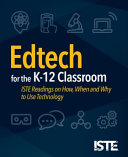
Edtech for the K-12 classroom: ISTE readings on how, when and why to use technology

edited by Diana Fingal

Grades: K-12

This book is designed to help future teachers use technology effectively in their classrooms and schools, offering concrete lesson plans, reflections from other teachers and advice from edtech experts on how to empower learners using technology

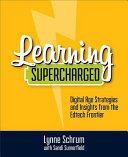
Learning supercharged: Digital age strategies and insights from the edtech frontier

by Lynne Schrum, with Sandi Sumerfield

Grades: K-12

This book looks at emerging approaches and tools, and incorporates professional educators’ stories of how and why they have implemented each trend, including information on challenges faced and overcome, how to get started and other resources to explore.

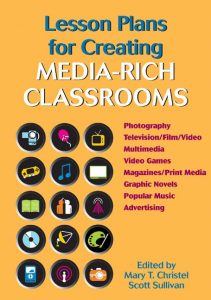
Lesson plans for creating media-rich classrooms

edited by Mary T. Christel and Scott Sullivan

Grades: K-12

This book contains twenty-seven lesson plans designed to help teachers integrate media literacy concepts, and skills into the curriculum, each with a rationale, activity, and assessment and adaptation suggestions, covering photography, multimedia, video, print, graphic novels, music, video games, and advertising.


Finding More Resources

To find more resources in this area, try the following:

  • Search using the General tab on the UBC Library website to look for material in all UBC Library branches.
  • Search using “Search Education Resources” box in the left hand bar on the Education Library website to limit your results to materials in the Education Library.
  • Use specific search terms to narrow your results, such as “inclusive classrooms”, “inclusive education”, “inclusion”, “equitable”, “diversity”, or “supportive”.
  • To find lesson plans, include “lesson plans”, “lesson planning”, or “activity programs” in your search terms.

For more help with searching, please visit the Library Service Desk or e-mail ed.lib@ubc.ca.
Categories
Planning for Teaching and Learning

Differentiated and Personalized Learning

Listed below are selected resources for teachers related to Differentiated and Personalized Learning.

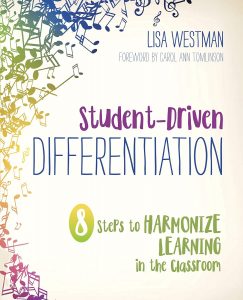
Student-driven differentiation: 8 steps to harmonize learning in the classroom

by Lisa Westman

Grades: K-12

This book demonstrates how to incorporate student voice and choice in the process of planning for student-driven differentiation, starting with building collaborative student-teacher relationships as a precursor to student growth.

Lesson design for differentiated instruction, grades 4-9

by Kathy Tuchman Glass, foreword by H. Lynn Erickson

Grades: 4-9

Designed for teachers who are new to differentiating instruction, this book provides step-by-step guidance for creating meaningful lessons in language arts, math, science, and social studies at the upper elementary and middle school levels.

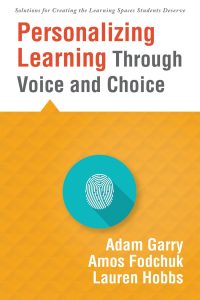
Personalizing learning through voice and choice

by Adam Garry, Amos Fodchuk, and Lauren Hobbs

Grades: K-12

This book introduces the key concepts of personalized learning and breaks down what personalized learning looks, sounds, and feels like in the classroom. The authors discuss structures that empower student voice and choice across a school, and lead to increased motivation for students.

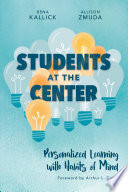
Students at the Center: Personalized Learning with Habits of Mind

by Bena Kallick and Allison Zmuda

Grades: K-12

The authors map out a model of personalization that puts students at the center, and highlight the habits that empower students to pursue aspirations, investigate problems, design solutions, chase curiosities, and create performances.

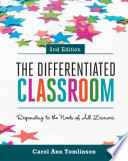
The differentiated classroom: responding to the needs of all learners

by Carol Ann Tomlinson (E-book available here)

Grades: K-12

This book explains the theoretical basis of differentiated instruction, explores the variables of curriculum and learning environment, shares a range of instructional strategies, and then goes inside elementary and secondary classrooms in many subject areas to illustrate how teachers are applying differentiation principles and strategies to respond to the needs of all learners.

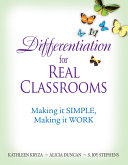
Differentiation for real classrooms: Making it simple, making it work

by Kathleen Kryza, Alicia Duncan, and S. Joy Stephens

Grades: K-12

Based on the authors’ “C U KAN” and “Chunk, Chew, and Check” frameworks, this book helps teachers to implement effective, differentiated instruction by identifying a clear learning target, getting to know their students as people and as learners, and understanding how to vary the learning pathways to the same target for different learners.

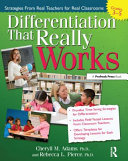
Differentiation that really works, Grades 3-5: Strategies from real teachers for real classrooms

by Cheryll M. Adams and Rebecca L. Pierce

Grades: 3-5

This book provides strategies and lesson ideas created and field-tested for heterogeneous classrooms, including exit cards, choice boards, cubing, graphic organizers, learning contracts, and tiered lessons. It also provides templates that can be used to develop new lessons using each strategy.

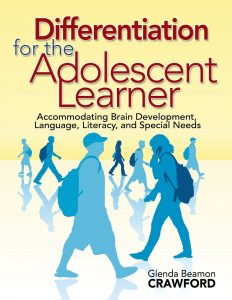
Differentiation for the adolescent learner: Accommodating brain development, language, literacy, and special needs

by Glenda Beamon Crawford

Grades: 7-12

The author focuses on the adolescent learner and outlines brain-compatible instructional strategies applicable to all students, including English Language Learners, gifted populations, and others with special needs. Readers will encounter a six-point differentiated model based on adolescents′ need for personal connection, appropriate intellectual challenge, emotional engagement, guided social interaction, metacognitive development, and a supportive learning environment.

Differentiated instruction made practical: Engaging the extremes through classroom routines

by Rhonda Bondie and Akane Zusho

Grades: K-12

This book introduces teachers to the All Learners Learning Every Day (ALL-ED) framework, which enables tailored instruction for every learner, not just the middle of the pack.

Note:

When you search for materials in this area, you may also want to search for “individualized instruction”, which is an older but still frequently used term.


Finding More Resources

To find more resources in this area, try the following:

  • Search using the General tab on the UBC Library website to look for material in all UBC Library branches.
  • Search using “Search Education Resources” box in the left hand bar on the Education Library website to limit your results to physical materials in the Education Library.
  • Use specific search terms, such as “individualized instruction”, “differentiated learning”, “personalized learning”, “equitable”, or “diversity”.
  • To find lesson plans, include “lesson plans”, “lesson planning”, or “activity programs” in your search terms.

PDF Booklist

For more help with searching, please visit the Library Service Desk or e-mail ed.lib@ubc.ca.

Categories
Planning for Teaching and Learning

Active Learning

Listed below are selected resources for teachers related to Active Learning.

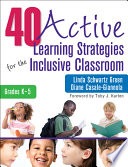
40 active learning strategies for the inclusive classroom, grades K-5

by Linda Schwartz Green and Diane Casale-Giannola

Grades: K-5

The authors provide strategies for incorporating active learning in the inclusive classroom, including directions for use, sample applications across content areas, and how-tos.

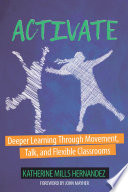
Activate: Deeper learning through movement, talk, and flexible classrooms

by Katherine Mills Hernandez

Grades: K-12

The book describes practical ways to incorporate movement into the classroom routine, based on research on how an active brain generates true learning, to help create classrooms optimized for deeper engagement and lasting learning. (E-book only)

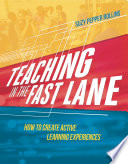
Teaching in the fast lane: How to create active learning experiences

by Suzy Pepper Rollins

Grades: K-12

The author details how to design, manage, and maintain an active classroom that balances autonomy and structure. The book offers student-centered, practical strategies on sorting, station teaching, and cooperative learning that will help teachers build on students’ intellectual curiosity, self-efficacy, and sense of purpose.

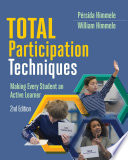
Total participation techniques: Making every student an active learner

by Persida Himmele and William Himmele

Grades: K-12

The authors provide detailed descriptions of the Total Participation Techniques (TPTs) with step-by-step instructions, plus reproducible blackline masters for student response cards as well as posters to remind teachers to use the techniques. They also suggest how teachers can adapt and personalize the techniques to fit specific contexts and content.

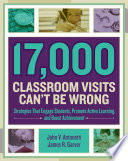
17,000 classroom visits can’t be wrong: Strategies that engage students, promote active learning, and boost achievement

by John V. Antonetti and James R. Garver

Grades: K-12

The authors share salient lessons that provide insight into how to smooth the transition from simply planning instruction to designing high-quality student work, along with stories of successful practice and practical tools ready for immediate classroom application. (E-book only)

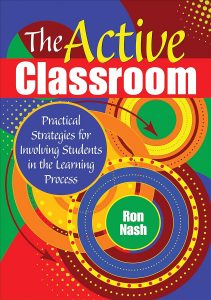
The active classroom: Practical strategies for involving students in the learning process

by Ron Nash

Grades: K-12

This resource shows how to turn passive students into enthusiastic participants in their own learning. The author illustrates how teachers can become facilitators who establish an interactive and safe environment for learning, manage movement in the classroom, and teach to all learning modalities

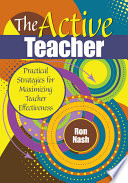
The active teacher: Practical strategies for maximizing teacher effectiveness

by Ron Nash

Grades: K-12

Emphasizing routines, rules, and relationships, this book helps teachers lead students in a clear, consistent manner that wins their trust and develops their personal responsibility. Readers will find guidance on creating and sustaining a classroom community that promotes respect and achievement, fully involving students in learning while addressing a wide range of cognitive styles, and collaborating with students, colleagues, and parents.

100 experiential learning activities for social studies, literature, and the arts, grades 5-12

by Eugene F. Provenzo Jr., Dan W. Butin, and Anthony Angelini

Grades: 5-12

Active learning promotes critical thinking, deep understanding, and transfer to real-life situations of knowledge about such important issues as social justice, culture, language, diversity, the arts, economics, and science and technology. The authors have compiled 100 ready-to-use units that address critical social issues, which emphasize comprehension, comparison, and transfer across disciplinary boundaries.

Joyful learning: Active and collaborative learning in inclusive classrooms

by Alice Udvari-Solner and Paula Kluth

Grades: K-12

This resource is intended to help build inclusive classrooms serving all learners, including those with cognitive, sensory, cultural, learning, and/or linguistic differences. The authors present strategies for engaging students in discussion, debate, creative thinking, questioning, and teamwork. The book gives teachers the tools to promote relationship building and interdependence, help students teach one another as they make discoveries about course content, and engage in whole-class learning while assisting students who need personalized instruction.


Finding More Resources

To find more resources in this area, try the following:

  • Search using the General tab on the UBC Library website to look for material in all UBC Library branches.
  • Search using “Search Education Resources” box in the left hand bar on the Education Library website to limit your results to physical materials in the Education Library.
  • Use specific search terms, such as “active learning”, “group work in education”, or “experiential learning”.
  • To find lesson plans, include “lesson plans”, “lesson planning”, or “activity programs” in your search terms.

For more help with searching, please visit the Library Service Desk or e-mail ed.lib@ubc.ca.
Spam prevention powered by Akismet