Categories
Indigenous Literature and Education

Integrating First Peoples’ Perspectives and Principles of Learning

Listed below are selected teacher resources and non-fiction related to integrating First Peoples’ perspectives and principles of learning into the classroom.

Vous trouverez ci-dessous une sélection de ressources pédagogiques et d’ouvrages non romanesques liés à l’intégration des perspectives et des principes d’apprentissage des Premiers Peuples dans la salle de classe.

Teacher Resources
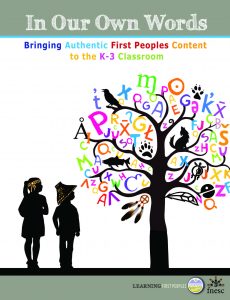
In our own words: Bringing authentic First Peoples content to the K-3 classroom,

by the First Nations Education Steering Committee

Niveau scolaire (Grade level): Kindergarten – 3

This resource provides an array of ideas and suggestions that can be applied in whole or in part to incorporate First Peoples content into a K-3 classroom. By using this resource and remaining open to respectful dialogue and consultation with members of the local First Peoples communities, teachers will benefit their students and expand their own comfort with this material. Also available online. See also Authentic First Peoples resources: For use in K-7 classrooms.

Re-storying education : decolonizing your practice using a critical lens,

by Carolyn Roberts

Niveau scolaire (Grade level): Kindergarten – 12

Re-Storying Education is a process of dismantling old narratives taught in education and rebuilding new narratives that include all the voices that have created this place known as Canada today. This vital and timely book outlines how colonialism has shaped both the country and the public school system. Re-Storying Education uses an Indigenous lens, offering ways to put Indigenous education, history, and pedagogy into practice. It invites readers into an open dialogue in the pursuit of a more inclusive and just educational landscape.
Integrating Aboriginal perspectives into the school curriculum : purposes, possibilities, and challenges,

by Yatta Kanu

Niveau scolaire (Grade level): Kindergarten – 12

From improved critical thinking to increased self-esteem and school retention, teachers and students have noted many benefits to bringing Aboriginal viewpoints into public school classrooms. In Integrating Aboriginal Perspectives Into the School Curriculum, Yatta Kanu provides the first comprehensive study of how these frameworks can be effectively implemented to maximize Indigenous students’ engagement, learning, and academic achievement.
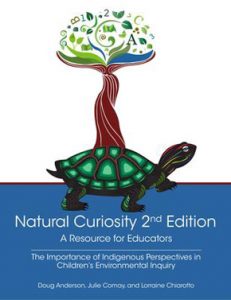
Natural curiosity 2nd edition: a resource for educators: the importance of Indigenous perspectives in children’s environmental inquiry,

by Doug Anderson, Lorraine Chiarotto, & Julie Comay

Niveau scolaire (Grade level): 1 – 6

The driving motivation for a second edition was the burning need, in the wake of strong and unequivocal recommendations by the Truth and Reconciliation Commission, to situate Indigenous perspectives into the heart of Canadian educational settings and curricula, most notably in connection with environmental issues. The Indigenous lens in this edition represents a cross-cultural encounter supporting what can become an ongoing dialogue and evolution of practice in environmental inquiry. Some important questions are raised that challenge us to think in very different ways about things as fundamental as the meaning of knowledge.
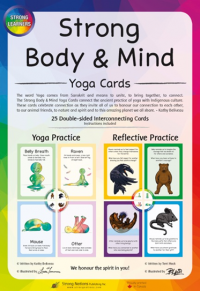
Strong body & mind yoga cards,

by Kathy Beliveau & Terri Mack; illustrated by Laura Timmermans & Bill Helin

Niveau scolaire (Grade level): Kindergarten – 7

Explores the connection to each other, animals, nature, spirit, and the body through yoga. Consists of two sets of cards which can be combined into different sequences. One set emphasizes yoga practice and the other focuses on reflective practice based on the Seven Sacred Teachings and Indigenous values.
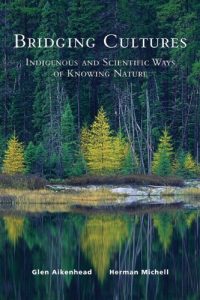
Bridging cultures: Scientific and indigenous ways of knowing nature,

by Glen Aikenhead & Herman Michell

Niveau scolaire (Grade level): Kindergarten – 12

This book supports science teachers, teacher candidates, and science educators preparing to implement science curricula that recognize Indigenous knowledge as a foundational way to understand the physical world.
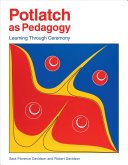
Potlatch as pedagogy: Learning through ceremony,

by Sara Florence Davidson & Robert Davidson

Niveau scolaire (Grade level): K – 12

Educator Sara Florence Davidson saw how the Haida tradition of the potlatch – which she learned from her father, renowned artist Robert Davidson – could be integrated into contemporary educational practices. In this book, father and daughter present a model for learning that is holistic, relational, practical, and continuous.
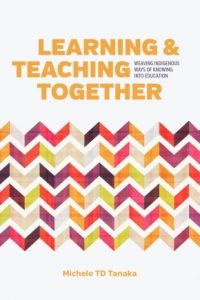
Learning and teaching together: Weaving indigenous ways of knowing into education,

by Michele T.D. Tanaka

Niveau scolaire (Grade level): K – 12

This book recounts how pre-service teachers immersed in a cross-cultural course in British Columbia began to practice Indigenous ways of knowing. Working alongside Indigenous wisdom keepers, they transformed earth fibres into a mural and, in the process, transformed their own ideas about learning and teaching.This book opens a path for teachers to nurture indigenist cross-cultural understanding in their classrooms.
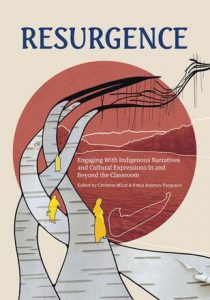
Resurgence coverResurgence: Engaging with Indigenous Narratives and Cultural Expressions in and Beyond the Classroom,

by Christine M’Lot & Katya Ferguson

Niveau scolaire (Grade level): K – 12

In Resurgence, poetry, art, and narratives from Indigenous authors and educators guide teachers in incorporating Indigenous stories, knowledge, and pedagogies into the classroom. The book is organized into the following four sections: Resistance, Resilience, Restoring, and Reconnecting.
Decolonizing education: Nourishing the learning spirit,

by Marie Battiste

Niveau scolaire (Grade level): K – 12

The author argues that the preservation of Aboriginal knowledge is an Aboriginal right and a right preserved by the many treaties with First Nations. Current educational policies must undergo substantive reform. Central to this process is the rejection of the racism inherent to colonial systems of education, and the repositioning of Indigenous humanities, sciences, and languages as vital fields of knowledge.

Aboriginal worldviews and perspectives in the classroom: Moving forward,

by the BC Ministry of Education

Niveau scolaire (Grade level): K – 12

This resources is designed to answer a number of questions, including what is meant by Aboriginal education and by Aboriginal worldviews and perspectives; what is required of teachers and of the education system in order to provide appropriate and authentic teaching in line with the First Peoples Principles of Learning; and where teachers can turn for guidance and support in modifying their practice to incorporate new content and approaches. Online resource only. See also, Shared learnings: Integrating BC Aboriginal content K-10.
Culturally Relevant Aboriginal Education,

by Nicole Bell & Terrylynn Brant

Niveau scolaire (Grade level): K – 12

Provides teacher candidates and in-service teachers with relevant information to help them integrate Aboriginal, First Nations, Métis, and Inuit content, customs, and traditions into the classroom, providing students with a broader perspective of Canada and its population.
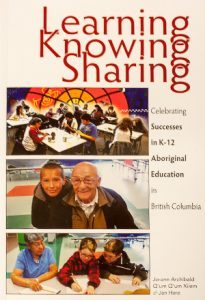
Learning, Knowing, Sharing: Celebrating Successes in K-12 Aboriginal Education in British Columbia,

by Jo-ann Archibald, Q’um Q’um Xiiem, & Jan Hare

Niveau scolaire (Grade level): K – 12

Published by the BC Principals’ & Vice-Principals’ Association and the UBC Faculty of Education, this book highlights practices in British Columbia relating to Aboriginal Education. Topics include Indigenous knowledge, Indigenous language revitalization, Aboriginal family and community engagement and partnerships, and more.
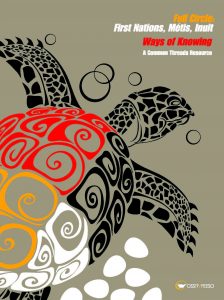
 Full circle: First Nations, Métis, Inuit ways of knowing,

by Ontario Secondary School Teachers’ Federation

Niveau scolaire (Grade level): 8 – 12

Lesson plans which encourage teachers to incorporate First Nations, Métis, and Inuit ways of knowing into the classroom in the four thematic areas of identity, health, Residential Schools, and land.
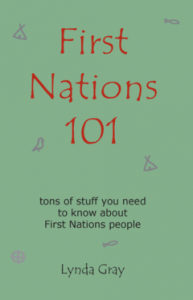
First Nations 101,

by Lynda Gray

Niveau scolaire (Grade level): 9 – 12

Overview of the diverse and complex lives of First Nations people with subjects including veterans, youth, urbanization, child welfare, appropriate questions to ask a First Nations person, feminism, the medicine wheel, Two-spirit (LGBTQ), residential schools, the land bridge theory, and language preservation.
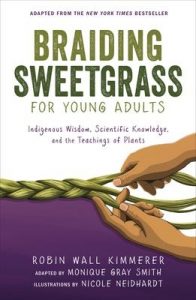
Braiding sweetgrass for young adults: indigenous wisdom, scientific knowledge, and the teachings of plants,

by Robin Wall Kimmerer; adapted by Monique Gray Smith; illustrations by Nicole Neidhardt

Niveau scolaire (Grade level): 7 – 12

Botanist Robin Wall Kimmerer’s best-selling book Braiding Sweetgrass is adapted for a young adult audience by children’s author Monique Gray Smith, bringing Indigenous wisdom, scientific knowledge, and the lessons of plant life to a new generation.
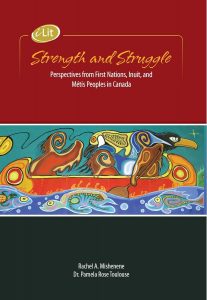
Strength and struggle: Perspectives from First Nations, Inuit, and Métis peoples in Canada,

by educational advisors: Rachel A. Mishenene & Pamela Rose Toulouse; reviewers: Denise Augustine; [authors and artists: Joyce Atcheson & others]

Niveau scolaire (Grade level): 10 – 11

A rich array of short stories, poetry, music lyrics, graphic art, articles, essays, and other pieces that will have students laughing, crying, talking, and thinking. It is a true celebration of First Nations, Inuit and Métis writing and art. Part of McGraw-Hill Ryerson’s Lit Collection of supplementary student resources for high school English courses. Also includes an accompanying Teacher’s Resource here.


Trouver d’autres ressources

Voici quelques conseils pour trouver d’autres ressources dans ce domaine :

  • Sur la page principale du site de la bibliothèque de l’UBC, utilisez la boîte de recherche générale pour rechercher des matériaux à travers toutes les succursales de la bibliothèque de l’UBC.
  • Pour limiter vos résultats aux matériels disponibles à la Bibliothèque de l’éducation, visitez le site web de la Bibliothèque de l’éducation et effectuez une recherche à l’aide de la case “Search Education Resources” située dans la bande à gauche de l’écran.
  • Remarque : les ressources étant principalement cataloguées en anglais, les termes ci-dessous donnent généralement plus de résultats que les recherches effectuées en français. Vous pouvez filtrer votre liste de résultats par langue dans la barre latérale de gauche.
  • Utilisez des termes de recherche spécifiques, tels que
    • “indigenous peoples” AND “education” AND “canada”, “indigenous children” AND “education” AND “british columbia”, “indigenous peoples” AND “study and teaching” AND “canada”, ou “indigenous pedagogy”
  • Pour trouver des plans de cours, incluez “lesson plans”, “lesson planning”, or “activity programs” dans vos termes de recherche.

Finding More Resources

To find more resources in this area, try the following:

  • Search using the General tab on the UBC Library website to look for material in all UBC Library branches.
  • Search using “Search Education Resources” box in the left hand bar on the Education Library website to limit your results to physical materials in the Education Library.
  • Use specific search terms, such as
    • “indigenous peoples” AND “education” AND “canada”, “indigenous children” AND “education” AND “british columbia”, “indigenous peoples” AND “study and teaching” AND “canada”, and “indigenous pedagogy”
  • To find lesson plans, include “lesson plans”, “lesson planning”, or “activity programs” in your search terms.
Categories
Inquiry-Based Learning

Inquiry-Based Learning: Middle Years and Secondary Grades

Listed below are selected resources for teachers related to using Inquiry-Based Learning in grades 7-12.

Guided inquiry design in action: Middle school

by Leslie K. Maniotes, LaDawna Harrington, and Patrice Lambusta

Grades: 7-8

This guide offers ready-to-use templates and models for implementing Guided Inquiry Design (GID) in the middle school learning environment, with each supplied lesson laid out according to the session plan templates from GID and a thorough description of the ideal inquiry process from beginning to end. Intended to be used alongside Guided Inquiry Design.

Guided inquiry design in action: High school

edited by Leslie K. Maniotes

Grades: 9-12

This book explains the nuances of GID in the high school context. It also addresses background research, explains guided inquiry and the information search process, and shows how GID serves to heighten student engagement at the high school level by going beyond fact-finding to foster deeper understanding and knowledge creation. Intended to be used alongside Guided Inquiry Design.

THINQ 7-9: Inquiry-based learning in the intermediate classroom

by Jennifer Watt, Heidi Fuller, and Wendy Terro

Grades: 7-9

This book applies the ideas of inquiry-based learning to the specific needs and characteristics of intermediate learners, teachers and classrooms.

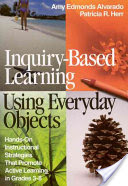
Inquiry-based learning using everyday objects: Hands-on instructional strategies that promote active learning in grades 3-8

by Amy Edmonds Alvarado and Patricia R. Herr

Grades: 3-8

This book explores the concept of using everyday objects as a process initiated both by students and teachers, encouraging growth in student observation, inquisitiveness, and reflection in learning.

Why are school buses always yellow? Teaching for inquiry, K-8

by John F. Barell

Grades: K-8

The author shares simple yet systematic ways to develop authentic student inquiry that fosters deep learning. This new edition features updates based on the latest research around inquiry-based teaching; examples for grades K–8 across subject areas; and an emphasis on critical thinking about technologies.

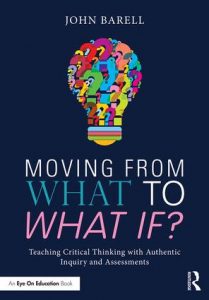
Moving from what to what if?: Teaching critical thinking with authentic inquiry and assessments

by John Barell

Grades: 7-12

This book outlines how teachers can challenge students to grapple with complex problems and engage more meaningfully with information across the content areas, rather than rely solely on rote memorization and standardized testing to measure academic success. (E-book only)

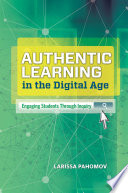
Authentic learning in the digital age: Engaging students through inquiry

by Larissa Pahomov

Grades: 7-12

The author outlines a framework for learning structured around five core values: inquiry, research, collaboration, presentation, and reflection. For each value, she presents a step-by-step outline for how to implement the value, with examples from teachers in all subject areas; solutions to possible challenges and roadblocks that teachers may experience; and anecdotes from students, offering their perspectives on how they experienced the value in the classroom and after graduation.

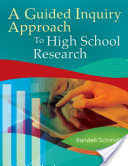
A guided inquiry approach to high school research

by Randell K. Schmidt

Grades: 9-12

This book provides a holistic approach to guided inquiry that guides students step-by-step through the cognitive, affective, and social processes involved, including building critical study skills, time management strategies, collaboration techniques, and communication and presentation skills.

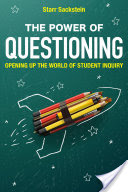
The power of questioning: Opening up the world of student inquiry

by Starr Sackstein

Grades: 9-12

Teaching and learning cannot happen without questions, but in the age of Google, teaching needs to change and students need to be reconnected with their early childhood curiosity. This book helps teachers to make students partners in their own learning. (E-book only.)

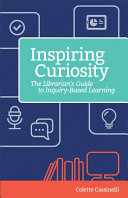
Inspiring curiosity: A librarian’s guide to inquiry-based learning

by Colette Cassinelli

Grades: 9-12

This book provides strategies for using memorable events to activate students’ natural curiosity and activities for generating essential questions for exploration. Includes ideas and resources to help librarians (and teachers!) be more effective in research and inquiry; tips for developing search strategies and for locating and curating resources; and ideas on evaluating sources and celebrating students’ inquiry beyond the traditional research paper.

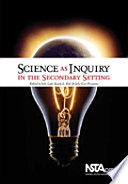
Science as inquiry in the secondary setting

edited by Julie Luft, Randy L. Bell, and Julie Gess-Newsome

Grades: 7-12

In 11 concise chapters, leading researchers raise and resolve such key questions as: What is inquiry? What does inquiry look like in specific classes, such as the earth science lab or the chemistry lab? What are the basic features of inquiry instruction? How do you assess science as inquiry?

Whole-class inquiry: Creating student-centered science communities

by Dennis Smithenry and Joan A. Gallager-Bolos

Grades: 9-12

The authors describe their experiences in implementing a student-led, multi-day, project-based whole-class inquiry model in the science classroom. Students consult with one another, make decisions for themselves, and carry out their own investigations to solve the complex problems posed to them.


Finding More Resources

To find more resources in this area, try the following:

  • Search using the General tab on the UBC Library website to look for material in all UBC Library branches.
  • Search using “Search Education Resources” box in the left hand bar on the Education Library website to limit your results to materials in the Education Library.
  • Use specific search terms to narrow your results, such as “inquiry based learning”, “inquiry-based learning”, or “inquiry”.
  • To find lesson plans, include “lesson plans”, “lesson planning”, or “activity programs” in your search terms.

For more help with searching, please visit the Library Service Desk or e-mail ed.lib@ubc.ca.

Categories
Inquiry-Based Learning

Inquiry-Based Learning: All Grades

Listed below are selected resources for teachers related to Inquiry-Based Learning at all grade levels.

Guided inquiry: Learning in the 21st century

by Carol C. Kulhthau, Leslie K. Maniotes, and Ann K. Caspari.

Grades: K-12

This book presents an introduction to Guided Inquiry, providing a starting point for considering and planning an inquiry-based learning program.

Guided inquiry design: A framework for inquiry for your school

by Carol C. Kulhthau, Leslie K. Maniotes, and Ann K. Caspari.

Grades: K-12

The companion book to ‘Guided inquiry: Learning in the 21st century’. Provides an overview of the Guided Inquiry design framework and details the eight phases in the Guided Inquiry design process, providing examples at all levels.

Concept-based inquiry in action: strategies to promote transferable understanding

by Carla Marschall and Rachel French

Grades: K-12

This book provides teachers with tools and resources to organize and focus student learning around concepts and conceptual relationships that support the transfer of understanding, and helps them to implement teaching strategies that support the realization of inquiry-based learning for understanding.

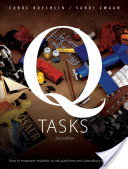
Q tasks: How to empower students to ask questions and care about the answers (2nd edition)

by Carol Koechlin and Sandi Zwaan

Grades: K-12

The original ‘Q Tasks’ showed teachers how to give students the tools they need to develop their own questions and build critical thinking and inquiry skills. The second edition continues to nurture and advance these crucial skills, and also offers Q-task extensions that introduce digital components that facilitate collaboration. Also available as an e-resource.

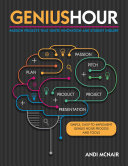
Genius hour: Passion projects that ignite innovation and student inquiry

by Andi McNair

Grades: K-12

This book provides educators with the tools to implement genius hour, or passion projects, in the classroom. Presented through a six-step strategy, teachers will utilize the six P’s–passion, pitch, plan, project, product, and presentation–as a map for students to follow as they create, design, and carry out projects.

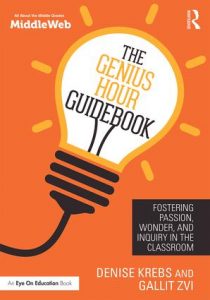
 The Genius Hour guidebook: Fostering passion, wonder, and inquiry in the classroom

by Denise Krebs and Gallit Zvi

Grades: K-12

Genius Hour is a time when students can develop their own inquiry-based projects around their passions and take ownership of their work. This book provides suggestions for teachers to help students develop inquiry questions based on their interests, conduct research to learn more about their topic, create presentations to share their work, and present their finished product for assessment.

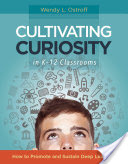
Cultivating curiosity in K-12 classrooms: How to promote and sustain deep learning

by Wendy L. Ostroff

Grades: K-12

This book describes how teachers can create a structured, student-centered environment that allows for openness and surprise, in which inquiry guides authentic learning. Ostroff shows how to foster student curiosity through exploration, novelty, and play; questioning and critical thinking; and experimenting and problem-solving.

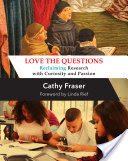
Love the questions: Reclaiming research with curiosity and passion

by Cathy Fraser

Grades: K-12

This book provides suggestions on how to honour students’ passions, interests, and specific questions; embrace inquiry, curiosity, and exploration; teach students to frame relevant questions throughout the research process; develop projects that include surveys, experiments, and interviews; work with school librarians as educational partners for teachers and students; and assess skills, not memorization.

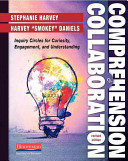
Comprehension and collaboration: inquiry circles for curiosity, engagement and understanding

by Stephanie Harvey and Harvey “Smokey” Daniels

Grades: K-12

This book presents research in comprehension, collaboration, and inquiry, and gives practical suggestions on connections to inquiry structures such as makers, design thinking, genius hour, and capstone projects, as well as tips on common questions about management and accountability.

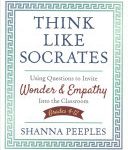
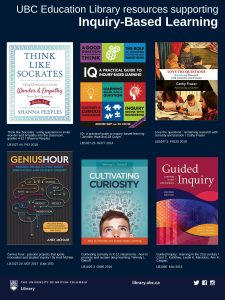
Think like Socrates: Using questions to invite wonder and empathy into the classroom, grades 4-12

by Shanna Peeples

Grades: 4-12

This resource provides questions paired with sample texts; step-by-step lessons for generating and using students’ questions; lesson extensions for English language learners, special education students, and gifted and talented students; and writing suggestions, in-class debate questions, and scoring rubrics.

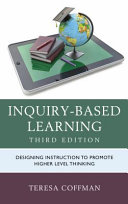
Inquiry-based learning: Designing instruction to promote higher level thinking

by Teresa Coffman

Grades: K-12

This third edition text explores realistic approaches and encourages reflective practice through the creation of instruction around a variety of curricular topics, to include digital citizenship, information literacy, social media, telecollaborative activities, problem-based learning, blended learning, and authentic assessments. Emphasis is placed on developing 21st-century skills within a thinking curriculum.

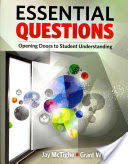
Essential questions: Opening doors to student understanding

by Jay McTighe and Grant P. Wiggins.

Grades: K-12

The creators of the “Understanding by design” framework present ways to incorporate inquiry-based learning into the classroom.

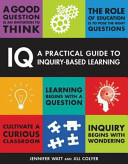
IQ: A practical guide to inquiry-based learning

by Jennifer Watt and Jill Colyer

Grades: K-12

This highly visual and accessible resource explains the inquiry process and offers practical suggestions and tools for successfully implementing inquiry-based learning in the classroom.

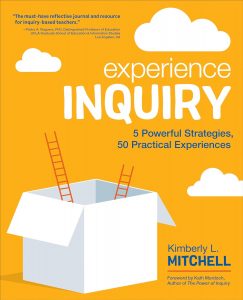
Experience inquiry: 5 powerful strategies, 50 practical experiences

by Kimberly L. Mitchell

Grades: K-12

This resource offers practical examples of what inquiry looks like in the classroom; fifty practical inquiry experiences that can be used individually, with students, or in small groups of teachers; and opportunities for reflection throughout the book, including self-surveys, templates, and tools.

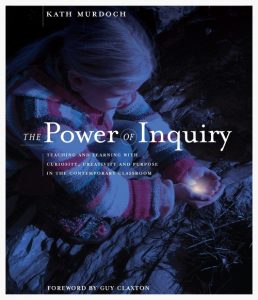
The power of inquiry

by Kath Murdoch

Grades: K-12

This resource is a guide to the implementation of quality inquiry practices in the contemporary classroom. Organized around ten essential questions, each chapter provides both a theoretical and a practical overview of the elements that combine to create learning environments rich in purpose and passion.


Finding More Resources

To find more resources in this area, try the following:

  • Search using the General tab on the UBC Library website to look for material in all UBC Library branches.
  • Search using “Search Education Resources” box in the left hand bar on the Education Library website to limit your results to physical materials in the Education Library.
  • Use specific search terms, such as “inquiry based learning”, “inquiry-based learning”, or “inquiry”.
  • To find lesson plans, include “lesson plans”, “lesson planning”, or “activity programs” in your search terms.
PDF Booklist

For more help with searching, please visit the Library Service Desk or e-mail ed.lib@ubc.ca.

Spam prevention powered by Akismet