Categories
Business Strategy Design Insight Marketing Strategies Product Positioning & Branding Tips and tricks

Brand Architecture Building: A Step-by-Step Guide (Step 1)


What counts as a sub-brand? How can  I make it easier for the consumers to navigate my offerings? Heck, what is a brand, really? If you’re asking these questions, you are not alone. This is a live challenge I am facing at work, and I wanted to share my key branding insights in a multi-step case study. Let’s do this!

Step 1: Understand what a brand really means.

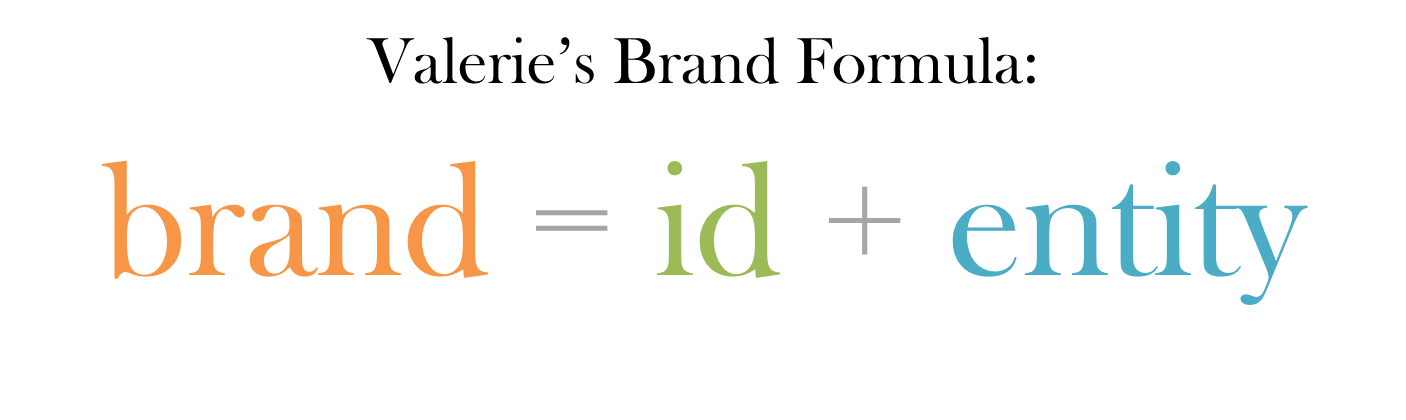
Before we define a brand architecture, let’s wrap our heads around what a brand really is. I have developed a formula to help tell the brand story: Let’s break this down. Id, ego, and super-ego, as defined by Sigmund Freud, are the three components of human psyche that govern the way you think and make decisions. The id is present with us when we are born, and represents our basic human drive: the unorganized instinct and sometimes irrational impulse. An entity is simply the item, service, or person that is the subject of branding. Is it your personal brand? A corporate identity? A product or service? When you give birth to a brand, you must first think of your entity’s id – peel back the layers of beautiful design, extraordinary functionality, and your price tag. What are you left with? On first impulse, what is the fundamental word that breathes life into your brand?

INDULGENCE

SPEED

BALANCE

As if it were not obvious already, id and entity make up the word identity, and that is the final piece of the puzzle. A brand is an identity – it’s an embodiment of your core offering, a definition of your entity, a way to link associations together, and a promise from you to the world to hold yourself accountable for delivering your core offering.

Only when you understand what makes up your identity will you be able to build a powerful, believable brand!

NOURISHING

I have chosen the word nourishing to represent the corporate brand because of two reasons – 1) Nature’s Path Foods products are  delightfully nourishing – both good tasting and good for you. They choose nourishing, superfood, organic ingredients that you can trust to put in your body. 2) Nature’s Path Foods is also about enriching the community and the land, giving back to everything that has made the company what it is today.


Stay tuned for Step 2.

Categories
Design Infographic Insight Marketing Strategies Product Positioning & Branding Technology Top News

The Business of Online Dating Infographic

Completed for my COMM 365 Market Research class. Spent about 3 days putting this together from research to design (in PowerPoint of all programs). While it isn’t perfect yet, I thought it would be neat to share! Here’s my two cents on the online dating industry.

Categories
Insight Student Life Technology Tips and tricks

Chrome Extension Round-up Edition 1: Productivity

Uncover the Chrome potential – have you tried these Chrome extensions yet? I’ve round up some of the top productivity and time-saving extensions I’ve used or want to try (in no particular order):

1. StayFocusd

I’ve reviewed this extension before, but it has made it to my list. So what is this extension? StayFocusd restricts the time you can spend on certain websites, thereby increasing “productivity by limiting the amount of time that you can spend on time-wasting websites.” This proves to be useful during exam periods when you need to cut down the time you spend on Youtube, Facebook, Pinterest, or even email. If you want to cheat on the minutes you get after you run out, it takes many annoying clicks through tons of buttons before you’re allowed to make changes.

2. Screen Capture

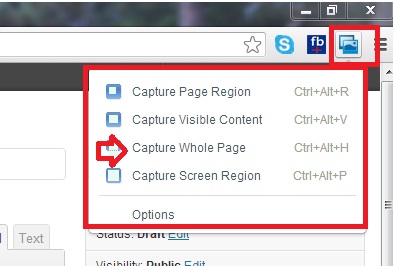
“Capture visible content of a tab, a region of a web page, or the whole page as a PNG image.” Great for materials you want to keep from websites to insert into PowerPoint presentations or reference materials for your papers. It has saved me so much time versus print screening and stitching together photos in Paint.

3. Pocket
When you see a useful page but don’t have time to read it all, hit the “Pocket” button to save the page and view it later. “It automatically syncs to your phone, tablet or computer so you can view it at any time, even without an internet connection.” It’s kind of like a Pinterest for websites, except it’s for your personal use.


4. LucidChart

For my friends in BTM, TLog, or engineering, I’m sure you’ll have to do a lot of flow charting. Google Drive apps are kind of annoying to create diagrams, as you need to create a drawing and add shapes. LucidChart is “the easiest way to draw flowcharts, mockups, UML, mind maps and more. Work together in real time with your team and clients.”


5. RealtimeBoard WhiteBoard

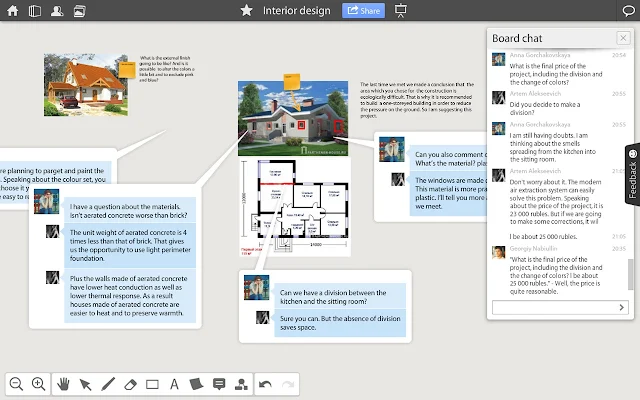
I’ve looked for things like this forever. If you’re in need of a virtual meeting, perhaps give this a try to “discuss design, brainstorm, work on projects, make mindmaps and use it in education.” Only downside (?) is that everyone will have to install it. Similar ones include: Conceptboard, TeamBox, Orchestra and more.

Bonus: BucketListly

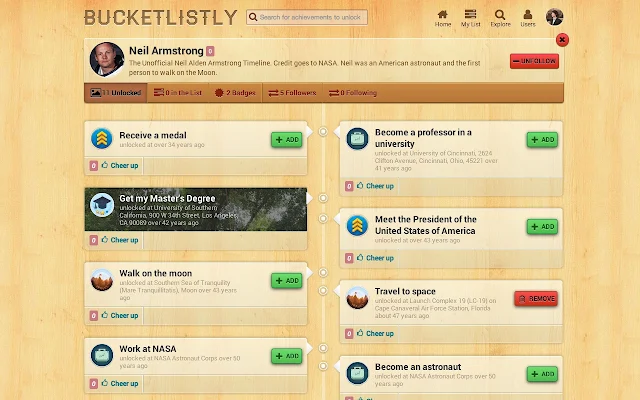
This app just sounds like a blast. “Bucketlistly will turn your life into a game. Complete and share your ‘achievement unlocked’ moments with your friends fast and simple.”This has more to do with productivity outside of work or school life, but it is a motivating way to keep track of all the things you want to do. We all get a sense of satisfaction from ticking off a box.


What is your favourite app or extension? Leave a comment below 🙂

 
Categories
Business Ethics Insight Marketing Strategies Product Positioning & Branding

Macklemore’s Thrift Shop affects Consumer Behaviour…?

Macklemore

Who hasn’t heard of Macklemore’s 99-cent leopard mink coat from his smash hit, Thrift Shop?

“Vintage” is the new class.


After the financial crisis in 2008, there seems to be a large rise in price sensitivity amongst consumers. Even thrifting, an endearing abbreviation which modern-day hipsters have coined for thrift shopping, has transformed from a shameful to shameless activity. Celebrities have been advocating it in music videos like Thrift Shop, in sitcoms like 2 Broke Girls, and even in fashion magazines like GQ Magazine. YouTube  personalities and beauty gurus have also been showing off their great buys and pretty looks using drugstore, on sale or thrift store items. Heck, as someone who had never thrifted before, I have even gone out to find some clever buys of myself. And, as I did so last Friday after studying for my consumer behaviour midterm, I had the sudden realization that I had been subject to a form of observational learning.


There are four conditions to modelling, which is a significant type of observational learning. In “self-diagnosis,” I found that I managed to satisfy all of them:

  1. ATTENTION: the model must be desirable to emulate: I followed and took note of the trend amongst big time celebrities in pop culture, beautiful makeup and beauty gurus on YouTube, magazine guides, friends who come back with awesome clothes
  2. RETENTION: the consumer must remember what model says or does: magazine guides give you the “top 3 rules to keep in mind while thrifting”
  3. PRODUCTION PROCESSES: the consumer must convert information into action: I went out to an actual thrift store to try out those tips
  4. MOTIVATION: the consumer must be motivated to perform these actions: I felt motivated because… well hey, who wouldn’t like to get trendy clothes for a fraction of the price? It’s what I like to call a guilt-free deal-steal. It gave me a kind of thrill, and I would do it again. 


I learned, through observing the personalities that I follow online and my peers, that thrift shopping is the new, “in” thing to do, and throughout this time, I have not even seen one single thrift shop advertisement. In hindsight, it could almost be a type of negative reinforcement created unintentionally by social pressures; in this era, you are applauded for a clever, thrifty purchase and have also avoided the unpleasantness of  overpaying.

Who knew that marketing could be applied  in such a non-conventional way!

Categories
Insight Tips and tricks

So You Know How To Pitch… It’s just a shame that you’re too nervous.

I cringed as I typed the title of this blog post.

“Oh, Valerie, Valerie, Valerie,” I think. “You could have done so much better.”

Two months ago, I posted about how to pitch it to win it. I have since then made the JDC West Entrepreneurship team, where every week we create a new business given a 2-page industry summary and make a pitch deck to go along with it. My team is amazing, the coaches even more so, and I could not feel more… timid with the sheer amount of “awesome” surrounding me.

I realized that I could write something that read well on paper, invent a relevant story, but I couldn’t deliver. Every time I opened my mouth, I got nervous, stumbled on my words, and talked way too fast for anyone to process. I blame it on the time my voice cracked during a solo in a middle school concert. BRUTAL. I still get nervous looking at the picture of the mic up there.

Knowing my personality, I couldn’t just sit back and watch myself be mediocre at something for the rest of my life. So, I had motivation. Intention. Now I just need the conviction.

I have now decided to set goals for myself to improve my speaking ability in two weeks time (December 5) through intense practice:

BABY STEPS: GO BACK TO THE BASICS

RELAX: address the audience, pause, smile,  “transform nervous energy into enthusiasm

CONTROL: count to three before starting, control breathing and loudness of voice, and do NOT trail off.

PACE: manage the rhythm and speed of speech, rate of changing slides

ENUNCIATE: open your mouth wider, relax your tongue with tongue twisters/exercises, talk slower and louder than you think, practice pauses, inflections, vocal dynamics

EXPRESS: Check facial expressions, body movements.

SING: support from your diaphragm, assume a persona, nestle into the moment, forget the audience, and lose yourself in what comes out of your mouth


BE WILE E. COYOTE: SKILLS TO USE

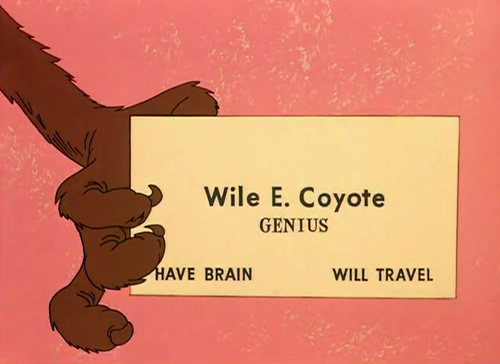
MESSAGE: Wile E. Coyote always has one message that he conveys in each Bugs Bunny episode – “Allow me to introduce myself. My name is Wile E. Coyote, supergenius.” Effective, simple, and easy to remember. This is the one thing you must get across if all else fails.

OUTLINE: Create a solid, transferable, easy-to-remember methodology. Structure will help with efficiency and confidence. What are the pivotal points you need to get across?

MANIPULATE: the atmosphere and the audience’s attention

CONFIDENCE: emanate an irrefutable charisma, but not come across as cocky

CONQUER: stop being afraid. You can do it.

CONVICTION: you have to believe in yourself before others will believe in you

FINISH: Close with a BANG!

HOMEWORK: PRACTICE MAKES GREATNESS

WATCH: people who are good at speaking and notice what they do (pronunciation, speed)

DO:  Practice speaking. Read story books to kids, see how engaged they are. Read spoken word poetry.


AND ALWAYS REMEMBER…

The team and audience are all rooting for you. They want you to do well. They want you to rock it. It all starts with a smile and a song.

Categories
Insight Tips and tricks

Pitch It to Win It: 15-Second Elevator Pitching Tips from Forbes!

We’ve all heard it. The first impression. The elevator pitch. The adjustment of your voice a few tones higher. So what does it really take to capture someone’s attention in the first 15?

It sounds so easy… You just tell them about it … what’s so hard about that? But have you ever tried picking up something sitting next to you, perhaps a mirror or a cup, and trying to pitch that to someone? I certainly haven’t. So I thought, how better to learn about effectively pitching something than to research, practice, then blog about it? I literally took the closest thing to me and tried to pitch it – my tissue box, Scotties Supreme. 

YouTube Preview Image

Forbes claims there is a method to achieve a wholesome 15 second pitch. How? Through the three-step message map consisting of the following:

  1. Create a Twitter-friendly headline.Can you give the gist of your product/service in one succinct sentence?
    • Scotties Supreme produces various types of soft, family-friendly facial tissues.
    • The sentence has the brand name, what they do, who they target, and what they provide all in one sentence.
  2. Support the headline with 3 key benefits. There’s a reason why it’s called the Magic Number Three! Highlight the benefits – psychologically, emotionally, spiritually, physically, mentally…
    • It’s great for your nose and bum, great for the environment, and great for your wallet. 
    • Physical benefits, psychological benefits as well as potential to a background story, and money-saving incentives.
  3. Reinforce the benefits with stories, statistics, and examples. These are your “bullet points.” Since I don’t have any stats, I went with a simple sentence.
    • They are dermatologist approved, packaged in 100% recycled fibre, and saves mothers lives! Yes, they support the Canadian Breast Cancer Foundation too. 
    • Confirmed “good-for-you” quality by authority, some proof that it’s good for the environment, and a quirky remark that generates a brief emotional attachment.

Scotties Supreme: Good for bum, good for mum. Motto ties everything I’ve mentioned into a succinct, fun and rhyming statement that’s easy to remember.

So I spent about 5 minutes reading through Scottie’s FAQ on-line, and typed out the statements in under 10 minutes.  The results: my 15-second tissue pitch, which according to the video actually refers to just the first two steps, comes to a little over 8 seconds. With the addition of step 3 plus the motto I came up with, it was just under 21 seconds. 

There you have it, my under 30 second pitch for Scotties Supreme tissues.

I’ll definitely have to practice this more, and hope this helps give some of you an idea of how to do it to!

Categories
Insight Marketing Strategies Product Positioning & Branding Top News

Will.i.am Revives Vinyl Records

YouTube Preview Image

“Even in media, sometimes an old idea is worth revisiting. Budweiser’s latest campaign in Brazil is actually a collection of old ideas. Securing a high profile musician to front a campaign has been a standard advertising tool for many years, but when the combination fits, it works perfectly.” – Cream Global


Before I was even born in the early 90’s, vinyl records had disappeared from mainstream music. With our generation came the rise of car radios, CD walkmans, mp3 music players, iPods, iTouches, and eventually even smartphones.


Beer, as we all know and love, is the go-to drink for TV, sports, and the “occasional” game of beer pong. Budweiser, the Anheuser-Busch InBev brand, had a major challenge at hand. Their solution?


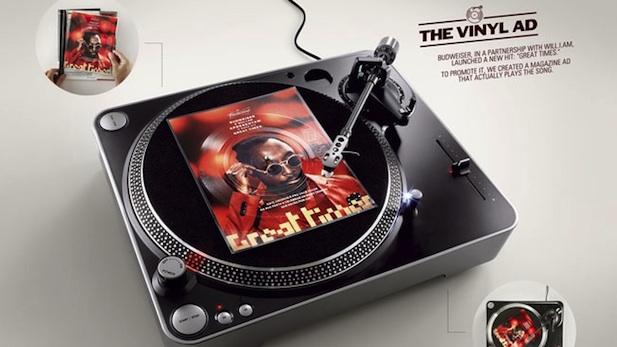
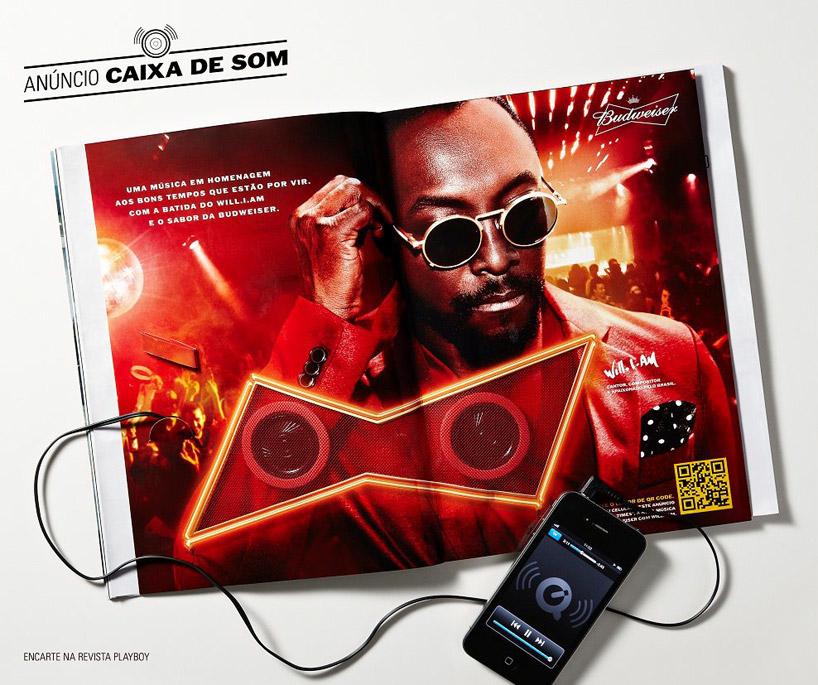
Budweiser made some music fusion in Brazil by promoting modern club music sensation Will.i.am through a hipster retro music format. They made a print ad that could be inserted into magazines as well as on a vinyl record player! The first use of such disposable vinyl records was actually in 1930, so it is nothing new… but the way that Budweiser used this technique added to the song’s exclusivity, helping both the singer debut his new song “Great Times” as well as helping the magazine sell out. Of course, Bud’s name also gained massive popularity during that time. Alternate versions of the ad were made into rudimentary speakers that you could plug smartphones into, as well as a scannable QR code for exclusive online access.


What a smart way to mash together something old and something new.


Hi Blog, it’s been a while. I hope to update you more often now.


Categories
Insight Technology Tips and tricks Top News

University: A Foster Home for Innovative Ideas

“I remember Lego sets back in the day. There was a time when they did not come with a manual. ” – Eric Gales


Windows has been my technological companion from humongous gray blocks to paper thin laptops. I joined the Windows Campus Rep Program in November 2011, and was sent out to Toronto for training at Microsoft Headquarters with the other UBC Campus Reps. You can find me sitting cheerfully at the PC section (yes, it’s there and it coexists peacefully next to the Macs) in the UBC Bookstore.


On April 3rd, I was lucky enough to be a part of the Microsoft Round Table Discussion with Microsoft Canada President, Eric Gales, and Associate Dean Murali Chandrashekaran from the Sauder School of Business at UBC. Eric was such a pleasure to listen to, and even more engaging to talk to. The event was even published on the front page of the Business Section in the Vancouver Sun!


In the discussion, the three topics of discussion were:

• What students need to be doing to set themselves up for success in the workforce
• Why students need to be more risk-tolerant and curious in order to establish and build career success
• How students can leverage technology to be more innovative, efficient and productive than the competition


I found that the main takeaways from the discussion, however, were of a slightly different focus. If I could summarize the talk in a nutshell, I would say the three main points were rather:

• What is innovation?
• What are entrepreneurs?

• How can students find innovation and help society?


What is innovation?

What is innovation? Innovation isn’t all about “designing that new break-through product” or “making the next, crazy do-all portable device.” Eric defines innovation as: “Doing something in a new way.” Continuing on this concept, Social Innovation BC defines it in their discussion paper about social entrepeneurship as “seeing things differently and imagining that which could be. It is about asking questions of ourselves and our institutions and wondering whether we can do better.”

Innovation is looking at a mug and seeing a coathanger. Innovation is making things larger than life. Innovation is making reality into illusion. Innovation is figuring out how two things can fit hand in hand.


What are entrepreneurs?


Entrepreneurs are people who convert ideas into action. They see through risk and put weight into rewards. They know their views, but do not hold a heavy bias so that they can openly disagree with themselves if they see fit. They are business leaders that attract ideas. And most importantly, they are not alone. Innovation is all about a cumulative; language exists for a reason, and that is for humanity to record, communicate, share and combine these ideas into a collective pool of information, and entrepreneurs think of ways to mold something out of them.


Business leaders: idea attraction: how to capture, cultivate and action: capture system? come from people closest to action


How can students find innovation and help society?

The problem in Canada, specifically, was identified in the discussion to be a large productivity gap and slower rates of adoption in technology in Canada. The reasons mentioned were perhaps the lack of competition, having all the tools for execution but not actually executing, an ineffective capture system for innovative ideas… the list goes on. To foster an innovative environment, we can start from university. We don’t really have issues with generating ideas, but more of what to do once you have one.


As an aspiring entrepreneur, the discussion really inspired me to stop being afraid of taking that first step or of making mistakes, because the biggest difference between people who dream big and people who breathe life into their big dreams is action. Eric commented that it is a “dog eat dog world,” but that should not be discouraging as long as you come into the world prepared. Be prepared to believe that there is a better way, as he put it. Be prepared to be wrong, but have the inner confidence to challenge yourself. Be prepared to invest your thoughts in the benefits for motivation, instead of fearing the risks.


We’re young, and it’s a good time to make mistakes. Bill Gates one said, “At Microsoft there are lots of brilliant ideas but the image is that they all come from the top — I’m afraid that’s not quite right.” There will be many people with more years (and experience) than you, but you have the advantage of coming from the source, closest to action I am discovering so many wonderful opportunities in Sauder alone in terms of clubs, events, workshops and courses, and from what I hear, there will be an additional project-based course in development. Your university is one of the biggest foster homes for innovation, so make use of what’s available to you. It’s time for us to take charge, take risks, and take a chance.


Are you ready to be the change?


Categories
Insight Marketing Strategies Product Positioning & Branding

Business Cards: The Brand in Your Hand

A student’s guide to the business card design and printing process.


First of all, I want to follow up on my previous blogpost. I find it fascinating that within days after publishing it, I already received comments from web surfers as well as peers, and even an employee from a business I blogged about. Businesses are constantly monitoring social media just as often as consumers follow businesses. Tiffany Pai’s blog explores such effects of web presence and specifically its impact on the consumer population. It is evident that establishing a strong web presence is important, but we mustn’t forget personal branding in the “physical” world as well.



‘Tis the season for personal branding. Business cards are every Sauder student’s quintessential must-have tool, and with the profusion of great networking events in the New Year from Style in the City 2012 and BizzComm to NIBC and Enterprize, this winter break is the perfect time to brainstorm, design, and print your own business cards.
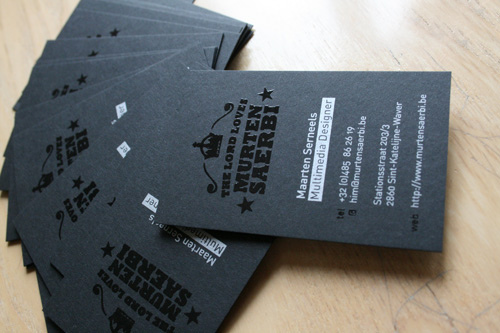


As a design and networking addict, the Sauder business cards were not distinctive enough for my tastes. Thus, I set out on a journey to research and develop my own business cards. Here are, from my experience, the top 3 tips for creating personal business cards with respect to the design and printing process:


1.      Remember the purpose of your card.

Business cards should be memorable, simple and informative. Think about how long you would look at a card if someone were to hand their card to you. Keep your content basic and visible; never clutter with all your Twitter, Facebook, and LinkedIn accounts. If you’re a student with no business or clubs, just include your name, phone number, and e-mail. If you are an executive of a club or owner of a business, include your company name and title, fax, mailing address, as well as a corporate website. Make sure the phone you use is direct; there’s a reason why you see businessmen with a Blackberry, iPhone and Android.
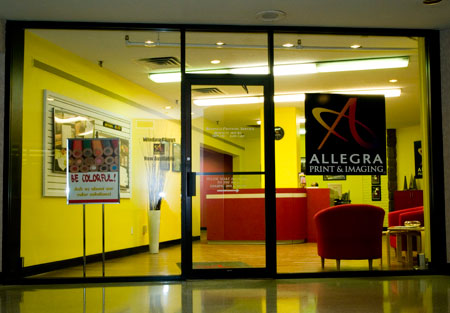


2.      Do your research and don’t be afraid to spend a little more – pick your printing company carefully.

My advice is either to read customer reviews, or to go to the store to meet the employees and check their printed samples before ordering from a company, because the “more-for-more” strategy doesn’t always apply. I recently had experience with a 3 – 4 day print service at a printing company in Downtown Vancouver that had a very clean and professional website, priced between $55 and $60. Although the staff was kind, the overall service and quality lacked the professionalism and promptness I expected for their price point.


Also, something to take note of is that different printing companies will have different specifications on how to prep your business card design for print. Generally, make sure your design in Adobe Illustrator or Photoshop is prepared with:


·         300 ppi (resolution)

·         canvas size at the standard cut size 3.5 x 2 inches (89 x 51 mm)

·         add an additional quarter inch bleed all around (always add guides to show where bleeds are)

·         produce CMYK colour mode.

Another reason why choosing a good printing company is extremely important is that different places will offer different paper textures, paper thickness, and printing techniques. Generally, I’d go with a heavier matte card stock (at least 12pt, and at best, 14 or 16 pt) so people it is easier to write on. Silk lamination is a current trend because of their durability (tear and water-resistant) and elegance (smooth, matte finish).  This, combined with either spot UV or metal foil printing (overlaying either a gloss with a shiny embossing effect or a metallic sheen) can create a spectacular and elegant effect:
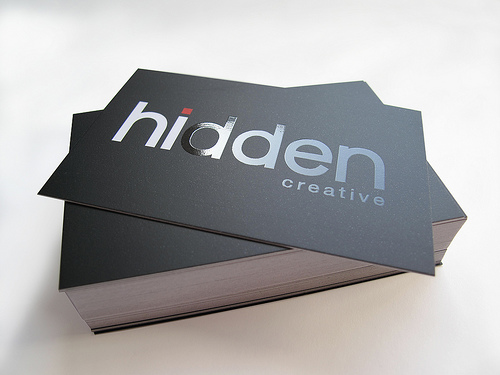
16 pt card, silk finish, spot UV
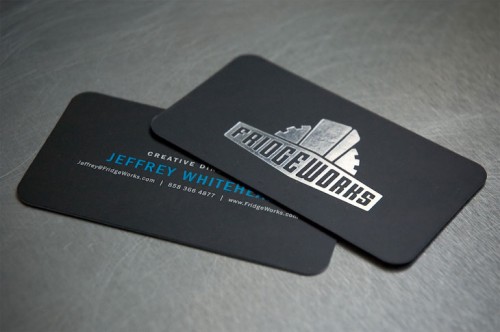
16 pt card, silk finish, UV coating over text, silver foil


3.       Remember that there are FREE resources everywhere.
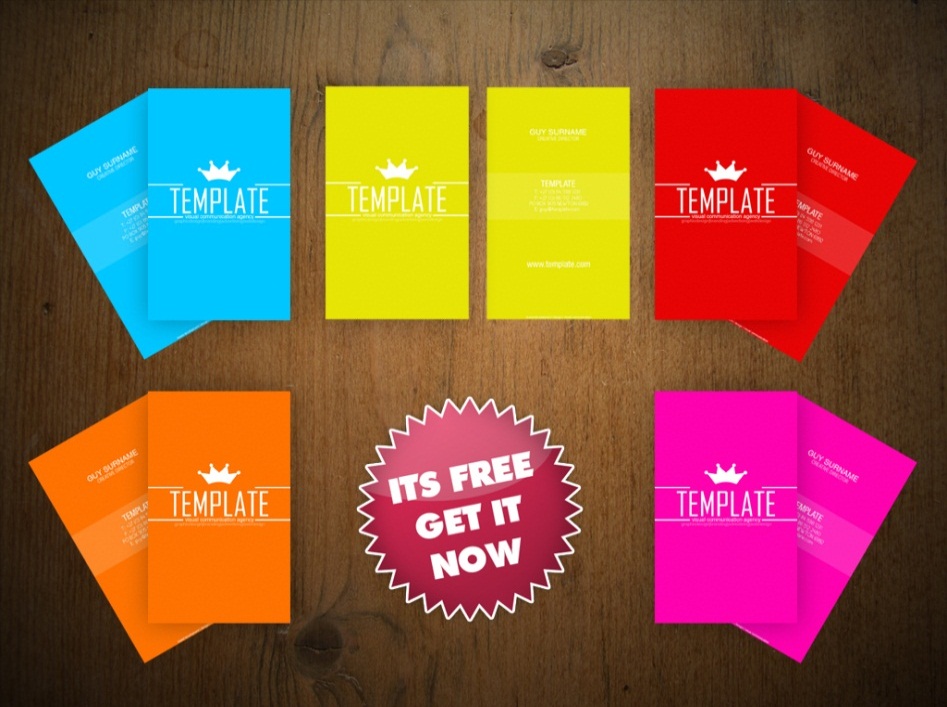


If you are unsure how to set up your file or even just where to start, there are free templates everywhere on the web. Refer to other people for inspiration, or browse for templates on sites like DeviantArt. Find a beautiful colour scheme on Kuler, and then choose a premium font like Quicksand or Zag. Remember the different connotations colours give, and ensure that the font is simple


(usually sans serif), and readable (no less than 8 pt). A good font is pretty much the difference between an amateur and professional business card. The current trend in business card revolves around minimalism, simple icons, clean vector lines, and a uniting colour (often tri-colour) or pattern theme on front and back. Here’s a great example:
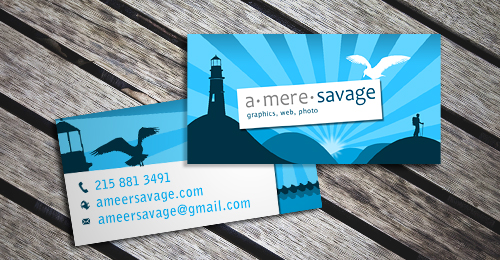
 

Finally, be sure to read up on business card etiquette. Keep your cards clean and unfolded. Generally, present and receive business cards with both hands, palms up. Always look at the card you are given before putting it away in your cardholder, give thanks, and makes notes on it inconspicuously.


To sum it all up quickly, remember that in addition to the actual design (colours and fonts) of the business card, you can play around with the actual print and card stock itself. Make it simple but to the point, with a unifying colour scheme or even text-as-a-logo. Make the card bilingual if your environment requires so, or if you want to show diversity. I hope that after reading this, you have gotten a better grasp of business card designs, and I leave you with one last bonus tip – NEVER START LATE. Business cards may be small, but take hours and hours to perfect.


Categories
Insight Marketing Strategies Technology

New Mapping Technologies: Stalking Made Easy?

The evolution of web mapping technology has been extraordinary.


Google Maps was one of the very first online web mapping technologies. Created in early 2005, it now dominates in online and mobile web-mapping technology. The power of Google Maps is probably with its route-planning and route-calculating elements that allow anyone with wireless access or even on the go with a smartphone to be have a directional guide. Shortly after Google Maps, Google Earth came along with its incorporation of incredible satellite images, and eventually Bing Maps in 2010.


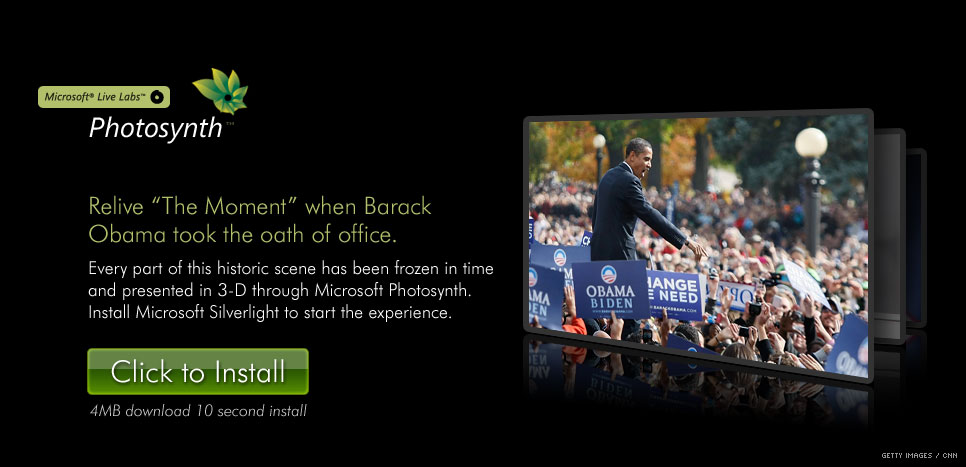
What makes Bing Maps superb is the use of Microsoft’s Seadragon technology, which allows seamless zooming regardless of resolution or file size that is optimized for online browsing. With this kind of technology, Bing Map users can zoom in with their mouse wheels from a satellite or map view to a point where it automatically transitions into street view, all with little load time. To understand what DeepZoom (based off of Seadragon) looks like in action, check out this amazing demonstration: Hard Rock Memorabilia. Fascinating as that was, don’t drop your jaw yet! Just when you think you’ve seen it all, Microsoft Live Labs releases Photosynth, a software to create 3D views of a particular location that can then be uploaded to Bing Maps.


Photosynth allows for an “augmented-reality mapping technology.” Photos taken by the public can be integrated into the map itself to create a virtual reality with infinite zooming, viewing angles, and even time frames, integrating cartography with imagery, as the developer of Bing Maps, Blaise Aguera y Arcas, puts it. It can even be used in real time, as Blaise showcases in his ground-breaking TED Talk.
 
YouTube Preview Image
 
And that brings us to the topic of geotagging. Geotagging is the process of linking locations to photos by embedding an extra piece of information (longitude and latitude) into the photo. Eye-Fi is an example service-provider for geotagging and uses the Wi-Fi Positioning System (WPS) to do so. It has now even been integrated into newer technologies such as the HTC Flyer and Huawei MediaPad. After witnessing Photosynth and Seadragon, one can imagine its unlimited applications with the addition of geotagging, especially in terms of promotions and advertising. However, with great power comes great responsibilities… and great threats. Mythbuster host Adam Savage was a victim of geotagging when he accidentally tweeted a geotagged photo and revealed where he lived.
 
So this new technology –  amazing technological advancement and advertising tool or stalking made easy?


Spam prevention powered by Akismet