Categories
Events Professional Development Tech Trends Uncategorized What others are saying

UVic and DHSI

First time on UVic campus was on April 9th for BC China Scholars’ Symposium. I didn’t expect that sort of strong response to our presentation…I enjoyed my company of Chris, Allison, Tim, Anna, Desmond, and getting to know more China specialists in BC. On the ferry back home, I walked into Allan and Greg who just finished the BCLA annual conference. Greg not only bought me Starbucks, but also informed me the changes and his concerns of RPL.

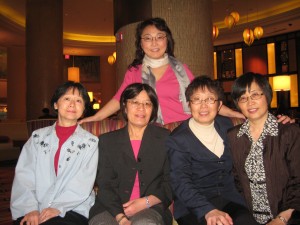
Digital Humanity Summer Institute brought me to UVic the second time, and stayed for an entire week. Instead of bunnies, I saw deers on my way back to the dorm. Our DigiFun class really had a great time together. We quickly worked out a video report by dipping into each feature we covered, sound, video, web design. We skipped ahead to web 2.0 by posting to youtube.

Categories
Professional Development Tech Trends

All about Rare Books

Just found time to record the last sessions of AAS/CEAL conference. April 1st Panel 289: Chinese Ancient Classics Publishing: Trends & Challenges attracted not only librarians but also scholars including our BC profs.

The NCL director, Ms. Zeng presented the work they have done on the over 50,000 rare titles in Taiwan. They have also funded LC and UW thousands of digital rare books, and uploaded their own rare images to WDL.

President Li Yan, Ancient Classics Publishing Committee of Publishers Association of China, provided us an overview of classics publishing. The government funding was increased up to 20 million Renminbi in 2008. Besides the 80 institutes and thousands of professionals, the annual program has trained over 500 librarians.

Professor Wu Ge talked about his union catlog of Chinese ancient classics. He emphasized the plan of investigating classic collections overseas and getting the rare content back to China. “海外調查, 引歸流失文獻”. I told Prof. Wu over the buffet dinner what I have gained from studying our rare items. They brought me back to Ming Dynasty with full of historical connections. I feel calm, peaceful and am eager to check out all the related sources. He was happy about my progress and 漸入佳境的自我感覺.

I also enjoyed the April 2 panel titled “Who writes the local history”, organized by our own Haihui and Zhaohui as one of the presenters. Prof. Carlitz used Jiading as an example to verify that gazetteers are crucial sources of local information, but they are far from neutral or value-free. Prof. Dennis from Wisconsin introduced the Pelliot gazetteer collection housed at the Bibliothèque nationale de France.

Categories
Events Experience Libraries in China National Library of China Professional Development Tech Trends Uncategorized What others are saying

CJK Joint Session

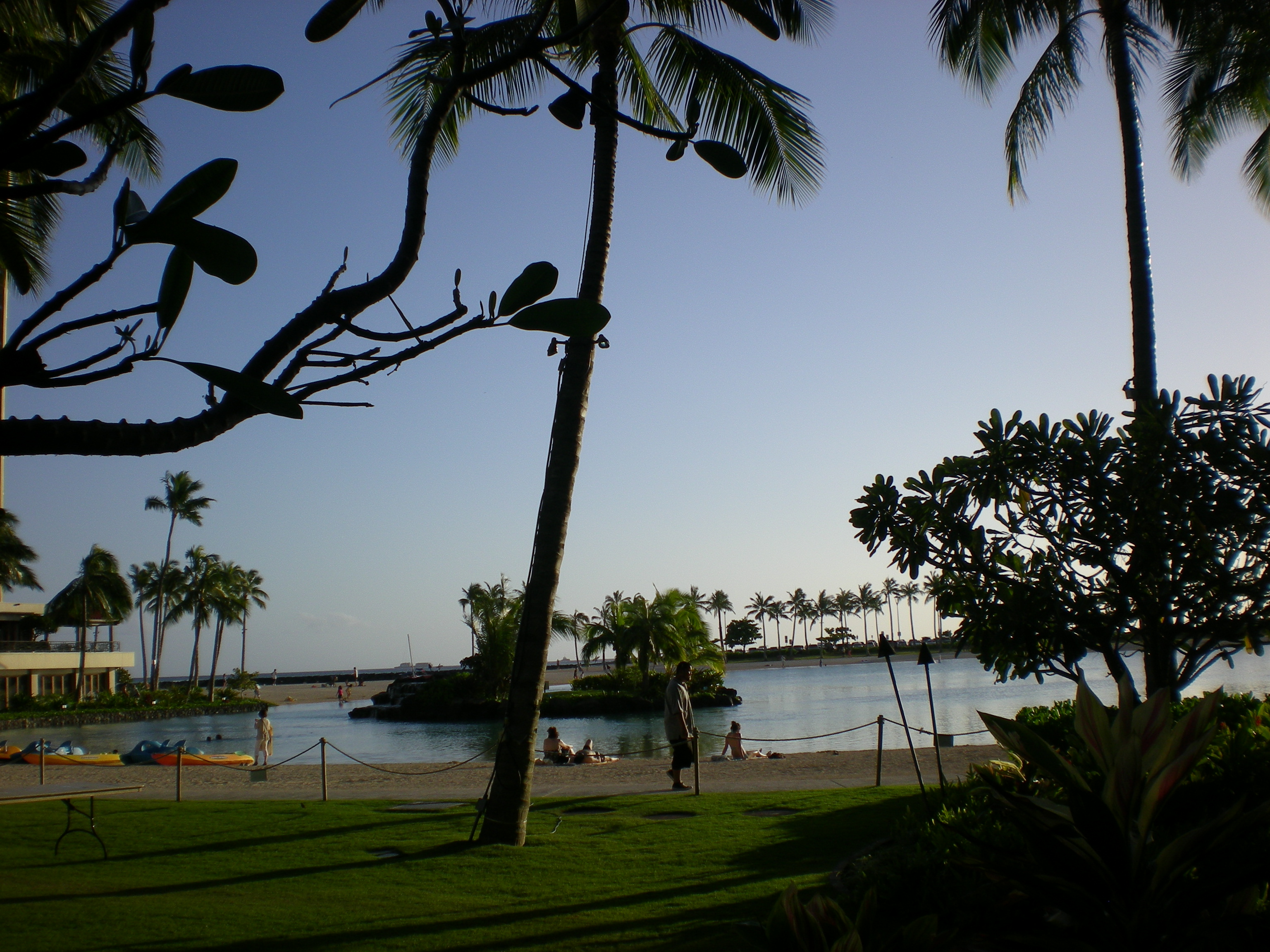
Walking along the beach then into the Hilton Village and Ballroom, I saw a whole lot more attendees on March 30th. This is the first time when Chinese, Japanese and Korean librarians meet for common interest instead of having separate committee meetings. The new format worked out nicely, but we could still cut some speakers out due to their emptiness.

The SCSL dinner and the Second General Meeting, also called 神仙会。The meeting lasted too long, so I brievely talked about our rare collections, my experience of studying Pang Collection and the challenges we are facing in terms of preservation and digitization. I enjoyed the afternoon and evening meetings because I spent some quality time with my mentors, Haihui, Wu Ge, Xu Hong, etc. and I met with new friends–Wang Jun, Li Yan and his funny assistant.

Categories
Events Experience Professional Development

Plenary and Public Services Meetings

We were lucky having Dr. Evelyn Rowsky again this year telling us her own experience of the enormous improvement of electronic data transmission. As the Qing history scholar, Evelyn confirmed the impact of the e-resources on the climate of East Asian studies. She suggested some areas that need further attention in the near future.

Paula Mochida, Interim University Librarian, University of Hawaii at Manoa, convinced us the pressure of reducing duplicates and print collection at academic libraries in North America. Sharon mentioned about nCiku, which has been linked to my subject guides, but hasn’t been really recommended to our students yet. Hope some folks have already picked it up. After a whole day program, I enjoyed the sunset on Waikiki.

Categories
Events Experience Professional Development

University of Hawaii

Started greeting my CEAL fellows at Hilton’s Lagoon. We were all very happy for this annual reunion. The OCLC CJK User Group discussion on the 29th of March was open and forward looking, which made me admire Sharon more. I learned a great deal from this open discussion. Sharon wrapped up the session as scheduled. We quickly gathered around Ye Ding, and he led us to the exhibit at University of Hawaii–Reformer’s Brush: Modernity and traditional media in China. Works include paintings and calligraphy from late 19th- and early 20th-century China on loan from the collections of Ernest and Letah Lee and Chin-tang Lo. The Reformer’s Brush showcases the artworks, lives and ambitions of leaders Chiang Kai-shek, Mei Lanfang, Liang Qichao, Kang Youwei, Guo Moruo and others. Every display item has bilingual intro and portrait of Minguo figures. I especially like the painting and Lychi and Green Peppers by Qibaishi and Zhang Zhidong’s calligraphic work 读书行路觉悟,知足惜福感恩. We enjoyed the special guided tour and wanted to learn more from the exhibit catalogue.

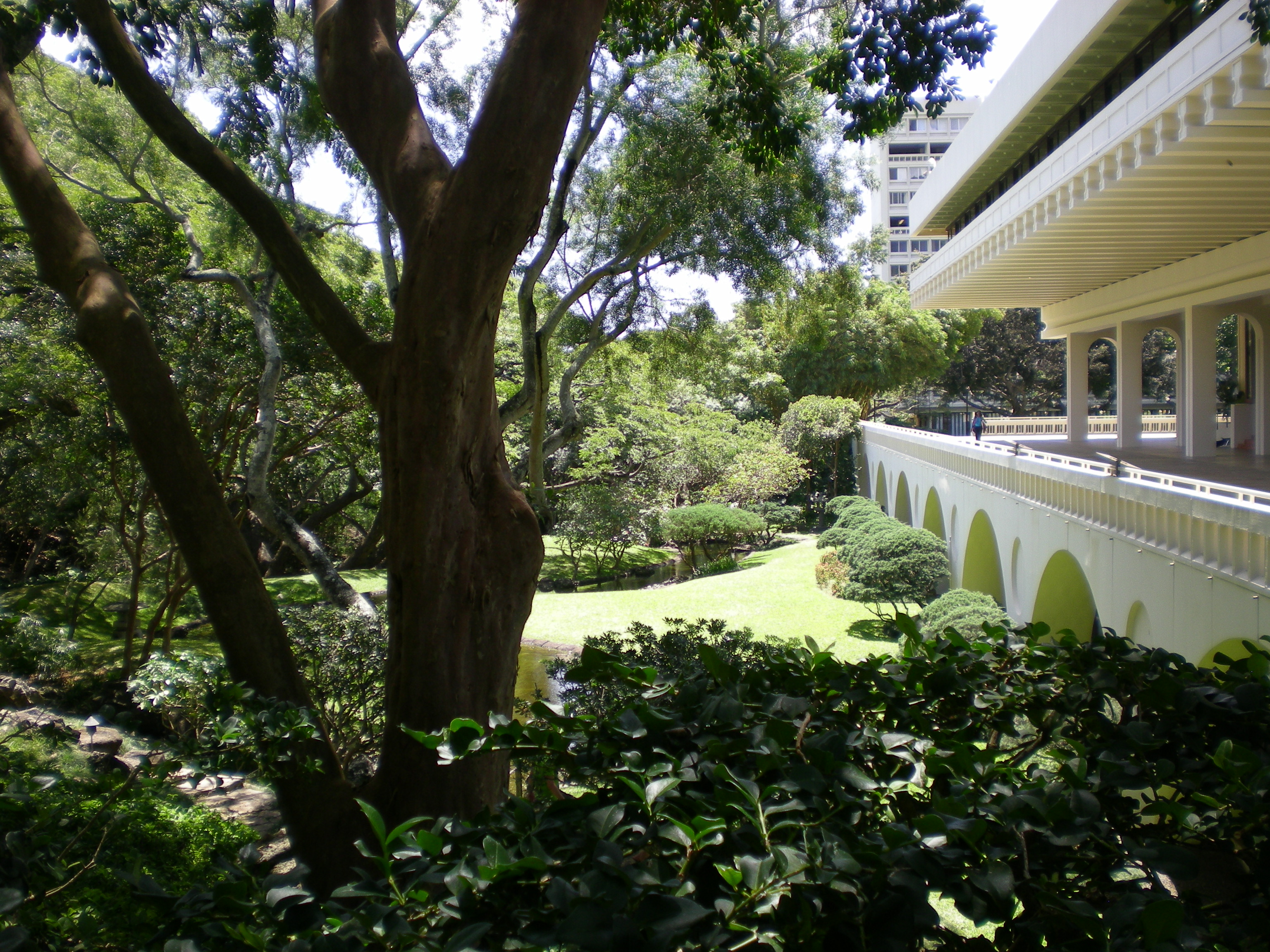
Ye Ding took us to the well-known East-West Center on U. of Hawaii Campus. Despite the funding shortage, we saw many people gathered. The Japanese tea house and the pond in the garden reminded me our Nitobe.

Categories
Events Professional Development

BC China Scholars Forum

BC China Scholars Forum brought together China specialists from across British Columbia on April 9th and 10th. Although I had reference shifts and the Asian Viola, I managed to present our rare book collection and gathered quite a lot feedback and suggestions. Alison said that there are about 250 of us in BC, many are not from traditional area studies fields. Some profs asked for my full paper, I will try to find time for it. Wonder if I shall submit to print publications in library or Asian Studies.

Prof. Bryant told me how he benefited from Puban when he studied at UBC. He even sent me a long email about some rare editions that he conducted research on in Asia and did the comparison with our Puban titles. Bless his heart! Will follow up. Thanks to Allan, we may enter the whole forum into cIRcle this year. Many good presentations, Kang Youwei in BC sounds fascinating to me, Prof. Brook’s research on the Ming daily life expenditure, the new mental health programs in China, and etc all attrated interesting discussion. Too bad, I missed the session more related to MAPPS, chaired by Prof. Cheek.

Bummed into Prof. Gu Xiong today, who reminded me his presentation “Becoming River” and the exhibition in MOA. At the end of the Forum, Prof. Gu gave me, Richard and Jeremy a special tour of MOA right before the Keynote. MOA was bright right and I enjoyed the sun set stroll and chat with the gentlemen. We saw the “river” made of thousands of little white boats, floating from the Pacific Ocean into MOA…

Categories
Professional Development Uncategorized

CEAL in Philly

IMG_4416It’s my third visit and very different one. Riding a taxi with Tim to downtown, our busy chat covered Beijing, Shanghai, UBC, cooperation challenges, political bias and … here’s downtown Philly.

I took my suitcase to the first SCLC meeting in a Malaysian resturant. Gentleman Cheng Hong from UCLA ordered spicy food for me, as hot as the discussion, while Shuyong’s working with her laptop and greeting me the same time. We happily squeezed ourselves into the first Society photo. The small meeting followed the big one. That’s dedication and professional! It was quite late when i checked in to Marriott.

We had very open discussion at the second SCLC meeting by the end of CEAL conference. Besides, I was struck the most by meeting with Jin Yilin, who reminded me how much e-resources out there, and how tricky it is for us to differentiate those commercial ones from institutional ones. The translation with Su and Shi for the next day presentation kept us up until 3am.

Another impressive talk was by the gentleman from Google, who reminds us in a decade or so, all books will have their digital format, or born digitally.

The group visit to the Art Museum is the only outing, which completely changed my first impression of this historical city in the States.

As always, I enjoy our friendship the most at CEAL. This year, I made a few new friends. Time to contact them.

Categories
Experience Life Professional Development

Best Chinese New Year Gift!

While I try hard to recover from the nasty flu, I had a terrible car accident over the weekend. My new SUV is not drivable! The old gentleman who hits my car seems to be ok, and lucky enough I am OK.

I felt sorry and guilty for not getting together with the local librarian friends this year. 8 American friends are coming this week for the Olympics and stay in our house. When I feel a bit under depression and stress, Mindy’s greeting popped in and brighten up my weekend, so pasting here as a new year greeting to all of us. Way to go, Mindy!

Here is an early Happy Chinese New Year greeting to you! Ever since my LIS study years, I’ve always looked upon you as my mentor for librarianship, so I’d like to send you some updates about my work here at UCF. 2009 was quite a blessed year for me. I was nominated for the Excellence Librarianship award in my university and was selected after winning the most votes among the library faculty. It’s quite an honor and encouragement for a junior level librarian like me, since the awardees (one for each year since 1984) in other years are all veteran librarians with at least more than 10-15 years’ professional experience. Plus, the monetary side is also pretty attractive :>. The award will be presented in this April. As to services, I’m honored to be appointed to the upcoming chair for the FLA Continuing Committee and the Vice President/President-elect for the CALA SE Chapter.

Categories
Professional Development

Meeting in Chicago

dscn00062

Feel lucky meeting so many colleagues sharing common interests. I’ve learned the most from Mr. Ma’s presentation on large set reprints and duplicate titles among them. More and more libraries are going for shelf-ready and the service prices are dropping.  Chinese e-books  and movie DVD collections have become common. Besides popular culture and film studies, science and technology in Asia are the new focus of many researchers who demand for information from ancient time to the latest.

Categories
Professional Development

10 Rules for Standout Public Speaking – a good article

This reads like a true Toastmaster’s promotional speech!

Wisdom is in the telling of the tale: Ten tips to get them listening to you now
Rick Spence, Financial Post
Published: Monday, June 23, 2008

Excerpts from the article:

As a sometime speaker, I was asked to be a judge. Fellow judge, image-consultant Ayla Tezcan, and I were asked to critique each three-minute presentation and provide “constructive criticism” a la American Idol’s acerbic Simon Cowell.

Having to produce such quick, concise feedback gave me a crash course in public-speaking dos and don’ts. And since presenting capably and confidently is a skill required of every business leader, I thought I’d share my conclusions: 10 rules for standout public speaking.
——————————————-

The mountain loomed closer and closer. Suddenly the train whistle shrieked. From pot, he moved on to crack. Finally I began to believe in myself. And then the sick child began to laugh.

Those are a few of the riveting journeys shared at a recent public-speaking contest held by Speakers Gold, a Toronto speakers’ bureau searching for new talent. About 20 speakers, from as far afield as Winnipeg, were vying for their shot at podium prime time.

As a sometime speaker, I was asked to be a judge. Fellow judge, image-consultant Ayla Tezcan, and I were asked to critique each three-minute presentation and provide “constructive criticism” … a la American Idol’s acerbic Simon Cowell.

Having to produce such quick, concise feedback gave me a crash course in public-speaking dos and don’ts. And since presenting capably and confidently is a skill required of every business leader, I thought I’d share my conclusions: 10 rules for standout public speaking.

Tell stories! Don’t just tell your audience what to do. Don’t offer assorted bits of hard-won wisdom. Unless it’s rooted in memorable stories and relevant experiences people will identify with, your “content” means nothing.

Tell your own stories. No matter what your rank or title, if you want people to heed your messages, you must establish your own credentials through personal experience and original thinking.

There are many highly paid speakers who simply synthesize other people’s thoughts and recycle great quotations, but these are trusted experts who have been building their brands for years.

Whether you’re making a sales presentation or delivering a keynote speech, if you want to appear credible and authoritative, you have to earn your audience’s respect, one painful personal lesson at a time.

Own the platform. This means making the best use of both your movements and the “stage” on which you are speaking.

At the competition, the first few speakers stayed by the microphone stand. They spoke well enough, but as the succeeding speakers roamed the stage with the hand-held mike, they literally upstaged the podium-clingers.

A big part of public speaking is finding movements, gestures and body language that look natural and underscore your meaning — just as actors and dancers use precise movement to tell their stories. But don’t overdo it! Some speakers wandered aimlessly across the stage. Random movement detracts from meaning, rather than adding to it.

Develop a few “big” gestures for effect. One speaker strode confidently into the aisles to involve the audience in her story; another demonstrated an emotional crisis by dropping to his knees and slapping the floorboards to create a violent thunderclap. Learn to use grand gestures. But sparingly.

Stay within your time. Sadly, the most experienced speakers were among the worst offenders, some taking five minutes or more for their three-minute speeches. This is unfair to your audience, as well as to other speakers. Three minutes isn’t a lot of time for an after-dinner speaker. But it’s a lot more uninterrupted time than most of us ever get in day-to-day life, so you must make the best of terse opportunities.

Move us. Use descriptive language, tone of voice and telling details to get your message across. Don’t just tell us somebody was hurt; tell us how they suffered. Don’t describe someone as brave, wise or honest — explain how they demonstrated those qualities.

Use visual descriptions. Tell us how things looked, how big the mountain seemed, how close the train came. Create pictures in our mind and we will recall your message much longer than we will remember facts or rules.

Speak up. Develop your voice. On the contest night, some speakers unwisely chose to leave the microphone behind. (Perhaps they don’t realize the absurdity of asking, “Can you hear me in the back?”) You can’t move people if you can’t reach them. A quick way to lose credibility is to say, “I don’t need a mike,” and then prove you did.

Don’t try to say too much. One speaker tried to take us on a full mountain expedition in three minutes. Going overtime, she managed to give us glimpses of her journey but the story wasn’t coherent. She should have described just one dramatic situation, and used it to illustrate her key point. Better to leave the audience wanting more than to attempt too much, and not communicate a single clear idea.

Include a call to action. Tell us how we should use the information you’ve shared. What should it mean to your audience? How should they put your message into practice in their lives? Your compelling stories and brilliant insights mean nothing until you draw the line between your experience and the needs of your audience.

— Rick Spence is a writer, consultant and speaker specializing in entrepreneurship. His column appears Mondays in the Financial Post. He can be reached at

rick@rickspence.ca

Spam prevention powered by Akismet